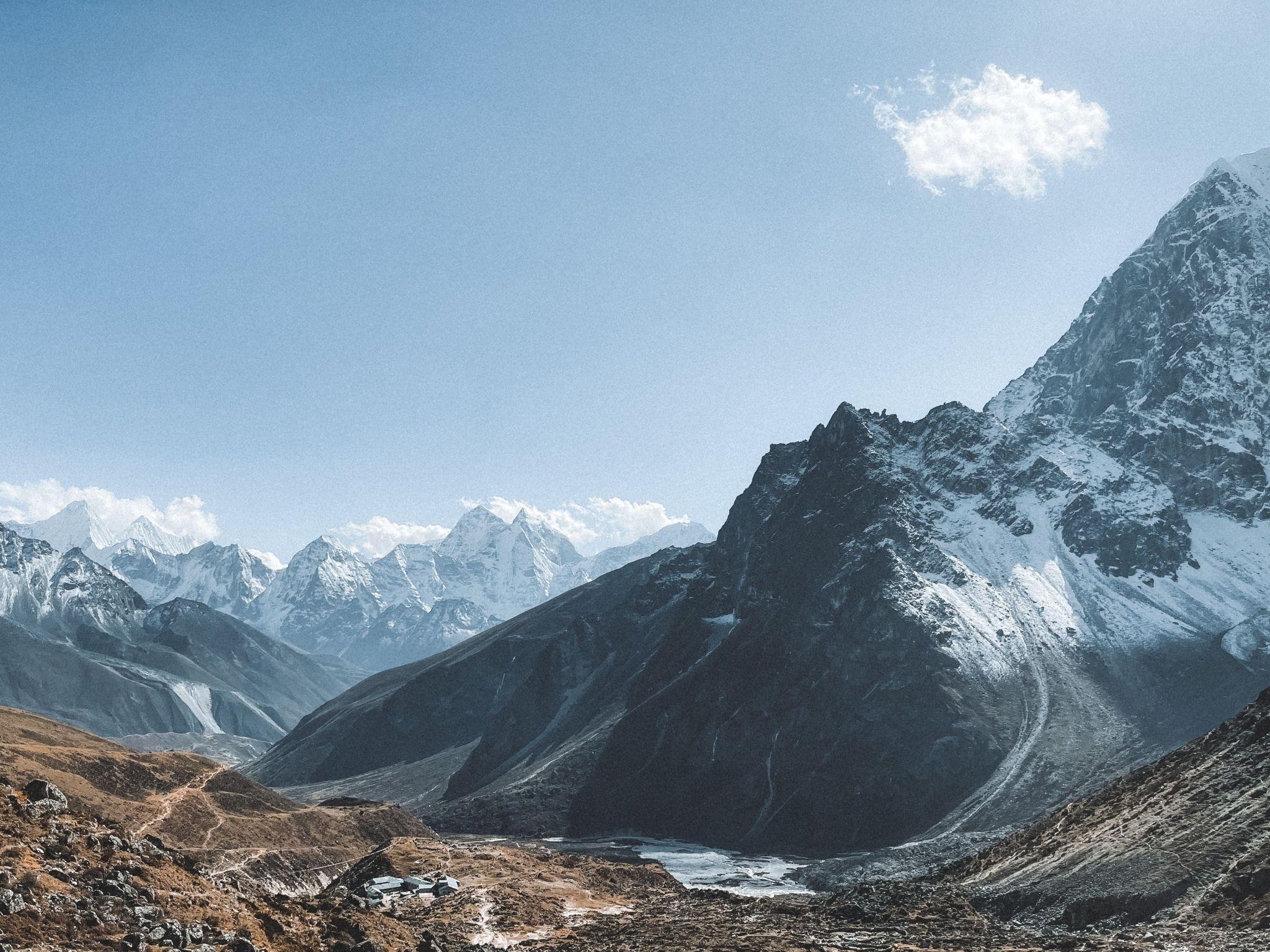
A two-week Himalayan trek is one of the few challenges that tests body and mind in equal measure without demanding technical skill. There are no ropes or ice axes on a teahouse trek, but there are 5,000-metre passes, cold nights and days that run eight hours. The reward is clarity: a rare stretch of time with no screens, no meetings and a single goal.
Key Takeaways
Teahouse treks need endurance, not technical climbing skill.
Altitude, not distance, is the main challenge above 4,000 m.
Training for 8 to 12 weeks with a loaded pack prepares most fit men well.
A remote route removes most digital distraction.
Budget roughly USD 1,500 to 2,500 (NPR 200,000 to 335,000) for a guided two-week trek, excluding flights.
Table of Contents
Why Choose a Trek Over Another Physical Challenge?
Marathons and obstacle races test one day. A trek tests consistency: getting up at 5 a.m. in the cold, walking well on day ten, and making sound decisions while tired at altitude.
There is no finish-line crowd and no medal. The only measure is whether the next morning starts on time, boots laced and pack ready, for the twelfth day in a row.
That repetition is the real test. Strength gets a trekker through day one, while discipline gets a trekker through day fourteen.
| Challenge | Duration | Main Test | Technical Skill Needed |
| Marathon | 3 to 5 hours | Cardio, pacing | None |
| Ironman triathlon | 10 to 17 hours | Endurance, nutrition | Swimming, cycling |
| Teahouse trek in Nepal | 14 to 16 days | Consistency, altitude | None |
| Alpine peak climb | 2 to 5 days | Technique, exposure | Ropes, crampons |
What Makes a Route a Real Challenge?
The Manaslu Circuit Trek Nepal is a strong choice for this kind of trip. It climbs from about 700 m to the 5,106 m Larkya La pass, and the pass day starts before dawn and runs 8 to 10 hours.
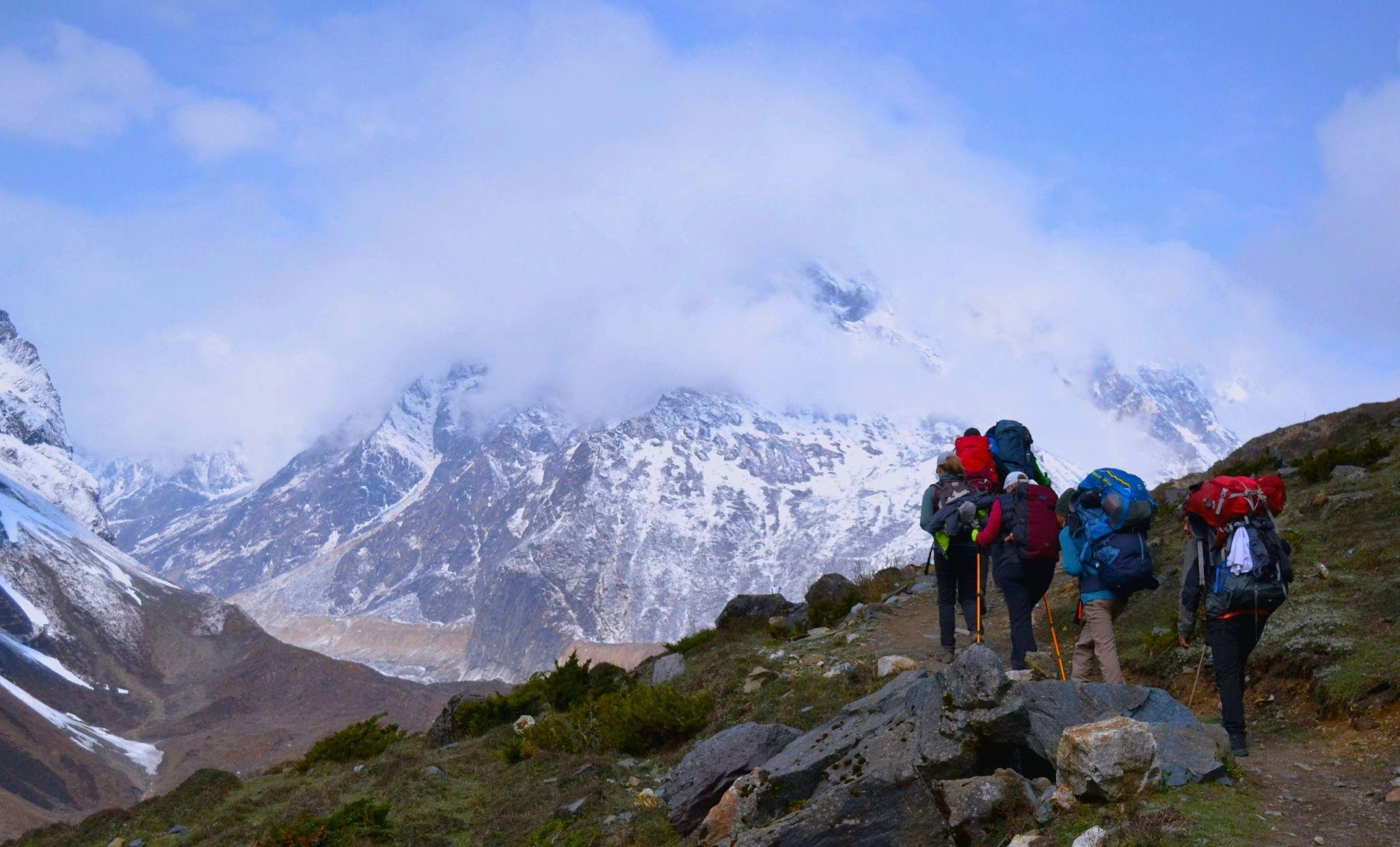
The route’s restricted status keeps it remote, and phone signals are patchy for days at a time. Most itineraries take 14 to 16 days from Kathmandu and back.
The trail follows the Budhi Gandaki gorge through villages that change sharply with height:
- Soti Khola and Machha Khola (around 700 to 900 m): hot, humid, terraced rice fields and suspension bridges
- Jagat and Deng (1,340 to 1,860 m): the restricted area checkpoint and the first Buddhist mani walls
- Namrung and Lho (2,630 to 3,180 m): pine forest, monasteries and the first clear view of Manaslu
- Samagaun (3,530 m): the main acclimatisation stop, with a side hike toward Manaslu Base Camp or Pungyen Gompa
- Samdo (3,875 m): a Tibetan border village and a second rest day on longer itineraries
- Dharamsala, also called Larkya Phedi (4,460 m): basic stone lodges and a short, cold night before the pass
- Bimthang (3,590 m): the descent village, with glacier views and the first real sleep in days
No single day on this list is extreme. The difficulty comes from stacking them, then putting the hardest day near the end.
What Rules and Costs Apply on a Restricted Route?
Restricted status brings rules that shape the whole trip. Solo trekking is not allowed: permits are issued only to groups of at least 2 trekkers travelling with a licensed guide through a registered agency.
| Item | Cost (approx.) |
| Manaslu Restricted Area Permit, Sep to Nov | USD 100 for the first week, then USD 15 per day |
| Manaslu Conservation Area Permit | NPR 3,000 (about USD 22) |
| Annapurna Conservation Area Permit (exit side) | NPR 3,000 (about USD 22) |
| Nepal tourist visa on arrival | USD 30 for 15 days, USD 50 for 30 days |
| Licensed guide | USD 30 to 35 per day |
| Teahouse room and three meals | USD 25 to 40 per day, rising with altitude |
A 30-day visa is the safer pick for a 14 to 16 day trek, since weather delays and spare days in Kathmandu add up fast. Cash in Nepali rupees is needed for the whole loop, as there are no ATMs past Machha Khola.
How Should the Body Be Prepared?
- Weekly long hikes of 4 to 6 hours with a 8 to 10 kg pack
- Stair or step-ups for leg endurance, 3 sessions a week
- Core work to protect the lower back under load
- At least two back-to-back training days to simulate trek fatigue
A simple 10-week plan works for most men who already train:
- Weeks 1 to 3: three 45-minute cardio sessions plus one 3-hour hike with 6 kg
- Weeks 4 to 6: add stair intervals and raise the weekend hike to 5 hours with 8 kg
- Weeks 7 to 9: back-to-back weekend hikes of 5 to 6 hours, ideally with 1,000 m of climbing each day
- Week 10: cut the volume in half and arrive rested
Downhill training matters as much as uphill. The descent from Larkya La drops roughly 1,500 m to Bimthang, and weak quads turn that into the hardest part of the day.
How Does Altitude Change the Mental Game?
Above 4,000 m, every step slows and sleep gets lighter. The skill is pacing: walking slower than feels necessary and resisting the urge to push ahead of the group.
Recognising altitude sickness early, and turning back when needed, is the most important decision on any high trek. Headache, nausea, loss of appetite and poor sleep are the early signs, and confusion or a wet cough at rest are signals to descend at once.
Two rules keep most trekkers safe:
- Above 3,000 m, sleep no more than 500 m higher than the previous night
- Take a rest day for every 1,000 m gained, used for a short climb high and a return low
The mental side is harder for men used to pushing through pain. On a high pass, pushing through the wrong kind of pain is the mistake, and the strongest decision is sometimes to wait a day in Samdo.
What Does a Typical Day on the Trail Look Like?
The routine is simple and repeats for two weeks. That simplicity is part of the appeal.
| Time | Activity |
| 5:30 to 6:00 a.m. | Wake, pack, tea |
| 6:30 a.m. | Porridge or Tibetan bread with eggs |
| 7:00 a.m. to noon | Walk, with tea stops in villages |
| Noon | Dal bhat lunch, the lentil and rice staple refilled at no extra cost |
| 1:00 to 3:30 p.m. | Walk to the next teahouse |
| Evening | Wash with a bucket of warm water, stretch, eat by the stove, sleep by 8:30 p.m. |
Hot showers cost around NPR 300 to 500 (USD 2 to 4) in the lower villages and disappear higher up. Charging a phone costs a similar amount, which keeps screen time naturally low.
What Gear Makes the Difference on a Two-Week Trek?
Most gear failures on a long trek come from feet and sleep. Spending money on those two areas pays off more than any gadget.
- Boots: broken in with at least 50 km of walking before the trip
- Sleeping bag: rated to minus 10 to minus 15°C for Dharamsala and Samdo
- Layers: a down jacket, a fleece, a waterproof shell and thermal base layers
- Trekking poles: a pair, for the long descent off Larkya La
- Water treatment: purification tablets or a filter, since bottled water is costly and creates waste
- Headlamp: the pass day starts around 3:30 to 4:00 a.m.
Porters carry up to about 20 to 25 kg between two trekkers, so a day pack of 5 to 7 kg is all that sits on the shoulders. That limit forces a useful lesson in deciding what actually matters.
Which Challenge Comes Next After Manaslu?
The natural next step is the Khumbu, where the trail climbs to 5,364 m at Everest Base Camp and 5,644 m on Kala Patthar. Men short on leave can still take on the full ascent on foot with an Everest Base Camp trek with helicopter return, which swaps the three to four day walk down for a flight from Gorak Shep to Kathmandu.
The climb stays the test, since acclimatisation cannot be skipped. Only the repeated descent is cut, saving days without making the hard part any easier.
What Does Life Look Like After the Trek?
Many trekkers describe a reset on returning: a lower tolerance for noise, a clearer view of priorities, and an appetite for the next challenge. Two weeks of simple routine is surprisingly effective at that.
The habits that last tend to be small: earlier nights, less time on the phone, slower meals. The bigger shift is knowing, from direct evidence, how much is possible on very little.
Frequently Asked Questions
Can someone with no trekking experience do the Manaslu Circuit?
A fit beginner can complete it with 10 to 12 weeks of training and a well-paced itinerary. Prior multi-day hiking at moderate altitude makes the experience smoother.
Is it possible to trek the Manaslu Circuit alone?
No. Restricted area rules require a minimum of 2 trekkers and a licensed guide, with permits arranged through a registered agency.
When is the best season for the trek?
Late September to November gives the clearest skies and stable pass conditions. March to May is the second window, with warmer days and rhododendron forests in bloom.
How long is the hardest day?
The Larkya La crossing from Dharamsala to Bimthang runs 8 to 10 hours, with about 650 m of climbing and roughly 1,500 m of descent.