
A silver crossover swings across your front bumper without a signal, and your hand is already on the horn while your jaw locks and your foot drops. You’ve read the standard anger-management advice. You’ve tried deep breathing in the driver’s seat and counting to ten, and you already know those tips fail because the anger fires at the exact same millisecond as the cut-off, not five seconds later when you’re choosing how to react. When a driving temper feels instantaneous, the real question is whether road rage is a symptom of attention-deficit/hyperactivity disorder (ADHD), and what changes when that reaction has a neurological root.
Clinical research backs a direct connection between ADHD and aggressive driving, even though emotional control was dropped from the official diagnostic manual in 1968 for reasons history still doesn’t explain. And because ADHD medication helps emotional control far less than most guys hope, fixing it takes practiced mechanical skills. At Unfinished Man, we’d rather look at the actual clinical mechanics and numbers than hand you another list of breathing exercises.
Key Takeaways
Road rage isn’t listed in the DSM-5-TR, which has excluded emotional dysregulation since 1968, but Russell Barkley, Ph. D., shows that deficient emotional self-regulation (DESR) and emotional impulsiveness (EI) in roughly 70% to 80% of people with ADHD uniquely predict road rage, driving under the influence (DUI), and crash risk.
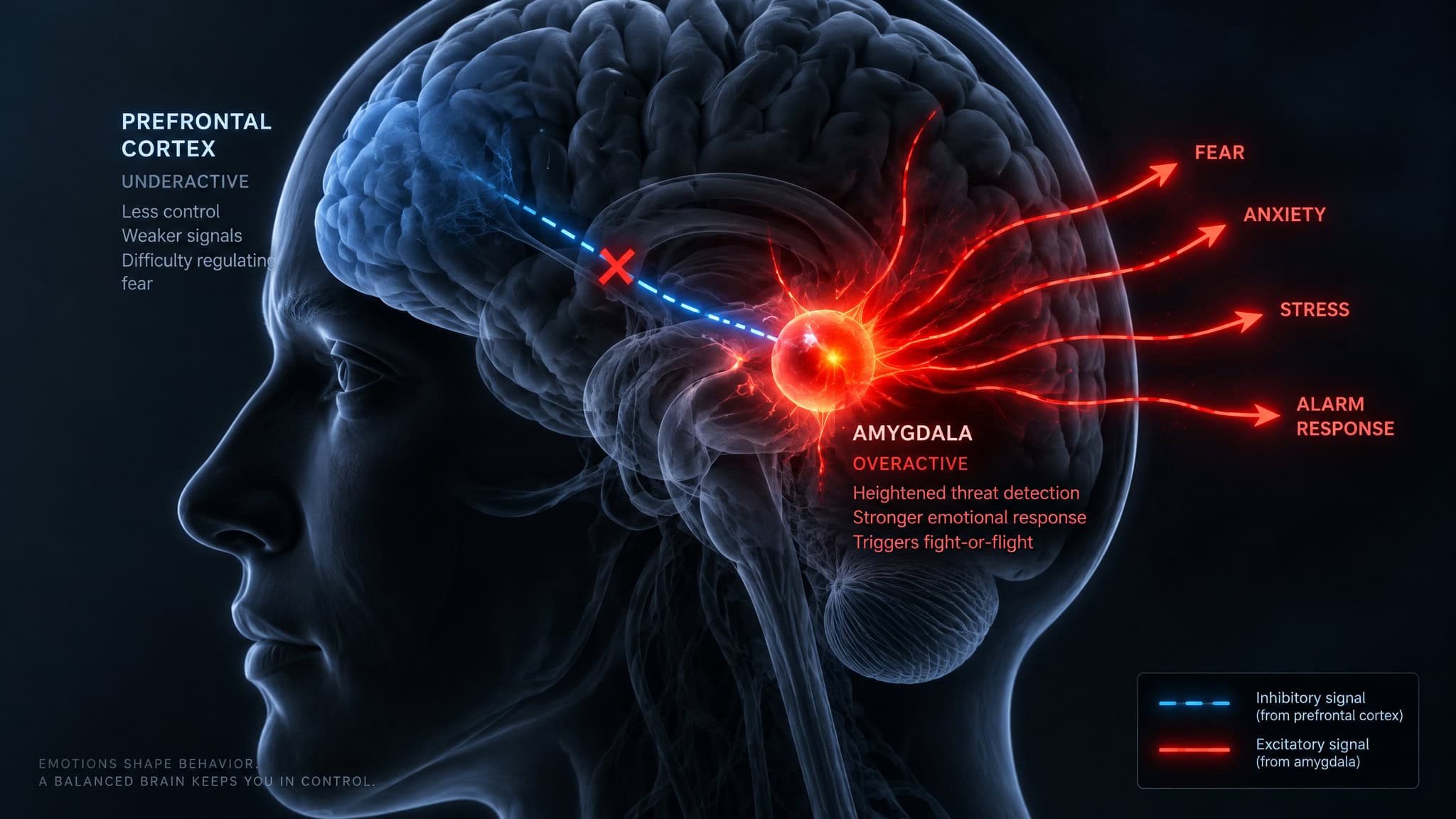
The snap behind the wheel comes from a frontal-limbic circuit mismatch where an overactive amygdala fires an alarm while an underactive prefrontal cortex (PFC) and impaired anterior cingulate cortex (ACC) fail to brake the impulse, compounded by sleep debt in up to 70% of adults with ADHD whose melatonin releases about 2 hours late.
Stimulants deliver a strong effect size of roughly 1.0 for inattention but only a modest 0.3 to 0.35 for emotional symptoms, meaning drivers must rely on cognitive behavioral therapy (CBT, about 0.3 effect size in medicated adults), environmental guardrails, and pause scripts rehearsed roughly 20 times in calm conditions.
Table of contents
Table of Contents
Is road rage a symptom of ADHD?
Yes, ADHD is linked to road rage: through emotional dysregulation, though road rage itself isn’t a Diagnostic and Statistical Manual of Mental Disorders (DSM) symptom. Drivers with ADHD are more prone to aggressive driving and have a harder time hitting pause on frustrating triggers, though roughly 70% to 80% of people with ADHD struggle to manage emotions while the rest have well-adjusted emotional reactions with impairments confined to traditional executive functioning (EF). A 2020 study by Beheshti, Chavanon, and Christiansen in BMC Psychiatry (20(1):120, cited via Medical News Today) directly connected emotional dysregulation in ADHD to dangerous driving. Drivers manage it through targeted behavioral skills and treatment rather than willpower.
ADHD road rage is a measurable driving risk rooted in neurological self-regulation deficits rather than a personal character flaw. The DSM-5-TR focuses on inattention and hyperactivity-impulsivity, leaving emotion out of every manual since DSM-II in 1968. Yet Russell Barkley, Ph. D. (in ADDitude and Barkley & Fischer, 2010, Journal of the American Academy of Child & Adolescent Psychiatry 49(5):503-513), identifies deficient emotional self-regulation (DESR) and emotional impulsiveness (EI) as core ADHD components. Together, DESR and EI uniquely predict how often road rage escalates to crashes and other major life damage beyond what traditional symptoms explain:
- Road rage, DUIs, and crash risk
- Social rejection and relationship conflict
- Marital dissatisfaction and parenting stress
- Job dismissals
- Impulse buying and poor finances
DESR: the named mechanism behind ADHD anger
Russell Barkley’s clinical framework gives a specific name to the mechanism that turns a minor lane-merge annoyance into a full-body overreaction. For kids and adults with ADHD, emotional self-regulation is one of the hardest-hit parts of executive functioning.
What deficient emotional self-regulation means
Deficient emotional self-regulation (DESR) is Russell Barkley’s clinical construct for impulsive emotion combined with difficulties regulating emotional responses in ADHD, where emotional impulsiveness (EI) is an aspect of poor inhibition marked by low frustration tolerance, impatience, quick anger, aggression, and emotional excitability. While official diagnostic criteria leave emotion out, patients and clinicians treat it as central to the disorder because it predicts real-world impairments and sharpens diagnosis and treatment, as detailed in the Barkley Deficits in Executive Functioning Scale: Children and Adolescents (published by The Guilford Press). Barkley breaks DESR down into four deficient components that fail in sequence: inhibiting inappropriate behavior triggered by strong emotions, self-soothing and down-regulating strong emotions, refocusing attention away from emotionally provocative events, and organizing or substituting healthier emotional responses in service of goals.
- Inhibiting inappropriate behavior triggered by strong emotions, which is the exact link that snaps when you’re cut off or tailgated
- Self-soothing and down-regulating strong emotions once they fire
- Refocusing attention away from the emotionally provocative event
- Organizing or substituting healthier emotional responses that serve your long-term goals
Emotional impulsiveness and the four components
ADHD emotional dysregulation causes fast anger outbursts because emotional impulsiveness (EI) strips away the initial inhibition that normally holds a reaction in check. Approximately 70% to 80% of people with ADHD experience significant emotion-management difficulties, though a minority have well-adjusted emotional reactions and run into trouble only in non-emotional executive functioning. A 2015 meta-analysis by Shaw et al. established emotional dysregulation as a core feature of adult ADHD psychopathology, alongside developmental findings by Dougherty et al. (2015, Journal of Child Psychology and Psychiatry 56(9):999-1007).
Within this two-part system, EI represents the raw, poor-inhibition side of DESR. It shows up in daily life and behind the wheel as low frustration tolerance, impatience, quick anger, aggression, and emotional excitability. In clinical terms, impulsive emotion maps directly onto ADHD’s hyperactivity-impulsivity dimension, while the ability to control and steer that emotion maps onto the inattentive and executive functioning dimension. When another driver cuts across your nose, step one of DESR fails via EI before you ever reach step two or step three: you haven’t just failed to calm down, you’ve already reacted before the mental brakes engaged.
Why the ADHD brain snaps in traffic
When you blow up at a slow left-lane driver, the reaction feels instantaneous because the physical hardware responsible for buying you a half-second of pause is under-firing. Along with the default mode network, the brain relies on specific executive circuits to keep raw impulses from turning into action.
The hot circuit: alarm vs. brakes
The ADHD brain’s trouble controlling emotions traces to an overactive amygdala alarm paired with an underactive prefrontal braking system. In a typical brain, the amygdala and limbic system generate raw emotion while the prefrontal cortex (PFC) notices and manages that signal, operating inside the frontal-limbic “hot” or “why” circuit alongside the default mode network. Neuroimaging and circuit research cited by Medical News Today show how this network misfires in ADHD:
- The four-structure “hot” circuit: Consists of the frontal lobe, anterior cingulate cortex (ACC), ventral striatum, and amygdala, forming one of four executive networks tied to ADHD, emotional dyscontrol, motivation deficits, hyperactivity-impulsivity, aggressive tendencies, and decision-making.
- 2016 neuroimaging research: Found possible differences in amygdala activation and size in people with ADHD.
- 2022 neuroimaging research: Found decreased frontal cortex activation in ADHD, which reduces the brain’s inhibition of major emotional reactions.
The anterior cingulate and short emotional latency
That gap between alarm and brakes creates short emotional latency: you react before you think. In neurotypical brains, the anterior cingulate cortex (ACC) fires during emotional or social conflict to buy time and suppress the impulse. According to Barkley, the ACC appears impaired in adult ADHD brains, causing direct trouble with response inhibition right when another car crowds your bumper.
The wiring problem is compounded by brain chemistry. As covered in ADDitude webinar material, low dopamine makes basic patience difficult to sustain in slow traffic, while norepinephrine swings between too much and too little, creating a “tired and wired” volatility. You can strengthen the ACC over time through meditation, mindfulness, cognitive behavioral therapy (CBT), medication, and exercise. Every one of those interventions works through the same mechanical payoff: creating a fraction of a second of space between the triggering event in traffic and your reaction.
Why emotion is missing from ADHD criteria
Emotional dysregulation is missing from official ADHD criteria because the 1968 DSM-II dropped emotional impulsiveness and DESR for unknown reasons when framing the condition as a hyperkinetic impulse disorder, and every edition through DSM-5-TR kept it out. Before that 1968 omission, emotion anchored the clinical record for nearly two centuries.

Melchior Adam Weikard’s 1770/1775 textbook Mangel der Aufmerksamkeit, Attentio Volubilis (1775 edition cited by Barkley & Peters, 2012, Journal of Attention Disorders 16(8):623-630) described inattentive people as unwary, flighty, careless, mercurial, and bacchanal. Alexander Crichton added emotional frustration in 1798, British physician George Still included emotional impulsiveness within defective moral control of behavior in 1902, and Mark Stewart, Dennis Cantwell, and Paul Wender kept emotion in their 1960s-1970s hyperactive child syndrome concepts.
Between 1968 and 2013, the DSM reclassified ADHD from a 1968 DSM-II hyperkinetic impulse disorder to a neuro-developmental disorder built around inattention, hyperactivity, and impulsivity. A 2015 literature review later outlined three competing models of the strong ADHD-emotion link (core defining feature, distinct co-occurring entity from a different brain region, or a new combined condition) without concluding which is most likely. Meanwhile, surveys show general practitioners still lag ADHD specialists on non-drug tools.
Is it ADHD anger or a mood disorder?
Before assuming a short fuse in traffic is purely ADHD, a competent clinical evaluation looks at how long the anger lasts and what else might be driving it. Bring these distinctions to a clinician rather than trying to diagnose yourself in the driveway.
Short, traceable emotions vs. long, cross-situational moods
The decisive difference between ADHD anger and a mood disorder is duration and situational traceability: ADHD produces short-duration, setting-specific emotions tied to an obvious trigger, whereas mood disorders produce long-duration moods that follow you across situations. In Barkley’s differential, EI-DESR is a top-down regulation deficit where the reaction is rational in kind (getting mad at a bad driver) but poorly regulated in scale. Mood disorders like bipolar disorder involve bottom-up excessive emotion generated by the amygdala-limbic system, where mania triggers are often unclear and irrational across settings.
What a clinician rules out first
A doctor evaluating ADHD anger must first rule out depression, anxiety, past trauma or chronic stressors such as bullying or chronic pain, and substance use, because general practitioners often lack specialized training in ADHD emotional dysregulation. A sudden shift from your normal baseline points to a secondary problem, while a lifelong short fuse points to ADHD. In children, depression and anxiety are the top comorbid drivers, with post-traumatic reactions third, and failing to evaluate trauma is the most common clinical miss; in adults, borderline personality disorder is a tough boundary case, though treatments largely overlap and missing stimulant treatment is a real oversight.
Why anger alone is not mania
Irritability or anger by itself isn’t mania. During the 1990s, DSM-IV counted irritability as a mania symptom, a teaching error that got many people with ADHD misdiagnosed with bipolar disorder for roughly a decade. The 2013 DSM-5 corrected this by requiring elevated or expansive mood, decreased need for sleep, hypersexuality, overspending, grandiosity, and energy above baseline, though the fix hasn’t reached every clinic. Joel Nigg, Ph. D., notes four terms you may hear in an evaluation: irritability (anger dysregulation and disproportionate tantrums), lability (frequent mood shifts), hostile attribution (over-reading neutral events as attacks), and heightened baseline emotional intensity, alongside emotional coherence mismatches where facial expressions and cardiac arousal fail to harmonize like an orchestra.
Why anger management tips fail in ADHD brains
Telling someone with ADHD emotional dysregulation to “just calm down” in traffic works about as well as telling someone who needs glasses to squint harder.
Why willpower fails mid-trigger
Standard anger-management tips fail in ADHD because they assume working brakes and available working memory mid-trigger, so drivers with ADHD need pre-rehearsed scripts and external guardrails instead of in-the-moment willpower. Processing an emotion takes multiple steps (name the emotion, pause, notice thoughts, question them, choose a response), and in an impaired ADHD working memory, two steps is one step too many, as How to ADHD illustrates with “Fred” wanting to quit his job on the spot after a denied day off. Because automatic gut-level negative reads fire before deliberate reframing (like seeing socks on the floor and automatically thinking your family doesn’t care), you have to change one habit area at a time for a full month using concrete tools:
- Pause scripts practiced roughly 20 times at home in calm conditions
- Frustration tolerance built in 5-, 7-, and 10-minute increments
- Non-judgmental emotion tracking (what happened, what you felt, what you did, what it cost) or working with an executive function coach
- Aerobic exercise for overall ADHD symptoms and mind-body exercise like yoga for self-regulation
Skills to rehearse before you drive
Stopping ADHD anger in the moment while driving requires overlearning your pause routine in calm conditions first, modeled on a speaker who stepped away to cool down before answering his son’s provocation, and then using four fast moves behind the wheel: pause before reacting, label the emotion out loud (which helps sync the amygdala and PFC), ground yourself with a slow exhale, and externalize feelings with a voice note. You can also shift your body out of hyperfocus (“move a muscle, move a thought”) while reframing hostile intent by assuming a tailgater is rushing to an emergency.
Environmental systems over effort
Because willpower drops offline when you’re provoked, outsource executive function to physical guardrails the same way people curb ADHD impulse spending (calling a partner before spending over $100, sleeping on purchases over $500, taping a reminder to a credit card, deleting saved cards, using a wait-forcing app, or wearing a bracelet reading “Hm, let me think about that”). Pair those pre-drive habits that stop road rage with an emotion tracker so you aren’t relying on raw effort at 65 mph.
Sleep debt, blood sugar, and sensory overload in traffic
Driving triggers intense overstimulation, anxiety, or rage in ADHD because the commute stacks three biological amplifiers (chronic sleep debt, blood sugar crashes, and sensory overload) inside a metal box. Up to 70% of people with ADHD run on a delayed internal clock where melatonin releases roughly 2 hours later than average, putting morning commuters into traffic on heavy sleep deprivation. Add irregular eating habits that trigger blood sugar spikes and crashes along the gut-brain axis, and baseline irritability is already high before you leave the driveway.
Once you hit dense traffic, visual and auditory clutter creates heavy sensory overload that can trip a full fight-or-flight response. In some drivers with ADHD, that physiological flood tilts toward driving anxiety and overstimulation, making highway merges or long drives feel overwhelming; in others, the exact same arousal fires the hot circuit into road rage. Because willpower can’t override sleep biology or low blood sugar, the fix happens before turning the key: stabilizing sleep schedules, eating protein before commuting, and cutting cabin noise.
Treatment for ADHD emotional dysregulation: the numbers
If you expect a prescription alone to cure a hair-trigger temper in traffic, the clinical trial numbers will adjust your expectations fast. Research across Therapeutic Advances in Psychopharmacology, Archives of General Psychiatry, and The American Journal of Psychiatry shows a sharp split between attention and emotion.

What medication actually does for emotion
ADHD medication helps emotional dysregulation only modestly: stimulant effect sizes run about 0.3 to 0.35 for emotion versus roughly 1.0 for inattention. Stimulants like methylphenidate (Ritalin) dampen the limbic system, which improves underlying control systems for some drivers while leaving others complaining of flat, robot-like emotions.
Non-stimulant atomoxetine up-regulates the executive brain but showed weaker emotion evidence in ADHD with comorbid oppositional defiant disorder (ODD) (Newcorn et al., 2005, Journal of the American Academy of Child & Adolescent Psychiatry 44(3):240-248). Alpha-2 agonists guanfacine and clonidine are believable non-frontline options pending further trials, and a recent National Institute of Mental Health (NIMH) trial found methylphenidate plus a selective serotonin reuptake inhibitor (SSRI) like Celexa (other SSRIs include Prozac and Lexapro) beat a stimulant alone for severely dysregulated kids with severe tantrums.
Therapy: CBT leads the evidence
For emotional regulation in ADHD, cognitive behavioral therapy (CBT) carries a much larger share of the load than medication alone because pills primarily target core inattention while behavioral counseling teaches actual response skills. CBT is the best-studied and most effective therapy for ADHD emotional dysregulation, delivering a moderate effect size of about 0.3 in adults already taking stimulants. Mindfulness-based therapy, dialectical behavioral therapy (DBT), and acceptance and commitment therapy look promising with fewer studies, while cognitive training and psycho-education alone perform poorly, and neurofeedback/biofeedback in children shows a tiny 0.15 effect size not worth the cost compared to exercise, diet, or meditation.
Children: parent training plus medication
In children, Barkley favors combining medication with behavioral parent training (restructuring situations, cutting parental hostility and criticism, building warmth in calm times, and ensuring tantrums get zero payoff). Joel Nigg, Ph. D., at Oregon Health and Science University (OHSU) and author of Getting Ahead of ADHD, emphasizes that medication has limited value for emotion compared to behavioral counseling, noting a 14-year-old who refused therapy until he learned he was being discussed and saw it reframed as skill building, like hiring a lawyer.
Beyond anger: RSD, stickiness, and emotional intensity
Rejection-sensitive dysphoria (RSD) is an ADHD-related emotional phenomenon characterized by extreme emotional sensitivity and pain triggered by perceived or actual rejection, though clinical sources don’t establish a direct causal link between RSD and road rage. Emotional dysregulation in ADHD spans sadness, happiness, and fear, showing up as fast impulse snaps (like Alex, 22, snapping at a teammate’s suggestion and feeling immediate guilt), positive excitement derailing an assignment due the next day after a text from a crush, or emotional stickiness where hyperfocus traps negative feelings for hours (like Jordan, 35, ruminating over a minor work-email mistake and canceling plans).
In an interview with Kjrstin Walters in Medical News Today, Dr. Gilly Kahn described receiving a late ADHD diagnosis as a woman, sobbing over perceived rejection, and managing her symptoms with guanfacine, stimulants, noise-canceling headphones, and quiet dark rooms. As Kahn put it, telling someone with ADHD to “calm down” is like throwing baseballs at their face and telling them to “catch.” She also noted that females assigned at birth are disproportionately underdiagnosed, and hormonal effects on mood across adolescent cycling, perimenopause, and menopause remain an unstudied gap.
What untreated emotional dysregulation costs over time
Leaving ADHD emotional dysregulation untreated compounds long-term psychiatric risk: oppositional defiant disorder (ODD) splits into a learned social-conflict dimension (predicting conduct disorder) and a biological, ADHD-derived emotional dimension that predicts later anxiety and mood disorders, with longer untreated dysregulation raising comorbidity odds (especially anxiety), 2022 research linking it strongly to depression, and 2023 research linking it to substance misuse. Developmental and twin studies show preschool irritability predicts later psychopathology via emotion dysregulation (Barkley, Tillman, & Luby, 2019, Development and Psychopathology) and shares genetic roots with ADHD (Merwood et al., 2013), so clinicians should screen and treat parents with ADHD who model or pass it down, noting ODD and emotion respond to ADHD medication only when ADHD is present.
The outlook for ADHD emotional dysregulation
ADHD anger outbursts follow a three-tier prognosis: with behavioral support and right-fit environments, some people outgrow emotional dysregulation completely, others stay passionate and reactive while mastering coping skills, and all can make real headway. In kids, behavioral parent training is critical because tantrums persist when they work. Neuroimaging shows children with ADHD experience a 2-to-3-year delay in brain maturation, sharpest in executive function regions, before catching up neurologically in their mid-to-late 20s; that developmental lag explains why childhood and teen regulation battles feel so relentless.
The goal isn’t turning yourself into a sedated robot. The same high-gain wiring that causes a traffic snap also drives passion, expressiveness, emotional intuition, quick recovery, resilience under pressure, and creativity. Edward Hallowell calls the ADHD brain a Ferrari engine with bicycle brakes. Better brakes let a guy stop saying “I used to be anger” and recognize “now I have anger.”
Frequently Asked Questions
is ADHD road rage dangerous driving risk or my fault
It is a documented, neurological driving risk rather than a personal character flaw, with clinical research in BMC Psychiatry directly linking ADHD emotional dysregulation to dangerous driving. Because your brain’s braking hardware under-fires before conscious willpower can even kick in, blaming yourself accomplishes nothing. However, you still have to manage the crash risk by setting up pre-drive habits, environmental guardrails, and rehearsed pause scripts.
can ADHD medication help with emotional dysregulation and anger
Medication helps, but far less than most drivers expect: stimulants deliver a massive effect size of about 1.0 for inattention, yet only a modest 0.3 to 0.35 for emotional control. Stimulants like methylphenidate dampen the limbic system for some people, though they leave others feeling emotionally flat, while non-stimulant atomoxetine shows weaker results for emotional symptoms. Alpha-2 agonists like guanfacine and clonidine are also viable options, and combining a stimulant with an SSRI like Celexa has shown stronger results for severe dysregulation in kids.