Streetwear market growth looks steady rather than explosive in Mordor Intelligence’s forecast: the firm estimates a USD 218.3 billion market in 2026 and projects USD 264.76 billion in 2031. That 2031 figure is a forecast, not a settled future value. The useful questions are what Mordor says may support that rise, which parts of the market are gaining momentum, and how much confidence the available evidence deserves.
Key Takeaways
Mordor Intelligence estimates the streetwear market at USD 218.3 billion in 2026 and projects USD 264.76 billion in 2031, a reported 3.94% CAGR for 2026-2031.
Clothing held 51.54% of reported 2025 streetwear revenue, while accessories are forecast to grow faster, at a 5.12% CAGR through 2031.
Offline retail held a 54.62% share in 2025; online retail is forecast to grow at a 4.49% CAGR through 2031, but that faster rate doesn’t mean stores have been overtaken.
Table of Contents
Streetwear market size and forecast through 2031
Mordor Intelligence estimates the streetwear market at USD 218.3 billion in 2026 and projects USD 264.76 billion in 2031, with a reported 3.94% CAGR for 2026-2031.
- 2025 estimate: USD 210.03 billion
- 2026 estimate: USD 218.3 billion
- 2031 projection: USD 264.76 billion
CAGR is an average across the stated period, not a promise that the market will grow by the same amount every year. Mordor says it built the series using its own estimates and information available as of 2026. It’s a provider-specific forecast, not a settled measurement or a market-wide consensus. That distinction matters if you’re comparing it with other market-value estimates, which may use different definitions and methods.
Why younger consumers are associated with streetwear demand
Mordor associates streetwear’s appeal with youth culture, self-expression, comfort, quality, and lifestyle adoption, not youth alone. Social discovery also appears in the source as an influence. For everyday wear, the appeal is fairly legible: loose or oversized fits can feel comfortable, while cotton, denim, and other durable materials suit regular use.
The report says most streetwear consumers are under 25 and lists comfort as a priority for 77.7% of consumers and quality for 67%. But the supplied material doesn’t give the survey population, date, or methodology, so those percentages shouldn’t be treated as universal buyer preferences. They point to cultural identity alongside everyday wearability, not a rule that streetwear belongs to one age group. The shopper profile is more varied than a single demographic label suggests.
How social discovery and online retail contribute to growth
Social media and online retail are reported contributors to discovery and reach, but the supplied figures don’t establish their independent causal contribution to total market growth. A post can put a label on someone’s radar; it doesn’t prove that social media created the sale or drove a specific share of the market’s expansion.
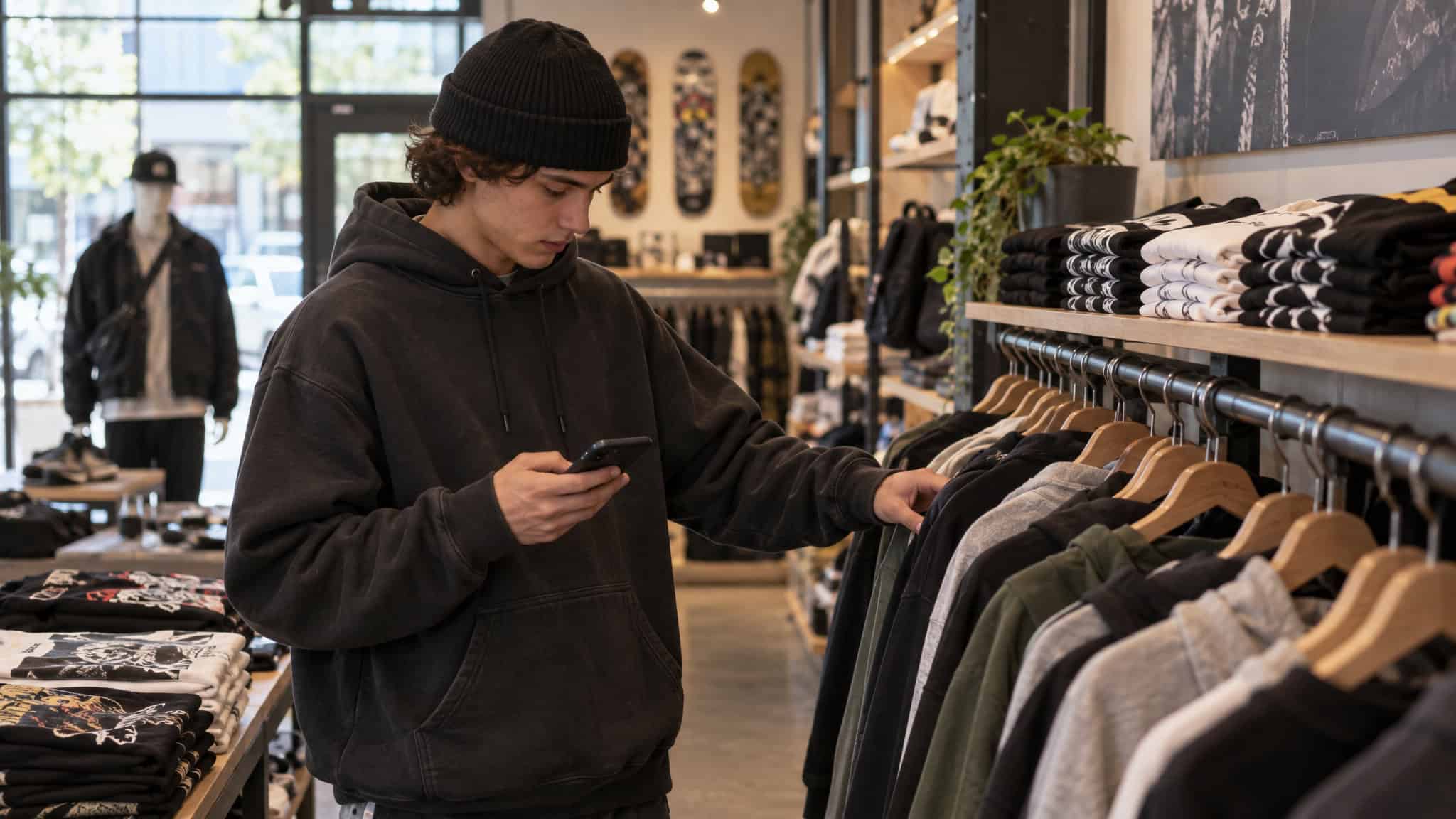
Instagram gives brands a visual route to show clothes as part of a lifestyle. TikTok can move a niche look into wider attention within days, although not every look breaks through. Smaller labels may use storytelling and community-building to find an audience, but social reach doesn’t erase larger companies’ advantages in distribution and scale. The source reports that micro-influencers drive 53.6% of Gen Z purchasing decisions. With no survey details supplied, that figure needs to be read as a reported claim, not a settled measure of influencer impact.
The channel figures describe different things:
- Offline retail: 54.62% of reported streetwear distribution in 2025.
- Online retail: forecast to grow at a 4.49% CAGR through 2031.
Online’s faster projected growth doesn’t mean it has overtaken stores. E-commerce and social commerce can connect discovery to checkout, with logistics, virtual try-ons, easier payment, livestreamed launches, and rapid delivery all part of the report’s explanation for online growth. Stores still offer things a screen can’t: touch, immediate purchase, authentication, social interaction, and a place for a brand community to gather. Those benefits won’t matter equally to every shopper, but the channels can complement each other rather than compete for a single winner.
The speed of TikTok discovery can also make demand harder to plan for. A brand that gets sudden attention may need to keep inventory and supply in step with interest, while clothing production moves on a less forgiving schedule. Summit Clothing and Manchester agency PushON’s July 2025 campaign is a separate example of paid digital marketing: PushON led Google and YouTube paid media with the aims of expanding reach and improving return on ad spend. Those were campaign goals, not reported results. Faster discovery can mean harder demand planning.
Which streetwear segments are largest and growing fastest?
Clothing and mass-market products lead in reported share, while accessories and premium/luxury products have higher stated forecast growth rates. The distinction is useful if you’re thinking about what’s broadly available to wear versus which categories the report expects to gain share more quickly.
Product mix
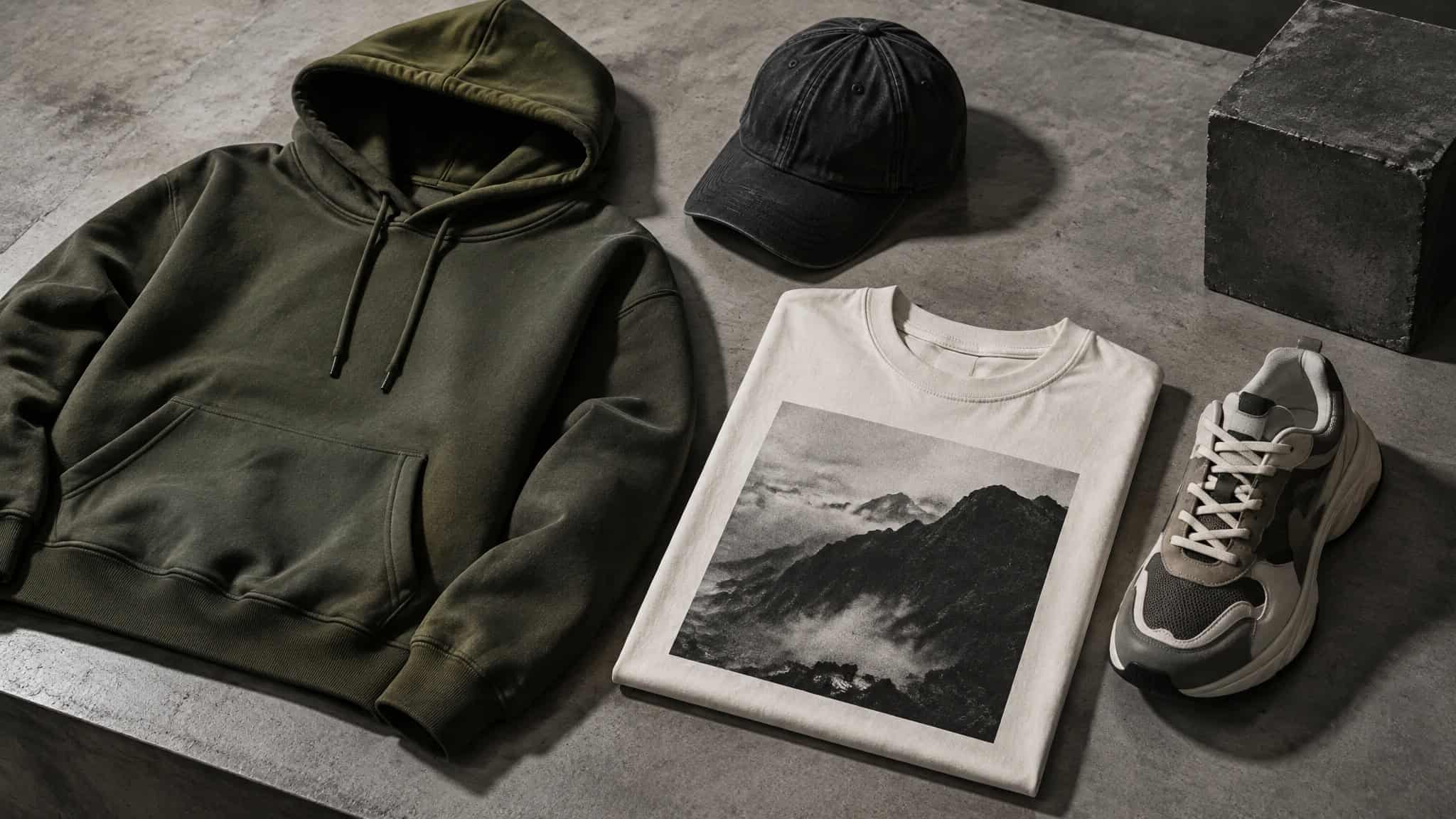
Clothing accounted for 51.54% of reported streetwear revenue in 2025. Graphic T-shirts, hoodies, and jackets are accessible core products in the report’s account. Accessories are smaller in current scale but forecast to grow at a 5.12% CAGR through 2031. Examples range from hats, bags, and traditional jewelry to functional accessories, smart jewelry, and connected wearables. Technology-integrated pieces are an opportunity, not evidence that wearables already dominate the category; these product trends also inform the streetwear market’s outlook.
Footwear is described as the second-largest product segment. Sneaker culture and limited-edition collaborations are associated with its demand, though they don’t explain every footwear purchase or all growth in the segment.
Price and gender mix
Mass-market products held 65.72% of the 2025 market. Premium and luxury products are forecast to grow at a 4.08% CAGR through 2031. A higher price doesn’t automatically mean better quality, and the faster growth forecast doesn’t make premium goods the larger segment.
Male consumers held a reported 57.38% share in 2025, a statistic the source links to the hip-hop and skateboarding roots of streetwear. It’s a market snapshot, not a boundary around who belongs in streetwear. Unisex collections are forecast to grow at a 4.26% CAGR through 2031, with the source pointing to versatile, inclusive products and younger consumers’ evolving ideas about identity. Universal designs may also simplify inventory while reaching more customers. Female participation is expanding in traditionally male-dominated spaces.
Yoho! Girl magazine is cited as an example of growing female engagement in Chinese streetwear culture.
What the contrasts mean
Market value is the total estimate; a share is a slice of that market; CAGR describes forecast growth over a set period. Each number depends on the report’s category definitions and denominators. A large current share isn’t the same thing as faster projected growth. Scale and momentum are different measures.
Regional streetwear growth: Asia-Pacific and beyond
Mordor Intelligence reports that Asia-Pacific held 38.21% of 2025 streetwear revenue and forecasts a 4.33% CAGR for the region through 2031. It connects that position with manufacturing depth, demographics, e-commerce, digital infrastructure, and cultural influence, but those are proposed factors, not measured causes.
China features as both a major manufacturing base and an increasingly important consumer market, with Yoho! cited as a local streetwear ecosystem. Japan’s BAPE and retail concepts combining physical and digital experiences offer other examples; South Korea’s K-pop influence is one cultural route for wider adoption. North America is described as the second-largest market, with established culture and mature retail that can also make entry tougher for new labels. The USMCA is relevant to trade across the United States, Canada, and Mexico.
Europe is growing steadily, with Germany and France named as key markets; sustainability compliance and post-Brexit UK trade are considerations, though regulatory and trade specifics require current verification. Mordor also covers South America and the Middle East and Africa, with country coverage spanning the United States, Canada, Mexico; Germany, the United Kingdom, Italy, France, Spain, the Netherlands, Poland, Belgium, Sweden; China, India, Japan, Australia, Indonesia, South Korea, Thailand, Singapore; Brazil, Argentina, Colombia, Chile, Peru; and South Africa, Saudi Arabia, the United Arab Emirates, Nigeria, Egypt, Morocco, and Turkey, plus the rest of each region.
How drops, collaborations, and brand scale shape competition
Drops and partnerships can create attention and cultural relevance, but the supplied material doesn’t measure their long-term effect on sales or market growth. The examples show strategic variety, not measured results.
Scarcity as a positioning tool
Limited production can make a release feel urgent and help build community. The source traces the approach to Tokyo streetwear, including GOODENOUGH, and says it later spread to luxury and sneaker brands. Reports of successful drops selling out in minutes or resale premiums exceeding 200% of retail aren’t independently measured here. They describe possible outcomes, not what buyers should expect from every release.
Partnerships across cultural worlds
A streetwear label may bring cultural credibility, while a larger partner can add reach, distribution, manufacturing capacity, product testing, or shared investment. Examples include KITH and Disney; Louis Vuitton and Supreme, whose collection included monogrammed hoodies, skate decks, trunks, and leather accessories with Supreme’s red-and-white logo; and Karl Kani and Culture Creators’ Creators Collection, launched in March 2025. KFC and Market released a limited-edition National Fried Chicken Day collection, dated July 6 in July 2025, with graphic T-shirts, hoodies, baseball hats, and shorts. The partnership illustrates how streetwear collaborations can draw on cultural worlds beyond fashion.
Other reported partnerships included On, PLEASURES, and The Loop in May 2025; Indian Motorcycle and Jeremy Arviso in June 2025; and Hot Wheels and B-Hype in July 2025. On is one example of the range of partners in these reported collaborations. The field is moderately fragmented, with Nike, Adidas, and VF Corporation alongside Supreme, BAPE, Palace, Stüssy, luxury entrants, and digital-native brands. Nike, Inc. and Adidas AG are among the larger companies in that competitive mix.
Risks and constraints that could temper the outlook
Yes, execution risks can pressure brands even if the market grows. Counterfeits may damage brand value and trust, particularly in premium segments, and can reach buyers through e-commerce and social commerce. The source attributes enforcement-related claims to the U.S. Department of Homeland Security and the United States Government Accountability Office; those claims need verification before publication.

Counterfeiting and trust
Imitations can be difficult to spot, making authentication and buyer confidence especially relevant when products carry a premium. The cited claims about online trafficking and intellectual-property enforcement shouldn’t be read as evidence that online shopping itself is unsafe.
Trend speed, costs, and supply
Rapid trends can put pressure on inventory, quality, design identity, costs, and margins. Fast-fashion copying, overconsumption, and waste add to the tension, while manufacturing concentration in Asia-Pacific can make supply disruption a concern. The report assigns approximate directional restraint estimates of -0.9% for counterfeiting, -0.6% for rapid trends, -0.8% for cost pressure, and -0.7% for supply-chain disruption. These are neither proven causal effects nor numbers to subtract from the headline CAGR.
Sustainability and compliance
Materials, ethical manufacturing, transparency, durability, repairability, recyclability, and lifecycle information are consumer and operating concerns. The source cites the EU Strategy for Sustainable and Circular Textiles, associated with the European Commission, Extended Producer Responsibility programs in Massachusetts in 2025 and California, and the Netherlands’ Policy Programme for Circular Textile 2025-2030. Verify regulatory specifics against official sources. Its claim of sales gains of up to 15% for certified brands lacks supporting methodology.
Skate footwear and apparel is a separate market
Skateboard footwear and apparel is a narrower, separate market, so its forecast shouldn’t be used as a streetwear market value. Future Market Insights (FMI) estimates the skate market at USD 3.3 billion in 2025, USD 3.5 billion in 2026, and USD 7.1 billion in 2036, with a reported 7.3% CAGR for 2026-2036. The supplied material also gives USD 3.6 billion for 2026, leaving that figure unresolved.
What the estimate covers
FMI includes skate-positioned footwear and apparel for active skating and skate-inspired daily wear. It excludes general non-skate sneakers, formal footwear, boards and hardware, helmets, rentals, and coaching.
Why skate shoes wear out
Grip tape can damage toe panels and outsoles, while skating calls for grip, boardfeel, comfort, and durability. That combination can create replacement demand. Skate apparel also reaches lifestyle buyers through hoodies, graphic tops, relaxed clothing, and pants.
What the segment shares describe
For 2026, FMI reports skate shoes at 34.0%, male consumer orientation at 41.0%, specialty stores at 33.0%, mid-priced products at 36.0%, and street skating at 38.0%. These figures belong to their specific categories; the source doesn’t establish one universally leading sales channel.
What the forecast can’t confirm
FMI describes using retailer reviews, interviews, replacement-rate and apparel-attach estimates, and validation. Skateboard GB and the Sports & Fitness Industry Association are examples of organizations in the skate and sports landscape, but their mention does not independently verify FMI’s market value. The figures remain FMI estimates, with different scope and evidence from Mordor’s broader streetwear forecast.
Other examples
Nike SB’s U.S. and Japan federation kits launched in May 2024; the source also cites the SB Air Force 1 and Vans WaffleCup. Those product examples don’t change the market distinction.
Australia’s textile and apparel estimate is weakly supported
IMARC Group’s Australia figure is a single-source estimate for the broader textile and apparel market, not streetwear: USD 30.3 billion in 2025, projected to reach USD 45.7 billion in 2034, with a stated 4.66% CAGR for 2026-2034. The supplied material has no successful IMARC URL or independent corroboration, so the estimate shouldn’t be treated as established evidence or compared directly with streetwear or skatewear. A separate claim of about 501 million kilograms of textiles and clothes discarded annually in Australia also lacks a supplied measurement method and has limited attribution.
How to read the streetwear forecast without overclaiming
There’s no consistent streetwear market-size series here for 2020-2023, so year-by-year growth can’t be shown. Filling those gaps with figures from another provider would create a chart that looks continuous without measuring a consistent market.
For a graph through 2031, use only Mordor Intelligence’s series: the 2025 and 2026 estimates, the 2031 projection, and the reported 3.94% CAGR for 2026-2031. Label the source and distinguish estimates from projections. Keep that line separate from FMI’s skateboard footwear and apparel figures and IMARC Group’s weakly supported Australia textile and apparel estimate. They differ in source, scope, geography, periods, and evidence quality.
Mordor’s driver table assigns approximate forecast-CAGR impacts of +1.2% to youth culture and demographics, +0.8% to social media, +0.7% to digital and omnichannel engagement, +0.6% to scarcity, +0.5% to collaborations, and +0.4% to sustainability. Those are directional report estimates, not additive figures or demonstrated causal contributions. A share only makes sense within its category, and a growth rate only makes sense over its stated period.
Frequently Asked Questions
What is the projected growth rate of the apparel market in 2026?
The forecast discussed here is for the streetwear market, not the broader apparel market. Mordor Intelligence estimates streetwear at USD 218.3 billion in 2026 and reports a 3.94% CAGR for 2026–2031.
What is the fastest growing clothing brand?
There isn’t enough comparable brand-level growth data here to identify the fastest-growing clothing brand. The forecast covers the streetwear market as a whole, while named brands and collaborations illustrate the competitive landscape rather than measured brand growth.
What type of clothing is in high demand?
Clothing is the largest streetwear product category, accounting for 51.54% of reported 2025 revenue. Graphic T-shirts, hoodies, and jackets are described as accessible core products, while accessories are forecast to grow faster than clothing.
Why is streetwear so popular now?
Streetwear’s appeal is tied to self-expression, youth culture, comfort, quality, and lifestyle adoption. Social media can help people discover styles, while relaxed fits and durable everyday materials make streetwear practical beyond its cultural associations.
How has streetwear market growth changed from 2020 to 2023?
A consistent streetwear market-size series for 2020–2023 isn’t available here, so year-by-year growth for those years can’t be established. Combining figures from different providers could create a misleading trend because their market definitions and methods may differ.
How much do social media and online shopping contribute to streetwear growth?
Mordor assigns approximate forecast-CAGR impacts of 0.8% to social media and 0.7% to digital and omnichannel engagement, but these are directional estimates, not demonstrated causal contributions or figures to add together. Online retail is forecast to grow at a 4.49% CAGR through 2031; it held no majority over stores in the reported 2025 distribution, when offline retail had a 54.62% share.
How do streetwear market size, value, and market share differ?
Market size or value is the estimated total worth of the defined market. Market share is a segment’s portion of that total, while CAGR describes a forecast average growth rate over a stated period; a large share does not mean a segment is growing fastest.