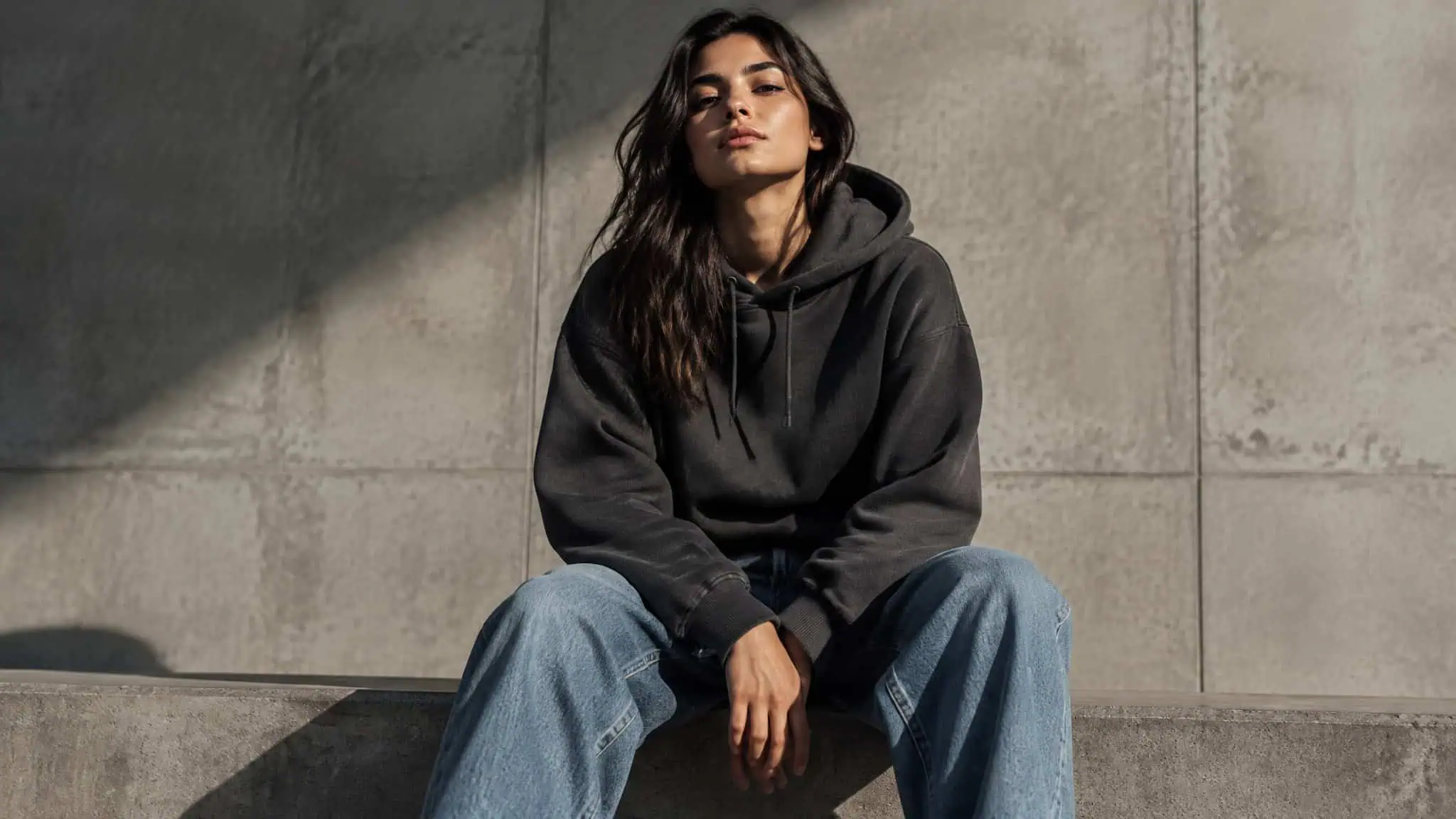
A hoodie can be a uniform, a practical layer, a way to signal what you’re into, or just the thing that fits your budget and feels good. That’s why the usual picture of a young streetwear shopper only gets you so far. Age helps describe the audience. It won’t tell you whether someone wants a loose graphic tee, a hard-to-find sneaker, a durable jacket, or a cheaper piece for one night out.
Fit and fabric decide whether a piece gets worn; price decides whether it makes it into the basket. Identity and cultural interests can shape what catches someone’s eye, while the path to a purchase might start on TikTok, end in a store, or never get past a saved post.
The evidence points to a youth-heavy audience, not a single buyer type. It also mixes different kinds of information. Some figures describe streetwear specifically, including estimates of its audience, products, and retail channels.Other findings come from broader surveys of UK clothing shoppers or Gen Z respondents.
A preference for online clothing shopping, for example, isn’t the same as a share of streetwear sales made online. And a retailer’s recognition score doesn’t show how many people buy from it.
A market estimate can describe a category, but it can’t tell you what a particular person values or what will fit their life. In practice, streetwear tends to reach younger shoppers, but age, gender, taste, budget, and shopping habits all vary. Even the numbers that look precise come with limits on what they measure.
Key Takeaways
Mordor Intelligence describes most streetwear consumers as under 25, but its extract doesn’t fully specify the population or survey method.
Comfort and quality were reported priorities for 77.7% and 67% of streetwear consumers, respectively; the underlying survey details are limited.
More than 40% of British Zoomers reportedly preferred online clothing shopping, while physical stores held 54.62% of estimated global streetwear distribution in 2025.
Table of Contents
Who is the streetwear target audience?
Streetwear tends to reach younger consumers, with the market analysis characterizing most of its audience as under 25. That’s a reported profile, not a census of every streetwear buyer, and the source extract doesn’t fully describe how the group was defined or surveyed.
Generation Z is a separate, broader age description. A UK source places Gen Z’s birth years from the mid-to-late 1990s through the early 2010s, describing the group as roughly 28 and younger.Those dates don’t make Gen Z and the reported streetwear audience interchangeable: some Gen Z adults are older than 25, and people outside either bracket can still wear streetwear. Gen Z sits at the younger end of the apparel-buying crowd, but streetwear has no age limit.
For local scale, the United Kingdom had approximately 13.2 million Gen Z residents in 2023. That’s a population count, not a count of streetwear shoppers.The broader UK apparel market was estimated at GBP 66.8 billion in 2024 and forecast to reach GBP 79 billion in 2029. Those figures describe clothing overall, not streetwear sales.
A younger audience can include people building a first wardrobe on a tight budget, people settling into independent life, and shoppers with more room to spend.The evidence supplied here doesn’t break streetwear buyers down by those life stages, or show that one age group shares a single taste. A loose hoodie and a limited sneaker release can both sit under the streetwear label without attracting the same person.
It’s more useful to think in overlapping groups than to hunt for one ideal customer. Age points to a youth-heavy market; it doesn’t tell you someone’s fit, budget, identity, or route into the clothes.
Gender, identity, and cultural influences
Streetwear has a reported male-majority market segment, but that doesn’t make it a men-only category. Male consumers held 57.38% of the reported streetwear gender-segment share in 2025. That figure describes market composition, not who participates or what each group prefers.
The source links the historical skew to skateboarding and hip-hop culture, two influences that help explain part of the category’s history but don’t define its whole audience.It also describes female participation as expanding in spaces that have historically been male-dominated, alongside greater representation and recognition of women’s purchasing power. The extract doesn’t provide a full comparison of men’s and women’s preferences.
Unisex collections are forecast to grow at a 4.26% compound annual growth rate through 2031. That’s a forecast, not a current share of shoppers.In Chinese streetwear culture, the introduction of Yoho! Girl was described as a turning point for female engagement. The example is specific to that scene, not a complete account of women’s participation everywhere.
Style, comfort, and product preferences
A relaxed fit and a material that holds up can make streetwear easier to wear day to day.Cotton, denim, oversized cuts, and loose silhouettes are associated with comfort and wearability, though style, self-expression, fabric feel, and occasion can matter just as much to an individual.
Mordor Intelligence reports comfort as a purchasing priority for 77.7% of streetwear consumers and quality for 67%. The extract doesn’t fully specify the survey population or method, so those figures are useful as reported tendencies, not rules for what every buyer wants.
Clothing accounted for 51.54% of estimated streetwear revenue in 2025.Graphic T-shirts, hoodies, and jackets are among the familiar options, while footwear was described as the second-largest product segment, with growth linked to sneaker culture and limited-edition collaborations that can command secondary-market premiums. Accessories, including hats, bags, jewelry, functional pieces, and tech-integrated wearables, are forecast to grow at a 5.12% CAGR through 2031. Those market categories don’t predict what any one person will keep in their wardrobe.
Price, value, and buying priorities
Streetwear spans accessible and premium price tiers.Mass-market products accounted for 65.72% of the reported market in 2025, while premium and luxury streetwear are forecast to grow at a 4.08% CAGR through 2031. One is the largest reported segment; the other is a faster-growing forecast, not a current share.
A general UK apparel survey found that about one-fifth of young consumers spent EUR 50-100 per clothing item in 2024, roughly GBP 42-84. That gives a little price context, but it isn’t a streetwear budget or a typical price range for every young shopper.A shopper may weigh a durable piece for frequent wear against a lower-cost item for a trend or a particular event. Patagonia may come to mind when a shopper is weighing durability and environmental credentials, but the sources here don’t show how often streetwear buyers choose it.
Price, style, quality, fabric feel, labor practices, and transparency can all compete for attention, and a budget narrows the options. JLL, relaying a Bain & Co. estimate, said Gen Z and millennials could represent over 70% of global luxury spending by 2030.That’s a luxury forecast, not a description of streetwear buyers as a whole.
How Gen Z discovers streetwear
Gen Z often encounters fashion through online inspiration, but seeing a look and deciding to buy it are different steps. In one survey, 92% of Gen Z respondents said they enjoyed finding fashion inspiration online, compared with 84% of millennials, 77% of respondents aged 43-58, and 75% of those aged 59 or older. Those figures measure enjoyment of inspiration, not online purchases or dependence on algorithms.

Instagram is described as a major fashion-discovery channel, while Gen Z respondents in the reported findings preferred TikTok.Younger respondents were also more likely than older groups to find brands through social media, influencers, and celebrities. YouTube, Snapchat, and Pinterest were among platforms Gen Z respondents were more likely than older groups to use daily.
Recommendations can help some shoppers, but not everyone finds them useful. In a Vogue Business survey of Vogue and GQ readers, 48% of Gen Z respondents reported a positive experience with algorithmic fashion recommendations.Other accounts describe suggestions as repetitive or irrelevant. What someone engages with can shape their feed, but a better-curated feed doesn’t guarantee a purchase.
A streetwear analysis also attributed an effect on 53.6% of Gen Z purchasing decisions to micro-influencers, though it didn’t provide the sample design or method. Ssense is one example of outfits presented as digestible social content.
Where Gen Z shops, and what brand figures can show
UK youth-apparel surveys offer clues about brand awareness and ownership, not a definitive ranking of streetwear favorites. In a 2024 Zoomer survey, nearly 90% of respondents recognized H&M, and Primark ranked second for recognition. Separately, both retailers had a reported popularity share of 58%. Recognition and popularity are different measures, and the survey method isn’t fully specified.
Nearly 70% of Gen Z consumers reportedly had owned Nike clothing, which the source connects with workout gear. Past ownership doesn’t show whether those consumers still prefer Nike or bought it as streetwear. People aged 18-24 in Great Britain were also generally described as favorable toward clothing retailers, a broad apparel finding rather than evidence of streetwear loyalty.
The market analysis also discusses brands including Adidas, VF Corporation, A Bathing Ape, Palace, and Stüssy.Their inclusion doesn’t establish a ranking or show how many young shoppers buy from them. H&M recognition, retailer popularity, and reported Nike ownership each answer a different question.
Online discovery and physical retail work together
Online browsing and physical stores can play different roles in a streetwear purchase. More than 40% of British Zoomers reportedly preferred shopping for clothing online, with wider selection and recommendations among the cited attractions.Separately, offline stores held 54.62% of estimated global streetwear distribution in 2025, while online retail is forecast to grow at a 4.49% CAGR through 2031. But a UK shopper’s stated preference and a global market estimate aren’t measuring the same thing.
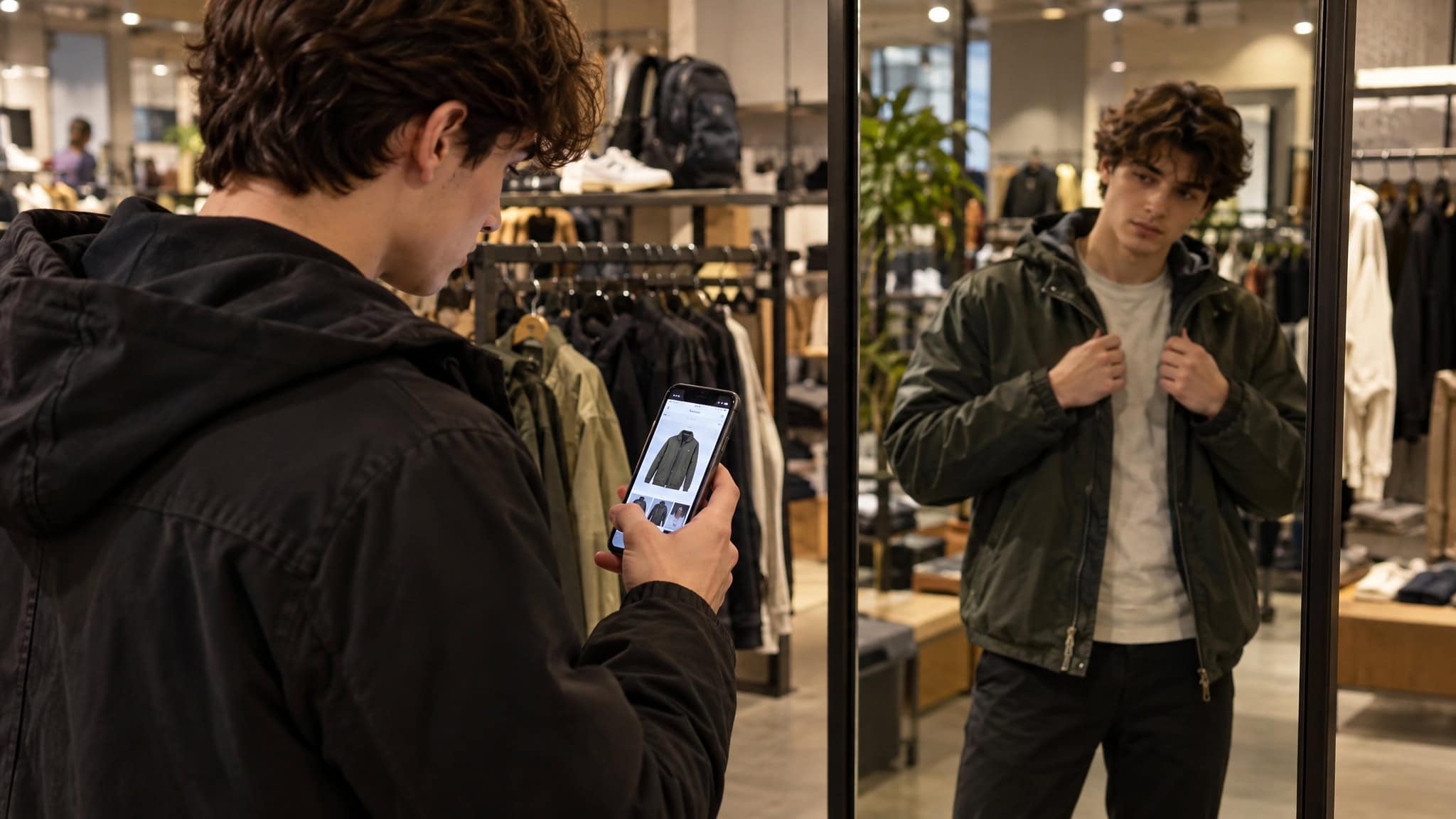
Some supplied examples show how a screen can narrow the options before a store visit. TJ Eaglin used TikTok and Instagram; Eric Suarez checked TikTok before visiting stores to try products and similar styles.Noah Miller used Pinterest to narrow options before thrifting in person. Tora Northman used TikTok to find physical stores, including vintage shops in Tokyo, and to get shopping tips and garment-care information.
Those are individual examples, not a standard route. Online browsing can help someone spot a style or a shop; trying a piece in person can answer questions about fit and feel that a screen can’t settle.
Drops, collaborations, and cultural reach
Limited releases are one way streetwear creates urgency, not a guarantee that an item is better or will sell out. Drop culture is traced to Tokyo streetwear, including GOODENOUGH, and was later adopted by luxury houses and sneaker brands. Nike and Supreme releases are examples of limited collaborations. Successful drops have reportedly sold out within minutes, and resale premiums can exceed 200% of retail, but those are low-confidence examples, not typical outcomes or dependable resale value.
Collaborations can connect streetwear with different interests. KITH and Disney brought the style together with mainstream entertainment; Louis Vuitton and Supreme paired a luxury house with a New York streetwear brand. In 2025, KFC and Market released limited-edition merchandise for National Fried Chicken Day in July, while Karl Kani and Culture Creators launched the Creators Collection in March. On, PLEASURES, and The Loop released performance-featured footwear and street-style apparel in May; Hot Wheels and B-Hype released a nostalgia-led limited collection in July.Indian Motorcycle worked with Indigenous streetwear designer Jeremy Arviso on apparel in June, with designs drawing on his heritage.
A partnership can share cultural reach, credibility, resources, and risk. It can also miss. Scarcity and a recognizable name don’t decide whether a collaboration is worth wearing.
Regional context and market scale
Streetwear is an international market, but regional market share doesn’t describe what individual shoppers like. Mordor Intelligence’s proprietary estimates put the global market at USD 210.03 billion in 2025 and USD 218.3 billion in 2026, forecasting USD 264.76 billion in 2031. Asia-Pacific held 38.21% of 2025 revenue and was forecast to grow at a 4.33% CAGR through 2031, with manufacturing, e-commerce, digital infrastructure, and cultural influence among the factors cited. Japan’s A Bathing Ape (BAPE) and South Korea’s K-pop export are part of that cultural picture.
North America was described as the second-largest market, including the United States, Canada, and Mexico in the USMCA region; China was part of the Asia-Pacific context. Europe’s context includes established communities and sustainability regulation, including in Germany and France. South America and the Middle East and Africa were included in the report’s scope, with little audience detail supplied.
Sustainability, industry pressures, and reading the evidence
Price and budget shape which styles, fabrics, quality standards, labor practices, transparency, and environmental credentials a shopper can prioritize. The EU textile strategy describes expectations for durability, repairability, recyclability, and recycled content by 2030.The Netherlands’ Policy Programme for Circular Textile 2025-2030 uses targets and financial incentives to push industry change. Those are policy examples, not legal advice. For any audience figure, check who was surveyed and what the number measures: an estimate or a forecast.
Frequently Asked Questions
Who is the main audience for streetwear?
Streetwear has a youth-heavy audience, with one market analysis describing most consumers as under 25. That profile is not a census or an age limit: people of different ages, budgets, identities, and tastes wear streetwear.
Who wears streetwear?
People across age groups and backgrounds wear streetwear, although the reported audience skews young. A market estimate also found a male-majority segment, but that does not make streetwear a men-only category or describe every wearer’s preferences.
What is streetwear influenced by?
Skateboarding and hip-hop are important influences on streetwear’s history, but they don’t define the whole category. Its cultural reach also spans regional scenes, music and entertainment, sneaker culture, collaborations, and individual interests.
What do streetwear buyers look for in clothes?
Comfort and quality were reported as priorities for many streetwear consumers, alongside fit, fabric feel, style, and price. Relaxed cuts, cotton, denim, hoodies, graphic tees, and jackets are familiar choices, but no single product suits everyone.
Do Gen Z shoppers buy streetwear online or in stores?
Both channels matter, and the figures measure different things. More than 40% of British Zoomers reportedly preferred online clothing shopping, while physical stores accounted for 54.62% of estimated global streetwear distribution in 2025; browsing online and trying clothes in person can complement each other.