What Is the Biggest Issue with Mazda? Here’s the Honest Answer
Fair question. If you’re shopping for a used car—or even a new one—you want to know what you’re getting into. Mazda has a strong reputation for driving dynamics, good looks, and a certain underdog charm. People call it the “Japanese BMW” for a reason.
But no brand is perfect. And Mazda has a history of some headaches.
So let’s answer it directly. What’s the single biggest issue with Mazda vehicles, and how much should it matter to you?
Key Takeaways
Rust is Mazda’s biggest long-term problem, especially on early 2000s models like the Mazda3 and Protege, with corrosion so bad it led to a 2018 safety recall on the 2009-2010 Mazda6 for suspension failure.
Mazda fixed the rust issue around 2009 with galvanized steel and anti-corrosion coatings, creating a clear before/after divide—pre-2009 cars in salt-belt states are high-risk, post-2010 models are much safer.
Modern Mazdas (2011+, especially with SKYACTIV technology) rank in the top 10 for reliability alongside Toyota and Honda, routinely lasting 200,000-250,000 miles with regular maintenance.
Table of Contents
The Biggest Issue: Rust
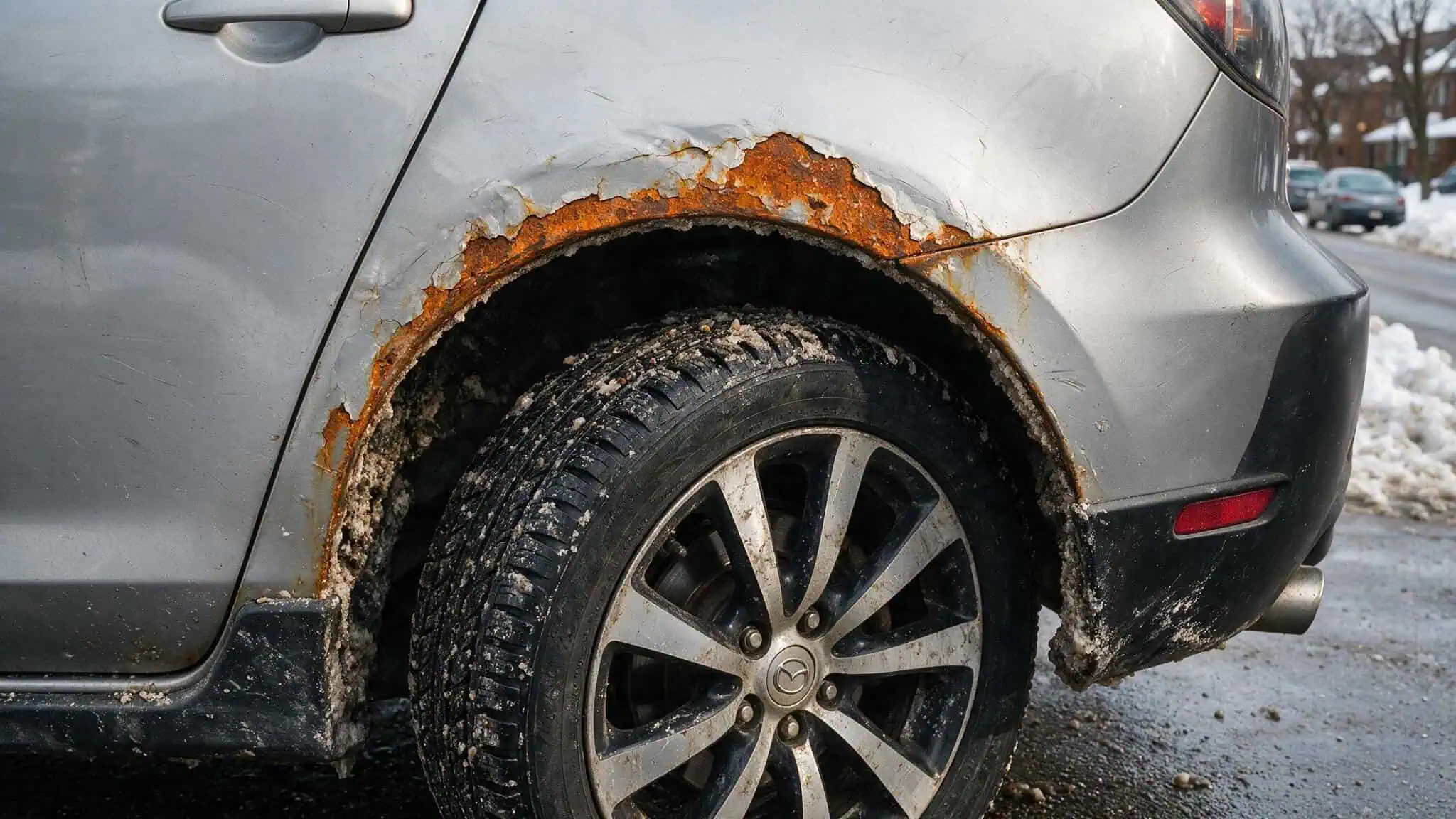
Rust is the king of Mazda problems. Not engine failures, not transmission quirks, not electrical gremlins—just rust. Rust on older Mazdas is especially severe, with many early 2000s models suffering from corrosion that compromises structural integrity and safety components.
The early 2000s Mazda3 and Protege are the worst offenders. If you live in a northern climate where road salt is standard winter practice, it’s a guarantee, not a possibility. You’ll see it first on the rear wheel arches—a bubble in the paint you might dismiss as cosmetic. Underneath, the rust has already spread to the rocker panels, brake lines, fuel lines, subframe, and suspension components. The kind of rust that makes you wonder if the car’s still structurally sound or held together by hope.
A timing chain replacement on an engine might cost you a couple thousand dollars. Rust repair on a subframe or brake lines can total the car. That’s the difference.
In 2018, Mazda had to recall thousands of 2009-2010 Mazda6 models for suspension corrosion. The rear trailing arm and subframe were corroding enough that the National Highway Traffic Safety Administration recognized it as a safety defect. That’s not a paint issue. That’s a ‘your car could lose control on the highway’ issue.
Mazda started getting serious about rust around 2009 with galvanized steel and anti-corrosion coatings. That creates a clear before/after divide. Pre-2009 Mazdas in the salt belt are a gamble. Post-2010 models are in much better shape. But the reputation lingers because those 2000s-era cars are still on the road, still rotting, still showing up on used lots where a buyer sees a good deal and misses the cancer underneath.
Engine Issues: Oil, Carbon, and the Rotary Situation
Rust is the biggest problem, but the engine bay has its own list of things to watch for. None of these reach the safety and cost severity of rust, but if you’re buying a higher-mileage Mazda, you should know what’s coming.
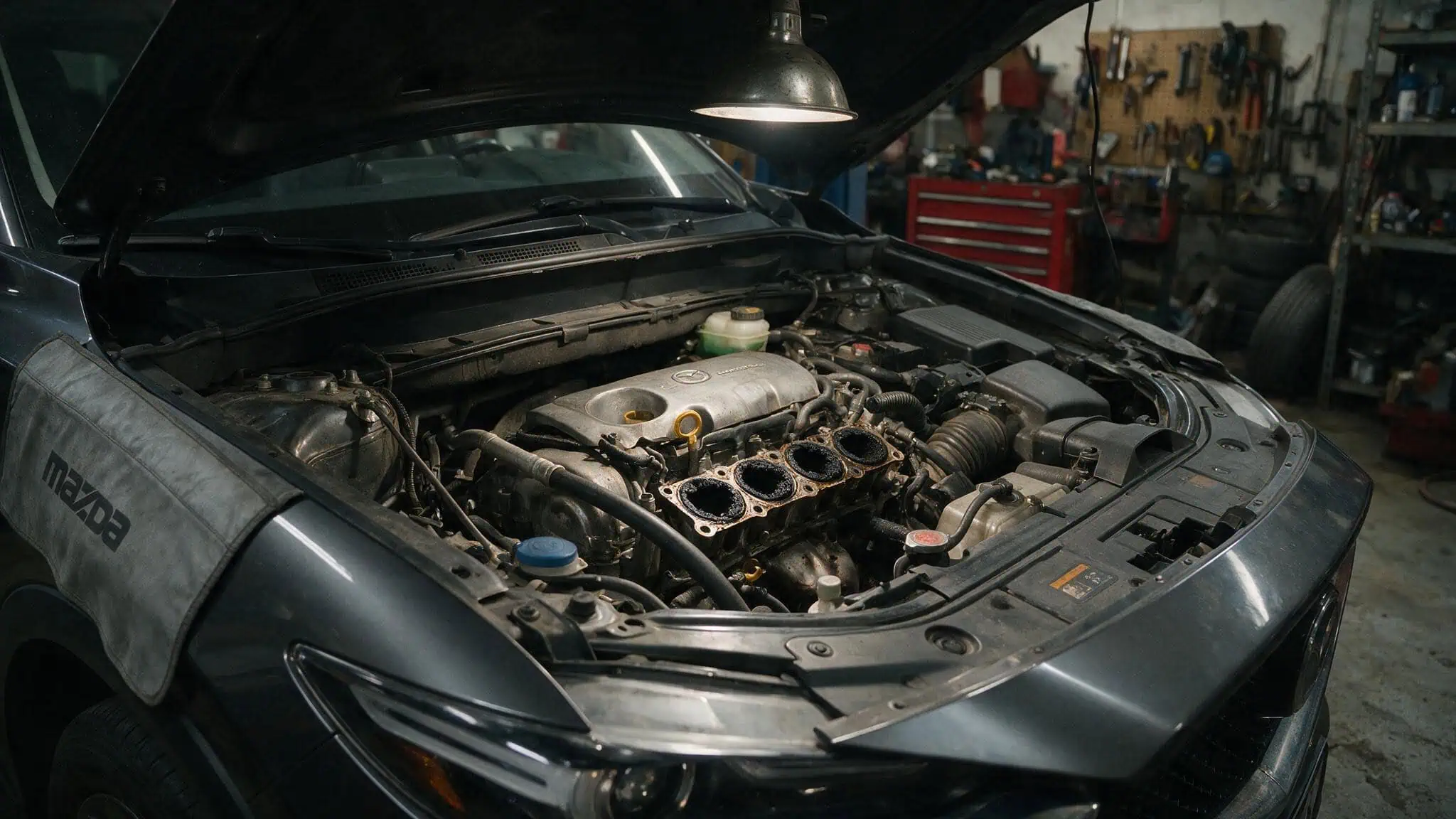
On SKYACTIV engines—which is most Mazdas from 2011 onward—oil consumption and timing chain wear become noticeable past 120,000 miles. The seals wear out, and oil starts disappearing. The timing chain can stretch, which sounds like a rattle and can trigger a check engine light. Oil residue around the engine bay can result from leaking valve cover gaskets.
Not a dealbreaker, but a known bill coming down the road. Some older Mazdas also suffered from excessive engine oil consumption due to piston ring issues, which could lead to fouled spark plugs and catalytic converter damage.
Then there’s carbon buildup. Direct-injection Skyactiv-G engines in the Mazda3 and CX-5 are prone to carbon deposits on the intake valves. Symptoms: rough idle, power loss, worse fuel economy, and the P0300 misfire code. The P0300 code is a Mazda meme at this point.
Many owners go through multiple misdiagnoses—spark plugs, coils, fuel injectors—before someone figures out the intake valves need walnut blasting. That’s the fix, and it’s not cheap.
Early Mazda3 and Mazda6 models with the 2.3L VVT engine had variable valve timing actuator failures. The turbo 2.5L in the Mazda6 and CX-9 has had some sensor issues—check engine lights and mass air flow sensor failures. Annoying, but not catastrophic.
And then there’s the rotary. The RX-7’s engine is a different beast. It’s known for drinking oil and wearing out its apex seals. That’s not a bug—it’s a feature of the design. But the rotary obsession was one of those strategic missteps that nearly killed the company, as the History of Mazda Automobiles in North America shows. It’s part of why Mazda’s reputation in North America has this persistent “they make weird, unreliable cars” undertone, even as the engineering improved.
Transmission Issues: Less Scary Than You Think
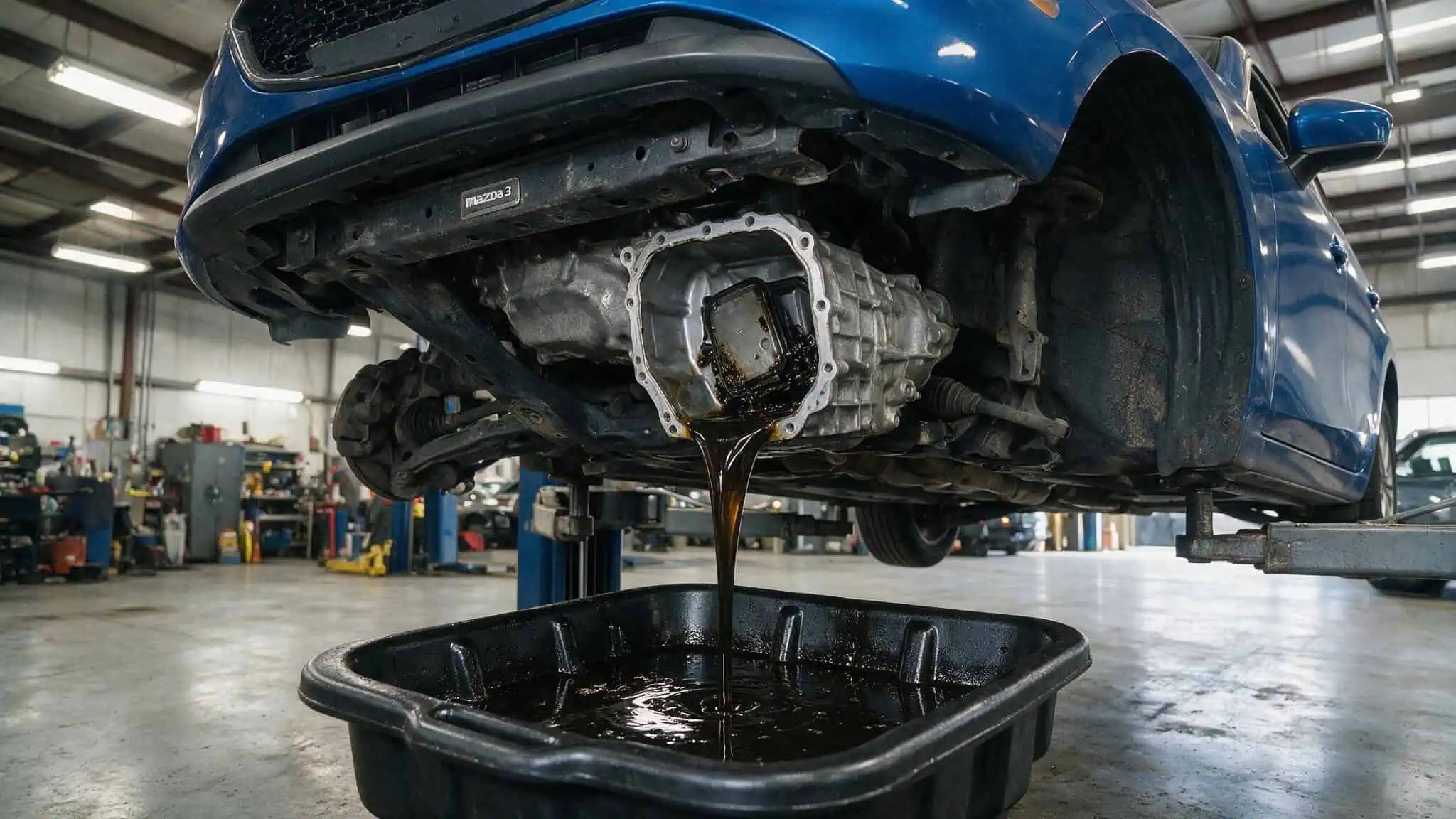
Most Mazda transmission problems come down to one thing: neglected fluid changes. Harsh shifts, slipping, warning lights—almost always because nobody ever opened the transmission pan. A common question is Is Mazda owned by Honda? No—Mazda’s six-speed and eight-speed automatics are durable, but they still need service. However, some models have experienced transmission problems beyond maintenance neglect, such as premature failure of the torque converter or valve body in certain Skyactiv six-speed automatics.
That said, there are a few engineering flaws worth knowing about.
The Skyactiv six-speed automatic has complaints about delayed downshifts, harsh downshifts, and a delay when you put it in gear. On 2006-2013 Mazda3 and 2008-2014 Mazda5 models, the transmission control module can fail, causing harsh or erratic shifts and warning lights. That’s an electronic failure, not a fluid issue.
On the manual side, early 4th-gen ND Miatas had a problem. The manual transmission was designed for a 1.5L engine, but Mazda paired it with the 2.0L. Under hard driving, gears could break. Some Mazda3 owners have reported clutch failure around 40,000 miles. On older manuals, worn clutches and synchronizers are common—but few know what did Mazda used to be called?
The company started as Toyo Cork Kogyo Co., Ltd. in 1920, making machine tools and cork.
The takeaway: automatic transmissions are solid if maintained. Manuals have a few specific weak points on certain models.
Suspension and Electrical: The Normal Stuff
These aren’t Mazda-specific problems, but they show up often enough that you should budget for them.
After 100,000 miles, struts, ball joints, and bushings will be worn. That degrades handling and eats through tires faster. Power steering pumps and lines may leak. Catch it early and it’s a maintenance item. Miss it, and you’re replacing tires every 20,000 miles.
Past 10 years, you’ll start seeing electrical gremlins. Failing sensors, window regulators, blower motors—the usual suspects. Battery and alternator failures get more common if the charging system isn’t maintained. This is the price of owning an older car, not a Mazda-specific flaw. But if you’re buying a 2012 Mazda3 with 130,000 miles, factor this into your budget.
Infotainment, Dashboard, and Paint: Annoyances That Affect Resale
These won’t leave you stranded, but they’ll annoy you every day.
The 2009-2013 Mazda3 and Mazda6 had dashboards that could melt in the sun. The plasticizer in the dashboard fails from sun heat, especially in hot climates like the South and Southwest. The dashboard gets soft, shiny, and reflective—a glare hazard that’s dangerous. Mazda extended the warranty to 10 years for replacement. If you’re looking at a used model from this era, check if the replacement was done.
The Mazda Connect infotainment system, introduced with the Commander knob in the 2014 Mazda3, has had its share of complaints. Dead screens, connectivity drops, Apple CarPlay and Android Auto disconnects, voice commands that don’t work. Owners often blame the battery, but the issue is usually the infotainment module itself.
And then there’s the paint. Mazda’s Soul Red Crystal is stunning. It’s also thin, water-based, and prone to chipping and flaking. Budget for paint protection or touch-ups if you go with red. It’s a “pay to play” situation.
Notable Recalls: Check Before You Buy
A few recalls stand out as worth knowing about.
The Takata airbag recall affected pretty much every Japanese carmaker, so that’s not a Mazda-specific problem. But you should still make sure the fix was done.
The CX-30 had a recall for faulty liftgates.
In 2021, Mazda recalled nearly 120,000 vehicles because the fuel pump could fail. That was Mazda’s biggest recent recall.
And the most safety-critical one: the 2007-2015 CX-9 had a brake booster defect where the pedal could get rock hard and stop working. NHTSA investigated and found a material defect in the diaphragm. If you’re looking at a used CX-9, check that recall status before you buy.
The Turnaround: Mazda Fixed Its Biggest Problems
Around 2010, Mazda started getting serious. SKYACTIV technology launched in 2011. The rustproofing improvements came around 2009. Better materials, better manufacturing, and a clear commitment to reliability.
The results speak for themselves. Modern Mazdas routinely last 200,000 to 250,000 miles with regular maintenance. Consumer Reports and J.D. Power frequently rank Mazda in the top 10 for reliability. They’re competitive with Toyota and Honda, and they often beat Subaru and Nissan. Annual maintenance costs run between $400 and $600—reasonable.
The 2023 CX-5 got excellent marks for mechanical reliability and build quality. The CX-5 is known for being dependable, affordable, and fun to drive. The Mazda3 has a strong reputation for long-term durability, especially with the manual transmission. And the MX-5 Miata is a no-brainer—mechanically simple, reliable, and a joy to own.
The rust reputation is real, but it’s stuck in the 2000s.
Buying a Mazda Today: What You Should Actually Do
If you’re buying used: Avoid early 2000s models—especially the Mazda3 and Protege—in salt-belt states unless rust has been professionally addressed and you’ve had a mechanic inspect the undercarriage. Check the 2009-2010 Mazda6 for the suspension recall fix. If you’re looking at a 2009-2013 Mazda3 or Mazda6, check if the dashboard replacement was done. And check recall status for any CX-9 you’re considering.
The best used CX-5 to buy: 2017 or newer. It benefits from the post-2010 improvements, improved rustproofing, and the SKYACTIV powertrain that routinely exceeds 200,000 miles. Check the 2021 fuel pump recall status.
If you’re buying new: You’re fine. Modern Mazdas are among the most reliable Japanese cars on the market. The brand fixed its biggest problem. The SKYACTIV era is a different story than the early 2000s.
Mazda’s biggest issue is and always was rust. But the company addressed it. The cars they make now will outlast the reputation they earned twenty years ago.
Frequently Asked Questions
What is the most common problem with Mazdas?
Rust is the most common and most serious problem, particularly on pre-2009 models. It attacks the rear wheel arches, rocker panels, and critical underbody components, and it can total a car faster than an engine failure. Post-2010 models with galvanized steel and anti-corrosion coatings are much safer.
Did Mazda fix its rust problem?
Yes, Mazda fixed the rust issue around 2009 by switching to galvanized steel and applying anti-corrosion coatings. This created a clear before/after divide: pre-2009 cars in salt-belt states are high-risk, while post-2010 models are much safer and routinely last 200,000 to 250,000 miles with regular maintenance.
How long do modern Mazda engines last?
Modern Mazda engines from the SKYACTIV era (2011 onward) routinely last 200,000 to 250,000 miles with regular maintenance. They’re competitive with Toyota and Honda in reliability rankings, though you should budget for potential oil consumption and timing chain wear past 120,000 miles.
Is Mazda’s Soul Red Crystal paint really that bad?
Yes, the Soul Red Crystal paint is notoriously thin and prone to chipping and flaking. It’s a water-based paint that looks stunning but requires extra care—budget for paint protection film or be ready for touch-ups. It’s a ‘pay to play’ situation if you want that color.