I’ve found it interesting how the car brands with the most loyal followings aren’t usually the biggest or the richest. They’re the weird ones. The ones that made bets that looked stupid until they worked, or didn’t work at all and nearly sank the company. Mazda is the textbook example of that pattern.
This isn’t the story of a Japanese automaker that methodically conquered the U.S. market like Toyota or Honda. It’s the story of a cork factory from Hiroshima that staked everything on a bizarre engine design, almost died twice, got saved by Ford, built some of the most beloved cars ever made, and clawed its way back to record sales in 2024. The history of Mazda automobiles in North America is a series of go-for-broke decisions, and that’s what makes it worth unpacking.
Key Takeaways
Mazda entered the U.S. market on April 14, 1970, when the first shipment of rotary-powered cars left Hiroshima for Seattle — but two Cosmo Sport coupes had already arrived in 1967 through an aviation company called Curtiss-Wright, before Mazda even had an American office.
The 1973 oil crisis nearly bankrupted Mazda by destroying demand for its thirsty rotary engines; the company posted a huge loss in 1975 and was rescued by Sumitomo Bank and its keiretsu group, not by Ford.
Mazda hit a 10-year low of 1.7% U.S. market share in 2016 with brand loyalty of just 39% (industry average: 53%), then rebounded to a record 424,382 sales in 2024 through clean-sheet SKYACTIV engineering and the Kodo design language.
Table of Contents
A Defiant Gamble from Hiroshima
Most people don’t know that Mazda started as a cork business. On January 30, 1920, Shinpachi Kaizuka founded Toyo Cork Kogyo in Hiroshima. Cork. For bottle stoppers and bulletin boards. That’s the origin of a company that would later win Le Mans with a rotary engine.
Jujiro Matsuda took over in 1921, and his name is half of the reason the brand is called Mazda. The other half comes from Ahura Mazda, the Zoroastrian god of wisdom, light, and harmony. It’s a smart double meaning — a tribute to the founder and a nod to an ancient deity. They almost called it Sumera-Go or Tenshi-Go, which would have been a disaster.
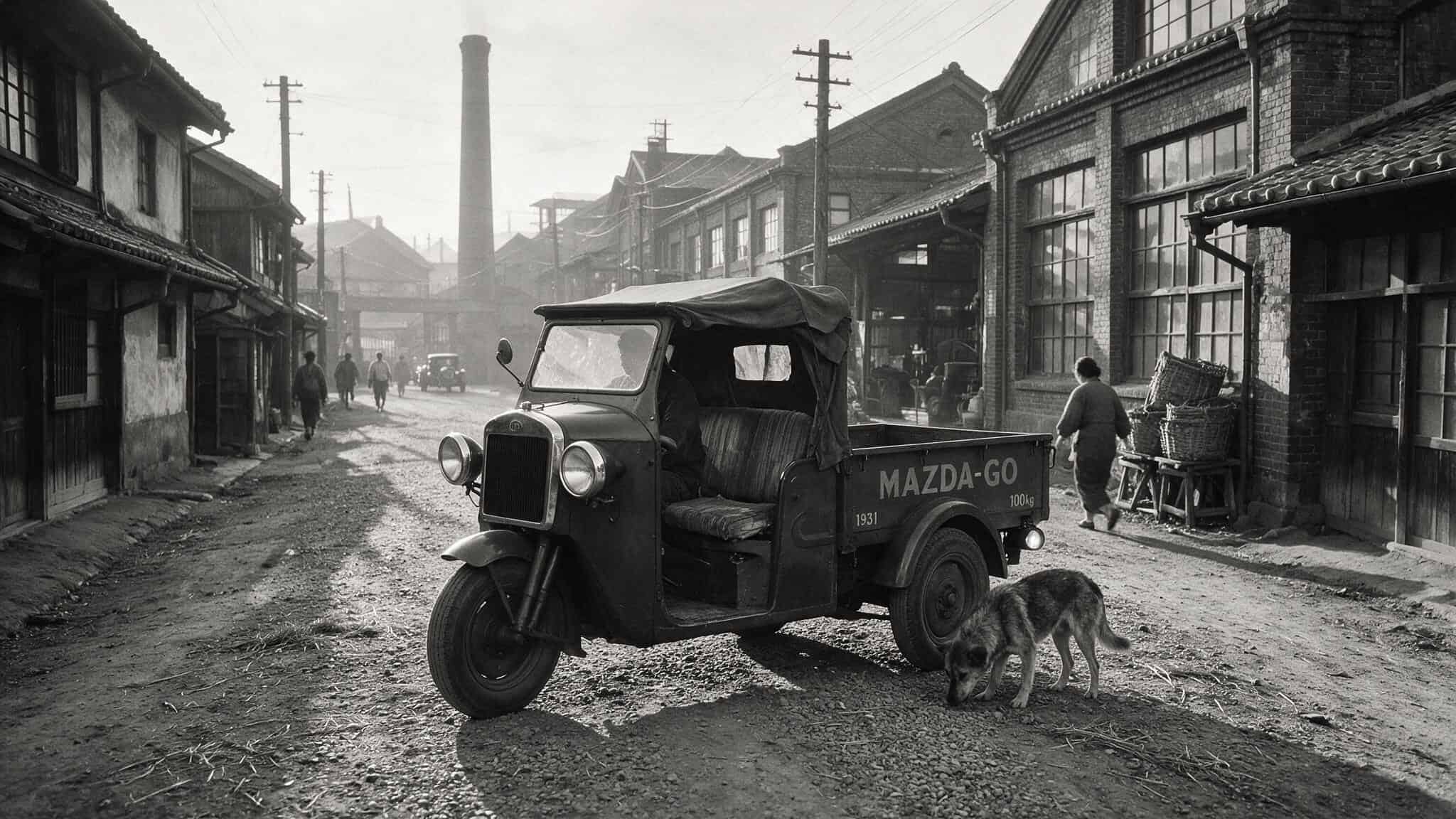
By 1927, the cork production stopped, and the company renamed itself Toyo Kogyo. Four years later, in 1931, Mazda rolled out its first vehicle: the Mazda-Go, a three-wheeled auto rickshaw. Think of a motorized tuk-tuk before tuk-tuks were a thing. It wasn’t glamorous, but it was the start.
During World War II, the company manufactured Type 99 rifles for the Japanese military. That’s a part of the story they don’t advertise, but it happened. After the war, Mazda survived and eventually got back to building vehicles. The R360 coupe arrived in May 1960 — a tiny two-door, four-seat car with a 356cc air-cooled engine making 16 horsepower. That’s less than a modern lawnmower, but in post-war Japan, it was transportation.
Then came the Carol in February 1962, with a water-cooled 358cc four-cylinder and eventually four doors. These were solid little cars, but they didn’t differentiate Mazda from Toyota, Nissan, or Honda. To stand out, Mazda needed something radical.
The Rotary Gamble and an American Landing (1960–1973)
Here’s where the story gets interesting. In July 1961, Mazda signed a licensing agreement with NSU/Wankel for the rotary engine. The Wankel rotary was a strange beast — no pistons, no valves, just a triangular rotor spinning in an epitrochoid chamber. It was smooth, rev-happy, and different from every other engine on the road. It was also unreliable and fuel-thirsty in its early form, which is why NSU eventually gave up on it.
Mazda didn’t give up. They became the only company to mass-produce Wankel engines for passenger cars.
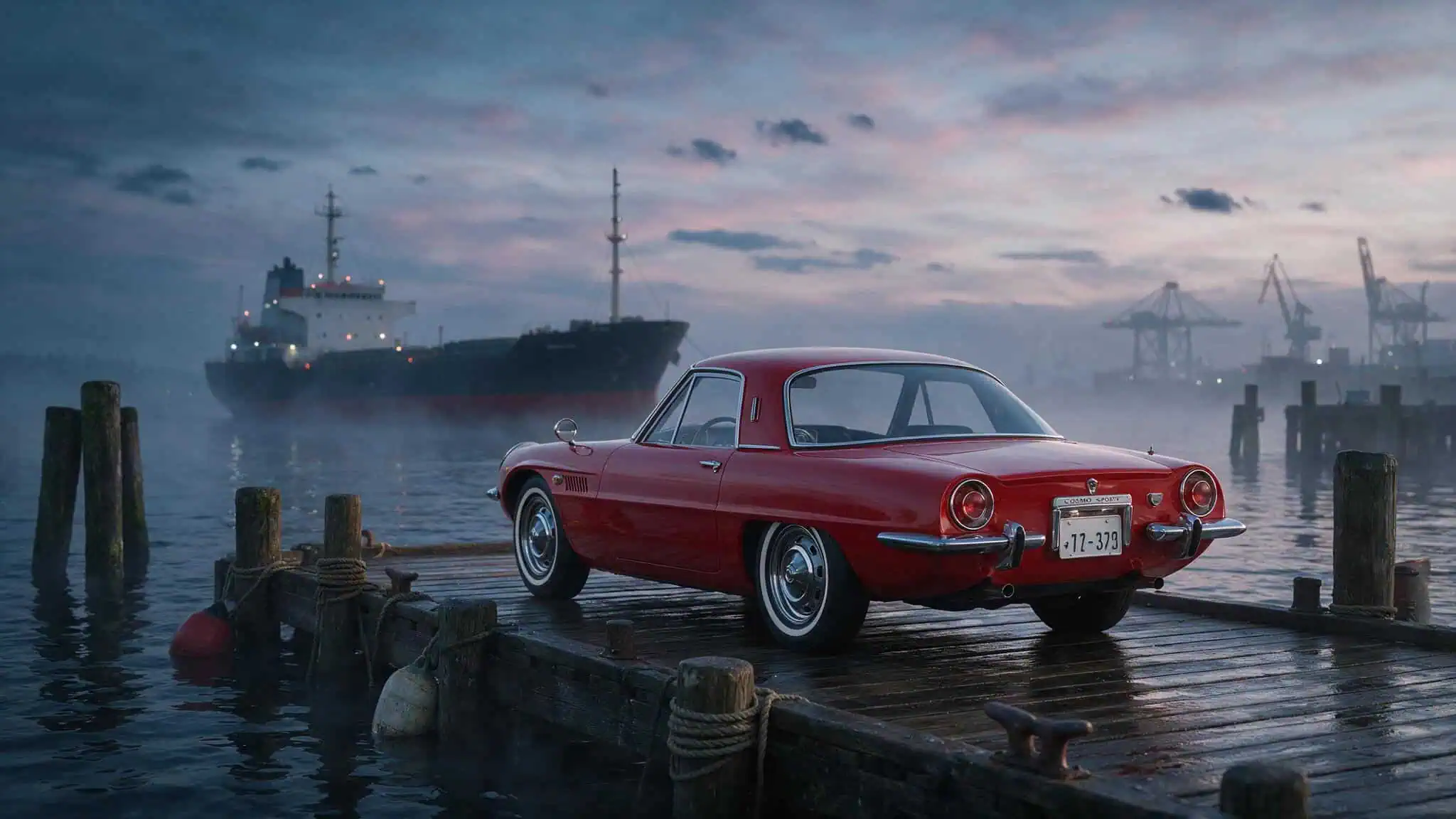
The Cosmo Sport 110S hit the streets in May 1967. Two seats. 110 horsepower. A top speed of about 115 mph. It looked like a spaceship and sounded like nothing else on the road. The rotary engine was officially real.
Before Mazda even had a U.S. office, an aviation company called Curtiss-Wright imported two Cosmo 110S coupes in 1967 for evaluation. Mazda North American Operations still owns one of them. That’s the kind of detail that makes the story feel alive — a couple of weird Japanese sports cars landing in America through an aerospace company.
Mazda set up a sales company in Canada in July 1968. The official U.S. entry came in January 1970, with a sales office in Washington. The first shipment of vehicles left Hiroshima on April 14, 1970, and arrived at the port of Seattle. That’s the day Mazda came to America.
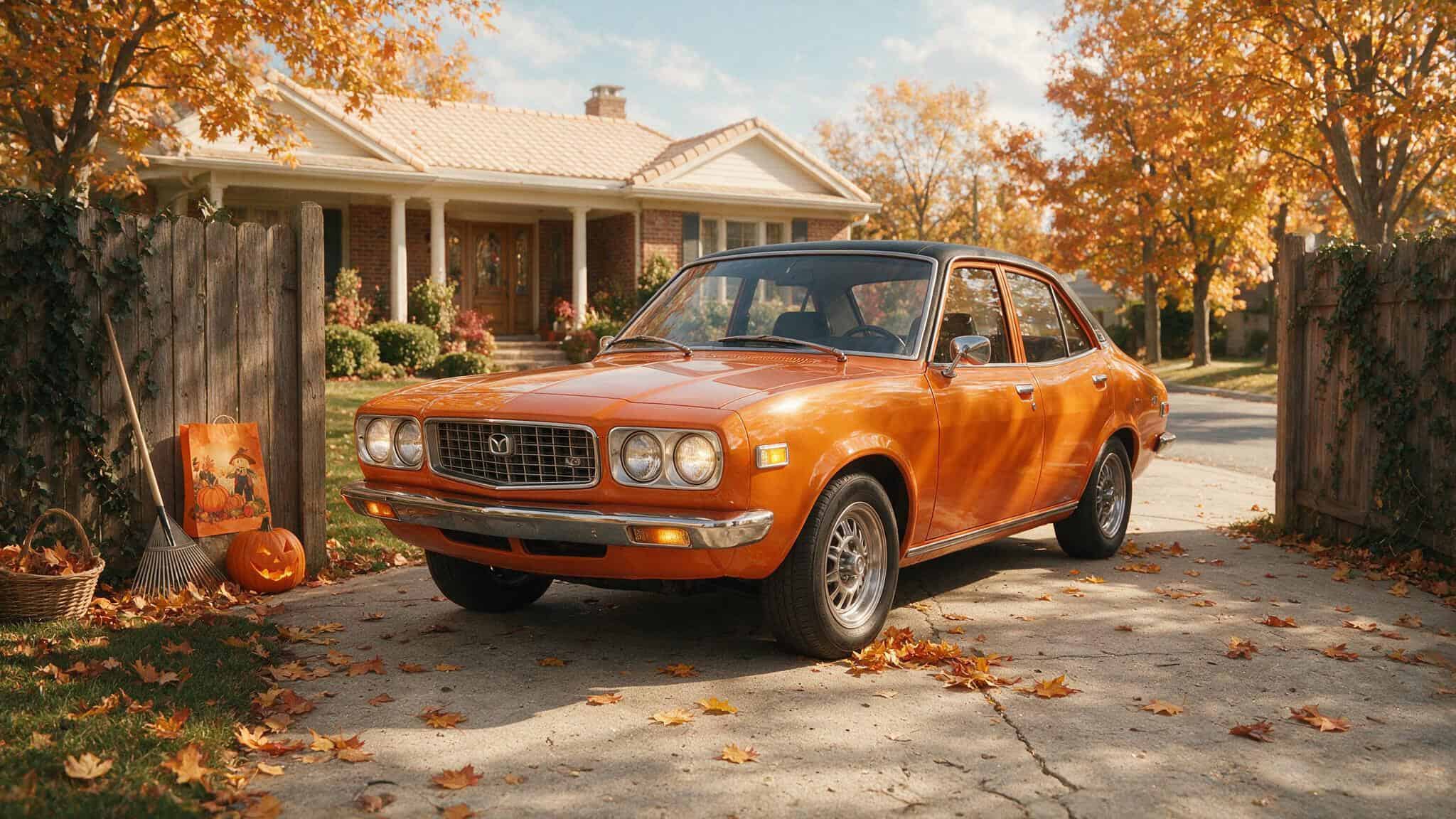
The first models sold in the U.S. were rotary-powered: the RX-2, RX-3, and RX-4, plus the Rotary Pickup. The RX-3 was the first vehicle globally to meet stringent new U.S. exhaust emission standards — an achievement for a tiny Japanese company with a weird engine. Car and Driver magazine bought an RX-2 after a 40,000-mile evaluation and turned it into a race car, which became the first Mazda to win a professional U.S. race.
The Rotary Pickup deserves a special mention. It was built exclusively for North America, based on the regular B-Series chassis with a rotary engine under the hood. To this day, it remains the only Wankel-powered pickup truck ever produced. That’s the kind of bold, slightly impractical move that defines Mazda’s character.
Red flag: The rotary engine’s fuel thirst was baked into its design — no amount of tuning could make it sip fuel like a piston engine.
The Crisis That Nearly Killed Mazda (1973–1979)
The rotary engine’s fatal flaw was fuel economy. When the 1973 oil crisis hit, gas prices spiked, and those smooth, revvy rotaries looked like gas-guzzlers. Demand collapsed. In 1975, Mazda posted a loss and was on the verge of bankruptcy.
This is the part most people get wrong. Ford didn’t save Mazda. The Sumitomo Bank and the Sumitomo keiretsu group stepped in — along with dealers and suppliers, to keep the company alive. It was a Japanese corporate rescue, not an American one. Exact figures for Mazda’s total debt or the rescue loan terms are not publicly available, but the intervention was substantial enough to prevent bankruptcy.
The survival product was the GLC: Great Little Car. In other markets, it was the Familia or 323. It was a small, efficient piston-engine compact that came out when people wanted that. The name was cheesy, but the car was good. It kept the lights on while Mazda figured out its next move.
There was also the 808 — a piston-engine sedan, coupe, and wagon that gave buyers a non-rotary option. These cars were boring by Mazda standards, but they were necessary. The rotary dream wasn’t dead, but it needed conventional cars to pay the bills, which is exactly what happened after when did Mazda come to North America in 1970.
The Ford Years — Survival Through Partnership (1979–1996)
Ford had held a 7% stake in Toyo Kogyo before 1979. That year, it bought 25% and became a major player in Mazda’s future. In May 1996, Ford increased its stake to 33.4%, giving it effective control.
The relationship was a mixed blessing. On one hand, Ford provided capital, U.S. manufacturing, and platform sharing that kept Mazda viable. On the other hand, badge engineering diluted the brand and confused customers.
The physical symbol of the partnership was the Flat Rock plant in Michigan. Groundbreaking happened in 1985, and production began in 1987. The plant built the MX-6, 626, and Ford Probe on the same assembly line. Some Probes were exported to Japan and sold through Mazda’s Autorama channel.
Platform sharing was a mixed bag. The B-Series pickup was sold as the Ford Courier starting in 1971, then from 1994 to 2010, it was a rebadged Ford Ranger. By 1991, Mazda had sold one million B-Series trucks in the U.S.
The Navajo was a different story. Launched in 1991, it was a rebadged Ford Explorer — but only available as a two-door, which was an unusual configuration for an SUV. It lasted four years. The Ford Explorer, meanwhile, became the best-selling SUV in America for over a decade. Mazda’s version couldn’t compete.
Ford-appointed presidents ran the company: Henry Wallace in 1996, James Miller in 1997, Mark Fields in 1999. Mazda was, for all practical purposes, a Ford subsidiary.
But even during the Ford years, Mazda managed to produce some innovative engineering. The Millenia S, introduced in 1995, featured the first mass-production Miller-cycle engine. It was supercharged and efficient — a clever way to get power without killing fuel economy. That technology bridge would later influence SKYACTIV gasoline engines.
Cult Hits and a Le Mans Victory (1989–2002)
This is the emotional heart of the story. Even while struggling financially and dealing with Ford’s corporate influence, Mazda produced some of the most beloved cars ever made.
The MX-5 Miata debuted at the Chicago Auto Show in February 1989 as a 1990 model. It was inspired by the concept of jinba ittai — “horse and rider as one.” The philosophy wasn’t marketing. The Miata was lightweight, rear-wheel drive, and balanced. It revived the small, affordable sports car that British roadsters had defined in the ’60s but with Japanese reliability.
The Guinness World Records confirmed the Miata as the best-selling two-seat sports car in history. The 25th Anniversary Edition sold out in 10 minutes in the U.S.
The RX-7 was a legend. Between 1980 and 1987, it won the IMSA GTU championship every year — eight straight championships. A specially prepared RX-7 set a land speed record of 238.442 mph at Bonneville. The FB-generation car that launched in March 1978 was light, simple, and had a front-midship layout with the engine behind the front axle for handling.
Then came the 787B. In 1991, Mazda won the 24 Hours of Le Mans overall — the first Japanese manufacturer to do so, and still the only non-piston engine to win the race. The four-rotor engine had a 2.6-liter actual displacement but was rated at 4.7 liters by the rules. The rotary engines were banned from Le Mans starting in 1992. Mazda had achieved something that no other automaker had ever done, and the establishment responded by changing the rules.
Field note: The 787B’s victory wasn’t just a win — it was a four-rotor middle finger to every convention in motorsport.
The Amati Disaster — Mazda’s Luxury Brand That Never Was (1992–2000)
Mazda wanted to compete with Lexus, Acura, and Infiniti. In early 1992, the company announced a new luxury brand for North America called Amati. The planned lineup included the Amati 500 (which would have been the Eunos 800/Millenia) and the Amati 1000, a V12-powered flagship that was a direct competitor to the Lexus LS400.
Not a single car was sold. The Japanese asset bubble burst, and the entire project was scrapped before launch. The financial cost was significant.
Mazda never got a proper luxury brand in North America. The Xedos line sold in Europe under the Mazda name from 1992 to 1997 as a consolation. In Japan, Mazda tried sub-brands like Autozam, Eunos, and ɛ̃fini, but none made it to the U.S., where the brand’s identity was instead shaped by an Old Mazda models list with pictures that highlights icons like the Cosmo, RX-7, and first Miata.
The Amati failure meant Mazda had to develop its premium aspirations organically. It would take two decades — and clean-sheet engineering, to pull it off.
The Renaissance — SKYACTIV, Kodo, and the Road to Record Sales (2008–2020)
By 2008, Ford was in financial trouble and started selling its Mazda stake. It sold 20% in November 2008, dropped to 3% by November 2010, and sold the remaining shares on September 30, 2015. After 36 years, Mazda was independent again.
The timing could have been a disaster. Mazda’s U.S. market share hit 1.7% in 2016 — a 10-year low. Brand loyalty was 39% versus the industry average of 53%. People were leaving Mazda for other brands.
Instead of folding, Mazda did something radical. It went back to the drawing board.
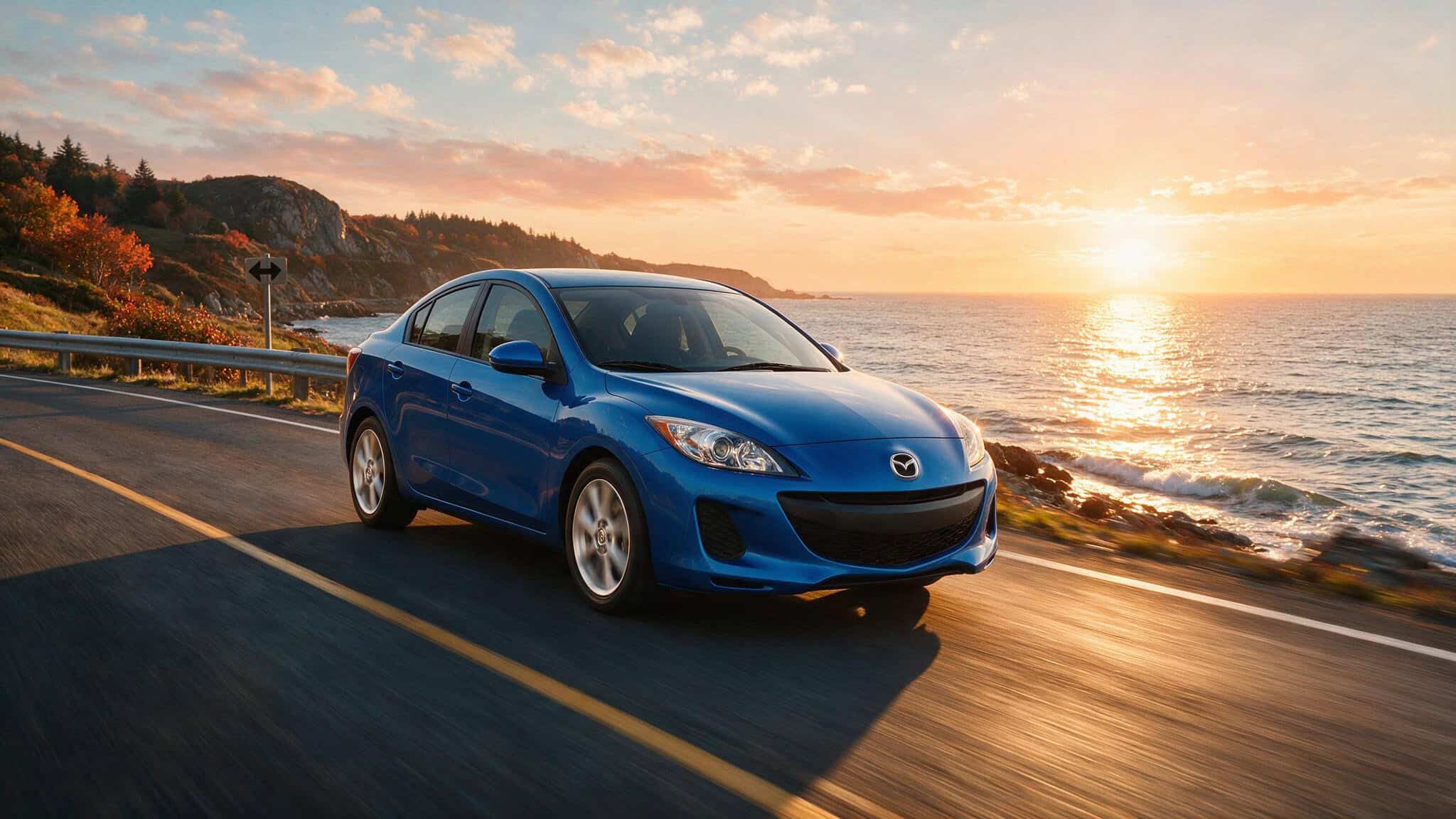
SKYACTIV wasn’t a new engine family. It was a clean-sheet redesign of the entire vehicle — engines, transmissions, body structure, chassis. No carryover parts from previous models. The first SKYACTIV vehicle was the 2012 Mazda3, which became the first compact car to earn a 40 mpg EPA highway rating.
At the same time, Mazda introduced Kodo design language — “Soul of Motion.” The first model to wear it was the CX-5, which debuted at the October 2011 Tokyo Motor Show. From 2014 onward, the CX-5 became Mazda’s global best-seller. By March 2022, cumulative sales had reached about 3.5 million units.
The CX-5 saved Mazda. It was a crossover that drove like a Mazda — responsive, engaging, and well-built, but appealed to mainstream buyers who wanted practicality. It was the right car at the right time. In 2014, its first full year on sale, the CX-5 sold 99,122 units in the U.S., trailing segment leaders like the Honda CR-V (335,019) and Toyota RAV4 (267,698); by 2020, CX-5 sales had grown to 146,706, while the RAV4 surged to 430,387 and the CR-V to 333,502, illustrating the persistent gap to the top sellers.
Mazda also introduced the “Mazda Premium” strategy, moving the brand upmarket with nicer interiors, better materials, and a more refined driving experience. The Retail Evolution dealership program aimed to improve the buying experience; the 200th location opened in San Antonio, Texas.
The CX-9 won North American Truck of the Year and Motor Trend SUV of the Year. The Mazda3 was named World Car Design of the Year. In 2024, Mazda set a U.S. sales record of 424,382 vehicles — a 16.8% increase over the previous year.
The numbers tell the story: from 1.7% market share and 39% loyalty to record sales in less than a decade.
The Future — Huntsville, Electrification, and the Driver’s Choice (2021–Present)
In January 2018, Mazda and Toyota announced a joint venture to build a factory in Huntsville, Alabama. Construction started in November 2018, and production began in September 2021. The plant builds the Toyota Corolla Cross and the Mazda CX-50, with an annual capacity of 300,000 vehicles.
The Huntsville plant is the clearest symbol of Mazda’s post-Ford commitment to North America. It’s a joint venture, not a subsidiary arrangement. Mazda builds cars alongside Toyota as an equal partner.
The MX-30 was Mazda’s first mass-production electric vehicle. Production started in May 2020, and sales launched in California — the typical test market for EVs. It earned a five-star NHTSA safety rating, but the range was limited, and it remained a cautious first step.
The CX-90 PHEV is a more ambitious bet. As a 2024 model, it’s Mazda’s first large platform vehicle in the U.S. — a three-row plug-in hybrid that combines driving dynamics with electric efficiency. It’s the kind of car that asks: can Mazda’s driver-first philosophy scale up to a family SUV?
Mazda’s brand messaging has evolved through the years: Zoom-Zoom in 2000 (“emotion of motion”), Driving Matters in 2015, and the current “Move and Be Moved” platform, introduced in the U.S. first. The thread through all of them is that driving should feel good.
A Driver’s Choice for the Future
So where does that leave Mazda?
The company has survived existential threats — the oil crisis, near-bankruptcy, the Ford dependency, the Amati failure, by betting on driving engagement. The rotary was insane, but it made Mazda different. The Miata was a throwback, but it created a fanatical following. The CX-5 was a gamble that paid off because it drove better than its competitors.
But the numbers tell a complicated story. That 39% brand loyalty number from 2016 shows the gap between enthusiast love and mainstream stickiness. People who love Mazdas really love them, but lots of people buy something else.
The CX-90 PHEV and the Huntsville plant suggest Mazda is betting on the same principles for the electric era. The question is whether the driver-first ethos can survive the transition to EVs, where the powertrain characteristics that made Mazda special (the rotary’s smoothness, the SKYACTIV’s responsiveness) become less distinctive.
I don’t know the answer. But that’s what makes following Mazda interesting. This is a company that refuses to do the obvious thing, even when the obvious thing would be easier. It built a rotary-powered pickup truck.
It won Le Mans with an engine that was banned the next year. It spent 15 years as a Ford subsidiary and came out the other side still making driver’s cars.
The history of Mazda automobiles in North America isn’t finished. That’s the best part.
Frequently Asked Questions
When did Mazda come to North America?
Mazda officially entered the U.S. market in January 1970 with a sales office in Washington, and the first shipment of rotary-powered cars left Hiroshima for Seattle on April 14, 1970. However, two Cosmo Sport coupes had already arrived in 1967 through an aviation company called Curtiss-Wright, before Mazda even had an American office.
What did Mazda used to be called?
Mazda started as Toyo Cork Kogyo in 1920, making cork for bottle stoppers and bulletin boards. It renamed itself Toyo Kogyo in 1927 after dropping cork production, and the Mazda brand name came later — a combination of founder Jujiro Matsuda’s name and Ahura Mazda, the Zoroastrian god of wisdom.
Why did Mazda almost go bankrupt in the 1970s?
The 1973 oil crisis destroyed demand for Mazda’s rotary engines, which were notoriously thirsty on fuel. The company posted a massive loss in 1975 and was on the verge of bankruptcy until the Sumitomo Bank and its keiretsu group stepped in with a rescue — not Ford, as many assume.
Can you still buy a rotary-powered Mazda today?
Not as a new car — Mazda stopped mass-producing rotary engines for passenger cars years ago. The rotary lives on as a range extender in the MX-30 EV, but the last pure rotary-powered production car was the RX-8, which ended production in 2012.