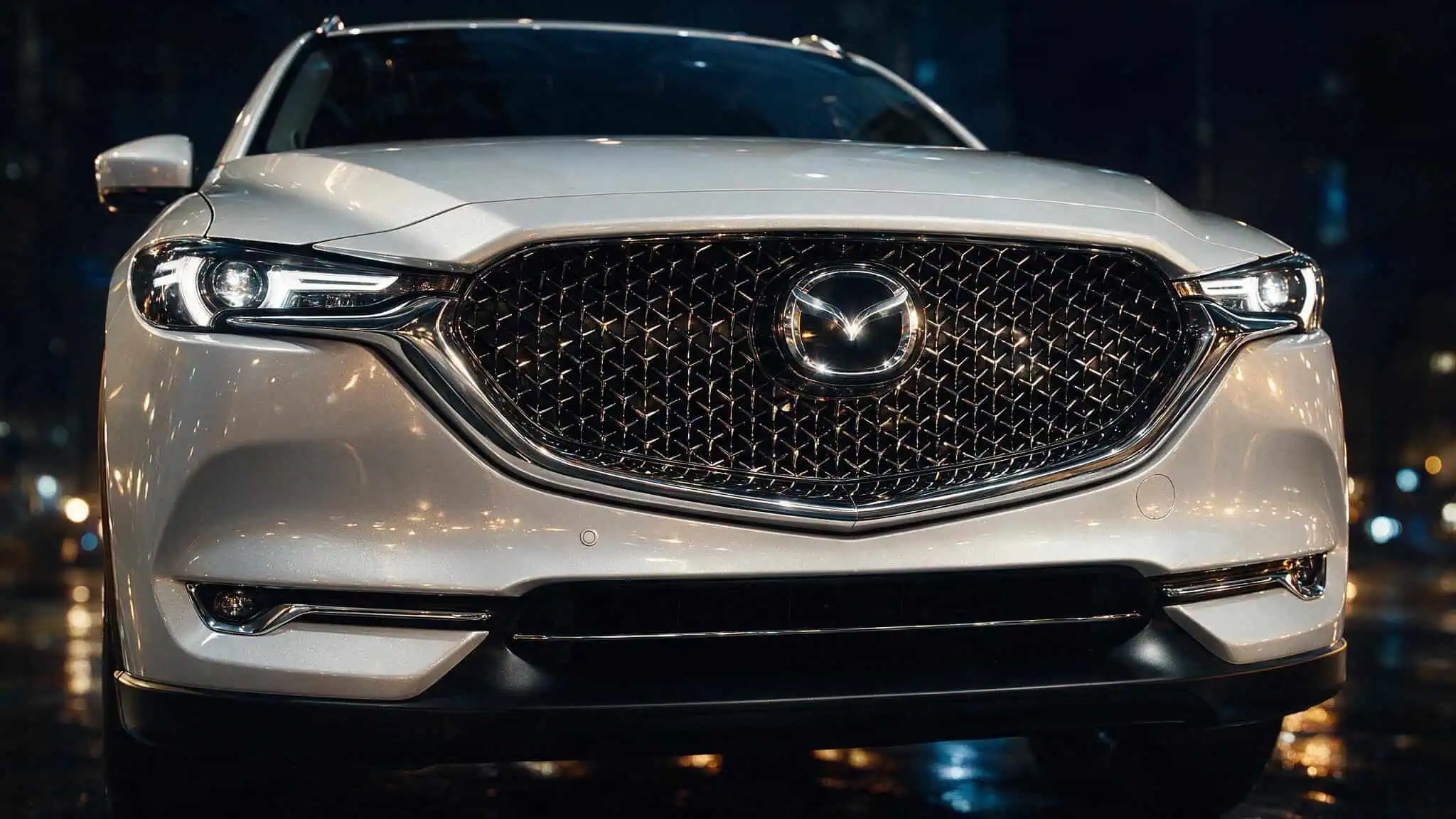
No, Mazda is not owned by Honda. They’re two separate companies, and they compete directly in the same market segments. All 2023 Mazda models received an IIHS top safety award. Only two Honda models did. If one company owned the other, you’d expect a lot more overlap than that.
I get why people ask, though. Both are Japanese automakers. Both are known for reliability and driving engagement. They sell compact sedans and SUVs that compete directly. The confusion is understandable — it’s not correct.
Key Takeaways
Mazda Motor Corporation is an independent, publicly traded company with no ownership link to Honda. Consumer Reports lists Mazda under its own parent company, not under Honda.
Toyota owns roughly 5.05% of Mazda as a strategic partnership, not a controlling stake. Mazda owns 0.25% of Toyota. They share a joint plant in Huntsville, Alabama, but Toyota doesn’t control Mazda.
All 2023 Mazda models received an IIHS top safety award, compared to only two Honda models. That’s a concrete data point showing these are separate companies with different engineering priorities.
Table of Contents
Why People Mix Them Up
The confusion between Mazda and Honda isn’t random. Both companies center their identity on driving enjoyment. Honda has VTEC and the legendary S2000. Mazda has Skyactiv and the MX-5 Miata.
They’re Japanese, reliable, and compete in the same segments — compact cars, family SUVs, affordable sports cars. When you’re shopping for a Mazda CX-5 and a Honda CR-V, they feel like cousins. They’re not.
A typical assumption I hear from car shoppers is wondering if the CX-5 is “a CR-V with a different badge.” It’s not. They’re engineered by separate companies with different priorities. The overlap is perceptual, not structural.
No corporate link exists. The brands just happen to live in the same neighborhood.
Who Actually Owns Mazda
If someone’s asking about Honda, they’re usually wondering who does own Mazda. The answer is more interesting than “no one.”
Current independence and the Toyota alliance
Mazda Motor Corporation (TYO: 7261) is a publicly traded company with no majority owner. It operates independently, answers to its own shareholders, and makes its own decisions.
Since 2015, Mazda has had a strategic alliance with Toyota. Here’s what that actually means:
- Toyota owns about 5.05% of Mazda. Mazda owns 0.25% of Toyota.
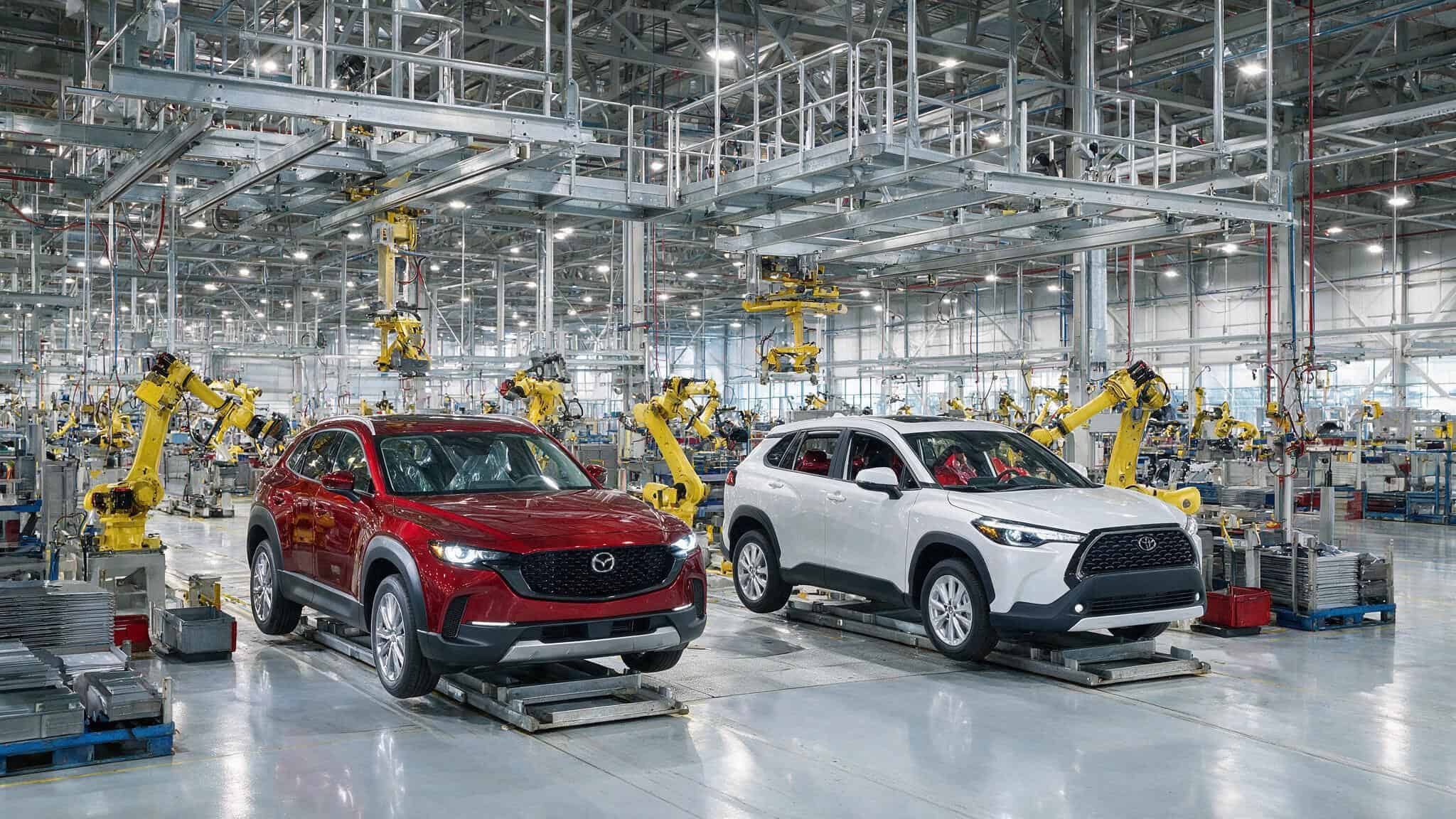
- They built a joint factory in Huntsville, Alabama — Mazda Toyota Manufacturing (MTM), that started production in 2021.
- That plant builds the Mazda CX-50 and Toyota Corolla Cross on a shared assembly line.
A 5% stake is a partnership, not a takeover. Toyota doesn’t run Mazda. Mazda doesn’t report to Toyota. They share a factory and some technology, but the companies remain independent.
The Ford era
This is where a lot of the historical confusion comes from. Ford owned a significant chunk of Mazda for 35 years, so the question of Is Mazda owned by Ford Motor Company? often arises. During that time they shared platforms and engineering.
The timeline tells the story:
- 1979: Ford buys 24.5% of Mazda.
- 1995: Ford increases its stake to 33.4%, giving it effective control.
- 2008: Ford starts selling off shares during its own financial troubles.
- September 30, 2015: Ford sells its last remaining shares. Clean break.
During that period, platform sharing was common. The Mazda B-Series pickup was a Ford Ranger underneath. The Mazda Navajo was a rebadged Ford Explorer. Ford even appointed its own people as Mazda presidents — Henry Wallace became the first foreign-born president of Mazda in 1996, but what is the biggest issue with Mazda? The company’s North American reputation has been hampered by persistent rust problems and a late move into the SUV market.
That’s why some older Mazda models look familiar. They were Ford products with different badges. But that era is over.
The Sumitomo rescue (before Ford)
Before Ford stepped in, Mazda nearly died. The 1973 oil crisis crushed demand for the rotary engine, which was a gas guzzler. By 1975, Mazda was on the brink of bankruptcy, a pivotal moment in the History of Mazda Automobiles in North America.
The Sumitomo keiretsu group — a Japanese business network with a bank and trading company at its center, bailed Mazda out. That rescue kept the company alive long enough for Ford to come in four years later. It’s a chapter most people don’t know, but it explains why Ford’s later stake was so significant. Mazda was already in trouble.
What Makes Mazda Different: Engineering Independence
Mazda’s independent engineering choices are possible because of its ownership structure. A parent company obsessed with volume wouldn’t greenlight half the things Mazda has done.
From cork to cars
Mazda was founded on January 30, 1920, in Hiroshima, as Toyo Cork Kogyo Co., Ltd. Yes, cork. The stuff in wine bottles. Founder Jujiro Matsuda started with cork products before ever touching cars.
The name “Mazda” comes from Ahura Mazda, the Persian god of wisdom, and it also sounds like “Matsuda.” Two birds, one stone. The company officially changed its name to Mazda in 1984, but they’d been using the name for decades.
The first vehicle to carry the Mazda name was the Mazda-Go, a three-wheeled truck, in 1931. Not exactly a sports car, but it was a start, though the best Mazda models you can buy today are far more refined.
The rotary engine and near-bankruptcy
Mazda is the only car company to mass-produce the Wankel rotary engine. The 1967 Cosmo Sport was the first volume-production rotary car. It was smooth, powerful, and distinctive.
That engine defined Mazda for decades. It gave us the RX-7 in 1978, a lightweight rotary sports car that’s still a cult classic. It gave us the RX-8, which ran until 2012. And in 1991, the rotary-powered Mazda 787B won the 24 Hours of Le Mans — the first Japanese win and still the only non-piston engine ever to take the checkered flag.
Quick test: Look up the 1991 Mazda 787B on YouTube. Listen to that rotary engine. No other car at Le Mans has ever sounded like it.
But the rotary was a gas hog. When the 1973 oil crisis hit, demand cratered. Nobody wanted a thirsty car. Mazda almost went under.
The company bounced back by focusing the rotary on sports cars and developing more conventional engines. The MX-5 Miata arrived in 1989 and revived the small, affordable sports car segment. It’s still the world’s best-selling two-seat sports car.
In 2011, Mazda launched Skyactiv technology — a suite of engines, transmissions, and chassis designed for efficiency and driving feel. The CX-5, with Mazda’s Kodo design language, became the company’s best-seller.
The engineering thread is clear: Mazda pursues niche technology because it’s independent. A parent company focused on quarterly volume would never have greenlit the rotary. Mazda did it anyway.
Mazda vs. Honda: A Practical Comparison
If you’re cross-shopping a Mazda and a Honda, you’re comparing two good vehicles from two completely separate companies with different priorities. Here’s how they actually stack up.
Safety: All 2023 Mazda models received an Insurance Institute for Highway Safety (IIHS) top safety award. Only two Honda models did. That’s a differentiator. If safety is a priority, Mazda has the edge in recent data.
Brand structure: Mazda is a single-brand company. It owns the Mazda name and that’s it. Honda Motor Co. owns both Honda and Acura. Mazda actually tried a multi-brand strategy in the 1990s — M2, Amati, Xedos, and it failed.
The Japanese asset price bubble collapse killed it, and the experiment confused customers. Mazda couldn’t sustain a luxury division, so it focuses all its resources on one brand.
Market position: Mazda’s U.S. market share hit 1.7% in 2016, with brand loyalty at 39% (industry average: 53%). That sounds bad, but it’s partly strategic. Mazda has shifted toward premium SUVs like the Mazda CX-90 and CX-70 with inline-six engines and rear-wheel drive. They’re aiming for a smaller, more profitable niche rather than chasing volume.
What this means for you: If you’re choosing between a CX-5 and a CR-V, you’re picking between two different philosophies. Mazda leans into driving experience, premium materials, and independent engineering. Honda leans into practicality, volume, and proven reliability. Neither is “better” overall — it depends on what you value.
The bottom line: Mazda isn’t owned by Honda. It’s not owned by Ford. It’s not controlled by Toyota. It’s a publicly traded company that makes its own decisions, takes its own risks, and builds cars the way it wants to. That independence is the whole story.
Frequently Asked Questions
Is Mazda now owned by Ford?
No, Ford sold its last remaining shares of Mazda in 2015, ending a 35-year ownership era. Mazda has been fully independent since then, though it does have a strategic partnership with Toyota.
Why do people confuse Mazda and Honda?
Both are Japanese automakers known for reliability and driving engagement, and they compete in the same segments — compact cars, family SUVs, and affordable sports cars. The overlap is perceptual, not structural; there’s no corporate link between them.