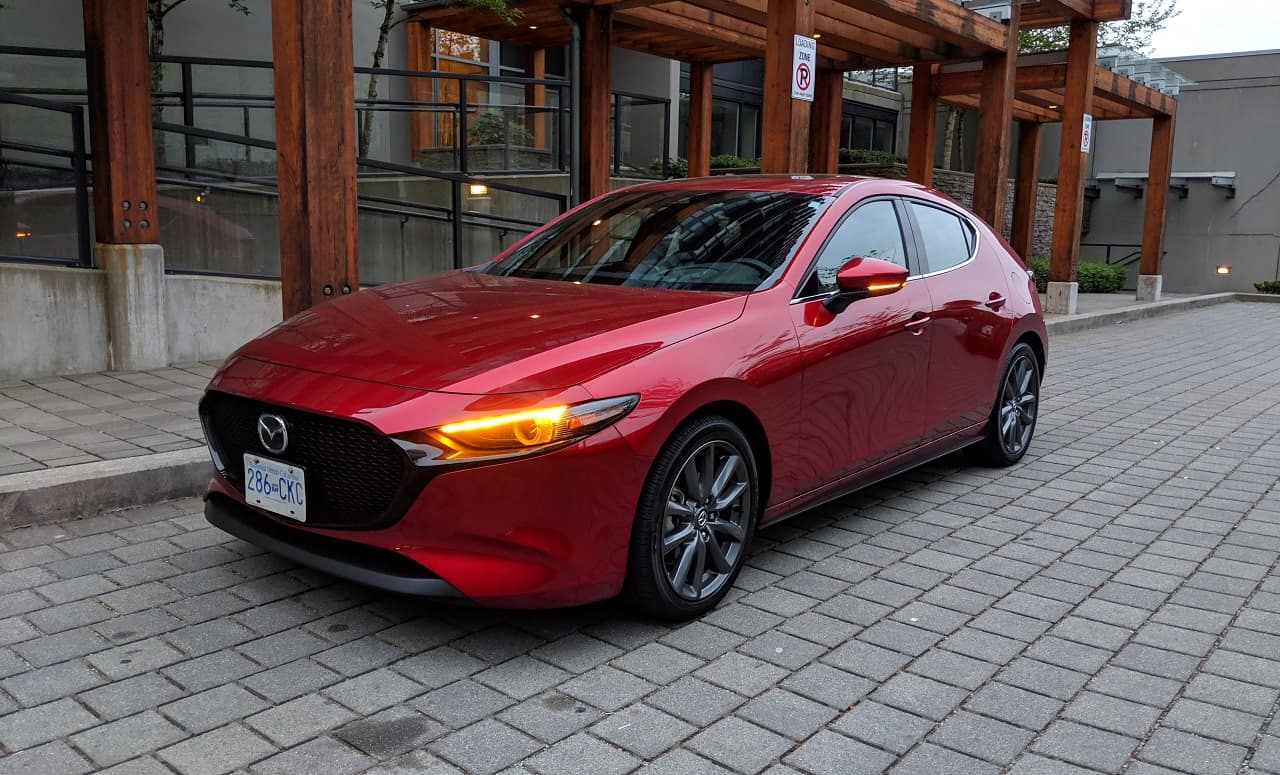
Ford doesn’t own Mazda. Hasn’t since 2015.
The last shares were sold on September 30, 2015. Clean break.
The relationship between these two companies was long, deep, and left a confusing footprint on the road. From 1979 to 2015, Ford held a stake in Mazda. Ford acquired a 24.5% stake in 1979, and shared platforms so thoroughly that a Ford Ranger and a Mazda B-Series were the same truck with a different grille.
For Mazda, the Ford era was a complicated chapter — a rescue that came close to washing away exactly what made the company interesting in the first place.
Key Takeaways
Ford sold its entire stake in Mazda on September 30, 2015. Since then, Mazda has been fully independent.
At its peak in the mid-1990s, Ford owned a controlling 33.4% of Mazda and installed its own executives to run the company.
Mazda is currently a public company (TYO: 7261) that has no single controlling owner. Toyota holds a 5.05% minority stake, but it’s a strategic partnership, not a takeover.
Table of Contents
So, Is Ford the Owner of Mazda?
No.
Ford acquired a 7% stake in 1971, took a 24.5% stake in 1979, and by May 1995 owned a controlling 33.4% of the company. That made Mazda a part of Ford’s empire. But when the 2008 financial crisis hit, Ford needed cash and sold 20% of its Mazda stake in November 2008. They began selling off their shares.
By 2014, their stake was down to 2.1%. The final shares were offloaded on September 30, 2015.
The question persists because the partnership produced cars that shared platforms, such as:
- Ford Ranger / Mazda B-Series: Same truck, different badge.
- Ford Escape / Mazda Tribute: Same SUV, different badge.
- Ford Laser / Mazda Familia: Same car, different badge.
- Ford Telstar / Mazda Capella: Same platform, different badge.
People saw a Mazda and a Ford next to each other on the lot and assumed the relationship was still active. But the divorce has been final for years.
Before Ford: Cork, Three-Wheelers, and a Bet on a Weird Engine
To understand what Mazda was fighting to preserve, you have to go back to the beginning. The company started in 1920 as Toyo Cork Kogyo. A cork factory.
Founder Jujiro Matsuda combined his name with Ahura Mazda, the Zoroastrian god of wisdom, and the company found its footing making three-wheeled trucks starting in 1931. Passenger cars like the R360 and Carol came later in the early 60s.
But Mazda’s defining obsession arrived in the 1960s: the Wankel rotary engine. It was a compact, high-revving powerplant that every other major automaker abandoned by the 1970s. Mazda bet the entire company on it.
- 1967: First rotary car, the Cosmo Sport.
- 1970s: The R100, RX-2, RX-3, RX-4.
- The icon: The RX-7.
- The peak: In 1991, a rotary-powered 787B became the first Japanese car to win Le Mans. It’s still the only non-piston engine ever to win overall.
This was the engineering identity Mazda carried into its 1979 partnership with Ford.
How a Thirsty Engine and an Oil Crisis Nearly Sank the Company
The rotary engine is what got Mazda into trouble in the 1970s. For a closer look at how the company navigated this crisis, see the History of Mazda Automobiles in North America. It was brilliant but thirsty. When the 1973 oil crisis hit, demand for gas-guzzling rotary engines evaporated.
By 1975, Mazda was the least efficient automaker in Japan, sitting on mountains of inventory, heavily reliant on the US market, and bleeding cash. By 1975, the company was on the verge of bankruptcy—which often leads people to ask, Is Mazda owned by Honda?
Ford gets the credit for the rescue in most American retellings, but the real first responder was the Sumitomo keiretsu — a network of Japanese banks, subcontractors, and distributors who stabilized the company. Ford had already bought a small 7% stake in 1971 through a deal where the Mazda B-Series became the Ford Courier. Ford stepped in with a much larger investment in 1979, buying 24.5%.
Ford didn’t create the 1973 oil crisis or swoop in as a lone savior. They invested in an already-stabilized situation. But that 24.5% investment gave Ford a seat at the table that would eventually become a controlling 33.4% stake in May 1996.
Bottom line: Ford didn’t rescue Mazda single-handedly — the Sumitomo banks stabilized the company first, then Ford bought in.
The Ford Years: Rescue, Control, and Identity Drift
Ford’s stake grew from 24.5% in 1979 to 33.4% in May 1995. By May 1995, Ford owned 33.4% of the company — a controlling interest. In 1996, they installed Henry Wallace as president, the first non-Japanese executive to run a Japanese car company.
What Ford Got
Ford gained access to small-car platforms such as the Mazda Familia and a reliable supply of manual transmissions starting in spring 1980. The Mazda Familia platform was used for the Ford Laser and Escort starting in 1980. The Mazda Capella architecture was used for the Ford Telstar and Probe. Ford and Mazda built cars together in joint plants in Japan, New Zealand (VANZ), and South Africa (Samcor).
What It Cost Mazda
Ford’s cash and scale gave Mazda stability, but it blurred the brand. When your “zoom-zoom” sports car company is busy building a minivan that’s also a Ford, the identity gets muddy.
Some Mazda engineers felt their ideas were being watered down to fit Ford’s volume needs. The company was a survivor, but according to a 2021 overview of the best Mazda models you can buy, it was losing its personality.
The Long Goodbye (2008–2015)
The 2008 financial crisis changed everything. Ford was on its back foot, selling assets to stay afloat. Mazda shares were a liquid asset.
- 2008: Ford sold 20% of its stake, dropping to 13.4% and surrendering control.
- 2008: Mazda bought back 6.8% of its own shares for about $185 million, effectively buying back its freedom.
- 2010: Ford’s stake was down to 3%.
- September 30, 2015: Ford sold the remaining shares. Complete exit.
Alan Mulally, Ford’s CEO at the time, was clear: Ford needed to streamline. That meant letting Mazda go. It wasn’t a dramatic breakup; it was a straightforward business decision for both companies.
Breaking Free: Mazda’s Second Act
Even before Ford fully walked away in 2015, Mazda was already laying the groundwork for its comeback.
In 2011, during the transition period, Mazda launched SkyActiv. It was a whole engineering philosophy. High-compression gas engines pushing a 13.0:1 ratio, ultra-efficient transmissions, and lightweight chassis, all designed from scratch by Mazda’s own engineers.
At the same time, they introduced Kodo design language (“Soul of Motion”), starting with the 2011 CX-5. The cars had presence. They looked like they were moving even when parked.
Post-Ford, Mazda stopped trying to be a generic volume player. Mazda developed a new rear-wheel-drive platform with an inline-six engine. Mazda brought the rotary back as a range-extender in the MX-30 R-EV. Mazda started winning comparison tests.
SkyActiv and Kodo weren’t caused by the separation from Ford. They were developed during the transition. But the timing isn’t a coincidence. Once Mazda was free to invest in its own ideas again, it remembered who it was.
Cost check: Mazda bought back 6.8% of its own shares for about $185 million in 2008 — the price of buying back its independence.
Who Owns Mazda Now?
Mazda is a public company (TYO: 7261). Anyone can buy shares. There is no single controlling owner.
The most common follow-up question is about Toyota. In 2017, Toyota bought a 5.05% stake in Mazda. Mazda bought a tiny 0.25% stake in Toyota in return. Toyota and Mazda also built a joint factory in Huntsville, Alabama (Mazda Toyota Manufacturing USA) that started production in 2021.
Is this the same as what Ford did? No. Toyota’s 5.05% stake is a strategic partnership for shared technology and production. It’s not a path to control.
- Is Mazda owned by Toyota? No. Toyota is a minority shareholder, not a parent company.
- Is Mazda owned by Honda? No.
- Is Mazda owned by Nissan? No.
After Ford left, the largest single shareholder became the Sumitomo Mitsui Financial Group — a bank, not a car company. Mazda answers to its own shareholders and designs its own cars.
Frequently Asked Questions
Does Ford still own any part of Mazda?
No. Ford sold its remaining shares in Mazda on September 30, 2015, and has had no ownership stake since. The two companies no longer have a financial relationship, though some older models still share platforms.
Is Mazda owned by Toyota now?
No. Toyota holds a 5.05% minority stake in Mazda as part of a strategic partnership for shared technology and production, but it is not a parent company. Mazda remains a public company with no single controlling owner.