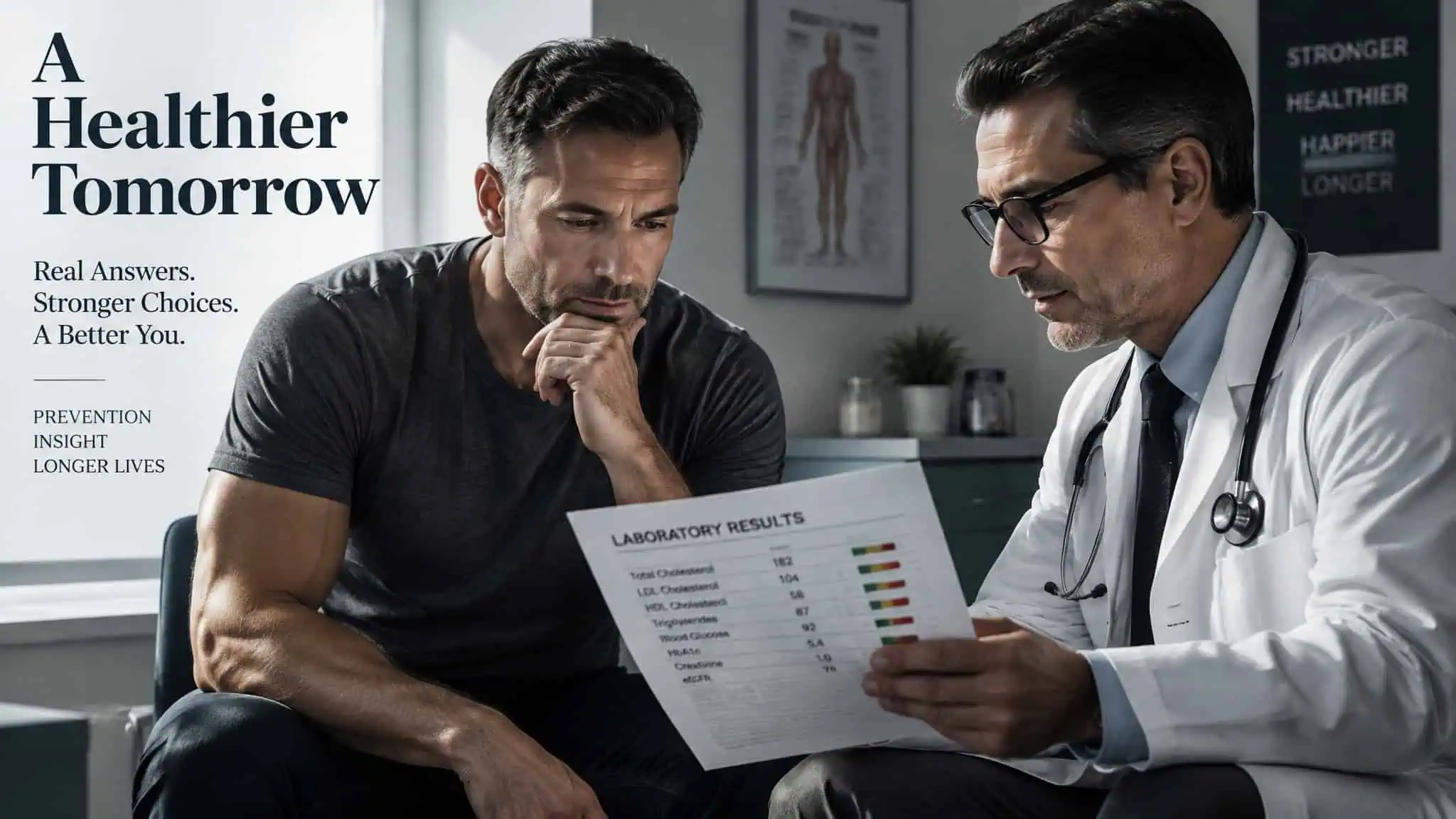
In 2014, the FDA slapped the scariest warning in medicine onto every testosterone product on the market: a boxed alert about heart attack and stroke. In 2025, the agency took it back off. In its place went a blood-pressure warning. That’s the trade in one sentence, and honestly it tells you most of what you need to know about where the evidence stands: the government’s biggest fear didn’t survive contact with a real trial, but testosterone isn’t a free pass either.
The catch almost nobody mentions is that the safety data only covers men who were properly diagnosed in the first place. A guy who got prescribed off one afternoon blood draw after a week of bad sleep isn’t in any trial population, no matter what the clinic’s website says.
Key Takeaways
The TRAVERSE trial followed 5,246 men for about 33 months and found major cardiac events in 7.0% of the testosterone group vs 7.3% on placebo, so heart attack and stroke risk didn’t increase in properly diagnosed men.
TRAVERSE did show more atrial fibrillation, acute kidney injury, and pulmonary embolism with testosterone, and the FDA added a blood-pressure warning in 2025, so ongoing blood monitoring isn’t optional.
Diagnosis requires symptoms plus low testosterone on two separate fasting early-morning tests (the urology association’s cutoff is under 300 ng/dL), and a 2022 JAMA Internal Medicine secret shopper study found online platforms prescribing to men with normal levels anyway.
Table of Contents
How to know if you genuinely need TRT before starting
Here’s the uncomfortable part: the safety of testosterone therapy depends less on the drug than on how you got the prescription. The diagnostic bar is clear. You need actual symptoms, plus low testosterone confirmed on two separate fasting early-morning blood tests. The American Urological Association’s cutoff is total T below 300 ng/dL, with the healthy range running roughly 300 to 1,000 ng/dL. And that number moves. It’s higher in the morning, it shifts with the season, which is why one afternoon draw tells you almost nothing.

A 2022 JAMA Internal Medicine study sent undercover patients to direct-to-consumer TRT websites and found that plenty of men got prescriptions even when their test results suggested normal levels. Some brick-and-mortar clinics prescribe on symptoms alone, no confirmatory bloodwork. That’s the composite failure pattern: poor sleep, an afternoon draw, a “low” result, therapy started without the second test. That second test is exactly the step that separates the guys the safety data actually covers from the guys it says nothing about.
Quick test: Two fasting early-morning draws, both under 300 ng/dL, plus real symptoms. Anything less puts you outside the safety data entirely.
Before blaming your testicles, look at the rest of your life and your medicine cabinet. Chronic stress, disrupted sleep, and physical overtraining can suppress testosterone reversibly, meaning it comes back when the cause goes away. Common medications do it too, statins, opioids, ADHD stimulants, antidepressants, corticosteroids. Obesity, type 2 diabetes, chronic kidney disease, COPD, and HIV all lower T too, and in those cases the low number is usually downstream of the condition, not the root problem. Weight loss, through lifestyle change or bariatric surgery, raises testosterone in obese men, which can make therapy unnecessary entirely.
One more number worth sitting with: only an estimated 6% of men who test low actually have symptoms from it, and many of those have contributing conditions like obesity doing double duty. Sexual symptoms are the most telling sign. The European Male Ageing Study, which followed over 3,400 men across 8 European centres, found that fewer sexual thoughts, weaker morning erections, and erectile dysfunction tracked low T most closely. Feeling tired and moody?
Turns out low T barely correlated with those in the same study. If your libido and erections crater, that means something. Fatigue alone doesn’t.
Is TRT bad for your heart, and why the panic started
No, testosterone therapy has not been shown to increase heart-attack or stroke risk in qualified patients. But the fear didn’t come from nowhere, and it’s worth knowing where it came from.

The panic traces back to two retrospective database studies, Vigen and Finkle, published in late 2013 and early 2014. Neither ran a trial; both looked backward through medical records, and both had design flaws and thin data. They still made The New York Times. Bad headlines travel faster than corrections. Of eight meta-analyses pooling the trial data, only one, Xu’s 2013 analysis, reported increased heart risk, and it counted swollen ankles and self-reported fainting as “cardiovascular events,” which padded the numbers considerably.
Against that: 13 observational studies covering 194,609 cases and nearly 1.2 million controls, mostly neutral or beneficial. The most credible is a 2017 Kaiser Permanente cohort of 44,335 men with androgen deficiency, 8,808 of them treated, which found lower heart-outcome risk in treated men over a median 3.4 years of follow-up. Observational, not proof, but the direction is hard to ignore.
Then TRAVERSE settled it as well as anything can: 5,246 men with symptoms, confirmed low T, and existing heart risk, half on testosterone gel and half on placebo, followed about 33 months. Major cardiac events showed up in 7.0% versus 7.3%. Essentially identical. But the testosterone group had more atrial fibrillation, acute kidney injury, and pulmonary embolism, and those signals stand on their own regardless of what you think about the older studies. Also worth knowing: every trial before TRAVERSE ran three years or less, and observational studies can’t fully control who gets treated and why.
Does TRT increase prostate cancer risk
No, testosterone therapy has not been shown to increase prostate cancer risk in the short-to-mid term, with one acknowledged unknown at the end.
The strongest number comes from a 2016 meta-analysis by Boyle, pooling 20 prospective studies with 5,623 prostate cancer cases and 14,604 controls over a 10-year average follow-up. Risk ratio: 0.99 per 5 nmol/L of natural testosterone. That’s essentially 1.0, meaning higher natural T didn’t raise prostate cancer risk at all.
The reason is the saturation hypothesis, and it’s the most intuitive idea in this whole field. The prostate’s androgen receptors are already maxed out at normal T levels. Adding more fuel to a full tank doesn’t make the car faster. Prostate growth only responds to androgen changes when a man is genuinely low, which is also why shutting T down shrinks prostate cancer and why normalizing it afterward can coincide with recurrence.
Seven meta-analyses since 2005 have looked at prostate safety, each pooling between 4 and 26 trials. Expect small short-term rises in PSA and prostate size, which is normal, not alarming. What the pooled data doesn’t show: increased urinary symptoms, abnormal PSA detections, or actual cancer development. In hypogonadal-only studies, long-acting injectable testosterone actually improved urinary symptom scores.
Now the caveat, in the same breath: cancer can take years to develop, so long-term certainty isn’t possible yet, and the FDA acknowledged exactly that when it narrowed its prostate warning to metastatic disease in 2026. Evidence on severe prostate enlargement is thin. If you already have prostate trouble, that’s a conversation for your doctor, not an article.
Blood clots, blood pressure, and the risks TRAVERSE surfaced
The main risks are elevated hematocrit raising clot risk, the three secondary signals TRAVERSE surfaced, and a standard ledger of ordinary side effects.
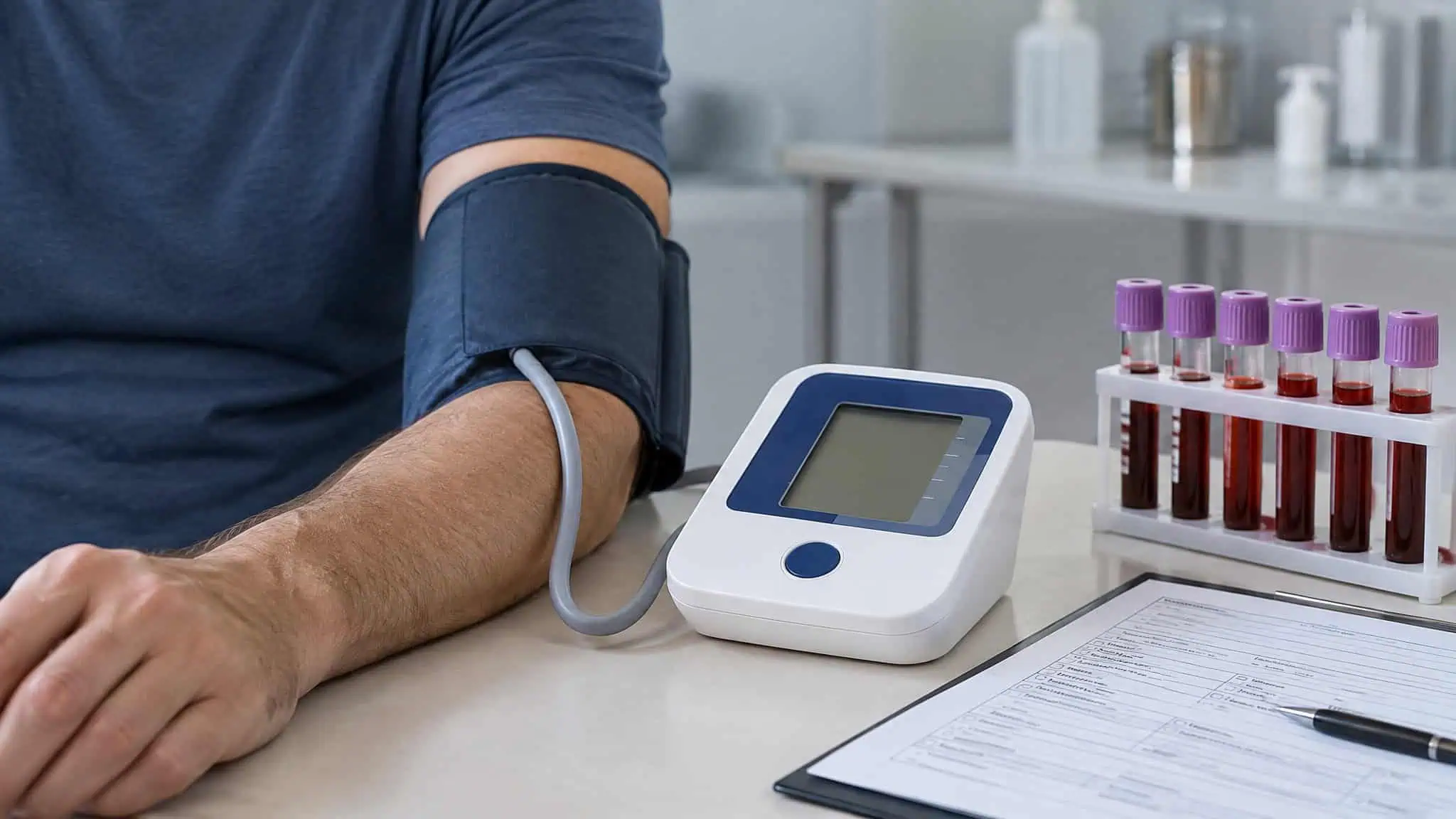
The mechanism chain is simple: testosterone ramps up red blood cell production, thicker blood raises clot risk. That’s what’s behind the pulmonary embolism signal in the trial, and it’s why blood monitoring never stops. It’s also why the FDA swapped warnings in 2025: the boxed cardiovascular warning came off, and a blood-pressure warning went on. Yes, testosterone therapy is flagged on the label for raising blood pressure now.
The ordinary stuff, listed the way a buddy would: acne, headaches, mood changes, fluid retention, gynecomastia, worse sleep apnea, hair loss. Plus suppression of your own natural testosterone production and sperm formation, which gets its own section below.
One pattern clinicians keep flagging: guys feel better at the 3-to-6-week mark, stop showing up for follow-up labs, and their hematocrit climbs silently. It gets caught only on a routine draw, or sometimes not until it’s a problem. The follow-up appointments aren’t a formality. Our rundown of TRT side effects in males covers the full list and how each one gets managed.
Red flag: Feeling great at week 4 and skipping your labs is exactly when hematocrit climbs silently. Keep the follow-up draws.
Is taking TRT worth the risk, the honest benefit ledger
Whether TRT is worth the risk depends on what it actually delivers, and the honest answer has two columns.
The positive column is real. A 2014 meta-analysis by Corona pooled the sexual-function trials and found testosterone beat placebo on every measure: erectile function at an effect size of 0.82 across 24 trials and 1,473 patients, libido 0.81, sleep-related erections 0.87, orgasmic function 0.68, satisfaction 0.80. Effects showed up at every age and were strongest in men who started lowest. The lower your starting point, the more you notice.
The reality-check column: a 2017 analysis found about half of clinical trials showed no sexual-function benefit at all. There’s a dissenting review that reached the same conclusion, but it mixed normal-T and low-T men and used no validated statistics, which is a fair reason to weight the meta-analysis more heavily. Still, half is half.
The nuance most articles skip: if you have type 2 diabetes, vascular damage blunts the sexual payoff. If the plumbing is damaged, more T only goes so far. But body-composition and insulin-sensitivity gains may carry the value instead, which for a diabetic guy might be the better trade anyway.
Timelines, honestly stated:
- Sexual function: often improves within 3-6 weeks. This is the first thing guys notice.
- Bone density and muscle: 6-12 months, and even then the strength and fracture benefits aren’t clearly proven.
No before-and-after promises here. If you’re deciding whether this is worth it, our guide on what men can realistically expect from TRT benefits goes deeper on the upside, and the broader decision guide on whether men should take TRT walks the full trade-off.
Who should not take testosterone therapy
Men with untreated prostate or breast cancer, severe polycythemia, uncontrolled heart failure, or untreated sleep apnea should not be on it, full stop. Some of those conditions make therapy dangerous in itself. The rest just put you outside the evidence base, where no safety claim transfers.
Supraphysiologic doses, meaning more than your body would naturally make, and uncontrolled cardiovascular disease fall outside every trial population too. Say it bluntly: more isn’t better, and a bad heart changes the math.
On the age questions, the honest answer comes from trial design. The T Trials, a randomized controlled trial run at 12 US sites, enrolled 788 community-dwelling men, all 65 and over, 63% of them obese. TRAVERSE enrolled men with pre-existing heart risk. The 2026 label change removed the age-related-hypogonadism exclusion, so older men are no longer explicitly shut out.
But those trial populations had risk by design, which isn’t proof of safety at any age. There’s no age-specific guarantee here, just populations that were studied and ones that weren’t.
Is TRT safe long term, what the evidence does and doesn’t show
No one has proven lifelong safety. The longest data runs years, not decades.
The exact horizon: TRAVERSE followed men about 33 months on average, and every trial in the eight prior heart-safety meta-analyses lasted three years or less. Before TRAVERSE, there was no long-term heart data at all. The FDA still acknowledges long-term prostate uncertainty for the same reason.
One nuance almost nobody covers: a 2014 review by Borst found cardiovascular risks and DHT elevation vary by administration route, meaning injections, gels, and other methods carry different risk profiles. TRAVERSE tested a transdermal gel, so the method you’d use is part of the risk conversation with your doctor, not a settled detail.
The honest close: we know more than we did, not everything.
Do men stay on TRT forever, stopping, suppression, and fertility
For most men, yes, because therapy shuts down your own testosterone production and sperm formation, which makes stopping an open question. If you might want kids, flag this with your doctor before the first injection, not after. The evidence documents the suppression clearly but doesn’t establish recovery timelines or tapering protocols after stopping. Anyone selling you a guaranteed exit ramp is inventing data.
Is it safe to take testosterone supplements without a prescription
No. Every non-prescribed route is riskier than monitored therapy, not gentler. The FDA warns that some “natural” boosters contain undeclared SARMs or actual anabolic steroids, meaning the unregulated version of the exact thing men were avoiding. SARMs, or selective androgen receptor modulators, have no FDA approval and carry contamination risks including lead, liver injury, heart attack, and infertility. Gray-market steroids run higher doses with no doctor checking bloodwork, and per NIDA and Reuters reporting, can be mislabeled or contaminated with heavy metals.
Prescribed, monitored TRT sits at the bottom of the risk ladder for a reason. On the supplement shelf itself, only 30% of human studies supported the ten most common ingredients across the five most popular Amazon boosters. D-aspartic acid, for one, showed no significant benefit over placebo in a 12-week randomized controlled trial combined with resistance training. If you’re determined to buy one anyway, look for third-party supplement certification such as NSF Certified for Sport, USP Verified, or Informed Choice.
The regulatory shift and the screening debate
For men over 60: you’re no longer explicitly excluded. The 2026 label change removed the age-related-hypogonadism limitation. But the trial populations behind that change had risk by design, so permissiveness isn’t a green light.
The arc, in one timeline. In 2015 the FDA restricted therapy to congenital or organic-damage cases, and Australia’s Endocrine Society agreed, pointing obese men toward weight loss instead. In 2025 the boxed heart warning came off and a blood-pressure warning went on. In 2026, HHS and the FDA removed the age-related limitation, added a low-libido indication, and narrowed the prostate warning to metastatic disease.
RFK Jr. and urologist Brian J. Christine framed the update as evidence-based. That’s their read; the FDA’s own acknowledgment of prostate uncertainty is also on the record.
Then the tension. In July 2026, Secretary Hegseth announced annual testosterone screening for all US troops 30 and older, with TRT offered voluntarily. The Endocrine Society pushed back on July 16, 2026, saying there’s little evidence for screening asymptomatic men. Researcher Adriane Fugh-Berman put it sharper, calling screening for a treatment with unproven benefits and proven risks “a bad idea.”
She also questioned the testing itself, arguing that lab testing adds little for men whose testicles still work normally. Provocative, but it lands on a real number: only about 6% of men who test low actually have symptoms from it. Most guys testing low feel fine.
There’s a genuine debate underneath all this that even the experts haven’t settled. The old line separated “true” hypogonadism, actual damage to the brain’s signal centers or the testes, from “false” age-related low T riding along with obesity and age. Some researchers argue that distinction isn’t well supported, pointing out that metformin is routine for a mostly non-organic diabetes while testosterone gets refused for a mostly non-organic low T. That’s their argument, not settled consensus. But it frames the whole article: testosterone is safe for the diagnosed, and going looking for patients is a different project entirely.
Frequently Asked Questions
Is TRT bad for your heart?
No, testosterone therapy has not been shown to increase heart-attack or stroke risk in properly diagnosed men. The TRAVERSE trial followed 5,246 men with existing heart risk for about 33 months and found major cardiac events in 7.0% of the testosterone group versus 7.3% on placebo — essentially identical. The FDA removed its boxed heart warning in 2025, though it added a blood-pressure warning in its place.
Does testosterone therapy raise blood pressure?
Yes, it’s flagged on the label. In 2025 the FDA removed the boxed cardiovascular warning from testosterone products and replaced it with a blood-pressure warning. That’s part of why ongoing blood monitoring isn’t optional — along with hematocrit, which climbs silently in men who feel great at week 4 and stop showing up for follow-up labs.