
A close friend of mine was in a fairly serious crash recently and ended up having to consult a truck accident lawyer in Atlanta. He’s going to survive, which is the only headline that matters, but watching the recovery process up close has been a lot. It turns out that once the tow truck leaves and the emergency room discharges you, healing after a car accident stops being a single event and turns into a slow, confusing grind.
When you’re in it, or watching someone you care about go through it, the questions hit at 2 a.m. You want to know if pain getting worse in the second week means the doctors missed something, how long the body takes to knit itself back together, and whether your brain is supposed to feel as rattled as your ribs. Crash injuries run from minor soft tissue damage like sprains, strains, and bruises that show up within hours to traumatic brain injuries or internal bleeding. Every stage from the crash scene through month three has a specific job in controlling pain and getting your function back, and knowing the map makes the process much less disorienting.
Key Takeaways
Physical healing follows a four-phase biological model from Fitness Matters (acute from 1 to 3 days, subacute from 3 to 14 days, repair from 2 to 6 weeks, and remodeling from 6 weeks to 6 months) that maps directly onto the clinical care schedule from Apex Orthopedics.
Sprains, strains, and bruises usually show up within hours, whereas internal bleeding, organ damage, neck trauma, and traumatic brain injuries can hide for days; new dizziness, headaches, or abdominal pain in the first weeks require immediate medical evaluation.
Over 30% of motor vehicle accident survivors develop post-traumatic stress disorder (PTSD) symptoms across four clinical clusters, and full mental recovery requires therapy such as eye movement desensitization and reprocessing (EMDR) combined with a behavioral plan to start driving again.
Table of Contents
How long healing takes: two timelines, one map
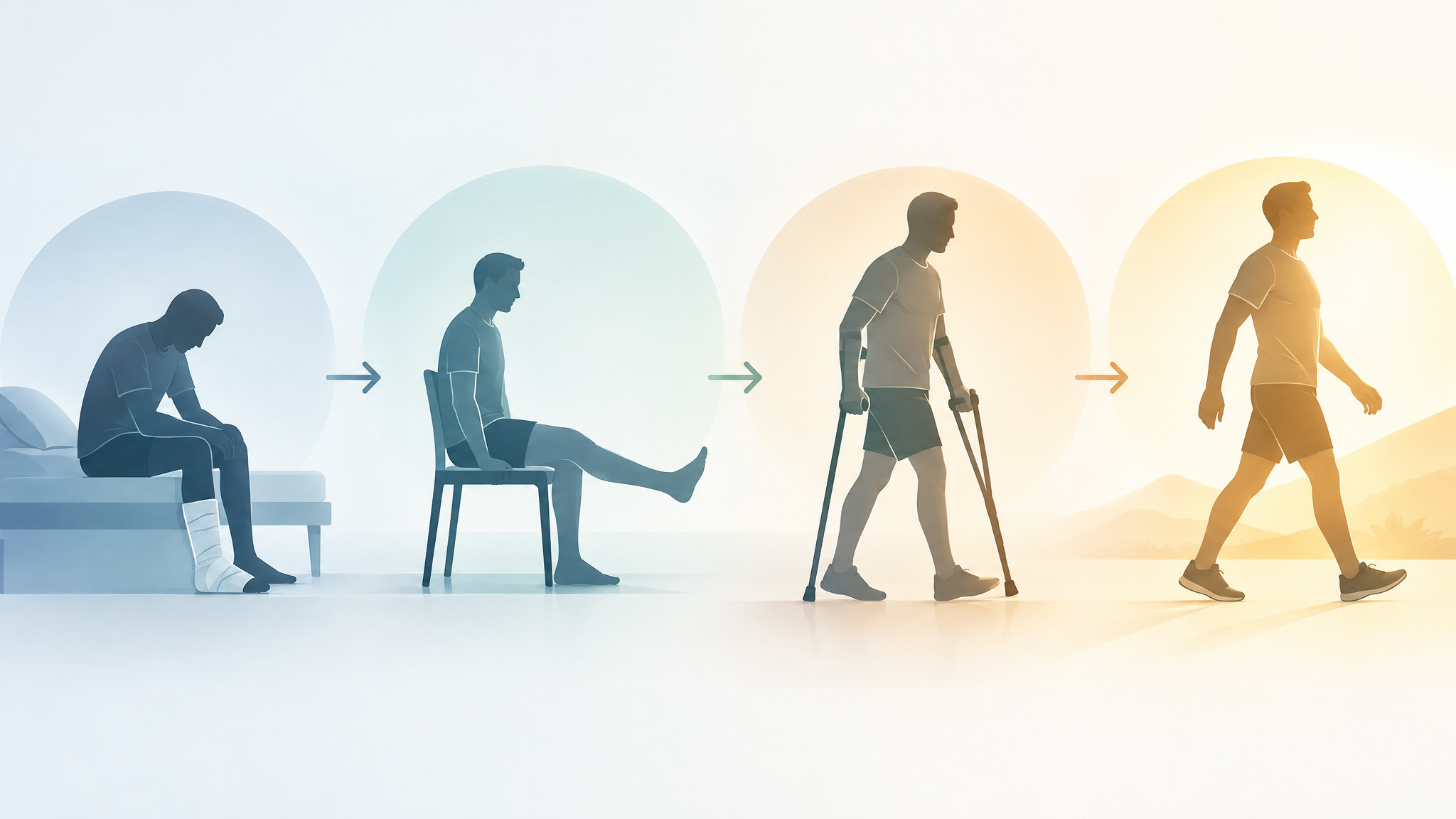
Recovery from a car accident proceeds through four biological healing phases spanning 1 day to 6 months that align directly with a clinical care schedule running from emergency triage through month three and beyond. Car accidents affect millions of people a year, and getting back to normal requires physical repair, emotional care for parallel trauma, and staying on top of medical follow-ups and insurance records. Pairing the clinical care stages from Apex Orthopedics with the four-phase healing model from physical therapy practice Fitness Matters explains why specific weeks feel the way they do, even though exact timelines shift with injury type and severity.
| Clinical care stage (Apex Orthopedics) | Biological healing phase (Fitness Matters) | Time window | Primary biological and clinical activity |
|---|---|---|---|
| First 72 hours (after emergency care) | Acute phase | Days 1 to 3 | Pain, swelling, and inflammation peak as blood flow increases; doctors confirm injuries and start acute pain control. |
| Weeks 1 to 2 | Subacute phase | Days 3 to 14 | Swelling begins to drop while muscle tension often peaks; gentle range-of-motion exercises and physical therapy start as pain allows. |
| Weeks 2 to 6 | Repair phase | Weeks 2 to 6 | Scar tissue forms at the injury site; rehabilitation shifts to targeted strengthening, posture work, and flexibility. |
| Months 1 to 3 and beyond | Remodeling phase | 6 weeks to 6 months | Scar tissue reorganizes to restore long-term strength, endurance, balance, and daily function. |
The injuries crashes cause and the treatment path for each
The same collision can leave one person with sore muscles and another with life-threatening internal bleeding or a traumatic brain injury. Physical therapy matches its tools to the exact tissue that took the hit.
Whiplash
Rear-end collisions often snap the head forcefully backward and forward. That whip motion leaves you with neck pain, stiffness, headaches, and dizziness. Physical therapy tackles whiplash with light stretching, hands-on manual therapy techniques, and pain management modalities designed to get your neck’s range of motion back.
Back pain
Impact forces frequently injure the muscles, ligaments, or discs in your spine, causing stiffness, pain, and reduced mobility. Waiting it out rarely fixes structural back soreness. Physical therapists focus on core strengthening, posture correction, and manual therapy to stabilize the spine.
Soft tissue injuries
Sprains, strains, and contusions are bruising and tearing across muscles, tendons, and ligaments. Physical therapy manages these by dialing down pain and inflammation first, then pushing tissue healing with targeted exercises and manual therapy.
Emergency care: what happens from the scene to the specialist referral
Emergency personnel at the crash scene assess your injuries, stabilize you to prevent further harm, and decide on hospital transport, starting the official medical documentation trail for your recovery process right from the roadside evaluation. At the ER, triage teams log vital signs, visible wounds, and pain levels to rule out internal bleeding, fractures, and traumatic brain injuries, giving immediate attention to neck pain to prevent long-term damage. Doctors use X-rays, CT scans, and MRIs to spot hidden spinal, internal, or soft tissue trauma, prescribe initial medication to control pain and inflammation (with stronger pain control for severe injuries), and refer you early to a car accident doctor who tracks your healing progress and builds a prescribed treatment plan to keep your recovery timeline on track.
The first 72 hours: managing inflammation and why complete rest backfires
The first 72 hours after a car accident requires controlling acute pain and swelling through ice packs, prescribed medication, brief rest, and guided gentle movement rather than staying flat on your back. Prompt medical evaluation within those first three days sets the baseline for prescription care and at-home recovery. While parking yourself on the couch feels intuitive when everything hurts, complete bed rest can actually hinder acute recovery, whereas light activity, manual therapy, or light stretching under medical guidance reduces stiffness and lowers your odds of long-term pain.
That early soreness has a mechanical purpose. During the first 72 hours, your body’s inflammatory response sends extra blood flow to damaged tissue. The resulting swelling, redness, and pain prove your immune system is working and give your doctor a physical map of which areas took damage. Early pain control keeps you comfortable enough to stay mobile during this window while you return to the doctor to review imaging results, check early progress, and confirm the exact injury list.
Delayed symptoms: which injuries appear days later, and the red flags that are never “just soreness”
Yes, car accident injuries can appear hours or days after the crash when initial adrenaline wears off and slow-developing internal, spinal, or neurological damage begins producing symptoms. Soft tissue damage like sprains, strains, and bruises usually announces itself within a few hours, while internal bleeding, organ damage, neck injuries, and traumatic brain injuries often stay quiet during the emergency exam. Watch for a specific triad of red-flag warning signs in the first days and weeks: new dizziness, headaches, or abdominal pain require immediate reporting to a doctor to rule out brain or internal trauma.
It’s a classic trap to walk away from a wreck feeling fine, skip the follow-up appointment because you think you dodged a bullet, and wake up three days later unable to turn your neck or shake a pounding headache. Internal bleeding, organ damage, neck trauma, and traumatic brain injuries can remain hidden during the first 72 hours, so rather than waiting until pain forces an urgent search for a walk in chiropractor near me, patients should follow up with a doctor during this window, and if symptoms persist or worsen, a primary care physician can evaluate the injury and recommend a prescribed treatment plan. Those scheduled check-ins during the first 72 hours and weeks 1 to 2 exist specifically to catch what the initial adrenaline rush masked.
| Injury or symptom category | Typical onset window | Specific symptoms to watch | Required clinical action |
|---|---|---|---|
| Minor soft tissue injuries | Within hours of the crash | Localized pain, swelling, bruising, sprains, and muscle strains | Manage with ice, rest, prescribed medication, and guided light movement; confirm at the 72-hour follow-up. |
| Delayed neck and whiplash injuries | Hours to several days later | Neck pain, worsening stiffness, reduced range of motion, headaches, and dizziness | Report promptly for physical evaluation; immediate attention to neck pain helps prevent long-term damage. |
| Traumatic brain injuries (TBI) | Days to weeks after impact | New or worsening headaches, persistent dizziness, sleep trouble, or sensory changes | Seek immediate medical re-evaluation and diagnostic imaging such as a CT scan or MRI. |
| Internal bleeding and organ damage | First few days to weeks | New abdominal pain, deep torso soreness, or dizziness | Contact a doctor or emergency care immediately for diagnostic testing to prevent life-threatening complications. |
When existing soreness refuses to fade or new issues show up after discharge, don’t try to tough it out at home. A doctor can re-evaluate the injury, order fresh imaging or tests, and refer you to a specialist before a hidden problem becomes permanent.
Weeks 1 to 2: when pain gets worse before it gets better
Plenty of people leave the ER thinking their discharge papers are the whole treatment plan, only to hit week two feeling worse and worrying that something newly broke. Treating sore muscles at home during weeks 1 and 2 relies on ice, rest, limited movement, and prescribed anti-inflammatory medications or muscle relaxers, provided you have no red-flag symptoms like dizziness, headaches, or abdominal pain. Both ice and heat therapy help manage pain and support recovery, and while choosing the wrong one usually won’t harm you, using the right option at the right time speeds up comfort.
Feeling worse in this window is standard biology. Days 3 through 14 mark the subacute phase, when soft tissue injuries and muscle tension often peak before swelling finally starts to drop. Home care isn’t a substitute for ongoing medical supervision, though. Continuing to see a doctor, such as a Charlotte car accident doctor noted in clinical recovery guides, lets your provider track progress, adjust prescriptions, and order extra imaging to rule out internal bleeding.
As soon as your pain allows, physical therapy begins with light movement, stretching, and manual therapy to restore range of motion. Early emotional fallout like anxiety, trouble sleeping, or flashbacks often surfaces right alongside the physical peak, and talking to a mental health professional early keeps those symptoms from hardening.
Weeks 2 to 6: active rehabilitation and rebuilding strength
Physical therapy after a car accident begins in the first week or two as soon as pain allows with gentle stretching and manual work, then steps up in weeks 2 through 6 into active rehabilitation focused on strength training, flexibility, and posture correction. Standard recovery plans pair this hands-on therapy with ongoing medical oversight and pain control so you can handle the workload safely. As your body enters the biological repair phase between weeks 2 and 6 and lays down new scar tissue, the clinical work shifts from passive comfort to rebuilding stability with resistance bands, balance drills, and core exercises.
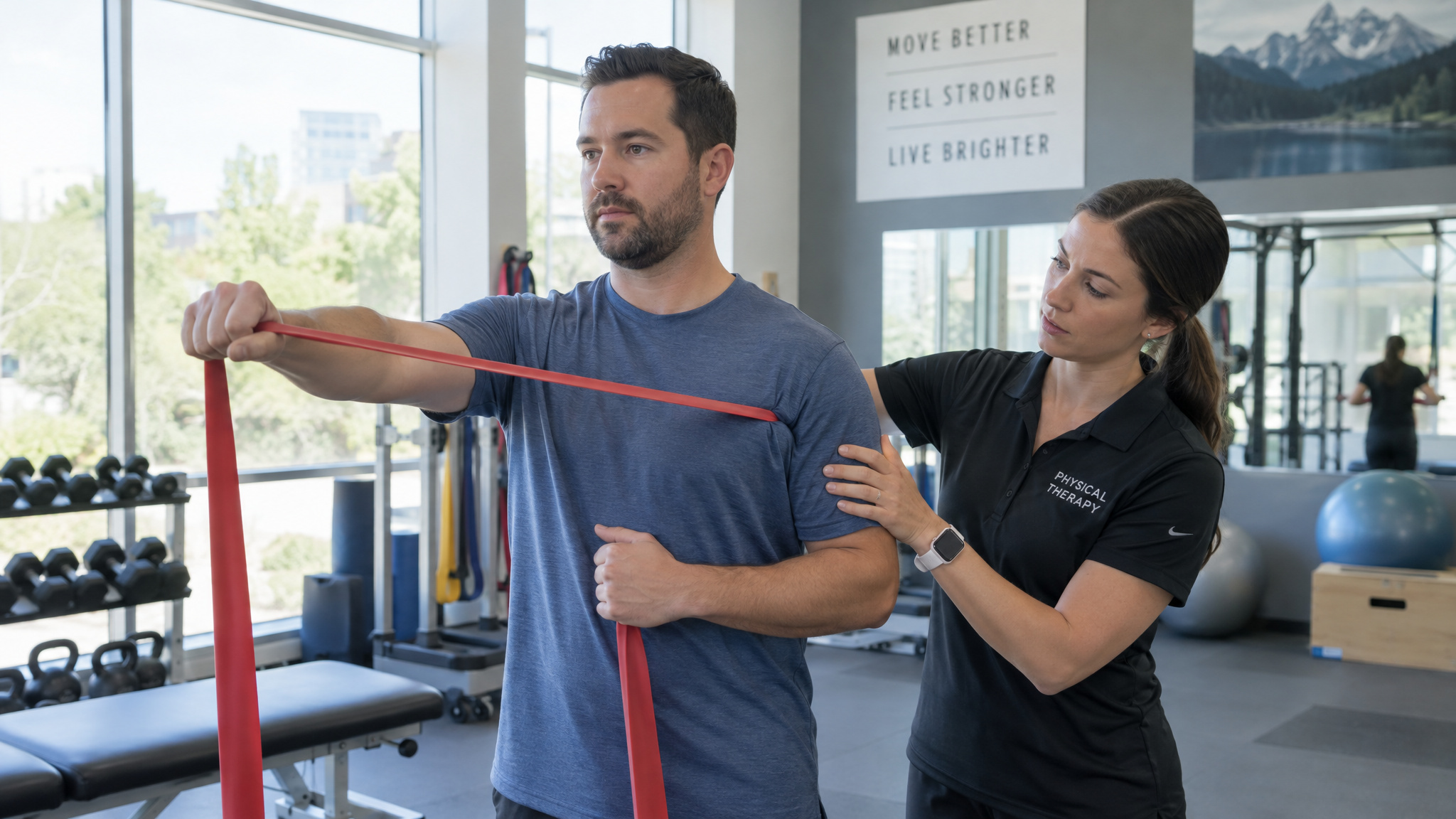
Here at Unfinished Man, we’re usually skeptical of anything that sounds like a generic fitness routine, and post-crash rehab only works when it’s built around your specific damage. A good physical therapist starts with a comprehensive evaluation of your injuries and how they limit your daily life, teaching you practical ways to move without straining healing tissue and adjusting the plan as you improve.
The weeks 2 to 6 rehabilitation toolkit covers four main areas:
- Strength training, flexibility exercises, and posture correction to rebuild structural stability after soft tissue damage.
- Resistance bands, balance work, and core exercises to lock in spinal alignment and keep you from re-injuring the joint.
- Soft tissue therapy, massage, hands-on manual therapy, cold and heat therapy, or ultrasound to improve circulation and calm lingering muscle tension, stiff joints, or nerve pain.
- A solid diet and consistent hydration, which supply the actual cellular fuel required for tissue repair and daily energy.
Your doctor stays in the loop throughout this four-week block. If symptoms worsen or new warning signs like dizziness, headaches, or abdominal pain develop, then doctors may order additional imaging or refer the patient to a specialist. This middle stretch of recovery is also slow and repetitive, and stress or low motivation can stall physical healing. Working with a mental health professional during weeks 2 to 6 helps plenty of patients stay consistent enough to finish their physical rehab plan.
Months 1 to 3 and beyond: extended therapy and measuring real progress
Serious crash damage like spinal trauma, joint damage, or torn soft tissue often requires physical therapy well into months 1 to 3 and beyond, matching the 6-week to 6-month remodeling phase when scar tissue reorganizes. Late-stage workouts lean into endurance, balance, and full mobility, with an eye on keeping chronic pain from setting in. Instead of watching the calendar or judging recovery by how stiff you feel on a random Tuesday morning, therapists measure real progress across three functional benchmarks: your strength, your range of motion, and whether your daily life works again.
The mental recovery track: recognizing post-accident PTSD
Post-accident emotional trauma becomes clinical post-traumatic stress disorder (PTSD) when normal early shakenness locks into persistent nightmares, panic attacks, driving avoidance, and self-blame loops, a pattern that affects over 30% of motor vehicle accident survivors according to research cited by therapist Barbara Heffernan. Feeling rattled or losing sleep in the first days is common, and getting professional support early helps stop those acute reactions from turning chronic. Clinical post-crash PTSD splits into four specific symptom clusters.
The four symptom groups
Intrusive symptoms hit you with nightmares, flashbacks, and sensory triggers like smelling smoke or hearing screeching brakes. Avoidance means refusing to drive, hating riding as a passenger, or routing around the crash street. Hyperarousal leaves you wired and jumpy, causing sleep trouble, psychosomatic stomach aches and headaches, and panic attacks where your heart races so hard it feels like a heart attack. Negative cognitions trap you in self-blame, anger at the other driver, and looping fears about safety that feed the other three groups.
Risk and protective factors
Your odds of developing PTSD spike with powerlessness, specifically that awful moment where you see the hit coming, let go of the wheel, and wait. Freezing, being trapped, believing you might die even in a minor wreck, crash severity, fatalities, delayed treatment, and self-medicating with alcohol or biphasic drugs all raise the risk. Conversely, a fast emergency response, calming your body down quickly, returning to driving early, and leaning on an understanding support network of friends and family who listen without judgment all protect against long-term trauma.
When grief masks PTSD and what support actually does
If someone died in the collision, heavy grief can easily hide PTSD symptoms. Survivors often experience both at the exact same time, and recognizing that grief doesn’t cancel out trauma is what gets people the right clinical help.
Treating post-accident trauma and why driving again is the treatment, not the reward
Mental recovery after a car accident requires starting trauma therapy as early as possible and working through a structured behavioral plan that ends with you driving again. Professional counseling gives you a controlled way to process flashbacks and anxiety that get in the way of work and sleep. Eye movement desensitization and reprocessing (EMDR) is one of the most effective treatments available, backed by an article on the National Institute of Health (NIH) website showing measurable neuroimaging brain changes caused by the accident, by PTSD, and by EMDR therapy itself, alongside proven options like cognitive behavioral therapy (CBT) and exposure therapy.

EMDR, CBT, and exposure therapy
Heffernan’s top clinical recommendation is straightforward therapy, and the sooner you start, the faster you clear the trauma. If you can’t stomach getting in a car to visit an office yet, video therapy and online EMDR work from home.
Returning to driving: the behavioral plan
Every effective therapy path ends in the driver’s seat. Avoiding driving feels protective in the moment, but it actively worsens PTSD, while getting back behind the wheel quickly dials down the trauma response. A therapist won’t just toss you the keys, though. You start by learning physiological relaxation and emotion-regulation tools, such as the three guided visualizations Heffernan uses in her office and offers in a free mini course to calm hyperarousal, and then follow a step-by-step exposure plan to ease back into traffic safely.
Medication after a crash: what helps, what’s contested, and the benzodiazepine question
Plenty of crash survivors clear post-accident anxiety and PTSD without ever filling a prescription. Deciding whether to take medication comes down to separating non-addictive drugs that calm specific physical symptoms from fast-acting sedatives like benzodiazepines that carry rebound and therapy-interference risks. Because therapists like Heffernan aren’t physicians and don’t prescribe, any medication call belongs with your therapist and a prescribing doctor or psychiatrist.
The medication landscape
When doctors do prescribe for crash trauma, they target specific problems. Beta blockers aren’t addictive, lower your blood pressure, take the physical edge off jumpy hyperarousal, and sometimes quiet flashbacks and intrusive thoughts. Selective serotonin reuptake inhibitors (SSRIs), which are standard antidepressants, sometimes help with post-crash anxiety and PTSD. For rough cases involving severe flashbacks, relentless nightmares, and ruined sleep, physicians sometimes use a very low-dose anti-psychotic.
The benzodiazepine tradeoff
Benzodiazepines sit in the middle of a real clinical debate. The World Health Organization (WHO) doesn’t recommend benzodiazepines for PTSD of any kind. Heffernan points to research, which she notes is debated, showing that these biphasic drugs give you quick relief followed by worse rebound anxiety once the half-life wears off, teach chemical dependence instead of self-regulation, and can block the brain-processing phase of EMDR. An American Family Physician article takes a slightly softer stance, listing benzodiazepines as possibly helpful for short-term relief while flagging short-term memory loss and rebounding anxiety when you stop, and advising doctors to skip chronic daily use in favor of other treatments.
Three real recoveries: calibrating what “healed” means
How long it takes to recover from a serious crash with broken bones or surgery comes down to what broke and how much hardware the surgeons had to put back in. Depending on structural damage, “healed” can mean walking out of the hospital the same day, counting weeks on crutches toward a single calendar date, or spending four years in and out of operating rooms.
A minor crash: Sen. Chris Coons
At the mild end of the spectrum, Delaware Sen. Chris Coons was caught in a multi-car crash around 10:20 a.m. on a Sunday in Lewes, Sussex County, after another driver suffered a medical incident and hit several vehicles, according to KYW Newsradio. Coons went to Beebe hospital for minor injuries and returned home with a full recovery expected while police continued investigating the wreck. He publicly thanked the first responders for their prompt, professional care and said he was relieved nobody was seriously hurt.
A staged surgical recovery: Becky Isaacs
A serious surgical recovery runs on multi-week milestones and heavy community logistics. Gospel singer Becky Isaacs of The Isaacs survived a head-on, two-car collision on December 15 in Hendersonville, Tennessee, that killed one person, MusicRow reported. Traveling alone, she got immediate care from first responders at the scene and was taken to Skyline Medical Center. Her injury list was brutal: a fractured left tibia, three fractured ribs, a plate and nine screws inserted into her right tibia, and a full right knee reconstruction.
Surgeons kept her non-weight-bearing on both legs for 4 to 6 weeks. The group cancelled its remaining December shows and brought in a stand-in performer, while her medical team targeted the end of February for her return to the stage ahead of a Reba McEntire tour kicking off March 9 in Jacksonville, Florida. While her family expressed confidence in a full recovery, supporters set up a GoFundMe to help with medical bills and sent cards to P.O. Box 370, Goodlettsville, TN 37070, and Isaacs shared her gratitude for the first responders, Skyline staff, and her community alongside prayers for the deceased man’s family.
A multi-year arc: Tiger Woods
At the catastrophic end, recovery takes years of follow-up operations. Tiger Woods had a history behind the wheel before his worst wreck, including a November 2009 crash into a fire hydrant and a tree, plus a May 2017 DUI arrest followed by a June 2017 clinic stay. Then came his February 2021 single-vehicle rollover in Southern California, reported by Vanessa Etienne at PEOPLE, where his SUV hit a center-divider sign, tore through a tree, and landed on the roadside. Woods suffered comminuted open fractures of his tibia and fibula, meaning the shattered bone broke right through the skin, alongside ankle and foot injuries.
Doctors considered amputating his leg during emergency surgery. Woods spent months in physical rehab and called the injuries more painful than anything he had ever experienced. That rollover set off a surgical chain that ran for years: a back procedure and microdiscectomy in December 2021, right ankle surgery in April 2023 to fix post-traumatic arthritis from the wreck, surgery for a ruptured Achilles tendon in March 2025, and a lumbar disc replacement for ongoing lower back trouble in October 2025.
Frequently Asked Questions
How long should you rest after a car crash?
Keep rest brief during the first 72 hours rather than parking yourself flat on your back for days. Complete bed rest actually slows down acute healing and drives up stiffness, whereas pairing short breaks with ice, prescribed medication, and doctor-guided light movement lowers your odds of chronic pain. Even in the first two weeks, gentle range-of-motion exercises and light stretching should start as soon as your pain allows.
What delayed symptoms and injuries can appear days after a car accident?
While minor sprains, strains, and bruises usually show up within hours, internal bleeding, organ damage, whiplash, and traumatic brain injuries often stay hidden while initial crash adrenaline wears off. Whiplash can take hours or days to trigger neck stiffness and reduced motion, whereas brain trauma and internal organ damage can surface days or even weeks later. If you develop new headaches, persistent dizziness, or abdominal pain after leaving the hospital, get an immediate medical evaluation and diagnostic imaging.
When should you start physical therapy after a car accident and what does it involve?
Physical therapy starts in the first week or two as soon as pain permits, opening with gentle stretching and hands-on manual work to get your range of motion back. By weeks 2 through 6, rehab steps up into active strength training, posture correction, core work, balance drills, and resistance bands to stabilize healing scar tissue, alongside modalities like heat, ice, massage, or ultrasound. For severe joint, spinal, or soft tissue trauma, therapy continues past month three to rebuild long-term endurance and daily function.
What are the signs of emotional trauma after an accident, and when is it more than normal stress?
Being rattled or losing sleep in the first few days is normal, but emotional fallout crosses into clinical PTSD—which hits over 30% of crash survivors—when it locks into four persistent symptom groups. Watch for intrusive nightmares or flashbacks, strict avoidance of driving or crash routes, jumpy hyperarousal with racing-heart panic attacks or psychosomatic aches, and looping self-blame or anger. Starting professional counseling early keeps that initial shakenness from hardening into a chronic disorder.

