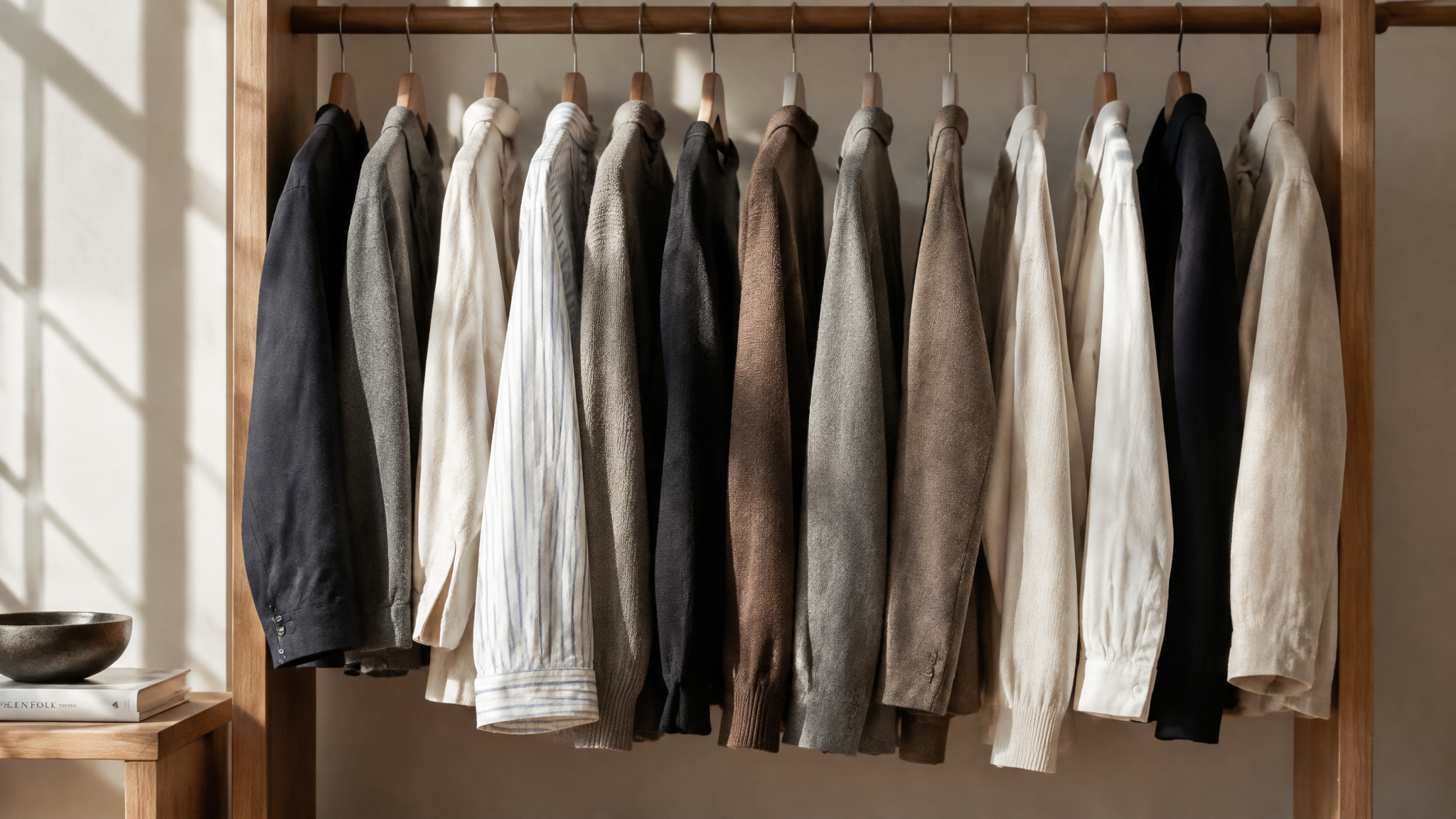
A closet rod bowing under forty hangers and still leaving you with nothing to wear at 7:45 a.m. isn’t a shopping problem. You bought the rust-colored overshirt because it looked great on a mannequin, the graphic tees on vacation, and the slim dress pants for a wedding three summers ago, and now none of them talk to each other.
Building a minimalist wardrobe for men kills off that daily decision fatigue and stops the habit of rebuying a new persona every time the weather turns. The system’s just a small, curated collection of versatile clothes, paired with adaptable staples from a barefoot shoes collection, that pair together across nearly any setting or outfit, built to stay timeless, cross seasons, and ignore passing trends.
Most guys get the order backward. You can assemble a standard capsule tomorrow afternoon by swiping a credit card for 15 new pieces at once, which is fine if your closet is currently empty. Minimalism starts by subtracting from what you already own before spending a single dollar.
Buy the same 15 items without purging first and those good pieces just get buried inside 60 old mistakes. Subtract first, and every hanger in the closet earns its keep. Here at Unfinished Man, we’re focusing on the philosophy of owning less, whereas our guide on coordinating a fashionable capsule wardrobe focuses on getting more mileage out of combinations.
You build a minimalist wardrobe from scratch in three steps: 1) dump your current drawers and closets onto the bed for a Keep, Toss, and Maybe purge that clears out anything untouched for a year; 2) filter every piece through four hallmarks, appropriateness for your real week-to-weekend life, versatility, a neutral color backbone, and durable construction that holds up; and 3) fill the gaps to reach a curated 15-item core rotation of timeless, trans-seasonal clothes that work together in almost any combination.
Only then do you build toward a 15-piece core rotation: three pants, three button-ups, three tees, one sweater, two or three jackets, and three pairs of shoes. We’ve included options at multiple price tiers alongside workarounds for formalwear, age, and tailoring. The 15-piece framework and hands-on product picks draw from Nick English’s StrideWise capsule guide (updated July 20, 2026) and Jane Elmets’s FashionBeans wardrobe guides (dated October 16, 2026).
Key Takeaways
Empty your closet, drawers, and under-bed storage first using the Keep/Toss/Maybe method, tossing anything unworn in the past year before you spend a dollar on new gear.
Fifteen core pieces, 3 pants, 3 button-ups, 3 tees, 1 crewneck sweater, 2 outer layers, and 3 pairs of shoes, cover all four seasons. That lineup handles everything from casual to business casual with hundreds of combinations.
Every new addition must pass the three-outfit rule, stay faithful to a warm or cool color palette, and reserve cash at checkout for basic tailoring adjustments.
Table of Contents
Capsule Wardrobe vs. Minimalist Wardrobe: Owning Less, Not Coordinating More
A capsule wardrobe is a small, tightly edited collection of versatile, high-quality clothes in neutral colors that mix and match effortlessly across outfits, while a minimalist wardrobe applies a subtract-first rule that forces you to clear out unworn clutter before buying a single replacement piece. Both systems rely on timeless, trans-seasonal garments that outlast fast-fashion cycles, and both solve morning outfit paralysis when your closet is already overflowing with orphan trend buys. Subtracting first beats shopping first because dropping 15 coordinated staples into a closet still stuffed with 50 ill-fitting graphic tees, loud patterns, and neglected impulse buys just buries the good clothes inside the noise you were trying to escape.
The term “capsule” is ostensibly credited to London boutique owner Susie Faux back in the 1970s. Think of the word the way you’d think of a medicine capsule, space food, or a time capsule: everything condensed down to what actually matters. Standard capsule guides usually treat getting dressed as coordination math you can solve with a credit card. Minimalism treats the closet itself as the bottleneck.
Keeping that rotation clean requires a few blunt rules from Mens Fashioner. Stick to solid colors, skip patterns and contrast stitching, keep logos off your shirts, and remember that casual never means sloppy or ill-fitting. When every piece is plain and cut properly, nothing clashes and your lineup stays timeless, trans-seasonal, and immune to trends.
Choosing between the two paths comes down to what your bedroom looks like right now. Take the minimalist subtract-first route if your rod is already jammed with uncoordinated purchases that don’t speak to each other. Once that dead weight is gone, treat the remaining capsule as a permanent base where you can occasionally drop in a single seasonal or trend piece without replacing the whole rotation every spring and fall.
The Four Hallmarks That Filter Every Purchase
The core principles of a minimalist wardrobe for men are appropriateness, versatility, neutrality, and quality, four hallmarks (sometimes condensed to three: being versatile, staying neutral, and holding up over time) that work in sequence so appropriateness screens out bad ideas before versatility even gets tested.
- Appropriateness: Clothes only have value if you wear them from the work week through the weekend in your actual life. A closet full of Savile Row suits is useless if you work as a personal trainer.
- Versatility: Every garment has to pull at least double duty across different settings.
- Neutrality: Unless you’re an advanced color theorist, build your backbone on navy, grey, brown, drab olive, and black.
- Quality and durability: Simple clothes have zero ornamentation to hide cheap construction. Real durability means stitching that won’t fall apart and classic cuts that never date.
If you’re over 40 or 50
Older guys don’t need a separate rulebook. Running every purchase through the appropriateness and durability filters automatically cuts out trend-chasing in favor of straight-leg jeans that never look like you’re trying too hard and mid-thigh overcoats that age better than trendy cropped jackets.
Prune First: The Keep/Toss/Maybe Method
Start by auditing what your daily life actually demands before you touch a hanger. Pull out the go-to staples you’d fight to keep. Then look hard at your job and social calendar to see what you actually wear: solid colors or prints, gym gear or suits.
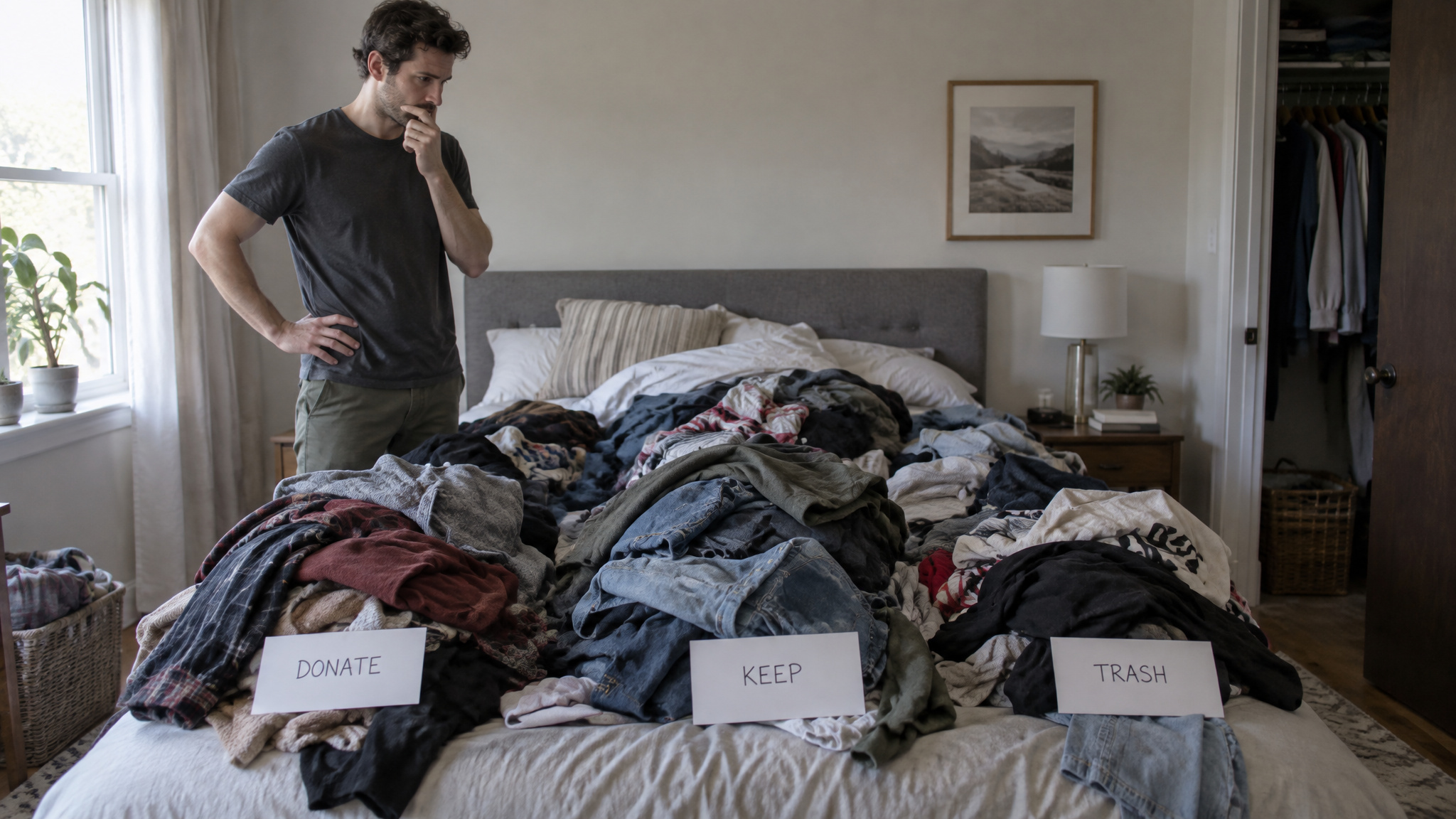
Next, empty the entire closet at once. Pull everything out of bedroom drawers, hall closets, and the storage boxes under the bed so you’re looking at a real inventory. Sort every piece into three piles: Keep for clothes that fit your style or pass Marie Kondo’s “spark joy” test, Toss for anything you haven’t worn in the last year, and Maybe for borderline items to sort later.
Watch the Maybe pile closely. Guys constantly use it as an escape hatch for unworn clothes saved for hypothetical occasions, which quietly refills the closet within months unless you enforce the one-year toss threshold. Once you’ve pared down, practice pairing what’s left so you only shop to fill real gaps.
The 15-Item Minimalist Capsule, Piece by Piece
This list answers a simple question: if you only get one jacket, boot, or pair of jeans, which one deserves the slot? We’ve included alternatives at multiple price points so it isn’t a shill list. Together, these 15 items (3 pants, 3 button-ups, 3 tees, 1 crewneck, 2 outer layers, and 3 shoes) cover all four seasons from casual to business casual across hundreds of combinations, with dozens demonstrated on video.
pants
- Left Field NYC Greaser selvedge jeans: Queens-made raw straight-leg denim (“Eat your heart out, Levi’s”) that works with all three shoes, stays dark and ketchup-proof for dinner, and never chases trends. Never buy fades you didn’t earn; demote ripped pairs to workwear. Cheaper: Naked & Famous, Brave Star, Uniqlo.
- Taylor Stitch Foundation Chinos in Espresso: 100% organic 8-oz non-stretch cotton twill sitting between brown and grey, not 70s brown, not too grey for earth tones, not khaki-preppy.
- Flint & Tinder 365 Chinos in navy: Stretch twill in four fits and 10+ colors; chinos evolved from military trousers into business-casual staples. Alternatives: Buck Mason Paperback Twill (vintage full-legged fit), J.Crew (under $100, huge fit array).
button-up shirts
- Flint & Tinder Classic Oxford: “The chino of shirts” from the best-value Americana brand. It works tucked in for business casual or worn untucked with sneakers. The Draftsman cut uses 3% elastane without looking shiny, and fit beats shade: slim enough under a jacket, roomy enough open over a tee (I bought blue, a color mistake I’ll unpack below). Slimmer: Taylor Stitch Jack.
- Proper Cloth Blue Indigo Chambray: Plain-weave workwear like denim without denim’s cultural baggage, sharp with chinos and loafers. Buy one mid-weight blue shirt that won’t look like a cowboy tuxedo with jeans. Cheaper off-the-rack: Huckberry, Alex Mill.
- Thursday Boot Co Forever Flannel: Thick enough as an overshirt or solo, strictly casual and cozy. Alternatives: Pendleton Burnside, L.L.Bean 1912.
tees and 1 crewneck
- Gustin Heavyweight T-Shirts: USA-made 100% heavyweight cotton 3-pack (white, navy, black) that breathes and keeps its shape.
- Wonder Looper Double Heavyweight long sleeve: Unbleached cream cotton from a small, often sold-out brand (I also own Gustin’s heavyweight long sleeves).
- Industry of All Nations Alpaca Crewneck: Midweight, low-texture pullover using undyed alpaca hair (baby yak and cashmere also add warmth without bulk; I still wear my discontinued light grey Taylor Stitch yak sweater, and Wills makes cheaper cashmere). Pullovers beat hoodies, which never dress up.
2-3 outerwear
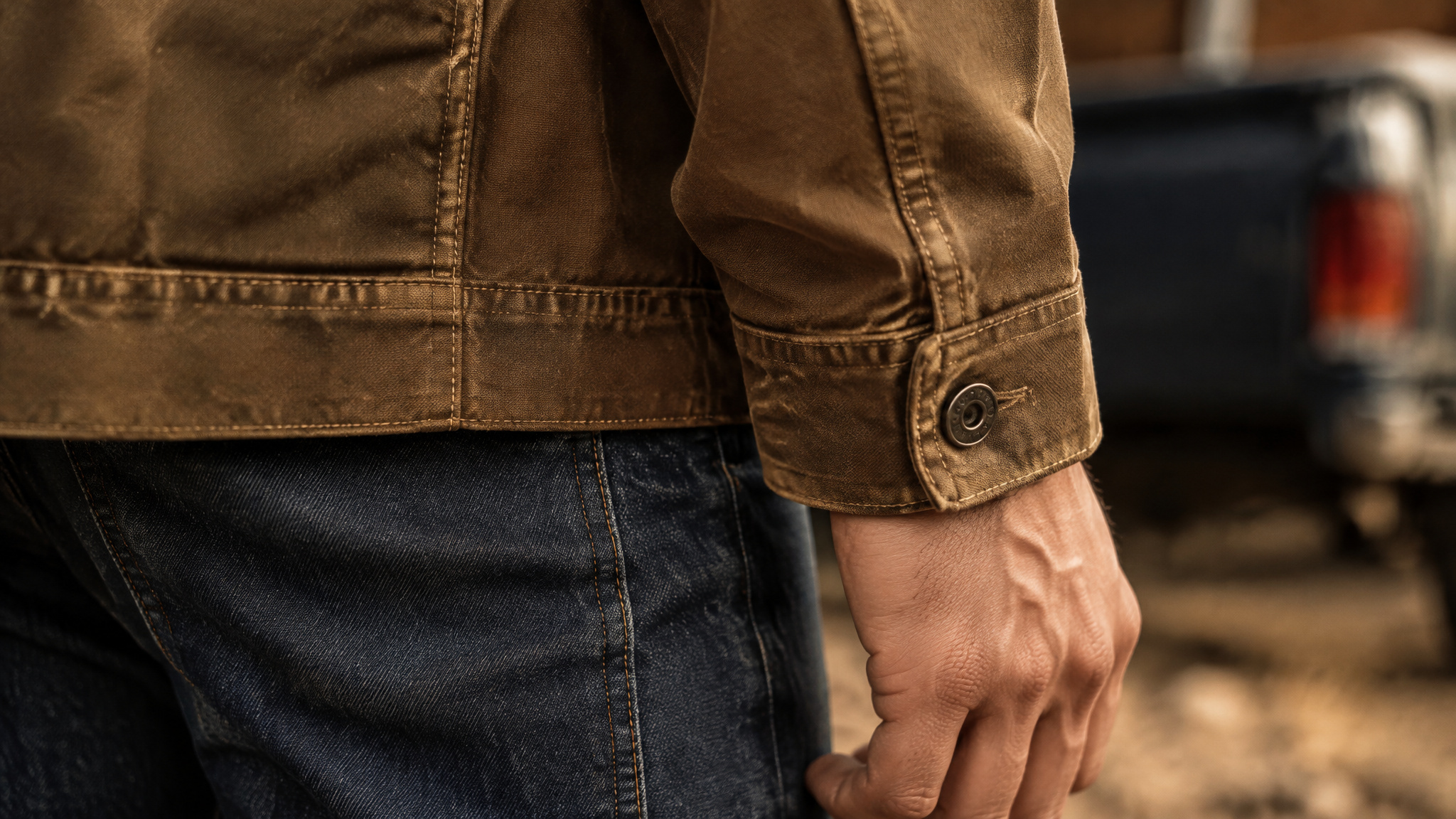
- Flint & Tinder Flannel-Lined Waxed Trucker: American-made in 8+ colors and two fits; cheaper and more abrasion-resistant than leather, avoiding double denim over jeans. Cheaper: Thursday Boot Co, Iron and Resin.
- Buzz Rickson Pre-WWII US Navy Pea Coat: Japanese-made exact pre-WWII Navy replica in 36-ounce Melton wool, surprisingly affordable and sharp over a tee or button-down. Vintage war-era eBay pea coats cost less but usually need a new lining.
- Schott NYC Cafe Racer (bonus third jacket): Brown leather that pairs with every item here except the loafers.
Footwear: The Three Shoes That Anchor Everything
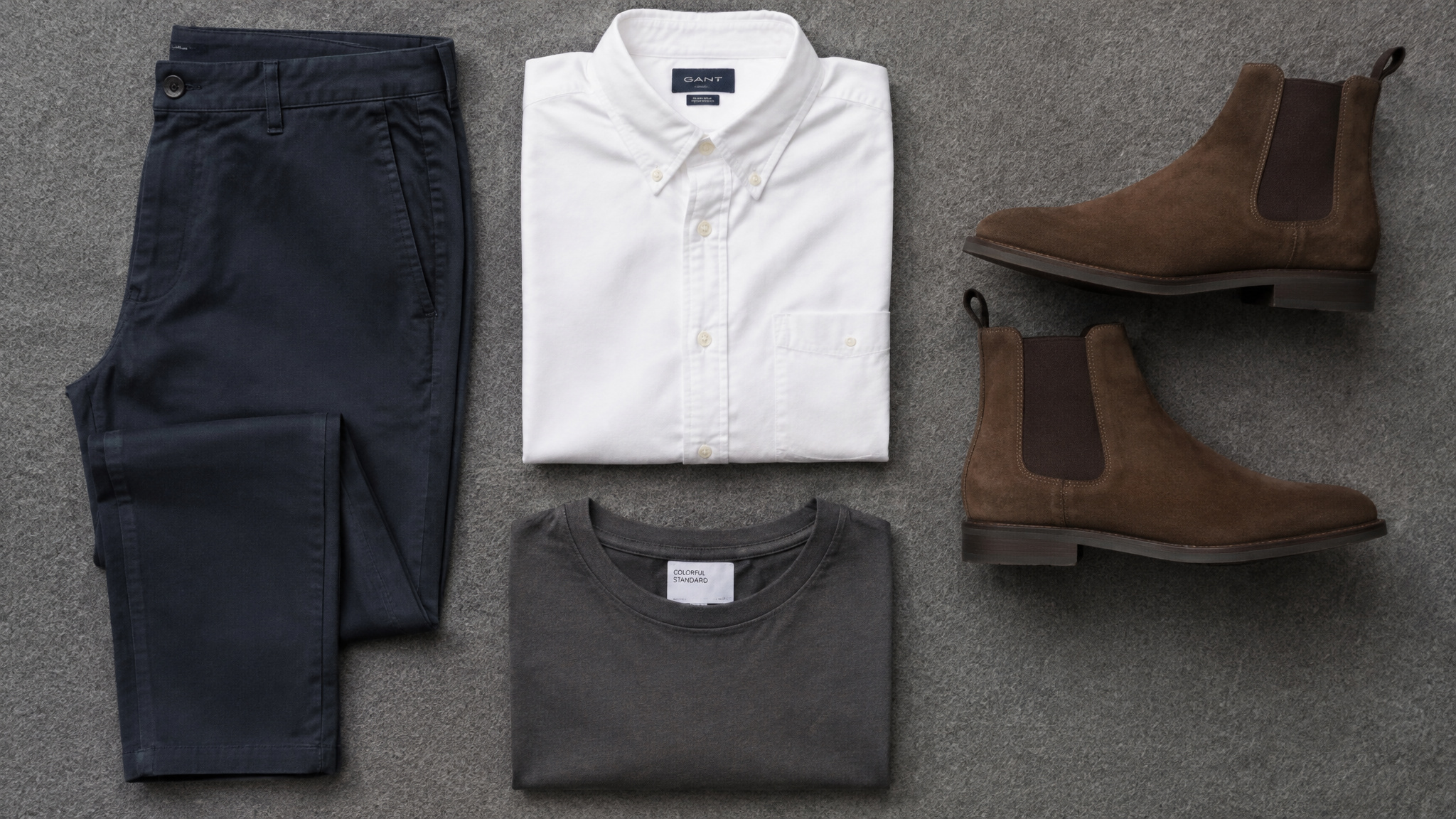
A minimalist men’s wardrobe needs three pairs of shoes: brown suede Chelsea boots, clean low-profile white leather sneakers, and smooth brown leather tassel loafers.
- Thursday Boot Co Cavalier Chelsea boots in brown suede: Resoleable and dresses up or down, making it the most versatile boot from the most versatile brand.
- Koio Capri white leather sneakers: A sustainability-focused brand makes these low-profile leather kicks, and they’re almost impossible to wear wrong. Thursday Boot Co sells an identical white leather sneaker for half the price, and Stan Smiths or Common Projects also fit this slot.
- Meermin Mallorca 101381 brown tassel loafers: Smooth French box calf leather (not suede) with an almond toe and resoleable Goodyear welt. They’re my dark-horse MVP and best value in the shoe game, spanning from a t-shirt up to a tie or suit (Grant Stone is a sturdier alternative).
Over the last decade, tennis sneakers replaced Oxfords as the default capsule shoe, while boots are less versatile than guys think: work boots clash with suits, Chelseas can look off with jeans, and desert boots or minimally detailed chocolate brown brogues bridge the gap better. White sneakers degrade fastest, so wipe them down with wet wipes and never wear any leather shoe two days in a row: a rest day kills odor and extends its life.
Color Budgeting: Commit to a Palette and Don’t Overspend It
Commit your wardrobe to either a warm palette (cream, tan, brown, green) or a cool palette (black, grey, burgundy), using blue and white as universal bridge neutrals across both schemes (red leans cool, though it works fine in either).
Once you pick a lane, treat individual colors like a finite budget where spending a shade on one garment locks it out of the next slot. I learned this the hard way inside my own 15-item rotation: I bought a blue Flint & Tinder Oxford, which was a mistake because blue is already mandatory for the indigo chambray shirt. Picking a white or olive Oxford instead would have opened up far more outfit combinations without doubling up on the exact same shirt hue.
Within your chosen palette, your dark neutrals stay flexible. You can swap your boot and jacket colors, pairing a brown canvas jacket with tan boots, or vice versa, and the outfit math still holds together without clashing.
How Formal Can It Go? Fabric Stacking and the Dress-Code Tiers
You can predict how formal an outfit will read by counting its workwear fabrics: denim, canvas, leather, flannel, and chambray mix together easily, but stacking two or three of them in one outfit pushes the look firmly into casual territory. Keep it to a single workwear piece, like a blue chambray shirt tucked into tan chinos with suede Chelsea boots, and the outfit still clears smart casual.
Mapping the 15 pieces across business casual office dress codes and weekend wear follows three strict formulas:
- Business casual: Navy or tan chinos, an Oxford or blue chambray shirt (skip safari-style workwear pockets) tucked in with a belt, and tassel loafers or suede Chelseas if you aren’t wearing a tie. Leave out white sneakers, tees, loud patterns, flannels, denim, and canvas.
- Smart casual: Opens the door to well-fitting dark blue jeans, suede, low-profile white leather sneakers, and untucked shirts.
- Casual: Raw denim and a heavyweight tee paired with Chelseas, loafers, or white sneakers.
What It Actually Costs to Build This From Scratch
Building a 15-item minimalist wardrobe from scratch scales from an entry-level budget tier using sub-$100 staples up to a mid-tier heritage roster, though neither the StrideWise nor FashionBeans guides calculate a single combined sticker price (and individual brand prices may vary).
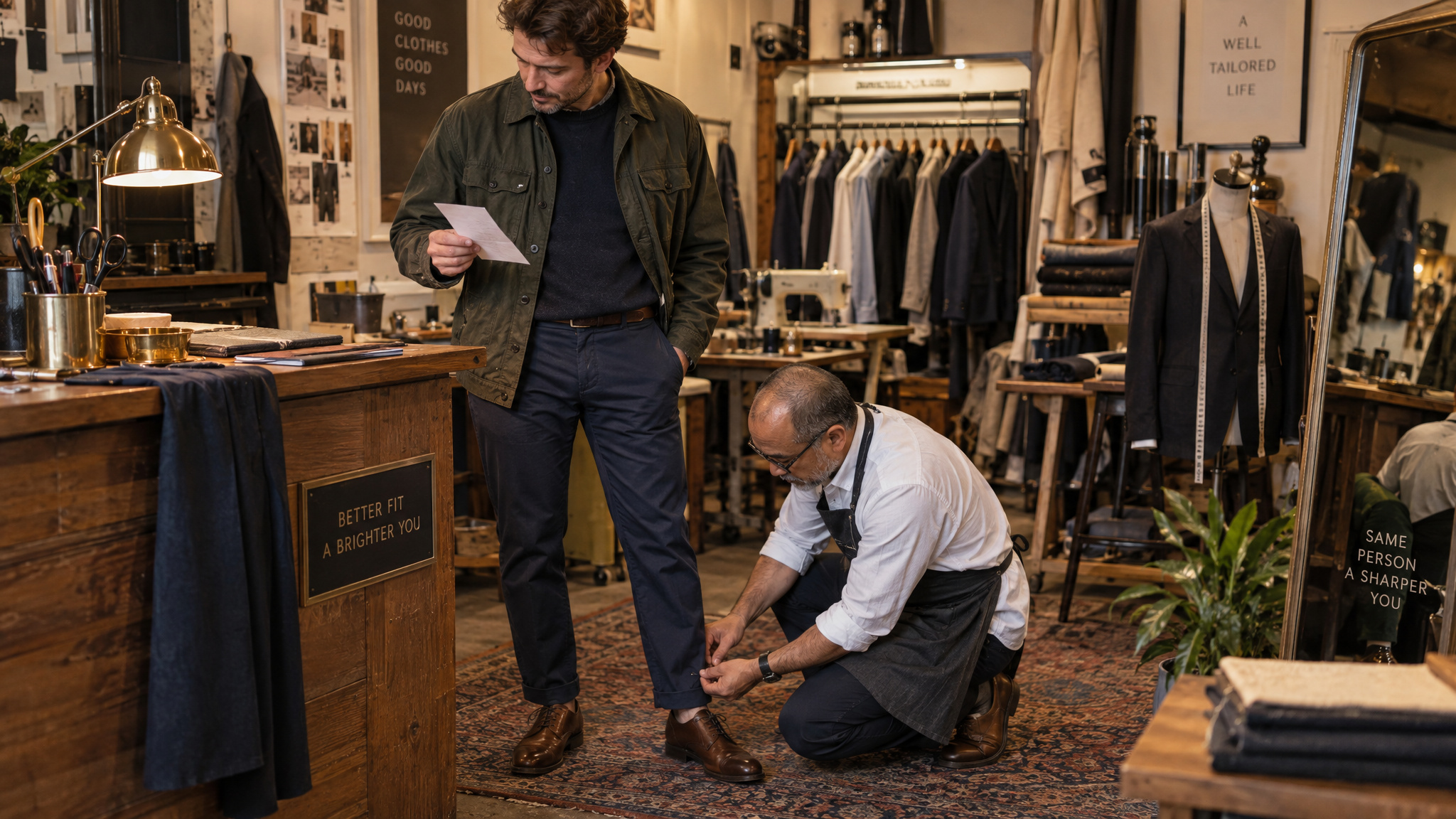
If you’re putting together a budget capsule wardrobe, swap in Uniqlo selvedge denim, J.Crew chinos under $100, and a Huckberry or Alex Mill chambray shirt. You can also grab Thursday Boot Co’s white leather sneaker at half the price of the Koio Capri, plus a vintage war-era pea coat on eBay (which stays cheap even after paying to replace the lining). I also bought four used tweed sport coats off eBay for under $100 each before alterations. Stepping up to the mid-tier hero roster brings in Gustin’s USA-made tee 3-packs, Flint & Tinder’s waxed trucker, Meermin’s Goodyear-welted loafers, and Buzz Rickson’s 36-oz Melton wool pea coat.
Spend on daily workhorses, buy cheap on items worn twice a year, and never buy all 15 pieces in one palette-blind haul. Most importantly, hold back cash at checkout for a tailor: simple fit tweaks make any garment look three times as expensive.
When the 15-Item Wardrobe Fails, and the Two-Loophole Fix
A 15-item rotation hits a wall whenever life demands a suit, peak summer heat calls for shorts and sandals, or a strict dress code bounces flannel shirts and suede boots at the door.
You don’t need separate year-round closets to fix that, just bolt on a small warm-weather capsule swap or a cold-weather layering annex. For summer, add muted tailored shorts ending an inch or two above the knee and a pale grey linen suit (which beats a lightweight navy two-piece). For winter and rain, add a mid-thigh navy overcoat (it ages better than black and works over a hoodie and jeans or a suit), a denim jacket layered over a knit under your coat, and a tan or charcoal trench or rubberized raincoat.
For formalwear, start with a navy two-button slim suit in textured hopsack with a shorter jacket hem, letting the jacket double as a blazer and the trousers wear like chinos. Back that up with an unpadded, unstructured blazer that wears like a cardigan over a Breton top, plus grey wool trousers you can pair with a blazer, a tee, or black tie like Saint Laurent. Finish the rack with two white dress shirts (always tucked; add blue, pink, and a stripe if you wear them weekly) and a few textured ties, silk is most formal, followed by linen and knitted, and a solid forest green covers almost anything.
Finally, use two loopholes to the “always buy quality” rule:
- Buy cheap if worn rarely: Inexpensive black Oxfords are fine for occasional wear, just pick almond toes, no brogueing or toe caps, and a low-profile heel (unless you’re Tom Cruise).
- Buy outright to create occasions: A dinner suit (or tuxedo) is less obligatory, but rented dinner suits look poor while buying one guarantees occasions to wear it. Choose midnight blue, which outperforms black, with classic silky lapels and a trouser stripe.
Second-Tier Essentials: The Layer Under and Around the 15
What touches your skin matters just as much as the outer 15. Stick to dark, well-fitting, natural cotton underwear and socks with zero novelty prints, replacing them at the first sign of holes, sagging, or snapped elastic (Tom Ford reportedly replaces his underwear every six months, which is wasteful). Sleep in a tee and breathable cotton or linen lounge shorts, skip the Disney Store stuff, that can pass outside the house to save an item in rotation.
When expanding your tops, start with block-color white and black tees (no fast-dating logos or slogans; be picky because tees multiply) and a logo-free navy or black sweatshirt before grey marl, which pairs with chinos like JFK or joggers like Ye. For a quiet-luxury old money aesthetic, rotate in a black wool roll neck (and a second in emerald) under a jacket or unbuttoned shirt, a 13-stripe long-sleeve Breton top from an original maker like Saint James, neutral polos (neither baggy nor spray-on; long sleeve reads more considered), two knitted jumpers (one lightweight under tailoring, one heavy for freezing days, neutrals before burgundy or mustard), and muted tailored swim shorts that go from pool to bar (never hot pink board shorts or a Speedo).
Finish with high-leverage accessories: a minimal three-hander watch with swappable leather and nylon straps, classic Wayfarer sunglasses, a citrus fragrance (swap scents from day to night to change how an outfit reads), subtle chain necklaces or rings (skip 2 Chainz maximalism), a wind-resistant block-color wooden-handle umbrella (no golf umbrellas), and a versatile backpack, tote, or leather messenger, backpacks now beat briefcases, and I carry a leather messenger bag from small Indonesian brand Cravar almost constantly.
Filling the Gaps: The Three-Outfit Rule and the Subscription-Box Question
No, clothing subscription boxes aren’t a substitute for building a minimalist wardrobe, except when you use a flexible service to fill specific gaps after you’ve already purged your closet and written down your style goals. Every new piece, from a store or a box, must pass the three-outfit rule: if it doesn’t work in at least three outfits with clothes you already own, send it back.
In a six-month test of 11+ services published February 13, 2026, Joseph Cheatham, Christian Gollayan, and the style and gear editors at Men’s Health broke down how the major boxes compare across budget ($20-$50), mid-range ($75-$150), and luxury ($200+) tiers, where styling fees typically run $20-$30 (prices may vary):
- Stitch Fix (Best Overall): $20 styling fee credited toward kept items, $25-$500 per piece, pairing a style quiz and algorithm with a human stylist (plus “Ask a Stylist”), free shipping, no subscription required, deliveries every 2-3 weeks to 3 months, and a discount only when buying 5+ items.
- Bespoke Post (Best Themed): $49/month (no free shipping), strong on accessories, gadgets, socks, and gloves; you can skip, swap, or pick colors, but no single-item returns.
- ThreadBeast (Best for Streetwear): 200+ brands (Levi’s, Puma, Champion) across Basic ($60/month, 2-3 staples), Essential ($95/month, 4-5 items), Premium ($150/month, full outfits), and Baller ($290 one-time, 9-11 pieces) for graphic tees, hoodies, denim, joggers, button-downs, hats, and socks; free shipping, no previews, no returns.
- Stately (Best for Dressy): Quiz-styled boxes from $129/month ($200 value, 3+ pieces from Bonobos, Ben Sherman, Perry Ellis, DL1961) to $499/month ($1,000 value with stylist consult); no styling fees or retail markup, free shipping, cancel anytime.
- Watch Gang: $75-$200/month (monthly, quarterly, or on-demand; no free shipping), keeping every watch (valued up to 5x the fee) with entries to win a Seiko, TAG Heuer, or “one-in-a-million” Rolex (the tester didn’t win a Rolex but liked the watches); no brand choice or returns.
Watch the return trap: Stitch Fix and trying capsule basics through Amazon via Amazon Prime Wardrobe ($14.99/month to try clothes plus $4.99/month for stylist curation) let you return what you don’t want, Bespoke Post lets you swap boxes or skip months but won’t take back single items, and ThreadBeast and Watch Gang lock you into keeping everything with no returns. If you just need to restock your underwear drawer, Basic Man is a cheaper subscription than Stitch Fix (unused items are returnable; used underwear isn’t).
Making It Last: Durability Is Two Separate Bets
True wardrobe durability is a two-part bet: the physical stitching has to survive years of wear, and the cut has to avoid looking ridiculous five winters from now.
Neither baggy nor spray-on silhouettes survive a trend cycle. Straight-leg raw denim like the Left Field Greaser and a mid-thigh navy overcoat are safe for decades, while adding an optional third pair of wide-leg pleated chinos alongside your slim tan and navy pairs is a slow-moving trend that’s safe to ride for at least the next ten years.
On the construction side, price doesn’t have to mean luxury markups. Flint & Tinder still holds the crown for best value in Americana, Buzz Rickson’s 36-oz Melton wool pea coat punches well above its price tag, and literal World War-era pea coats off eBay will run for decades more once you pay a tailor to replace the lining.
That’s also why this framework stays current in 2026. Real shifts in a men’s capsule happen over decades, like low-profile white leather sneakers gradually overtaking brown Oxfords over the last ten years, so building around fabric weight and classic proportions lets your closet age by design instead of expiring every fall.
The whole low-effort secret comes down to five categories that never need constant updating: chinos and jeans, t-shirts and Oxford button-downs, and good leather footwear. Before you open a browser tab or price out a new jacket, dump your closet onto the bed this week, run the Keep/Toss/Maybe pass, and see how much of that rotation you already own.
Frequently Asked Questions
What is a capsule wardrobe and how is it different from a minimalist wardrobe for men?
A capsule wardrobe is a compact, coordinated set of neutral, interchangeable clothes, which you can technically buy all at once with a credit card. A minimalist wardrobe enforces a subtract-first rule: you have to purge your existing closet clutter before buying a single replacement garment. If you just drop 15 new staples into a rack still jammed with 50 uncoordinated impulse buys, the good pieces just get buried in the old noise.
What pieces do I actually need on a men’s wardrobe essentials checklist?
A 15-piece core rotation covers all four seasons with three pants (raw straight-leg selvedge jeans plus espresso and navy chinos), three button-ups (an Oxford, an indigo chambray shirt, and a heavy flannel), three heavyweight tees, and one midweight alpaca or cashmere crewneck sweater. Round out the rack with two or three outer layers—like a waxed canvas trucker jacket and a heavy wool pea coat—and three pairs of shoes: brown suede Chelsea boots, clean white leather sneakers, and smooth brown leather tassel loafers.
What color palette should a minimalist men’s wardrobe use?
Build your foundation on neutral darks like navy, grey, brown, drab olive, and black, and commit to either a warm palette (cream, tan, brown, green) or a cool one (black, grey, burgundy) while using white and blue as universal bridges. Treat individual colors like a strict budget so you don’t waste slots doubling up on the exact same shade. In my own 15-item rotation, buying a blue Flint & Tinder Oxford was a mistake because the indigo chambray shirt already locked up the blue slot, whereas a white or olive Oxford would have unlocked far more combinations.
Do I need separate summer and winter capsule wardrobes for men?
No, your 15 core pieces handle all four seasons on their own, so you only need to bolt on a few weather-specific extras instead of maintaining two separate closets. For peak summer heat, add muted tailored shorts that hit an inch or two above the knee and a pale grey linen suit. When winter or heavy rain hits, layer in a mid-thigh navy overcoat, a denim jacket worn over a knit under your coat, and a tan or charcoal trench or rubberized raincoat.