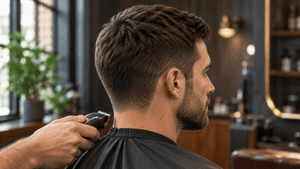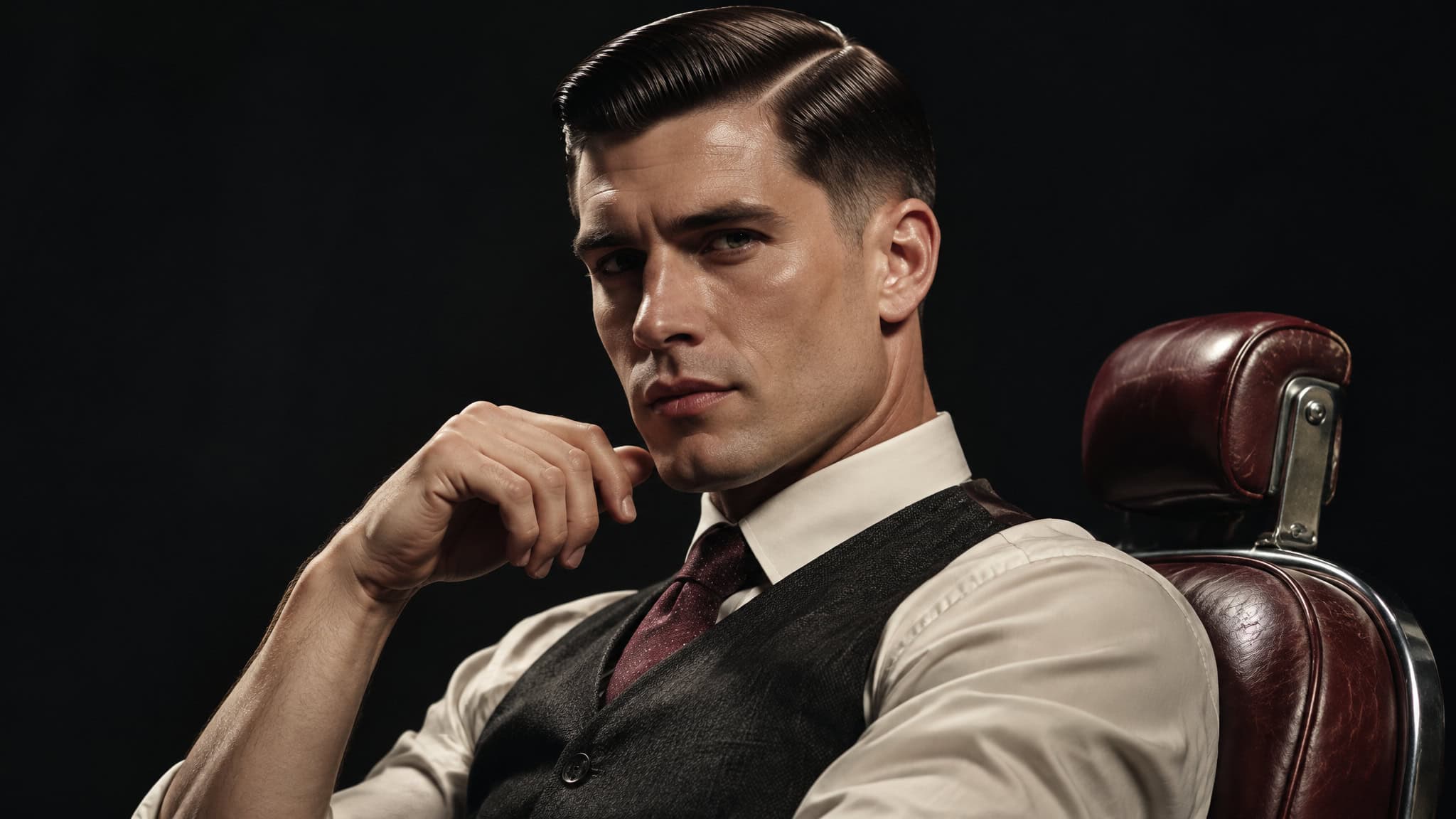
Walk into a barbershop and ask for a classic gentleman haircut with no guard numbers attached, and you’ll walk out with whatever the shop cuts most that week. Usually, that means a cut that’s tighter on the sides, shorter on top, or shinier than the picture in your head. The phrase itself isn’t a single haircut. It covers a family of traditional styles: the side part, pompadour, slick back, and Ivy League. Four specific decisions govern all of them: how the nape edge is tapered, how the part is placed, where the weight sits around the crown, and how much shine the product leaves behind.
In Ali Gordon’s styling and barbershop walkthroughs, viewers consistently asked what to request in the barber’s chair and how to style the cut afterward. Closing the gap between the photo in your head and what happens in the chair takes exact clipper guard numbers and a real barbershop script. At home, you lock it in with a repeatable hot-to-cold blow-dry routine.
Key Takeaways
Ask your barber for a classic side part (the Mad Men haircut) with a #5 guard on the sides and back tapered down to a #3, leaving roughly 3/4 of an inch to just under an inch. For a tighter summer cut, start with a #3 and taper down to a #1.5 at the nape.
Preserve the vintage silhouette by skipping a harsh skin fade in favor of a soft neck taper, or compromise with a zero-line high neck taper graduated with scissor-over-comb to just below the bottom of the ear.
Lock the style in at home in seven steps: towel dry, brush into the target direction, finger-part using the crown and hairline peak, blow-dry with directional heat, hit the cold setting to set the shape, run warmed Truefitt & Hill matte clay through the hair, and separate with a wide six-tooth comb before finishing with hairspray.
Table of contents
Table of Contents
What is a classic gentleman haircut
The classic gentleman haircut isn’t one fixed style, but a traditional family of barbershop cuts, including the side part, pompadour, slick back, and Ivy League, built around four structural decisions. Across these cuts, the sides and back stay short, commonly cut with #2 to #4 guards or scissor-over-comb, blended into the crown, and finished with a crisp taper slightly longer around the ears rather than a harsh skin fade. The top stays medium-length so you can part or sweep it back with a low-to-medium shine finish. In the Beardbrand cutting demonstration, the barber builds this silhouette by finding where the hair splits and falls on its own to place a natural side part instead of forcing an artificial line.
From the front, side, and back, those four structural decisions keep the silhouette distinct from fast-moving men’s haircut trends. The nape finishes in a soft taper that blends into the neck rather than a high skin fade. The part follows the hair’s natural split instead of a shaved razor trench. Weight stays concentrated at the crown and back to keep the head shape square while bulk is cleared from the sides. Finally, the finish stays low-to-medium shine so the hair moves as a connected shape.
Side part, pompadour, slick back, Ivy League
Choose a traditional classic haircut if you need formal polish with a strict, combed part for the boardroom, or pick a modern textured update if you want lower-maintenance movement worn over with more weight and a loose fringe rather than a strict line. Here at Unfinished Man, we view these four styles as the reliable backbone of traditional men’s haircut categories because the exact same cut canvas can be dressed up for a boardroom or loosened up for the weekend depending on how the part and top texture are handled.
Side part: the Mad Men haircut
Built for conservative offices, client-facing roles, and black-tie events, the classic side part forks cleanly in the chair. Ask for a traditional finish and you get neat side lengths separated with a six-tooth comb and low-shine clay; ask for a modern update and the barber leaves a looser, textured top worn over without a strict line.
Pompadour: the fifties cut Elvis made famous
Elvis Aaron Presley made the 1950s pompadour famous by stacking height and length on top. A modern classic update takes the back and sides tight with an open fade or neck taper (never a skin fade), keeps very sharp clean edges that aren’t overly perfect, and lets a little fringe fall onto the face with movement instead of smoothing it flat.
Slick back
Sweeping medium length straight back from the forehead suits formal and evening wear. When grown out or adapted for warmer weather, that same length converts into a messy, textured top with a faint natural line running through it.
Ivy League
If you want an old-money look for short hair with minimal daily styling, the Ivy League (alongside the short side part and crew cut) is the smart call. It keeps the sides tapered tight while leaving just enough front length to part or sweep neatly for business-casual and academic settings.
How a barber builds the classic shape
A classic haircut holds its square profile because of how the barber sets the horseshoe section and the initial clipper-over-comb baseline. Every step in the chair serves a mechanical purpose that keeps weight where your head needs it.
Sectioning: the horseshoe and the natural hairline
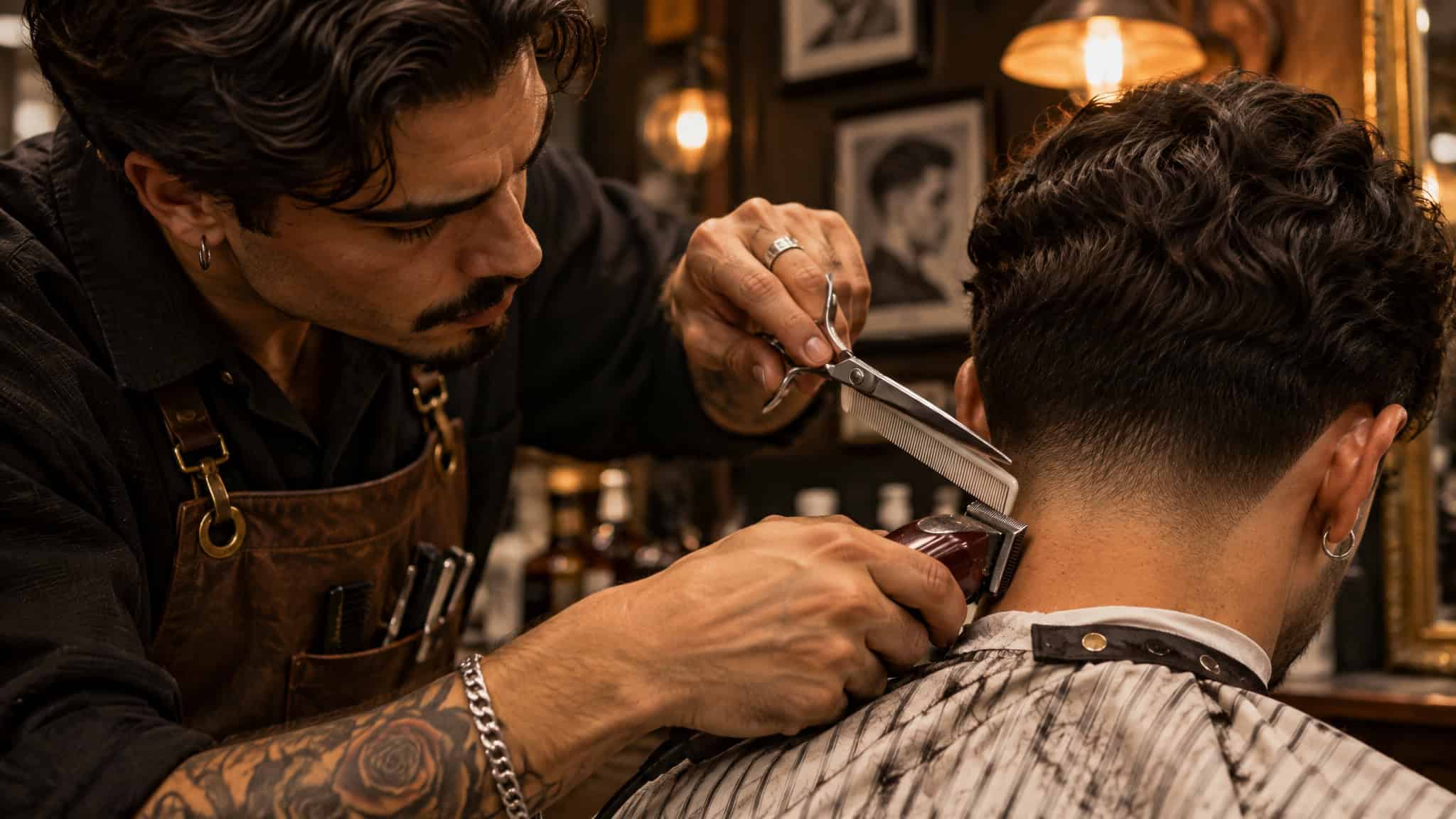
First, the barber sprays the clippers with disinfectant: cleanliness is godliness. In the Reuzel pompadour walkthrough, the barber wets the hair thoroughly while leaving old oil-based product in on purpose, using its stickiness to see the hidden haircut shape. He sections along the natural hairline, isolating the front triangle for the pompadour, and angles his fingers toward the desired top length while following the skull into the nape. In the Beardbrand cut, the horseshoe section follows the head’s curvature and drops slightly at the back to retain weight.
In the Regal Gentleman walkthrough, the barber locates the crown flat in the middle of the back of the head (setting the horseshoe too low leaves excess weight) and round-brushes the sides dry on high heat and high speed into a square shape before touching the clippers. A clipper-over-comb pass then sets the initial corner and baseline guide.
Guard progression on the sides and nape
Beardbrand clears out bulk first with a #3 guard. From there, the barber works down from a #2 to a #1.5 coming up the nape so the back tapers out soft and natural.
Regal Gentleman starts with a #2 guard because it blends easily into any length with room for error and exposes scalp moles or scars. He runs the #2 higher on the sides and dips toward the back using the back of the clipper head as a bumper, then steps down to a #1.5 and a #1 right where each previous guard started. In the Reuzel cut, clippers on zero or a half-open Babyliss Pro follow the comb hand’s angle to match the initial finger angle, though the specific clipper brand doesn’t matter.
Cutting the top: overdirection onto the clipper baseline
To cut the top, Beardbrand pulls the hair back to cut directly on the clipper-over-comb baseline. That overdirection trick preserves length through the middle before he cuts the top square from a back guide, leaves the front long, and adds texture for movement.
Reuzel works in inch-wide sections from the head’s widest point and over-directs each one back to the previous line to smooth out the nape transition. That leaves heavy weight on the crown so the pompadour stays square and masculine. He cuts the front triangle in inch-wide sections starting heavy near the face, creating slight temple disconnection that flows into the nape. Regal Gentleman sweeps the hair back, asks the client before taking about a quarter inch off the fringe, elevates sections straight up to cut a square shape across rather than following head curvature, and uses the long fringe as the crown guide.
Blending and cross-checking for weight
Scissor-over-comb and detailer trimmers clean up the transition before the top and sides ever meet. Beardbrand softens the sides with scissor combing, cleans up the edge curvature with detailers, cross-checks the top, pulls crown hair down to connect to the baseline, and texturizes toward the back. Reuzel runs horizontal and vertical cross-checks to strip weight without losing length, uses blenders to accentuate rather than thin the hair (under oil-based pomade, hair ends stick together like velcro), and slices freehand to clear heavy spots in the nape. Guards, scissor-over-comb, and blenders all get the job done; the barber just picks whichever tool fits the client’s hair.
Dry finishing: sculpt, edge, and refine the outline
Once the hair is dry, the barber twists his fingers through the top to spot hidden bulk and open up enough air to build pompadour height. He then checks the front triangle and refines the combed-back outline with scissors because swept-back hair becomes part of the outer silhouette. Tapered sideburns lock in the old-school vintage look, tapering the nape accentuates crown fullness, and a detailer lightly strengthens a weak hairline on lighter or blonde hair without pushing it back.
Taper vs fade on a classic haircut
Asking for a taper instead of a fade is what keeps a vintage silhouette from turning into a modern barbershop default. Go too short on the sides and bare scalp shows through, breaking the combed-back outline. A classic taper steps down gradually, such as running a #3 down to a #1.5 at the nape and into the beard, so the hair blends softly into your natural neckline. A skin fade strips the sides down to bare skin.
Why a skin fade breaks the classic silhouette
In the Reuzel 1950s pompadour demonstration, the barber skips a skin fade immediately because bare skin on the sides simply isn’t a 1940s or 1950s look. Leaving a soft taper with slight length around the ears lets the combed-back outline stand out as a connected frame. During the Beardbrand consultation, the client and barber agree to stop around a #2 or #3 on the back and sides (tapering to a #1.5 at the nape) specifically to avoid showing too much skin while preserving weight at the back. For our money, the soft taper is always the right call on a classic cut.
The zero-line high neck taper compromise
If you find full skin fades too harsh but still want a crisp bottom edge, the Regal Gentleman walkthrough demonstrates a smart middle ground: the zero-line high neck taper. The barber lines the very bottom edge with a zero guard and graduates up with scissor-over-comb to just below the bottom of the ear, giving you sharpness at the collar without erasing the sides.
How to ask your barber for a classic side part
To ask for a classic old money haircut, request a classic side part, also known as the Mad Men haircut, with a #5 clipper guard on the sides and back tapered down to a #3, a tapered neckline that disappears into your natural hairline, and scissors on top left long enough to part along the natural fall. Giving your barber exact guard numbers, a neckline rule, and a parting method keeps the cut from drifting toward a generic short fade. In Ali Gordon’s walkthrough at Hudson Hawk Barbershop in Springfield, Missouri, and across the Beardbrand consultation, that request breaks down into concrete specs you can read straight from your phone in the chair:
- The traditional #5-to-#3 brief: Ask for a “classic side part” (or Mad Men haircut) with a #5 on the sides and back tapered down to a #3. The barber translates that #5-to-#3 progression to roughly 3/4 of an inch at the bottom climbing to just under an inch toward the top, paired with a little length taken off the top with scissors so it still parts cleanly.
- The neckline fallback rule: Ask for a tapered back and a tapered neckline that disappears into the natural hairline. If you’re ever in doubt in the chair, tell your barber to taper the neckline; it’s the cleanest shape on any head.
- The tighter summer variation: For warmer weather, ask for a #2 or #3 on the back and sides tapered down to a #1.5 at the nape. Have the barber blend it with clipper-over-comb and taper into both the beard and the back without showing too much skin.
- Part and top texture: Specify that the part should sit in your natural hairline where the hair splits on its own, and state whether you want a neat combed finish or a little weight taken out on top for a messy, relaxed part with only a subtle line showing through.
When you sit down and only ask for something classic, the barber has to guess whether you mean three-quarter-inch scissor-blended sides or a tight #1 buzz. Guys looking for an old-money cut are all hunting for the exact same structural specs: tapered sides that hide the scalp, a natural part anchored to the hairline, low shine, and zero hard razor lines. Calling out the guard progression and the tapered neckline up front locks those boundaries in before the clippers turn on.
The at-home styling routine, step by step
- Towel dry and brush: Towel dry your hair after showering and brush it into the shape and direction you want the classic gentleman haircut to sit.
- Trace the side part: Run the side part in with your fingers, using the crown and the peak of your hairline as reference points.
- Blow-dry with directional heat: Blow heat in the brushed direction of the style to straighten the hair and add volume.
- Set with cold air: Switch the dryer to the cold setting to lock the shape in place.
- Finish with clay, comb, and spray: Warm matte clay between your fingers and work it through the hair, then pull a wide six-tooth comb through before misting with hairspray.
Across both barbershop cutting and daily styling demonstrations, the part follows the hair’s natural fall and the head’s natural reference points, the curvature of the head, the crown, and the peak of the hairline, rather than a forced line. That exact sequence of directional heat, a cold-air shot, warmed Truefitt & Hill matte clay, wide-tooth combing, and hairspray gives straight or flat hair lift and holds a classic side part in place.
Prep and part: towel dry, brush, finger part
Raking un-warmed clay straight from the pot into damp, unbrushed hair makes the product clump, leaves greasy shiny patches, and lets the part collapse inside an hour. Right after the shower, towel dry your hair and brush it into the exact shape and direction you want it to sit when finished. Brushing while damp trains the roots before any product touches them. Next, run the side parting in with your fingers, using the crown at the back and the peak of your front hairline as fixed reference points so the line lands in the same natural split every morning.
Heat shaping and the cold set
A hair dryer builds the structure that product alone can’t hold on straight hair:
- Step 4 (Directional heat): Grab the hair dryer and blow warm air strictly in the direction you brushed the hair to sit. Drying along the grain straightens unruly bends and lifts the roots for clean volume.
- Step 5 (The cold-air lock): Once you’re happy with the height and shape, switch the dryer to the cold setting and run cool air over the style. That two-second temperature drop sets the warmed hair shafts in place so the part doesn’t fall flat once you walk outside.
Product and finish: clay, six-tooth comb, hairspray
To lock the dry shape in without weighing it down, finish with three targeted moves:
- Step 6 (Warmed matte clay): Scoop a finger of Truefitt & Hill matte clay and rub it thoroughly between your fingers to warm it up before running it through your hair. Warming the clay softens the wax so it spreads evenly from root to tip with low shine and natural texture.
- Step 7 (Six-tooth comb and spray): Pull a wide six-tooth comb through the top and sides, an absolute game-changer that carves clean, consistent separation lines without flattening the volume you just blow-dried, then mist with hairspray to fix everything in place.
Matching product to the classic finish
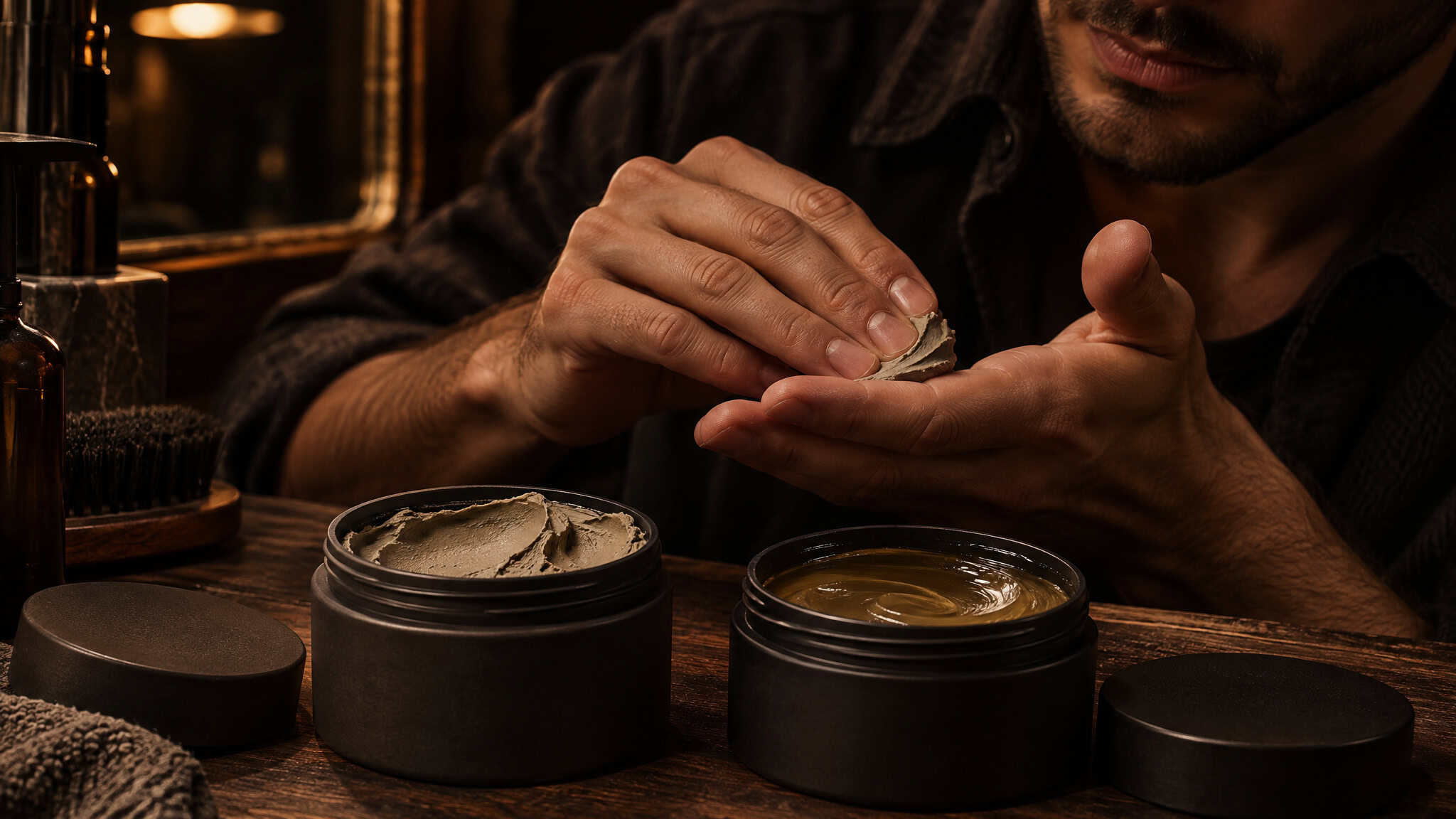
Matte clay is the go-to choice for a low-shine classic side part when you want dry texture and separation, while creamy or water-based pomades suit styles that need extra working time or a traditional slick finish. Shine level acts as the dial between a modern textured execution and a vintage barbershop look. While Truefitt & Hill matte clay warmed between the fingers builds a low-shine modern side part, Regal Gentleman finishes a looser, swept-back cut with Mac pomade because its creamy consistency gives you leeway while working it into the hair, and Hudson Hawk uses Imperial Barber Products water-based pomade for a simple, clean side part.
Matte clay, creamy pomade, or water-based pomade
Pick your everyday jar by how tight you wear the part. Warmed matte clay grips individual sections so a six-tooth comb leaves crisp separation with almost no reflection. If you sweep the top back or want extra working time before the product sets, a creamy pomade like Mac or a water-based formula like Imperial Barber Products glides through medium length without tugging.
Grease for the true pompadour
Some haircuts simply need grease. Elvis Aaron Presley styled his 1950s pompadour with his own unique oil-based mix because oil-based pomade was the only option available back then. In the Reuzel walkthrough, the barber mixes strong hold, pink, and green oil-based pomades, drowns the hair in product, and combs it in every direction until the hair turns pliable enough to sculpt into a tall, square pomp.
Oil-based grease actually performs better the longer it sits in the hair, though it’s tough to wash out. You never smother a first-timer with four fingers of oil-based pomade, and daily grease wearers usually style their own hair better than the barber does because they practice every morning rather than once a month (in the Reuzel demo, the client steps up to style his own final pomp).
Pre-cut tonic: scalp care and buildup
Before blow-drying or cutting, barbers massage an alcohol-based hair lotion tonic into damp hair right after shampooing. The massage creates relaxing friction on the scalp while the alcohol strips old product buildup. In the Reuzel cut, a small splash of Reuzel tonic delivers an old-school masculine fragrance, cleans the scalp, and reactivates the leftover oil-based pomade still sitting in the hair before the dryer comes out.
Washing out oil-based pomade
Old-school oil-based pomades set like cement and won’t budge if you jump straight under the shower head. Before any water touches your head, work a generous dollop of regular shampoo directly into dry hair right where the product sits; it won’t foam, bit by bit it just breaks down the grease.
Rinse with warm water (never too hot or too cold), then run a second regular shampoo pass until the hair feels rubbery and squeaky clean. Because heavy shampooing strips natural oils, brush a generous amount of conditioner all the way through like a facial moisturizer, then rinse with lukewarm-to-cool water to close the cuticle while leaving roughly 60% to 70% of the conditioner in the hair.
Hair type, weight, and the above-the-ear illusion
Keeping weight at the crown and back matters much more for proportions than memorizing charts that match haircuts to face shapes. Thick, straight-to-wavy medium-length hair does the heavy lifting in these walkthroughs, so guys with thin or curly hair won’t get the exact same result. When your barber tapers the sides, watch the zone right above the ears: hair grows lighter there on most men, so a fresh fade can look short on the surface while hidden weight still sits underneath.
Rather than forcing a rigid template, the cut relies on finding where the hair falls naturally along the curvature of the head and building the initial corner with a clipper-over-comb technique. At home after a shower, towel dry and brush the hair in the direction you want it to sit, trace the side part with your fingers using the crown and the peak of your hairline as reference points, blow heat in that direction to shape it, and switch the dryer to the cold setting to lock the style in place.
From grown-out slick back to rebuilt classic
Turning a long, grown-out slick back into a wearable classic side part requires finding the hair’s natural split and head curvature, tapering the sides with a dropped horseshoe section that preserves back weight, cutting the top square from a back guide, and over-directing top sections back onto the clipper-over-comb baseline. In the Beardbrand walkthrough, the client, Pierre, a Frenchman living in London, came in with an overgrown slick back looking for a lighter summer cut built for warmer London weather.
By pulling the top hair back to cut on the initial clipper-over-comb guide, the barber kept length through the middle of the top while clearing heavy side bulk with a #3-to-#1.5 taper. That combination of preserved middle length and retained crown weight is what keeps the haircut looking sharp four weeks later instead of collapsing around the ears. Rather than carving a rigid razor part, the barber dropped in a loose, natural side part, just a faint line running through the top, using the excess front length so Pierre could sweep the hair over with messy texture as it grew out.
Frequently Asked Questions
What does the classic gentleman haircut actually look like?
Rather than one fixed style, it is a traditional family of cuts—specifically the side part, pompadour, slick back, and Ivy League—built around four structural choices. The sides and back are kept short and blended into a square-shaped crown, while the medium-length top is parted or swept back with a low-to-medium shine finish. Instead of harsh shaved part lines or bare skin on the sides, the look relies on a soft neck taper and a natural part that follows where your hair splits on its own.
What’s the difference between a fade and a taper for a classic haircut?
A taper gradually steps down in length—like moving from a #3 guard down to a #1.5 at the nape—so your hair blends softly into your natural neckline without exposing bare scalp. A skin fade strips the sides all the way down to bare skin, which ruins a vintage 1940s or 1950s silhouette by breaking up the connected, combed-back outline. If you still want a sharp edge at the collar without erasing the sides, ask for a zero-line high neck taper graduated with scissor-over-comb up to just below the ear.
How do I blow-dry straight hair to add volume and set a side part?
Start with towel-dried hair, brush it in the exact direction you want it to sit to train the roots, and trace your natural part with your fingers using your crown and front hairline peak as guides. Blow warm air strictly along that brushed direction to straighten bends and lift the roots for clean volume. Once the height and shape look right, switch the dryer to the cold setting and hit the hair with cool air to lock the warmed hair shafts in place.
How do I keep a classic side part in place all day?
Product alone won’t hold flat or straight hair if you skip the prep and cold-air blow-dry set. After locking the dry shape in with cool air, scoop out a finger of Truefitt & Hill matte clay and rub it thoroughly between your fingers so the warmed wax distributes evenly from root to tip instead of clumping and collapsing. Finish by pulling a wide six-tooth comb through to create separation without crushing your volume, then mist everything with hairspray.
How do you wash heavy oil-based pomade out of your hair?
Never jump straight under running water, because oil-based grease sets like cement and won’t budge when wet. Instead, work a generous amount of regular shampoo directly into dry hair to break down the oil, rinse with warm water, and follow up with a second shampoo until the hair feels squeaky clean. Because heavy washing strips natural oils, brush a thick layer of conditioner through and rinse with lukewarm-to-cool water so roughly 60% to 70% of the conditioner stays behind.