
BulletBall is one of those insane sports I remember hearing about and thinking, there’s just no way this could be real. If you spent any time on the early-2000s internet, you probably know exactly what I mean. The history of BulletBall usually gets reduced to a thirty-second cringe compilation video. A guy stands in front of reality TV judges, tells them he sold his car, quit his job, and pawned his wife’s wedding ring to fund a game played entirely with hands on a round table.
The judges laugh him out of the room. The internet makes him a meme. But the story of the “BulletBall guy” does not end with that brutal rejection. What started as absolute financial ruin quietly evolved into one of the most unexpected redemption arcs in modern tabletop sports.
Key Takeaways
In 2006, Marc Griffin pitched his game on television after sacrificing his home and assets, resulting in a viral reality TV rejection.
By 2009, the game was officially recognized as an inclusion sport by the National Center on Health, Physical Activity, and Disability.
Official 21-point tables are no longer manufactured, forcing the modern fan community to rely entirely on reverse-engineered DIY setups.
Table of Contents
The Tragic and Redemptive History of BulletBall
Marc Griffin is a passionate inventor who originally created the game as a casual backyard activity, only to blindly sacrifice his entire financial life trying to turn it into an Olympic sport. Modern internet audiences usually recall him as a delusional meme who got humiliated on national television. That framing misses the actual story.

Griffin’s path is a masterclass in extreme resilience. The exact physical table design that reality TV judges mocked for being weird turned out to be biomechanically perfect for something entirely different. When Griffin finally abandoned his ego-driven Olympic dream, he found his true demographic.
His bizarre tabletop game quietly became a respected tool for marginalized, differently-abled athletes. My colleague Noman over at Unfinished Man frequently points out how often guys obsess over the idea of pure success or pure failure. Griffin’s story proves life rarely works that cleanly. His complete commercial collapse was the only thing that forced the game into the therapeutic community where it actually belonged.
How a Family Pastime Shaped the History of BulletBall
You play BulletBall by using your hands and forearms to strike a foam ball across a circular table into your opponent’s colored zone, playing to a standard score of 21 points. Rules dictate that players get two attempts at a legal serve from the center triangle, and if the score ties at 20-20, you have to win by a two-point margin.

The mechanics heavily emphasize upper body movement, eliminating the need for paddles completely. It plays remarkably similar to a blisteringly fast match of table tennis, just stripped down to its absolute rawest, bare-handed physical form. Because the physical barrier to entry is so low, players can easily compete whether they are standing up or sitting down.
Before it ever reached the intense scrutiny of television cameras and official rulebooks, the game was just a casual distraction. The complex rules and scoring thresholds came much later, after the basic striking motion proved entirely addictive during weekend picnics.
The 1980s Cat Toy Inspiration
The game’s mid-1980s origin story starts completely by accident. Marc Griffin and his then-wife Delores Griffin created the initial concept after casually rolling a basic cat toy across a table during a family gathering.

They noticed how naturally competitive the simple motion felt. Hitting a small object back and forth with bare hands required zero athletic background, making it instantly engaging for everyone in the room. What started as a joke with a pet toy evolved into a dedicated obsession for Griffin.
He began obsessively refining the physical boundaries, swapping the casual pet ball for a high-visibility foam sphere. He realized the game needed structure to keep those family tournaments from devolving into chaos. The innocent family pastime slowly morphed into a rigid, competitive obsession that would soon dominate his life—and his bank account.
Rules, Scoring, and Table Mechanics
To actually play a regulation match, you need to understand the precise movement constraints. The table itself is a specialized physical environment. Here is how a standard match flows:
- The server places the foam ball in a central triangular zone.
- The player strikes the ball with their bare hand or forearm.
- The ball must cleanly cross into the opponent’s colored playing area.
- You score a point if the opponent fails to return the strike.
- The first player to reach 21 points wins the match.
If a player fails their serve twice in a row, the opponent automatically gets a point. The guardrails complicate the physics. You are penalized if the ball hits a rail, unless it bounces directly back into your own zone, which grants you exactly one chance to save the rally.
The American Inventor Pitch That Broke the Internet
During his infamous 2006 television appearance, a panel of reality TV judges universally rejected Marc Griffin’s pitch after he admitted he had sold his house, car, and wife’s wedding ring to fund the game. Modern viewers frequently mistake this broadcast for an early episode of Shark Tank.
It was actually Simon Cowell’s American Inventor, a show built around high-stakes emotion and brutal takedowns. Griffin walked onto the set absolutely convinced he was pitching the next great Olympic sport. Instead, he walked into a buzzsaw of televised humiliation.
Digital meme culture completely stripped away the profound human reality of his financial despair. People watched the clip for a cheap laugh, ignoring the terrifying reality of a man who had literally leveraged his survival on a foam ball and a round table. Behind the cringe was actual devastation.
“Digital meme culture completely stripped away the profound human reality of his financial despair.”
Sacrificing Everything for an Olympic Dream
Griffin’s commitment to the game required systematically dismantling his financial life. He firmly believed the sport would sweep the globe and achieve mainstream Olympic status. To fund prototyping, patenting, and marketing, he quit his stable job entirely.
When savings ran out, the sacrifices escalated. He sold his house and his primary vehicle to keep the operation afloat. The most gut-wrenching admission was that he pawned his wife’s wedding ring to squeeze out just a little more capital.
He operated on the blinding conviction that traditional investors would immediately recognize his genius once he got on national television. Griffin bet absolutely everything on a single, make-or-break moment. He viewed severe financial ruin not as a failure, but as a temporary, necessary stepping stone to international validation and massive commercial wealth.

The Brutal Rejection and Viral Aftermath
The pitch fell apart almost immediately. The judging panel looked at the small, colorful table and completely dismissed the idea of adults playing it professionally. When asked what he had left after liquidating his entire life, Marc Griffin delivered his defining line on American Inventor.
“I have BulletBall,” he said, holding back tears.
The judges did not care. One bluntly told him he was never going to make it. Viewers clipped the devastating segment, uploading it to early video-sharing sites where it permanently anchored his identity as “The BulletBall Guy”.
The internet thrives on awkwardness, and Griffin provided a masterpiece of vulnerability. His emotional breakdown became a staple of early-web cringe compilations. The sport seemed completely dead, buried under millions of views from people who only saw a delusional man refusing to accept reality.
BulletBall Finds Its True Purpose in Adaptive Sports
Adaptive sports programs actively use the game today because its compact table size and integrated guardrails create a flawless, levelling playing field for athletes with limited lower-body mobility. While reality TV judges mocked the small physical footprint, rehabilitation professionals recognized its immediate biomechanical value.
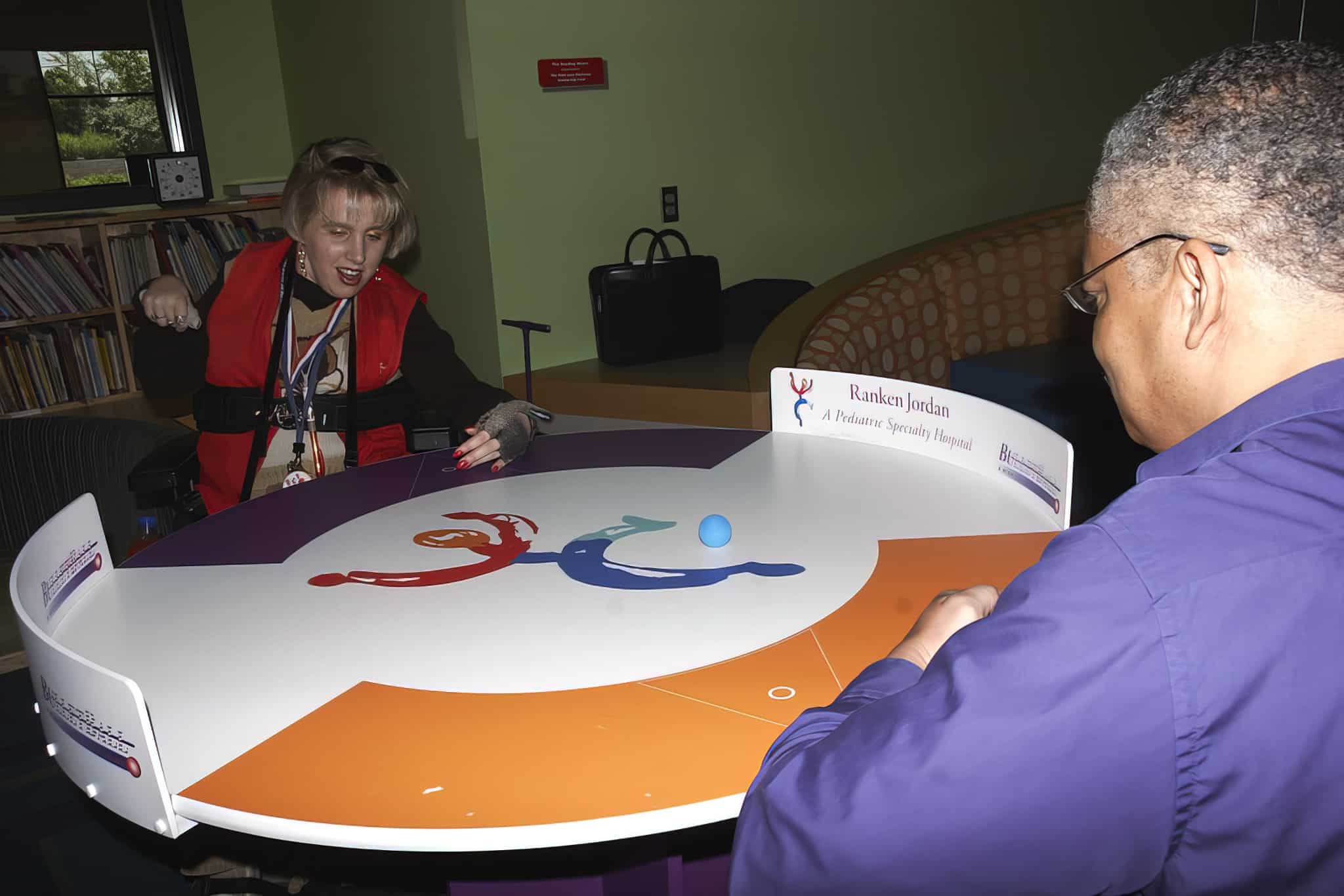
The game requires rapid hand-eye coordination but demands exactly zero footwork. In 2009, Griffin finally stopped chasing able-bodied Olympic validation and pivoted his operation toward inclusive sports. The exact design quirks that made the game look odd on television were actually massive accessibility features in disguise.
Serving a marginalized, disabled demographic gave the inventor his first taste of legitimate, institutional success. He traded the empty pursuit of mainstream fame for the practical reality of helping people in physiological recovery. This quiet pivot saved the entire project from total obscurity.
Institutional Backing and Therapeutic Use
The turning point happened when major medical and athletic institutions formally evaluated the table’s design. The NCHPAD eventually published official materials highlighting the game, while digital media platforms like Legit.ng praised its massive inclusive value. This combination of institutional medical backing and international media visibility quickly validated BulletBall alongside established adaptive activities at the Rehabilitation Institute of Chicago.
Therapists realized that striking a foam ball repeatedly across a short distance provided excellent cardiovascular and joint therapy without risking severe strain. It allowed differently-abled individuals to compete aggressively without feeling constrained by their physical limitations.
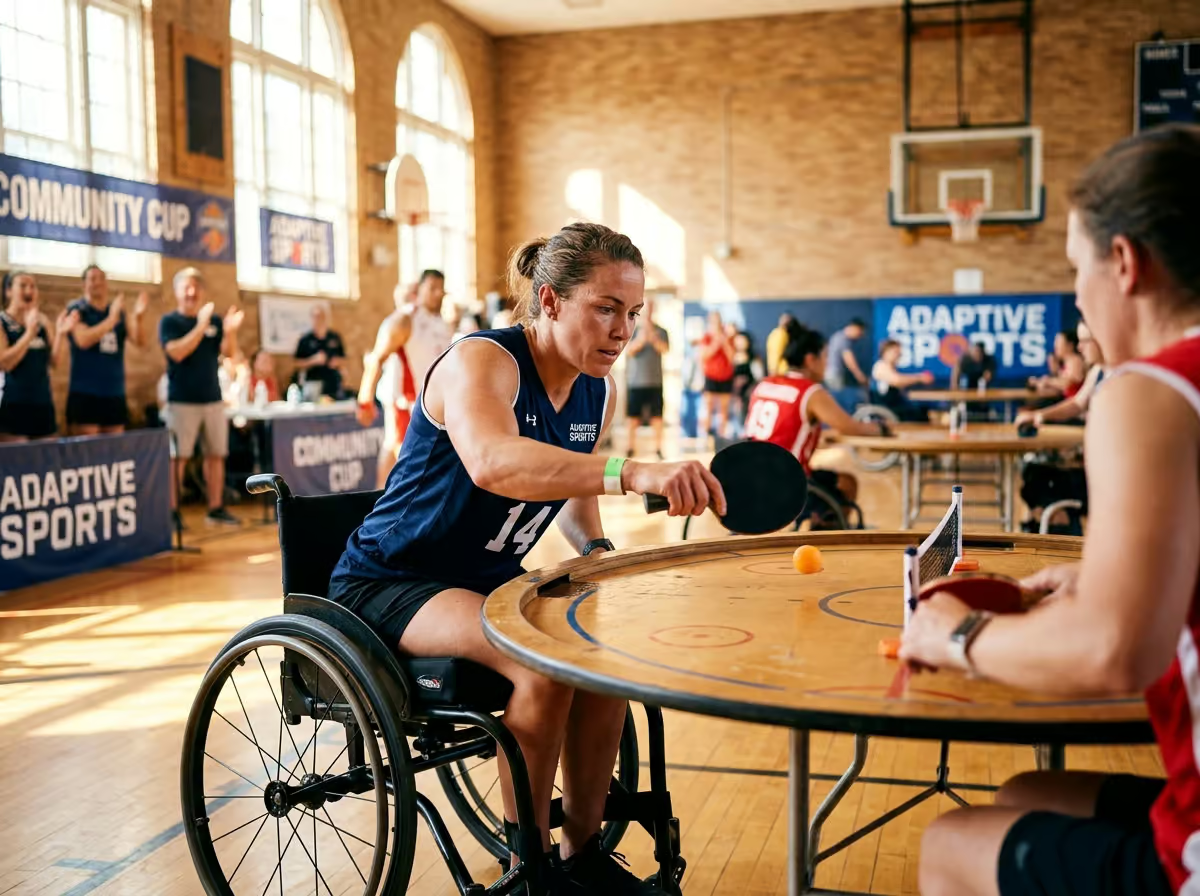
This backing stripped away the internet meme status and replaced it with genuine medical utility. Griffin was no longer fighting to justify his invention to hostile entertainment executives. He was now supplying a legitimate tool to physical therapists who actively wanted his product to succeed in their clinics.
Biomechanical Advantages for Wheelchair Users
Standard ping-pong tables are notoriously frustrating for seated athletes. The deep physical overhang and wide corners severely restrict turning radiuses. Griffin’s invention completely eliminates this problem. The table is inherently wheelchair accessible because the height allows standard chairs to pull directly underneath it, while the side rails naturally keep the ball trapped in the active playing zone.
You do not have to chase run-away balls across a gymnasium. The intense focus on upper-body movement makes it an extraordinarily fast-paced workout for players with limited leg function.
These biomechanical advantages led directly to the sport’s inclusion in events like the St. Louis Senior Olympics. Athletes could sit directly at the edge, lock their wheels, and engage in high-speed rallies that demanded pure reflex and spatial awareness.
The Rise and Limitations of Inclusion Sports
Hoping to capitalize on this therapeutic momentum, the founding team formalized their specific corporate footprint. They attempted to commercialize this new phase by formally registering BulletBall under the Inclusion Sports company structure, operated in partnership with his brother Charles Griffin.
Institutional praise, unfortunately, does not automatically solve complex supply chain economics. Scaling a physical sporting goods business requires massive upfront capital for injection molding, table manufacturing, and specialized shipping logistics.
The cost of producing the unique circular tables with removable guardrails simply outpaced the purchasing volume of niche rehabilitation clinics. The dedicated company eventually folded due to these harsh operational realities. They succeeded in proving the game’s massive therapeutic value, but they fundamentally failed to build a sustainable, profitable manufacturing pipeline to support it.
How Maker Culture and Memoirs Kept the Sport Alive
Because official tables are no longer manufactured by any corporate entity, modern players must reverse-engineer the required dimensions from old early-2000s footage to build their own custom equipment. The physical scarcity of the product forced fans to manually preserve the sport.
Total commercial failure unexpectedly birthed a highly dedicated maker culture. When the official company closed its doors, the game could have vanished completely. Instead, the internet stepped in.
The people who originally discovered the sport via viral mockery eventually recognized its actual mechanical value. They started treating the game like open-source software. You cannot log into a website and buy a regulation table today. If you want to play, you have to buy the lumber, cut the circle, and assemble the playing surface yourself in a garage.

Reclaiming the Narrative in Print
Griffin eventually realized he needed to take control of his own historical narrative, completely bypassing traditional publishing gatekeepers to do so. In 2019, he released his 278-page self-written book titled Endless Dreams, which is currently available to read via Amazon Kindle for just over five dollars.
The book details the extreme spiritual and psychological toll of his journey. It currently holds a perfect five-star rating on Amazon, primarily because readers respect his raw, unfiltered portrayal of blind faith and absolute perseverance.
He followed this release with another deeply personal story of survival titled Heart Attack. Publishing these works allowed the inventor to speak directly to his supporters, ensuring that the legacy of his life was defined by his resilience rather than a heavily edited, thirty-second television clip.
DIY Table Builds and the Community Today
With the official company defunct, the physical survival of the sport depends entirely on basement engineers and enthusiastic woodworkers. Fans actively coordinate online, sharing detailed DIY builds based on estimated table dimensions pulled tightly from old promotional tapes.
They use standard PVC pipe for the guardrails, cut medium-density fiberboard for the circular base, and source high-density foam spheres to replace the original balls. This grassroots manufacturing entirely removes the profit motive from the sport.
The community keeps the game alive purely out of respect for its mechanics and its unusual history. The fact that people are willingly spending their weekends sawing lumber to replicate a failed reality TV pitch proves that the underlying mechanic was always fundamentally solid. The business failed, but the physical game survived.
The Ultimate Legacy of an Underdog Inventor

Marc Griffin never achieved the massive personal commercial wealth or mainstream Olympic validation he blindly chased when he first invented his game. If you measure success purely by traditional financial metrics and stadium ticket sales, his decades-long journey looks like a complete catastrophe.
But that is the wrong metric to use. The inventor’s actual success is measured entirely by his profound social impact on marginalized athletes. He refused to quit when the entire internet laughed at him. He swallowed his pride, abandoned his ego, and allowed his game to become medicine for people who desperately needed a level playing field.
His refusal to accept defeat resulted in a highly meaningful, permanent contribution to the disabled athletic community. He lost his house, his car, and his original dream, but he ultimately built a sport that brings genuine joy to people in wheelchairs. In the end, serving a real-world community need proved infinitely more valuable than a reality television trophy.
Frequently Asked Questions
What’s the difference between BulletBall and standard table tennis?
The most obvious difference is that BulletBall completely ditches paddles—players strike a high-visibility foam ball using only their bare hands and forearms. It is also played on a specialized circular table with guardrails rather than a standard rectangular setup. This tight, rail-enclosed surface requires zero footwork, making the game purely about rapid upper-body reflexes.
Did Marc Griffin actually pitch his game on Shark Tank?
No, though the internet frequently misremembers it that way. Griffin’s infamous 2006 rejection happened on u003ca href=u0022https://www.google.com/search?q=Marc+Griffin+BulletBall+appearance+%22Simon+Cowell%27s+American+Inventor%22+2006u0022u003eSimon Cowell’s American Inventoru003c/au003e, a reality show heavily reliant on emotional stakes and brutal takedowns. That is where he delivered his viral, tearful admission that he had sold his house and his wife’s wedding ring to fund the project.
Why does the BulletBall table design work so well for wheelchair users?
Standard ping-pong tables have deep physical overhangs and wide corners that heavily restrict turning radiuses for seated athletes. BulletBall’s circular design allows wheelchairs to pull directly underneath the playing surface. Additionally, built-in guardrails keep the foam ball trapped in the active zone, eliminating the frustrating need to chase wild volleys across a gymnasium floor.
Can I still buy an official BulletBall table online?
You cannot, because no corporate entity officially manufactures them anymore. The founding company folded after realizing the massive upfront supply chain costs of injection molding and shipping large circular tables. Today, dedicated players have to build their own equipment out of medium-density fiberboard and PVC pipe using reverse-engineered dimensions from vintage promotional videos.
How do rail penalties actually work in the rules?
Matches are played to a strict 21 points, and hitting the table’s guardrails directly penalizes the striker. The sole exception is if the foam ball hits a rail but bounces straight back into your own zone. That lucky bounce grants you exactly one chance to save the rally before automatically surrendering the point.
Is Marc Griffin’s memoir Endless Dreams worth reading?
If you want to understand the terrifying psychology behind blind entrepreneurial obsession, absolutely. Griffin self-published the book in 2019 to bypass internet trolls and reclaim his narrative from a thirty-second cringe video. It holds a five-star rating on Amazon because readers genuinely respect his raw, unfiltered breakdown of surviving total commercial collapse.