Two decades of near-constant travel have taught me one thing worth leading with: the best travel hacks aren’t hacks at all. Most of what passes for them is repackaged filler, and the stuff that actually saves money is usually just avoiding fees other people don’t notice. I’ve hit 30+ countries, 21 of them in a single year. Working remotely on the road since 2020, and no, this isn’t a guru act.
It’s what I’d tell a friend over a beer. What works, booking through arrival. A number on every claim, plus a whole section on what doesn’t. Spoiler: there’s no secret to cheap flights. And yes, I’ll flag which tools are sponsored.
Key Takeaways
The only real flight-saving system is price literacy. Learn a route’s baseline in Google Flights, set alerts, and book only a genuine dip. My best catch: $197 one-way from New York through Milan, Prague, and Amsterdam.
Always pay in local currency at terminals and ATMs, or dynamic currency conversion quietly skims 3-15% off nearly every transaction abroad.
Carry-on only is the single biggest travel upgrade: no bag fees, no carousel wait, no lost-bag gamble, if you pack the contingency kit and skip the overstuffing.
Table of Contents
Booking flights: set alerts, learn the baseline, book the real dip
The best flight-saving travel hacks come down to one skill: price literacy. There’s no secret. What works is knowing what a route normally costs so a genuine deal is obvious when it shows up. Google Flights is the free tool most guys underuse.
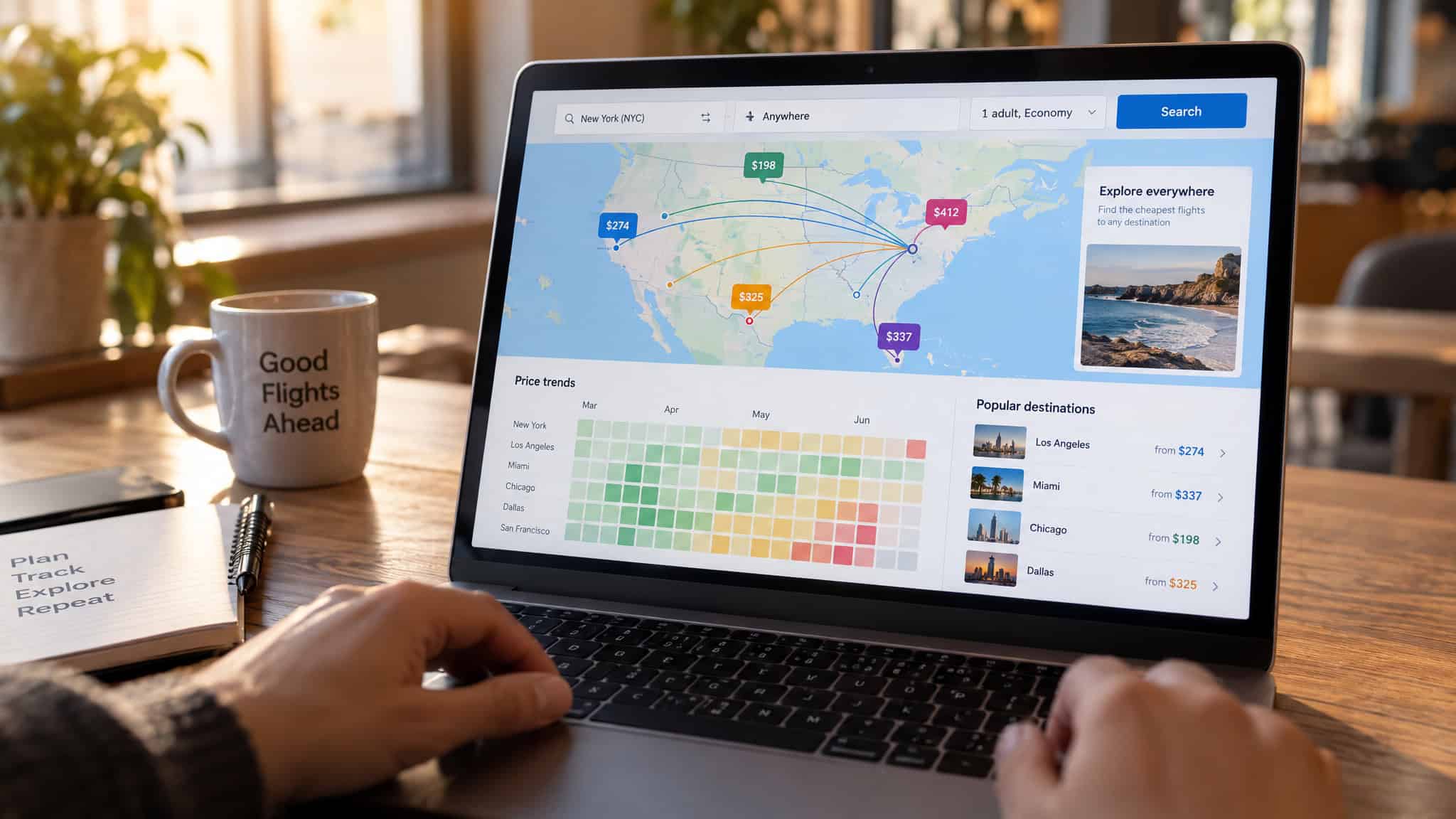
The date grid shows the cheapest days at a glance, and the map view lets you shop by budget instead of by city. Set alerts on your route, then wait. The classic failure is a guy who sets one alert, panic-books off the first “price drop” email, and never learns the baseline. Patience is the actual hack.
When a real dip appears, book it. Mistake fares are real, and I’ve got the receipt: $197 one-way from New York through Milan, Prague, and Amsterdam. Airlines sometimes cancel these, but they often honor them. No guarantee either way, but the downside is basically zero.
Let the deals come to you: The Points Guy and The Flight Deal (on X) push real-time alerts, and Going, formerly Scott’s Cheap Flights, sorts deals by your departure airport. Flexibility is the multiplier here. Deals to multiple European cities under $200 exist if your dates and destination aren’t fixed.
A few structural moves that hold up. Fly into one city and out of another: into Budapest, out of Vienna. You’re not backtracking to your arrival airport, and it’s especially effective in Europe and Asia, where rail and budget links connect hubs. Give yourself at least a 90-minute layover, and favor early-morning flights, because delays accumulate as a plane works through its day.
For Greece, May or September beats June through August: lower prices, good weather, no crowds. And consider a points card for everyday spending, like the Chase Sapphire Reserve or AmEx Gold (my picks, not a recommendation). The catch you have to say out loud: this only works if you pay the card in full monthly. Carrying a balance kills the entire play. Sign-up bonuses run up to 150,000 points once you hit minimum spend, NerdWallet refreshes offers monthly, and transfer bonuses hit 30% during Black Friday and Cyber Monday windows, which is perfect for topping off a points booking that’s nearly free.
Loyalty has two genuine schools of thought. One camp says sign up with every airline: free points, no downside. Tim Duggan argues the opposite: concentrate your points on a single Oneworld, Star Alliance, or SkyTeam airline so you actually reach status. These strategies truly conflict, so pick based on how much you fly.
I went with United MileagePlus cards because United’s hubs match my hometowns. I can usually fly United into Orlando, where I rent a car at Orlando airport and skip the rental counter entirely. The hub logic matters more than the card. One Australia-only note: Uber airport trips and Airbnb bookings earn Qantas points through the app redirect.
And ShopBack stacks cashback on Booking.com and Expedia with a $20 welcome bonus, though treat it as slow money. Prices may vary, but the system doesn’t.
Does booking in incognito mode or with a VPN actually get cheaper fares?
Yes, but with limits: a VPN or incognito search can lower fares, mainly on long-haul flights, and barely moves cheap short-haul ones. That’s because airlines and booking sites can factor your IP address into pricing, so the same flight can cost differently depending on where you’re browsing from, which I noticed the hard way watching my own fare jump. Think of it as cheap insurance, not a proven pricing manipulation. The everyday wins are arguably better: safer browsing on coffee-shop and airport WiFi, and your Netflix keeps working abroad.
Mine started as a dad move, firing up NordVPN so the kids could watch Netflix in a hotel. One line on security, done.
Booking accommodation: the platform stack and the location tradeoff
The stack is simple. Book with free cancellation early, then recheck closer to the trip: worst case you keep the original, best case you upgrade for less. Booking.com app bookings usually run at least 10% cheaper, Agoda can come in cheaper when you do that final check, and Airbnb gift cards knock 3-5% off big bookings. A reverse image search or HiChee finds cheaper cross-listings on Vrbo and direct sites, and the Firebnb extension sorts by actual ratings, because Airbnb’s algorithm favors higher-commission listings.
On price matching: most car hire and accommodation companies will match unadvertised. An Australian campervan company matched a cheaper competitor on the spot for me and saved thousands.
Buyer rule: Book refundable early, recheck the price before you go, and keep the cheaper booking. Costs you nothing but a few minutes.
On where to stay, two views directly contradict. Stay as central as you can afford, and you can pop back mid-day to rest and see more. Or go two or three blocks out: cheaper, quieter. I lean central, but honestly it’s a judgment call.
Traveling with kids? Email the hotel before booking and ask whether the room TV supports logging into your own Disney+ or YouTube. The better systems auto sign-out at checkout, so you don’t leave your account behind.
Money abroad: beat the terminal prompt and the exchange desk
Avoiding foreign transaction fees comes down to one terminal choice: always pay in local currency. Euros in Italy, not dollars. Every card terminal abroad asks “home currency or local?”, and travelers pick home because it looks simpler. That’s dynamic currency conversion, and it quietly costs 3-15% per transaction.
Same rule at the ATM: take local currency, never your home currency. And never exchange money at the airport. The rates there are terrible because that’s the business model.
The cards make the rest automatic. Wise works in 40+ countries, and mine solved an urgent Turkish bank account need in Cyprus when I needed to hire a car. I’ve used Monzo for five years, mostly for ATM withdrawals and spending tracking that’s almost automatic. Charles Schwab is the known option for fee-free international ATM withdrawals.
On budgeting, a rough daily estimate beats having none, but hold it loosely. Some days run cheap, some don’t. Add a 10-20% cushion to your trip budget for the stuff you didn’t plan. Tell your bank you’re traveling so fraud flags don’t freeze your cards mid-trip; a frozen card abroad makes for a uniquely bad day.
If saving dollars is the actual goal, the travel hacks ranked by real money saved go deeper on fares, points, and hidden fees, and small bonus: the Apple Calculator converts at real-time rates. Beats doing math in a queue.
Insurance as a layered defense
Travel insurance isn’t optional, and I say that as someone who learned why the hard way. It covers the scenarios that actually wreck trips: medical emergencies, cancelled flights, lost luggage. One traveler I heard credits it with saving tens of thousands in medical bills. I can’t verify his numbers, but I don’t want to test the alternative.
Layer two is what you already have. Some credit cards include trip-delay coverage, up to $500 for delays over 6 hours in one example, and some cards lack the weather exception airlines rely on. Chase and AmEx cards often include rental car auto and collision coverage; if yours doesn’t, buy rental excess insurance before you travel rather than absorbing the counter upsell. The real point: check what you already have before you pay for it twice.
Packing: the carry-on system and its contingency kit
The best packing tips for international travel start with one conclusion: carry-on only is the single biggest travel upgrade. No bag fees, no carousel wait, no lost-bag gamble. This kind of travel hack for grown-ups comes down to rolling clothes in compressible packing cubes, a travel uniform, and neutral colors that all mix. Wear your layers through the airport, too, a jacket with zippered pockets carries your valuables through security, and it frees up bag space. The failure mode is the first-timer who packs for every scenario, fails the gate sizer, and loses the whole benefit. Pack the contingency kit instead: spare clothes, toothbrush, and underwear in the carry-on, with sample-size toiletries dodging the liquid limits entirely.
Some honest math and gear talk. Muji’s compressible packing cubes are the ones worth building the rolling system around. Laundry can be cheaper than a checked bag fee; a luggage scale dodges overweight fees; backpacks are less likely to be weighed than suitcases. On the 5-4-3-2-1 packing rule: it circulates everywhere, but the tested material here supports general light-packing principles, not that specific formula, so I won’t pretend to verify it. Build a default packing list once and tweak it per trip.
Wear your layers through security with zippered pockets for valuables; a packable jacket works as a plane pillow. A scarf is a blanket, cover-up, pillow, and extra layer for basically zero space. Bring a collapsible water bottle (a filter bottle where tap water’s questionable), snacks for travel days, and buy sunblock in advance: it costs far more at tropical destinations than off-season in the Midwest. Universal adapter plus a converter where voltage differs. Plenty of these tricks come straight from actually-validated travel hacks from Reddit. There’s a full guide to packing systems that work, too.
Pre-departure: connectivity, documents, and device prep
The sequence most tips miss: install a travel eSIM like Airalo (Roambit works too, but it reads sponsored/referral-flavored, so you know) or one built to use eSIM globally, and keep your home SIM active. That way you’re online the second you land, and your bank’s 2FA texts still get through while you’re roaming on local data. No kiosk SIM swapping, no roaming bill shock.
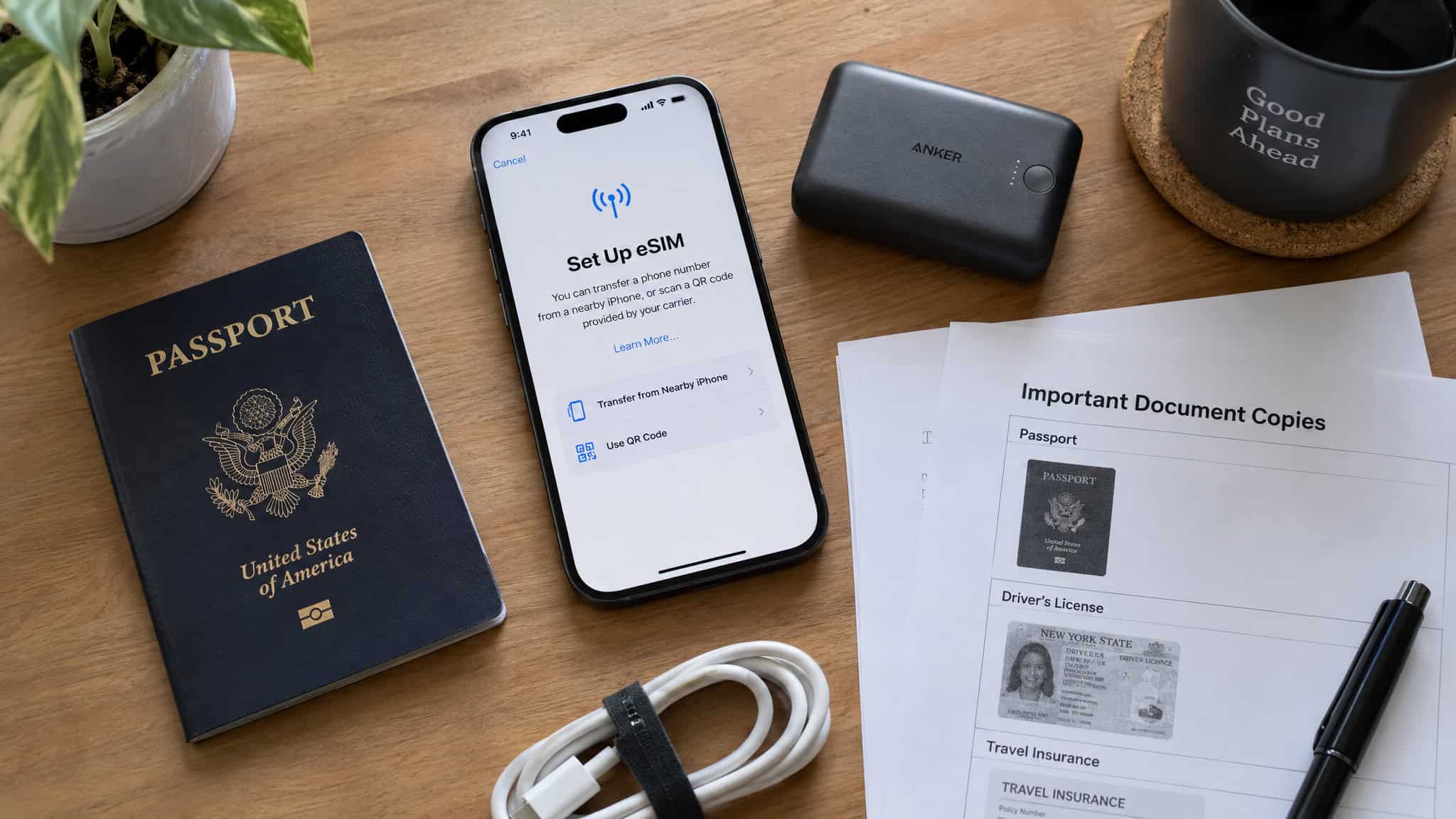
Then the redundancy work. Photograph your passport, visa, insurance, and bookings; keep them in cloud storage plus printed copies. Two-second task, saves a world of pain. Expired passport?
Renew it now; applications go online, and nobody wins by learning this at the airport. Before you fly, download offline Google Maps (screenshot what you need for remote areas) and Google Translate, which proved invaluable when I was stranded in a northern Thailand downpour. Media a day or two out. For the portable charger, pick one giving about two charges: smaller and lighter beats the brick, and it lives in the day bag, not the suitcase. Skip public USB ports, since they can be tampered with.
Airport: expedite layers, seating rules, and boarding decisions
Gate agents and frequent flyers agree on one thing: have a plan B before disruption, not after. A viral Reddit gate-agent post made this famous (1,700 upvotes, 260+ comments, authorship unconfirmed; one commenter called it “polite, yet terse”), and the advice holds: alternative airports mapped in advance, airline app installed, text alerts on, the kind of planned travel hacks for flying that keep you a step ahead. The app also handles check-in 24 hours out, shows what’s open on the seat map, and texting a flight number in iMessage creates a live status link. United’s former chief customer officer has claimed app users save about 30 minutes per airport trip. Company claim, but plausible.
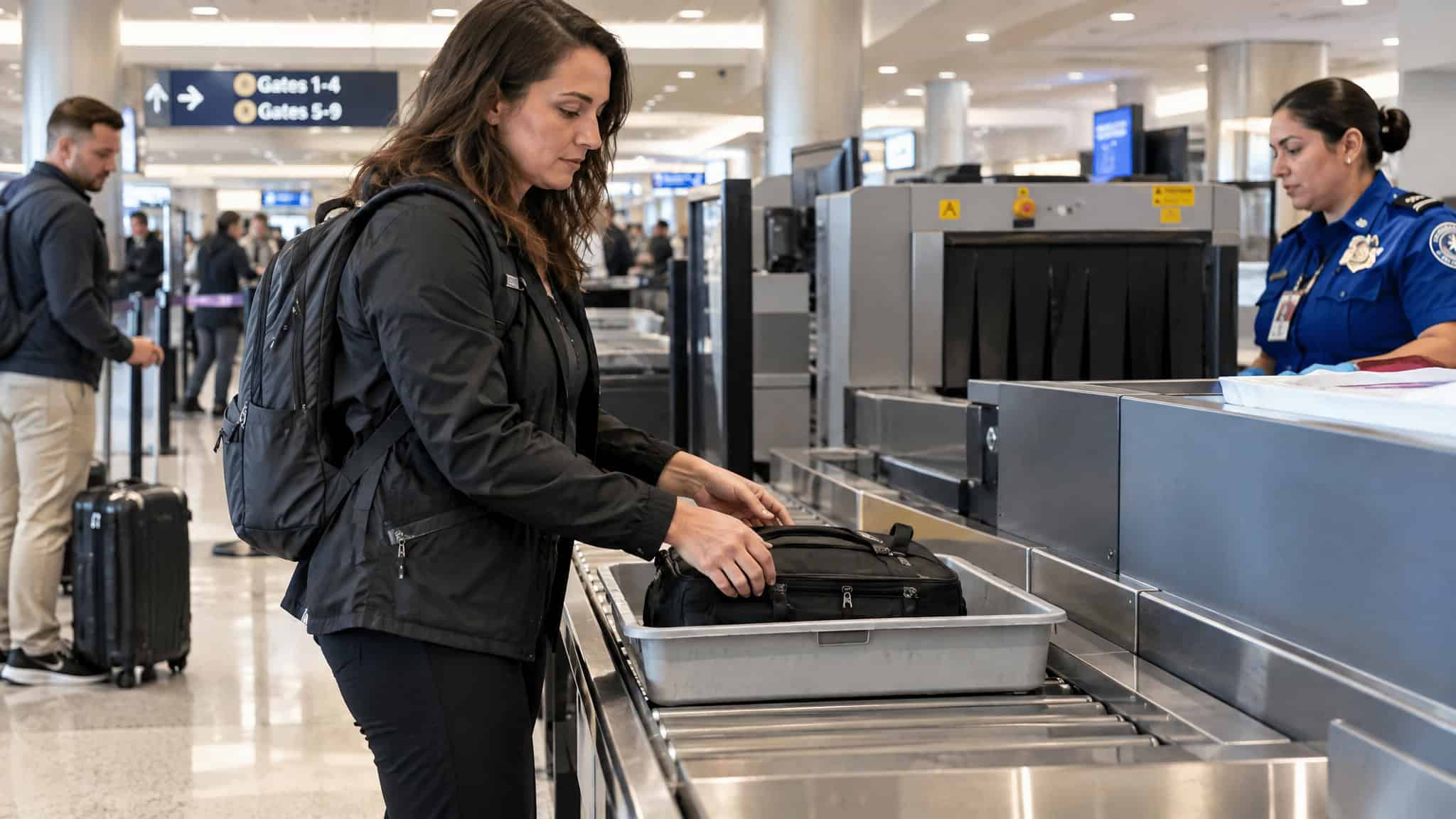
The expedite layers are TSA PreCheck, CLEAR, and Global Entry, chosen by how you fly, plus Mobile Passport for quicker re-entry lines, and Priority Pass lounges, which usually come free with Chase or AmEx cards. Free food, drinks, and a quiet seat. No luxury posturing, it’s just better.
On seating: book aisle and window in the same three-seat row, and the middle often stays open. On packed flights it won’t, and you’ll have a stranger between you. Full flight, board early for bin space. Empty flight, wait at the gate.
For upgrades, check the seat map for open premium seats and ask politely; a no costs nothing. One presenter claims about 50% success on exit-row upgrades through sheer niceness, but that’s one guy’s unverified anecdote, not data. Volunteering for a later flight only works when you’re flexible; hold out, because vouchers can hit thousands. And free hotel shuttles beat taxis.
In-flight: sleep, health, and the physiology of a good flight
To survive a long flight in economy, skip greasy or salty food, eggs, caffeine, fizzy drinks, and alcohol before you board, then drink water, wear compression socks, and use earplugs to actually sleep in your seat. The pre-flight diet matters because gas expands at altitude, causing bloating, while caffeine and booze worsen the dehydration and jet lag that wreck you on arrival. Staying hydrated helps your body adapt to the new time zone. Compression socks handle the swollen-ankle problem on long sits, which is why travel pros swear by them. And when it’s time to sleep, earplugs beat over-ear headphones, the headphones help with noise but make sleeping harder.
Jet lag is a protocol, not willpower. Timeshifter gives exact timings for sleep, caffeine, melatonin, and light exposure. Get early sunlight on arrival, stay awake until local night, and, yes, I wear sunglasses wandering airports to limit light exposure. Comfort-wise: over-ear headphones help with noise but make sleeping harder, so earplugs are the actual sleep fix.
A Bluetooth adapter lets your own headphones run the seatback entertainment, mostly worthwhile for frequent long-haul flyers. My Bose headphones have lasted 10+ years with 10+ hour battery, and the model’s discontinued, which tells you something about how long this gear lasts. Compression socks for long sits: travel pros swear by them, and they’re right. Gum for ear popping, skin care and a quality neck pillow for long-haul, and the scarf from your packing list is the sleep kit.
On the ground: eat, move, and explore like a local
You can judge any restaurant in about half a minute. Menus in six languages and touts out front are tourist traps; they announce themselves. Busy with locals at normal meal times is the green light, street food is fine when it’s cooked in front of you, and lunch should be your big meal because dinner prices run higher. Bib Gourmand is the pre-vetted value filter: in Spain, three courses for under AUD$60. Local guides exist in every country; Tripadvisor is backup only.
For moving around, download the local transport apps before you land: cheaper and more reliable than cabs when everything’s busy, and you actually see the place. Uber and Bold usually take cards, so less cash to carry. For the first day, a free walking tour led by a local is the best orientation there is. Tip-based, typically $15-40, bookable via GuruWalk; free-entry, not free.
Perplexity or ChatGPT works as an audio tour guide, and Atlas Obscura (30,000+ places), AllTrails, and Accidentally Wes Anderson cover the rest. Scroll Get Your Guide even if you book nothing: it’s a free idea engine for DIY versions. Learn four phrases: hello, please, thank you, excuse me. I’ve got an 800+ day Duolingo Spanish streak going, iTalki has $5 free credits, and locals appreciate the effort even when you butcher it.
Two mindset notes. Wake up early once per trip: quiet streets, better photo light. I’m not a morning person, but I do it once per trip because the payoff holds. And keep the itinerary loose; the best moments usually aren’t on the spreadsheet.
When things go wrong: the first hour decides the money
The first hour of a disruption decides whether you recover money at all. File lost-luggage claims at the airport before you leave; airline deadlines require it. My AirTag story sells this: a lost bag tracked and recovered while I was literally being driven away from the airport, because I could see where it actually was.
Field note: If a bag goes missing, the claim desk is inside the airport. Walk out without filing and most airlines are off the hook.
Escalate where it works. Airline X/Twitter DMs resolve faster than phone queues, and keeping a complaint public adds pressure. Calling international customer service numbers and choosing the Spanish option often reaches English-speaking agents quicker. AirHelp handles compensation claims, and look up your rights right after the disruption.
FlightAware shows the incoming aircraft’s previous movements, so you can gauge a delay before it’s announced. Two honesty labels: the empty-bag check trick (checking an empty delayed bag for compensation, like a free shopping spree) is hearsay, and TSA locks are often cut off abroad, so they’re a domestic deterrent only. Zip ties, carabiners, and luggage covers handle security and identification. One anecdote from another presenter: Mexican customs taxed his bag because he carried one new computer and one old one.
The hacks that don’t hold up
Incognito mode and VPNs do little for cheap short-haul fares, and there are no secret booking days, only baseline-price patience. The ~50% upgrade rate and the empty-bag trick are single-person anecdotes, nothing more. And don’t save money at the cost of the trip: a $100 red-eye is worth nothing if you can’t sleep on planes and your back’s wrecked, and the cheap hotel three miles from the beach with no bike is not a deal.
The bookends: before and after the trip
Most trip stress lives in the admin before and the re-entry after: a final pre-boarding checklist (entertainment downloaded, batteries charged, transport planned), priorities aligned with whoever’s coming, morning person vs night owl matters more than you’d think, and a buffer day at home for laundry and groceries before work. Then close the loop on why any of this matters. Travel pays memory dividends: the money is spent, but the payout keeps arriving years later. All that’s left is respecting the places that paid it.
Frequently Asked Questions
What is the 5 4 3 2 1 rule for packing?
It’s a popular light-packing formula that circulates widely online, but the tested evidence supports general light-packing principles rather than that specific formula. The reliable version is simpler: roll clothes in compressible packing cubes, stick to a travel uniform in neutral colors that all mix, and build a default packing list once that you tweak per trip.
Why not wear jeans on a plane?
Heavy denim is slow to dry, uncomfortable for long sits, and takes up serious luggage space — the opposite of a travel uniform. The smarter play is neutral-colored layers you can mix and match, with a packable jacket that doubles as a plane pillow and a scarf that works as blanket, pillow, and extra layer for basically zero space.
How much money can dynamic currency conversion cost you abroad?
3-15% per transaction. Every card terminal abroad asks whether you want to pay in home or local currency, and travelers pick home because it looks simpler — that’s dynamic currency conversion quietly skimming your money. Always pay in local currency at terminals and ATMs, never exchange money at the airport, and avoid the counter upsell on rental insurance if your credit card already covers it.