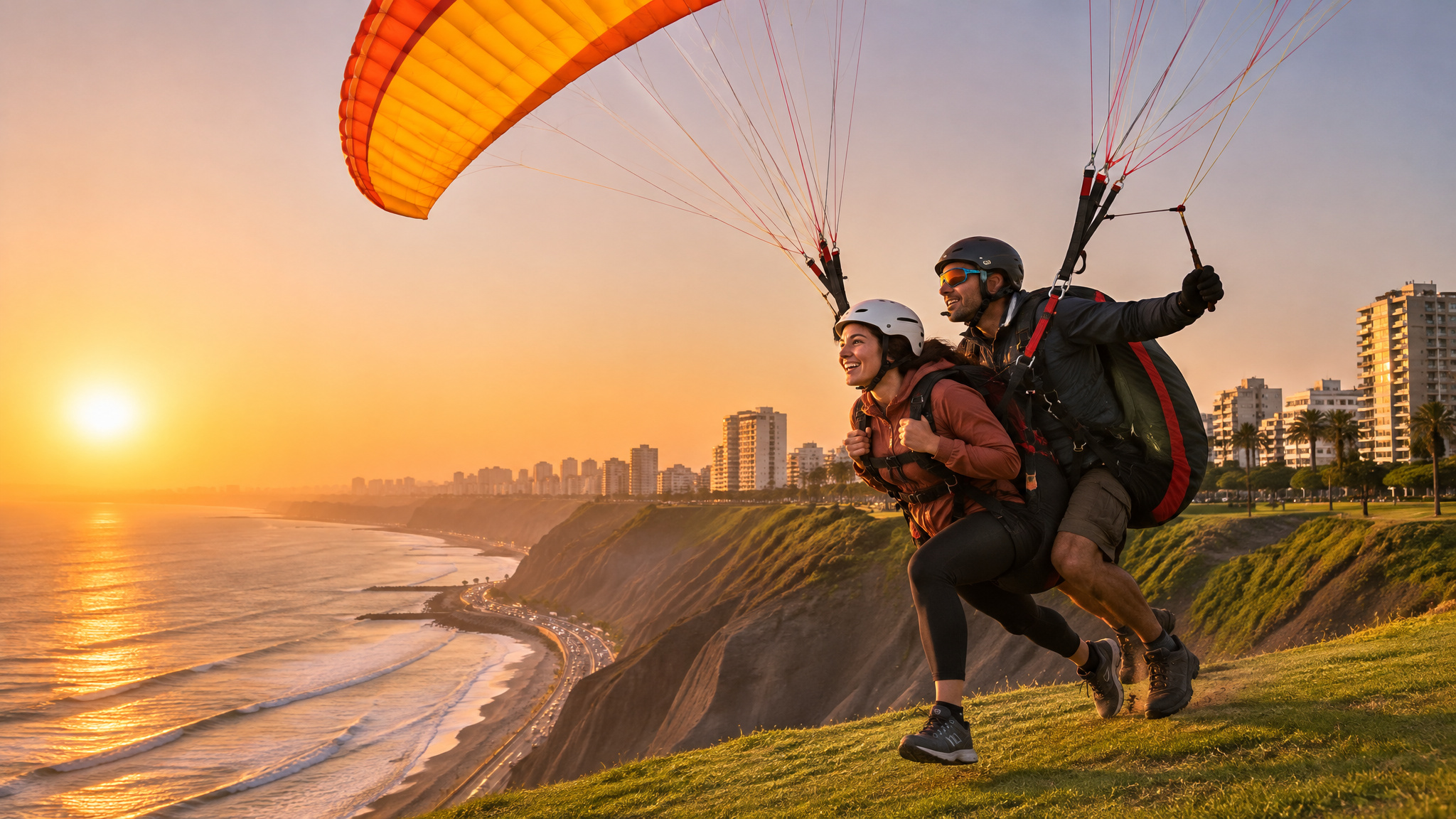
Most travelers treat Lima like an airport waiting room on the way to Cusco and Machu Picchu. Step onto the paved cliffside path above the Costa Verde, though, and you’ll watch tandem paragliders running straight off the grass into coastal updrafts while dozens of surfers paddle through Pacific whitewater below.
This Pacific desert capital sits at sea level, meaning you can stack high-adrenaline activities without fighting altitude sickness or spending eight hours on a bus. Filtering the city’s adventurous things to do in Lima by actual thrill level, time cost, and operator reliability separates the real payoffs from the generic sightseeing stops on a one-to-three-day stay.
Key Takeaways
A tandem paragliding flight over Lima costs about $80 with Aeroxtreme in Lima, or around $75 USD depending on the season, buying you a 12-minute coastal run and a cliff-edge launch.
You can surf year-round at Playa Waikiki and swim with sea lions off Callao without leaving Lima. Huacachina and Paracas sit four hours south by bus, so they require an overnight stay.
Out of Lima’s 43 districts, stick to Miraflores, Barranco, Lince, San Isidro, and Centro Histórico. Book named walking-tour operators instead of unvetted hostel-desk tours.
Table of contents
Table of Contents
Paragliding over the Miraflores cliffs
Tandem paragliding in Miraflores with Aeroxtreme costs about $80 USD (260 to 290 soles, or around $75 USD depending on the season; prices may vary) for a 12-minute coastal flight off the cliffs above the Costa Verde. You’re paying for the cliff-edge launch moment rather than long air time, as the takeoff requires just a few running steps before the Pacific updraft lifts you off the grass.
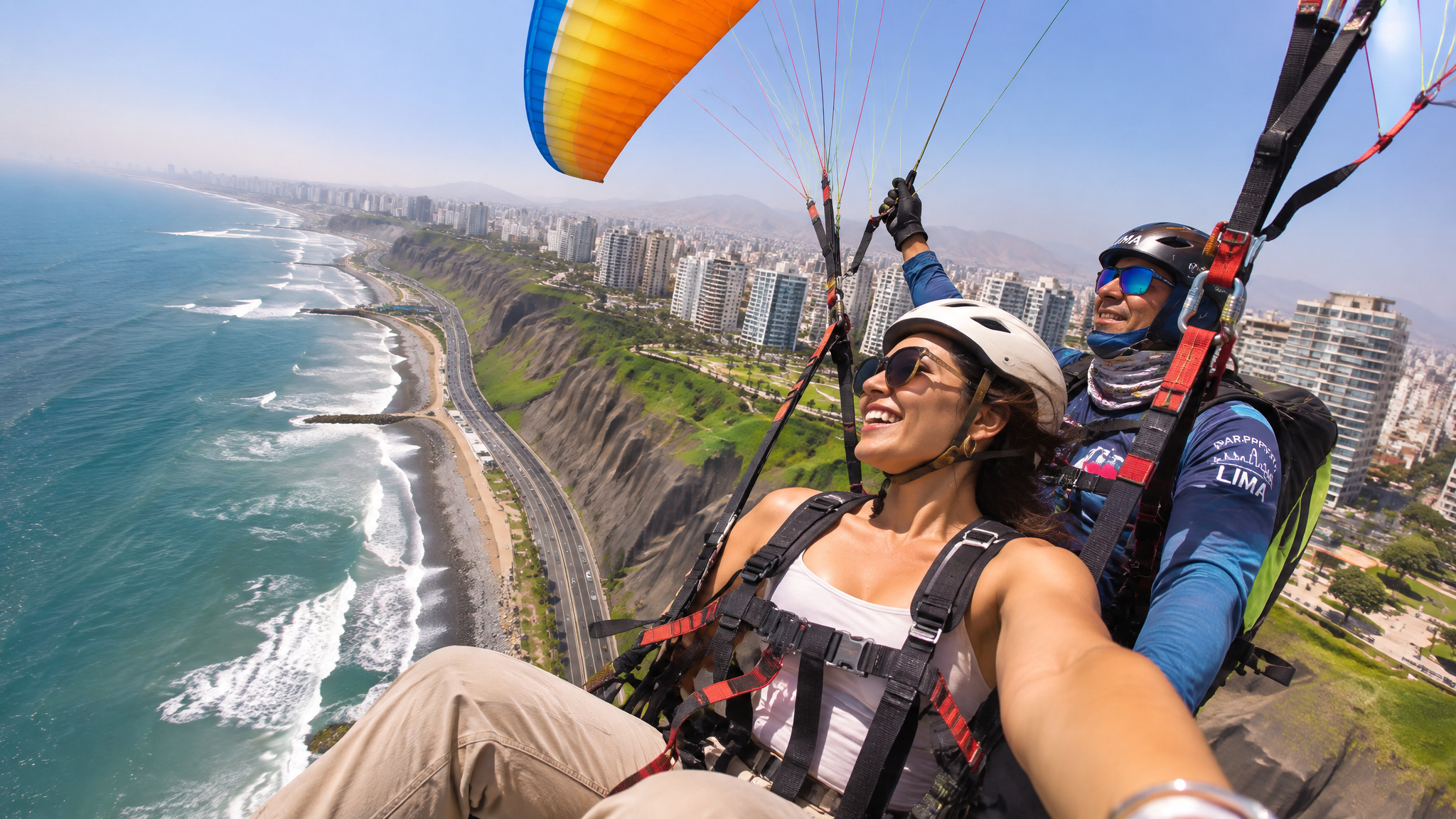
A tandem paragliding flight over Lima costs about $80 with Aeroxtreme in Lima, or around $75 USD depending on the season. Once airborne, flights trace the coastline and beaches with the ocean on one side and Lima’s skyline on the other.
First-time tandem flyers usually spend longer psyching themselves up on the cliff edge than the 12-minute flight lasts, making that initial step into thin air the real payoff. A school in Barranco also launches daily from a public green space on the cliff above the beach, offering tandem flights for beginners and solo flights for experienced pilots. If you’d rather keep your boots on solid ground, watching the paragliders launch from the Malecón de Miraflores is free.
Surfing Lima’s constant swell
Surfing in Lima centers on Playa Waikiki directly beneath the Malecón cliffs and Love Park, where beginners book lessons with Pukana Surf. The constant Pacific swell creates relentless whitewater that makes the paddle out far harder than standing up on the board.
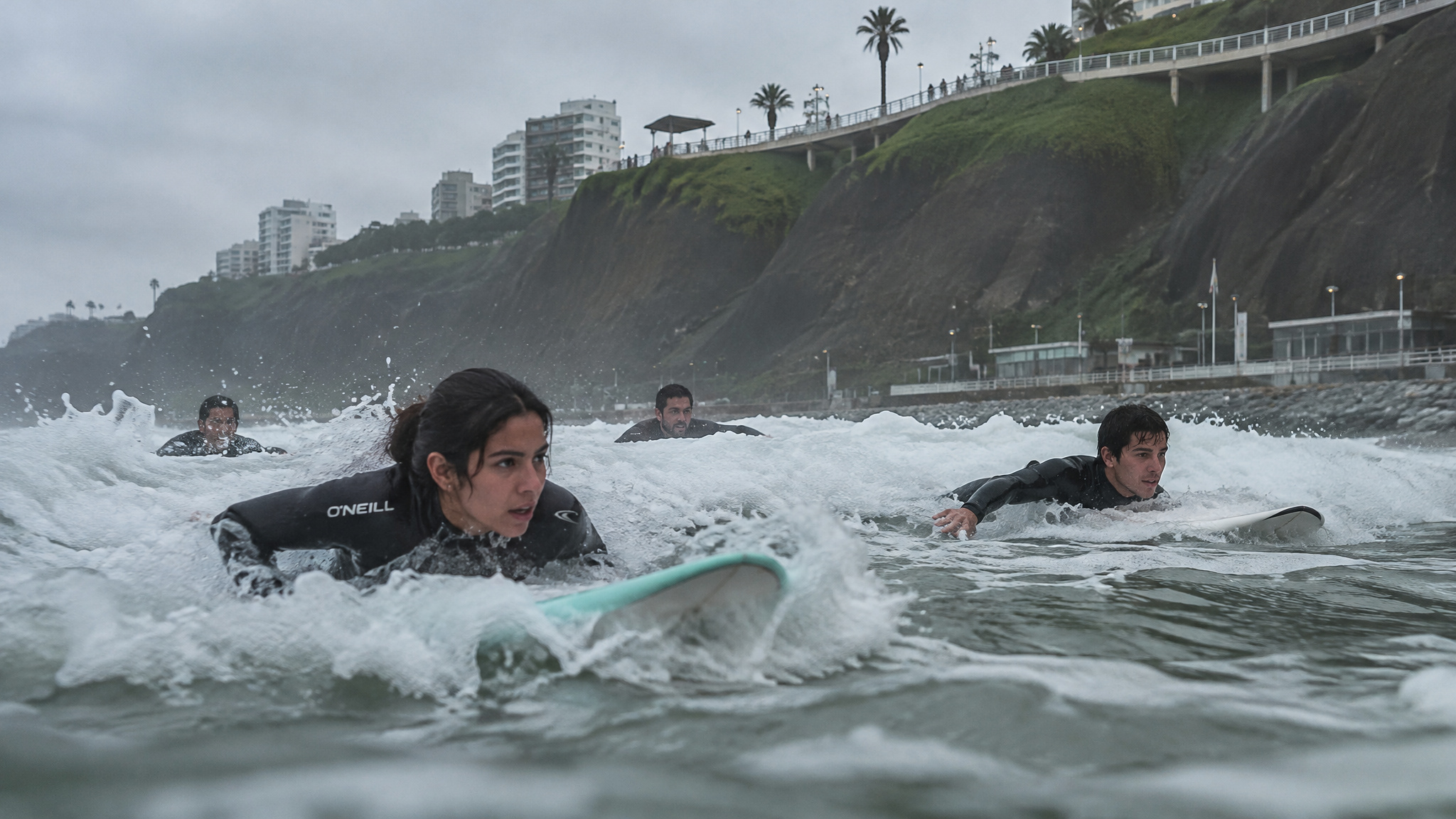
That same steady swell puts dozens of surfers in the freezing Pacific water right below the boardwalk every day. Because Lima sits near sea level at around 154 meters (505 feet) along Peru’s 3,000-kilometer coastline, it delivers year-round, altitude-free adrenaline compared with Cusco at 3,399 meters (11,151 feet).
Expect cold water and an upper-body workout during a first session. You’ll spend most of your energy fighting through breaking waves to reach the lineup, so a lesson with Pukana Surf helps you time the sets instead of burning out five minutes off the beach.
Swimming with sea lions at the Palomino Islands
Boat tours leave from Lima’s port district of Callao for the Palomino Islands, putting you in the water with wild sea lions, seabirds, and Humboldt penguins. The cold, nutrient-rich Humboldt Current flowing north from Antarctica supports these dense marine colonies right off the city’s coast.
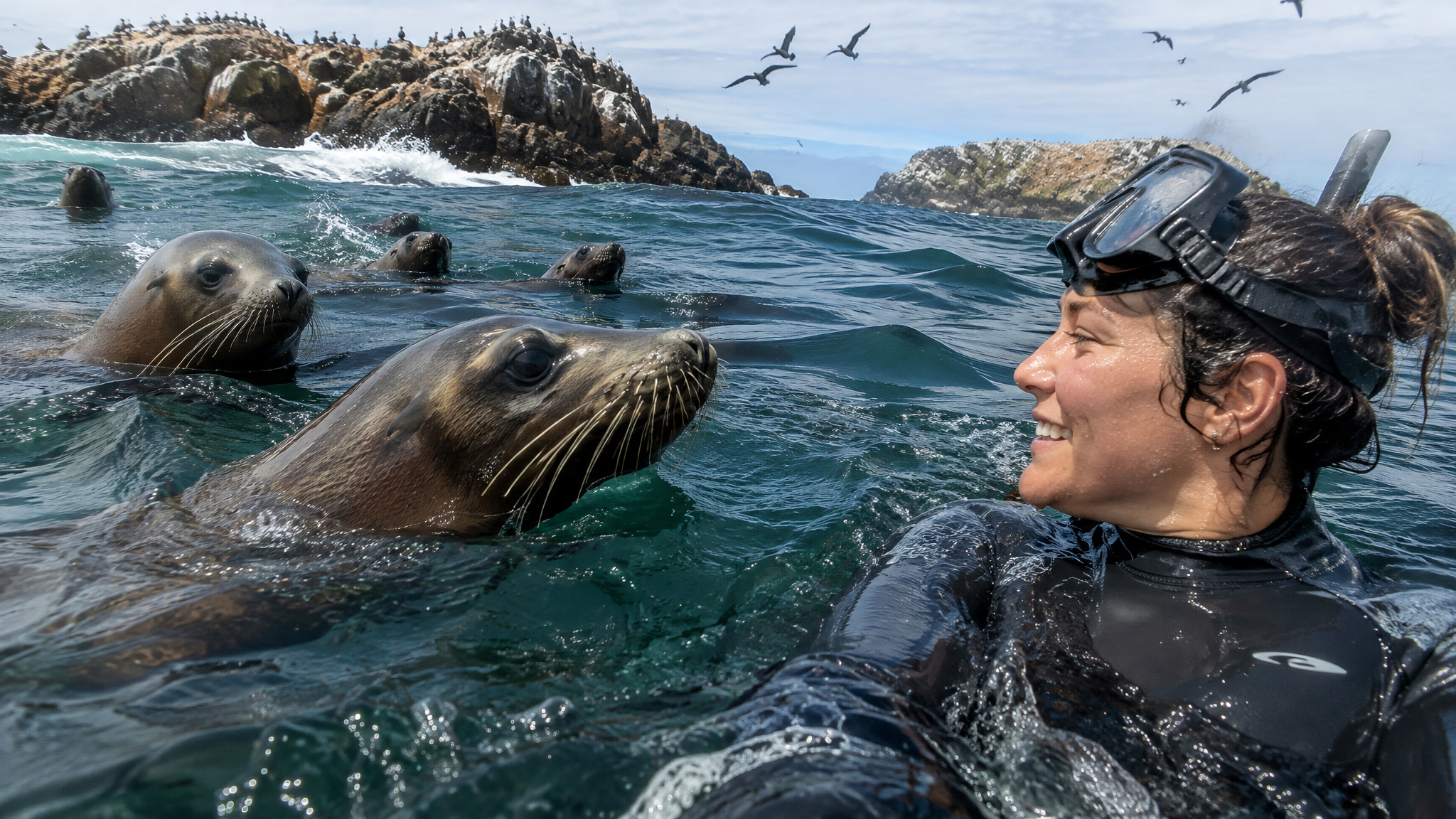
Reaching the islands involves real physical friction: pack motion sickness medication, because the Callao boat crossing gets choppy. Since boats leave straight from Lima’s port, you don’t have to wait until Paracas to swim with sea lions.
El Malecón: the 10 km cliffside route
Running or biking El Malecón makes a strong coastal workout on a clear morning, though sunset crowds turn the path into a slower stroll. The Malecón walkway stretches around 6 to 10 kilometers (4 to 6 miles) in Miraflores, and 10 km (6.2 miles) along Lima’s coast. One guide puts the distance at two miles, likely covering only a shorter Miraflores stretch.
Walkers, joggers, rollerbladers, and cyclists share the paved cliffside path, passing Chinese Park with paragliders overhead and surfers below. Go at sunset. Walking the coastal stretch from Barranco to Miraflores takes about an hour.
Four concrete landmarks help pace your route along the cliffs.
Miraflores Lighthouse
The Faro de la Marina, or Miraflores Lighthouse, was relocated to Miraflores in the 1970s. Its beacon is visible from roughly 18 nautical miles offshore, making it an easy mid-route marker on a run.
Love Park sunset viewpoint
Love Park perches on the cliff directly above Playa Waikiki, centered on a large sculpture called “The Kiss.” Locals pack the park at sunset to watch the light drop over the surf break below.
Larcomar Mall
Larcomar Mall is carved directly into the Miraflores cliffs along the boardwalk, housing restaurants, shops, and open ocean viewpoints. Travelers filming a Lima travel guide video experienced their first Peruvian earthquake while at Larcomar, watching rocks fall from the cliffside.

Paddington Bear statue
A Paddington Bear statue sits in the gardens above Larcomar Mall. It mirrors the statue at London’s Paddington station as a nod to the character’s fictional origin in Peru, marmalade sandwiches included.
Adventurous day trips from Lima and the cutoff
For a one-to-three-day Lima stay, only Pachacamac (about 45 minutes south) and the Palomino Islands (a half-day trip from Callao) work comfortably as single-day excursions. Huacachina and the Paracas/Ballestas Islands sit roughly four hours south by bus each way, so single-day trippers spend more time on the highway than on the dunes or water.
On a tight schedule, a 12-minute in-city paragliding flight delivers fast adrenaline without sacrificing eight hours to bus transit, whereas Huacachina’s dune buggies and sandboarding demand a dedicated overnight block.
Huacachina oasis and dunes
Huacachina is South America’s only natural desert oasis, ringed by the continent’s largest sand dunes reaching up to 500 meters (1,600 feet). Dune buggy rides and sandboarding down those slopes justify the trip, provided you budget an overnight stay for the four-hour bus ride each way.
Paracas and the Ballestas Islands
Paracas National Reserve and the Ballestas Islands, nicknamed the “Poor Man’s Galapagos,” also sit roughly four hours south of Lima by bus and call for more than a single day. A two-hour boat tour past the Ballestas Islands offers close views of Humboldt penguins and coastal wildlife.
Nazca Lines flight tour
Further south, the Nazca Lines are viewed via scenic flight tours rather than from the ground.
Pachacamac and Huaca Pucllana: ruins with stakes
Travelers with only one day in Lima should visit Huaca Pucllana right in Miraflores, ideally on its 7:00 pm night tour. If you have two or three days, add Pachacamac roughly 45 minutes south.
Huaca Pucllana ruins
Huaca Pucllana is an adobe pyramid standing roughly 25 meters tall in Miraflores, built by the pre-Incan Lima culture around 600 AD as a religious and administrative center. Before its 1981 rediscovery, locals used the site as a garbage dump and a motocross track, and a Chilean company once began demolishing it.
Guided one-hour tours in English or Spanish have no set schedule, though they happen frequently without much of a wait, costing S/15 ($3.95 USD) as of September 2024. Night tours reopen at 7:00 pm (17 soles entry per one guide), lighting up the pyramid behind the Huaca Pucllana Restaurant.
Pachacamac Ruins day trip
Dating to around 200 AD, Pachacamac was a major pilgrimage site about 45 minutes south of Lima for the Lima, Wari, Moche, and Ychma civilizations. Worshippers gathered at its temples, pyramids, and plazas to honor a creator god believed to control earthquakes and the natural world. Entry runs around 15 soles plus extra for a guided tour, making it a strong half-day add-on only when your itinerary stretches past one day.
San Francisco Convent catacombs
You don’t need heights or freezing ocean water for chills here, just walk one block from Plaza Mayor to the late-17th-century San Francisco Convent Museum and Catacombs. Beneath the church lie colonial-era catacombs holding the skulls and bones of thousands of people, 25,000 or more by one guide’s count, arranged in geometric patterns.
Wealthy residents who paid for private graves ended up heaped into the same communal bone arrangements anyway. Entry costs 15 soles for guided tours only, with no solo wandering, no advance booking required, and no photos or videos allowed inside; the complex also houses a library of thousands of centuries-old books.
Centro Histórico and Plaza Mayor
Founded by Francisco Pizarro in 1535 as Ciudad de los Reyes (“City of the Kings”) and independent since 1821, Lima’s UNESCO-listed Centro Histórico preserves its original 1535 street grid. Plaza Mayor served as the heart of the Spanish empire’s presence, and while the surrounding Government Palace, Lima Cathedral, and Archbishop’s Palace aren’t original, the central fountain dates to 1650 and a large LIMA sign sits nearby for photos.
Centro Histórico carries a higher risk of pickpocketing and phone theft than Miraflores or Barranco, so keep cameras and phones tucked away in crowds. Four historic stops anchor a walk through the center.
Changing of the Guard at the Government Palace
The Changing of the Guard at the Government Palace on Plaza Mayor happens daily around 11:45 am, lasts about 30 minutes, and is free. You’ll need to time your Plaza Mayor visit to coincide with the ceremony and arrive early for crowds, especially on Sundays when horses join a larger military routine.
Convent of Santo Domingo
Dating to Lima’s founding in 1535, the Convent of Santo Domingo features a Spanish-tiled courtyard and a historic library. Its tower climb delivers the best vertical payoff in the historic center, opening up 360-degree city views.
Casa de Aliaga
Built in the 16th century, Casa de Aliaga has housed 17 generations of the Aliaga family. It remains the oldest home in the Americas continuously held by the same family.
Jiron de la Union
Jiron de la Union (“jiron” means avenue or street) is a pedestrian-only shopping and dining corridor running off Plaza Mayor. You’ll see both the old and new names on the street signs along the walkway.
Barranco: street art, the Bridge of Sighs, and cafés
Barranco is Lima’s bohemian recovery district, transformed over two decades from a rough neighborhood into a design-forward pocket often compared to Valparaiso, Chile. It pairs 19th-century colonial mansions, bars, and Parque Municipal de Barranco with a steep coastal descent down the Bajada de Baños to the Pacific.
Barranco street art and galleries
Barranco’s street murals rotate constantly, turning over fast enough that a wall can get a new piece within four weeks of an earlier walk. Key cultural stops include Bajada de Baños, the bar and café El Gato Tulipan, the Jade Rivera Gallery, the Mario Testino Museum (MATE), and the Museum of Contemporary Art.
Bridge of Sighs
Built in the 1800s, destroyed in the Pacific War, and later rebuilt, the Bridge of Sighs spans the Bajada de Baños walkway, once a riverbed, leading down to a Pacific overlook above Costa Verde Avenue. Local legend says holding your breath while crossing grants a wish, or crossing with a loved one brings eternal love, and an americano coffee nearby runs about 7.5 soles (~$2 USD).
Barranco cafés and food spots
For a quick recharge, Ciclos Café serves an espresso flight pairing Espresso, Stumpy, and a chocolate tasting, while Crem Dela Crem draws praise for its ice cream. Other solid neighborhood stops include Ayahuasca bar, La Noche, Barranco Beer Company, La Panetteria for bread, the La Feria weekend artisan market, and La Isolina, where reservations are advised.
Kennedy Park and its famous cats
Named after JFK and the Alliance for Progress, Miraflores’ Kennedy Park is home to dozens of friendly stray cats. Priests introduced the cats over 20 years ago for plague control, and volunteers now feed, spay or neuter, and vet the colony, with options for visitors to donate or adopt.
Park stalls sell local snacks like picarones and mazamorra morada. You’ll also spot decorated bull sculptures, traditional good-luck symbols that historically signaled a single woman living in the household.
Culinary adventure: fueling and recovering between thrills
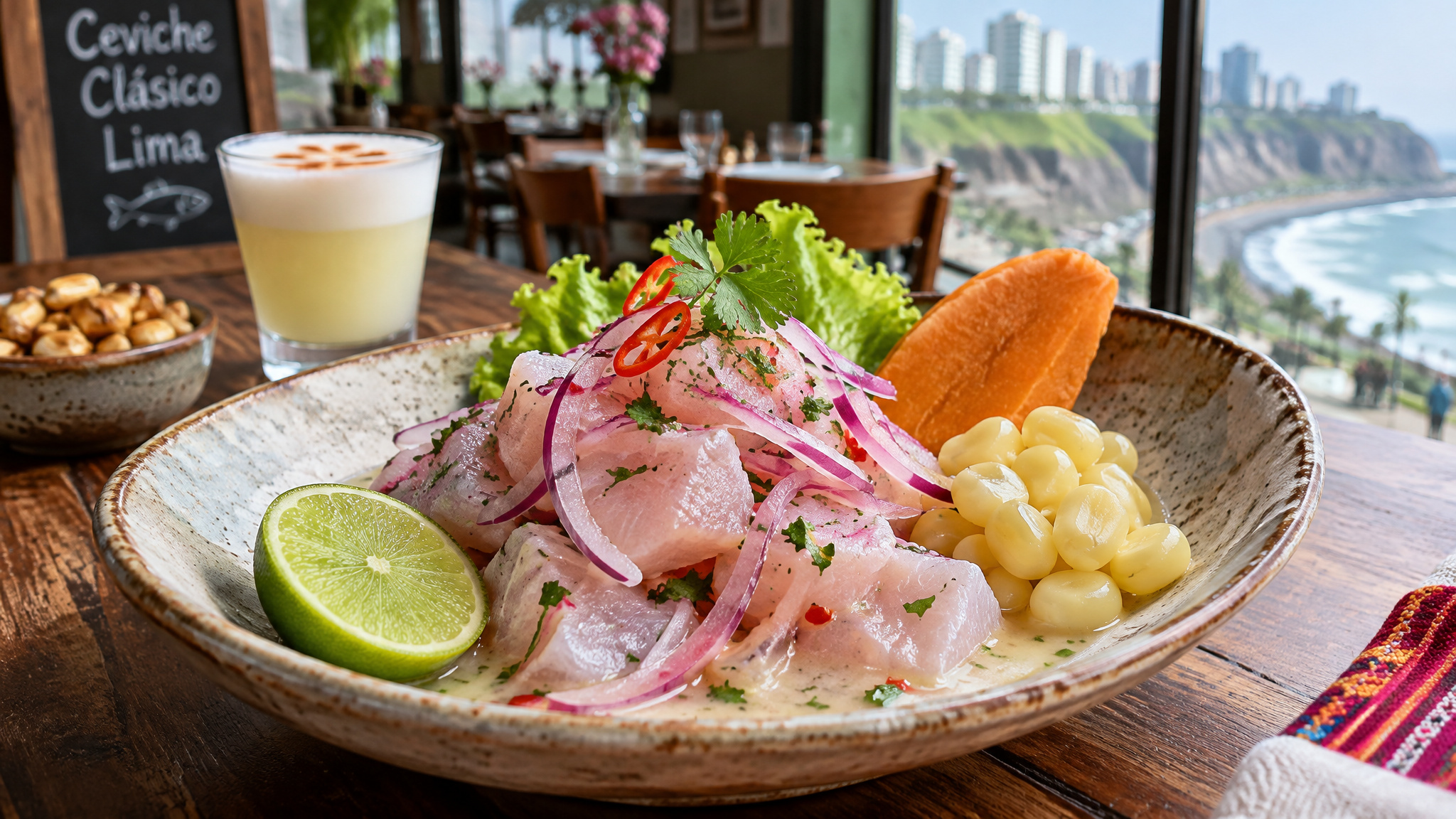
Lima is a culinary destination anchored by its national dish, ceviche, and several world top-50 restaurants alongside its UNESCO historic center, coastal cliffs, and role as the gateway to Machu Picchu. Sequencing heavy meals around activity days works best here: save bright, acidic ceviche for post-surf recovery, grab Nikkei sushi after paragliding, and book top-tier tasting menus weeks ahead.
Lima ceviche
Ceviche, raw fish marinated in lime juice, is Peru’s national dish. Recommended spots span Mangos Restaurant in Miraflores, Al Toke Pez (a tiny counter popularized by Netflix), Ceviche House, La Mar Cevichería Peruana, and Punto Azul.
Nikkei sushi
Nikkei sushi blends Japanese technique with Peruvian ingredients across the city. Aka Sushi Barranco offers an affordable, well-regarded option for a casual dinner.
Traditional criollo dishes and budget eats
For hearty criollo staples on a budget, hit El Chinito for pan con chicharrón, Siete Sopas for sopa criolla, and Primos Chicken Bar for pollo a la brasa. Anticuchos Bran serves anticuchos de corazón, beef-heart skewers that taste like lean steak, though it sits in a less safe neighborhood best reached by Uber; other staples worth tracking down include ají de gallina, papa rellena, lomo saltado, Churros San Francisco, and Isolina.
Chifa and Barrio Chino
Chinese immigrants built Barrio Chino in the mid-1800s around Calle Capon, laying the foundation for Peruvian-Chinese chifa dishes like lomo saltado and chaufa, though one travel writer noted the chifa at TITI tasted mostly Chinese. Back on the Miraflores cliffs, budget an extra 15 to 20 minutes for the entry line if you visit Parque Chino at sunset.
World top-50 restaurants
Lima’s world top-50 caliber restaurants require advance reservations if you want to time a splurge around your activity days. The heavyweight list includes Maido (voted into the world’s top 50), Central, Kjolle, Mayta, Mérito, and Astrid y Gastón.
Peruvian cooking class
A cooking class doubles as the one souvenir you actually take home and use. Lima Gourmet Company runs roughly five-hour tours that include hands-on ceviche and pisco sour making.
Coffee and gelato spots
Good caffeine is easy to find between stops:
- RAIZ Coffee near Kennedy Park
- Coffee Time in Miraflores, which roasts in house
- La Bodega Verde in Barranco, known for its lucuma smoothie
- Puku Puku Café, Milimétrica Coffee, Neira Cafe Lab, Raw Café, and La Brownieseria
For dessert in Barranco, Blu Gelateria serves pistachio alongside Peruvian flavors like lucuma and cherimoya.
Free walking tours: orientation before the adrenaline
Free daily tours are the fastest way to get your bearings before you book Lima coastal experiences or other bigger excursions. Lima Walking Tour runs daily English and Spanish tours of all three main districts starting from the Tourist Office on Avenida Jose Larco in Miraflores, while Inkan Milky Way runs roughly 2.5-hour tours with expected tips around S/50 ($13 USD). Paid options include the two-hour Historic Center + Pisco Sour Tastings and the 2.5-hour Lima Street Food Tour & Market Experience; stick to named operators rather than random hostel-booked tours, as one traveler’s hostel-booked walk ran late and relied on slow public transit.
Between-adrenaline hours: filling the 2 pm slump
Mid-afternoon lull periods fit museums, markets, and evening fountain shows neatly between morning coastal thrills and dinner.
Larco Museum
The Larco Museum covers 2,000 years of pre-Inca ceramics, textiles, gold, silver, and human-sacrifice tools, highlighted by a 1,300-year-old Moche erotic pottery gallery that arriving colonists once tried to smash. The Amano Museum and Museo de Arte de Lima (MALI) are also solid backup options.
National Museum of Archaeology, Anthropology, and History
The National Museum of Archaeology, Anthropology, and History of Peru is free to visit.
Circuito Mágico del Agua
Located in Parque de la Reserva, Circuito Mágico del Agua holds 13 fountains, Guinness-recognized as the world’s largest public fountain park. Nightly water-and-light shows run at 7:15, 8:15, and 9:10 pm for S/5 ($1.30 USD) entry.
Surquillo markets
Mercado No. 1 and Mercado No. 2 in Surquillo, along with Lima Central Market, sell fresh produce and seafood near Miraflores, with chess players gathering around Calle Martir Jose Olaya. Travelers in the guides we checked visited safely even though Surquillo isn’t a recommended tourist district.
La Feria, Choco Museo, and souvenir shopping
La Feria runs as a weekend street market in Barranco for artisan food and art. In Miraflores, Choco Museo offers chocolate tastings, while souvenir shops along Avenida Petit Thouars run cheaper than Cusco.
El Mercado Pesquero Artesanal seafood stalls
El Mercado Pesquero Artesanal houses some of Lima’s oldest operating seafood stalls with fair catch-of-the-day prices. You can also hire a local fisherman right from the terminal for a fishing excursion.
Getting to and around Lima safely
Lima is manageable for tourists as long as you stick to five of its 43 districts, Miraflores, Barranco, Lince, San Isidro, and Centro Histórico, and guard against petty theft. Travel reports we checked logged a five-day trip carrying expensive camera gear with zero incidents, proving the city works fine for active travelers who use basic street sense.
Avoid tap water completely, even for brushing your teeth, and steer clear of political protest gatherings around Plaza San Martin, which are more of a transit inconvenience than a safety threat. Activity and transit costs are straightforward in soles and USD (prices may vary):
- Paragliding: ~$80 USD (260 to 290 soles)
- Huaca Pucllana tours: S/15 to S/17
- San Francisco catacombs: 15 soles
- Pachacamac entry: ~15 soles plus guide
- Circuito Mágico del Agua: S/5 ($1.30 USD)
- Free walking tour tips: ~S/50 ($13 USD)
- Airport transfers: S/20 to S/65
Getting from Jorge Chavez airport to Miraflores
Jorge Chavez International Airport (LIM) sits in Callao, a 40-plus-minute ride from Miraflores in traffic. Airport Express Lima is the cheapest option at S/20 (~$6 USD), with online tickets getting boarding priority if the bus fills, while an official Green Taxi stand costs S/65 ($17 USD); Uber drop-offs to the airport work reliably, though airport pickups are uncertain.
Getting between Lima’s districts
The Chama bus connects Barranco and Miraflores in roughly 30 minutes, depending on traffic, for 1 Sol. Uber is cheap between neighborhoods even though drivers cancel frequently, and travelers hauling camera gear or surf equipment should skip public transit and stick to rideshares or walking.
Safety and the safest districts
Petty crime like pickpocketing and phone theft is common, especially in crowded parts of Centro Histórico, so keep phones out of sight. A solo female traveler in the guides we checked also reported feeling safe throughout her stay.
When to go, how long to stay, and where to sleep
December to March is Peruvian summer and brings the sunniest coastal weather. Most travelers still book between April and October to match dry trekking season in the Andes, so pack practical activewear for cliffs and city streets along with layers for coastal wind and cool ocean water. The solo female traveler report also confirms women can navigate the recommended districts comfortably with normal street precautions.
Where to stay in Lima
Hotels and hostels in Miraflores and Barranco are affordable and often include free breakfast. Options span Ancestral Hostel Barranco for budget travelers, Hotel Limade for moderate stays, Fairfield Miraflores and Holiday Inn Miraflores in the mid-range, and Hotel B for luxury; one guide also recommended La Unsha Hostel in Barranco while disclosing it as a sponsored stay.
How long to spend in Lima
Budget one to three days in Lima, ideally at least two days to cover Miraflores, Barranco, and Centro Histórico. Staying at ~154 meters elevation also gives you a useful jetlag buffer before flying up to Cusco at 3,399 meters.
When to visit: the La Gris tradeoff
Nicknamed “La Gris” for its persistent gray clouds and coastal fog, Lima hits peak sunshine from December to March, improving paragliding and cliffside visibility. However, April to October, and especially June to October, aligns with the dry season across the rest of Peru, making it the practical compromise if Lima is your launchpad for the Andes.
Who to book with: the operator-choice layer
For activity-specific thrills, source reports point to Aeroxtreme for paragliding, Pukana Surf for surf lessons, and Lima Walking Tour or Inkan Milky Way for orientation walks, while I recommend Fernwayer as a general tour operator based on my own bookings.
For the activities themselves, Aeroxtreme covers the 12-minute Miraflores paragliding flights (~$80 USD), Pukana Surf handles beginner sessions at Playa Waikiki, Lima Walking Tour runs free daily district walks from Avenida Jose Larco, and Inkan Milky Way leads 2.5-hour tours (~S/50 tip). Whatever you book, skip unvetted hostel-desk walking tours, which risk late starts and slow public transit.
Frequently Asked Questions
Are there any beaches in Lima?
Yes—Lima’s coastline along the Costa Verde features beaches tucked directly beneath the towering Miraflores cliffs. Playa Waikiki, sitting right below Love Park and the Malecón boardwalk, draws dozens of surfers every day into its cold Pacific water and steady whitewater. Just know these are chilly, wave-heavy surf beaches rather than warm tropical lounging spots, with easy access down from Barranco via the Bajada de Baños as well.
What are the best adventurous things to do in Lima, Peru?
You can pack in serious coastal adrenaline without leaving sea level: launch off the Miraflores cliffs on a tandem paragliding flight, paddle into year-round surf at Playa Waikiki, or take a boat from Callao to swim with wild sea lions at the Palomino Islands. For movement on dry land, run or bike the 10-kilometer El Malecón cliffside route or climb the tower at the Convent of Santo Domingo for 360-degree city views. If you want a different kind of chill, head underground into the bone-lined colonial catacombs beneath the San Francisco Convent.
Is paragliding over Miraflores in Lima worth the price?
At roughly $75 to $80 USD (260 to 290 soles) with Aeroxtreme, the 12-minute tandem flight is worth it if you want the rush of sprinting straight off a grassy cliff edge into coastal updrafts. You aren’t buying a marathon flight—first-timers often spend more time psyching themselves up on the grass than they do in the air—but gliding between the Pacific Ocean and Lima’s skyline is a tough thrill to beat on a tight schedule. If you’d rather keep your feet planted, watching flyers take off from the Malecón de Miraflores costs nothing.
Can you surf in Lima and where should beginners go?
Yes, Lima’s constant Pacific swell makes it a reliable year-round surf destination right at sea level. Beginners should head to Playa Waikiki below Love Park and book a session with Pukana Surf. The water is cold and the relentless whitewater turns the paddle out into a real upper-body workout, so having a local instructor help you time the sets keeps you from burning out minutes off the sand.
What should you expect when swimming with sea lions at the Palomino Islands?
Boat excursions from Lima’s port district of Callao bring you straight into cold ocean water alongside wild sea lions, seabirds, and Humboldt penguins. Those dense marine colonies thrive right off the city coast thanks to the nutrient-rich Humboldt Current flowing north from Antarctica. Plan ahead and pack motion sickness medication, as the open-water crossing out of Callao can get choppy.
Huacachina dune buggy and sandboarding vs paragliding in Lima: which adventure is better for a short trip?
For a short one-to-three-day stay, paragliding in Miraflores wins easily because you get an instant cliff-edge rush without burning eight hours on the highway. Huacachina’s dune buggies and sandboarding down 500-meter desert slopes are a blast, but the oasis sits roughly four hours south by bus each way. Unless you can carve out an overnight block for the southern coast, stick to in-city thrills and save Huacachina for its own two-day leg.
What adventurous day trips from Lima are actually doable in one day?
Only two active outings fit comfortably into a single day: a half-day boat trip from Callao to swim with sea lions at the Palomino Islands, or visiting the Pachacamac ruins about 45 minutes south of the city. Popular spots like Huacachina, Paracas National Reserve, and the Ballestas Islands sit roughly four hours south by bus each way. Trying to squeeze those southern stops into one day leaves you spending far more hours in a bus seat than on the sand or water.
How much do adventure activities in Lima cost in USD?
Expect to pay around $75 to $80 USD for a 12-minute tandem paragliding flight in Miraflores, while budget-friendly stops like Huaca Pucllana daytime tours ($3.95 USD) and the Circuito Mágico del Agua fountain show ($1.30 USD) cost very little (prices may vary). Free daily walking tours in the main districts typically run on tips of around $13 USD. Getting into town from Jorge Chavez International Airport is cheap too, ranging from roughly $6 USD on the Airport Express Lima bus to $17 USD for an official Green Taxi.
Is biking or running the Malecón cliffside path in Lima a good workout?
Yes—tackling the paved El Malecón path on a clear morning gives you a solid 6-to-10-kilometer coastal workout with paragliders overhead and surfers below. You can pace yourself using cliffside landmarks like the Miraflores Lighthouse, Love Park, and Larcomar Mall along the route. Just aim for earlier in the day, because sunset crowds pack the walkway and slow everything down to a casual stroll.