
The average domestic round-trip flight costs $383 as of May 11, per Kayak data, up 23.2% from a year ago. International trips aren’t better: $1,097 average, up 17.8%. Every trip you’re planning got more expensive, and if you’re still waiting for the Goldilocks booking window I used to swear by, that playbook expired.
Here’s the honest reframe. The old rule said 3 to 7 months out for domestic flights, 4 to 10 for international. Book inside that band and you’d catch the dip. With fuel-driven fare inflation, that waiting game is now a losing default. So this list isn’t the usual 40 evergreen tips. It’s ranked by what each move actually saves, biggest money first: destination swaps and hub-splitting worth $300 to $600, points strategies worth an entire flight, midweek flying worth $56 to $100 a ticket, and down the ladder to $10 bag-fee offsets.
The experts tracking this stuff daily, guys like Julian Kheel at Points Path and Jesse Neugarten at Dollar Flight Club, have mostly converged on the same advice: if you see a fare that works, book it. The deal in front of you might be the best one you’ll get.
Which is annoying, because I liked waiting. But the numbers changed, so the moves change. Here’s what actually works now.
Key Takeaways
Fares are way up (domestic round-trips averaging $383, +23.2% YoY per Kayak as of May 11), so book sooner rather than later: Thanksgiving flights by early-to-mid October, Christmas by Halloween, New Year’s by the end of September 2026.
Skip the folklore: there’s no cheapest booking day, incognito mode changes nothing, and the one-way-mixing trick isn’t automatic anymore since American and some others price round-trips cheaper again.
The biggest money is in flexibility and stacking: swapping New York-London for Paris or Amsterdam can save $500-600, midweek flights run about 13% cheaper (~$56-100 a ticket), and nearly every fare except basic economy can be canceled and rebooked penalty-free if the price drops after you buy.
Table of Contents
Book as soon as possible, the Goldilocks window is out
Waiting for the old window doesn’t work anymore. Rising oil prices broke the 3-7 month domestic, 4-10 month international rule. Both Kheel and Neugarten now land on book-now: with fuel costs climbing, holding out probably costs you money.
The current windows are ranges, not gospel. Roughly 1-3 months out for domestic (The Points Guy says 1-2), 2-8 for international with some variation by region. Google’s data has March and April trips cheapest about 43 days out, inside a 28-61-day band.
2026-27 holiday booking deadlines
Holiday fares are a different animal. They average 41% higher than non-holiday fares booked about six months out, and per Points Path they’re climbing year over year: Thanksgiving fares up 9-13%, Christmas up 12-18%, international holidays up 16%. Summer fares ran as much as 27% higher than last year.
- Thanksgiving 2026: book by early-to-mid October
- Christmas 2026: book by Halloween
- New Year’s 2027: book by the end of this month
- Why so early? Holiday fares already average 41% higher than non-holiday fares, and Points Path data shows Thanksgiving fares up 9-13% year over year and Christmas up 12-18%, waiting for a cheap window that isn’t coming just costs you money
The common failure is holding out for a cheap Tuesday that doesn’t exist while holiday fares climb under you. Set the calendar reminder instead.
Stop chasing the “cheapest booking day” and incognito-mode myths
No, there’s no magic booking day. And private browsing changes nothing about what you pay. Per Hopper economists Hayley Berg and Lindsay Schwimer, the “Tuesday at 3 PM Eastern” rule died when dynamic pricing started updating fares in real time based on demand, route popularity, fuel, and booking velocity. The fare doesn’t care what day your cursor is on it.
What actually matters is how far out you book and how flexible your dates are. That’s the whole game. Everything else is superstition with a spreadsheet.
Set fare alerts if you can’t book now
Fare alerts on Google Flights, Hopper, Points Path, or Going.com watch price drops for you: set a target price, let it sit a couple of weeks, book when it hits. In 2026 this is basically required equipment, not an optional extra.
One catch: an alert isn’t a buy button. Before pulling the trigger, check whether the flagged fare is actually low. Google Flights labels fares low, typical, or high and shows 60 days of price history, so you can tell a deal from a mirage. The proof it works: a United round-trip from Miami to the SF Bay Area for Thanksgiving week came up at $319 with a “typical” label, and a Google Flights alert for a Dec 21, 2026-Jan 2, 2027 trip emailed when the price dropped.
If you carry a Capital One card, their travel portal predicts pricing and auto-refunds you when fares fall after booking. Only relevant if you already have the card, but if you do, it’s free money on autopilot.
Rebook your flight if the price drops after booking
Yes, you can rebook at a lower price if the fare drops after you buy, as long as you didn’t purchase basic economy. Almost every other fare can be canceled or changed penalty-free, which is what makes post-booking price-watching worth your time at all.

Kheel’s warning is the right one: the biggest mistake travelers make is assuming booking ends the job. It doesn’t. Keep your original alerts running after checkout, and if a better price appears, cancel and rebook at the lower fare. Tools like Autopilot can automate the claim-chasing if you’d rather not babysit it.
The pattern that costs people money: they set one alert at booking, never re-check, and miss the post-purchase window entirely. Don’t be that guy. This is the move most generic tip lists skip, and it’s the laziest real money in this whole piece.
Check both one-way and round-trip fares, with a new caveat
Sometimes two one-ways on different airlines beat the round-trip, but not automatically anymore. Scott Keyes at Going has long pointed out that mixing carriers on the outbound and return can win, and that’s still true on plenty of routes.
Here’s the 2026 reversal, though: American and some other airlines have gone back to pricing round-trips cheaper than two one-ways. Keyes attributes this shift specifically, so don’t assume it’s every airline, but don’t assume it isn’t yours either. The hack you learned five years ago isn’t a law of physics.
Keyes’ bottom line is boring but correct: you’ve got to look at everything. Price both ways before you commit. It takes two minutes.
Be flexible: dates, airports, and even destinations
This is the biggest lever in the piece, so lead with the math: a New York to Paris or Amsterdam flight can run half the NY-London fare, per Neugarten. That gap easily covers a cheap train or hop onward to wherever you actually wanted to go. Roughly $500-600 saved before you’ve left the ground.
Alternate airports work the same way. Flying into Oakland instead of SFO costs you maybe 30 more minutes in the car and saves real money. Why the per-city spread exists: demand, which carriers serve the airport, and cancellation trends all move prices independently.
Off-peak and shoulder seasons stack on top. Early spring and late fall cut fares, hotels, and attraction prices all at once. Everything gets cheaper, not just the flight. If you have any control over when you travel, this beats every other trick combined.
Fly off-peak days and times: midweek, red-eyes, and the holiday itself
Yes, midweek flying genuinely saves. A 2025 Google report found Monday-Wednesday travel runs about 13% cheaper than weekends, which works out to roughly $100 a ticket per Schwimer and a $56 average domestic savings on Wednesdays per Berg. Hopper’s Berg adds that midweek departures save over $60 a ticket during spring break and summer, and over $100 around holidays.
Also cheaper, in no particular order: Saturday nights, red-eyes, the first flight of the morning, and flying on the holiday itself. Nobody wants to be at the airport on Thanksgiving morning, which is exactly why it’s cheap.
Use the ±3-day flexible-date search on Kayak or Google Flights to see the spread. Even two days of wiggle room can save a couple hundred on international fares.
Book right after your billing cycle closes
Quieter move: book right after your credit card statement closes, and the charge sits on the card for nearly two months before it’s due. Say your cycle flips on the 28th. A flight booked September 29 doesn’t come due until late November. That’s breathing room, not a finance scheme.
Many banks let you change your billing date outright, sometimes right in the app, so you can position the cycle wherever it helps. Worth knowing, not worth building a personality around.
Split tickets through hub cities, carefully
The worked example: a JFK-Taipei nonstop runs around $1,000, and a separate Taipei-Bali hop on a regional carrier runs about $300. Together they beat the through-ticket, and you get 24 hours in Taipei as a bonus. That’s a $300-plus save on a single itinerary, which puts this near the top of the money ladder.
Here’s the method: search your final destination first, then hunt for the cheapest major hub you can connect through and price the last leg separately.
The catch, said plainly: missed connections are entirely on you. Nobody rebooks you, nobody refunds you. Leave at least four hours between flights, ideally overnight on long-hauls, the kind of buffer you’ll find among the travel hacks that actually work. The savings are real; so is the risk.
Turn long layovers into free stopovers
Icelandair runs a formal stopover program: up to 7 days in Reykjavik between North America and Europe at no extra fare. Two trips, one ticket, basically.
Emirates lets you extend a Dubai layover to 24 hours free as well. I stretched a Dubai layover this way once: saw the Burj Khalifa, swam in the Persian Gulf, back on a plane. No additional fare. It turns dead transit time into an extra city on the trip, which is about the best exchange rate in travel.
Watch price predictors, and know when they’re wrong
Google Flights tags fares low, typical, or high with 60 days of price history. Hopper guesses buy-now-versus-wait. Both are useful, and both read the past, not the future. Weather forecast, not prophecy.
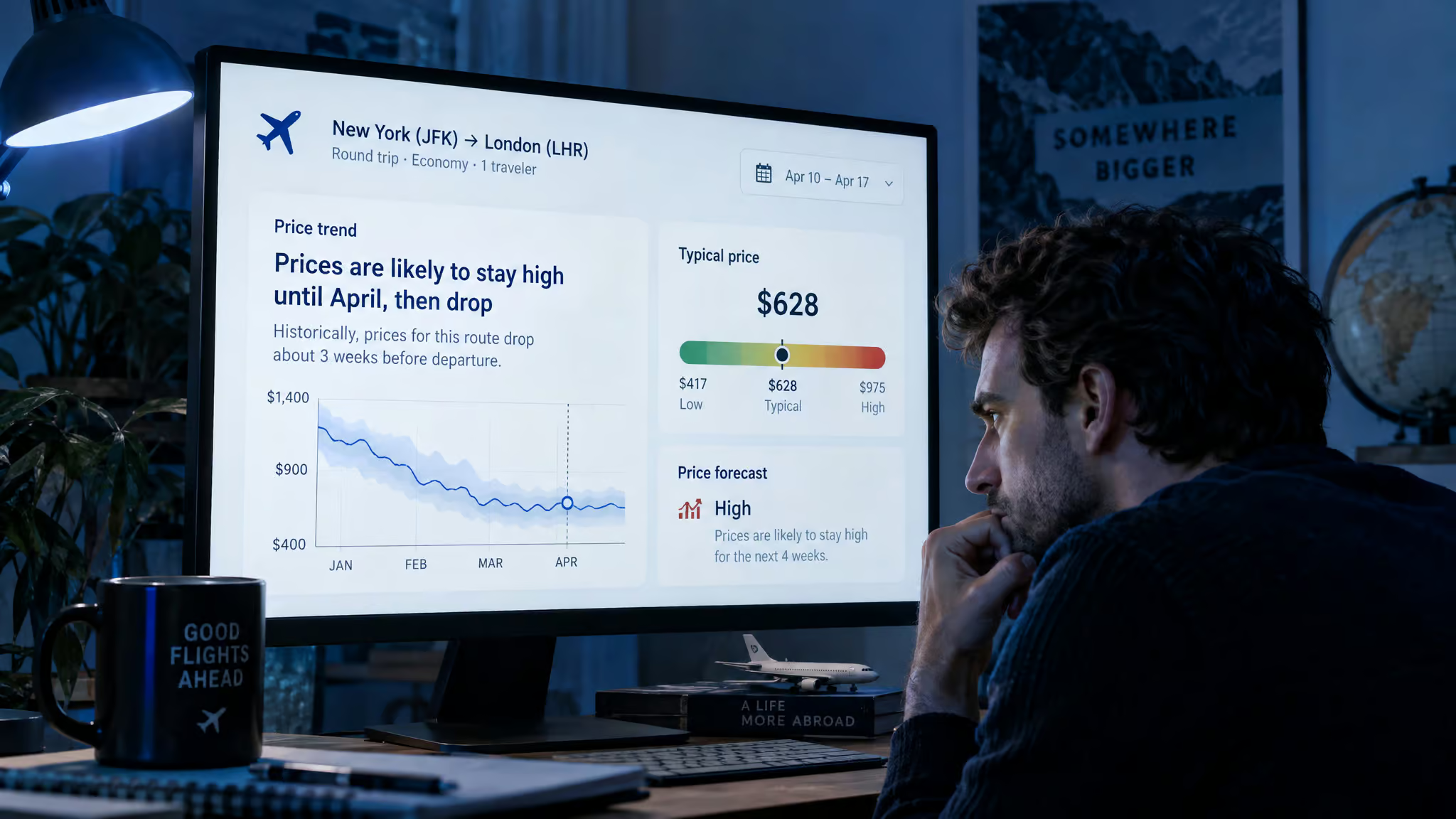
One pattern worth knowing: quiet routes, think Nicaragua, Colombia, rural Mexico, often drop closer to departure. Hot routes like NY-London or LA-Tokyo climb. The direction depends on the route, not the tool.
The failure mode almost nobody covers: predictors are blind to sudden demand spikes. Big group trips, conferences, holidays. The model sees historical pricing; it doesn’t see the sales convention that just swallowed your flight. Before trusting a “wait” recommendation, glance at the seat map.
Half-full plane, the prediction’s probably fine. Nearly full, ignore it.
Know your booking sites: compare three, book direct last
Compare at least three sites and end at the airline’s own page, that’s one of the classic hacks for booking the cheapest flights, alongside setting up flight trackers and hunting mistake fares. Google Flights is the starting point: fast, comprehensive, with the best price-tracking and date-flex views around. Going.com earns its keep on international deals and mistake fares straight to your inbox. Skyscanner is strongest internationally and catches budget carriers the US sites miss. Hopper is the best mobile app for prediction.
Always finish at the airline’s site. Sometimes it’s actually cheaper there, and booking direct means the airline has to fix its own messes when things break. A third-party booking turns a canceled flight into a customer-service loop; a direct one turns it into a phone call.
Bundling flight plus hotel or rental car through a reputable site can unlock deals you can’t get separately, these airport flight booking hacks are worth a look, though not gospel.
Use your points and miles now, cash fares are the inflated currency
If you’re sitting on a points balance, spend it. Points and miles beat cash right now for anyone holding one, and the reason is simple math rather than loyalty-program mysticism: award rates are roughly flat year over year while cash fares spiked 17-23%. Your points just got relatively more valuable. Hoarding them is now a losing bet, because there’s no guarantee that stays true.
Neugarten makes the point by behavior more than argument: right now he’s not booking cash fares at all. He’s using points. When the guy who runs a flight-deal company stops paying cash, pay attention.
The working rules:
- Check every flight in points AND cash. Takes ten seconds. Sometimes it’s a no-brainer in one direction.
- Watch for transfer bonuses from card portals to airlines. Some are still running. When one lines up with a transfer you were making anyway, that’s free value.
- Know your alliances so partner bookings work for you instead of confusing you. More on that below.
The counterintuitive part, stated honestly: for once, saving your points is the wrong move. Earn ’em and burn ’em. The usual hoarding logic assumed points would hold value while cash prices stayed put. This year that’s backwards.
Concentrate miles in one alliance and book partners
Pick one alliance and stack everything there. Fast rosters: Star Alliance runs United, Air Canada, Lufthansa, Singapore, ANA, Turkish, EVA Air, and Copa. Oneworld has American, British Airways, Cathay Pacific, Iberia, Qantas, Qatar, and Japan Airlines. SkyTeam covers Delta, KLM, Air France, Korean Air, Aeromexico, and Virgin Atlantic.
The strategy: don’t skip a slightly pricier partner flight if it keeps your miles compounding in one place booking through alliance partners still earns miles even at the higher cost. Splitting balances across three programs means you never accumulate enough in any of them to book the good stuff.
The double-dip model: Amex Membership Rewards transfers to Delta 1:1, so you earn Amex points booking the flight and Delta miles flying it. Same trip, two balances growing. That’s the whole trick, explained like a person.
Find the right credit card: match it to the fees you actually pay
The framework that works: evaluate a card by matching its credits to costs you actually incur. Bags, Global Entry or PreCheck, lounge spend. Not the biggest headline bonus. A card with a $95 fee that kills your $70 bag fee every trip is better than a $895 fee you can’t use down.
The honest upside first: sign-up bonuses in the 60,000 to 175,000 point range can cover a round-trip international flight. The honest cost: every one of these has a spend requirement and an annual fee, and that’s the real price tag.
- Chase Sapphire Preferred: 75,000 points after $5,000 spend in 3 months, $95 fee, 1:1 transfers to United, Southwest, JetBlue, and Hyatt. The sensible first travel card, though note this pick comes from a promotional source.
- Chase Sapphire Reserve: 100,000 points after $6,000 in 3 months, $300 travel credit, 8X on Chase Travel, 4X on direct flights and hotels, 3X dining, 1,300+ lounges. The spend bar is real.
- Amex Platinum: up to 175,000 points after $12,000 in 6 months, $895 fee, 1,550+ lounges, a stack of credits. The drawback said plainly: the credits are complicated, the fee is high, and the everyday purchase rewards are weaker than the marketing suggests.
- Capital One Venture Rewards: 75,000 miles after $4,000 in 3 months, $300 hotel and vacation-rental credit, 2X everywhere, $120 Global Entry/PreCheck credit. No lounge access, but its portal auto-refunds fare drops, which ties back to the alerts section.
One pricing note for this whole section: these are issuer offers, they’re time-sensitive (Delta’s Gold offer ends 11/04/2026), and the terms change. Check before you apply.
Use trusted-traveler program fee credits
PreCheck, Global Entry, and CLEAR are pay-once, skip-lines-for-years deals, and most premium cards reimburse the fees anyway: $120 Global Entry/PreCheck on the Venture, $219 CLEAR+ on Amex Platinum, up to $120 every four years on Sapphire. Basically free if you carry the card.
The time math closes the argument: per March 2025 TSA data, 99% of PreCheck passengers waited under 5 minutes.
Lounge access that pays for itself
Lounge access is one of the few premium-card perks that earns its keep during a bad delay. Amex Platinum gets you 1,550+ lounges through the Global Lounge Collection, including Centurion Lounges, Delta Sky Club when you’re flying Delta, and Priority Pass, which you have to enroll in first, it’s not automatic. Sapphire Reserve covers 1,300+ lounges via Priority Pass Select plus Chase’s own Sapphire Lounges, with two guests included. If you travel with someone, that guest policy matters.
Beat rising bag fees: pack light, guarantees, and free-bag cards
Three ways around bag fees: carry-on only, Delta’s guarantee, or a free-bag card. Context first: Delta and Southwest each raised checked bag fees $10 in April, jet fuel blamed. The fees aren’t standing still.

Carry-on-only saves money when it works, and on longer trips, honestly, sometimes it doesn’t. Admit that going in. NerdWallet’s 10-$10 Rule is a decent gut check: don’t pack something “just in case” unless it’s worth $10 a day of hassle. For packing systems that make carry-on-only actually workable, see our travel hacks packing guide.
Quick test: Before booking, check whether a card you already carry covers the checked bags for everyone on the reservation — family bag fees are the most commonly wasted money in travel.
Delta’s 20-minute baggage guarantee and free-bag credit cards
Obscure and mildly delightful: Delta pays bonus miles if your checked bag arrives more than 20 minutes after the plane parks at the gate. Claim it on Delta’s site with your SkyMiles number and flight confirmation within two hours of landing. Almost nobody does this.
Then the cards. The Delta SkyMiles Gold Amex gives a free first checked bag for you plus up to eight people on the reservation worldwide, a free second bag domestic, and 15% off award travel, with a welcome offer of up to 80,000 miles plus a $250 statement credit after $3,000 spend in 6 months (offer ends 11/04/2026), $0 the first year then $150. The Southwest Rapid Rewards Plus covers a free first bag for you plus up to eight, with 50,000 points after $1,000 spend in 3 months and 3,000 anniversary points.
The common oversight: someone pays bag fees for a whole family reservation while card coverage sat unused in their wallet. Check before you’re at the counter.
Get reimbursed for delays and cancellations, in the right order
The sequence is the whole point. Contact the airline first, because its own policies may already reimburse the flight. Then check your card’s trip delay and interruption coverage. Amex Platinum and Chase Sapphire Reserve are the named ones here, and Sapphire Reserve specifically includes trip cancellation/interruption, auto rental, and lost luggage coverage.
This is the perk nobody remembers they have. Most guys eat a $600 disrupted trip without ever opening the benefits guide once.
Buy travel insurance, early, and with the right limits
Buy it the same day you book. That’s what keeps the CFAR window open, and it’s a good habit regardless of where you picked it up.
Standalone policies cover more and reimburse higher than credit cards do. Faye, for example: $300/day trip delay up to $2,100 per trip after six-hour delays, $150,000 medical coverage, and pet coverage up to $2,500 in vet bills plus $250 boarding, with fully digital claims. CFAR, cancel-for-any-reason coverage, has to be bought within 21 days of booking and covers up to 70% of trip costs. The flexibility has a price and a deadline. Say both, plan for both.
Leaving the country? USI Affinity InterMedical covers medical plus evacuation for trips of 5 to 364 days from $1.35/day, with a 21-day pre-existing waiver on the plus plan. World Nomads covers 200+ activities across Standard and Explorer tiers; SafetyWing fits long-haul and nomad-style travel. Match the policy to the trip, not the other way around.
Save on hotels: points perks, price matches, and booking timing
Hotel money is in booking timing, price matches, and points bookings that kill junk fees. Timing first: book 4-6 months out for major holidays, about 15 days ahead for flexible trips. Two rules, easy to remember.
Points bookings waive resort fees at Hilton Honors and World of Hyatt, and those fees can top $50 a night. That’s a hidden tax disappearing. Marriott Bonvoy throws in a fifth night free on redemptions, and Hilton does it at Silver Elite and up. Hotel cards under $100 a year that come with a free-night certificate worth more than the fee are the rare case where the math is just obvious.
Odd but real: the Booking.com app sometimes prices below the same site in a browser. At the Paramount Hotel in Times Square it was $408 versus $453 for two nights. Check both. And price-match bonuses are free money if you spot a lower rate: Marriott and Hilton match plus 25%, Hyatt matches with 20% or 5,000 points.
The bigger idea: the same room costs wildly different amounts depending on where you book. Shop the channel, not just the hotel.
Arbitrage your booking channel: Costco, reverse image search, mystery hotels
Costco Travel pulled an example about $300 a night cheaper than booking the hotel direct, plus an 8-day cancellation window against the hotel’s no-refund rate. The membership doing work.

The Airbnb workaround: reverse-image-search the listing photos on Google. One Indio, California listing at $11,000 for three nights turned up elsewhere for around $300. A Glam Homes Miami listing traced back to the host’s own site at $4,652 instead of $5,341. A little detective work, big savings. Nothing scammy about checking whether the same property exists cheaper.
Hotwire and Priceline mystery hotels can be decoded before you commit: cross-reference the promised location, review count, rating, and any photos to ID the property. Then decide if you actually want it.
Book timeshare residences on RedWeek
Underrated lodging play, zero timeshare-presentation energy involved: owners rent out their weeks, and the prices reflect it. The example that makes the case: a Hyatt Vacation Club suite in Maui at $475 a night on RedWeek versus $956, $1,000 booking direct. With room and view guarantees, too.
Half price. Same ocean.
Protect your money on property: complaints, minibars, cancellation windows
Complain at the front desk in real time, not in a review after checkout. They can fix the room while you’re still in it; a review fixes nothing.
Photograph the minibar when you arrive, so any mischarge is disputable. And know your cancellation window: usually 24 to 72 hours, though some resorts run 14 days. One workaround worth a line: shift your dates first, then cancel outside the penalty window.
Lesser-known hotel discounts: bereavement rates, corporate rates, entry-tier perks
Bereavement rates are real. Marriott’s code B52 took a Lincoln, Nebraska room from $149 to under $100. Unpleasant reason, useful fact. No jokes here.
Corporate discounts sometimes extend beyond desk jobs. Retail and food-and-beverage workers can qualify with proof, so it’s worth a phone call. And even entry-tier status at Hilton, Marriott, and Hyatt throws in free water, Wi-Fi, sometimes breakfast, for nothing but a free program signup. Doesn’t hurt to ask about any of this. The worst answer is no.
Vegas-specific: players cards and free app play
A raised eyebrow here, not gambling enthusiasm: about 20 minutes a day of free casino-style app play for a week landed two free Mandalay Bay nights, worth over $800. MGM and Caesars players cards shave 15% off, and it’s worth grabbing one even if you barely gamble.
Use a dedicated email for all of it. These companies’ data-breach history is real, and you don’t need your primary inbox paying for it.
Save on the ground: groceries, snacks, and free attractions
Grocery stores skip tax and tip entirely, so stock protein snacks and a collapsible water bottle and you’ve killed most in-transit spend. Free stuff exists too: Disney’s monorail and Polynesian fireworks, the de Young’s Hamon Observation Tower, St. Louis’s free museums and zoo.
The superhack: stack every hack into one booking process
The savings come from stacking, not from any single trick. The compressed workflow: search Google Flights and read the low/typical/high label. If you’re 3+ months out, set alerts on Going and Hopper and wait. When your billing cycle resets, re-check across Google Flights, Skyscanner, and the airline direct. Pay with whichever card earns the most points on travel, and buy insurance the same day.
For scale: flexibility swaps save $500-600, hub-splitting saves $300-plus, midweek flying saves $56-100, and fee offsets save you $10s at a time. Stack two or three and you’ve funded the trip’s real expenses. That’s the honest version of the hack.
Frequently Asked Questions
What are the top 10 travel hacks that actually work?
The highest-value moves are ranked by real savings: swap destinations or airports ($300-600), split tickets through hub cities ($300+), use points instead of cash while award rates stay flat, fly midweek ($56-100 a ticket), set fare alerts, rebook if the fare drops after you buy, use stopover programs like Icelandair’s, book direct with the airline, and stack two or three of these on a single trip.
What is the best way to save money while traveling?
Flexibility is the biggest lever. Swapping a New York-London flight for Paris or Amsterdam can save $500-600, flying into alternate airports like Oakland instead of SFO cuts fares, and shoulder-season travel lowers flights, hotels, and attractions at once. On the ground, grocery stores skip tax and tip, and free attractions like Disney’s monorail fireworks cost nothing.
Can I rebook my flight if the price drops after I book it?
Yes, as long as you didn’t buy basic economy. Almost every other fare can be canceled or changed penalty-free, so keep your fare alerts running after checkout and rebook at the lower price if one appears. Tools like Autopilot can automate the claim-chasing. The costly mistake is setting one alert at booking and never re-checking.
Is it cheaper to book two one-way flights or one round-trip ticket?
It depends on the airline now. Mixing carriers on two one-ways still wins on plenty of routes, but American and some other airlines have gone back to pricing round-trips cheaper than two one-ways. The reliable move is to price both ways before committing — it takes two minutes.
Is it better to pay cash or use points and miles for flights this year?
Use points if you have them. Award rates are roughly flat year over year while cash fares spiked 17-23%, which makes your points relatively more valuable — hoarding them is now the losing bet. Check every flight in both points and cash, watch for transfer bonuses, and earn-and-burn rather than save.