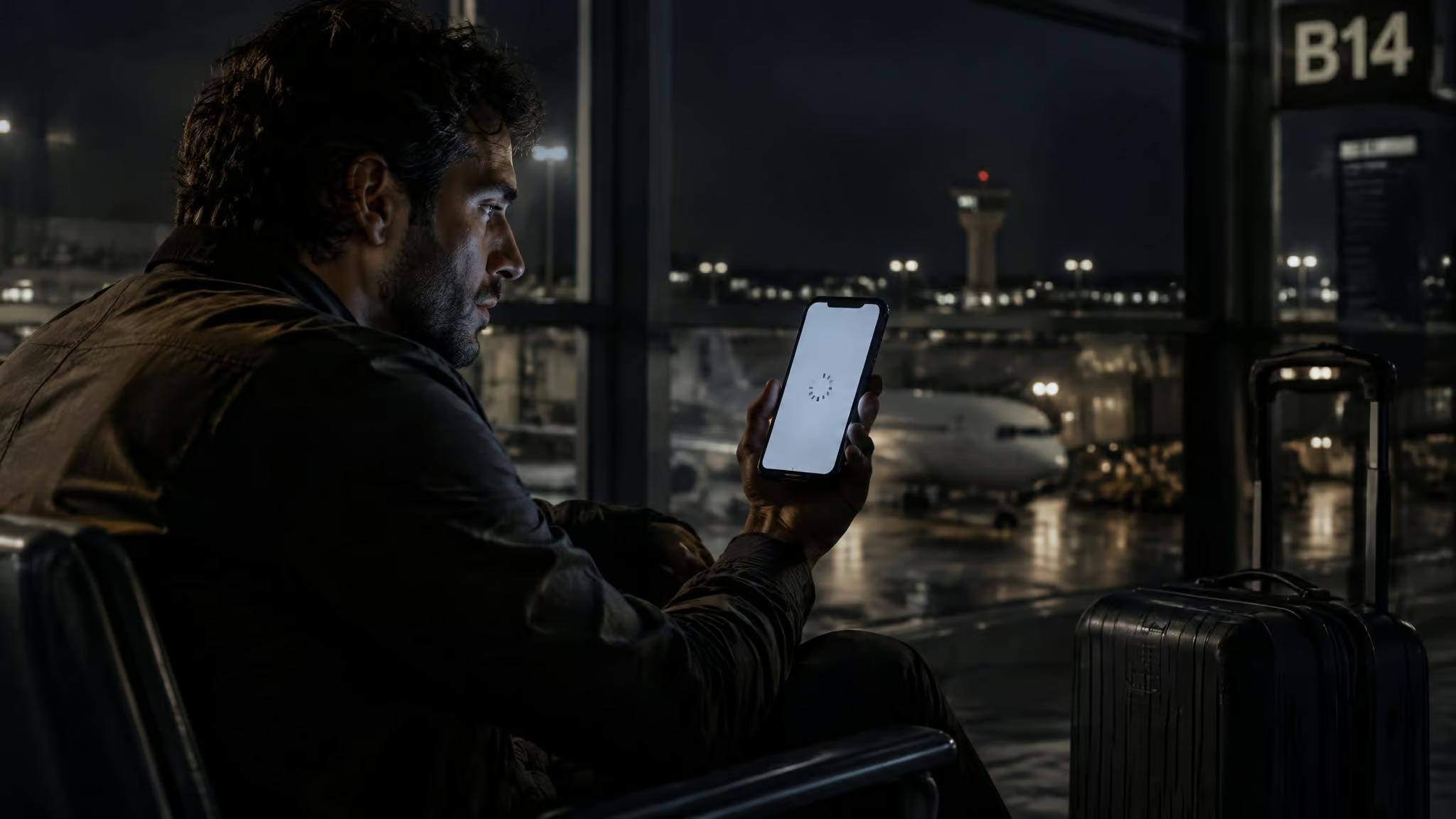
The airport is the worst few hours of any trip. The Wi-Fi is dead, the food costs double, and your boarding pass won’t load because ten thousand other people are hammering the network. Meanwhile you’ve already spent money on the flight, so the terminal has you trapped at your most expensive and least connected moment of the whole journey.
That’s the problem this piece solves. These travel hacks for flying are ordered the way a trip actually unfolds: booking, security, gate, in-flight, and the day everything breaks. You don’t need all of them for a two-hour hop. Jump to whichever stage you’re stuck in, steal the move, and get on with it.
If you want the broader version of this approach across hotels and ground transport too, we’ve got a separate roundup of the travel hacks that actually work. This one’s just flying.
Key Takeaways
Check in online 24 hours out and attach your frequent flyer number to every booking, including partner airlines, or you’re tossing free miles.
TSA PreCheck costs $78 for five years, most passengers wait under 5 minutes, and many credit cards reimburse the fee, which turns the math into “is it free for me.”
The best airport phone tricks are offline-first: screenshot your boarding pass, download offline Google Maps, and text yourself your flight number on iPhone for a live status link.
When your flight cancels, call the airline from a free airport phone instead of waiting in the gate-agent line. Phone agents can do everything gate agents can, usually faster.
Table of Contents
Before you fly: booking, check-in, and pre-flight prep
Check in online 24 hours before the flight and attach your frequent flyer number to every booking. Yes, even partner airlines count, and yes, that’s free mileage most guys throw away every single trip. While you’re at it, set fare alerts on Google Flights, Kayak, or Skyscanner and let the deals come to you. Google’s flexible-date calendar shows the cheapest days in green, so you know instantly whether flying Tuesday instead of Friday saves real money.
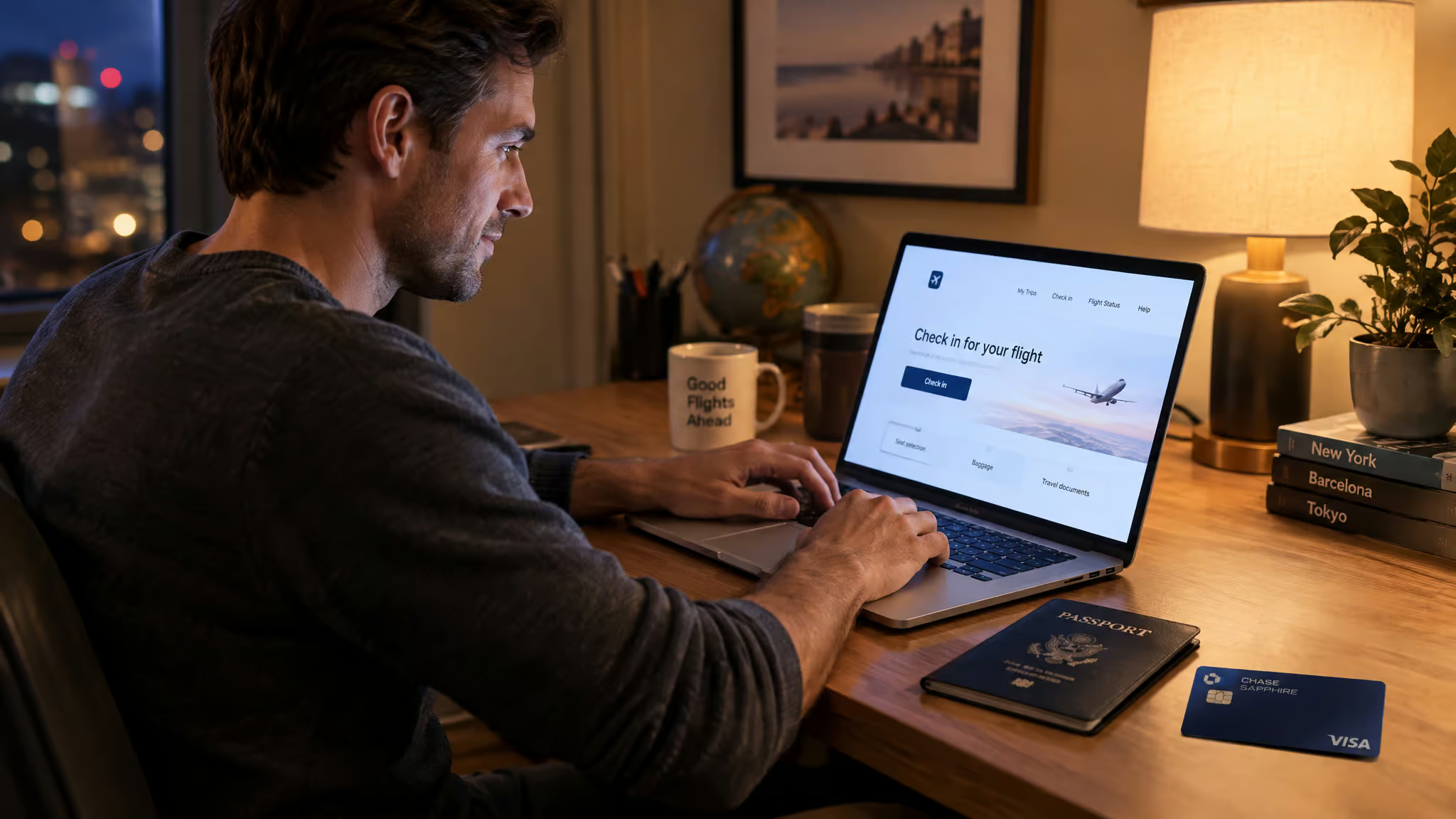
Some other stuff worth ten minutes at home. Red-eyes after 10 pm mean emptier airports, faster security, and sometimes room to spread out on the plane, though you’ll land tired. Politeness at check-in costs nothing if you want to ask about an upgrade; worst case they say no. (There’s a video floating around claiming roughly half of friendly upgrade asks work if you offer to take the exit row. Unverified chatter.
Treat it as a fun maybe, not a statistic.) Pre-order special meals for long-haul dietary needs, check State Department advisories, and keep your passport and visas current.
One tradeoff to know: basic economy fares usually exclude change flexibility. The cheapest fare is cheapest for a reason. Loyalty programs, meanwhile, are free to join even if you fly twice a year, and they buy earlier boarding plus better support when things break. Travel insurance is a reasonable last purchase before wheels-up. Award tools like ExpertFlyer, Award Nexus, and Seat Spy exist for finding premium-cabin award seats; it’s a real hobby with a real learning curve, so just know it’s there.
Getting through airport security faster
Four free moves cut checkpoint time: slip-on shoes, pockets emptied before the detector, liquids and laptop packed where your hand can reach, and walking to a farther or left-side lane. That’s the whole formula.
The shoes thing sounds minor until you’re behind a guy unlacing boots. Laces are the failure mode. So is the forgotten metal belt that sets off the detector and makes everyone behind him wait. Slip-ons drop in the tray, you’re through, done. Same logic applies to packing: passport, phone, and keys into zippered jacket pockets, liquids bag and laptop on top of the bag so they come out in one motion.
On liquids, the rule is simple: carry-on toiletries in 100ml containers or smaller. A Ziploc does the leak-proofing job of a fancy toiletry bag for free. Know it once and stop getting things tossed.
Lane selection is a heuristic, not a law. Checkpoints farther from the entrance are usually quieter because people take the first line they see, and one frequent-flyer observation holds that left lanes often move faster because right-handed people drift right. Decent bet. Not a guarantee. Once you’re past all this, the real fix is membership, which gets its own math below.
TSA PreCheck vs CLEAR vs Global Entry: the per-year math
TSA PreCheck is worth it if you fly two or more times a year and a credit card offsets the fee. That’s the verdict. Everything else is detail.
Here’s the math. PreCheck runs $78 for five years, which works out to roughly $15.60 a year. Per the TSA, the majority of passengers wait under 5 minutes, and you keep your shoes, jacket, and belt on while your laptop and toiletries stay in the bag. CLEAR scans your eyes and walks you to the front of the line.
It’s faster in practice, pricier, and availability varies by airport, so check whether your home terminal even has it before considering it. Global Entry costs $120 for five years, about $24 a year, and speeds up US customs with kiosks on the way back in. If you fly internationally even occasionally, this is your pick, and it includes PreCheck benefits. Not ready to commit?
The Mobile Passport app speeds up US re-entry with no pre-approval. It’s the free fallback.
Prices may vary and these fees change, so confirm before you apply. The real decision lever is your wallet: plenty of credit cards reimburse the PreCheck or Global Entry fee. So the question isn’t whether to buy it. It’s whether your card covers the fee, and if it does, you’re done thinking.
| Program | Cost | Speeds up | Worth it when |
|---|---|---|---|
| TSA PreCheck | $78 / 5 years (about $15.60/yr) | Yes (domestic security; most waits under 5 min) | Yes (2+ trips a year, especially if a card covers the fee) |
| CLEAR | Pricier than PreCheck (varies) | Yes (walks you to the front) | Partial (only if your airport has it and lines are bad) |
| Global Entry | $120 / 5 years (about $24/yr) | Yes (US customs kiosks, plus PreCheck benefits) | Yes (any international flying) |
| Mobile Passport app | Free | Partial (speeds US re-entry, no pre-approval) | Yes (as a stopgap before committing to Global Entry) |
Offline-first phone and app preparation
The phone tricks that make airports easier are the offline-first ones. The airport is the worst connectivity environment you’ll visit all trip, so assume the network fails and prep accordingly.
Start with the big one: screenshot your boarding pass before you leave for the airport. An image loads on the spot without needing any internet, so when the app crashes or the Wi-Fi crawls, you’re still holding a working pass. Download your airline’s app too. Gate changes and delays hit your phone via push before the departure boards update, which means you stop wandering over to squint at the screens every twenty minutes.
On iPhone, text yourself your flight number in iMessage and it becomes a tappable link with live gate, status, and delay info. Free, built in, and most guys never notice it exists.
Do offline Google Maps for your destination in three taps: search the place, tap the name, hit the three dots, download. Works with zero service once you land. Keep a cloud travel folder with passport, ID, boarding passes, and insurance details, set to work offline. And on short connections, pull up the airport map mid-flight so you know your route before you’re standing in the terminal with a rolling bag. My TSA and FlightAware earn their spots on the home screen if you fly enough.
Money hacks: water, snacks, and checked bag fees
Checked bag fees are avoidable three ways: fly a free-bag airline like Southwest, earn elite status, or carry an airline credit card that includes free checked bags. Pick whichever route fits how you actually fly and do the math once.
The water trick is the cheapest win in the whole article: empty bottles pass through security fine. You can’t bring water, but you can bring the container. Fill it at a fountain or refill station after the checkpoint; most modern airports have them. That’s a $6 airport bottle replaced by zero dollars, every trip, forever.
Food’s the same story. Pack granola bars, nuts, or trail mix and you skip the restaurant line and the $10 airport price. That bag of nuts stings every time it hits a receipt. Snacks also carry you through delays, when the vending-machine run feels mandatory and you’re stuck anyway. On check-in day, use the kiosk instead of the counter.
It’s faster and it lowers your odds of an overweight-fee surprise. A $10-ish luggage scale used at home closes that gap completely.
Currency is where airports really get you. Exchange stands give bad rates, full stop. It’s a tax on the unprepared. A neighborhood ATM will almost always beat them, and Charles Schwab’s free checking account refunds ATM fees worldwide.
Set it up before the trip, not from the terminal. Last small one: heavier gear goes in your personal item if it fits, because nobody weighs the backpack.
Packing strategy and luggage security
Pack a carry-on day of essentials, put an AirTag or Tile in any checked bag, photograph the bag’s contents before you fly, and tag it with your phone number, never your home address. You don’t want strangers knowing where your empty house is.
Carry-on-only, if the trip allows it, is the honest best answer: no check-in line, no baggage claim, and your bag can’t get lost if it never leaves you. The tradeoff is a smaller bag and fewer outfit options. Roll your clothes and use color-coded packing cubes to claw space back, and toss cubes straight into the hotel drawers so unpacking is one motion. Whatever you check, put spare clothes, underwear, and first-day vacation stuff in the carry-on: bathing suit, sunscreen, flip-flops. The payoff picture is you at the pool while your suitcase takes its sweet time.
Here’s the contrarian note, stated straight: TSA locks deter opportunists at home, but they get cut off abroad all the time, sometimes breaking the zipper in the process. The tracker is the safeguard that actually works. The photo matters too, because lost-bag forms want detail and “black suitcase” doesn’t cut it. Tie something bright on the handle, a pink ribbon is the classic, so your bag is findable at a carousel that’s a sea of black.
One last thing: security lines and carousels are pickpocket territory. Zippers inward, valuables on you.
Boarding strategy and what never to do at the gate
On a full flight, board with your group and put the carry-on in the bin opposite or slightly ahead of your seat, never behind. Bin space gets decided in about sixty seconds, and so does gate-checking. Bags behind your seat mean waiting for the whole plane to empty before you can reach yours.
Read the room beyond that. Full flight, board early, one of those small booking-stage moves that pays off at the gate. Empty flight, wait out the line and stretch your legs. Before you leave for the airport, verify the bag actually fits the size limit and that you can lift it over your head without a running start.
And before stowing the big bag, pull snacks, bottle, jumper, earbuds, meds, and documents into one small under-seat bag. That single move is the difference between grabbing what you need at hour three and excavating the overhead bin while the aisle glares at you.
The never-do list is short. Don’t count on gate Wi-Fi or the screens; your screenshot and eSIM should already be set. Don’t cut boarding groups, everyone sees it and it buys you nothing. Don’t argue with the gate agent over bins.
Small moves that pay: a power strip turns one scarce outlet into three or four and makes you the generous guy sharing, terminal laps beat gate-slouching, and running a pre-boarding checklist (entertainment downloaded, batteries charged, transport planned, eSIM set) beats remembering it at cruise altitude. Decency toward the crew costs nothing, and it shows.
Seat selection mapped to what you want from the flight
Seats are trade-offs, not rankings. Name what you want from the flight and the seat picks itself. Window for sleeping, front of the plane for tight connections, rear aisle for bathroom access, over the wing for less turbulence. The bulkhead has legroom but no under-seat storage, so everything goes overhead. There’s a longer breakdown of this in our piece on the 3 seat economy trick.
SeatGuru maps the pros and cons of individual seats before you commit; five minutes there prevents a bad twelve hours. Qatar Airways goes further with 360-degree interior images in its app, which is one airline actually trying on this front.
Back rows are more likely to sit empty, which means a chance to stretch out. Decent odds, not a promise. That’s the logic behind the couples’ play: book the aisle and a window toward the back and hope the middle stays open. On a non-full flight it usually does.
If someone takes it, one of you swaps and life goes on. Exit rows buy legroom at the cost of fixed armrests and seats that don’t recline, so know that trade before you pay for it.
Long-haul economy: comfort, health, and sleep without pills
You can get through a 12-hour economy flight without medication. Compression socks on before boarding to prevent swelling and beat jet lag, walk the aisle every two hours, scarf as blanket, skip the booze and fizz, wipe the tray table, meals and snacks already packed from home. That’s the core of it, and there’s a fuller version in our long-flight survival guide.
The socks are compression socks, fitted at a pharmacy and worn from a few hours pre-flight through landing. They cut swelling and stiffness and may reduce DVT risk. May. Not prevents. Pair them with actual movement, because walking does most of the work.
The cabin is a desert and a fridge at the same time. Lip balm, hand lotion, glasses over contacts when your eyes feel like sandpaper, and a jumper or large scarf for the cold, which also doubles as pillow, lumbar support, and blanket. Eat carefully before you fly: gas expands at altitude, so greasy food, eggs, caffeine, and fizzy drinks all bloat you mid-flight, and alcohol speeds dehydration and jet lag. One beer is fine.
Know the trade. Wipe the tray table when you sit down; Forbes flagged it as the dirtiest part of the plane, which is all the reason you need. Carry a small wellness pouch: pain relievers, sleep aids, allergy meds, sanitizer, and a face mist under 100ml. Brush your teeth on overnight flights with bottled water; pointless on a two-hour hop, transformative on a ten.
Colgate Wisp if you want the pocket version. A Bluetooth adapter for seatback entertainment only makes sense if you fly long-haul often. For sleep: window seat, scarf as pillow, earplugs and eye mask. That’s the kit.
Flying with kids
Call the airline early for bulkhead bassinet seats, and pack snacks, lollipops, and one new toy. Those three items are the highest-leverage things in the bag. Lollipops help ears pop on descent. New toys hold attention longer than old ones because they’re new; that’s the whole mechanism. A tablet with downloaded shows plus kid headphones is the fallback when novelty runs out.
Airports increasingly have play areas, and Minneapolis-St. Paul has a well-known one, so let the kids burn energy before boarding instead of at 35,000 feet. One parenting claim you’ll see online says snacks solve about 85% of kid flight problems. It’s an unverified anecdote, but the directionally true kind. Snacks fix a lot.
Airport lounges and Priority Pass: when they’re worth it
Priority Pass through a credit card beats paying lounge-door prices, provided your airports actually have lounges and you dodge peak US hours. The network covers 1,400+ lounges across more than 600 cities, and it usually comes included with cards you may already have, and some include showers and massages.
The honest caveat: US lounges get slammed at peak times. Outside the US they’re usually calm; the Espaço Banco Safra Lounge at São Paulo/Guarulhos is the example of the species done right. The guest-pass math is the quiet trick: add your partner as an authorized user, each cardholder brings two guests, and suddenly up to six people are in free. Legal, quiet, just paperwork.
One failure mode to flag: ask the desk how long the walk to the gate is, because hidden security checkpoints between lounge and concourse have genuinely caused missed flights. And if the lounge is packed, grab the food and relocate to a quieter gate. Verify lounges exist at both ends before counting on one. They earn their keep on long layovers, not on a 90-minute turn.
The disruption playbook: delays, cancellations, and lost bags
The fastest way to rebook a cancelled flight is the airline’s phone line, not the gate-agent queue. Counterintuitive, but on mass-cancellation days the gate line snakes through the terminal while the person on hold gets rebooked first. Phone agents can do everything a gate agent can, usually faster, and airport phones dial out free. Holiday crunch is exactly when this pays.
Field note: The rebooking ladder is app, then phone, then public post. Skip the gate line entirely — the guy on hold usually flies first.
If the phone line’s jammed, climb the ladder. Airline app first, then phone, then a public complaint on Twitter/X, where airlines staff real teams and issues move to DMs fast. Be direct, not dramatic; public-shaming theater slows things down. Before you join any queue, though, take thirty seconds to breathe and note why the flight’s delayed, weather is usually the airline’s get-out-of-jail card, while airline-controlled problems often mean compensation, so that reason matters. Then activate the fallback you scoped before the trip: the lounge, quiet seating, restaurant, or workspace you already picked out. Having a next action ready keeps the frustration down while everyone else stands in line. And research your compensation rights as soon as the delay hits. Airlines cover most delays, weather being the usual exception. AirHelp handles the reimbursement fight when the airline goes quiet.
Credit-card trip delay coverage is money most flyers never claim. One card example pays up to $500 for delays over six hours, and some policies don’t even have the weather exception. Never assume your card matches someone else’s terms; read your own policy once. It takes ten minutes.
Late bags have money attached too, and the clock is the trap: file at the airport before you leave, because deadlines close when you walk out. Delta’s Bags On Time pays 2,500 bonus miles when a domestic bag arrives more than 20 minutes late, and Alaska gives a $25 code or 2,500 miles claimed within 2 hours at the baggage desk. Nobody’s offering these; you have to ask. Last thing: pre-plan what you’ll do during a delay, which lounges, quiet seating, or workspaces are nearby, so a delay stays an inconvenience instead of a crisis.
Charging, connectivity, and data security on the road
Carry a power bank instead of trusting public USB, and harden your devices before you leave. The juice-jacking risk at public charging ports is rare but real. A power bank closes it completely, and a cheap USB data blocker closes it if you’d rather use the airport’s outlets. Either way, solved, no panic required.
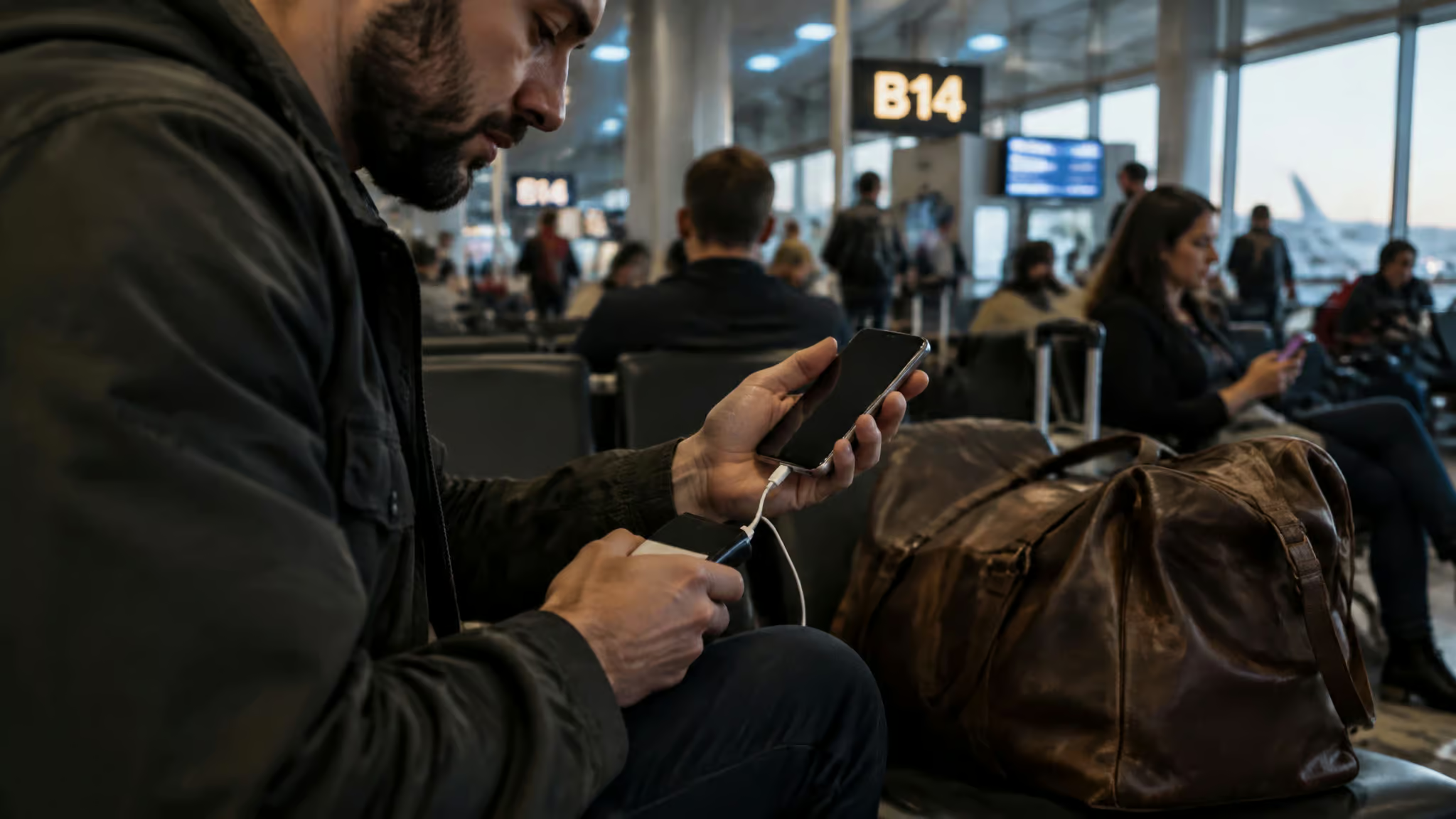
The power strip belongs here too: one scarce outlet becomes three or four, and your neighbors will like you. Before departure, do the boring stuff at home on good Wi-Fi: update everything, password-protect it, back it up to the cloud, enable biometrics. On the road, Use a VPN and 2FA whenever you’re on public Wi-Fi, particularly for anything tied to money or work. The stakes example that sticks: a twice-a-month business traveler logging into company portals from airport Wi-Fi with none of it.
One bad login costs more than any laptop. Keep encrypted copies of your passport and insurance in the cloud.
Connectivity is three moves: set up an eSIM at the gate so you land with data, keep Wi-Fi Map handy for airport passwords, and run the VPN. And keep those zippers facing inward at the carousel. Same reason as before.
Arrival and ground transport shortcuts
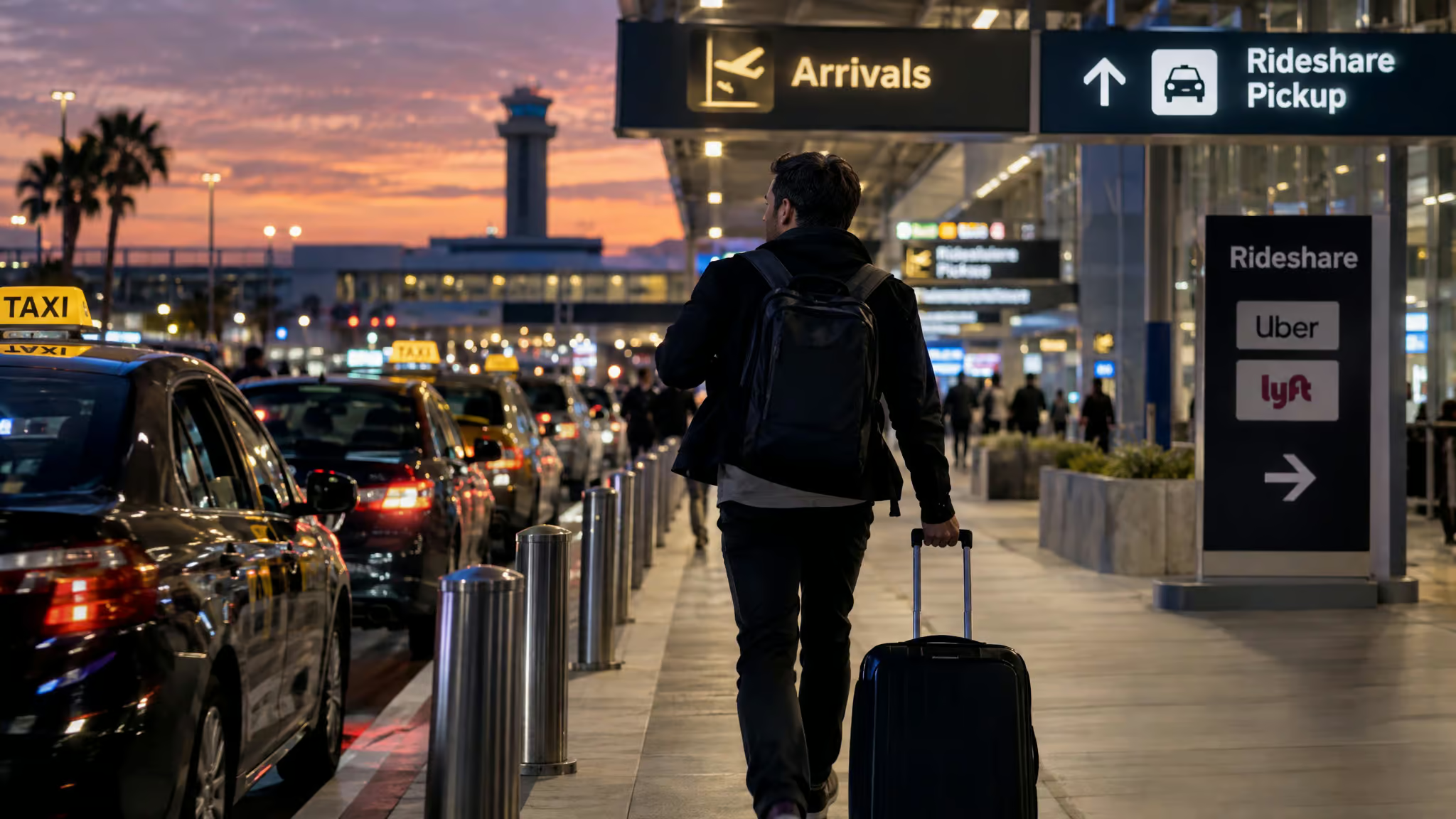
The first restroom past your gate is always the most crowded one in the terminal. Walk another thirty seconds and the line disappears. Before wheels-down, download Uber and Lyft and get a payment card set up in each, nobody wants to fight app setup on airport Wi-Fi. And since the hotels clustered around most airports run free shuttles, skip the taxi and just take whichever shuttle shows up first.
The hacks compound. Offline-first prep makes the terminal calmer. Contingency packing makes disruptions survivable. Program math makes frequent flying cheaper. Booking stage, security, gate, in-flight, disruption day: pick one weak spot, fix it before your next trip, then fix the next.
For now, just run the pre-boarding checklist. Entertainment downloaded, batteries charged, transport planned, screenshot saved. It’s two minutes at home, and it’s the difference between the guy who’s ready and the guy watching a boarding pass that won’t load.
Frequently Asked Questions
What is the 3:1:1 rule for flying?
It’s the TSA liquids rule for carry-ons: toiletries in 100ml containers or smaller, packed where you can reach them in one motion. Know it once and stop getting things tossed. Empty water bottles pass through security fine, though — you can bring the container and fill it at a fountain or refill station after the checkpoint, replacing a $6 airport bottle for free.
What is the 3 seat economy trick?
Book the aisle and a window toward the back of the plane and hope the middle seat stays open. Back rows are more likely to sit empty, so on a non-full flight you often get a free row to spread out. If someone does take the middle, one of you swaps into it and life goes on.
Is TSA PreCheck worth it?
Yes, if you fly two or more times a year — especially if a credit card offsets the fee, which turns the math into ‘is it free for me.’ At $78 for five years, it works out to roughly $15.60 a year for checkpoint waits the TSA says are under 5 minutes for most passengers. Many cards reimburse the fee entirely, so check your wallet before deciding.
How can I sleep on a plane if I can’t afford business class?
Pick a window seat, bring a large scarf or jumper as a pillow and blanket, and add earplugs and an eye mask — that’s the whole kit. Skip the booze, which speeds dehydration and jet lag, and choose the window specifically so nobody needs to climb over you. Compression socks worn from a few hours pre-flight through landing help you arrive rested rather than swollen.
How do I survive a 12-hour flight in economy without sleeping pills?
Compression socks on before boarding, walk the aisle every two hours, wipe the tray table (Forbes flagged it as the dirtiest part of the plane), and eat carefully — gas expands at altitude, so greasy food, eggs, caffeine, and fizzy drinks all bloat you mid-flight. Bring lip balm, hand lotion, glasses over contacts, and a scarf that doubles as blanket, pillow, and lumbar support. Pack your own snacks and meals to skip both the restaurant line and the dehydration cycle.