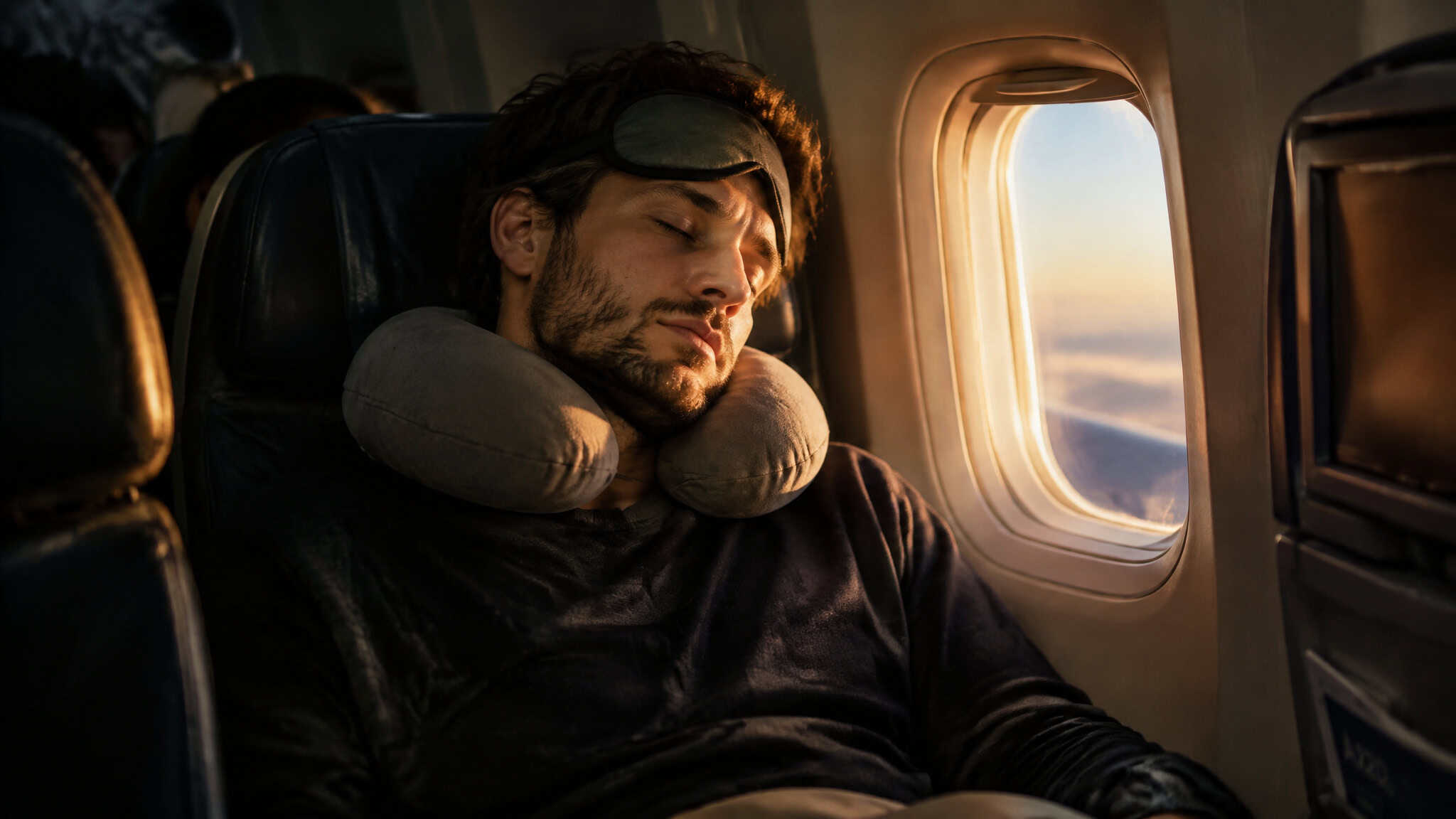
Surviving hour 10 is where the best travel hacks for long flights either earned their spot in your bag or didn’t. That’s the moment the novelty wears off, the seat feels like it was molded from a parking barrier, and every mistake you made before boarding comes due. The good news: it doesn’t have to. Surviving a long-haul economy flight is a preparation problem, not a willpower problem.
The answer, stated plainly: advance prep wins. That means picking the right seat with a real seat map, packing gear that answers specific failures, and planning the recovery almost nobody plans. The cabin environment is quantified and predictable, which is exactly why it’s beatable. Humidity up there runs 10 to 20 percent, versus 40 to 60 percent on the ground.
For reference, the Sahara sits around 25 percent. You’re flying through air drier than a desert, and your body pays roughly eight ounces of water an hour for the privilege. Airlines target cabin temps of 23 to 25°C, but it drops mid-flight anyway. Pack a layer.
And the routes keep getting longer. Perth to London nonstop runs 17 hours 45 minutes. New York to Singapore pushes 19. You’re not toughing that out on grit. You’re out-preparing it.
There’s also something nobody tells you: the long ones are weirdly pleasant once you stop fighting. Crews and passengers cut each other more slack on a genuinely long flight. Everyone’s in the same boat, everyone knows it, and the vibe softens. A 14-hour flight has its own rhythm.
Once you surrender to it, it’s almost enjoyable. Seriously.
Key Takeaways
Cabin humidity runs 10 to 20 percent, drier than the Sahara’s ~25%, and you lose roughly 8oz (240ml) of water per hour, so a reusable bottle plus electrolytes is the core survival setup.
Check the actual seat layout on AeroLOPA before paying for a seat: some rows lack a window, some sit next to lavs or galleys, and exit rows run cold.
The best gadgets each fix a specific failure: over-ear noise-cancelling headphones, an AirFly Pro for wireless audio on the seatback jack, a power bank because plane outlets trip breakers, and offline downloads as backup when the entertainment system dies.
Table of Contents
Before you book: flight timing and pre-trip prep
The smart default for long-haul is direct flights, and when that’s not possible, evening departures. That’s the advice of Loren Braunohler, a luxury travel advisor at Ciao Bambino, and the logic is simple guy-math: land closer to bedtime and the sleep you get in the air actually lines up with what your body wants anyway.
The other half is boring prep that pays off on arrival. Captain Laura Einsetler, who flies for a living, keeps it unglamorous: sleep properly before the trip, keep your immune system propped up with something like Airborne or Zicam, and get electrolytes in before, during, and after the flight. None of it feels like a hack. All of it shows up on arrival day.
How to pick the best seat
Window or aisle depends on your goal, full stop. If sleep is the goal, window wins: you’ve got something to lean against and nobody waking you to climb past. Justin Brownjohn, who runs things at RMIT Aviation Academy and flies 70-plus times a year, mostly in economy, always takes the window to lean against. That pick holds up at scale. Me, I’m an aisle guy on long-haul: stretch, bathroom, snacks from my own bag, nobody trapped. Both answers are right; they’re answers to different questions.
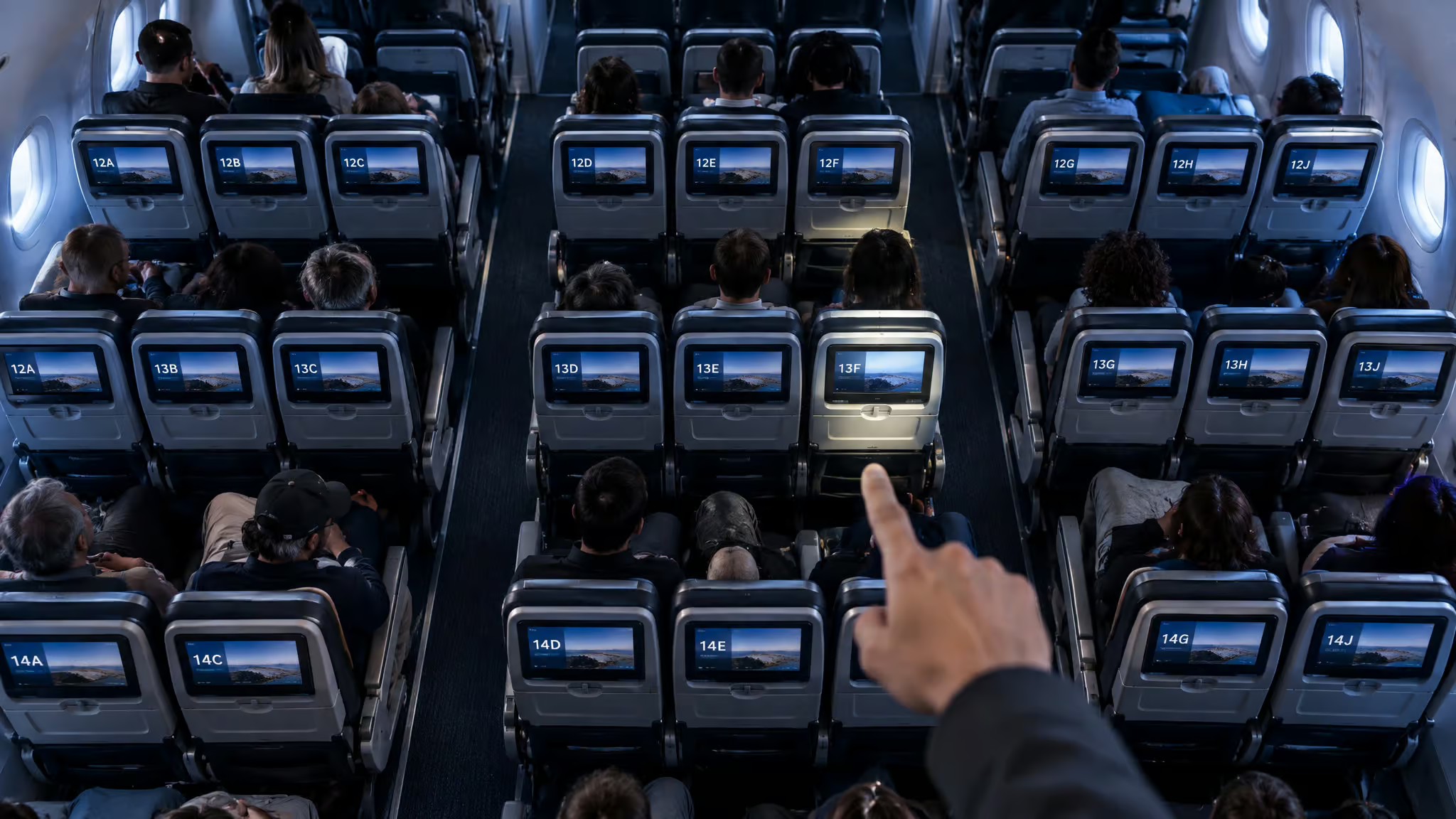
One nerdy-but-useful trick: in a 2-3-2 or 3-3-3 layout, the aisle seat in the middle section is the good one, because your seatmate has two ways out. That logic doesn’t hold in a 3-4-3.
The real move is checking the actual cabin layout on AeroLOPA before you pay. Some rows are missing a window. Some sit right next to the lav or galley, which on an overnight means flush noise and chatty neighbors all night, the difference between sleeping and not. Exit rows run colder too, with less insulation near the doors; one editor remembers hers as unforgettably frigid.
Bring the layer. And yes, paying for seat selection is worth it. A middle seat on a 14-hour flight is suffering you can pay your way out of.
Quick test: Before paying for any seat, pull up the row on a seat map site and check for missing windows, lav neighbors, and cold exit rows.
The bag system: carry-on, spare clothes, and a smaller essentials bag
The packing strategy is a system, not one bag: a carry-on that fits the airline’s rules, a change of clothes inside it for when things go wrong, and a smaller essentials bag that keeps seat-side stuff within reach. Each layer answers a specific failure, the gate-checked bag, the spilled drink, the hour-nine scramble through everything you packed.
The carry-on
For trips of a week or more, buy luggage that actually matches the airline’s exact carry-on allowance. A bag that doesn’t fit means gate-check fees and stress. Test it before you fly: can you lift it, steer it, move fast with it? Broken wheels have ruined trips. External pockets earn their keep at security, when the clear toiletry bag slides in and out without unpacking your life.
Spare clothes in the carry-on
Carry-on real estate goes to two things: tech, and one change of comfortable clothes. That’s the allocation. A travel writer tells the story of a flight attendant who dumped a mango smoothie into her lap before takeoff to Mexico. That story is the entire argument. Spills and vanished checked bags happen, and the spare shirt is boring advice that pays off the first time you need it.
The small essentials bag
Slip-on shoes too. No laces in the lav on a long flight is a tiny detail with a big quality-of-life return.
You’ll also want a second, smaller bag for the stuff that lives at your seat: passport, documents, sleep mask, wallet, keys, phone. Function beats prestige here. Lightweight, zips shut, done. The viral Uniqlo crossbody at £15 is the budget proof, and the Anya Hindmarch flight bag with its labelled pouches is the organized splurge, honestly framed as paying extra for neat. Hannah Towey packs a mini Baggu nylon shoulder bag inside the carry-on, which on big planes holds exactly what she wants in the seat pocket.
How to sleep in economy
Here’s the counterintuitive one: the free airline pillow works better under your lower back than behind your neck. Most people put it in the wrong spot and then blame the pillow. Free fix number two: curve the headrest wings around your head. That gets you partway there for nothing.
Is a travel pillow worth it, or is the airline pillow enough? The honest answer: the airline pillow is enough for the lumbar job, and if you actually want to sleep upright, a compact pillow that supports the front and side of your neck is the upgrade that matters. The Cabeau Evolution S3 is the example: flat back, velcro straps that wrap around the headrest, so your head stays put instead of doing the head-bob. That’s how sleeping sitting up actually works.
Einsetler’s rule is the simplest one in this article: when you’re tired, sleep. Earplugs or headphones, eye mask, neck pillow. That kit is what makes the rule possible.
On sleep meds, my personal line: I’ll take an OTC option like melatonin only on flights of 10-plus hours, timed for something like the reading block in a flight itinerary. Anything shorter and you arrive groggy, which defeats the point. That’s my practice, not medical advice; check with your doctor.
Gadgets worth packing: entertainment and power
Every gadget below earns its place by killing a specific failure. Anything that doesn’t answer a concrete problem stays home.
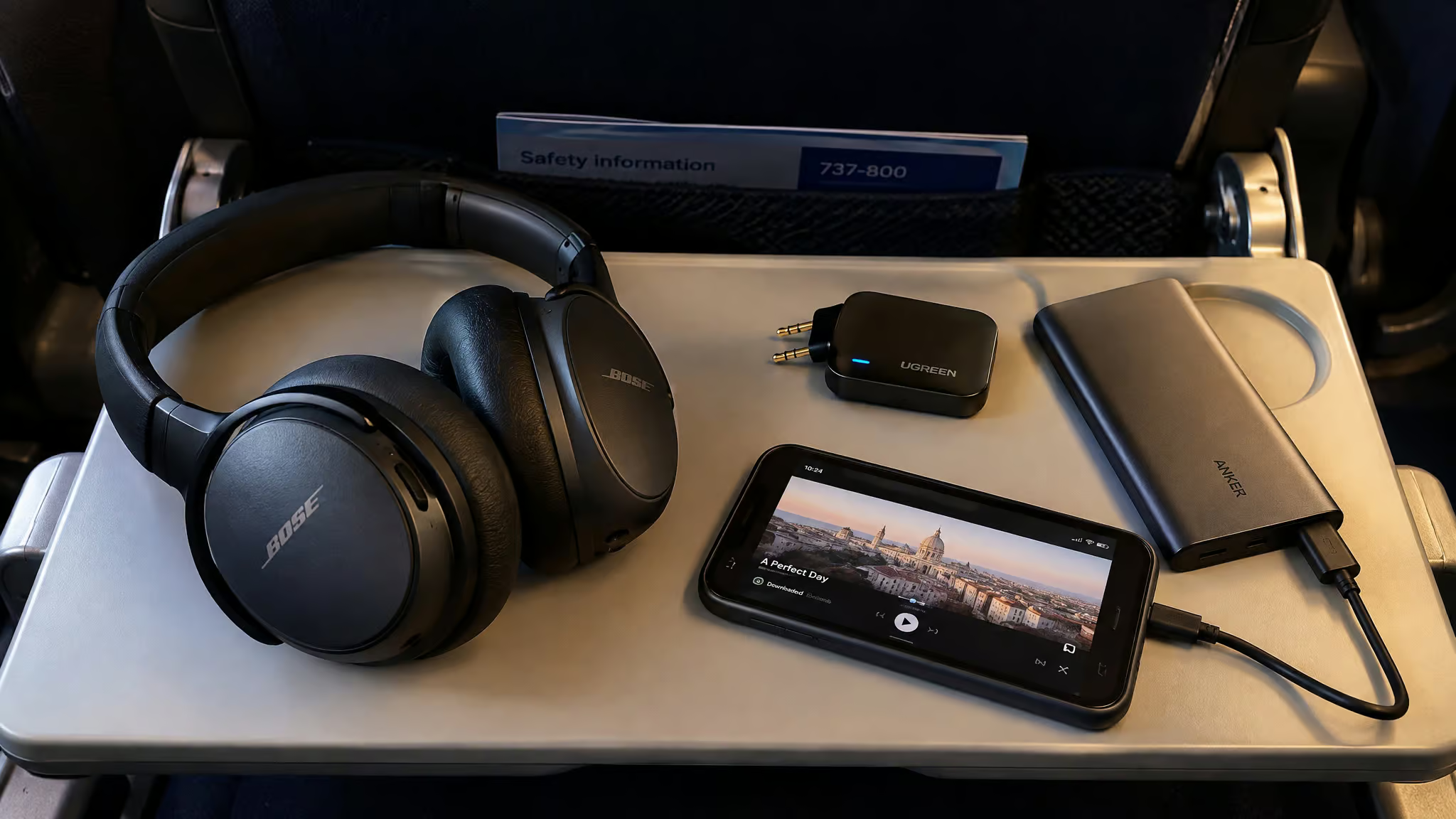
Noise-cancelling headphones. The single biggest upgrade for a long flight. Over-ears, not AirPods-style buds; in a cabin, over-ears beat buds, and airline earbuds and foam plugs don’t cut it at all. What they kill: rattling carts, crying babies, that cabin ding on a loop, on and on.
Then silence. In-air comfort matters on any flight, but especially on a long-haul flight, and if you’ve been waiting for a reason to buy a pair, right before a big trip is exactly when the purchase makes sense.
AirFly Pro. A small gadget that plugs into the plane’s headphone jack and streams the in-flight entertainment to your wireless headphones over Bluetooth. It’s an all-time favorite long-flight buy of mine, mainly because it gets you out of the cheap airline earbuds forever.
Hands-free phone mount. Clamps to the seatback in front and holds your phone at eye level. The before picture: phone propped against a water bottle, neck wrecked, watching downloaded episodes at a 40-degree angle. The mount fixes exactly that, for cheap.
Offline downloads. Non-negotiable prep. The cautionary case is a 14-hour flight to India where the seatback entertainment never works, and it happens. Hannah Chubb’s find is worth passing along: TikTok has an Offline Videos setting that saves up to 200 videos before a flight.
Or just save a favorite show and binge it, with a Kindle loaded as the backup when the screen dies. Obvious because it works.
Power bank. Plane outlets fail. Wattage limits, breaker trips, plain wear and tear. Don’t trust the seat outlet; treat it as a bonus, not a plan.
The composite failure is common enough to have a pattern: you pull out the e-reader you haven’t touched in months before a nine-hour flight and it’s at 5%. Madison Flager carries a BioLite power bank because her AirPods die way before the flight does, which is a normal ownership tradeoff, not an edge case. Go small and light, and get two ports if you’re traveling as a pair. Two people, one outlet. You do the math.
The theme is redundancy: power bank plus offline downloads, outlets as a pleasant surprise.
A luggage tracker before you fly
Lost luggage keeps getting more common, so a tracker is now basic prep, not a gadget. An Apple AirTag or similar earns its keep most on stopovers and on bulky checked items like a car seat, the stuff you really don’t want to lose, and it’s just one of the travel hacks that actually save time, money, and stress. Two quick steps before flying, done at home rather than at the curb: attach it securely, and get the tracking app set up on your phone. Arriving at the airport is the wrong time to discover the app needs an account, a password reset, and a software update.
Hydration and cabin air: the numbers behind the bottle
You lose roughly 8oz, about 240ml, of water hourly while you’re up there, in air at 10 to 20 percent humidity. That’s drier than the Sahara. So the answer is a reusable water bottle, filled early and often, which is the cheapest comfort upgrade in your bag. Someone called theirs as important as their passport and keys, which is slightly hyperbolic and also basically right.
Side benefit: single-use airport bottles are the biggest source of plastic waste travelers create, so the bottle quietly handles that too. Electrolytes before and during, per Einsetler.
Then skin, because the cabin’s cruel joke lands there. Moisturizer and lip balm, anything under 100ml riding in your personal bag through security. Lip balm takes the least room and makes the biggest difference, and it doubles for face and hands. On a 14-hour flight to Seoul, one writer’s skin around her nose started cracking before travel-sized moisturizer saved it. These kinds of simple travel hacks matter everywhere, like moving and stretching often mid-flight, and Brownjohn never flies without hand cream, lip balm, hydrating mist, and a moisturizing eye mask, which tells you this isn’t a fussy-traveler thing.
Build your own amenity kit: toothbrush, sanitiser, minis
Pack your own toothbrush and toothpaste. Some airlines toss a kit in the amenity bag, but “some airlines” is not a plan, and this is the item you forget and then badly want at hour nine. Brushing before landing is the cheapest mood upgrade in travel. You step off feeling human.
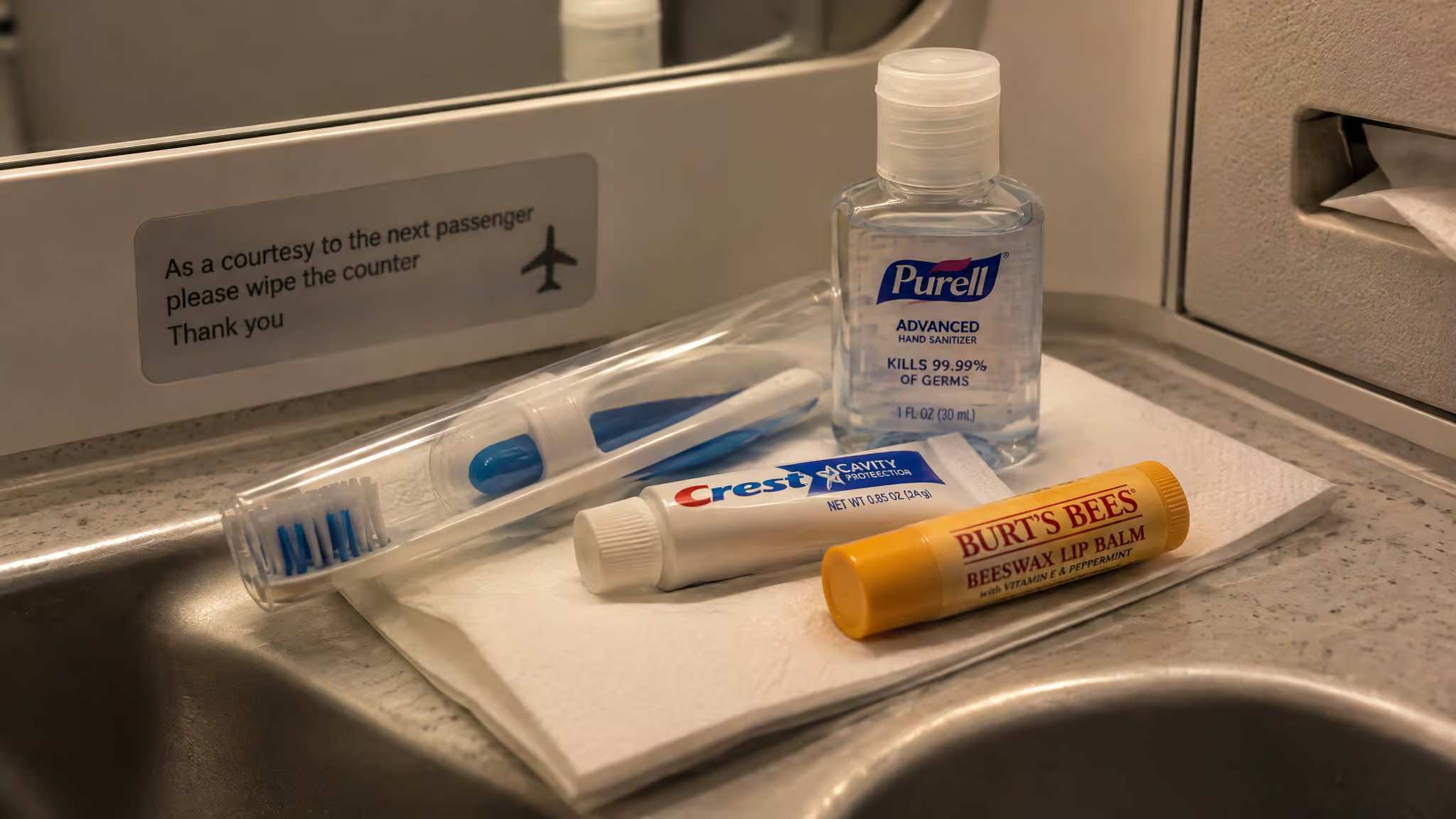
Hand sanitizer, small, gentler formula. Antibacterial sprays are everywhere post-pandemic anyway, so keeping one on you is easy. Onboard, the Aesop citrus mist is the cited example, and fair enough: nice-smelling beats hospital-smell.
The principle, from Hannah Towey and Matt Ortile: replicate your normal hygiene routine in the air with your own minis instead of the airline’s janky complimentary kit. Janky is the correct word. You land feeling like yourself instead of a wrung-out rag.
The long-flight outfit: what to wear, garment by garment
A long-haul outfit works when every garment solves a specific in-cabin problem. Here’s the system, garment by garment:
- 100% cotton tee as the base. The Uniqlo U Cotton Crew Neck runs $20 and handles the nightmare scenario: a greenhouse tarmac delay with no air conditioning. White cotton breathes and soaks up sweat when that happens.
- A warm layer that beats the blanket. Cabin temps swing, warm at boarding and landing, cold mid-flight, and crews cool the cabin during turbulence to settle queasy stomachs. Merino wool is the classic fabric for this job, and a quarter-zip knit like the Nimble Everyday Ribbed 1/2 Zip ($189) packs better than a bulky scarf and zips over the neck. Brownjohn’s never-without item is his favorite hoodie.
- Tapered travel pants. The Nimble Travel Pant ($149) has a stretchy adjustable waistband, four pockets, and hems that stay off the lavatory floor, which is exactly where hems should stay. Loose beats tight leggings when the bloat hits; Hannah Chubb likes Cozy Earth’s Bamboo Stretch knit pants as the loose alternative. And this is also the jeans answer: tight denim fails for the same reasons.
- Side-clasp underwear. The Roamies Starter Pack, $70, snaps at the sides so you can change in the lav without pulling your pants and shoes off. Weird on paper, genius in practice. The origin story is grim and real: designed by an Adelaide woman named Lauren after someone else’s urine hit her wide-leg pants ten hours into the Perth-London nonstop. Repeat orders are the endorsement.
- Wire-free, non-padded bra. The M&S Non Wired Bralette A-E, $28: comfortable all day, quick-drying for hotel-sink washing, and padded bras eat too much luggage space.
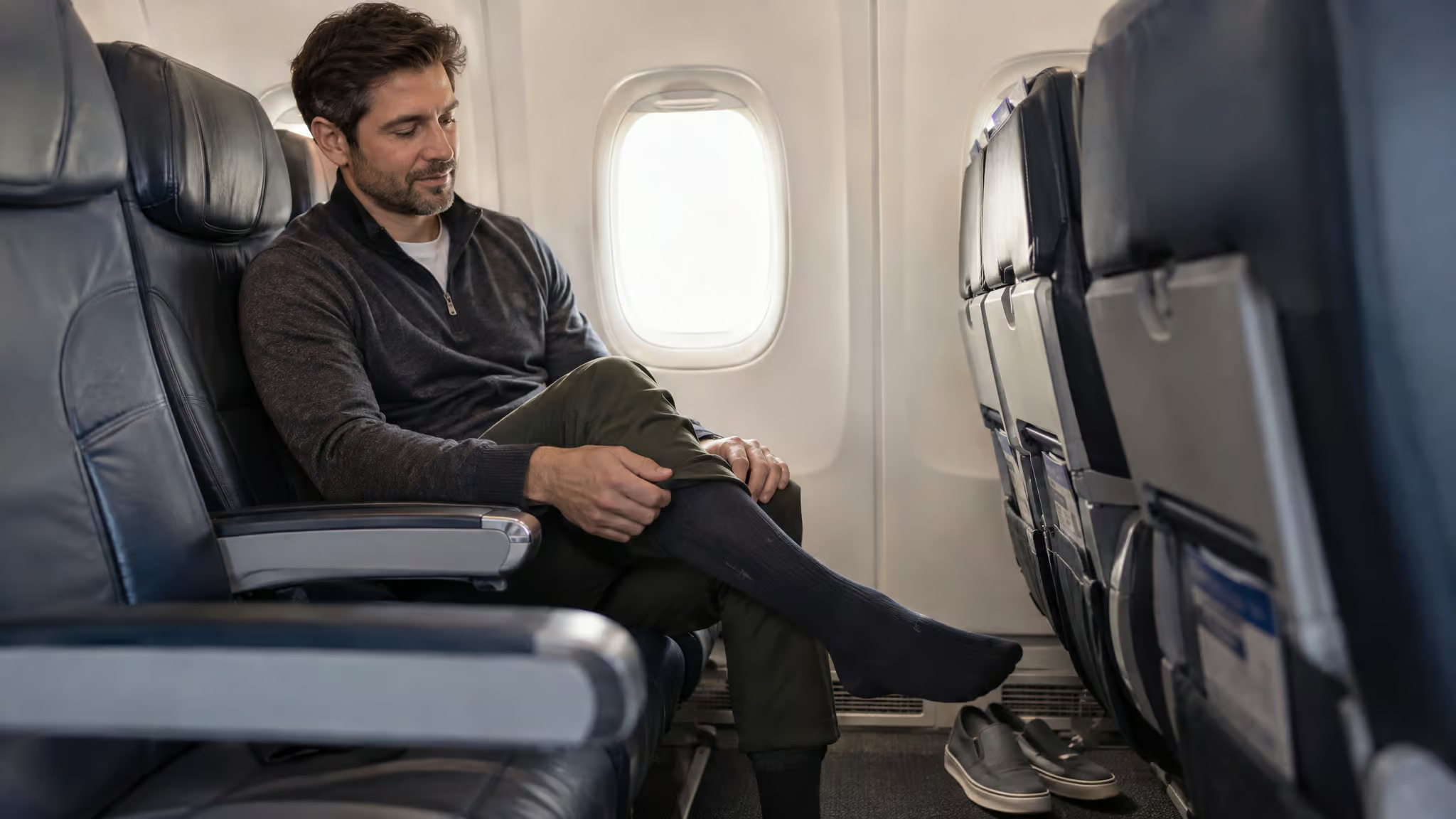
- Bamboo compression socks. Over synthetics, because the natural fiber didn’t irritate skin after all-day wear. They help circulation and cut swelling when you’re sitting forever, which matters more on hour 14 than any fashion choice. Einsetler backs them too.
- Slip-ons or disposable hotel slippers once seated. Bathroom trips get way less gross. Weirdly good move.
- The vanity pick. M&S The Trench, $219, if you care about the arrival photo by the departures board. Half-joking. Mostly.
Prices are as listed in the original currencies of the UK and Australian sources and may vary.
Circulation: a movement protocol that starts before boarding
It starts at the gate. Don’t burn your last hour sitting when you’re about to sit for another 12. Take a terminal walk, then knock out calf raises, heel-toe rocks, ankle circles, easy knee bends. Two minutes of weird looks, and it fires up your calves to pump blood back up before you fold into a seat.
In flight, Dr. Sanjiv Lakhanpal of the Center for Vein Restoration draws the line at four hours: on longer flights, walk the aisle every one to two hours when it’s safe. Between walks, seated ankle circles, heel raises, and foot pumps. Zero equipment, nobody even notices.
Einsetler’s version is the one worth stealing: treat a widebody as a walking track. A few laps when the seatbelt sign is off and you’re not blocking service. Compression socks cover the in-between stretches.
Eating, bloating and food safety in the air
Surviving a 12-hour economy flight comes down to eating with some intention. Prepare to bloat: cabin pressure puffs your gut the same way it puffs a bag of chips, which is why that bag sounds like a drumroll on every flight, and sluggish circulation adds water retention on top. The fixes are thumb-rules, not a protocol: skip fizzy drinks and spicy food, take a probiotic, keep the water and electrolytes coming, take the water cups even when you’re not thirsty, because you sort of are. And loose pants over tight, as covered.
On meals, Ben Desbrow, a sports nutrition professor at Griffith University who consults for the Gold Coast Titans, goes moderate-fibre and low-fat: pastas, rice, noodles, colorful produce. Plus the obvious food-safety vigilance: anything discolored or off-smelling, skip. Erin Eames adds a knowing shrug of a rule: don’t hit the street food the night before you fly out.
The underrated perk nobody tells first-time long-haulers: most major airlines run self-service snack pantries in the galley on longer flights. Biscoff cookies, water refills, no waiting, and a built-in excuse to stand up. My snack verdict, held with full bias as a Qantas-leaning traveler: Qantas has the best in-flight snacks, mango ice cream bars included. Argue with me.
Business class bonus move: eat dinner in the lounge, tell the crew you’re skipping the meal (asking for just dessert works), then sleep straight through the red-eye.
Passing hours 8-12: time perception and mental survival
The honest answer is structure, it’s the writer’s own time-perception recommendation. A known sequence of blocks (music at takeoff, meal, movie, reading, sleep) gives the flight a shape and helps you lose track of time, anxiety or plain boredom. If anxiety is a serious issue for you, that’s a conversation for a professional, not an article hack.
The counterintuitive lead: stop checking the flight map. Actively tracking the remaining time stretches how the wait feels, which everyone has experienced. One writer’s game: guess the halfway point, and he usually undershoots what’s left, so the reveal lands like a surprise discount at checkout.
Then give the hours a job. Block the flight out: music at takeoff, meal, movie, reading, sleep, and the clock disappears. One travel writer marked up a friend’s manuscript and purged phone photos mid-flight; his note was that being in motion gets ideas moving. Twelve hours of found time is genuinely rare. Use it however you want.
Etiquette that pays
What cabin crew and captains actually emphasize is prep and courtesy, not secret tricks. Einsetler’s tips are sleep, hydration, and scheduling nothing after landing. Eames’s are check-in timing and carry-on spares. Both covered below.
The courtesy part is Brownjohn’s: greet the crew, make eye contact, say thanks. Not a transaction, just true, and it comes back as flexibility, better service, and small gestures.
The recline code, stated like guy-rules: on overnight long-hauls, recline freely. On day flights, wait until after the first service and give the person behind you a heads-up. Brownjohn has seen spilled drinks and broken laptops from seats that slammed back without warning. Armrests: the middle seat gets both, framed as shared space, not a territorial victory.
Shoes off at your seat is fine. Bare feet or socks in the lavatory is exceptionally gross, and the queue for that lavatory puts seated passengers’ faces roughly level with a region of you they did not consent to see. Be aware of it.
Contingency planning from cabin crew
Erin Eames, a TAFE NSW cabin crew teacher and former cabin crew, keeps it short: pack clothes, an extra 24 hours of medication, and spare baby formula in your carry-on. Never check anything important; a bridesmaid’s checked bag holding the bride’s dress vanished within 24 hours of a wedding. Ask everything at check-in, meals, bassinet, extra legroom, wheelchair, where someone with actual power to help can hear you. If a long stopover looms, Incheon in Seoul has genuinely clean showers and free sleep areas. That’s paradise on a 14-hour layover.
Long-haul with kids: the admin-first strategy
The strategy is administrative, not entertainment-packing. Lock in seats together in advance, put spare baby formula in the carry-on, and request the bassinet at check-in, not at the boarding door. Braunohler’s family list is all practical, none precious: familiar snacks, toys, tablets loaded with their favorite shows, and let the kids walk the aisle. Younger kids like looking around, and she found fellow passengers were kind about it. Most people are cooler about kids than you fear.
And the conviction, from someone who’s been there: long flights with kids are worth the hassle. The bonding, the other cultures, the foods and landscapes they’d never see otherwise. That’s the whole point.
Jet lag and recovery: what to do before and after you land
Jet lag work starts before you fly. The Timeshifter app, built by Mickey Beyer-Clausen and company, prompts timed actions like bright-light exposure and caffeine timing to shift your body clock. Light is the main cue, the right timing depends on your chronotype, sleep pattern, and itinerary, and getting it wrong makes jet lag worse. Start at least a few days out; one example move is limiting caffeine to the hours before lunch.
If you need motivation, Desbrow’s finding does it: illness reports run two-to-three times higher after travel to somewhere more than five hours off your home time.
As for why you feel wrecked: Kevin Netto of Curtin University explains that cabins aren’t pressurized to sea level, so less oxygen gets through, hence the dehydration and jet-bloat. Compound that with bad sleep and, on some airlines, free alcohol, and the crash lands right on schedule.
So plan the recovery like a planning decision, because it is one. Einsetler’s rule is blunt: never plan anything the day you get back or the day after. You’ll be wrecked, and showing up wrecked does your people no favors. My play: rest on day one, hit the ground running on day two after a real night’s sleep. Slower start, better trip.
Bottom line: Book the recovery before you book the flight — nothing scheduled for the first two days home.
The back half is won before you board
Long-haul economy is survivable, even almost enjoyable, because every hour-10 failure got rehearsed at home. Bottle packed, seat checked in, compression socks on.
For what it’s worth, I fly internationally two or three times a year, and every trick above earned its place on those trips, a few links here also earn the site a commission if you buy through them. And the crews and passengers around you afford more grace on the long ones, same as you afford it to them. Surrender to the rhythm and it carries you.
Frequently Asked Questions
Why not wear jeans on a plane?
Tight denim fails on long flights for the same reasons tight leggings do: cabin pressure puffs your gut, so restrictive waistbands get miserable fast. Loose pants with a stretchy, adjustable waistband are the better call, plus hems that stay off the lavatory floor. If you insist on denim, go loose, not skinny.
How to survive a 12 hour flight in economy?
Treat it as a preparation problem, not a willpower problem. Pick your seat using a real seat map, block the flight into segments — meal, movie, reading, sleep — stop checking the flight map, walk the aisle every one to two hours, and keep water and electrolytes coming. The back half of the flight is won before you board.
What are some hacks flight attendants swear by for long flights?
Captain Laura Einsetler keeps it unglamorous: sleep properly before you fly, keep your immune system propped up, get electrolytes before, during, and after, sleep when you’re tired, and schedule nothing the day you land. Cabin crew teacher Erin Eames adds: pack a change of clothes, extra medication, and baby formula in your carry-on — never check anything important.
Is a travel pillow worth it or is the airline pillow enough?
The airline pillow is enough for the lumbar job — under your lower back is where it actually works. If you genuinely want to sleep sitting up, a compact front-and-side neck support is the upgrade that pays off. The Cabeau Evolution S3 is the example: flat back plus velcro straps that anchor to the headrest so your head stays put.
How to survive long flights with anxiety?
Structure is the honest answer: a known sequence of blocks — music at takeoff, meal, movie, reading, sleep — gives the flight a shape and shortens the perceived wait. Stop actively checking the flight map, since tracking remaining time stretches how it feels. One trick: guess the halfway point, then let the reveal land as a surprise. If anxiety is serious, that’s a conversation for a professional, not a hack list.
What gadgets to make flying more comfortable are actually worth packing?
Only gadgets that fix a specific failure. Over-ear noise-cancelling headphones are the single biggest upgrade; an AirFly Pro streams seatback entertainment to your wireless headphones; a power bank covers outlets that trip breakers; offline downloads back up dead entertainment systems — TikTok even has an Offline Videos setting saving up to 200 videos. The theme is redundancy: never trust the seat outlet or the seatback screen.
What to wear on a long-haul flight to stay comfortable?
Every garment should solve a cabin problem: a 100% cotton tee as the base, a warm merino or knit layer for mid-flight cold snaps, loose tapered travel pants, wire-free underwear and bra, bamboo compression socks for circulation, and slip-on shoes so you’re not lacing up in the lav. Cabins target 23 to 25°C but drop mid-flight, so the layer is non-negotiable.
How much water do you lose on a long flight?
Roughly 8oz (240ml) per hour, because cabin humidity runs 10 to 20 percent — drier than the Sahara’s ~25 percent. The fix is a reusable bottle filled early and often, plus electrolytes before and during. It’s the cheapest comfort upgrade in your bag, and it cuts the single-use plastic waste too.