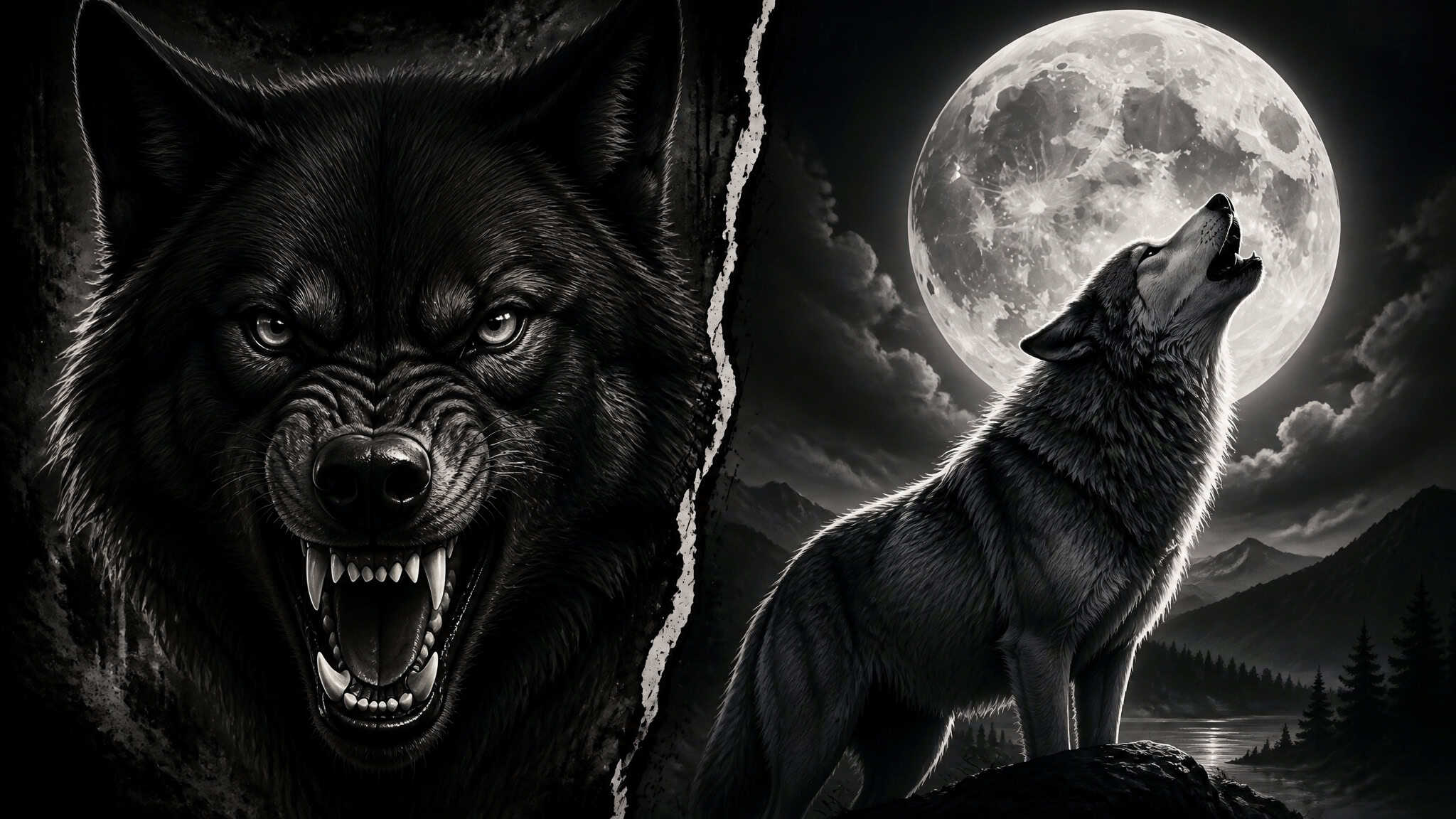
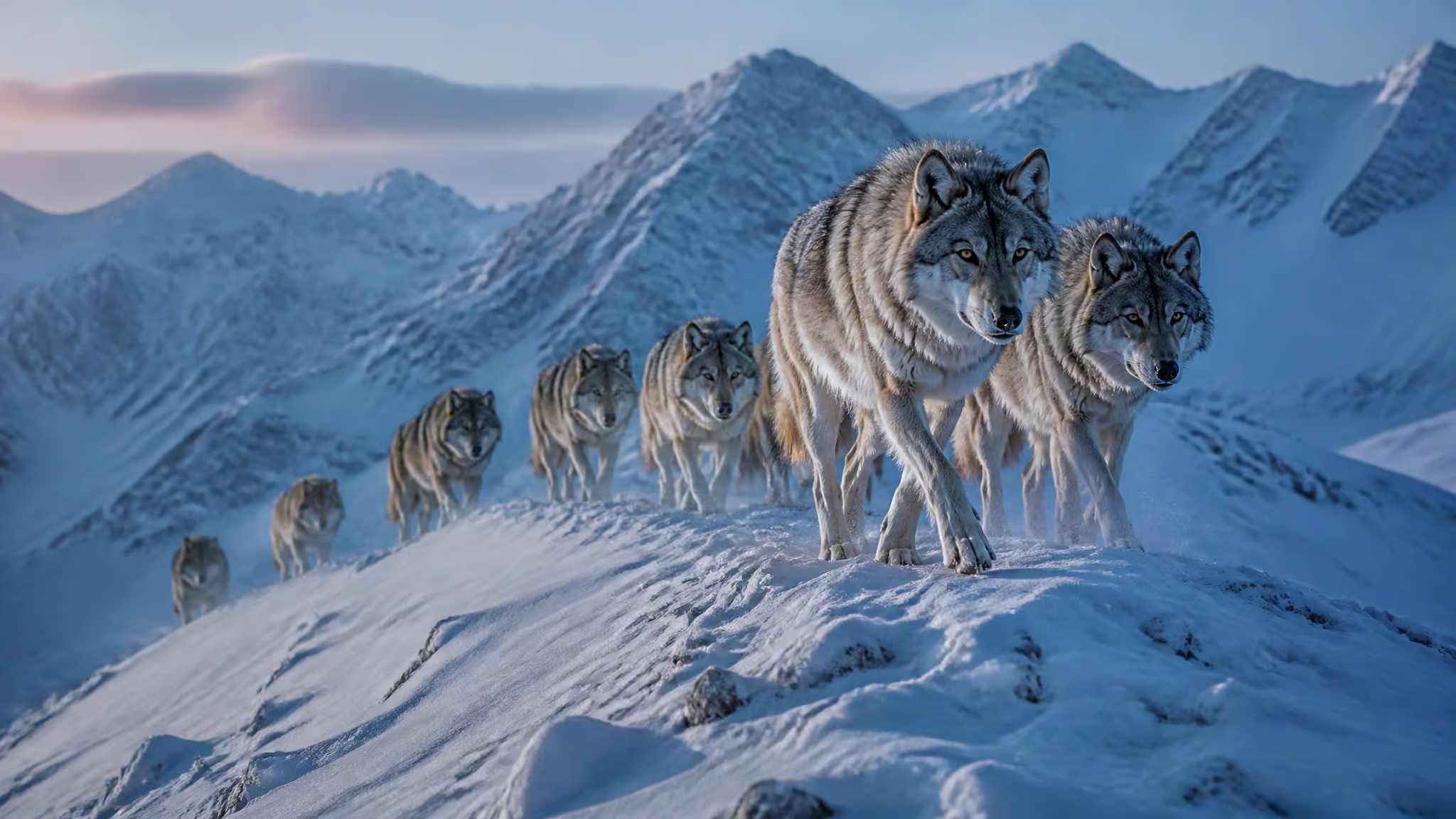
One wolf howls alone across a frozen valley. Six wolves move in silent formation along the ridge, no sound, no stragglers, every animal holding its line. Same species. Opposite stories. And a tattoo of either one says something completely different about you.
That’s the thing most wolf-tattoo articles skip. A wolf tattoo symbolizes strength, sure, but strength isn’t one meaning here. A snarling wolf with blood on its muzzle gets called “courageous,” and so does a serene wolf under a full moon. Those aren’t the same courage. Call them confrontation courage and endurance courage.
The first says I’ll fight you. The second says I survived something you can’t see.
Pick the wrong one and you’re wearing someone else’s story. A guy who walked out of a bad marriage, a veteran who made it home, a single father holding a family together, none of those stories is a snarl. And a man whose whole point is that he doesn’t back down shouldn’t ink a quiet silhouette on his ribs.
By the end of this piece you’ll know which courage your design signals, and how to change it if it’s the wrong one.
Key Takeaways
Courage comes in two compositions: a snarling wolf, chains, and battle imagery signal confrontation courage, while a lone wolf or serene moonlit design signals endurance courage, and design, style, and placement decide which one you’re broadcasting.
The alpha wolf tattoo is built on outdated biology: real pack leaders are the parents, so an honest alpha or pack design reads as guardianship and responsibility for your people, not dominance.
Placement is part of the message: a forearm wolf declares itself publicly, a chest wolf keeps a private vow over the heart, and a full back piece tells a story scene by scene.
Table of Contents
What a wolf tattoo means: strength and courage at the core
A wolf tattoo symbolizes strength, courage, loyalty, independence, and survival, and most real designs blend two or three of eight symbolic threads rather than claiming the whole animal at once. Wolf tattoo meaning has always been layered like that: the animal holds contradiction without collapsing.
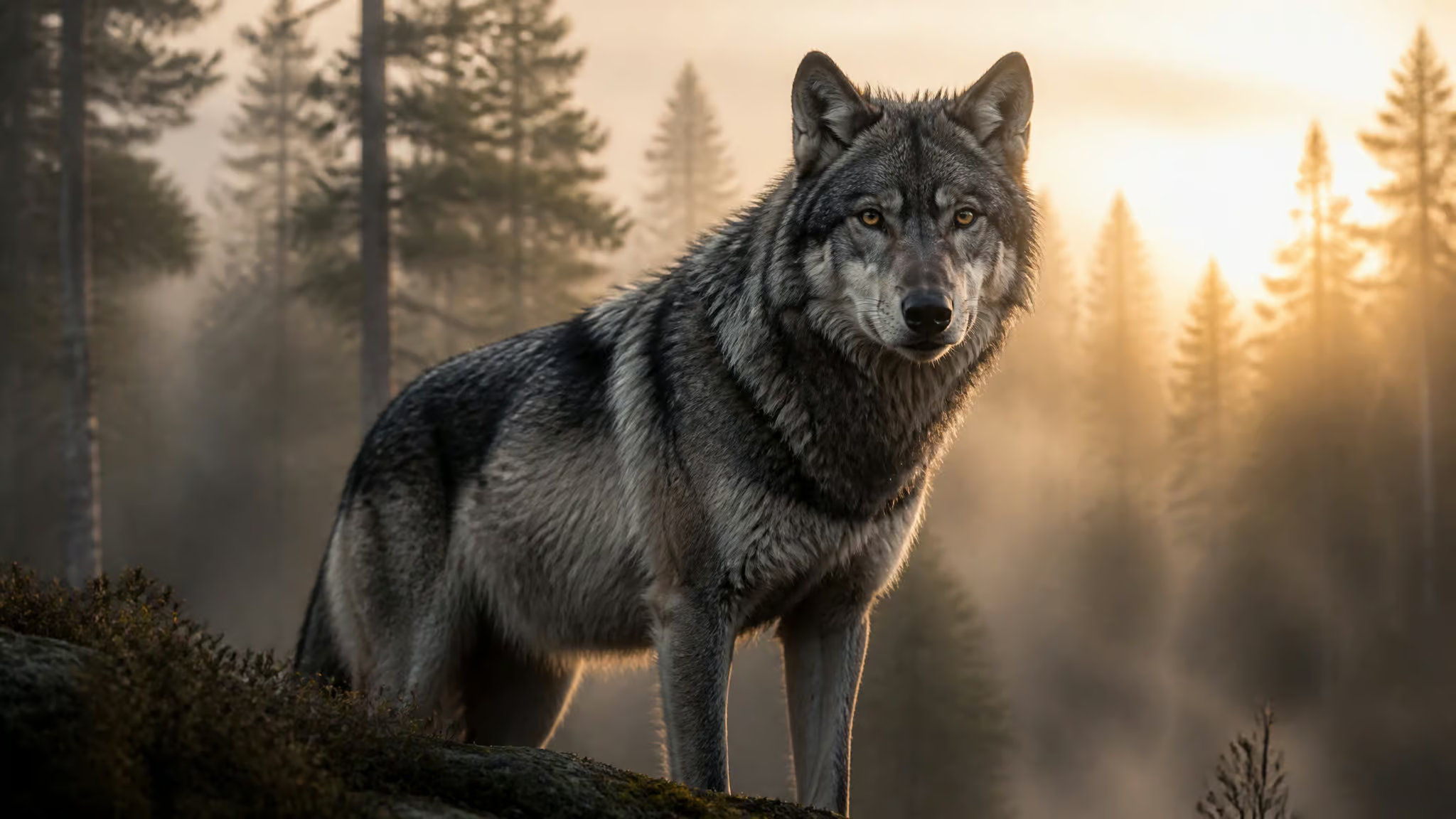
Those threads, briefly:
- Loyalty and family. The pack as blood you defend.
- Independence and freedom. The animal that answers to no one.
- Strength and survival. Enduring what should have ended you.
- Instinct and intuition. Trusting the gut over the committee meeting.
- Protection and guardianship. Standing between your people and the threat.
- Spiritual guidance. The wolf as pathfinder or totem.
- Ferocity and danger. The teeth, on purpose.
- Transformation and duality. Wild thing, disciplined wearer.
Men commonly pick wolves citing strength, courage, and leadership, and that’s the honest pattern, not a marketing line. But the core symbolism is gender-neutral, and snarling and alpha designs suit bold wearers regardless of who’s wearing them. The reason wolves tattoo so well across genders is that every thread is available to anybody.
The list above isn’t trivia to memorize. It’s a decision tool. Design, style, and placement decide which meanings rise to the surface, and the rest of this piece is about pulling those levers deliberately.
Pack wolf vs. lone wolf: the fork that decides your courage
The decisive difference is simple: a wolf pack tattoo signals family loyalty you’d defend, while a lone wolf tattoo signals self-reliance carved out during a hard solo passage. Choose wrong and your ink tells a story that isn’t yours.
The wolf pack tattoo: loyalty you defend
Here’s the biology that makes pack designs land: real wolf packs are family units led by the parents, and when one member weakens, the pack defends it rather than leaving it behind. That’s not the cartoon hierarchy. That’s a family that carries its own.
The wearers match. Parents get pack tattoos, often personalizing them with their kids’ names. Siblings get matching pieces. Military veterans use pack compositions to honor their unit, which might be the cleanest version of the symbol there is.
Common designs: wolves running together, a ridgeline scene, the family gathered with pups. Some artists make a lead wolf larger or set it higher; others deliberately keep the animals equal in scale. Either way this is usually half-to-full sleeve territory, because the composition needs room.
The whole design distills to one line: one pack, one direction, or no movement at all.
The lone wolf tattoo: courage without a safety net
A lone wolf in biology is a young disperser, the one that leaves the birth pack to find a mate and territory. The crossing is perilous, and plenty of dispersers never make it. The ones who do found new packs.
So a lone wolf tattoo isn’t just “independence” the way a motivational poster means it. It’s courage with no safety net, and the wearers reflect that. People who’ve been through major upheavals often gravitate here: after a divorce, through recovery, after emigrating, after walking out of a toxic environment. The design says I left, it was hard, and I’m still here.
Solitary poses and dramatic landscapes carry it well. There’s more on this in our piece on lone wolf tattoo meaning.
Warrior wolves: snarling designs, battle imagery, and composed strength
Martial meaning isn’t assumed from the animal. It’s built from legible mechanics: open jaws, bared teeth, heavy chains, rune inscriptions, knotwork, and full narrative battle scenes across a back piece. Strength in a warrior wolf gets composed on purpose, element by element. If you want the deeper symbolic catalog, our wolf tattoo symbolism guide covers the full range.
Fenrir and the Norse vocabulary of defiance
Fenrir is the anchor, and the chain is the story. The monstrous son of Loki, bound by the gods with a magical chain, destined to break free and trigger Ragnarök. Alongside him, Sköll and Hati pursue the sun and moon, fated to overtake them eventually. A Fenrir tattoo signals untamable power, defiance of authority, and comfort with the wilder self. That’s the message built into the design: chains that will not hold forever.
The Norse design vocabulary gives you the grammar: runes, knotwork, heavy chains, that snarling open jaw. A big Nordic wolf on the shoulder or forearm reads as a statement about fighting back when boundaries get crossed. My take: this is the strongest choice in the whole wolf canon if your actual story is confrontation, because the mythology does half the talking for you.
From wolf-pelt warriors to modern battle pieces
The modern warrior wolf sits on a long line. Warriors and hunters wore wolf pelts to show they’d killed the beast and taken its strength for themselves. Tattooing traditions with clan and ritual weight run deep in Japanese and Polynesian full-body work too, though the exact lineage there gets debated, so treat it as texture rather than gospel.
What carries forward is the logic: you don’t just wear the wolf, you claim what it did.
Leadership and the alpha myth
An alpha wolf tattoo’s honest meaning is guardianship and responsibility for the people you love, because real pack leaders are the parents, and the “alpha” dominance model is scientifically outdated. That’s not opinion. The dominance-hierarchy research that shaped the alpha idea has been walked back by the science of actual wolf behavior.
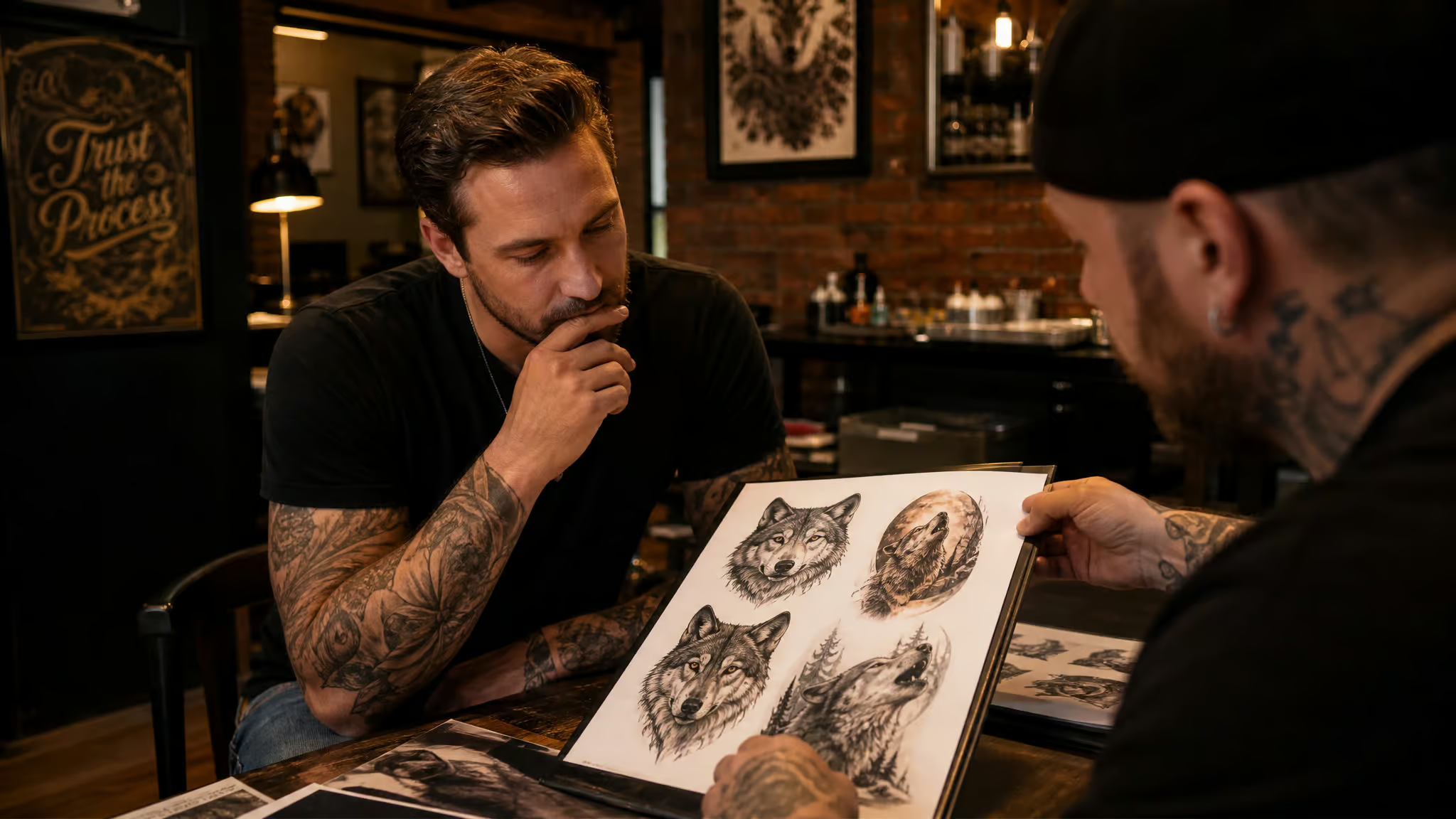
There’s a pattern tattooists often describe: a guy comes in asking for an alpha wolf, hears the parent-led-pack biology, and leaves with a pack composition instead. Not because the alpha was embarrassing, but because the real story, the one about leading and providing and defending, fit him better once he heard it.
That said, alpha tattoos remain popular, and for good reason. They suit bold, competitive wearers who want the banner Energy, usually placed somewhere visible and carried accordingly. If that’s you, get it. Just know what the biology says, and decide which story you’re telling: the outdated dominance one, or the guardianship one that happens to be true.
Quick test: Before booking an alpha design, decide whether your story is dominance or guardianship — and pick the composition that matches the honest answer.
What wolf tattoos mean across cultures: four grammars of courage
Wolf tattoos carry different meanings across Norse, Japanese, Roman, Native American, and Celtic traditions. Same animal, four or five distinct kinds of courage, each with its own design language and its own honest limits.
Native American: teacher, pathfinder, warrior spirit
In many Native American traditions the wolf is a teacher, pathfinder, and spirit guide, tied to loyalty, family, and warrior spirit. In some traditions a wolf spirit gave strength and courage in battle, and wolf names were reserved for the audacious. A Cherokee headdress design on a visible body part reads as a person with a backbone. Dreamcatcher wolves are popular among women who put family first, often on the hip, where they’re showable or hideable.
One caveat that isn’t decoration advice: ceremonial Native imagery carries sacred weight. If you’re not Indigenous, approach it with respect, not as a cool aesthetic.
Japanese Ōkami: divine protection with a melancholy edge
The Japanese word Ōkami (Nihon Ōkami, the native Japanese wolf itself) shares its root with the word for deity, and Shinto tradition reveres the wolf as a messenger of the gods who watches over travelers and farmland. The native Japanese wolf died out in the early 1900s, though Mitsumine Shrine, in Saitama Prefecture, continues to honor it. So a Japanese wolf tattoo carries divine protection plus genuine melancholy: the guardian animal is gone, and people still pray to it.
Design-wise, the wolf folds into irezumi grammar, sleeves and back pieces with flowing composition. And the actual animal was small and fox-like, so it reads as spiritual rather than aggressive. That’s a feature if “menace” isn’t your message.
Roman Lupa: fierce maternal protection
The she-wolf nursing Romulus and Remus at the Tiber is an image over 2,000 years old, and without her there’s no Rome. This is fierce maternal protection as the founding myth of an empire. Worth sitting with: the oldest wolf image in Western civilization is a mother defending her young.
Celtic: protector and guide to the otherworld
The Celtic wolf is a protector and guide to the otherworld, carrying rebirth symbolism, and Celtic knot wolves honor heritage. You’ll sometimes see a sun-devouring wolf attached to Celtic lore, but that detail is thin in the record and may be conflated with Norse Sköll, so I’d skip it or hold it loosely.
Put the lenses side by side and the pattern is clear: Norse defiance, Japanese sacred protection, Roman maternal defense, Celtic community bravery. Same wolf, different courage depending on which grammar you speak.
Howling wolf and moon: the most popular composition, corrected
The howling wolf is the most popular wolf composition going, and it’s deliberately ambiguous. Howling is real communication: locating pack members, coordinating hunts, marking territory. So the design reads as connection, which is why wolf tattoos with meaning remain so enduringly popular. But a lone howler against a vast sky reads as solitude. Most wearers want both at once, and it’s the rare design that delivers.
Howling wolf: connection or solitude?
The ambiguity is the point, and you can tip it. Add a pack around the howler and it’s a roll call. Leave it alone against an empty skyline and it’s a man shouting into the void because nobody’s coming. Same pose, opposite sentence.
Wolf and moon: a cultural pairing, not biology
Here’s the correction worth knowing before you commit: wolves don’t howl at the moon. The raised head just projects sound further. The moon pairing is cultural, and it’s also where werewolf imagery lives, which is a legitimate read if you’re a science fiction fan, since a wolf and moon can represent strength and curiosity through that lens.
Moon phase shifts meaning too: full moon is power at its peak, crescent is emergence and transition, dark moon is hidden knowledge. And some texture on adjacent designs: tribal howling wolves lean lone-wolf or pack-leader; night-wolf designs read as loneliness and often land on the hand; wolf-and-mountain pairings are common for guys grounding the animal in a landscape.
Element pairings that shift a wolf tattoo’s meaning
One element can flip the whole emotional register of the piece. These are the modifiers worth knowing.
Wolf eyes
Vigilance and seeing through deception. Realism suits the translucent iris best, pale golds and icy blues, and the boldest eye-focused designs render only the eyes and nothing else. Blue eyes read as an inner world opened only to the closest people.
Wolf and roses
Beauty and danger coexisting. Tenderness alongside ferocity. Often placed on sensitive body parts, which tracks with how personal the pairing usually is.
Wolf and skulls
Mortality faced down. A wolf surrounded by many skulls signals challenges overcome, fearlessness, and loyalty to your beliefs. Shoulder or forearm carries it.
Three-eyed wolf
Third-eye perception and hidden knowledge. Pairs naturally with geometric or blackwork.
Wolf paw
The sign left by a stronger wolf. A paw with a heart inside means chosen to become warrior and defender. Prints alone mean the animal’s strength transferred to the wearer.
Forest and mountain backgrounds
These ground the wolf in a world. Forest means maturity and independent decisions; mountain means strong character and relentless pursuit. Both work as a sleeve, especially with the moon in composition.
Wolf paired with other animals
If you want strength and bravery beyond the wolf alone, pairings like wolf-and-lion, wolf-and-tiger, and wolf-and-eagle layer two strengths instead of doubling one. Other strength motifs exist outside the wolf lens entirely, but this piece stays inside it.
- Raven. Nordic designs especially. Duality, the choice between good and evil.
- Tiger. Tiger is energy, wolf is bravery: speed in decisions. Japanese-style versions on the chest tie into pack loyalty.
- Lion. Two kings, so the pairing doubles down on leadership and family loyalty. An observed pattern: men often choose howling poses, women peaceful ones, usually placed side by side.
- Dragon. The dragon is the Asian power symbol, and the pairing marks transformation from restless to mature. Shoulder or shin.
- Sheep. Backbone under a soft shell. Hand placement.
- Butterfly. Romantic, but it faces difficulty head-on, balanced strong character. Forearm.
- Hawk or eagle huntress. Determined and self-reliant, a totem of bravery and beauty. Runs vertically down the arm or leg.
Each of these is a composition decision, not filler. Ask what the second animal adds that the wolf can’t say alone.
Distinctive wolf designs: from growling to minimalist
Beyond the big compositions, a set of specific designs each carry their own narrow message.
Growling wolf
Ready to protect self and family. On the hand, it’s a warning, full stop.
Wolf head, front or three-quarter
Welcomed wisdom and spiritual growth. Small on the hand, large on the hip or chest.
Two fighting wolves, yin-yang
The ancestral inner struggle: darkness against light. Dotwork suits the large hands, chest, and back pieces this design wants.
Viking wolf in a ring
Love of freedom and loneliness. A life cycle traveled alone.
Subtle outline talisman
The predator’s spirit aiding in crises and decisions. Arm or leg, and it keeps quiet about itself.
Mandala wolf
The mandala as a map, with the wearer following inner instincts. Thigh placement.
Girl with wolf cowl
Strong character and mystic protection in hard times. Arm.
Side-view wolf, jumping or howling
This one is a statement of self-image, the verb you choose sets it. Choose that verb deliberately.
Small and simple wolves
Small wolf tattoos can lose meaning, yes. In simple black-and-grey with limited layering, one thread, courage or loyalty, carries the whole tattoo. Independence and pack loyalty are the common reads.
Neck or wrist suits them. For guys who want their first piece discreet, this is a legitimate entry point, not a cop-out; more on that in our guide to wolf tattoos for guys.
Black wolf vs. white wolf
A black wolf signals reserved nature, owning your own principles. On the leg it’s an independent path; on the arm, decisiveness. White and arctic wolves show up in color-variant catalogs, but the material on them is thin, and I’m not going to invent meaning the sources don’t support. If arctic speaks to you, build the meaning from composition, not color mythology.
Style as strength signal: which courage survives healing
Neo-traditional holds up better over the years than hyperrealism, which suits tribute pieces but ages differently. The style you pick decides which courage stays legible after healing, and plenty of otherwise great wolf tattoos quietly fail right here. A common consultation mistake: picking hyperrealism for ferocity without asking whether a snarl in bold neo-traditional or blackwork linework keeps its menace once healed. Fine linework is the real durability question.
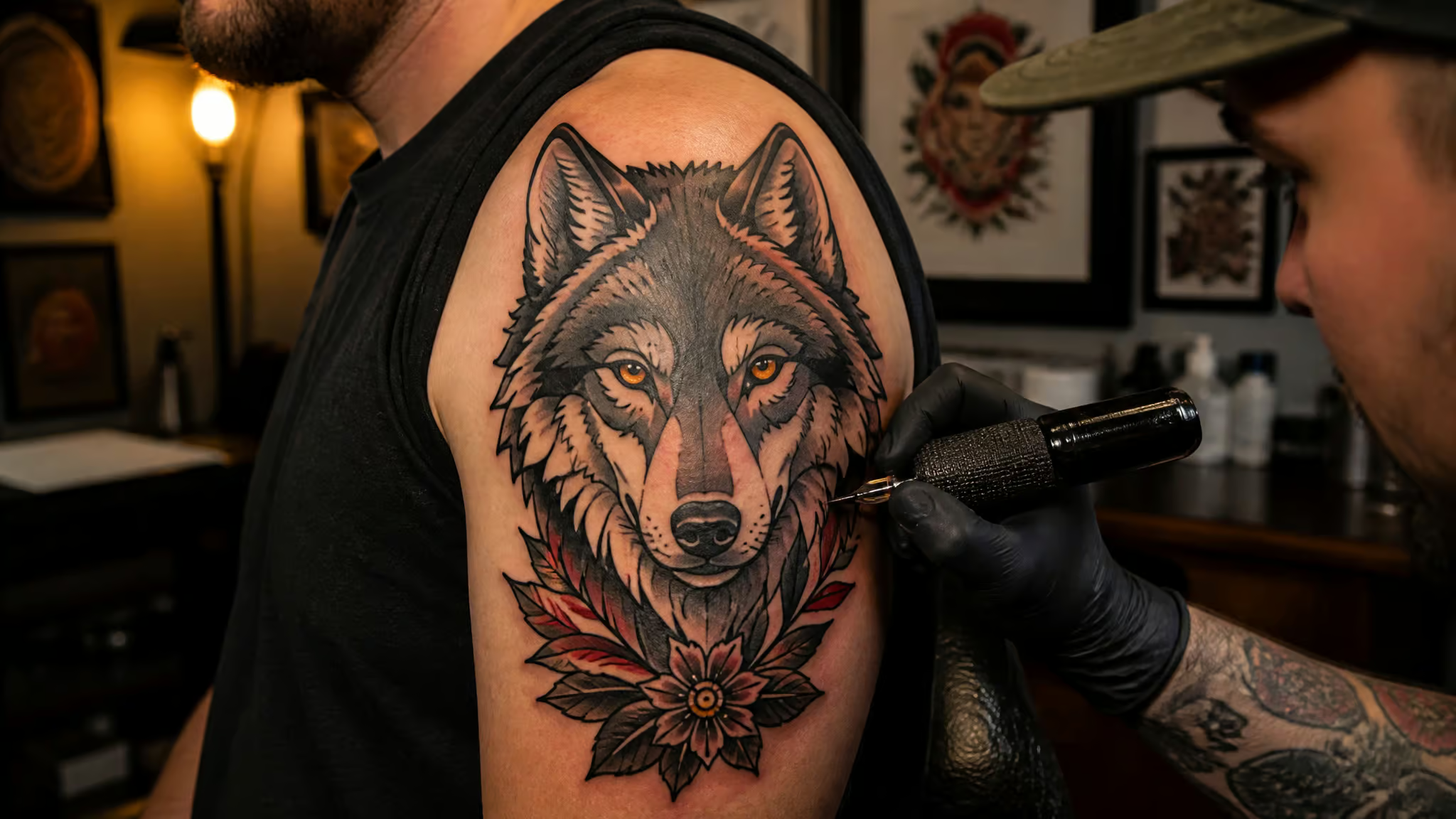
Realism, neo-traditional, and American traditional
Hyperrealism is photographic detail and serious technical skill, ideal for tribute pieces. Neo-traditional runs bold outlines readable across a room, and it holds up. American traditional goes heavier still: thick outlines, limited palette, symbolism over likeness, and the old-school open-jaw wolf is a lucky charm for wearers who fight back. Traditional wolf placement is usually arms or hips, rarely the chest.
Tribal and blackwork
Tribal wolf work lives on cultural and spiritual ground, pattern over detail, typically on men, typically arms, forearms, and shoulders, underlining strength. Is it outdated? Sources genuinely disagree: one lists tribal among current styles, another frames the 1990s wave as dated. My read: a heavy 1990s arm-band tribal reads dated; a deliberate blackwork composition reads current. Intent shows.
Geometric, watercolor, and the 2026 hybrids
Geometric wolf work surged over the past decade, and the signature split design, half realistic, half dissolving into geometric planes, expresses instinct held within structure. Watercolor conveys impermanence, a promise breaking free. Japanese irezumi folds the wolf into narrative sleeves. One promotional source’s trend list for 2026, take it lightly, names hyperreal-geometric hybrids, minimalist wrist wolves, and spirit animal narratives. Roughly ten styles suit wolf tattoos overall.
Field note: Ask your artist directly how the design’s lines will read once healed — fine linework ages differently than bold outlines.
Placement as communication
Placement is part of a wolf tattoo’s meaning: a forearm wolf declares itself publicly, a chest wolf keeps a private vow, and a full back piece tells a story scene by scene. People wear wolf tattoos on different body parts and the core meaning holds, but the placement decides who the message is for. Same snarling wolf: a private vow on the chest, a public warning on the forearm.
Public declarations: forearm, hand, and face
The forearm gets shown daily, which is why “strength and courage forearm” is its own search: that’s the public read. Hand and face are unhideable entirely. A handshake forces the view, so the design better be a statement you’re willing to make at every first meeting for the rest of your life.
Private vows: chest, back, and the whisper placements
Chest sits over the heart: intimate loyalty, often holding dates. The full back has compositional room for battle scenes and stays hideable under a shirt. Wrist, ankle, and behind the ear are whisper-level, visible only when you choose. Shoulder carries its own convention: left for darkness, right for light. A full sleeve fits a vertical story told top to bottom.
There’s no single right spot. Placement shifts meaning; it doesn’t grade it.
Is a wolf tattoo a red flag? The shadow side
No, a wolf tattoo isn’t a red flag, except when the design deliberately signals menace, and context decides. The animal itself is neutral; the composition tells the room which wolf you meant.
The negative tradition is real, though. European folklore built the big bad wolf as predator and deceiver, Little Red Riding Hood and the Three Little Pigs did lasting work there. Fenrir embodies world-ending destruction. And some wearers choose snarling, aggressive designs on purpose, for danger, for rage, for shadow work. That’s a legitimate choice; it’s just worth knowing it’s a choice.
The mechanism that disarms all of it: bared teeth with blood on the muzzle and a serene wolf under a full moon tell opposite stories. You can predict exactly how your specific design reads before you sit in the chair. Do that prediction honestly and you won’t be surprised by anyone’s reaction.
Courage beyond gender
The core symbolism, strength, loyalty, independence, instinct, is the same for any wearer. Men often arrive citing strength, courage, and leadership; women cite intuition, independence, and motherhood. The difference is which thread leads, not whether courage is available.
And the counterpoint that settles it: Lupa. A 2,000-year-old image of a fierce mother defending her young means protection and ferocity were maternal archetypes before anybody was etching wolves on forearms. Courage was never male-only. The myth knew it before we did.
Pop culture: the dire wolf and the Witcher medallion
Dire wolf tattoos rose with Game of Thrones and the House Stark sigil. A dire wolf portrait means brutality and bravery, striking first, and the designs run big: chest, back, arms. The Witcher’s wolf-head medallion on a chain is a sacred protective charm, the wearer wants the wolf spirit to defend against failures and bad decisions, and it suits the arm.
Pop culture doesn’t dilute the motif. It re-channels the old wolf-as-protector-of-kin symbolism into new vessels. A Stark dire wolf and a Roman Lupa are doing closer to the same job than 1,900 years would suggest.
Choosing your design: style first, then artist, then aftercare
Choosing a wolf tattoo starts with style, not the design pick, and the story decides the style. Start with what you actually lived: if the piece is about loyalty and the people you’d go to war for, a pack composition fits; if it’s about standing alone and trusting your own instincts, a lone wolf does that job. Then pick the style that carries that story, colorful work suits watercolor, neo-traditional, or illustrative takes, while black and gray delivers the depth and realism for blackwork, dotwork, or realistic pieces. Style also determines which artists can even do the piece, so hunt for a specialist with completed wolf work in their portfolio, fur texture, eye detail, compositional flow, not a generalist, and let mythology, elements, and style stay tools while you decide what the meaning is. Artist skill is what determines whether the courage you intended survives healing.
Choosing the style, then the specialist
Style first, the tradeoffs above. Then find a specialist whose portfolio proves real canine work: fur texture, eye detail, compositional flow. Artist search filters by style and location help you build a shortlist fast. A complex animal portrait demands a specialist’s touch in a way a generalist can’t match, and a wolf is nothing if not a complex animal portrait. Talk to the artist before committing; a good one will push back on composition in ways that save you from yourself.
Aftercare that protects the meaning
None of the meaning matters if the ink heals badly, and outlets like iNKPPL hammer this in their aftercare guidance for good reason. Fragrance-free cleansing, thin-layer hydration, UV protection, and touch-ups when needed. This isn’t glamorous, but it’s the part that protects the work and the money you just spent on it.
Here’s where I land: mythology, elements, style, and placement are all tools. The wolf endures as a tattoo subject because it holds contradiction without flinching, loyal and solitary, nurturing and snarling, guide and chaos beast, all at once. Your job isn’t to honor the wolf. It’s to make the design reflect your own story, whichever courage that turns out to be. That’s what makes it permanent-worthy.
Frequently Asked Questions
What does a wolf tattoo symbolize?
A wolf tattoo symbolizes strength, courage, loyalty, independence, and survival, with additional threads like instinct, protection, spiritual guidance, ferocity, and transformation. Most real designs blend two or three of these meanings rather than claiming the whole animal at once. Which meanings surface depends on the design, style, and placement you choose.
Is a wolf tattoo a red flag?
No, a wolf tattoo isn’t a red flag, except when the design deliberately signals menace — and even then it’s a choice some wearers make on purpose for danger, rage, or shadow work. The negative tradition exists, from the big bad wolf of European folklore to Fenrir’s world-ending destruction, but context and composition decide how the tattoo reads.
What does a wolf tattoo symbolize for men in terms of strength and courage?
Men commonly pick wolf tattoos citing strength, courage, and leadership, though the core symbolism is gender-neutral. The key distinction is which courage: a snarling warrior wolf or Fenrir design signals confrontation courage, while a lone wolf or serene moonlit piece signals endurance courage — the strength of having survived something invisible.
What does an alpha wolf tattoo mean, and is the alpha concept real?
The alpha dominance model is scientifically outdated — the dominance-hierarchy research behind it was walked back, and real pack leaders are simply the parents. So an honest alpha wolf tattoo reads as guardianship and responsibility for your people rather than dominance. Alpha designs still suit bold, competitive wearers who want banner energy, but the choice between the outdated dominance story and the true guardianship story is worth making consciously.
What does a black wolf tattoo mean compared to a white wolf tattoo?
A black wolf signals a reserved nature and owning your own principles — on the leg it reads as an independent path, on the arm as decisiveness. White and arctic wolves show up in design catalogs but the supporting symbolism is thin, so it’s better to build the meaning from composition and elements rather than color mythology.

