The wolf is the easiest animal to love and the hardest to commit to, and that’s not an accident. It’s one animal with two reputations: the loyal pack member who’d die for his family, and the independent hunter who answers to nobody. Every wolf tattoo design picks a side of that tension, or finds its own way to hold both at once. That’s why “wolf tattoo meaning” isn’t one answer. A lone wolf says something completely different from a pack, a paw print says something different from a snarling head, and a blue-eyed wolf is a whole other animal entirely, in ways most guys never think about before the needle starts.
So here’s the deal. Below is the full map: what each design means, who it’s actually for, and how to get it on your skin without the meaning getting wrecked by a bad style choice or a rushed placement call. By the end, you should know which wolf is yours.
Key Takeaways
A wolf tattoo’s baseline meaning is power, faithfulness, courage, and a wild spirit, but the specific design changes the message: lone wolves signal independence and survival, pack tattoos signal family and loyalty, and growling wolves are the loudest rebellion mark in the lineup.
Two common beliefs are pop culture, not biology: “lone wolves are stronger” (they’re usually young wolves leaving to start their own family) and “alpha dominance” (modern biologists see packs as cooperative families).
Real wolves never have blue eyes, only yellow and amber, so a blue-eyed wolf tattoo is a deliberate claim to the ghost-wolf of movies and games, and the Shinto bells in Japanese wolf tattoos exist to catch the gods’ attention, not as decoration.
Table of Contents
What does a wolf tattoo symbolize overall?
A wolf tattoo symbolizes power, faithfulness, courage, and a wild spirit, and the exact meaning depends on which of those traits you identify with. That’s the short answer, and it’s the honest one. The wolf doesn’t come with a fixed message bolted on; you pick the trait and the design carries it.


There’s a spiritual layer too. Across Native American and other traditions, the wolf shows up as a totem animal or spiritual guide, something that walks with a person rather than just standing for an idea. Plenty of designs borrow that guide role directly.
Here’s the historical flip that gives the ink some teeth. American history treated wolves as vermin, livestock-killing animals that dodged every trap and hunter thrown at them. The modern view recasts the wolf as the survivor. That’s why guys who’ve been through something, or are still in it, pick this tattoo for tenacity rather than toughness.
One line to hold onto for the rest of this article: the wolf is both social and solitary. Every design below is an answer to that tension.
Lone wolf tattoo meaning: independence and hardship
A lone wolf tattoo symbolizes independence, courage, virility, and a strong personal journey. It suits guys who walk their own path, or who came out the other side of something hard and carry the receipt. If that’s your story, the design earns itself.
Now the honest correction. The “lone wolves are stronger and more dangerous” line is pop culture, not biology. Real wolf packs are family units, and a lone wolf is usually just a young one leaving home to find or build a pack of his own.
Which, honestly, makes the design better. Leaving one family to build your own is a more interesting story than faux superiority. If you want the deeper dive on this one, the lone wolf tattoo meaning guide goes further.
Tribal wolf tattoo meaning: strength and family bond
A tribal wolf tattoo symbolizes strength plus a strong family bond, done in bold black lines with old spiritual roots behind them. The pack angle matters as much as the toughness angle here. It’s not a solo-animal design.
The look is easy to spot: heavy lines, intricate detail, often a little quirky in the geometry. It suits guys for whom loyalty and straight communication are actual core values, not just words on a gym poster.
One caveat, said once: the tribal style references real traditions, including Native American totem symbolism. Pick it deliberately, not just because it looks cool on Pinterest. No sermon, just do it with your eyes open.
Howling wolf tattoo meaning: the connection wolf
A howling wolf tattoo symbolizes freedom of spirit, strength, and wild connection, and here’s the part most people miss: a howl is pack communication. This is the connection wolf, not the solitude wolf. He’s not talking to himself.
The signature look is worth naming so you recognize it instantly: wolves howling at the moon, often three of them, blue and purple palette, grey wolves, galaxy-style stars. It’s genuinely popular, and for good reason. It’s a cinematic image.
The wearer vibe is the free spirit who’s still down to earth. Likes his solitude, needs his people. That two-sided read is the real meaning, and it’s a better fit for most guys than they’d expect. More on the moon pairing in the wolf and moon tattoo guide.
Wolf pack and alpha wolf tattoos
These two get lumped together, but they’re different claims. Worth separating before you commit to either.
Wolf pack tattoo: your people, in ink
A pack tattoo stands for family, loyalty, and teamwork. Multiple wolves reading as the people you run with, whether that’s blood, brothers, or the crew that showed up when it counted. It’s one of the few wolf designs that’s explicitly about other people, which is part of its appeal.
Alpha wolf tattoo: authority, with an asterisk
An alpha wolf tattoo means authority, leadership, respect, and power you can actually point at. That’s the symbolism on offer, and it traces back to tradition, including the pairing framing in Native American symbolism.
Straight talk, once: modern biologists see packs as cooperative families, not dominance hierarchies. So if you want the defensible version of the meaning, leadership-as-cooperation is it. You can still wear the design. Just know what the science says before someone at the bar asks.
Wolf and raven tattoo meaning: wisdom or darkness
A wolf and raven tattoo carries a double meaning: wisdom and intelligence on one side, darkness and destruction on the other. The dark half is no accident, the raven’s long been depicted as a sinister, mystical bird. You pick which half you’re claiming when you pick the design.
The raven has the résumé to back either reading. Ravens live long, they’re smart, and they run complex social lives. In Norse myth, Odin’s ravens Hugin and Munin flew out into the world and reported back everything they saw and heard. Divine messengers, basically. Pair one with the wolf and you’ve got a Viking-culture two-hander: the hunter and the watcher.
Small wolf tattoos with big meanings: paw, eye, and head
Not every wolf tattoo needs a full animal across your ribs. Partial designs carry the full symbolic weight at small scale, and some of them carry it better than the big pieces.
Wolf paw tattoo: movement and progress
A wolf paw tattoo symbolizes movement and progress, emotionally and personally and professionally alike. In Native American tradition, the wolf acts as a totem or spiritual guide, so the image is you moving forward under its watch. This one suits gut-decision, instinct-driven guys, much like wolf pack tattoo meaning designs, which lean on the pack’s loyalty and brotherhood. If you make calls on feel and they usually pan out, this is your design.
Wolf eye tattoo: locked on target
A wolf eye tattoo borrows the animal’s actual gaze: piercing, locked on, unmoving. The meaning is keeping your eye on the end goal and not drifting. One-line design, one-line meaning. That’s the point.
Wolf head tattoo: stay level
The wolf head is probably the most common full-design choice, and it stands for intelligence and adaptability. The wolf is a Native American totem animal for exactly those traits. As a tattoo, it means being at peace with yourself and staying level when things get stressful. Less flashy than the growling version. More useful, arguably.
Wolf skull and mandala wolf: the heavy two
These are the designs with the most weight on them. Both go deep, in opposite directions.
Wolf skull tattoo: life after death
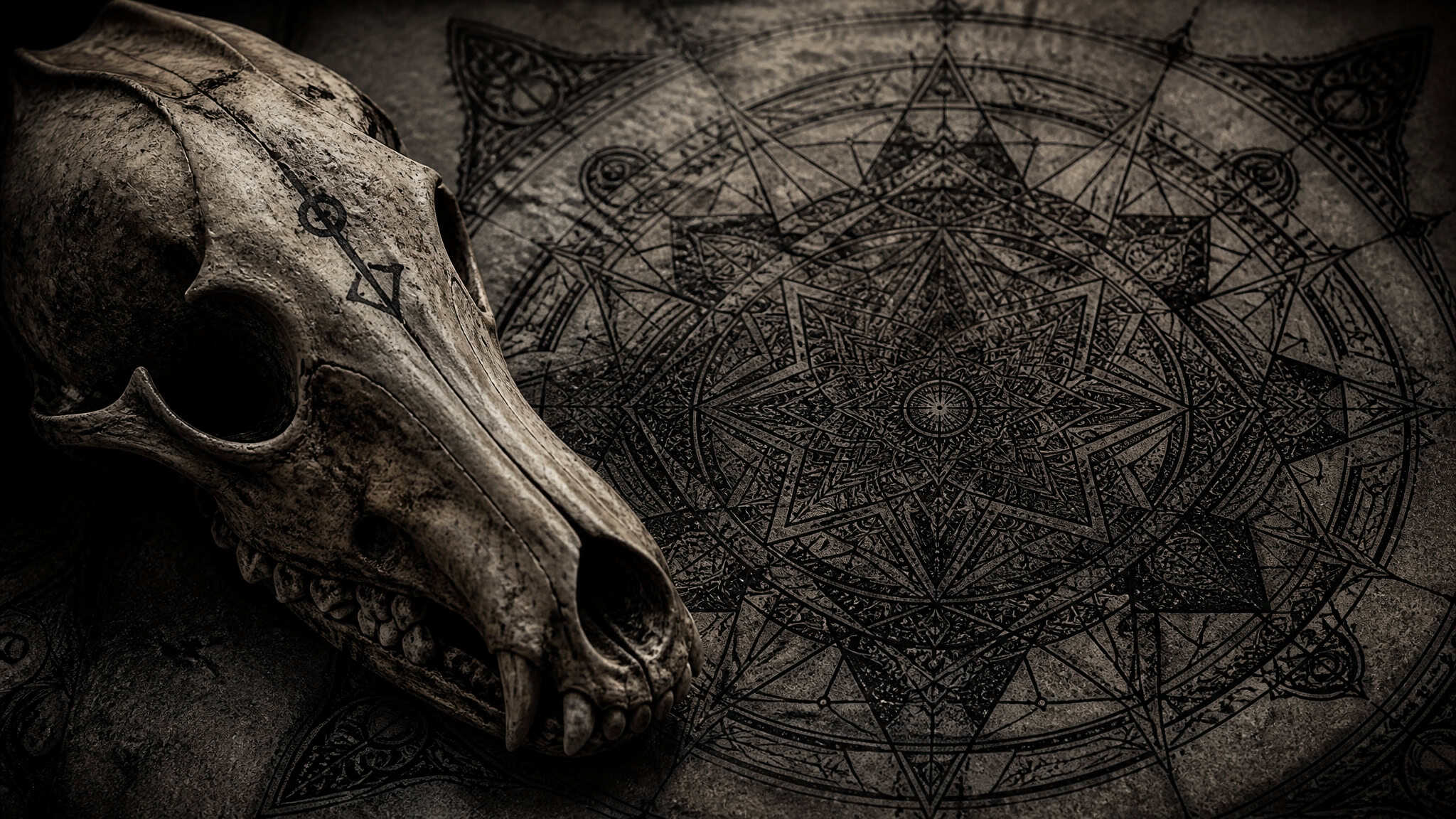
A wolf skull tattoo holds two truths at once: life continuing past death, and life reaching its end. In some mythologies, the wolf guides the dead onward, which is the backbone of the whole design. Don’t get this one sanitized. It suits guys who already like skull imagery, plain and simple. Want the opposite pull? The mandala wolf flips the same animal from mortality into inner growth and wisdom.
Mandala wolf tattoo: inner growth
A mandala maps the cycle of life, with the center representing the inner self. Add the wolf as spiritual guide and the combined meaning is inner growth and wisdom. Practical bonus: mandala wolves come in every color and size, and the style is fashionable right now, so it’s flexible if you’re still unsure on scale.
Geometric wolf tattoo meaning: minimalist freedom
A geometric wolf tattoo fits the first-timer or minimalist who wants small, modern ink with the meaning intact. Lines and angles, stripped-back look, tons of room for a unique take. It’s a newer trend, and it slots right into the current lean toward minimalist, fine-line, meaningful-symbol designs.
The meaning holds up too: freedom and energy, plus a dose of mystery and the balance of instinct and intellect, much of it rooted in strength and courage, the warrior spirit the wolf has always carried. Worth saying plainly: no design in this article is a guys-only thing. The wolf’s appeal crosses gender lines cleanly, and the geometric version probably crosses them fastest. If small and clean is your lane, the small wolf tattoo ideas and minimalist wolf designs guides have more.
Growling wolf tattoo meaning: rebellion and the inner wolf
A growling wolf tattoo, with the teeth bared, means the animal is ready: to attack or to defend the pack. Both readings are live, and you’re allowed to hold both.
As a tattoo, it’s about doing what’s right and not getting pushed around. A rebellion mark. Your inner wolf, out loud. This is the loudest independence signal in the entire lineup, which matters more than you’d think, because the design you pick sets the social volume. More on that in a bit.
Black wolf and blue-eyed wolf: color symbolism
Color changes the message more than most guys realize. These two designs prove it.
Black wolf tattoo: the messenger
In folklore, the black wolf is a messenger or a warning that change is coming. Old stories, not prophecy. As a tattoo, it marks a significant life change, a milestone, or a goal finally hit. Good fit for a guy closing a chapter and wanting it on record. The black wolf tattoo meaning guide unpacks the darker symbolism further.
Blue-eyed wolf tattoo: fiction on purpose
Here’s the surprise: real wolves never have blue eyes. Only yellows and ambers. So a blue-eyed wolf design is a deliberate claim to the ghost-wolf of movies and games, the mysterious, maybe-all-knowing figure that doesn’t exist in nature.
That’s exactly why it works. You’re inking fiction on purpose, and the unnaturalness is the appeal. No apologies needed.
Cultural wolf tattoo traditions: four very different wolves
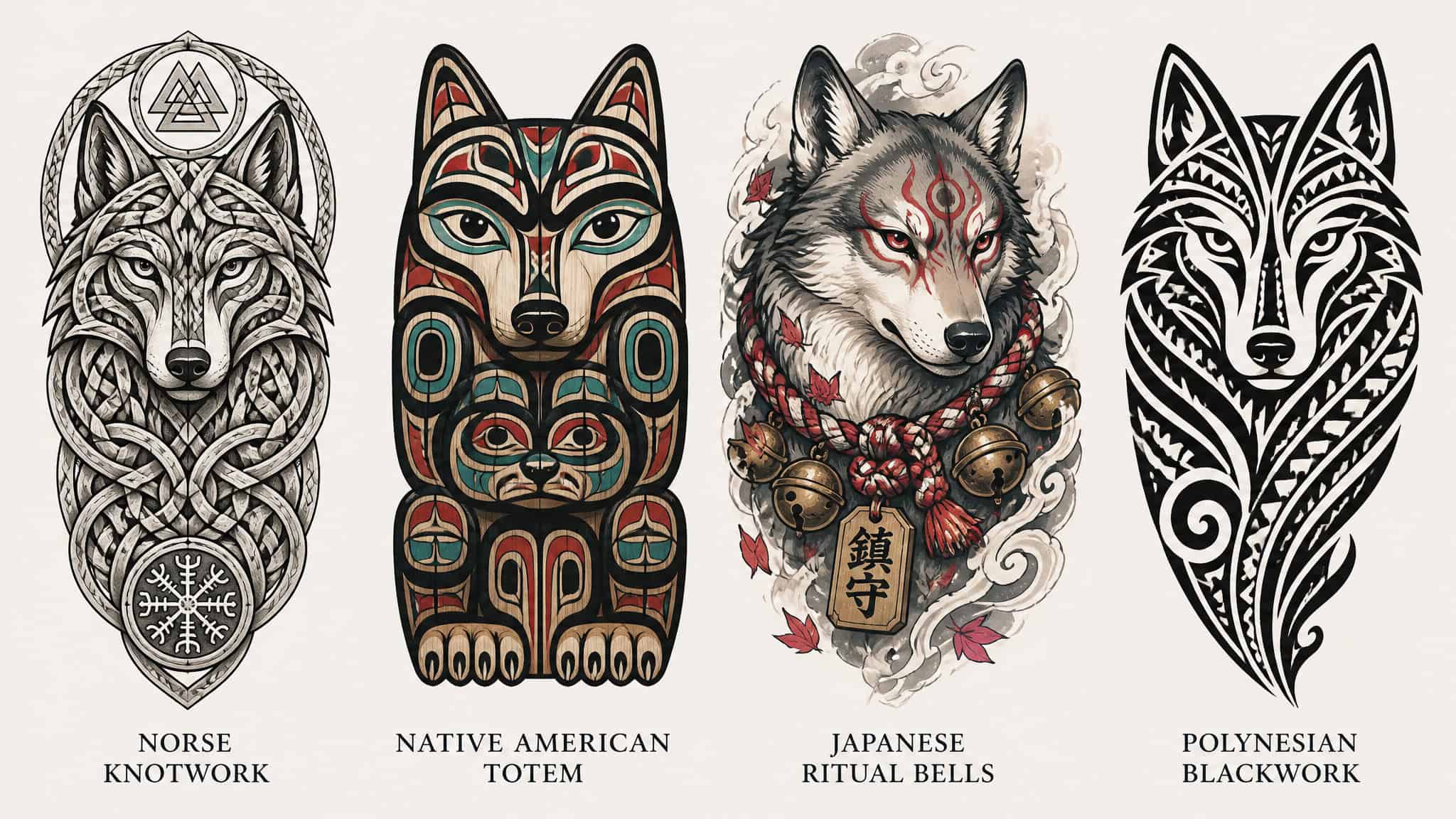
The same animal means four different things depending on whose tradition you’re borrowing. That’s the core comparison, and it’s worth making before you pick a cultural style.
Nordic wolf tattoos: strength and the otherworld
Wolves show up all over Norse and Celtic mythology, and some Celtic tribes even claimed descent from wolves. That’s pedigree. Among the Norse, the wolf symbolized strength, willpower, survival, and protection from evil strangers. The Celtic wolf leans different: a guide to the otherworld. Same animal, two jobs.
Native American wolf tattoos: totem and guide
Wolves hold a special place in many tribes’ traditions, standing for courage, strength, and protection of the soul. The totem and spiritual-guide role is the core of it: an animal that carries a person through life. In contemporary designs, dreamcatchers and headdresses are common pairings. State of respect here, no claimed expertise. This tradition is the deepest well the wolf draws from.
Japanese wolf tattoos: messengers with bells
Japanese folklore has wolves watching over travelers, and Japan’s wolves were smaller animals, closer to wild dogs. The wolves were messengers of the Kami, the Shinto gods. Here’s the detail that makes the design smarter than it looks: those bells you see in Japanese wolf tattoos aren’t decoration. They’re Shinto ritual bells, meant to draw the gods’ attention. The meaning lands as respect and a connection to something above you.
Polynesian wolf tattoos: the honest caveat
Let’s say the awkward thing plainly: the wolf isn’t traditionally Polynesian. The Polynesian wolf tattoo is a recent adaptation, and pretending otherwise doesn’t do anyone favors.
What the design says anyway: courage and fight, the warrior side of the guy wearing it. And the broader Polynesian tradition is worth respecting on its own terms: in Polynesian tattooing generally, the design tells who you are and where you’re headed. Your ink tells your story.
Is a wolf tattoo a red flag? What your design actually signals
No. Or more precisely: it depends entirely on which design you pick, not the animal. A growling wolf reads as aggressive to some observers. A pack, a mandala, or a paw print reads as family, spirit, or growth. Nobody looks at a small paw tattoo and thinks “problem.”
Think of it as a volume dial the design controls. Growling is the loudest, tribal next, then pack, then mandala at the quiet end. If you’re worried about signal, pick your spot on the dial deliberately. The stereotypes and stigmas article digs into this further.
Bottom line: The animal isn’t the signal — the design is. Match the volume to where you want it read.
Meaning vs. execution: which tattoo styles suit a wolf design
Here’s the distinction nobody makes: what the design means and how it’s drawn are two separate choices. There are roughly 16 design variants out there and 10 execution styles, and picking them in that order, meaning first, style second, prevents the classic mistake of loving a meaning in a style that ruins it.
The ten styles that suit a wolf: Traditional, Neo-traditional, Realism, Japanese, Tribal, Blackwork, Geometric, Watercolor, Dotwork, and Illustrative. Quick color tip while we’re here: color fits watercolor, neo-traditional, and illustrative work. Black-and-gray fits blackwork, dotwork, and realism.
One context beat: in men’s tattoo culture, the wolf sits alongside the lion (wisdom and courage), the snake (transformation), the skull (living without fear), and the dragon (luck and strength). It holds its own in that lineup without trying.
Where to put a wolf tattoo: placement matched to meaning
Placement comes down to the design’s size, style, and detail. The common first-tattoo spots are the forearm, upper arm, shoulder, calf, and wrist. That’s the standard answer, and it’s fine as far as it goes.
Here’s the move most guides skip: match visibility to meaning. A public statement, like a growling or tribal design, suits the forearm or calf, places people actually see. A private totem, like a paw or mandala, suits the shoulder or upper arm, where it’s yours and nobody else’s unless you show them. And detailed realism needs more canvas than a small geometric outline, so let the style vote on placement too.
How to choose the right wolf tattoo: test before you commit
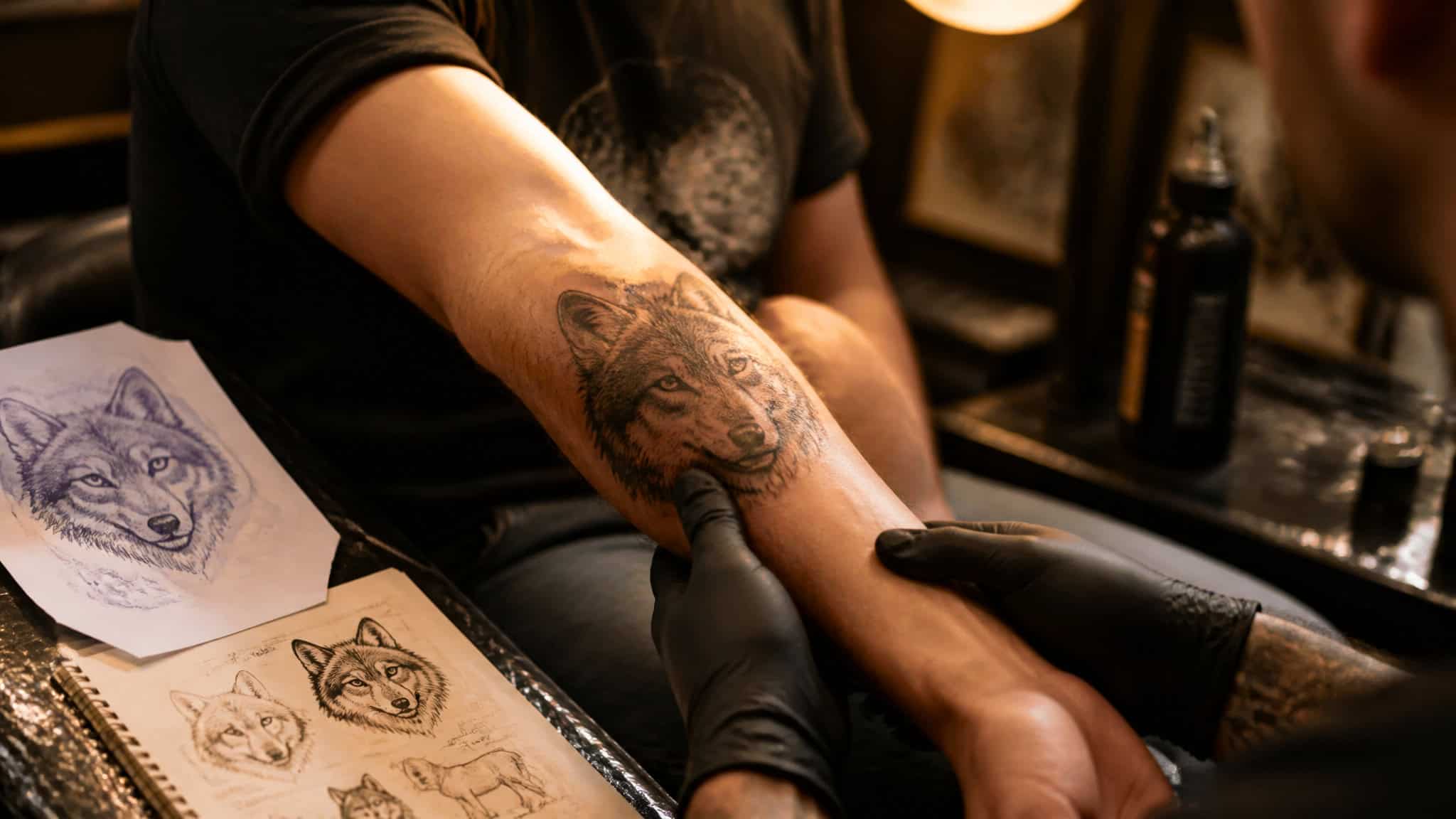
Choosing the right wolf tattoo comes down to running one decision in order: meaning first, then variant, then style, then placement. Do it in that sequence and you won’t end up with a design whose message got mangled somewhere along the way.
The decision order
Start with what you actually want it to say. Then find the variant that says it. Then pick an artist you trust, review portfolios, and communicate exactly what you want, especially for tribal and realism work, where the margin for “close enough” is zero. For a sense of scale: a serious shop’s design gallery might run 150-plus wolf designs, which is a good benchmark for what to expect when you walk in.
The temp-tattoo test
Wear a temporary version of your candidate design first. Cheap insurance on a permanent call, and it shows you how the design actually sits and renders on your skin before it’s forever.
Quick test: Wear the temp version for a week. If the meaning still holds in the style you picked, commit.
Here’s a pattern tattoo artists see constantly: plenty of first-timers arrive attached to a meaning without thinking about how the style changes the message. Sketching the same meaning in two different styles, or wearing the temp version for a week, resolves the mismatch before it becomes permanent. If you want placement ideas matched to meaning, the best placement guide covers it, and the guys-focused and women-focused guides go deeper on fit and style.
Ink with ancient roots
Quick detour, because it’s a good story. When you get a wolf tattoo, you’re joining one of humanity’s oldest symbolic traditions, and the archaeology proves it.
Ötzi the Iceman is 5,300 years old, and he was found in the Alps in 1991 carrying 61 tattoos of lines and crosses. How they were applied stayed a mystery until Daniel Riday, a tattooer and researcher, tattooed himself eight identical stacked triangles using eight different techniques: 12 hours total, 3 of them on the Inuit sewing method alone. The result: sliced marks taper into wisps, needle-poked marks end blunt, and Ötzi’s match the needle marks. The man settled it by inking his own thigh for half a day. Respect.
Aaron Deter-Wolf, an archaeologist with the Tennessee Division of Archaeology, spent close to a decade making replica tattoo needles to figure out which ancient tools actually worked. Feather shafts: too soft. Deer bone: works, because its porous structure holds ink. And that method pays off in the field, since tattooing wears tool tips down and leaves charcoal behind, which is how researchers identified a 2,000-year-old tattoo needle.
The mummies keep talking too. Infrared cameras revealed hidden tattoos on Peruvian mummies up to 2,400 years old, with the imagery staying consistent across almost two millennia. And one Egyptian mummified woman carries more than 30 tattoos, hieroglyphs, instruments, snake deities, with ink over her voice box suggesting a speaking or singing role.
Here’s the kicker: more mummy tattoo evidence has surfaced in the past five years than in the previous 150 combined, after the field was long written off as barbaric. So no, wolves aren’t a tattoo tradition. Tattoos are the tradition, and the wolf just showed up to it early.
The last word on which wolf is yours
So, the recap. Family and loyalty. Resilience and survival. Leadership and independence.
Spiritual guide. Fighting spirit. Those are the common meanings, and the designs above sort themselves into them fairly cleanly.
But the final say belongs to the guy wearing it. That’s not a shrug; it’s the point. The ink is permanent, so it should actually mean something to you, not to a listicle.
Here’s the test I’d use: if you can’t state your wolf’s meaning in one sentence, you’re not done deciding. When you can, you’ll know which wolf is yours.
Frequently Asked Questions
What do small minimalist wolf tattoos mean for women and first-timers?
Small designs like a paw, eye, or geometric wolf carry the full symbolic weight at small scale — movement and progress, locked-on focus, or freedom and mystery. No wolf design is a guys-only thing; the appeal crosses gender lines cleanly, and the geometric version crosses them fastest. For first-timers, the stripped-back geometric or fine-line style keeps the meaning intact while staying modern and easy to place.