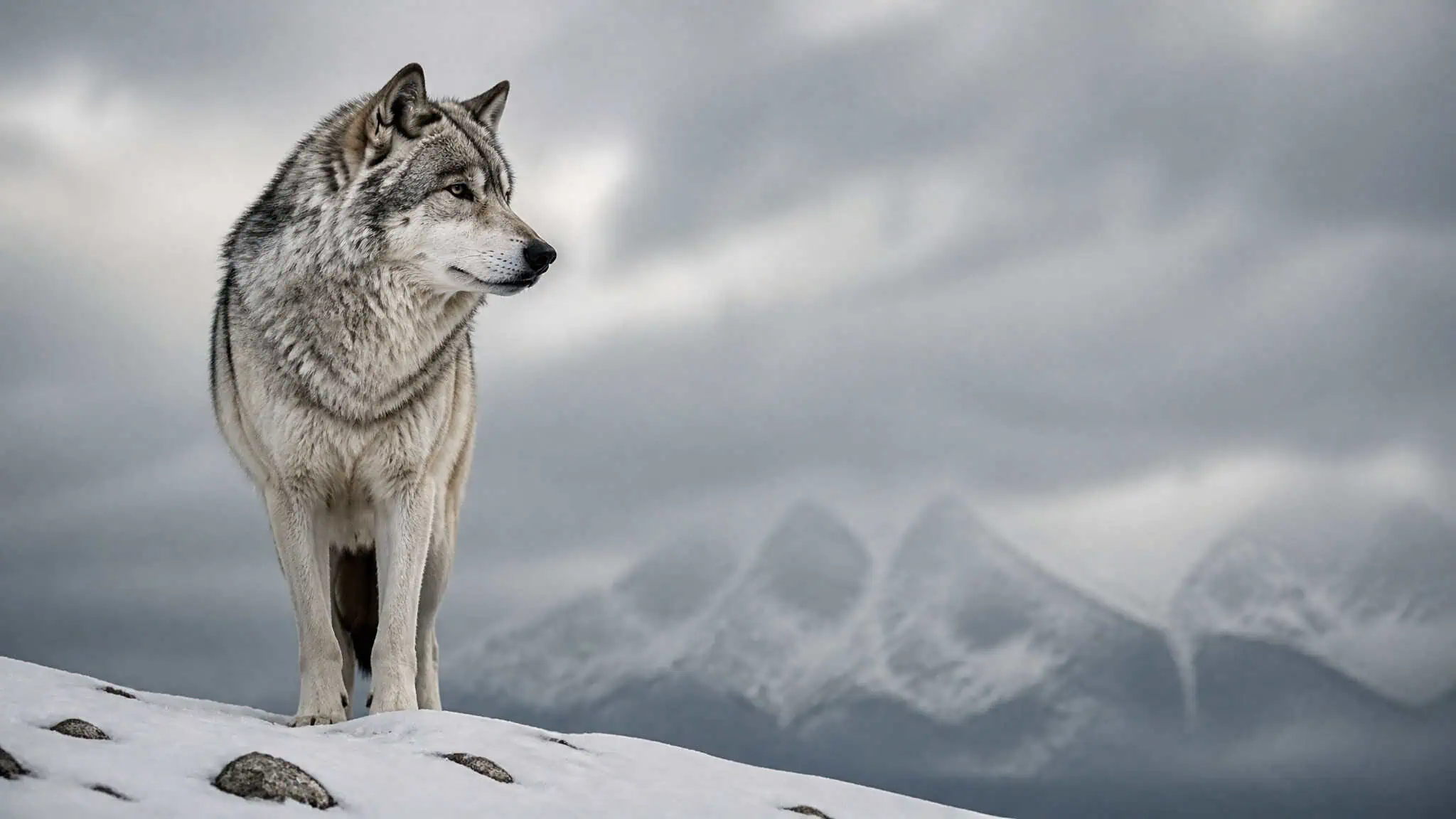
The wolf you see on half the lone wolf tattoos out there doesn’t exist in nature. Real wolves are pack animals, almost never alone. The solitary wolf is an anomaly: a young one striking out, an old one that lost its group. So when you get that image inked, you’re not documenting how you live. You’re marking a choice, a chapter, a season of walking by yourself when walking with others was the default. That’s the actual lone wolf tattoo meaning, and it’s more interesting than the standard “independence” line.
Does the symbol fit your story? Will the design actually say what you mean, or will it quietly say something else? That second question matters more than most articles admit, because a howling wolf and a wolf with an averted gaze carry opposite messages even though they look similar on a Pinterest board. Here’s the full picture: what the symbol means, where the pack contrast comes in, which design elements sharpen the solitude story and which undermine it, and how to pick something you won’t regret in five years.
Key Takeaways
A lone wolf tattoo symbolizes independence and surviving hardship alone, made sharper by the fact that real wolves are almost never alone, so the design marks a chosen deviation, not a natural state.
Design details change everything: a howling wolf actually calls the pack (freedom plus connection), a black wolf leans toward facing fears and major life change, a white arctic wolf leans toward good luck and overcoming obstacles, and there’s no fixed traditional meaning for blue eyes.
Small lone wolf tattoos age best as simple, black-and-grey, face-focused pieces on the wrist or ankle; per senior artist Jesse James Doering, smaller pieces read as quiet strength, not a watered-down symbol.
Table of Contents
What a lone wolf tattoo means
A lone wolf tattoo symbolizes independence, self-reliance, and the strength to overcome hardship alone, it’s a symbol of resilience for anyone who survived a tough time by their own grit. It carries extra weight precisely because wolves are pack animals that are rarely alone in the wild, making the design a chosen identity rather than a natural state. That’s the consensus core across sources: independence first, then individuality, the courage to stand apart, and surviving hard stuff by yourself. The lone wolf knows it can face adversity alone, even if it relies on others for support. One source’s five-meaning list from a SOLID TEE VEE video puts independence at the top too, ahead of leadership, impermanency, protection, and loyalty. Treat that as a useful cross-check, not gospel.
Who does it fit? Guys who buck the status quo and like their own company, sure. But a lot of these pieces come from a rough season someone made it through alone: a breakup, a move, leaving a job, grief. If that’s you, the tattoo reads as earned, and you don’t need to explain it to anyone.
Two nuances worth having before you commit. First, you don’t have to be a hermit. Plenty of people get this tattoo to represent wanting more independence than they currently have, which is a perfectly honest reason. Second, the meaning is capability, not isolation.
The lone wolf knows it can handle things alone, even though wolves normally lean on the pack. It’s about walking your own path, not about never calling anyone back.
The lone wolf and the pack: an honest tension
A lone wolf piece says independence; a pack piece says family and loyalty. That’s the decisive difference, and the two designs define each other, which is why it’s worth deciding before you’re in the chair. For more on the broader symbol set, our guide to wolf tattoos with meaning covers the whole pack.
Lone wolf vs. pack
Wolves are serious solo hunters that nonetheless depend on tight social groups. That built-in duality, fierce solitary predator and loyal pack member in the same animal, is exactly why wolf ink can mean opposite things. It’s also why the lone wolf only means something because wolves are pack animals. Contrast is the punch.
Game of Thrones put the counterargument best: “When the snow falls and the white winds blow, the lone wolf dies, but the pack survives.” That quote comes from the show, and it’s a real one, worth sitting with before you commit. Here’s the honest resolution, though: most lone wolf tattoos commemorate a solo chapter, not a permanent rejection of other humans. The tattoo marks the season you walked alone. It doesn’t mean you’re still walking.
If you’re actually designing around family, a pack tattoo is its own thing: family, community, strength from sticking together, sometimes personalized with kids’ names. That’s a different message for a different reason.
The alpha myth
The popular story says the alpha fought his way to dominance, beating down rivals to run the pack. Great story. Unfortunately, the real research says pack leaders are typically just the parents of the younger wolves. The whole dominance mythology came from observations of captive wolves thrown together unnaturally, not wild family units.
The busted science doesn’t kill the symbol, to be fair. Alpha framing still works as a pick for family-oriented, bold guys who like the protective angle. But if your “lone wolf” tattoo is really about dominance over other men, you’ve picked the wrong animal. The actual lone wolf isn’t the top of anything. He’s the one figuring it out on his own.
Design elements that reinforce or undermine the solitary narrative
The pairing question is where most guys get it wrong, so let’s go through the common elements and what each does to the story your tattoo tells.
The howling contradiction
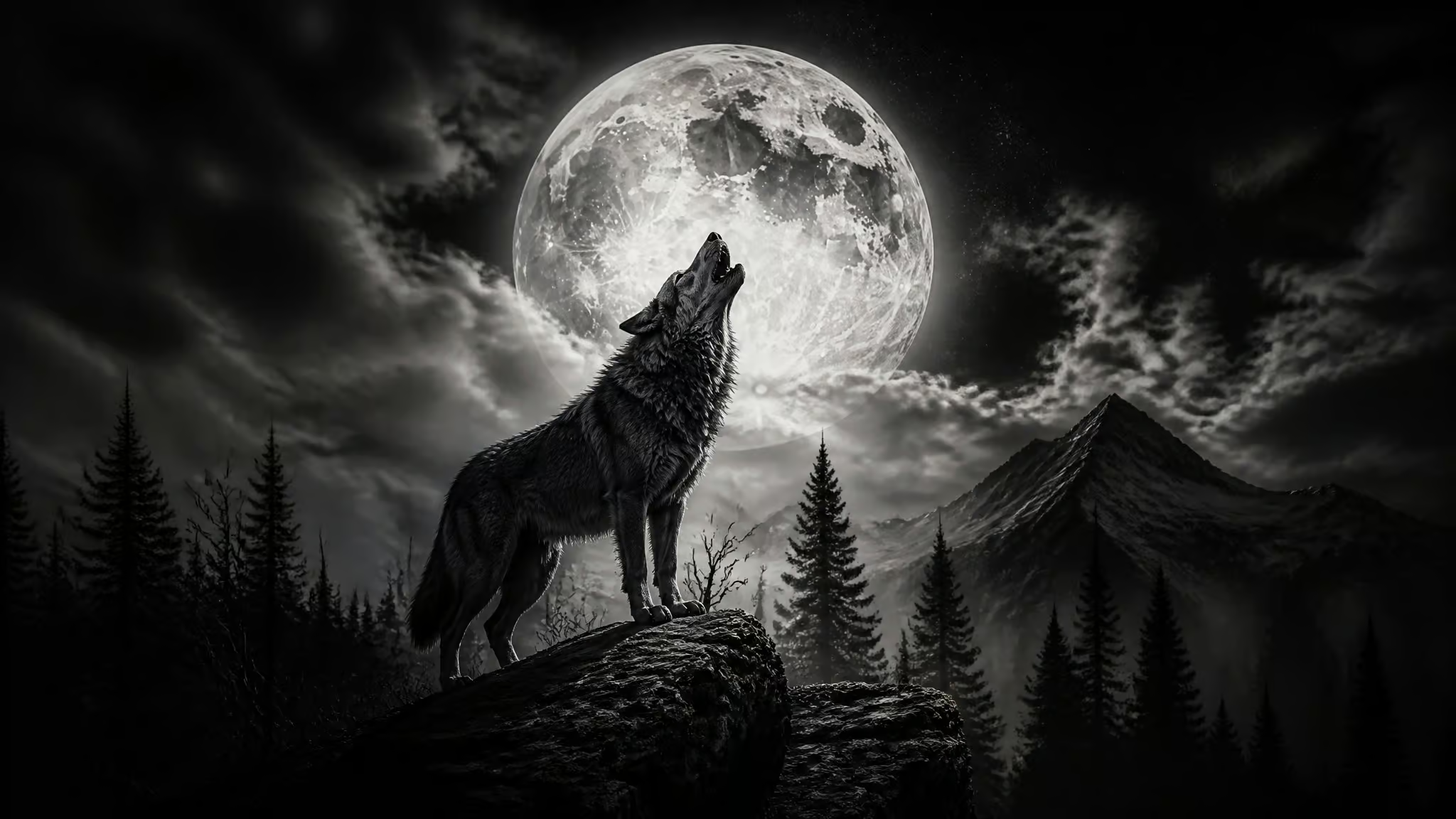
A howling lone wolf reads as freedom, wildness, and a call back to your roots or true nature, especially against a full moon. It’s the iconic image for a reason. But wolves howl to communicate with their pack, so the pose quietly contradicts the solitude story. Your lone wolf is literally calling for others.
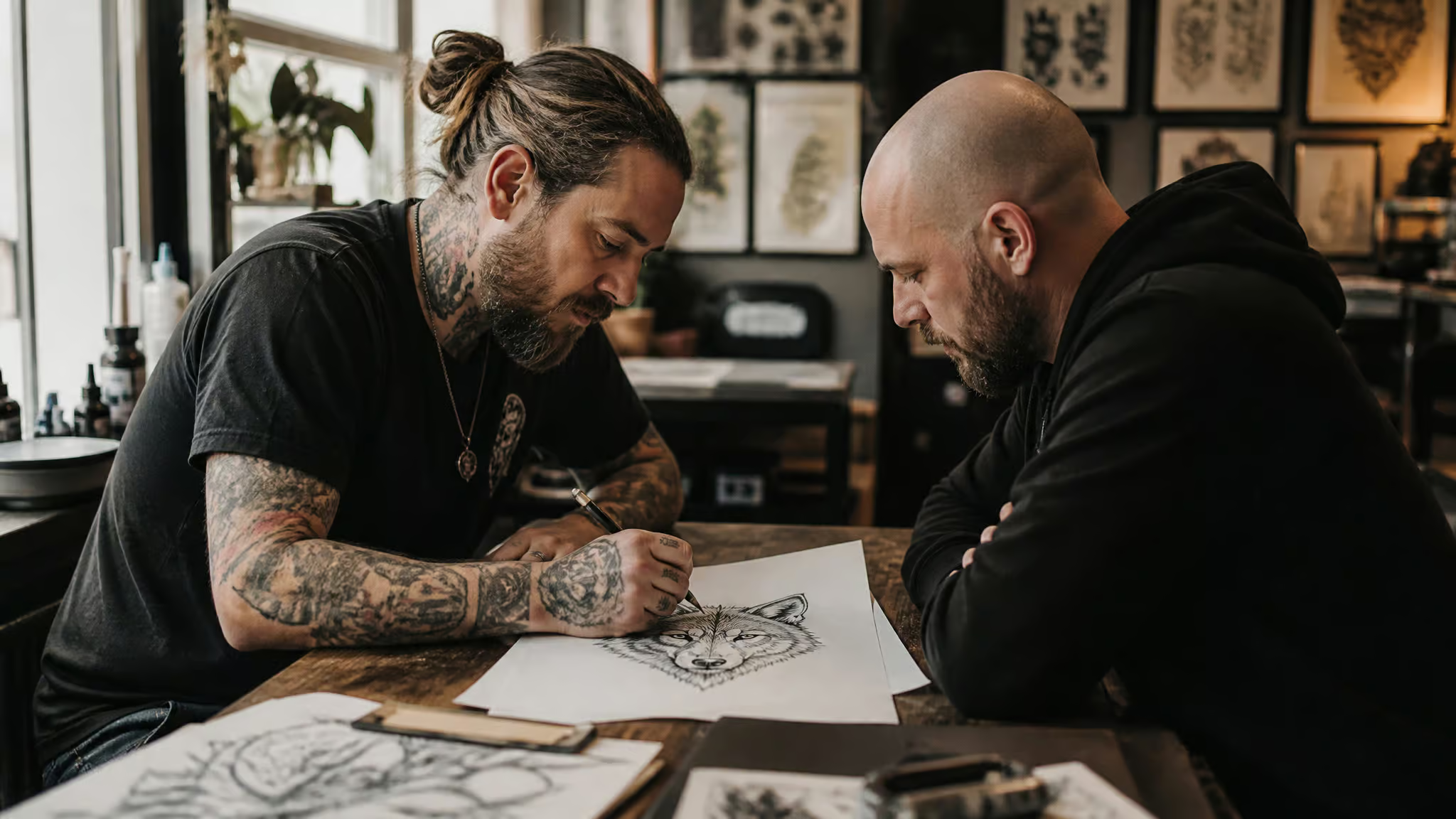
This comes up enough that artists describe it as a common consultation pattern: a guy brings in a howling-wolf reference, the artist mentions the howling thing, and the design changes. Averted gaze instead of open muzzle. Closed, settled posture. A figure turned away from the viewer, done announcing itself.
If the solo narrative is the point, those choices hold it. If you actually like the dual meaning, freedom plus connection, the howl is doing honest work. Just know which one you’re wearing.
Moon, mountains, and forest
Lone wolf motifs often get paired with moons or mountains to emphasize personal growth. The full moon adds mystery, night, and the unknown, the sense of a call to your true nature. Mountains and forest backdrops point to peaceful solitude, resilience, self-healing, and connection to nature. A wolf-in-the-woods scene with trees, moon, and mountains is the full solitude-and-resilience read in one image.
One caution on a related scenic option: a running wolf is the wild-and-free pick, but add a pack to that scene and you’ve flipped the message to family ties. Same frame, opposite meaning.
The wolf paw print
If a full wolf is more design than you want, a paw print is the minimalist version of the same idea. It stands for movement, progress, and perseverance through hard stuff, and it can stand for the guy who walks his own path. In Native American tradition, the paw connects to moving forward under the totem’s watchful gaze, worth acknowledging briefly and respectfully. A single track of prints is about as deliberate a solitude statement as you can make in a small space.
Fierce variants, quickly
A growling wolf is its own category. Fearlessness, readiness to act or defend, rebellion, sometimes with horror-inspired red eyes. The growl can also read as a warning or a marker of a big life change. A wolf skull leans heavier in a different direction: overcoming grief, transformation, accepting what life throws at you. Werewolf and wolf-and-moon designs are duality territory, the human side versus the wild side, instinct versus restraint, an inner battle, rooted in the European folklore of man-to-wolf transformation under a full moon.
Claw-scratch designs are the cleverest of the bunch. Some go red-ink for fighting spirit; others scratch away to reveal wolf eyes underneath. More on these angles in our piece on wolf tattoo meaning strength and courage.
Color as the fastest meaning lever
Color moves the meaning fastest. Black shifts the same solitary wolf toward facing fears and major life change; white flips it to good luck and adventure. Nothing else changes the message that quickly.
The black lone wolf tattoo meaning sits at the deeper end of the pool: shadow connection, significant life change, the stuff you went through to get here. The white wolf tattoo meaning runs positive: a good-luck omen, overcoming obstacles, adventure. Arctic wolves are famously adaptive in brutal environments, and that’s where the meaning comes from, a whole spectrum explored in wolf tattoos with meaning. Surviving the worst conditions on the planet tends to read as luck worth having.
Blue-eyed wolves are the honest caveat. There’s no fixed canonical meaning anywhere for the blue eyed wolf, even though the design looks striking. The gaze reads as piercing focus locked on a goal, but beyond that, the meaning is yours, not tradition’s. Some artists render lifelike glistening eyes, some go ghostly blue for the effect.
If you love the look, fine. Just don’t expect the color to carry a story by itself.
Cultural threads: the wolf as guide for the solo journey
Across traditions, the wolf splits into two roles: a guide for the individual’s solo path, or a guardian of the group. Knowing which one a tradition emphasizes tells you whether it fits your design.
Native American traditions, in many tribes’ views, treat the wolf as a sacred spiritual guide, totem, guardian, and protector, with traits like loyalty, intelligence, leadership, and courage. That’s the walking-your-own-path-under-a-watchful-gaze frame, and it deserves respect without anyone pretending to hand you a personal totem.
Norse and Celtic threads run toward protection and ancestry. Nordic wolf ink is believed to ward off evil, note the “believed,” since we’re talking symbolism, not effects. Some Celtic tribes claimed descent from wolves, and Celtic knots layered into a wolf design stand for protection, loyalty, strength, and family bonds. A wolf-and-raven design nods to Odin’s ravens Hugin and Munin, the gods’ messengers, and reads either as wisdom and intelligence or as darkness and destruction. Both readings are legitimate.
Japanese folklore gives us the ōkami, and the details are genuinely cool: the native Japanese wolves were small, wild-dog-like animals, now extinct, considered gods or messengers of the Kami. They guarded travelers and children and were often shown with Shinto ritual bells to catch the gods’ attention. European folklore runs darker: survival, transformation, chaos, raw natural force. Per Encyclopaedia Britannica‘s cultural archives, wolves stand for social harmony, leadership, and instinctual power in storytelling, which tracks with how often they play both hero and villain.
And one honest caveat: wolves aren’t native to Polynesian iconography, so Polynesian-style wolf ink is a modern adaptation expressing courage, combativeness, and the inner warrior. It can indicate a life path. Just don’t confuse it with an ancient motif.
Choosing style, size, and placement
Three decisions stack here: style, size, and where it goes on your body. They interact, so let’s take them in order. For placement and style pairings in more depth, our guide to wolf tattoos for guys goes further.
The style spectrum
Realism sits at the raw-authenticity end of the style spectrum: lifelike fur, emotive eyes, the version that makes strangers lean in. Geometric wolf work uses lines and poly-shapes to balance wildness with structure, which reads as ordered independence, and it mixes well with micro-realism or watercolor if you want layers. Tribal wolf designs are the ancestral-solitude pick: bold black semi-abstract lines, curves, and flicks, usually snarling or howling, carrying meanings of strength, ancestral connection, family bonds, and protective energy.
Modern tribal work is a genuine upgrade from the dodgy 90s era. No disrespect to anyone still wearing theirs. Mandala and dot-work wolf pieces read as inner growth, the wolf as spiritual guide at the center of the design.
Small lone wolf tattoos
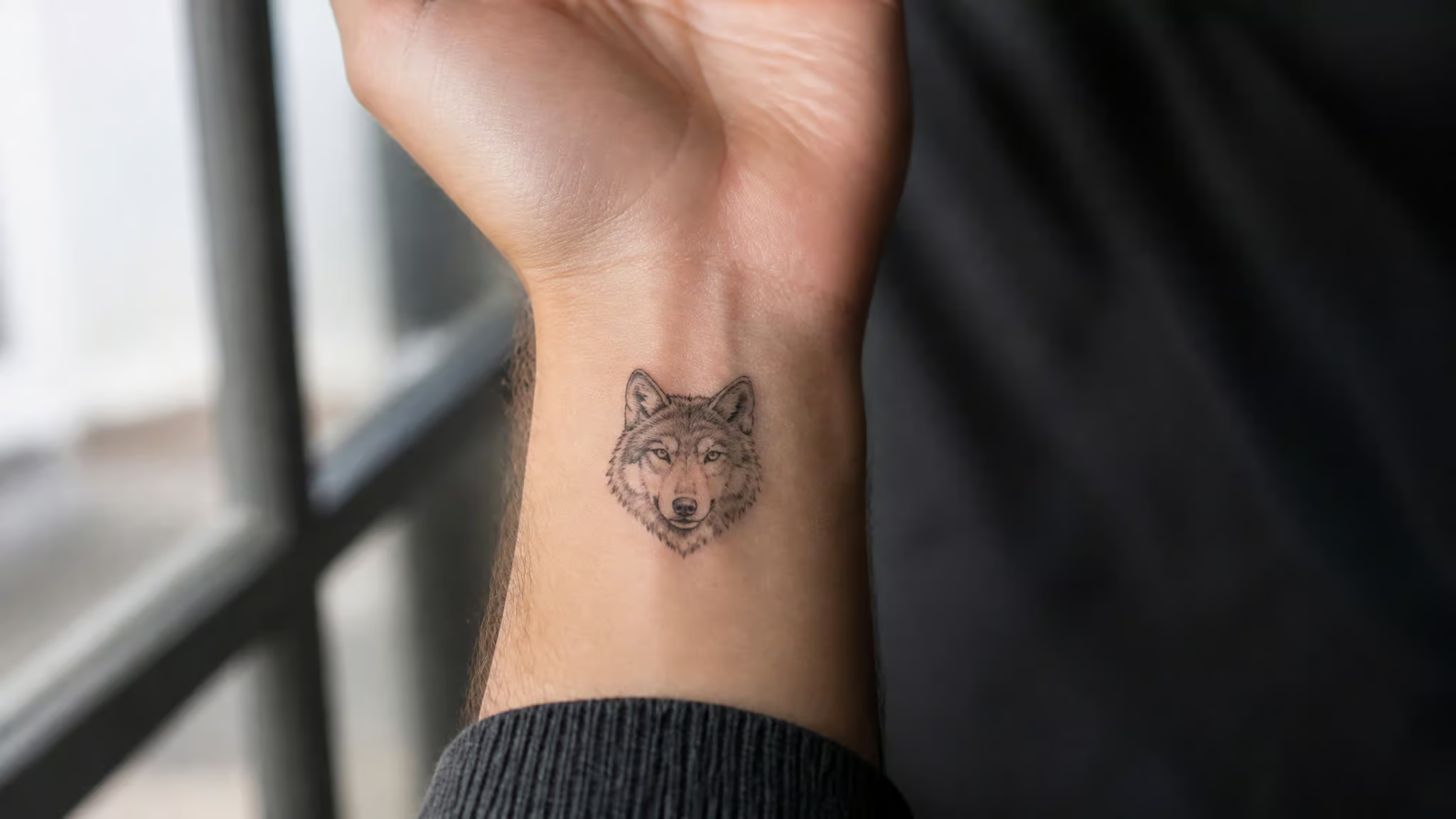
Here’s the outcome first: small lone wolf tattoos work best as simple, black-and-grey, face-focused pieces, because fine detail and color can bleed over time and turn muddy. That’s the trade for going tiny. Wrist and ankle suit minimalist silhouettes best.
Field note: Tiny tattoos survive on simplicity — strong silhouette, limited detail, black and grey. Fine lines and color are the first things to blur on a wrist or ankle.
Senior artist Jesse James Doering’s take on the small version: pieces along the arm or leg can symbolize quiet strength. In his view, a detailed wolf head suits a broad surface, where depth and movement come through, while smaller pieces along the arm or leg can symbolize quiet strength. The common pattern goes like this: a guy picks a tiny wrist piece because it’s easy to cover for work, then worries the meaning got lost in the shrink. It didn’t.
Quiet strength is the meaning. A small paw print on the wrist says the same thing as a full wolf on the back, just to fewer people.
Placement and the gender question
On gender, let’s be plain: the core meaning is gender-neutral. Independence, self-reliance, surviving hard stuff alone. Women and guys differ in placement and style conventions, not symbolism, and there’s no stereotype here about who should wear what.
For guys specifically after a masculine read, the supported options are mountain-landscape scenes, black-and-grey realism, and tribal accents. Those work because they pair the solitary figure with scale and texture, which is a real design consideration, not a rule.
Placement, then. Forearm reads as a public declaration; wrist reads as a private reminder. Same design, different audience. Detailed wolf heads need broad surfaces to capture depth and movement, so save those for the upper arm, thigh, chest, or back, where the big landscape scenes also belong. The four most common placements overall are shoulder, back, forearm, and neck.
The red-flag question: is a lone wolf tattoo negative?
No, a lone wolf tattoo is not a red flag when the design’s tone signals self-reliance rather than aggression. That’s the whole answer in one sentence, and the design tone is genuinely the lever.
The positive consensus is strong: independence, individuality, surviving hardship alone, the courage to stand apart. The wedge is that some people attach an edgy or antisocial read to solitude symbolism, and fair enough, the aesthetic can tip that way. An aggressive snarl with bared teeth reads edgier. A warm landscape with an averted, peaceful gaze claims healthy boundaries: I can handle things alone, which is not the same as I don’t need anyone. If you’re worried about the read, that’s the language to claim, because it’s what the symbol actually says.
The “lone wolf dies, pack survives” counterpoint deserves the honest treatment here too. It’s a real argument, but it argues against permanent isolation, not against a tattoo commemorating a solo chapter. And some marketing out there pushes lone wolves as “stronger and more dangerous” ink for “virile, strong and rebellious men.” Come on.
That’s copywriting, not meaning. What sources actually agree on is the quieter stuff: independence, individuality, resilience on your own terms. That’s the symbol worth wearing.
Choosing yours: name the emotion first
What you tell your artist is the emotion you want the piece to carry, not the image you found on Pinterest. Doering puts it exactly: For Doering, the decision goes beyond picking a striking animal; the point is understanding the emotion you want the piece to carry.
The sequence is simple. Name the feeling: strength, independence, transformation, family loyalty. Match the pose, color, and landscape to that feeling, using the eyes, posture, and surroundings as the dials, because those details change the whole message. Then find an artist who actually specializes in realism, geometric, or tribal, whichever style you picked.
The common consultation pattern artists describe: clients start with the look, the real story surfaces in conversation, and the design changes once the solitude is named. One of my favorite examples of story-driven design comes from a commenter on a wolf tattoo video: a wolf cub looking into water with a fully grown wolf in the reflection. Transformation in a single image. No words needed.
Two practical notes before the needle. A temporary tattoo is cheap insurance: live with the design on your skin for a week and see if it still says what you meant. It won’t remove all regret, nothing does, but it catches the obvious misses. And once it’s done, the care is short: clean with mild soap, thin layer of whatever moisturizer your artist recommends, and once it’s fully healed, high-SPF sunscreen so the black-and-grey contrast doesn’t fade. That last step is the one most guys skip, and it’s the one protecting the piece you paid for.
The lone wolf works as a symbol precisely because it isn’t the natural state. Real wolves belong to the pack; your tattoo says you spent a stretch of road without one, and made it. Name that emotion first, let the design carry it, and the meaning you walk out with is the one you chose on day one.
Frequently Asked Questions
Is a wolf tattoo good or bad?
A wolf tattoo is generally positive — the consensus meanings are independence, resilience, courage, and standing apart. Whether it reads good or edgy depends on the design’s tone: an aggressive snarl with bared teeth tips darker, while a peaceful gaze and warm landscape claim healthy self-reliance. The design tone is the lever, not the animal itself.
What does a lone wolf symbolize?
A lone wolf symbolizes independence, individuality, and the courage to stand apart, sharpened by the fact that real wolves are pack animals that are almost never alone. The symbol marks a chosen deviation, not a natural state — a season of walking by yourself when walking with others was the default. It’s about capability, not isolation.
Is lone wolf positive or negative?
The lone wolf is predominantly positive: independence, individuality, surviving hardship alone, and resilience on your own terms. The negative wedge — edgy or antisocial vibes — comes from specific design choices like snarling poses, not from the symbol itself. Most lone wolf tattoos commemorate a solo chapter someone made it through, which reads as earned.
What does a black lone wolf tattoo mean compared to a white one?
Black shifts the solitary wolf toward facing fears and major life change — shadow work, the stuff you went through to get here. White flips it to positive territory: a good-luck omen, overcoming obstacles, and adventure, drawn from the arctic wolf’s survival in brutal conditions. Color moves the meaning faster than any other design element.
What does a small lone wolf tattoo mean and where should it go?
A small lone wolf tattoo means quiet strength — the same message as a full back piece, just told to fewer people. It ages best as a simple, black-and-grey, face-focused design, since fine lines and color blur over time on small surfaces. The wrist and ankle suit minimalist silhouettes, and the wrist doubles as easy coverage for work.

