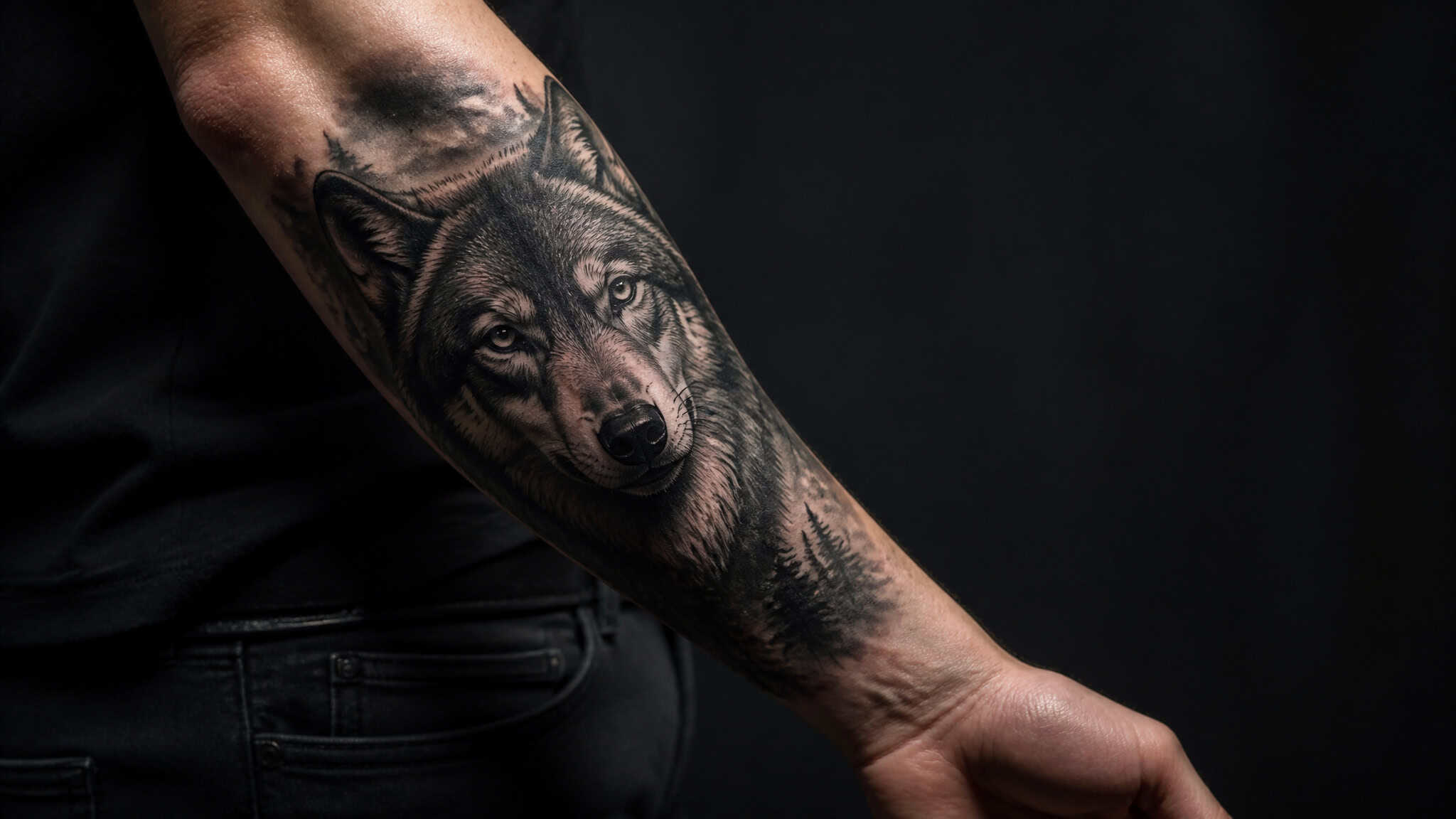
A black wolf tattoo is a messenger and a warning in one, an announcement of major change. A goal hit. A milestone survived. Upheaval that came through and got answered. Wolf tattoos in general are about loyalty, strength, and wildness; the black coat adds a layer most wolf-ink articles skip, and it’s the layer that probably brought you here.
Because here’s the actual question underneath it: is this thing a warning or a guardian? The honest answer is that the wolf doesn’t decide. You do, through four dials: color, pose, scale, and style. Wolves are popular enough that you won’t be the first guy in the shop with one, and that’s fine.
What separates a good black wolf piece from a generic one is knowing exactly what you’re saying with it. That’s what this piece is for.
Key Takeaways
Beyond the base wolf meanings, loyalty, strength, independence, guidance, and transformation, a black wolf tattoo reads as a messenger, a warning of upheaval, or a marker of a significant life change or milestone.
No tradition. Norse, Japanese, or Native American, has a “black wolf” category. The black coat is a modern artistic choice, and the wearer authors it.
What the tattoo signals to strangers is decided by execution: the snarl, not the species or the color, makes a piece read aggressive, and eyes, posture, and surrounding elements change the whole message.
Table of Contents
What a black wolf tattoo means
A black wolf tattoo is a wolf design where the color itself carries meaning. The base wolf symbolism is mystery, deep transformation, inner strength, and fierce independence. On top of that sits the specific black-wolf reading: the animal is seen as a messenger, a warning that change or upheaval is coming, or a marker of a significant life change, a goal achieved, or a milestone reached. It’s ink for something finished, not something you’re hoping for.
That’s the short version. Now the layers, because they matter when you’re picking a design.
The base wolf layer. Every wolf tattoo starts from the animal’s traits, the same way any animal tattoo works:
| Theme | What it says |
|---|---|
| Loyalty & family | Ride-or-die for your people. Pack unity, lifelong devotion, protective instincts. |
| Strength & courage | Getting through bad stretches, surviving long odds. Strength as strategy, not just toughness. |
| Independence | Self-reliance. Lone wolf designs habitually get paired with moons or mountains. |
| Spiritual guidance | Intuition, instinct, protection from harm, a reading rooted in Native American folklore and Nordic mythology. |
| Transformation | Change, raw instinct, the duality of human nature. Werewolf, fantasy, and split-face geometric styles carry this. |
The black layer. This is our read, and it’s the part we’d stand behind: black is the color of the unknown. Added to a wolf, it reads as mystery, the shadow self, confronting your own darkness, protection against adversity. In practice that means the black wolf is a commemorating-the-dark-period tattoo.
It marks something you came through. That’s a genuinely good reason to get inked, and it beats picking a meaning off a list.
If you want the full wolf-symbolism base layer with more styles and variants, we’ve got a separate deep guide to wolf tattoos with meaning.
Wolf symbolism across cultures, and where “black wolf” comes from
Across cultures, the wolf consistently reads as a guide, guardian, survivor, and symbol of transformation. One standout specific: in Norse folk belief, a wolf tattoo is thought to protect you from evil strangers. That’s reported belief, not fact, but it’s a decent hook for a skeptical guy. What no tradition does is codify a “black wolf.”
The black coat is a modern artistic layer, and you’re the one authoring it. Here’s the cultural groundwork.
Native American
Many Native American traditions treat the wolf as a sacred spiritual guide, guardian, protector, and totem animal. The traits that get emphasized: loyalty, intelligence, leadership. Native-style wolf tattoos carry that weight for wearers, reading as courage, strength, and protection of the soul. That’s their framing, credited as such.
Japanese: Ōkami
Ōkami is the Japanese wolf, and in Japanese folklore these animals guard travelers and the wilderness, combining courage with watchful protection. They’re also messengers of the Kami spirits. Two details worth knowing: Japanese wolves were smaller than European ones, more like wild dogs, and artists often depict them wearing the bells used in Shinto rituals to catch the gods’ attention. A real visual detail you can actually use in a design. In this tradition the wolf stands for respect and heavenly powers.
Norse
The Norse wolf is strength, willpower, survival. No decoration needed. That belief about protection from evil strangers comes out of Nordic folk tradition, and it makes the wolf a rare tattoo that’s literally thought to have your back.
Celtic
Celtic wolf meaning runs to protection, guidance to the otherworld, and strong family bonds, which is notable given how chaotic the myths around the animal get. Bonus for anyone with the heritage: some Celtic tribes claimed descent from wolves. That’s a genuinely cool lineage claim to build a tattoo on.
European legends
European legends cast the wolf as survival, transformation, and raw natural force. Per Britannica’s cultural-history archives, wolves in storytelling also carry social harmony, leadership, and instinctual power. Old stories, same core ideas.
Polynesian
Straight caveat first: the wolf isn’t a traditional Polynesian animal. But the symbol has been widely adapted into the style in recent years, and a Polynesian-style wolf reads as courage, combativeness, and the inner warrior. No gatekeeping either way, just the honest map.
The takeaway from all of it: you’re not inheriting a black-wolf doctrine from anyone’s ancestors. You’re choosing it. Which is exactly why the design choices below matter so much.
The darker readings: duality, werewolf, and shadow made visible
Wolves are formidable apex predators that survive on tight social structures, dangerous alone, better together. That contradiction is the honest version of the symbol, and black coloration pushes it toward the shadow side. A guy who’s independent but still shows up for his people gets the wolf. The color just turns the volume toward the unknown.
Werewolf ink makes that duality visible. Human versus wild, conscious restraint versus primal instinct, the tug-of-war every guy recognizes, inked. Werewolf designs also carry personal transformation, owning a hidden identity, and inner strength during major life shifts, and the archetype reads differently across wearers, as in how women wear wolf tattoos, where grace and fierce femininity reshape the symbolism. The fantasy elements do real compositional work: a blood moon glowing behind the transformation, thick mist crawling around the hindquarters, dramatizing the civilization-versus-nature split.
And here’s the contrarian beat, which is the part we like most about this design: the darkest reading gets chosen by people marking upheaval they survived. The warning is worn as a trophy, not a threat. Protective, not ominous. The ink is a shift you can feel, not a curse.
Pose and variant catalogue: the same animal, different sentences
Meaning in a wolf tattoo is compositional: even in small wolf tattoo ideas, the elements you pick decide whether the same animal reads as progress, guardianship, mortality, or defiance. Same wolf, different sentence. The variants:
- Lone wolf. Independence, self-reliance, introspection. The quiet version, not the movie version. Designs usually pair with mountains or a full moon, which is convention, not rule.
Lore says lone wolves are stronger and more dangerous than pack wolves, and the design fits guys who’ve been through a rough patch. It also carries courage, virility, and a rebellious streak, all reported without promising a personality transplant.
- Howling wolf. Freedom of spirit, strength, wild connection. Add the moon and you get nocturnal energy and a call back to your true nature or roots. Simple, and that’s fine.
- Wolf pack. Family, loyalty, teamwork, usually a tribute piece for brothers, kids, or the crew.
- Alpha wolf. Authority, leadership, respect. The meaning is real; the internet has opinions about the word itself. Your call.
- Growling wolf. A growling wolf tattoo means readiness to act or defend the pack in any situation, not being intimidated by adversity, and a mark of rebellion. Your inner wolf made visible. Protective, not hostile.
- Werewolf. Covered above, and the duality section is where it lives.
- Wolf paw. Movement and progress, forward in your work, your head, your life. Rooted in the Native American tradition of moving under the wolf totem’s watch. Suits intuitive types who trust their gut.
- Wolf eye or head. The piercing gaze where everything else disappears, locked on your ultimate goal. Also intelligence, adaptability, focus under stress, because staying focused comes from being settled with yourself. Works best on broad surfaces where the depth can breathe.
- Wolf skull. The heaviest meaning in the lineup: life after death and the end of life, held at once. In some mythologies the wolf guides the dead, and some wearers get it as a memorial. Steady hand, no morbid flair.
- Mandala wolf. The mandala is the cycle of life; the center is the inner self, the wolf is the spiritual guide around it. Reads as inner growth and wisdom. Comes in every color and size, so there’s a lot of room to make it yours.
- Wolf and raven. A Viking-culture reference. Odin’s ravens Hugin and Munin flew out and reported back everything they saw and heard, the gods’ intel network. The pairing carries a double meaning: wisdom and intelligence, or darkness and destruction. Ravens are also real birds with real smarts, standing for longevity and complex social organization.
For more pose-by-pose detail, the broader wolf tattoo meaning guide goes deeper.
Is a black wolf tattoo a red flag?
No, a black wolf tattoo is not inherently a red flag, because what reads as aggression is the snarl, not the species or the color. Senior artist Jesse James Doering puts it plainly: the gaze, the stance, and what surrounds them can shift the entire reading of the piece.
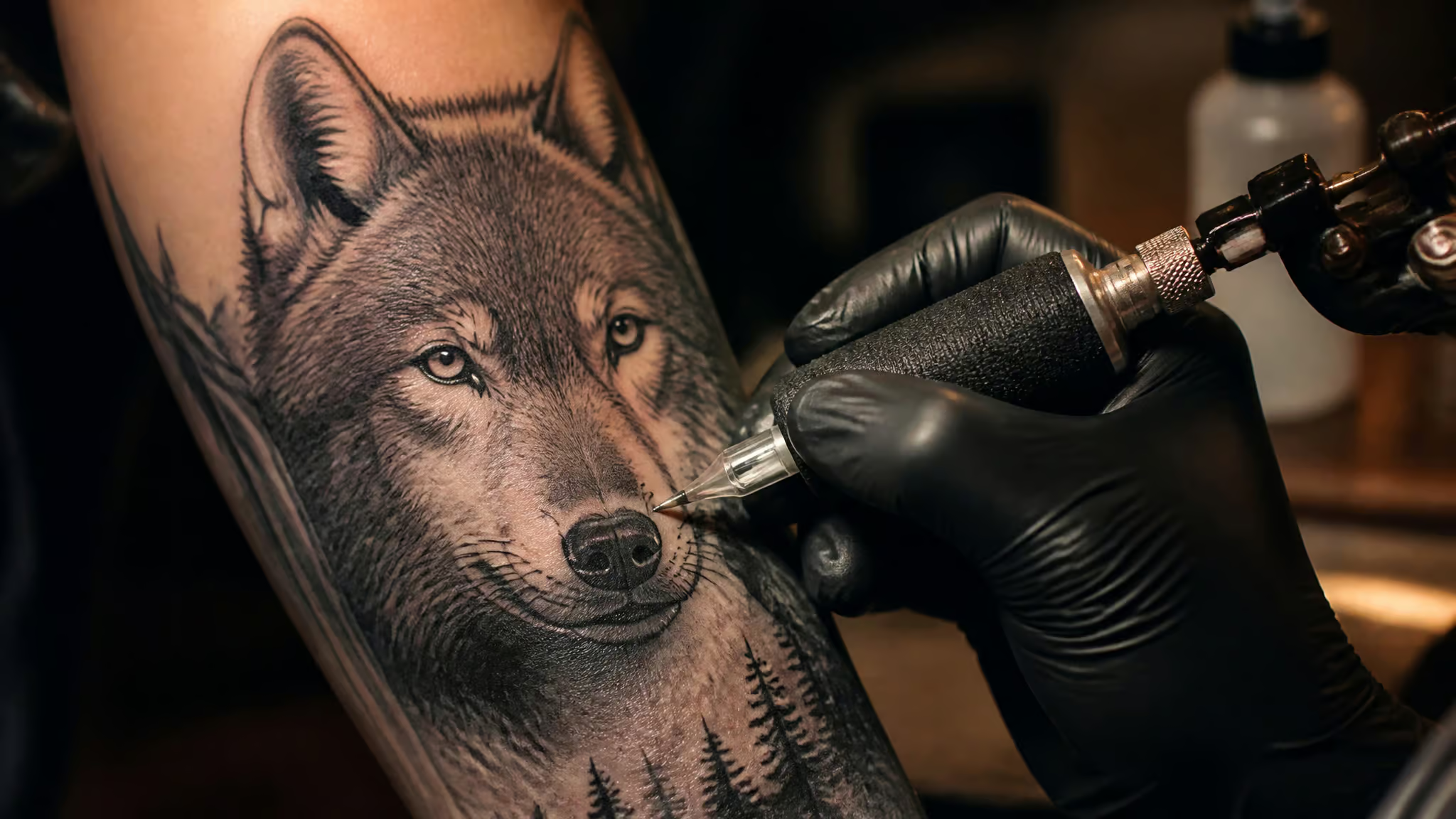
So learn the dials and you control the signal. A calm black wolf portrait reads as a guardian. A growling black wolf across a full chest reads as intensity and defiance. The composite pattern artists see: heavily blacked-out animal pieces get read as aggressive by strangers before anything else registers, and the small quiet silhouette versus the snarling full piece changes those reactions completely. That’s worth knowing before you commit, not after.
On suitability: wolf tattoos aren’t gendered. Anyone who connects with wolf tattoo symbolism can wear one, and the meaning is personally determined. Full stop. If you’re ever unsure how a specific design might land, that’s a perception question worth raising with your artist, not a reason to skip the ink.
Style taxonomy: when blackwork is the right call
Each style says something before the symbolism even kicks in:
- Realism. The point is lifelike detail, from fur texture to piercing, emotive eyes. The eyes are what sell it. For authenticity and raw power.
- Geometric. Clean lines, patterns, and poly-shapes that read as structure, balance, and modern precision. The surprise: geometric shapes are among the oldest symbols and stand for freedom and liveliness. They can also signal mystery, complexity, and the balance of nature and intellect.
- Tribal. Bold black lines, often quirky and detailed. Ancestral connection, spiritual guidance, bold protective energy, strong family bonds.
- Black and grey. High contrast, smooth gradients, dramatic shading. A timeless, intense look that ages exceptionally well. That last point is the practical sell, and we’d make it without apology.
Here’s our decision rule, the Unfinished Man verdict: choose blackwork when you want the nocturnal, shadow mood and a design that holds up over the years. Choose geometric or minimal when the meaning is structure or a subtle identity. On black-and-grey versus realistic color: heavy black ink physically carries the shadow reading and outlasts color work. That’s a tradeoff, not a ranking, and color realism isn’t wrong, it’s just saying something different.
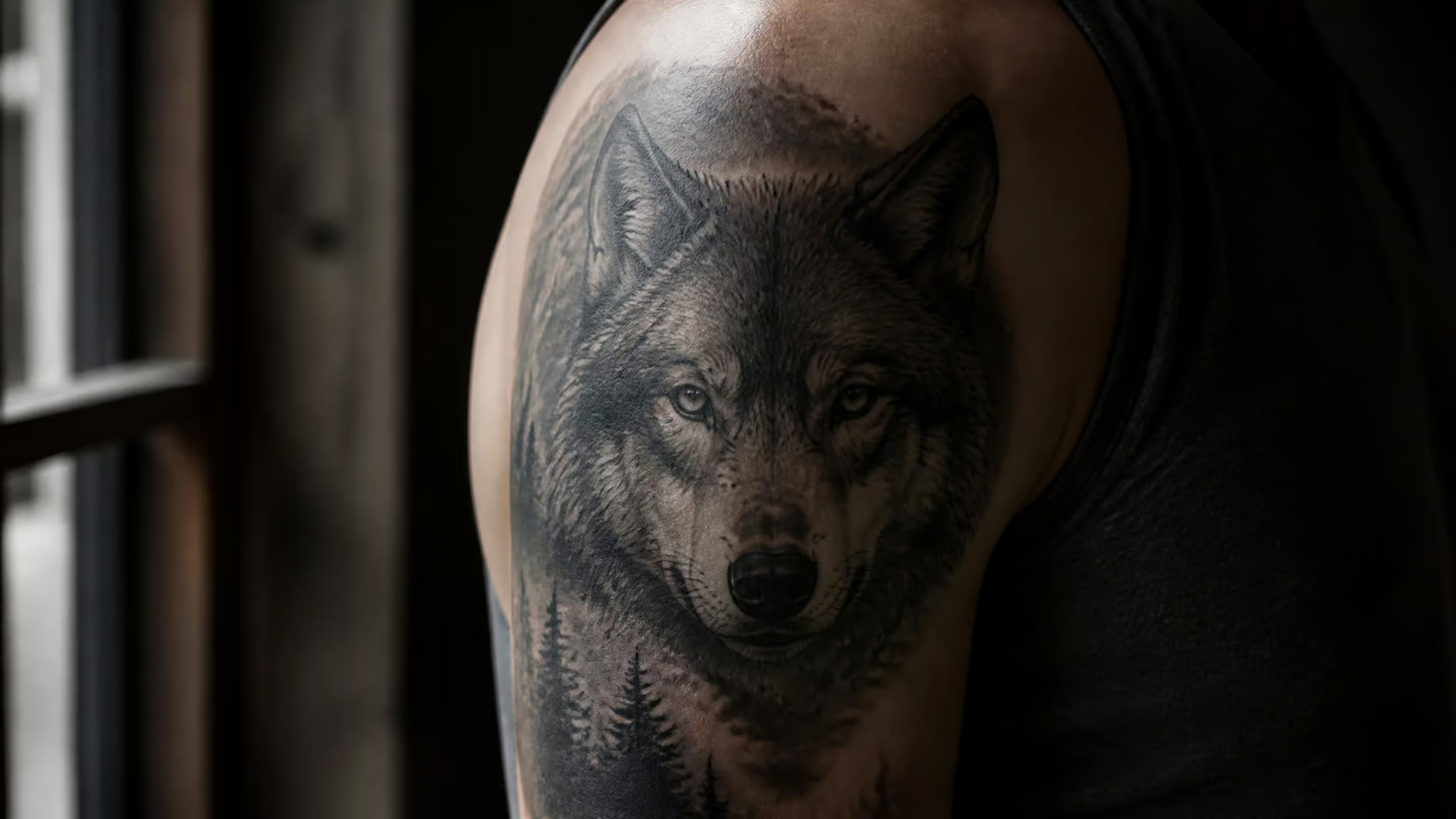
One placement constraint actually matters here: fine geometric detail needs flat skin, while bold shaded work adapts to curves like the shoulder or calf.
Pairings that sharpen or soften the dark reading
Motifs don’t decorate a black wolf tattoo; they tune it. Ranked by what they do to the tone:
- Raven. Sharpens it. The wisdom-or-darkness duality from the Hugin and Munin story doubles down on the shadow reading.
- Full or blood moon. Sharpens it. Freedom, nocturnal energy, transformation. Blood moon and mist belong to the werewolf register.
- Forest and mountains. Steadies it. Resilience, peaceful solitude, deep connection to nature. For guys who’d rather be outside.
- Dreamcatcher. Softens it and guards. Protective spiritual energy filtering out negative influences, which reframes the dark wolf as guardian.
- Rose or peony. Softens it. Don’t dismiss florals as feminine, because the contrast is the point: ferocity balanced with passion and beauty, immense strength protecting something delicate. That’s a real message, not a compromise.
The move here is deliberate dialing. Pick your motifs on purpose instead of hoping the finished piece lands where you wanted.
Scale, placement, and the “for women / for guys” question
Scale changes the sentence entirely. A small black silhouette on the wrist or behind the ear reads as quiet strength, a personal talisman. Doering’s own framing: a finely detailed wolf head rewards a broad surface, where depth and movement have room to breathe, while smaller pieces along the arm or leg can carry a quieter strength. A large realistic chest or back piece reads as statement and intensity.
Placement follows size and contour. Forearms and upper arms for visible portraits you’ll actually see. Back, chest, or full sleeves for big intricate work that needs the real estate. Wrist, ankle, hand, or behind the ear for minimalist pieces. Same contour note as above, no need to repeat it.
On the “for women versus for guys” question, the honest answer is that the differences are style and scale, not meaning. Women and guys choosing this ink are making size and placement calls on the same symbol; the symbolism isn’t gendered. If you want placement and design ideas from that angle, our piece on wolf tattoos for women covers it without pretending the meaning changes.
The blue-eyes branch deserves honesty too. People search for what a blue-eyed black wolf means, and there’s no codified answer anywhere. Eye color is a modern personal accent, and the only defensible guidance is the craft point: the gaze is the emotional core of the piece, so choose the eyes for feeling, not folklore.
Choosing your design: the emotion-first process
For Doering, the starting point isn’t the animal at all, it’s the emotion you want the piece to carry. That idea is the thesis of this whole article.
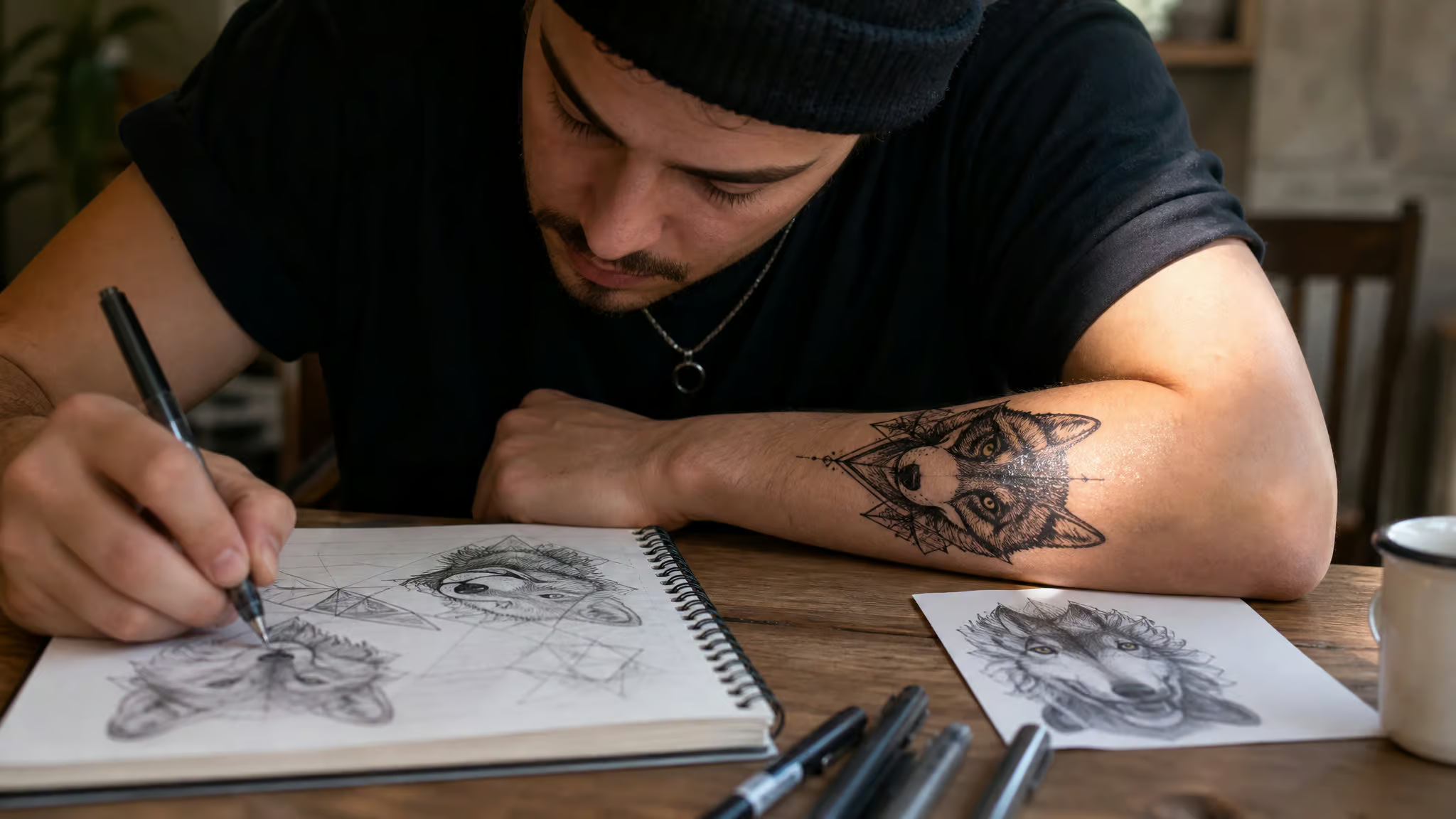
Choosing your wolf tattoo comes down to matching the emotion you want the piece to carry, then finding the placement that fits your body. Name what you want it to say: strength, family loyalty, independence, or personal transformation. Do a little symbolism homework, and honestly, this article counts. Pick the style that matches the emotional tone, realism for raw, geometric for precise, tribal for ancestral. Then think about placement: a detailed wolf head works beautifully on a broad surface where an artist can capture depth and movement, while smaller pieces along the arm or leg can symbolize quiet strength. Placement matters just as much as design, so consider visibility and how the design sits on your contours before you commit, and work with an artist who does custom work. The difference shows.
Match, don’t rank. Then think about placement, visibility, and how the design sits on your contours before you commit. And work with an artist who does custom work. The difference shows.
The genuinely useful tip: test the design with a temporary tattoo first. Cheap insurance on a lifelong decision.
One pattern artists report from consultations, framed exactly that way: guys arrive set on a black wolf for the look, then discover in conversation that the darker reading is what actually matches their story, and the whole brief changes. You don’t need to have it figured out walking in. Most guys don’t.
Placement and aftercare for heavy black ink
Placement is a recap at this point: match the spot to the size, the style, and how visible you want it. Section by section, this article’s already covered the map.
Aftercare is four plain moves. Wash with a mild fragrance-free cleanser. Apply a thin layer of the moisturizer your artist recommends, enough to stop scabbing, not a grease coat. Keep it out of the sun while it heals, then high-SPF sunscreen once it’s fully healed.
And know that heavily shaded designs may need touch-ups down the line. That’s cost of ownership, stated up front. Your artist’s instructions outrank any article, including this one.
Here’s why the aftercare matters beyond skin: the grey gradients are the mood. The most common maintenance mistake with black-and-grey work is treating solid black as low-maintenance, skipping SPF, and losing contrast unevenly over the years, which softens the whole reading of the piece. Sun protection protects the symbolism, not just the skin.
Black wolves in 2026: trends and who owns the meaning
Hyper-realistic animals are dominating shop walls right now: lions, wolves, eagles, tigers, dragons, often blended with abstract color splashes or geometric patterns. Spirit-animal ink has shifted from trend to self-expression, the eagle for focus, the bear for resilience, and owls, foxes, and mythical hybrids keep gaining ground. Minimalist small designs, a wolf silhouette on the wrist, an owl behind the ear, keep the meaning without the full sleeve. Customization, hybrid designs, and multi-animal wildlife scenes are surging.
The black wolf sits well in this landscape because dark, mood-heavy ink thrives at both ends of the spectrum: the tiny minimalist silhouette or the full hyper-real statement.
And the meaning-ownership part is real. In the comments under a recent wolf-ink video, one viewer, @SubaruWRC1996, described a concept of a wolf cub looking into water and seeing a grown wolf in the reflection. Another, @evolutionhybrid7770, was getting a wolf as their spirit animal. Both are wearers authoring their own meaning, which is exactly how this is supposed to work.
The black coat is a modern layer, not inherited doctrine. Messenger, warning, major life change: that’s the citable core. Whether yours reads as guardian or menace comes down to the eyes, the posture, and the scale. The common meanings exist, and they’re worth knowing, but the final call has always been the wearer’s. Your story finishes the design.
Frequently Asked Questions
Is a wolf tattoo a red flag?
No, a wolf tattoo is not inherently a red flag. What reads as aggression is the snarl, not the species or the color — the gaze, stance, and surrounding elements shift the entire reading of the piece. A calm portrait reads as a guardian, while a growling full-chest piece reads as intensity and defiance.
Is a wolf tattoo a good or bad idea?
It’s a good idea if you know exactly what you’re saying with it. Wolves are popular, so the difference between a good piece and a generic one is intent — you control the signal through four dials: color, pose, scale, and style. Marking a dark period you survived is a genuinely good reason to get inked, and it beats picking a meaning off a list.
What does a black wolf symbolize in folklore and mythology?
No tradition — Norse, Japanese, or Native American — has a codified “black wolf” category; the black coat is a modern artistic layer the wearer authors. In broader wolf folklore, wolves read as guides, guardians, and survivors: Norse folk belief holds that a wolf tattoo protects you from evil strangers, Japanese Ōkami guard travelers as messengers of the Kami, and Native American traditions treat the wolf as a sacred spiritual guide and totem.
What does a black wolf tattoo mean for guys?
For guys, the common readings are independence with loyalty — someone who’s self-reliant but still shows up for his people. The black layer specifically marks a dark period survived, a goal hit, or upheaval that came through and got answered. The darkest reading is often chosen deliberately, worn as a trophy rather than a threat: protective, not ominous.
Do heavily shaded black wolf tattoos require special aftercare?
Yes — the biggest mistake is treating solid black as low-maintenance. Wash with a mild fragrance-free cleanser, apply a thin layer of your artist’s recommended moisturizer, and keep it out of the sun while healing. Once healed, high-SPF sunscreen matters because skipping it causes uneven contrast loss that softens the whole reading of the piece, and heavily shaded designs may need touch-ups down the line.

