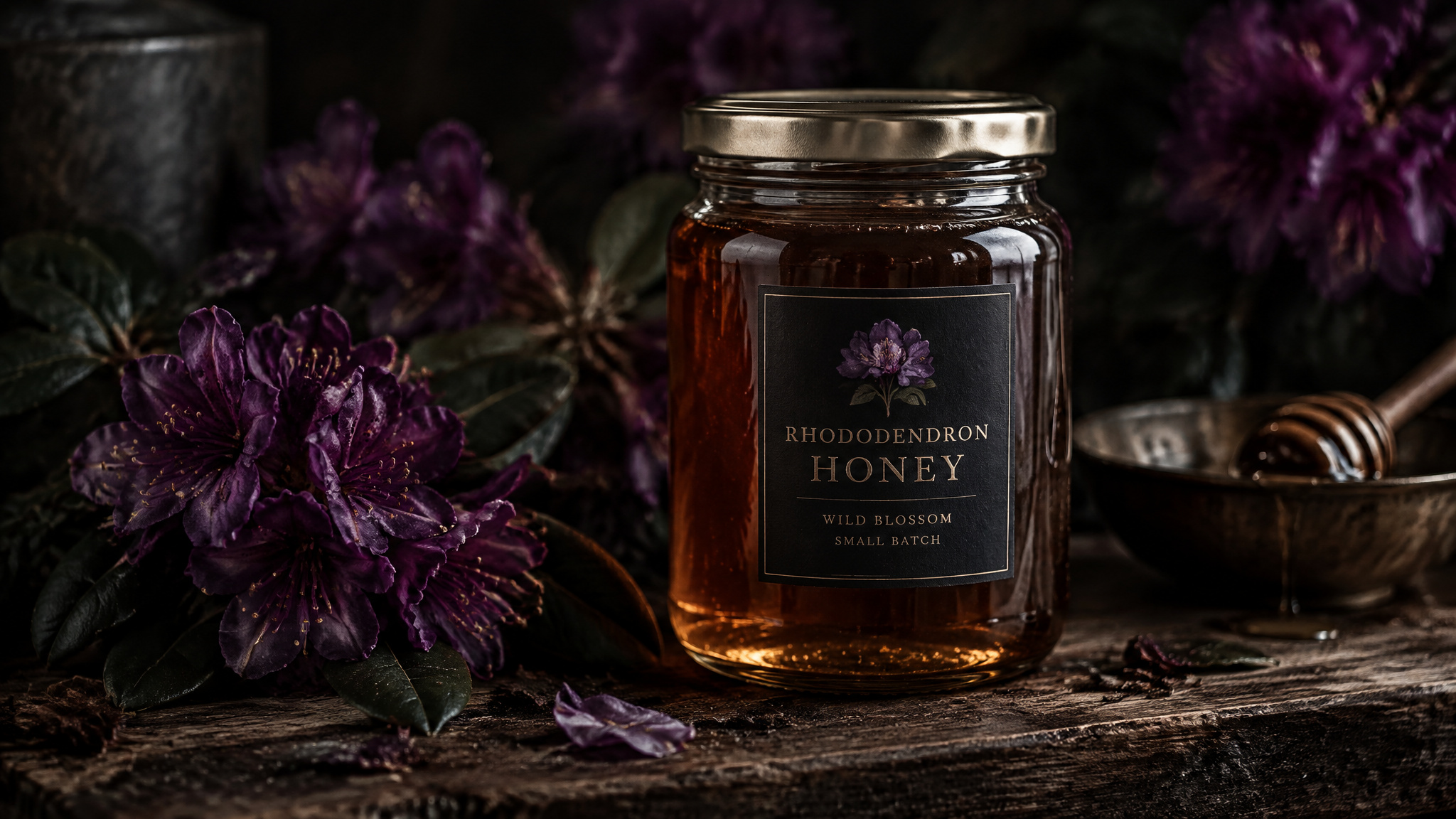
Honey is supposed to be the safe one on the shelf. It’s sugar, folklore, and a spoonful in tea. Except there’s a version of it that can drop your heart rate into the 40s, put you on the floor, and leave a grown man unable to walk for a day. It’s called mad honey, and it isn’t some psychedelic legend.
It’s honey that carries grayanotoxins from rhododendron nectar and pollen, and the “mad” part is a literal description of what happens to the people who eat too much of it. The flowers are the problem, not the bees and not the honey itself. Below: where it comes from, what it actually does to your body, the real dose numbers, who ends up in the emergency room, and why the famous fatal cases weren’t mad honey at all.
Key Takeaways
Mad honey is honey contaminated with grayanotoxins from Rhododendron nectar; the documented effect is a dangerously slow heart and low blood pressure, not a reliable psychedelic trip.
15 to 30 grams causes intoxication, sometimes just one teaspoon, with symptoms starting in 0.5 to 4 hours and clearing within about 24 hours.
No confirmed modern deaths from classic Rhododendron mad honey; the famous fatal series in China involved a completely different toxin.
Table of Contents
What mad honey is and why it’s called “mad”
Mad honey is honey contaminated with grayanotoxins, plant poisons that ride into the comb from Rhododendron nectar and pollen. The bees visit the flowers, the toxin comes along for the ride, and the honey that comes out the other end messes you up. Hence the name, which is refreshingly literal.
It goes by other names depending on where you’re standing: deli bal in Turkey, which translates directly as mad honey, plus bitter honey, miel fou, meli mænomenon, and bhir mauri ko maha in Nepal. That “bitter” one is a clue. Real mad honey tastes bitter and sharp and actually irritates your throat. You’d know if you tasted it.
Your grocery-store honey is safe for a boring reason: it comes from a hundred different flower sources, so any one toxin gets diluted into nothing. Mad honey comes from bees working almost nothing but rhododendron, so the toxin concentrates. Honey has been used as folk medicine since 2100 BC and contains at least 181 substances, so this isn’t some fringe product. It’s also not the only toxic honey out there.
New Zealand has tutin honey, a neurotoxin from Coriaria shrubs. Same lesson, different plant.
Why it’s called mad honey: grayanotoxins from Rhododendron flowers
The whole causal chain is short: rhododendrons make the toxin, bees carry it, the jar holds it. Here’s what each link looks like.
The toxin and its plant source
Grayanotoxins are plant-made compounds, diterpenes with lots of hydroxyl groups and no nitrogen, if you care. They come from species like Rhododendron luteum, R. flavum, R. simsii, and R. ponticum, which is why you’ll also see them called rhodotoxins. The andromedotoxin alias traces back to Plugge, who isolated the compound in 1891. The plant makes this stuff as defense chemistry.
The bees pass through it unharmed. Only the person eating the honey has a problem.
Grayanotoxin variants and what each does
There are 18 known forms of grayanotoxin, though not every form is toxic. Type I is the one that scrambles the heart’s electrical signaling. Type II is the weaker sibling, dampening the heart’s pacemaker but with less toxicity overall. Type III has been shown to trigger irregular heartbeats in cat heart tissue, which is animal-tissue data, not human evidence, so hold it loosely. Nobody poisoned with type III died, and people fully recovered within 3 to 4 days.
One practical wrinkle: honey produced in spring is more toxic than honey from other seasons. Keep that in mind for later.
Where mad honey comes from: Turkey’s Black Sea, Nepal’s cliffs, and the US edge case
Mad honey is produced mainly in Turkey’s Black Sea region and Nepal. Those two traditions account for nearly everything sold online, and they look nothing alike.
| Region | Source plant | Bee | Harvest method |
|---|---|---|---|
| Turkey, Black Sea | Rhododendron luteum, R. flavum, R. ponticum | Common honeybee | Standard hive beekeeping on hillsides |
| Nepal, Himalaya | Rhododendron species | Apis laboriosa, the world’s largest honeybee | Cliff harvesting with rope ladders and smoke |
| US Appalachians (rare) | Kalmia, mountain laurel | Common honeybee | Ordinary hives, only after late cold snaps |
Turkey’s Black Sea region and deli bal
Trabzon and the Kaçkar Mountains are the historic heartland. Steep hillsides, rhododendron everywhere, generations of beekeepers who’ve been harvesting deli bal the same way the whole time. The research reflects that: 24 of the 36 case reports published since 2010 are Turkish, and 69 of the 84 published papers on mad honey come from Turkish researchers. When your country is the world capital of honey poisoning, you end up writing most of the literature. Makes sense.
Nepal’s Himalayan cliff honey and Apis laboriosa
The Nepal version is the one you’ve seen in documentaries. Apis laboriosa, the world’s largest honeybee, builds combs up to 1.5 meters wide on cliffs between 1,200 and 4,000 meters. The Gurung people harvest them twice a year, late spring and late fall, working down cliff faces on rope ladders while smoke drives the bees off the comb. It’s genuinely one of the more dramatic food-gathering practices on earth, and the spring harvest is the more toxic one.
The cost is real, though. Cliff bee populations have reportedly dropped roughly 70% annually from overharvesting and development, an estimate from reported observations rather than a census. Sustainable harvesting means leaving half of the new combs undisturbed. Whether that happens when there’s money on the line is another question.
Rare US mad honey
It can happen in America, rarely. After late cold snaps kill off other flowers in the Appalachians, bees turn to Kalmia, mountain laurel, and the resulting honey carries grayanotoxins. Weather-driven, uncommon, but real. Three people were also poisoned at Burning Man in 2024, which is the least surprising sentence in this article. And in 2025, a Utah woman was poisoned by Indian mad honey: blood pressure 90/60, heart rate in the 50s, treated with two 0.5 mg atropine doses.
Intoxication has been reported across Turkey, China, Korea, Nepal, Japan, Austria, Germany, Brazil, and North America. Don’t read that as “everywhere.” Most cases cluster in a few places, and Turkey dominates the count.
What mad honey does to you: the mechanism behind the “high”
Mad honey intoxication is, in the overwhelming majority of documented cases, a cardiovascular event: a dangerously slow heart and low blood pressure, showing up in up to 90% of hospitalized cases. That’s the main event. Everything else is supporting cast.
Sodium channels and prolonged depolarization
The mechanism is plain. Grayanotoxin locks your nerve channels in the “on” position so they can’t reset. Nerves stay fired longer, which throws off the heart’s rhythm and drops blood pressure. Researchers have even mapped where the toxin binds on the channel.
Your skeletal muscle channels are more sensitive to this than your heart’s, which is part of why the whole body feels wrong. The bees, again, are unaffected; the toxin doesn’t harm them.
Why the heart slows: vagal and M2 pathways
Some of the effect runs through the vagus nerve, the body’s brake pedal on heart rate. The Bezold-Jarisch reflex in plain terms: the heart gets signals telling it to slow down, blood vessels open up, and pressure drops. In experiments where the vagus nerve was cut, the slow-heartbeat effect disappeared, which is how researchers know the pathway is involved. Atropine fixes both problems, the slowed breathing and the slow heart rate.
A selective blocker of the M2 muscarinic receptor only fixes the heart rate. Useful to know later.
Then the honest correction. The psychedelic reputation, tunnel vision, whirling lights, hallucinations, is described in the literature, and the physical and psychoactive experience is exactly why people seek this stuff out. But those effects are secondary to the cardiovascular syndrome that dominates the documented cases.
Around 67% of cases involve impaired consciousness. The shorter list: dizziness, blurry or double vision, nausea, vomiting, sweating, tingling, passing out. It can look like a heart attack, which is exactly why emergency rooms take it seriously.
Mad honey dose, onset, and duration: how much, how fast, how long
15 to 30 grams causes intoxication, and in some cases a single teaspoon has been enough. Let that sit for a second: a single spoonful of the wrong jar can put a grown man on his back.
Symptoms appear within 0.5 to 4 hours. Your body clears the toxin within about 24 hours, so untreated symptoms last roughly a day. Full recovery can take anywhere from hours to several days. Severity scales with dose, toxin concentration, and season, and the toxin isn’t evenly mixed through a jar, so one spoonful might hit harder than the next.
Prior experience can’t calibrate the next dose, which is the part self-experimenters keep learning the hard way. Published accounts describe a dose ladder: half a spoonful produced mild symptoms, 5 to 6 spoonfuls meant severe sickness, and one villager couldn’t walk for 24 hours after overconsumption.
The big-data beat makes the pattern clear. One systematic review covered 1,199 cases, and nobody died. Zero. Dizziness showed up in 51.6%, slow heart rate in 49.9%, nausea in 37.6%, vomiting in 35.5%, fainting in 14.7%, sweating in 11.3%. On the rhythm side: slow sinus rhythm in 79.5% of cases, electrical signaling problems in the heart (AV block) in 30.8%, and atrial fibrillation in 8.7%.
There is no safe or recommended dose, and there never will be one, because potency varies between honeys. Anyone quoting you a number is guessing.
Who gets poisoned: the male 40-60 demographic and why
The folk-medicine claims tell you who ends up in the ER: men buying it for blood pressure and sexual performance. That’s the whole demographic story. Men get poisoned about 5 times more than women, and the majority of cases are males aged 40 to 60, attributed to rising aphrodisiac use plus higher hypertension rates in that group. The poisoning data is basically a mirror of the marketing promise.
Women who do get poisoned tend to have milder symptoms, with less vomiting and fewer serious rhythm problems. One line, moving on.
Demand evidence, if you need it: South Korea imported over 8,000 kg of mad honey from Nepal in 2003-04, then banned imports in 2005. Cases kept coming anyway, through illegal imports and travelers buying it in Nepal. A ban doesn’t fix curiosity.
Traditional uses and the aphrodisiac economy: what’s actually in the jar
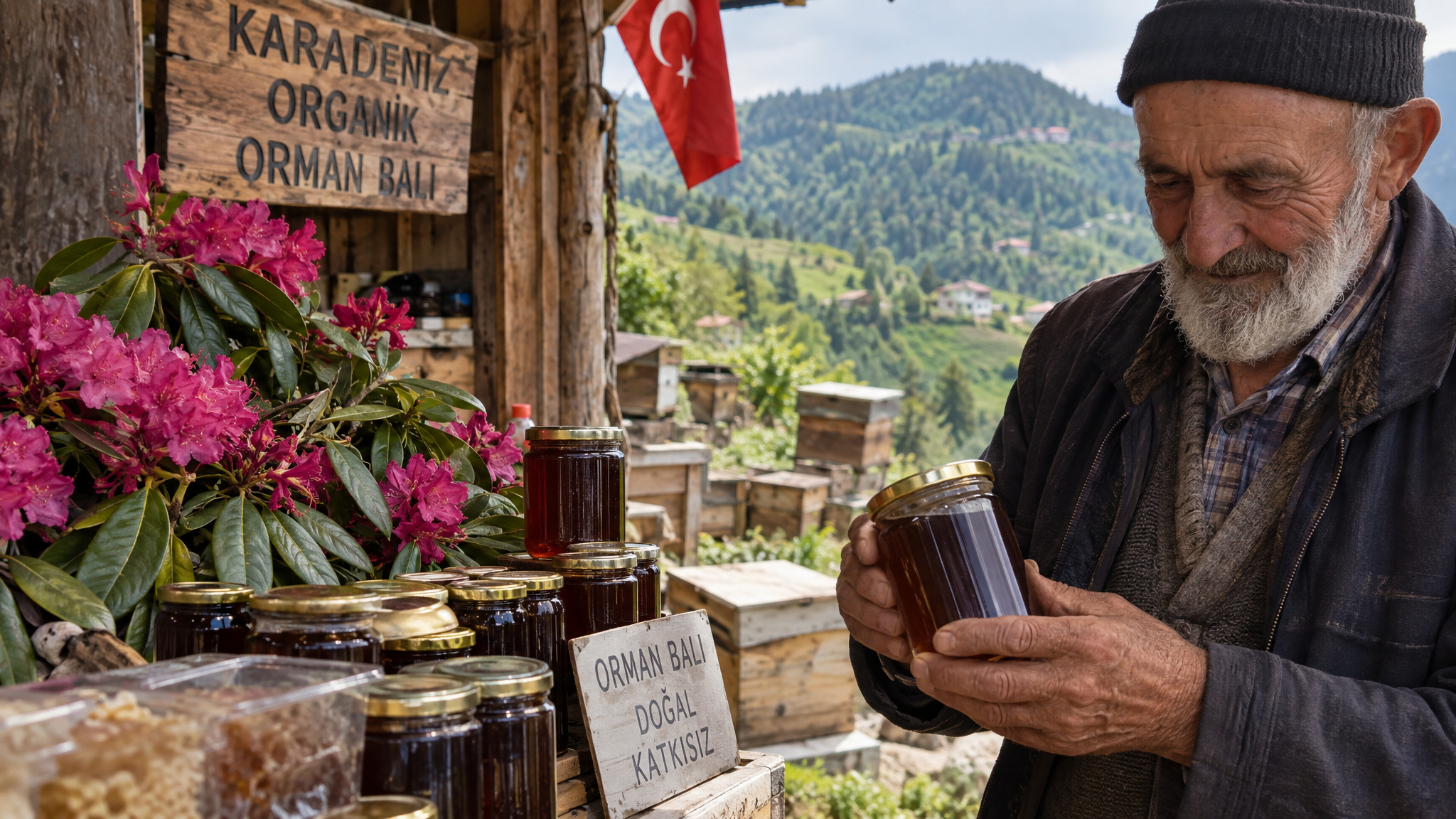
Mad honey is used as folk medicine for a long list of complaints, and it sells for around $166 a pound, the most expensive honey in the world. Both facts deserve a skeptical look, this complete guide to mad honey covers what it is and the risks behind the claims.
Folk-medicine uses and the bioactivity behind them
The folk list runs long: hypertension, diabetes, flu, stomach problems like peptic ulcers, gastritis, and dyspepsia, as well as arthritis, sexual dysfunction, viral infections, skin ailments, pain, and colds. Frame that correctly: it’s what people use it for, not what it’s been shown to do.
There’s a kernel under the reputation. The Rhododendron genus itself has documented antidiabetic, anti-inflammatory, antioxidant, analgesic, and antimicrobial bioactivities. Those findings concern the plant, not proof the honey is medicine. The problem is that the therapeutic window sits dangerously close to the toxic dose, and no established recommended dose exists. The health claims rest on anecdote, not systematic testing.
As for composition, the main phenols are chlorogenic, coumaric, ferulic, and gallic acids, and the main amino acids are arginine, lysine, and aspartic acid. It measured highest in antioxidant activity among honey types in one comparison. Real measurement, though it doesn’t make the honey a superfood. Antioxidants in honey are not the reason anyone is paying $166 a pound.
Price, adulteration, and the bitter-taste test
Here’s the part worth your attention if you’re actually thinking about buying. Much of the mad honey sold online is suspected of being corn-syrup diluted or dyed regular honey. That’s a reported pattern among buyers, not a lab-proven survey, but the failure mode is common: people pay premium prices for what tastes like ordinary honey with a story attached.
The practical authenticity test is the taste. Genuine mad honey is bitter and sharp and actually irritates your throat. Honey sold online that tastes sweet and mild is the strongest signal of a fake. If it doesn’t fight back a little, you probably bought expensive syrup. Prices may vary, but the bitter fingerprint doesn’t.
Is mad honey legal? Regulation and the US legality question
No source establishes US-specific legality, so I won’t pretend otherwise. The documented regulatory record comes down to two facts, which is why a country-by-country legality rundown is the best starting point for anyone sorting out US FDA stance, import rules, and gray areas.
First, EFSA’s 2023 review found laboratory evidence of genotoxicity and set a tolerable combined grayanotoxin I+III concentration of 0.05 mg/kg honey, which works out to roughly 3 tablespoons or 66 grams. That’s a real number from a real regulator, even if the genotoxicity finding was lab-only.
Second, South Korea imported over 8,000 kg from Nepal in 2003-04 and banned imports in 2005. Cases kept arriving through illegal imports and travelers buying it in Nepal anyway.
On drug tests: grayanotoxin is not a scheduled drug and no routine blood test for it exists, but no source directly addresses drug testing, so I’m not going to guess. And no, I won’t tell you it’s legal or illegal in any particular US state, because the record doesn’t support either claim.
Mad honey history: medicine, commodity, and biological weapon
Xenophon’s soldiers ate the stuff near Trabzon in 401 BCE, got wrecked, and were fine by the next day, per the Anabasis. Mithridates VI of Pontus left honeycombs in Pompey the Great’s path around 65-67 BCE, and three maniples were wiped out per Strabo, somewhere between 480 and 1,800 soldiers, possibly over 1,000 killed, though ancient numbers are fuzzy. Queen Olga of Kiev’s 946 honey trap killed roughly 5,000, and the 1489 Tatar mead poisoning killed about 10,000. In the 1700s Europe imported about 25 tons a year, mostly dumped into alcoholic drinks, meaning people were literally spiking punch with poison honey. In 1891, Plugge isolated andromedotoxin and closed the loop.
Diagnosis, treatment, and prognosis: how clinicians handle mad honey poisoning
Diagnosing mad honey poisoning is detective work, and it can hinge on a dietary question that clinicians may overlook: what did the patient eat?

Diagnosis hinges on one question
The picture is a weird-honey history plus slow pulse, low pressure, nausea, and fainting in someone with no heart history. There’s no routine blood test for grayanotoxin, so don’t assume a lab panel settles it. Doctors rule out heart attack with an ECG or angiogram, and rule out organophosphate poisoning because cholinesterase stays normal in mad honey cases. The misdiagnosis pattern shows up repeatedly in the case literature. Labs can detect the toxin in honey samples through thin-layer chromatography, paper electrophoresis, gas chromatography (tricky, since the compound is heat-labile), HPLC, LC-MS/MS, and NMR. A neat corroborating trick: finding rhododendron pollen grains in the honey itself.
Treatment and how long you’d stay
The good news is treatment is simple. Mild cases get IV saline. Bad bradycardia or blood pressure gets atropine sulfate, 0.5 to 2 mg IV. Worst cases get epinephrine or dopamine drips and a temporary pacemaker, but that’s happened in only 3 reported patients. One counterintuitive point: even when the presentation resembles a heart attack, doctors don’t push antiplatelet therapy, because it isn’t one. The clinical approach rests on a body of experimental work. Türkmen et al. traced the dose-response relationship in rats: 200 μg/kg grayanotoxin III lowered blood pressure, and 400 and 800 μg/kg caused further drops in blood pressure and heart rate. Omotayo et al. probed the heart’s electrical behavior in feline Purkinje fiber experiments, and paired atropine-versus-AFX-DX 116 M2-receptor experiments, together with vagotomy experiments, pinned down which pathways the toxin hijacks.
Gunduz et al. found 6 hours of monitoring was enough without admission, and Sohn et al. found normal pulse and blood pressure within 24 hours after saline plus or minus atropine. Prognosis is very good. This is how clinicians recognize it, not a self-diagnosis guide.
Can mad honey kill you? The fatal-case nuance most articles get wrong
No. Classic Rhododendron mad honey has no confirmed modern fatalities, except the cases that weren’t mad honey at all. The 1,199-case review had zero deaths, and the few fatalities on record were in the 1800s, before saline and atropine existed.
The exception: Lanping County, China, 2007-2012, where 8 of 31 people died, a 25.8% mortality rate. But those deaths came from Tripterygium hypoglaucum toxin, a completely different poison, not grayanotoxin. Within that series, 11 wild-honey consumers had 18.2% mortality while 20 farmed-honey consumers had 30%, an odd inversion worth reporting without over-explaining. Average consumption was 100 ± 70 grams, and median symptom onset was 29 hours, versus 0.5 to 4 hours for grayanotoxin.
That onset gap is the fingerprint that separates the two poisons. The demographics differed too: 14 men, 17 women, nothing like the Turkish male skew.
That reassurance needs balancing: symptoms can look life-threatening, and the arrhythmias are genuinely dangerous and easy to miss. “Nobody dies” is not permission. Recent cases show the typical arc: a 59-year-old Nepali man ate 15-20 mL, hit a heart rate of 42 and BP 60/40, got a single 0.6 mg atropine dose, and was discharged at 24 hours. A 7-patient Nepali series saw 5 classic presentations and 2 anaphylaxis-like ones, all recovering in 24 to 48 hours. Animal studies have reported kidney, liver, and seizure effects, but none of those have been reported in humans, so keep that caveat attached to every animal claim you read.
Conservation and the future of supply
The scarcity is real, not marketing. Cliff bee populations are reported down roughly 70% annually from overharvesting and development, an estimate from reported observations. Sustainable harvesting would mean leaving half of the new combs undisturbed, and demand for the honey as an aphrodisiac is colliding with a shrinking, geography-limited supply, which is what the $166/pound price reflects. Authentic product may get rarer than the market pretends.
Frequently Asked Questions
Can mad honey show up in a drug test?
Grayanotoxin is not a scheduled drug, and there’s no routine blood test for it in standard clinical workups. Doctors diagnose mad honey poisoning from the history and symptoms — slow pulse, low blood pressure, nausea, fainting — not from a lab panel. No source directly addresses recreational drug screening, so a definitive claim either way isn’t supported.
Can mad honey kill you?
Classic Rhododendron mad honey has no confirmed modern fatalities — a 1,199-case systematic review found zero deaths, and the few fatalities on record were in the 1800s, before saline and atropine existed. The famous fatal series in Lanping County, China (2007-2012, 8 of 31 dead) involved Tripterygium hypoglaucum toxin, a completely different poison, distinguishable by its much slower symptom onset. That said, the arrhythmias are genuinely dangerous, so “nobody dies” is not permission.
Why is it called mad honey and where does grayanotoxin come from?
The name is a literal description of what happens to people who eat too much of it. Grayanotoxins are plant-made defense compounds produced by Rhododendron species like R. luteum, R. flavum, and R. ponticum; bees carry the toxin from nectar and pollen into the honey unharmed, and only the person eating it has a problem. The compound was isolated by Plugge in 1891 under the alias andromedotoxin.
Why is mad honey so expensive?
It sells for around $166 a pound, the most expensive honey in the world, and the scarcity is real rather than marketing. Cliff bee populations in Nepal are reportedly down roughly 70% annually from overharvesting and development, and sustainable harvesting would mean leaving half of the new combs undisturbed. Demand driven by its aphrodisiac reputation is colliding with a shrinking, geography-limited supply.