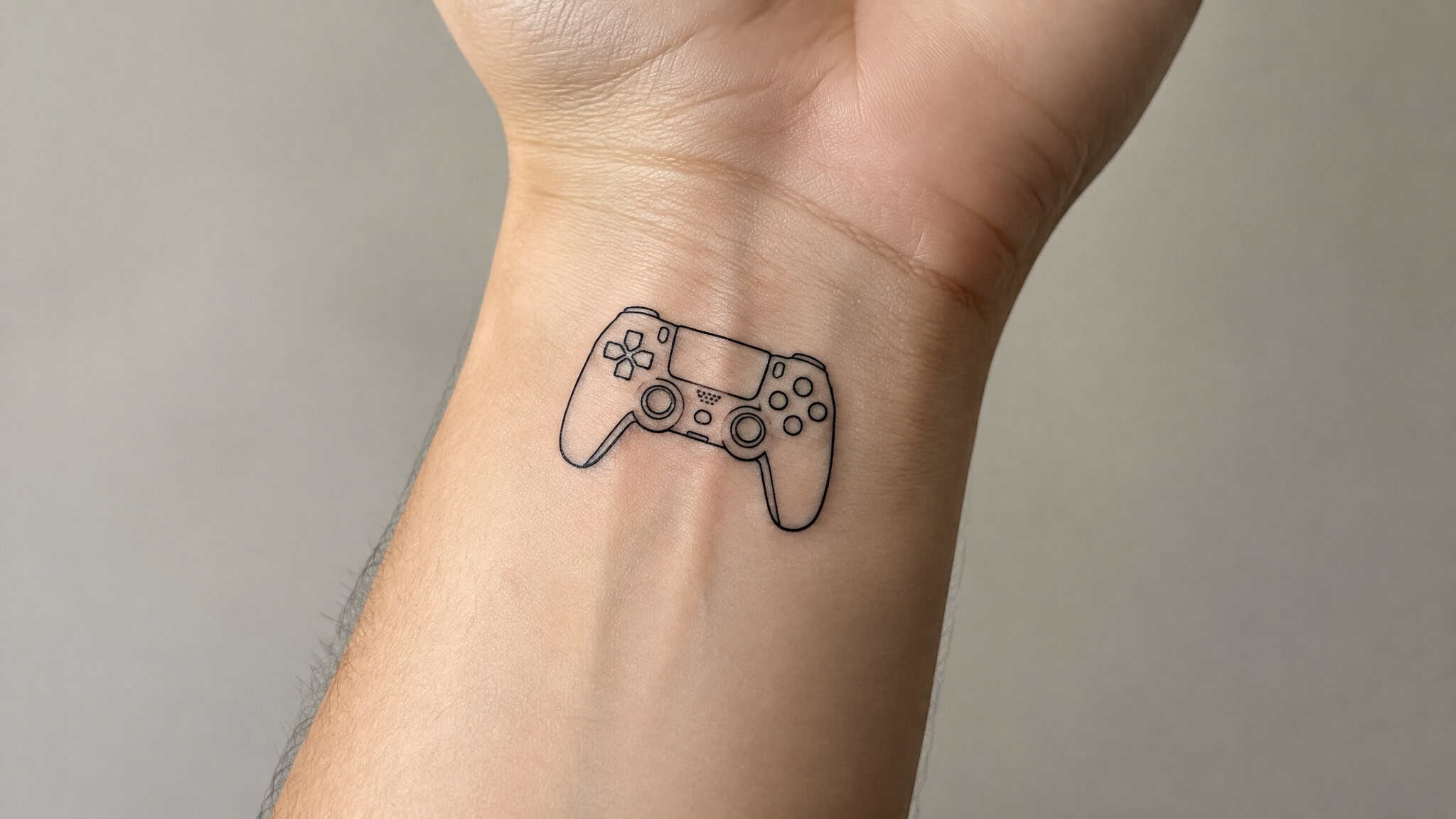
There’s a pixel-art sprite sitting in my saved photos right now. Maybe 30 pixels tall, pulled from a screenshot I took two years ago, and every few months I open it, zoom in, and ask the same question: how much skin does a hundred bucks actually buy? That question is really two questions, and they’re tangled together. Where does a gaming tattoo go, and what does gaming tattoo placement and cost actually look like end to end?
Placement decides how much it hurts and how the tattoo ages, and whether the artist tacks on a surcharge. The money side has minimums, hourly rates, deposits, and a tip you didn’t budget for. Here’s what I found when I dug into real shop pricing.
Key Takeaways
A $100 shop minimum buys roughly a simple 2×2-inch design on an easy spot: something like a compact pixel sprite, one controller icon, or a brief game wordmark. Not a portrait, not a scene.
Difficult placements (hands, feet, fingers, ribs) can add up to 20% to the price, and they’re also the spots where fine detail ages worst, so the surcharge and the touch-up bill compound.
The quoted price isn’t the total. Add a $50, $200 deposit, a tip, and possible touch-ups to get the real number.
Table of Contents
Where a gaming tattoo actually works
Placement is a trade-off triangle: how visible you want it, how much it hurts, and how the design holds up over years. You don’t get all three wins. Here’s how the common spots shake out.
The visible, easy spots
Forearm. Best for: almost everything at small scale. Pixel art, controller icons, short game wordmarks. The skin is flat and smooth, which matters more than people think, because pixel art and small icons need clean, even canvas to stay crisp.
It heals easily, it’s one of the least painful spots, and artists can pack ink there without fighting the skin. Not for: hiding it at a job interview.
Wrist. Best for: small, simple icons. It’s visible, easy to show off, and heals well. The catch is friction: wrists get rubbed by watch bands, sleeves, and desk edges constantly, and that friction is what blurs fine lines over time. A chunky simple icon ages better there than a detailed sprite.
The hidden spots
Ribs, thigh, back. Best for: bigger pieces you control who sees. These spots hide well under clothing, which some guys want and some don’t. The trade-off is cost and pain: ribs and back take more time and skill to tattoo, and that shows up in the quote. Also nobody sees them unless you show them, so if the whole point is the visible flex, this isn’t your spot.
The trap spots
Hands, fingers, feet. Best for: honestly, not much, and I’d hedge here. These are exactly the spots gaming fans want. A tiny triforce on a finger, a controller icon on the side of a hand.
They’re also the worst spots for fine detail: the skin is thin, ink struggles to settle in, detail goes soft, and constant friction plus sun exposure ages fine lines fast. Finger tattoos are notorious for needing touch-ups within a couple of years. If you’re set on one, go bigger and simpler than you think, and expect to pay more for worse longevity.
One more variable: real estate. Pixel art and small icons want flat, smooth skin. A full gaming sleeve wants an entire arm and a multi-session commitment. Don’t try to squeeze a scene onto a spot that only fits an icon.
Pain by placement
Pain comes from three things: how thin the skin is, how close the bone is, and how many nerves are packed in. It’s about the spot, not the design. Ribs, hands, feet, and wrists hurt the most. The outer arm hurts the least.
Here’s the part worth noticing: the painful spots and the expensive spots are the same list. Ribs, hands, and feet carry placement surcharges (more on that below), and difficult skin takes longer to tattoo, which compounds if the artist charges hourly. So the rib piece you imagined isn’t just the most miserable hour of your week. It’s also the priciest version of that design.
What moves the price: the five factors
Five things move any tattoo quote. Map them against gaming art and the picture gets clear fast.
Size. Bigger costs more, straightforwardly. But size isn’t king, as you’ll see.
Color vs black-and-grey. Color takes longer because the artist has to pack it into the skin; black goes in more easily. Black-and-grey also leaves more of your natural skin showing, which suits some gaming designs (a shaded controller, linework) and kills others (a colored pixel sprite lives on its palette).
Detail intricacy. A simple icon is cheap. A detailed pixel scene with 40 distinct colors and hard edges is not, and hard edges are exactly what pixel art demands, which is why gaming tattoo ideas built on this style quietly get expensive as detail density climbs.
Custom vs flash. Flash designs already have a printable stencil ready to go. Custom work eats the artist’s design time before the needle ever touches you. And custom work is the norm for gaming tattoos, since you’re referencing a specific game, a specific controller generation, or a specific UI element, see these community-sourced gaming tattoo ideas pulled from r/tattoos threads.
There’s no “Super Mario World flash sheet” hanging on the wall. Budget for that.
Placement. The fifth factor, and the one that connects back to everything above. Difficult spots cost more, period.
What a tattoo actually costs: minimums, hourly rates, and shop economics
Most shops run a minimum around $100, some run $150. Even a tattoo that takes ten minutes costs the minimum, because the minimum isn’t paying for the needle time. It’s paying for everything around it.
Bigger pieces go hourly because nobody knows how long they’ll take. Ballpark rates: beginners around $100 an hour, experienced artists $150, $200, and high-demand artists with years-long waiting lists $300 and up. One working artist in the material I dug through charged $150 an hour himself, which is a data point, not a standard. Single-session pieces sometimes get a flat price instead.
Now the part almost nobody explains. A tattoo’s price covers the fixed supplies (needles, ink, gloves, wraps, disposables) plus the time spent tattooing, drawing, setting up, and cleaning up. And the artist doesn’t keep what you pay. Resident artists typically hand roughly half to the shop owner, who eats the rent and taxes.
One artist broke down the math himself: from a $100 minimum, he takes home $30 to $40. That’s why skilled artists often charge $110 to $180 an hour, $200 an hour isn’t outrageous once you see the shop’s cut. That’s a single artist’s account of how shops usually work, not audited industry accounting, but it reframes things. A guy undercutting the market at $60 isn’t a deal. He’s either cutting hygiene or cutting skill, and both of those are on your skin.
Red flag: A quote far below the local minimum usually means cut hygiene or cut skill — and both land on your skin.
A cheap tattoo rarely turns out well, and a well-done one rarely comes cheap, the price covers skill, experience, hygiene, and work that still looks right in ten years.
What $100 actually buys: sizing your gaming design
Here’s the answer to the question I kept asking my phone. A $100 minimum buys roughly a simple design around 2×2 inches on an easy placement. In gaming terms: a compact pixel sprite, one controller icon, or a brief game wordmark. That’s it. It’s not a detailed character portrait, and it’s not the first payment on a scene.
The detail point deserves its own beat. One artist gave the example of a small but detailed tattoo that ran $130, next to a larger piece that was still unfinished at $800. Complexity can outweigh size, which is why the best video game tattoos tend to be standout pieces rather than the biggest ones. Pixel art is the poster child for this: it looks simple, but crisp pixel edges at small scale are demanding work.
For a concrete anchor on how minimums get structured: Heavy Gold Tattoo in Downtown Los Angeles was charging an $80 minimum for simple designs around 2×2 inches on basic placements (arm, wrist, ankle, leg) and a $100 minimum for difficult placements like neck, ribs, hands, and feet. Important caveat: that comes from a Yelp comment the shop posted roughly nine years ago, so treat it as a historical example of the pattern, not current rates. The pattern itself, minimums split by placement difficulty, is what’s worth taking away.
Me, I measured my sprite against the 2×2 reality and it fits. Barely. That’s the honest starting point.
How placement changes the price
Claim first, mechanism second: difficult spots, meaning feet, hands, and fingers, can push the price up by as much as 20%, since that skin resists ink. The artist works slower, fights the skin, and often has to go over lines twice.
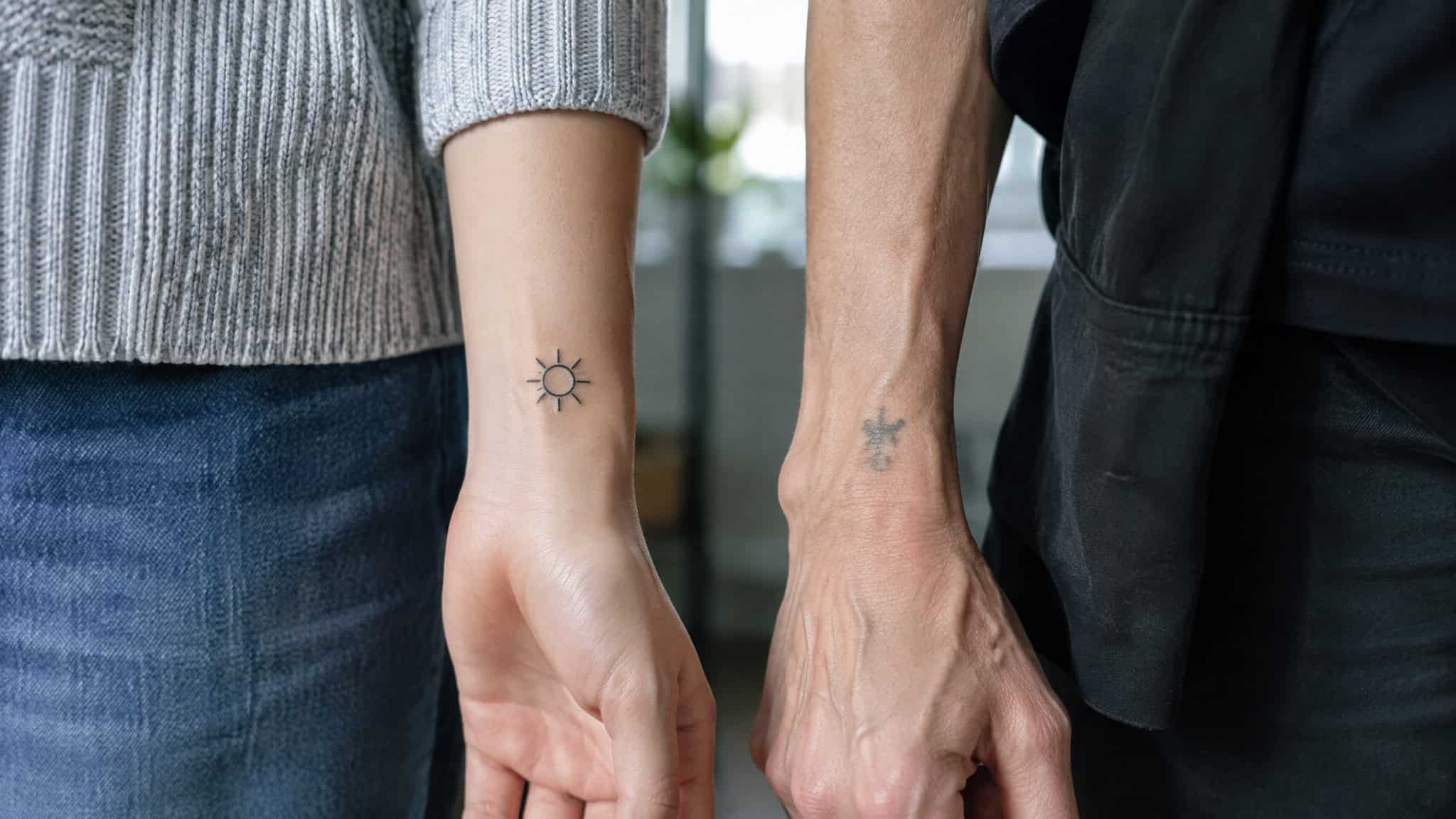
Now map it to gaming art specifically. Pixel art on fingers. A controller icon on the side of a hand. Those are the combinations that draw the surcharge and fade badly, which means you’re paying extra for a design that will need paying extra again later.
Ribs and feet also take more time or skill, which raises the cost even without a formal surcharge. The same basic-versus-difficult minimum split Heavy Gold used is the pattern to expect, just don’t read those specific dollar figures as today’s market.
Cost by size: from small icons to full gaming sleeves
Here’s a size ladder built from one working artist’s real examples. Treat these as estimation ranges, not quotes, and note the currency in the source was unspecified, presumably US dollars.
- Small icon: the shop minimum, around $100. A sprite, an icon, a wordmark.
- Small detailed piece: around $130. Detail costs even at small size.
- Fairly small tattoo: $150, $200.
- A two-hour tattoo: around $200, $250.
- Mid-size piece: two to two and a half hours at $400, $500 in that artist’s own pricing. Others charge more. Worth knowing: the same piece took him about two hours but would take an experienced artist about one, so a higher hourly rate can land at a similar final price. Experience affects the per-piece price, not just the rate card.
- Larger work: around $800 and not yet complete. Big pieces run multiple sessions.
- Portrait-style, high-detail work by a very experienced artist: $600, $2,000, typically around $1,000.
- Lettering by a very experienced artist: around $600.
- Sleeve: around five sessions at $2,000, $2,500.
A sleeve is the natural home for a large gaming composition, an entire arm of scenes and iconography, but it’s a multi-session commitment with a multi-session bill. And location moves all of these numbers: a tattoo in New York tends to run higher than the same piece in a smaller city, and pricing shifts by region and country.
Booking and budgeting: deposits, tips, and the real total
The quoted price isn’t what you pay. Three additions.
Deposit. Booking deposits commonly run $50, $200, scaling with the final quote. They’re non-refundable, and they don’t transfer to other artists at the same shop, so pick your artist before you put money down. Switch artists, and you’re likely paying a deposit again. If you need to reschedule, give at least five days notice, and expect a typical cap of two reschedules before the deposit’s gone.
Tip. Tipping is expected on top of the quote. If you’re not sure how much, treat it like a decent restaurant: meaningful, proportional to the work.
Touch-ups. Touch-ups may come later, especially on small detail-heavy work, which, again, is most gaming tattoos.
The free part: consultations usually cost nothing and last around 30 minutes, short enough to plan around a lunch break. Bring your own design or reference pictures; a phone full of saved images is a legitimate starting point. If your reference is close but not quite right, working together on a custom concept is completely reasonable and usually the better route. Before any of that, look through the artist’s portfolio online to confirm their style matches what you want.
Free consult, real number, no commitment. Most guys skip it and shouldn’t.
Budget the deposit, the tip, and a possible touch-up on top of the quote before you book anything.
A worked example, mental math only: say you’re quoted $450 for a mid-size gaming piece. Add a deposit of, say, $100 (which typically goes toward the final price, but confirm with your shop), a tip of $75-ish, and you’re walking out having spent closer to $525 out of pocket. If the piece is detail-heavy and small, pencil in a possible touch-up later.
Aging and aftercare: why placement is a long-term cost decision
Here’s the link most guides never make: high-friction spots cost extra to ink and demand more touch-ups. Hands, feet, and wrists carry the surcharge upfront, then keep charging you as friction and sun wear the fine lines down. A sprite on the forearm might be a one-time cost. The same sprite on a finger is a subscription.
If you do get inked, the healing basics are plain. Keep the wrap dry while you shower, and take it off if water or sweat gets beneath it. After three days the wrap comes off; clean the area using lukewarm water and, if you prefer, a fragrance-free antibacterial soap, then gently pat it dry with a fresh paper towel. Thin layer of A&D ointment twice daily for three days.
While it heals: no soaking, swimming, hot tubs, direct sun, irritating clothing, or dirty environments. Don’t pick or scratch. Scabs flake naturally over 7 to 10 days. First week, wear clean loose clothing; some artists also advise skipping alcohol, seafood, and spicy food that week, which I can’t fully vouch for, but it costs you nothing to humor them.
If you see redness, swelling, tenderness, red streaking, fever, or pus, see a doctor. And whatever your artist tells you overrides this article; they’ve seen a thousand healings, I’ve seen none.
Using cost calculators without getting burned
Treat tattoo cost calculators as a rough sanity check rather than a quote. One calculator vendor claims well-built estimates land within 10-20% of the final price. That’s the vendor’s claim, not something I’ve verified, and I’m not endorsing any specific tool. A calculator is only as good as the factors it includes: size, complexity, artist experience, placement, and session count.
Check whether the tool’s pricing gets updated at least annually, too, artist rates and material costs don’t sit still. Run one if you like, then sanity-check the result against the size ladder and minimums above. The in-person quote is the real number.
That’s where I landed with my sprite. The spot I pick sets the pain, the aging, the surcharge, and the touch-up bill, all at once, before the artist ever quotes a dollar. Two inches on the forearm, simple palette, easy skin, one price. Or two inches on a finger, more money upfront and a redo in three years.
Same design, same budget in my head, completely different decisions. I know which one I’m booking.
Frequently Asked Questions
How much does a small gaming tattoo cost?
Most shops run a minimum around $100, sometimes $150, and that buys roughly a simple 2×2-inch design on an easy spot — a compact pixel sprite, one controller icon, or a short game wordmark. Bigger or more detailed work goes hourly, typically $100 for beginners up to $300+ for high-demand artists. The quoted price also isn’t the total once you add a deposit, tip, and possible touch-ups.
Why do finger and hand tattoos cost more and fade faster?
Hands, fingers, and feet have thin skin that resists ink, so artists work slower and often go over lines twice — which can add up to 20% to the price. That same thin skin plus constant friction and sun exposure makes fine detail go soft quickly, and finger tattoos are notorious for needing touch-ups within a couple of years. You end up paying extra for a design that will need paying extra again later.
Where should I put a pixel art tattoo so it stays crisp?
Flat, smooth skin is what keeps pixel edges and small icons sharp, which makes the forearm the best all-around spot — it heals easily, hurts relatively little, and lets artists pack ink cleanly. The wrist works for chunky simple icons, but friction from watch bands and sleeves blurs fine lines over time. Avoid fingers, hands, and feet if crispness matters to you.
What’s the most painful spot for a tattoo?
Ribs, hands, feet, and wrists hurt the most, while the outer arm hurts the least. Pain comes down to how thin the skin is, how close the bone is, and how many nerves are packed in — not the design itself. The catch is that the painful spots and the expensive spots are the same list, so a rib piece is both the most miserable and the priciest version of that design.