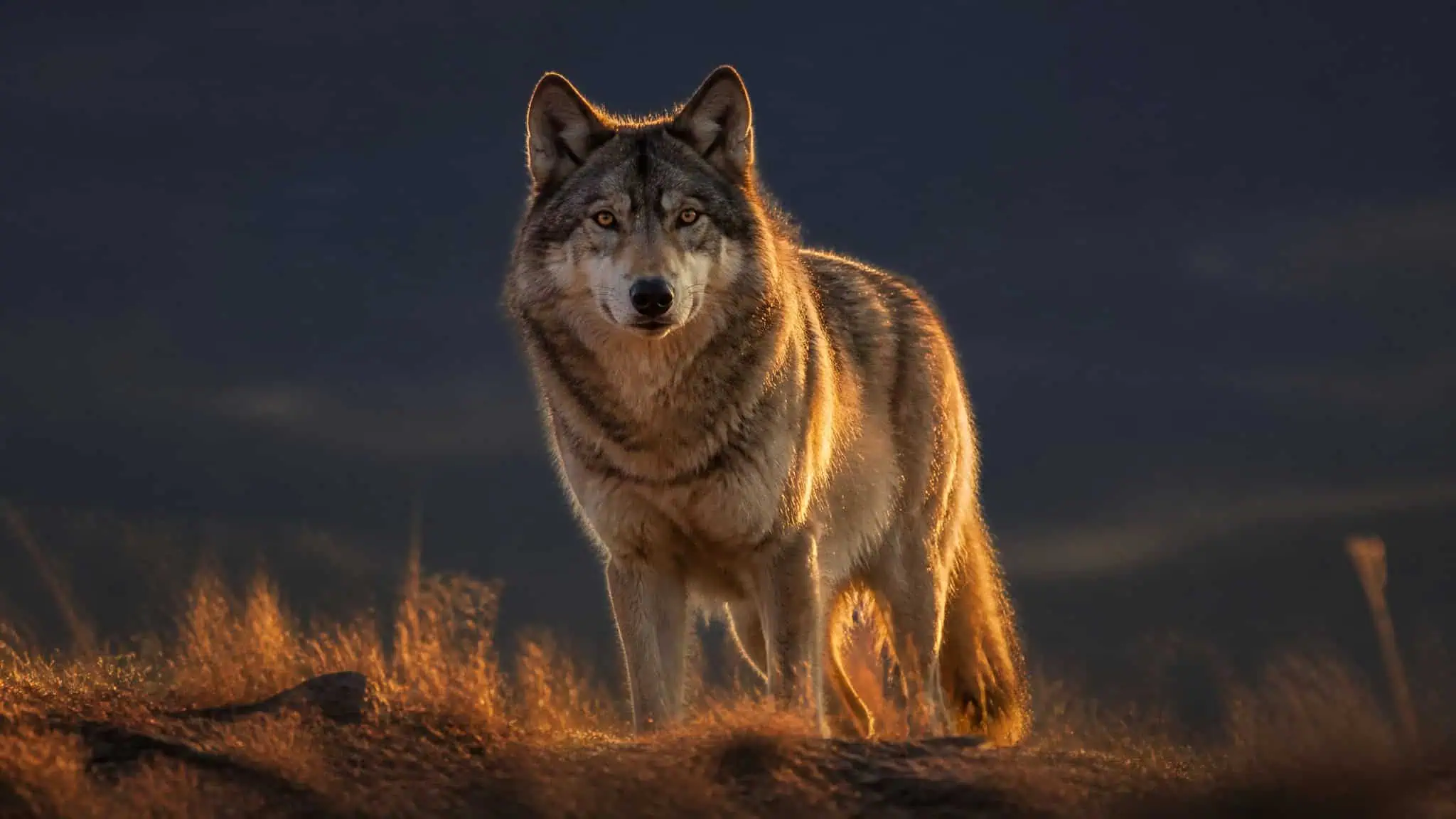
What does a wolf symbolize spiritually? If you go by the internet, it’s “loyalty and freedom” slapped on a hoodie. The actual record is a lot more interesting. In Native traditions, the wolf symbolizes courage, strength, loyalty, freedom, wisdom, intelligence, and fidelity, but above all it’s a teacher and spiritual guide, not just a power symbol. The Sioux didn’t even bother with an adjective list. They called the wolf shunk manitu tanka: “a powerful spirit in the shape of a dog.”
That phrase is the whole article in miniature. The tradition’s own definition isn’t “cool predator.” It’s a spirit wearing a dog costume.
And it cuts both ways. One Navajo word, mai-coh, means wolf and witch at the same time. Same animal, healer and something darker in a single syllable. So here’s the plan: I’ll walk through what the documented traditions actually say, tribe by tribe, and then answer the question most wolf-symbolism content dodges entirely: is it okay to wear this stuff as a tattoo, and how do you do it without being a tourist?
Key Takeaways
The Sioux called the wolf shunk manitu tanka, meaning a powerful spirit in the shape of a dog, which defines the wolf as a spiritual being, not just an animal.
Traditional totems weren’t chosen, they were earned: a vision quest meant four days and four nights in the mountains with no food or water, waiting to see which animal revealed itself.
The Navajo word mai-coh means both wolf and witch, yet Navajo healing ceremonies call on the wolf as a Power to restore peace and harmony to the sick.
For a wolf tattoo, the deciding factor is whether you (and your artist) can name which tradition your design actually comes from; ceremonial imagery like wolf bundles or klukwana motifs carries far more weight than generic wolf art.
Table of Contents
The wolf as totem and teacher
A wolf is considered one of the strongest spirit guides you can be connected to, and what it supposedly says about your personality tracks closely with how the animal actually lives: loyalty, sharp instinct, cooperation, guardianship. That’s the modern reading. The traditional one is older and considerably more demanding.
Start with the word itself. “Totem” comes from the Ojibwe word odem, the mystical link between a spirit and a people or place. A totem wasn’t a moodboard aesthetic. It was the binding between one animal’s spirit and one community.
Here’s the part the wolf-quiz industry quietly skips: you didn’t pick your totem. It came to you through a vision, or a tribal council assigned it. In Canadian traditions, people wore their totems on clothing or as wolf-teeth necklaces, and the totem stayed with them for life, providing protection, courage, and wisdom.
And getting there was serious. A young person went out into the mountains or forest for four days and four nights. No food. No water.
They prayed to the Great Spirit to send a vision, and whatever animal showed itself in a vivid, real way became their totem. That’s a genuine rite of endurance, not a weekend retreat with a journal.
I’d just note the gap plainly: the modern “find your spirit animal” quiz compresses that entire process into a three-minute personality result. Whether that’s respectful or empty is your call to make. But knowing what the original process cost is worth ten minutes of anyone’s time.
Why tribes saw the wolf as brother: pack, kinship, and the lone-wolf inversion
Tribes saw the wolf as a teacher and protector because the wolf’s life looked like their own. Pack devotion mirrored tribal brotherhood and clan structure. Wolves defended home ground the way tribes had to. One recorded detail I like: tribes honestly envied how well wolves hunted together.
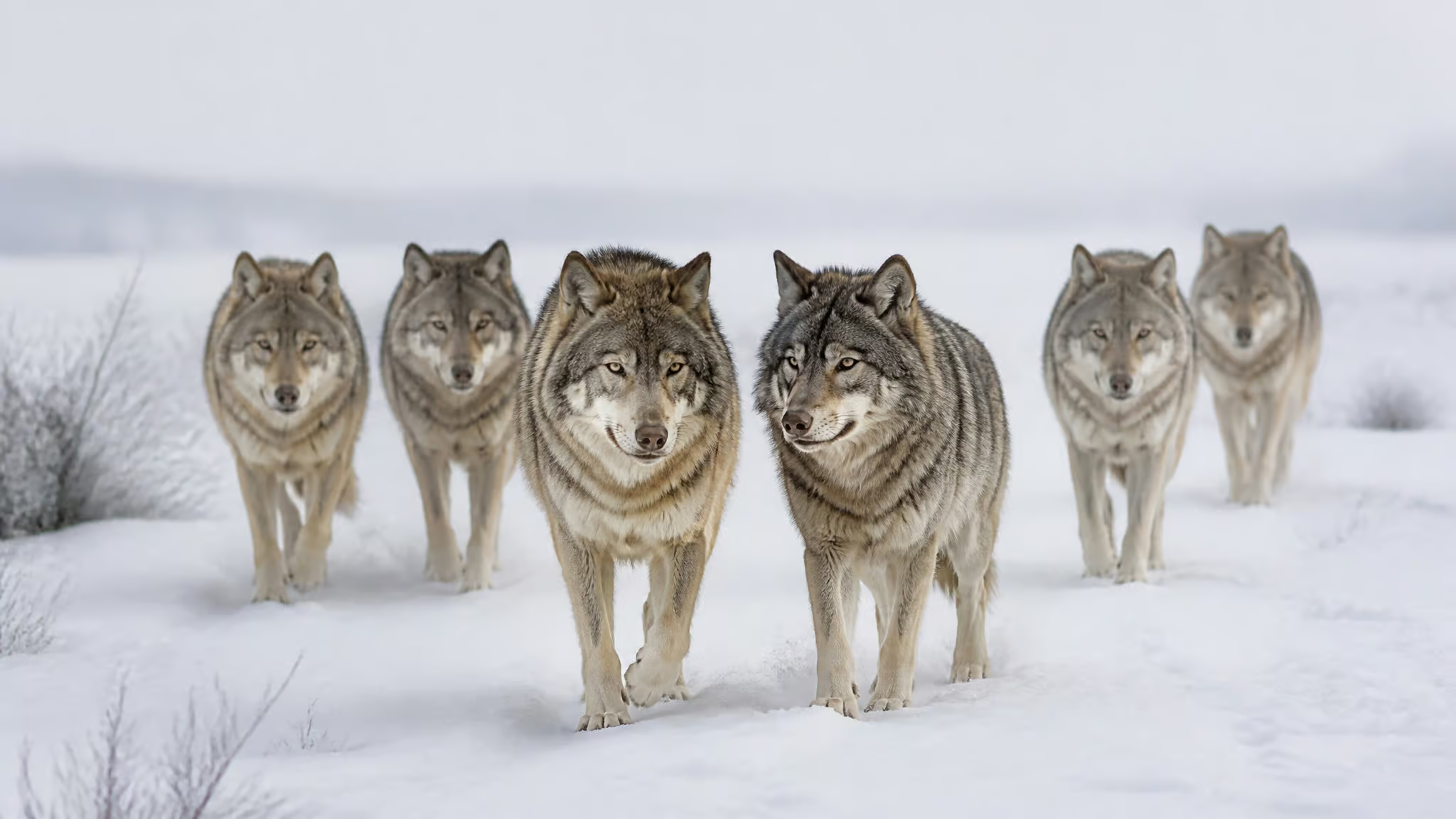
Not feared. Envied.
So the wolf was brother, sister, guide. Kin, not beast.
The Keewatin Eskimo said it best: “The caribou feeds the wolf, but it is the wolf who keeps the caribou strong.” That’s reciprocity and balance, spelled out centuries before anyone coined “keystone species.” It holds up because it describes how the system actually works: predator and prey need each other, and pretending otherwise breaks both.
The wolf was also the “master of the hunt,” a respected equal rather than a resource. Traditional accounts even credit wolves with teaching early humans the basics of staying alive: finding water, reading the seasons, building shelter, using animals for food and clothing. Whether you take that as history or as a way of honoring the animal, the point is the same. The wolf sat across the fire, not below it.
Which brings up the cliché that bugs me. The whole “lone wolf equals independence” thing inverts the documented evidence. The traditions define the wolf by family devotion and pack strength, not solitude. That framing is a modern projection, full stop.
So if you’ve been seeing a lone wolf in dreams or out in the world and reading it as a symbol of going it alone, know that the tradition’s wolf isn’t alone. It’s a family animal, and the dreams and sightings people attach meanings to fit that reading better: connection, loyalty, looking after your own.
Symbolism as practice: what tribes actually did
None of this was decoration. Every wolf practice in the record did a specific job, from hunting luck to childbirth to reading the winter sky. The wolf words themselves carry that weight, and they’re worth knowing up front: mai-coh in Navajo, shunk manitu tanka in Sioux, klukwana among Pacific Northwest peoples, Qisaruatsiaq in Eskimo stories.
Hunting and warrior practices
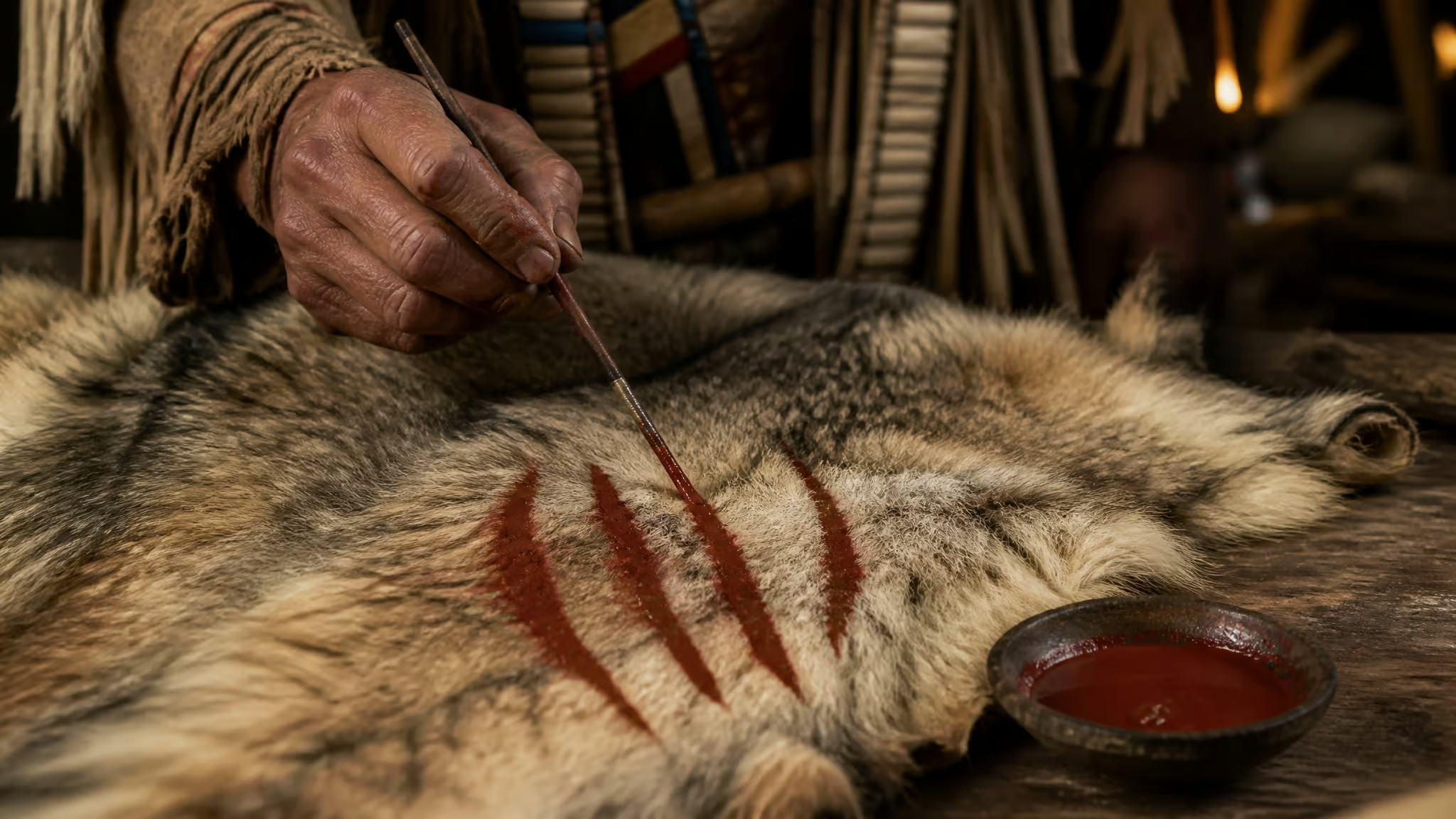
To improve hunting luck, Cheyenne medicine men drew warrior arrows across wolf fur. Crow hunters went after game wearing wolf skins, which tells you exactly how much respect that animal’s craft commanded.
Before war, Plains tribes including the Sioux, Cheyenne, Apache, and Chippewa invoked wolf power for strength. Men painted wolf-claw marks on their faces. Some carried a double-bladed knife with a handle carved from a wolf’s jaw. The meaning behind all of it: the wolf as the model warrior, still strong even wounded, a wolf tattoo symbolism tradition still echoed in ink today. That was their view of the animal, and it’s a harder standard than any gym poster.
Birth, death, and the sacred calendar
The Cherokee wouldn’t kill wolves, fearing revenge from the dead wolf’s siblings, and they imitated the wolf’s walk to ward off frostbite. Both details sound strange until you realize both treat the wolf as a being with family, agency, and reach.
Hidatsa women rubbed their bellies with wolf skin during difficult childbirth. The Ahtena propped up and fed dead wolves ceremonially. The Cree believed divine wolves came down to earth when the northern lights shone in winter. The Hopi count Wolf among the Katchinas, and the Delaware read weather in wolf howls.
The Mandan wore wolf tails on their moccasins as signs of battle cred, which might be the original status symbol. The Pawnee, Hidatsa, and Oto kept wolf bundles for their ceremonial implements.
Wolf as creator and kin: the Arikara myth and the Wolf People
The Arikara creation story, as Cottie Burland tells it, puts the wolf at the beginning of everything. The story goes that Wolf and Lucky-man, working with the sky spirit Nesaru, had ducks dive down for mud to build the prairie, the hills, and the valleys. Wolf’s share of the job was the great prairie itself, built as a home for the hunting beasts. The spiders found underground were cleansed and enlightened to populate the earth. Creator, landlord, and teacher in one story.
Then there’s the Pawnee, and this is the strongest documented case that wolf symbolism was identity, not metaphor. In their homeland, today’s Nebraska and Kansas, the Pawnee language uses the same word for “wolf” and “man.” The hand signal for wolf was the hand signal for Pawnee. One word. One sign.
And it wasn’t self-labeling. Neighboring tribes called them the Wolf People. Outsiders saw it too.
One more story, because it deserves telling. The Eskimo tale of Qisaruatsiaq is about an old woman, abandoned and left to live alone, who eventually turned into a wolf. That’s it. Dark, human, and it doesn’t ask for a lesson.
Wolf, death, and the spirit world
Yes, in several specific traditions the wolf connects to death and the spirit world, but through cosmology and ceremony, not omen talk. That distinction is the whole section.
Look up on a clear night. Sirius, the brightest star in the sky, was the Wolf Star. Its yearly appearance and disappearance read as the wolf traveling to and from the spirit world, running the Wolf Road, which was the Milky Way. The Blackfoot called that same galaxy the Wolf Trail, or Route to Heaven. So the sky itself was mapped as wolf country.
On earth, the Nootka held a ceremony where participants, wearing wolf clothing, acted out bringing the chief’s dead son back to life. State it plainly: it was a celebration of spiritual ties between the people and the wolf.
In the Pacific Northwest, the klukwana, the ceremonial wolf dance, opens the sacred winter season, when men communicate with spirits. It’s also the initiation boys undergo to become men, with masked dancers performing the wolf’s steps and songs, and the knowledge passing through sacred stories generation to generation. First Nations hunters carved wolf-headed lightning snakes on their canoes, and some believe wolves are reincarnated deceased hunters who show up at ceremonies. That’s belief, held by specific peoples, and it deserves to stay attributed that way.
Here’s my tell for low-effort wolf content: it flattens the wolf into a death omen. The actual record is a star, a road, a season.
Is the wolf a dark symbol? Mai-coh and the good/evil question
The documented record shows duality and balance, not good versus evil. Hold that thought, because it resolves a question a lot of people arrive here asking.
The sharpest example is Navajo. Mai-coh means wolf, and it also means witch. In that tradition, a person could transform by putting on a wolf skin. If that rings a bell, it should: it rhymes with European werewolf legends almost beat for beat, the same story shape arising on different continents, though nobody should claim the two share an origin.
But the same tradition calls on the wolf in healing ceremonies as a Power that restores peace and harmony to the sick. Wolf and witch, healer and something to be wary of, inside one word in one language, and the same dual meaning is why wolf tattoos carry such weight for people today. I think that’s the most honest thing in the entire record, and I wouldn’t smooth the witch meaning over if I were you. It’s the interesting part.
The Cherokee wolf-kill taboo, with its fear of the dead wolf’s kin, and the Keewatin proverb both sit in the same place: ambivalence, balance, respect with teeth.
As for what demon represents the wolf? No tradition in the documented record assigns the wolf a demon. That framing comes from European werewolf and demon lore, and it’s worth keeping separate from Native traditions rather than mashing the two together. I won’t make the opposite mistake either and claim wolves never symbolize anything dark anywhere, the same goes for the “red flag” stereotypes around wolf tattoos, which owe more to pop demonology and lore-mashing than to anything honest. The darkness, where it exists, is specific, attributed, and rarely what pop demonology says it is.
Beyond Native America: Norse, Celtic, and biblical wolves
The contrast is stark: teacher in Native traditions, guardian or companion in Norse and Celtic lore, danger metaphor in the Bible. Same animal, three entirely different jobs.
Norse, Greek, and Roman myths tend to cast the wolf in guardian roles, and Norse tradition includes spirit companions of the fylgja kind that walk with a person. I’ll be straight with you: that framing comes from a lower-confidence source than the rest of this piece, so take it as a sketch rather than scripture.
The Celtic material is firmer. The name Conan means “wolf,” and Caílte of the Fenian Cycle gained his power by slaying werewolves, with druid context behind him (the word is usually glossed as “knower of the oak”).
The Bible runs the other direction entirely. Wolf imagery there is predator and false-teacher metaphor, wolf among the sheep. I’ll flag honestly that this sits outside the main sources for this piece, but it’s well-known scripture and the point isn’t the proof-texting. The point is the contrast. One tradition’s big brother is another tradition’s warning label.
Wolf names today: Tala, Nashoba, and carrying the symbol respectfully
Two documented names literally mean wolf: Tala, primarily Iroquois (with Samoan, Swedish, and Arabic versions also in use), and Nashoba, which is Choctaw. Close by association: Chayton is Sioux for falcon, and Tokala is Sioux for fox. If you want the meaning on a birth certificate instead of a bicep, those are the real ones, not baby-site inventions.
Using these names with respect
Naming traditions vary widely by tribe and geography, all the way out to the Hawaiian Islands. So there’s no one-size-fits-all rule here, just good practice: if you’re not Indigenous and you want a Native name, do some research on it or ask someone from that tribe. Most people will take the question as the respect it is.
One piece of context worth having. Two-Spirit is a term for a gender identity carrying special social and spiritual meaning, embodying both feminine and masculine spirits. Gender-neutral names can be bestowed on Two-Spirit people, and assigned sex at birth doesn’t have to dictate name choice. That’s the tradition’s own framework, stated once, and it doesn’t need my editorial.
Here’s the bridge to the next section: a name is portable personal symbolism. So is a tattoo. Both raise the same question, and it’s worth answering honestly.
Honoring wolf symbolism in a tattoo: which lineage does your design speak to?
My honest take: yes, a wolf tattoo can respectfully honor Native symbolism, if you know which tradition your design speaks to and can verify it. No, with the exception being ceremonial imagery, which warrants the most caution and, in most cases, a pass. The deciding factor isn’t your ancestry or your intentions. It’s whether you can name the lineage behind the lines.
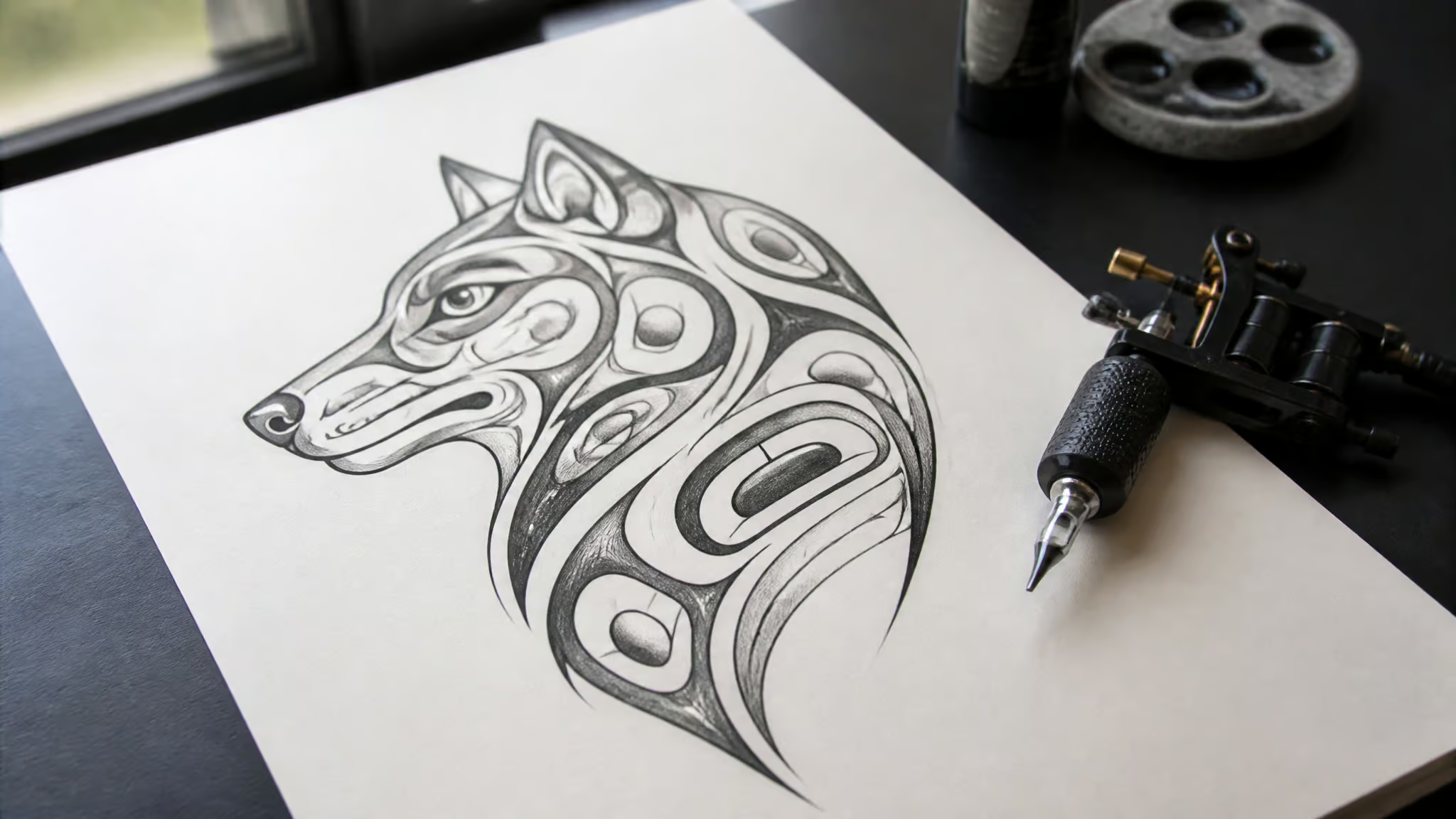
That question matters because the vocabulary you’re probably drawing from belongs to specific living traditions. Formline wolf art, like the Wolf Panel by Kwakiutl artist Trevor Hunt shown at the Spirits of the West Coast gallery, totem-style imagery, klukwana motifs: each comes from a particular people, not from “Native art” as a generic aesthetic. The pattern I keep seeing is the same one: someone walks into a shop wanting a generic howling-wolf piece, then learns the style they had in mind has a specific lineage, and the real question becomes whether their artist can name it. If your artist can’t, that tells you something.
Quick test: Before booking, ask your artist to name the tradition and people behind the design. If neither of you can, pick different art.
General imagery vs. ceremonial imagery
Not all wolf imagery carries the same weight. General wolf meanings, loyalty, lifelong pair bonds, protecting the young and the elders, family ties, communication, are meanings the animal earned through behavior, and they travel fairly freely. Ceremonial imagery is different. Wolf bundles, Katchina figures, klukwana dance motifs: those are sacred property with specific roles, and borrowing them because they look cool is a different act entirely.
Worth knowing the symbol is alive, too. The Spirits of the West Coast gallery sells wolf-symbol prints, jewelry, carvings, masks, bracelets, and bentwood boxes, made by working artists from those traditions. I mention it as proof of life, not as a shopping recommendation.
Consult before you commit
So the practical version, and it’s the same three steps as the naming guidance. Identify which tradition your design comes from. Recognize that traditions vary by tribe, so a rule of thumb from one nation doesn’t transfer to another. Then consult tribal sources or a knowledgeable artist before the needle starts.
This is just the trade-offs logic I’d apply to any purchase, applied honestly: know what you’re buying, know where it came from, know who to ask. A tattoo is the one purchase you can’t return, which raises the bar a little.
The close
Strip away the quiz results and the “loyalty and freedom” filler, and the wolf’s spiritual meaning was never a personality aesthetic. It was teacher. Kin. Healer.
Creator of the prairie. Keeper of the balance, in the Keewatin sense: the wolf and the caribou keep each other strong.
Understanding what the wolf symbolizes includes understanding who the meaning belongs to. Get that part right, and everything else, the name, the tattoo, the star you find at night, falls into place on its own.
Frequently Asked Questions
What does seeing a wolf in a dream mean spiritually?
The traditions define the wolf by family devotion and pack strength, so dreams and sightings fit readings of connection, loyalty, and looking after your own. The popular ‘lone wolf equals independence’ interpretation inverts the documented evidence — it’s a modern projection. The tradition’s wolf isn’t alone; it’s a family animal.
What do wolves symbolize negatively — are there dark or demonic wolf meanings?
The record shows duality and balance rather than good versus evil. The sharpest example is Navajo: mai-coh means both wolf and witch, and the Cherokee wouldn’t kill wolves for fear of revenge from the dead wolf’s siblings. But no Native tradition assigns the wolf a demon — that framing comes from European werewolf and demon lore, and the darkness that does exist is specific and attributed, rarely what pop demonology claims.
What tribal names and words mean wolf, like Navajo mai-coh or Sioux shunk manitu tanka?
The documented words are mai-coh in Navajo (meaning both wolf and witch), shunk manitu tanka in Sioux (‘a powerful spirit in the shape of a dog’), klukwana among Pacific Northwest peoples, and Qisaruatsiaq in Eskimo stories. The Pawnee language goes furthest: it uses the same word for ‘wolf’ and ‘man,’ and neighboring tribes called them the Wolf People.

