You’ve got the design picked. Maybe it’s a howling head, maybe a geometric piece you saw on a trip, maybe something your artist sketched that made you go “that’s it.” And then, somewhere between the deposit and the appointment, the question creeps in: what will this actually say about me? A date, a hiring manager, your dad, a stranger at the gym.
Everyone’s going to read something into it. So, is a wolf tattoo good or bad? Here’s the honest answer: the ink itself isn’t good or bad. Observers read it, and wolves are strange because the exact same tattoo triggers opposite readings at the same time.
Some people see strength and loyalty. Others see loner, aggressor, problem. The framing that stuck with me comes from a video description I came across while digging into this: tattoos aren’t the problem, it’s what they signal. That’s the lens this whole piece runs on. We’ll cover what the wolf symbolizes, where the stigma actually comes from, the cliché problem nobody in the wolf-tattoo articles wants to admit, and a way to decide if you should book the appointment.
Key Takeaways
Same wolf, opposite reads: one person sees loyalty, strength, guardianship; the next sees loner, aggressor. The only real decision is which reading you’re willing to own.
The “red flag” stigma around tattoos traces largely to a small, monetized corner of dating-debate YouTube, not survey data, and the “80% of men dislike tattoos on women” claim is an unsourced comment, nothing more.
Design and placement do most of the perceptual work: a small minimalist forearm wolf reads as a nature tribute, while a snarling chest piece or full sleeve invites the tougher stereotypes.
Table of Contents
What a wolf tattoo symbolizes
A wolf tattoo is a symbol of pack loyalty and family bonds first, with survival through hardship, independence, and guardianship close behind. That’s the consensus reading, and it holds up because the animal itself earns it: wolves hunt together, raise pups as a unit, and endure conditions that kill weaker species. If someone sees your wolf and thinks “loyal, tough, protective,” that’s not a stretch. It’s the plainest reading available.
There’s a cultural and spiritual layer on top of that. In several Native American traditions the wolf acts as a spirit guide, a teacher about instinct and path-finding. In Japanese folklore, the ōkami is a guardian figure, watching over travelers and crops. I’m not going to pretend there’s a study behind any of this; it’s common symbolic knowledge, and if you want the deep version, we’ve got a full guide to what a wolf symbolizes spiritually.
Then there’s the lone wolf variant, and this one is more loaded than people realize. A lone wolf tattoo isn’t just a design choice, it’s a self-narrative you’re putting on your own body. You’re telling the world you operate solo, answer to no pack. Fair enough.
But understand that you’re also inviting strangers to speculate about your personality based on that story, and not everyone fills in flattering details. That’s the risk you’re buying.
And here’s the thing that makes wolves genuinely different from other animal tattoos: the wolf is the only creature that’s simultaneously the pack icon and the loner icon. A lion tattoo doesn’t carry that duality. Neither does an eagle. The wolf’s dual identity is exactly why the same ink gets opposite reactions, which is where the rest of this article goes.
Wolf tattoo color and style variants
The difference between a black wolf tattoo and a white one comes down to which mood the design projects: black reads as mystery and raw power, white reads as spirit and purity. Same animal, completely different energy. A black wolf against bare skin hits hard and slightly ominous. A white wolf, often done with negative space or on darker ink work, feels ethereal, almost ghostly.
The blue-eyed wolf works differently again. Blue eyes on a wolf are rare in nature, which is exactly why the design reads as piercing focus and uncommon intensity. It’s a popular design-level interpretation, not documented symbolism, so don’t expect a folklore citation. But if you’re picking a variant, know that the ice-blue stare changes the vibe of the piece considerably.
The practical upshot: your color and style choice pre-loads the first impression before anyone asks a single question. A howling white wolf says something different to a stranger than a snarling black one, even though both are “wolf tattoos.” If you want the full breakdown of styles, we have a longer guide to wolf tattoos with meaning.
Is a wolf tattoo a red flag? What the stigma actually says
No, a wolf tattoo is not inherently a red flag, but a documented and heavily gendered perception pattern exists online, concentrated in dating-debate comment culture. That’s the verdict, and I’ll show my work, including where it’s thin.

Here’s the evidence base. Across five YouTube videos on tattoos and dating, commenters overwhelmingly framed tattoos as deal breakers, usually grouped with piercings and dyed hair into one signal package. The assumptions attached: impulsivity, attention-seeking, mental-health issues. Just as telling is what didn’t happen.
Nobody asked about the design, the meaning, or the artist. People didn’t argue with the tattoo; they judged the wearer and moved on. There’s a quiet-disengagement dynamic in these threads: men describe silently walking away rather than debating. Forum threads split the same way you’d expect on Reddit or anywhere else the question comes up, with half the replies reading the symbolism and the other half importing the lone-wolf personality stereotype.
That grouping deserves its own beat, because it explains a lot. In the discourse, tattoos don’t get evaluated alone. A septum ring plus tattoos plus unnaturally colored hair gets read as a single uniform, one bundled signal about a person. The stigma attaches to the cluster, not to your wolf. Which means you could have the most traditional wolf design on earth and still catch judgment meant for the whole category.
The anecdotes circulating in these threads are exactly that: anecdotes. One commenter described his daughter’s septum ring and tattoos as part of a life that went badly. Another blamed an ex-partner’s tattoos, recounting how she got them gradually before leaving him and becoming an escort, a story he only pieced together in hindsight, calling the tattoos part of a big puzzle. One guy claimed his best relationships were with untattooed women.
A former Air Force medic chimed in with his own read. The metaphors get colorful: one tattoo critic compared ink to graffiti, another to stickers on a dresser, and the circulating Kim Kardashian line about tattoos on women being like a bumper sticker on a Bentley gets repeated approvingly. I’m reporting these as examples of how the discourse talks, not endorsing any of them. If you’re noticing that every one of these stories confirms what the storyteller already believed, congratulations, you’ve spotted the confirmation bias. Worth noting too: some commenters extend the criticism to heavily tattooed men as well, so the stigma isn’t exclusively aimed at women.
Why people see tattoos as dating deal breakers
The red-flag framing exists because of what tattoos are believed to signal, not the ink itself, and it traces to an identifiable, monetized content ecosystem rather than any neutral consensus. Follow the money and the pattern gets a lot less mysterious.

Start with MenNeedToBeHeard, the channel behind the “it’s what tattoos signal” thesis and a video whose title frames the question of men viewing tattoos as a warning sign. It’s a mid-sized operation, sitting at around 135K subscribers. The channel runs on men’s-advocacy cause branding: it sells merch (donating 10% of merchandise profits to the Taylor House, a domestic violence shelter for men), the creator sells a book on male domestic violence victims, runs a Patreon called the Brotherhood of Men, and hosts a weekly live show. The stated mission is raising awareness of issues men and boys face, and the content is opinion, not research.
Then there’s whatever Clips, which runs “Dating Talk” panel clips hosted by Brian Atlas, where tattoos-as-red-flags debates get excerpted into standalone clips with titles like the one asking whether tattoos are a red flag on women. The red-flag debate is the format. It’s what generates the clips.
And Rich Cooper of The Unplugged Alpha published a video through his clips channel around June 5, 2025 asking whether tattoos and piercings can be red flags. Cooper sells the book, a divorce course, a paid community, merch, and sponsorships.
I want to be careful here. I’m not claiming anyone invented this stigma cynically or that their views are insincere. But every one of these channels monetizes the framing it sells. The red-flag narrative is product.
It has provenance, a distribution strategy, and an incentive structure. It is not survey data. One honest caveat: full transcripts weren’t available for several of these videos, so the argument rests on titles, descriptions, and comment sections. And for balance, men get judged for tattoos too, which means the wolf’s signal problem applies to any wearer, not just one gender.
Red flag: A viral statistic with no named study, sample, or source behind it is content, not evidence — treat it accordingly.
The “most stereotypical tattoo” problem
Wolves keep showing up on “most stereotypical tattoo” lists, usually alongside howling moons, pine forests, and clocks. I’m not telling you wolves are objectively the most common tattoo, but they recur in the cliché discourse often enough that pretending otherwise would be dishonest, and it’s part of why wolf tattoos carry so much symbolic meaning in the first place. So let’s deal with it.
Here’s the irony that nobody in the wolf-tattoo articles wants to touch: the symbol of independence is itself a common choice. You’ve chosen the lone wolf. So has a lot of other people. A commenter in one thread passed along an Ozzy Osbourne critique about how full tattoo sleeves became herd behavior rather than individuality.
The point lands even if you couldn’t name an Ozzy song. When everyone gets inked to be different, the difference evaporates.
There’s an even sharper version of this: “No tattoos is the new tattoos.” Clean skin has started functioning as the counter-signal, the rarer choice. Which means bare skin is now as legible a choice as inked skin. There’s no neutral corner anymore.
The way through isn’t denial. It’s personal meaning and original composition. A wolf you designed around a specific experience, placed deliberately, reads nothing like the flash-sheet howling moon everyone got at 19. If you want help making sure the piece won’t feel dated in a decade, our guide to the best placement for a wolf tattoo covers sizing and visibility trade-offs too.
How design and placement change perception
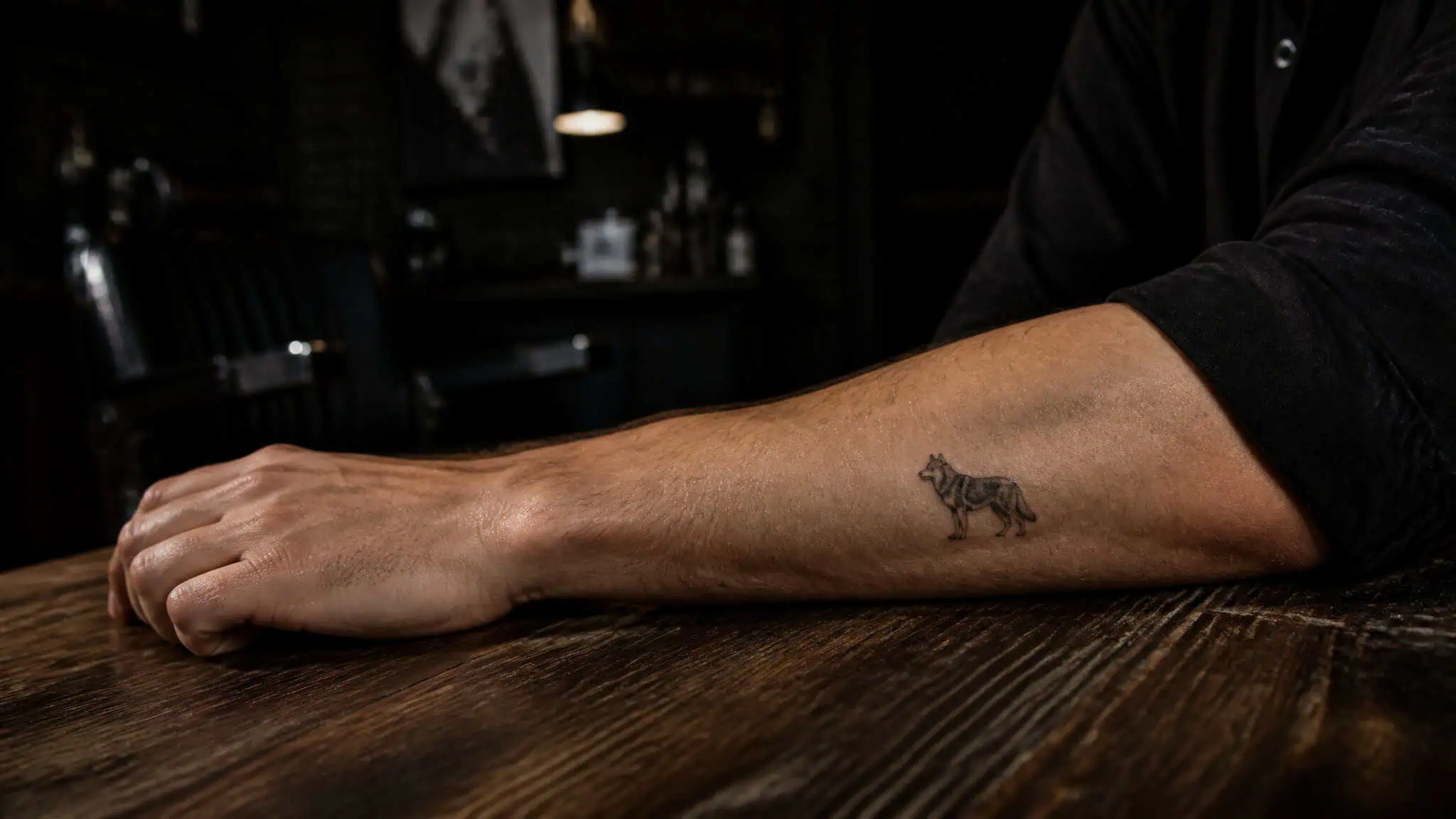
Wolf tattoo placement changes how people perceive it because visible placements engage the signal-reading dynamic more than concealable ones. A small minimalist wolf on the forearm and a full snarling chest piece are technically the same tattoo. Strangers will not treat them the same way.
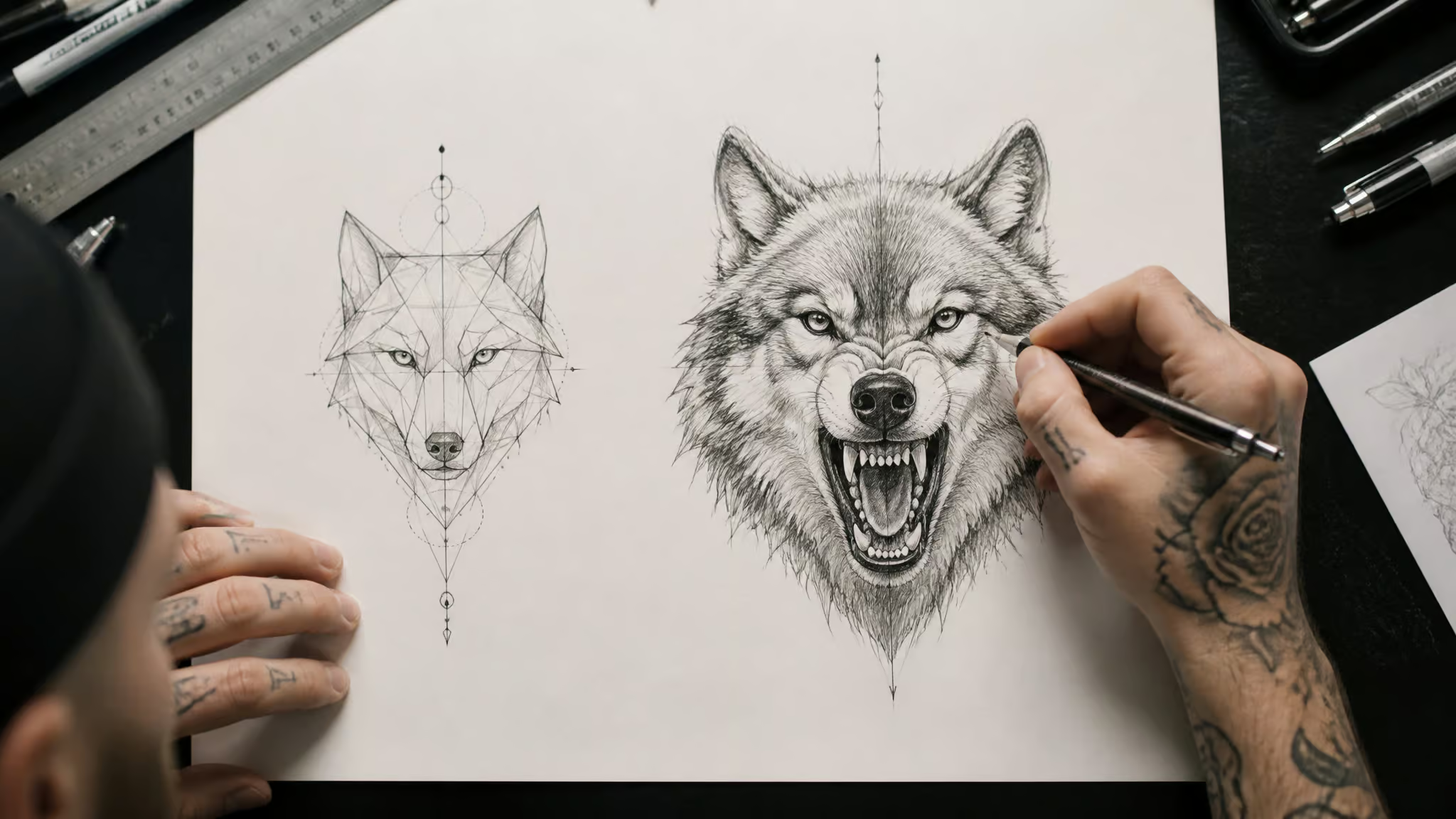
The placement escalation follows a pattern the tattoo discourse has documented extensively: face, neck, chest, and full sleeves are framed as the strongest signals, with a whole “jobstopper” narrative attached. The story goes that these placements mark escalation, an addiction to ink, and firing anecdotes circulate in the same content to prove the point. I have no wolf-specific employment data to give you, and I’m not going to invent statistics. But the concern exists in real hiring discourse, and it maps cleanly: a forearm or calf piece reads mild, a neck piece reads as a statement you made on purpose.
Design variant matters just as much, because each one attracts its own stereotype. The minimalist wolf reads as a nature tribute, almost safe. The snarling realistic portrait slides into tough-guy shorthand even if all you wanted was something that looks badass. The tribal wolf carries the lone-wolf baggage plus a cultural sensitivity question worth pausing on: tribal designs often borrow from traditions that aren’t yours, and it’s worth knowing what you’re borrowing from before you wear it.
Not a lecture. Just do ten minutes of homework.
The clearest window into all this is what happens in the tattoo shop itself. From what circulates in artist discussions, clients commonly walk in asking for “a wolf” and nothing else. The artist’s clarifying questions, howling or snarling, big or small, and crucially where, are effectively questions about how strangers will read you. The pros know the placement and expression do the talking.
How to weigh stigma claims you find online
Somewhere in your research you’ll run into the claim that 80% of men dislike tattoos on women. Here’s what’s actually behind it: a YouTube comment. No survey, no sample, no source. It’s exactly the kind of number that screenshots well and cites nothing.
That’s the pattern to watch for. Viral stigma statistics almost always trace back to other comments, not studies. A confident judgment substitutes anecdote for data, gets repeated, and becomes “everyone knows.” Before you repeat any number you screenshot, run three questions on it: Where did this come from?
Who was actually asked, and who benefits from me believing it? Those two answers plus the source give you provenance, sample, and incentive. If any of the three is missing, treat the claim as noise. You’ll feel smarter than most of the internet, because you will be.
The inverse signal and the historical arc
A wolf tattoo can work as a first tattoo, but the decision should account for the growing tattoo-regret trend and the design’s cliché status. Those two caveats don’t kill the idea. They just mean you should walk in clear-eyed.
First, understand the inverse signal. A popular video genre now frames clean skin as a rare positive trait, with titles along the lines of millions of women starting to regret their tattoos and content arguing that untattooed people have more dating options. Same signal-reading logic, opposite direction. The point isn’t that tattoos are bad. The point is that getting a wolf tattoo is a legible tradeoff, not a safe default. You’re picking a reading, and some people are now picking the other one.
The historical arc puts this in perspective. One commenter recalled paying a quarter as a teenager to see a tattooed woman in a circus tent, back when ink was a sideshow attraction. Today it’s everywhere, and the nostalgia crowd grumbles that tattoos were cooler when they were limited to sailors and criminals. The regret trend is real too, and it’s reaching Gen Z; a Steve-O clip about wishing he’d never gotten inked sits at around 12 million views.
But before you read that as a verdict, note the counter-evidence: mainstream tattoo culture, artists, celebrity ink, documentaries, coexists at full scale alongside the regret content. Perceptions are mixed, not monolithic. It’s a caveat, not a death sentence for your design.
Should you get a wolf tattoo? A decision framework
What a wolf tattoo means on a woman versus a man depends less on the design than on the gendered perception patterns documented around tattoos generally. The design doesn’t change between genders. The observer does, and the observer brings a script.
With that said, here’s how I’d actually think through the decision, the same way I’d talk a friend through it:
- Three audiences, three reactions. What are you comfortable being read as by employers, by dates, and by family? All three conversations exist in the documented record. The jobstopper discourse is real, the red-flag discourse is real, and your father has an opinion. Decide in advance which of those judgments you can live with.
- Placement visibility. Can you live with it always visible, or do you want the concealable option? A chest piece you can cover beats a neck piece you can’t, if flexibility matters to you.
- Design tilt. Does your variant pull aspirational, loyalty and guardianship, or aggressive, snarling portrait? Same animal, different message.
- The regret caveat. The trend is real. Sit with the design for months before booking, and get the most original composition you can afford. Trend styles date fastest.
Here’s the payoff, said plainly: the question was never “is a wolf tattoo good or bad.” It’s which reading am I willing to own, in which placement, on whose eyes. Answer that, and the tattoo takes care of itself.
Frequently Asked Questions
Is a wolf tattoo a good or bad idea?
The ink itself isn’t good or bad — the same wolf triggers opposite readings in different people, with some seeing strength and loyalty while others see loner or aggressor. The real decision is which reading you’re willing to own. Weigh your three key audiences (employers, dates, family), pick placement you can live with, and sit with an original design for months before booking.
What does a lone wolf tattoo say about your personality?
A lone wolf tattoo is a self-narrative on your body: it tells the world you operate solo and answer to no pack. But you’re also inviting strangers to speculate about your personality based on that story, and not everyone fills in flattering details — the lone-wolf stereotype gets imported into online debates regularly. That’s the risk you’re buying with the design.
What does a wolf tattoo mean on a woman versus a man?
The design doesn’t change between genders — the observer does, and the observer brings a script. The stigma around tattoos is heavily gendered in dating-debate spaces, but some critics extend the judgment to heavily tattooed men too, so the signal problem applies to any wearer. Your comfort level with being read by employers, dates, and family matters more than your gender.

