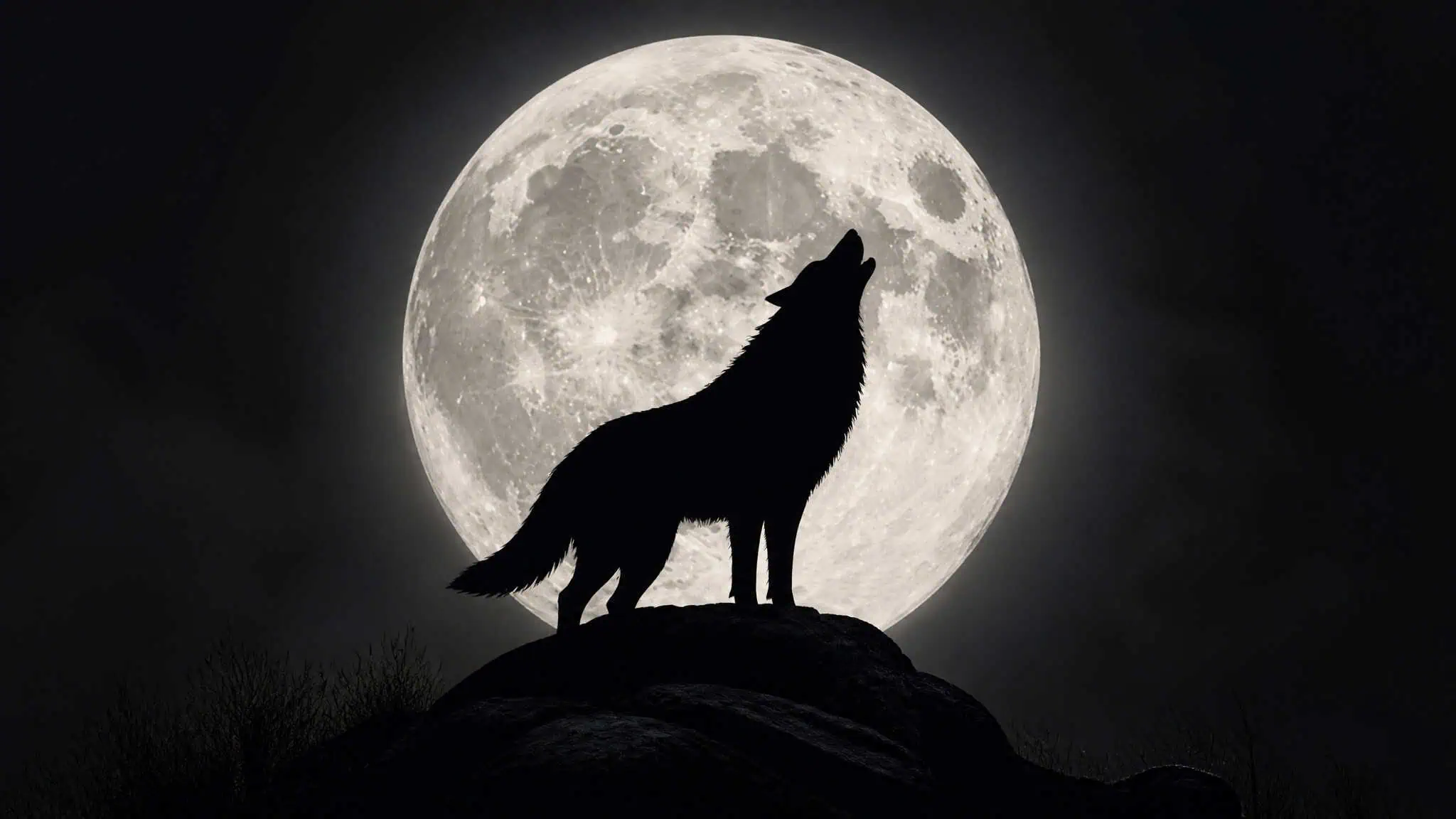
One wolf, head tilted back, howling at the moon. It’s the first animal tattoo that always comes to mind, even for guys who’ve never thought about ink twice. You see it everywhere, on men and women, in placements you wouldn’t expect. The wolf and moon tattoo meaning seems simple at first glance: wildness, freedom, strength, loyalty, connection to nature.
But it’s messier than that, and the mess is what makes it good. The same silhouette reads as guardian to one wearer and death omen to another, and what tips the balance is mostly culture, though style and placement matter too. Here’s what this ink actually says, and how to make it say what you mean.
Key Takeaways
Core meaning: wildness, freedom, strength, loyalty, and connection to nature. The howl itself does double duty, pack communication in biology, and in myth a petition to the moon for power to protect family.
Culture flips the sign: Native American and Japanese traditions read the wolf as guardian and protector, while some European folklore casts it as a Satan emissary and a death omen when it howls near your door.
The alpha wolf tattoo meaning is based on a myth. Real pack leaders are typically the parents, not fighters who clawed their way to the top.
Table of Contents
What a wolf and moon tattoo means
A wolf and moon tattoo symbolizes wildness, freedom, strength, loyalty, and a connection to nature, usually drawn as a lone wolf with its head back, howling. That’s the flat answer. The interesting part is why that image carries so much weight.
The howl has two registers. Biologically, wolves howl to communicate with their pack. That’s it. It’s a long-distance phone call.
In myth, though, the howl is communication with something bigger, a higher power, and that’s what makes the moon pairing work. It’s not decoration, it’s a petition. The wolf isn’t howling at a rock in the sky; it’s asking.
The design carries guardianship weight too, the “I protect my people” reading, plus a connection to tribe, family, or heritage for guys honoring their crew or their roots. And the howl itself reads differently depending on the wearer: sorrow, joy, or liberation. Same pose, different autobiography. It’s also a hugely popular pick with nature lovers, so if you’re the type who actually feels tuned in to the outdoors, you’re in good company.
What the moon adds: femininity, power, and transformation
Yes, the pairing carries darkness and transformation associations, and there’s a specific mechanism behind it. Paired with the moon, the wolf takes on femininity and birth symbolism. In the traditional reading, the howl asks the moon, a feminine presence, for power to protect family. That’s the concrete mechanism most articles skip when they write “moon = mystery” and call it a day.
The howl is also about power and communication: calling the pack, marking territory. You’ll notice the alpha framing creeping in there, and that framing comes from an outdated myth. Real pack leaders are the parents. More on that later, once.
Some cultures see the wolf as a creature of the moon itself, which is where the transformation stories come from, werewolf-adjacent territory. One design guide, Bensoz, calls howling-at-the-moon the most popular wolf-moon variant with werewolf designs second, but that’s an editorial call with no data behind it. Take it as one site’s take, not gospel.
Cultural roots: guardian in one tradition, death omen in another
Both the guardian and death-omen readings are legitimate, they come from different cultures. Native American and Japanese traditions treat the wolf as a protector; some European folklore casts it as a bad-luck omen. Which one you’re wearing depends on which tradition your design leans on.
Guardian and guide traditions
Wolves have been revered since ancient cultures treated them as totemic animals, and Indigenous cultures connected them to loyalty, family, and the spirit world. In Native American traditions, the wolf stood for protection, guidance, and nobility, and was viewed as a guardian. The Celts saw wolves as protective figures and spirit guides linking to the living and their ancestors. Japanese folklore made wolves protectors of travelers and children, and the now-extinct native Japanese wolves were believed to be gods or divine messengers.
The family angle runs deep. The pack feeds and protects all its members, and Rome’s founding myth has Romulus and Remus raised by a she-wolf. If your tattoo is about belonging to your people, you’re drawing on a very old story.
The European dark register
Some European traditions went the other way and cast the wolf as an emissary of Satan, a bad-luck omen. Old folklore said a wolf’s howl near your door meant death was close. Creepy old-story stuff, not fact, but it’s where the negative reading comes from.
Red flag: A howling wolf at your door is old folklore, not fact. Know which tradition your design borrows before you sit in the chair.
Neither reading is wrong. Meaning is culture-dependent, so know which side of the split your design sits on before you sit in the chair.
Wolf and moon meaning for women
For women, a wolf and moon tattoo symbolizes the guide-and-protector role plus femininity, because the moon is present in the design. Here’s the contrarian part: despite the design being marketed heavily to men, as in most moon tattoos for men, its core mechanism is matriarchal. The wolf asks the moon for power to protect her family. That’s feminine guardianship at the core, not a men’s design women borrow.
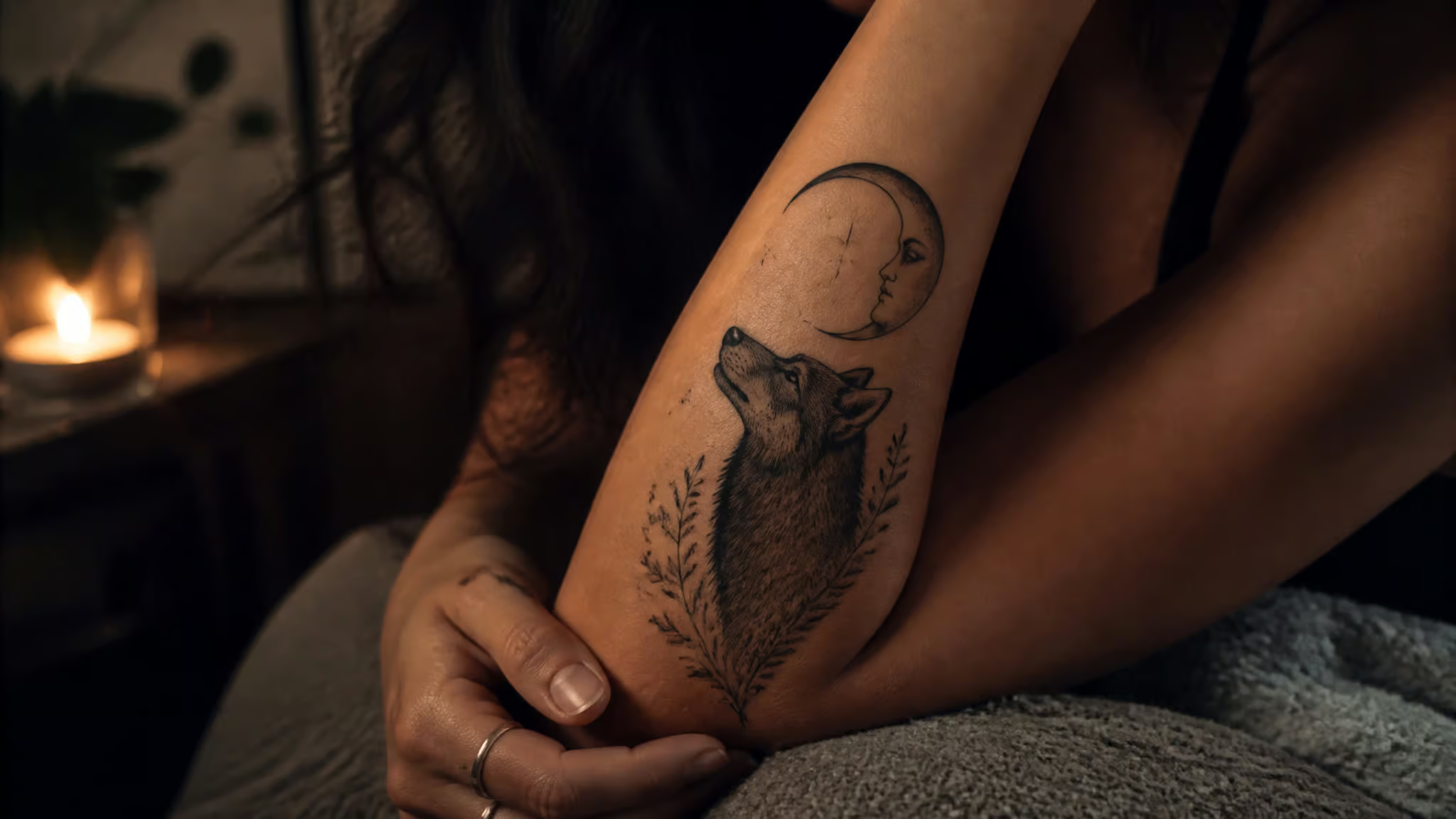
The most common overall interpretation of the whole motif is a guide and protector of its own kind, with femininity added when the moon shows up. That reading works regardless of who’s wearing it.
For a concrete example: one design in the BlackInk gallery shows a woman alongside a howling wolf under the moon, in Blackwork. Heads up, though: the galleries are AI-generated design examples, not real client tattoos. Still useful reference material.
Wolf and moon meaning for men
For men, the wolf and moon tattoo meaning centers on strength, independence, and loyalty to the pack, with the lone-wolf pose doing most of the talking. The howl adds the nature-connection reading, wildness, freedom, and a call-of-the-wild streak, and the alpha question hangs over some versions of the design.
Strength, independence, and pack loyalty
For men, the design reads as strength, lone-wolf independence, and pack or family loyalty, and the irony is the whole point. Wolves are rarely alone in the wild. So a lone wolf reads unmistakably as independence and individuality. It fits guys who like their own company or push against the status quo.
Keep two readings distinct. The howling wolf is the image stripped to its simplest true reading, and it suits guys who genuinely feel tuned in to nature, hikers and outdoors types included. The lone wolf, meanwhile, signals fierce independence precisely because real wolves are never alone. Don’t blend them into one mush of “freedom vibes.”
The alpha myth
The alpha wolf tattoo meaning is based on a myth: real pack leaders are typically the parents of the younger wolves, not fighters who won rank through combat.
Here’s the tension: alpha designs remain commercially popular anyway, still marketed to bold, competitive, family-oriented guys. In practice, this often becomes a consultation moment. A guy learns the biology and either embraces the parental-protector reading, which is honestly the stronger story, or keeps the design for its cultural cachet. Both are fine. Guys tend to appreciate the correction rather than resent it, so consider this yours.
How design choices change the meaning
Style and companion elements are levers on meaning, not decoration. The same wolf-and-moon concept reads completely differently depending on how you execute it.
Style and impression
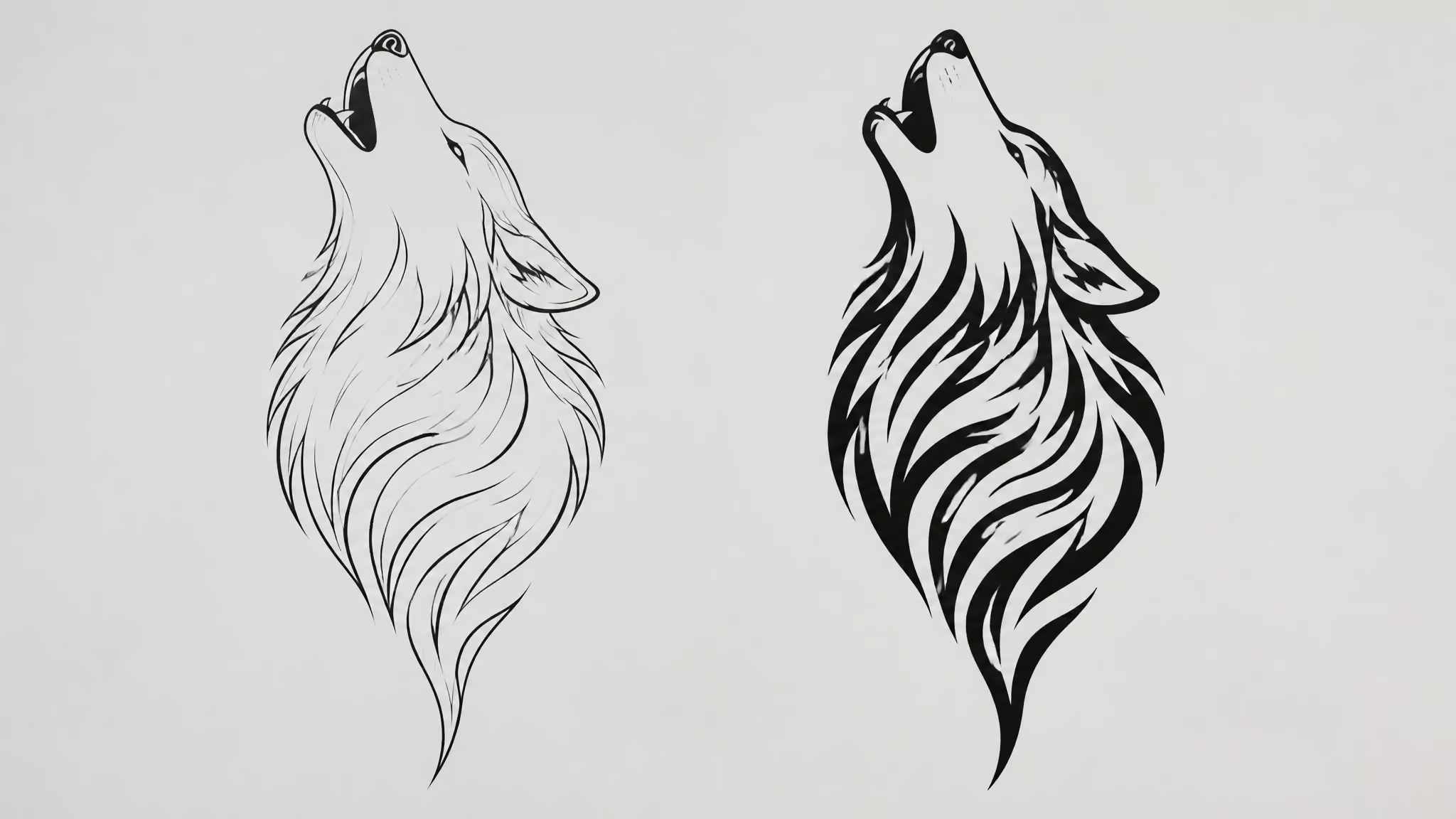
Realism gives you lifelike detail, fierce yet noble. Black and grey brings mystique and depth, the moody option. Watercolor brings in color for the night sky and moon, the vivid take. Neo-traditional and geometric are the modern routes.
Minimalist strips it back to shapes and angular lines, a solid pick for a first tattoo or a low-key placement. Tribal wolf is the 2020s update of 1990s tribal ink: bold black lines, semi-abstract curves, usually snarling or howling. It can reflect the wearer’s heritage, but only say that if it’s actually true for you.
So pick your style before you walk into a shop, it completely changes how the same design reads. Our guide to wolf tattoos with meaning covers more ground on execution choices.
What the counted data shows
Across roughly 58 documented designs in the BlackInk AI galleries, AI-generated examples, Blackwork is the most frequent style at 14, spanning more than 10 styles including dotwork, sketch, surrealism, Japanese, and traditional. BlackInk‘s wolf-howling idea listings run to page 115. Reference material isn’t the bottleneck. Deciding is.
Companion elements and color
You can swap in a full, crescent, or bleeding moon, set the scene with forest silhouettes, mountains, a galaxy backdrop, or add mandala elements. Color shifts the message too: a black wolf can mean your darker side or your shadow, but it can also stand for facing your fears, a sinister warning, or spiritual connection, while a white or arctic wolf leans toward good luck and adventure, plus overcoming obstacles.
Companions carry their own meanings. Wolf and cub says family commitment. Wolf and rose, two sides of one personality, reads romantic on the chest with red roses. A werewolf design is the inner battle, straight from European full-moon folklore. A wolf skull is about grief, transformation, and accepting what’s coming.
Some of the strongest examples in the galleries: Fenrir howling at the moon in dotwork, a wounded wolf at full moon in realism, a Japanese-style piece with cherry blossoms. And if dire wolves got a boost from Game of Thrones, House Stark’s sigil did the heavy lifting. Pop culture moves ink. Also worth a look if you’re weighing family-themed versions: wolf pack tattoo meaning for the pack-of-three and matching-tattoo angle.
Small tattoos, placement, and the aging problem
Size dictates style. That’s a longevity fact, not a taste preference.
Buyer rule: Small tattoos need simple, face-focused black-and-grey designs. Fine details blur over the years, so simplify now to stay legible later.
Where it fits
Big detailed pieces go on the back, chest, or thigh. Smaller versions suit the forearm or calf, and small placements are usually easy to cover for work. There’s a fuller breakdown in the guide to best placement for a wolf tattoo if you’re torn between visible and private spots.
Why small versions need simpler designs
Small wolf tattoos work best as simple black-and-grey, face-focused designs. Here’s why: fine details and multiple colors blur and bleed together over the years. A detailed howling scene at forearm scale won’t stay legible.
This comes up constantly in practice. A guy arrives wanting the full scene, wolf, moon, forest, sky, small. The honest resolution is a simplified silhouette plus moon. It stings for about a minute, then you realize you’ll still be able to tell what it is in fifteen years. Of everything in this article, this paragraph saves the most regret.
Making it personal: how one swap turns the design into autobiography
The personal touches that change meaning are specific element swaps. Trade one canonical element, usually the moon, for something tied to you, and generic wildlife art becomes autobiography.
The gallery examples make the case better than any theory. A moon made of coffee beans. A wolf silhouette with hidden binary code, built for a guy who loves wolves and programming. A wolf howling at a microphone for a musician.
A wolf standing on a stack of books, howling at a crescent moon, for the reader types. A wolf with a cub underneath for lineage. Same pose, five different stories.
If none of those fit, the add-on menu is long: names, Roman numerals, crowns, other wildlife, mandala elements, vibrant color. The pitch is simple: variations reflect personal stories, cultural background, and beliefs, which beats grabbing a flash sheet. All the gallery pieces are design examples, not real tattoos on real people, but they’re proof of how far the swap trick goes.
The dark register and the freedom-unity duality
No, a wolf tattoo isn’t a red flag, except when the wearer picks it specifically for its darker folklore readings, and those readings are documented traditions, not verdicts on anyone who has the ink.
Omens and werewolves
The negative meanings belong to specific traditions: the European death omen, the Satan-emissary claim, werewolf transformation as an inner battle, the black wolf as shadow. Honest note: the sources don’t directly address how wearers are perceived socially, so this is folklore you should know about before you ink, not a judgment of anyone who already did.
The lone wolf paradox
Wolves are rarely alone in the wild, so the lone howling wolf is simultaneously the symbol of independence and of the pack it calls to. That’s the paradox, in plain terms: the guy who loves his crew but needs his own space. It’s a picture of longing for connection, expressed through solitude. That’s why the motif endures.
One takeaway: it’s a strong symbol of individuality and connection to nature, and it’s lasted this long because it holds both at once.
Frequently Asked Questions
Is a wolf tattoo a red flag?
No — not inherently. The darker readings (death omen, Satan’s emissary, werewolf inner battle) come from specific European folklore traditions, not a verdict on anyone wearing the ink. It only signals what you intend if you’ve chosen your design’s tradition deliberately.
Is a wolf tattoo a good or bad idea?
It’s a good idea if you know what your specific design says. The howling wolf suits people genuinely tuned in to nature; the lone wolf reads as independence precisely because real wolves are rarely alone. The main regret risk isn’t the symbol — it’s getting a detailed scene too small, where fine details blur within years.
What does a small wolf and moon tattoo mean and where should it go?
A small version carries the same core meanings, but size dictates style. Small placements like the forearm or calf work best with simple, face-focused black-and-grey designs, because fine details and multiple colors blur and bleed over the years. A simplified silhouette plus moon will still be legible fifteen years later.
How does the meaning change between a lone wolf, wolf pack, or wolf and cub design?
The lone wolf signals independence and longing for connection — wolves are rarely alone, so solitude is the statement. A wolf pack design leans into family and belonging; the pack feeds and protects all its members. Wolf and cub specifically says family commitment and lineage.

