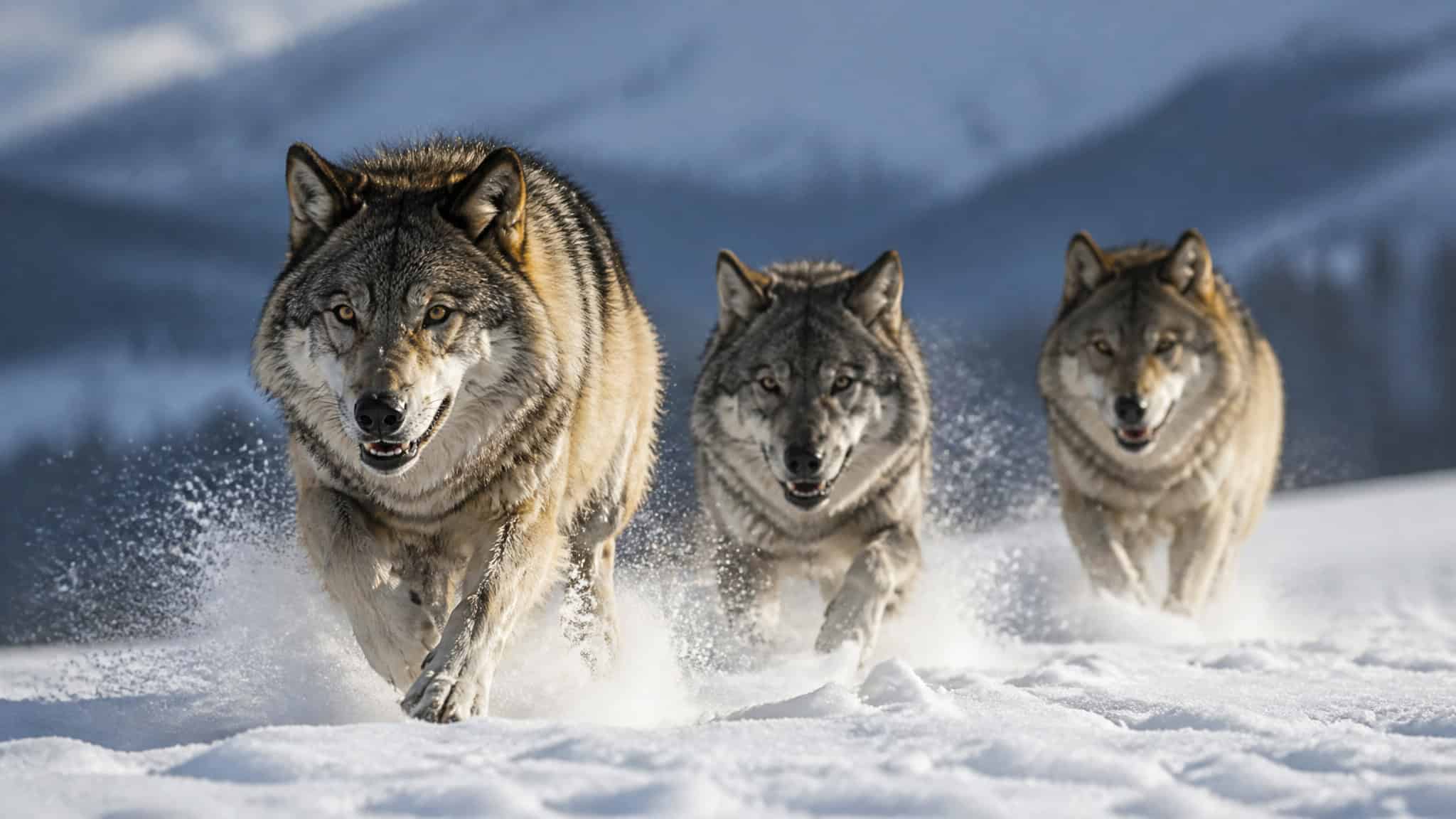
Standing in the shop chair, the questions stack up fast. One wolf or five, black ink or grey, snarling or running? And where’s it going, forearm, chest, or somewhere your boss won’t see it?
And here’s the part most guys don’t realize until the artist asks: every one of those answers changes what the tattoo actually says. The wolf pack tattoo is the most popular family-and-brotherhood ink going, and it’s also the most misunderstood, because everyone assumes it’s about the alpha. It isn’t. Real wolf packs aren’t dominance hierarchies. They’re families led by parents, and once you know that, the family meaning gets stronger, not weaker.
Key Takeaways
A wolf pack tattoo represents loyalty, unity, and family bonds, and that reading is biologically accurate: real packs are family units led by the parents, not alpha-dominated hierarchies.
Design choices change the message: two wolves read as a couple or brothers, three as siblings or a parent with two kids, black coats signal change, white arctic coats signal luck and resilience.
Small pack tattoos work best as simple black-and-grey silhouettes, because fine details blur at wrist and ankle scale over time.
Table of Contents
What a wolf pack tattoo actually means
A wolf pack tattoo represents loyalty, unity, and the unbreakable bond of family and brotherhood. That’s the headline meaning, and unlike most tattoo symbolism, you don’t have to take it on faith. A real wolf pack is a family: parents and their offspring, cooperating. The family reading isn’t poetic license. It’s biology.
That’s why this ink carries so much weight for the guys who get it. Pack unity, lifelong devotion, protection of your people, strength that comes from togetherness rather than from going it alone. And there’s a tribute angle that lands hard for a lot of men: this is the tattoo for the people who stood by you when things went sideways. It’s not a “family” tattoo in the greeting-card sense. It’s a this-is-who-riding-with-me tattoo.
If you want to go further, wolf family tattoos can be personalized with your children’s names worked into the design, which turns a general statement into a specific one. And if you’re the type who wants backup beyond biology, wolves have kept showing up in human storytelling as symbols of social harmony, leadership, and instinctual power, per Britannica‘s cultural history. Different cultures, same conclusion: the wolf means something because the wolf means family.
The alpha myth and parental leadership
The alpha wolf dominance thing is a myth. In reality, the parents of the younger members are the ones leading the pack. That’s it. No bloody coup, no subordinate fighting his way to the top of a pyramid. The big wolf out front is usually dad.
Here’s why that’s good news for your tattoo: a “leading alpha” design, one large wolf guiding smaller ones across the skin, actually depicts fatherhood or mentorship. Dominance ink turns out to be family ink mislabeled. The correction doesn’t weaken the design. It hands you a better story to tell when someone asks what it means.
Red flag: Any artist still pitching dominance hierarchies as wolf biology is working from outdated material.
Now, the marketing reality. Alpha tattoos still get sold hard to bold, competitive, family-oriented guys, and shops know the word sells. Notice that last descriptor, though. Family-oriented.
That’s the honest half of the pitch. The common pivot I keep hearing about goes like this: a guy comes in wanting an alpha piece, hears that packs are parent-led, and walks out with a pack-with-pups design instead. Same boldness, better backstory.
Lone wolf vs pack: the duality decision
Lone wolf tattoos mean independence precisely because real wolves are rarely alone. That’s the paradox that makes the symbol work: loneliness only reads as meaningful in a species defined by belonging. A lone wolf tattoo is aspirational, not descriptive. Pack ink is the belonging side of the story. Lone wolf ink is for the guys who got through something solo and want the receipt.
Lone wolf vs the pack
The lone wolf design almost never travels alone, visually speaking. You’ll see it paired with mountains or a full moon, isolation rendered as scenery. And the pop-culture anchor here is hard to beat: House Stark’s dire wolves from Game of Thrones, and the line people actually bring into shops: “When the snow falls and the white winds blow, the lone wolf dies, but the pack survives.” That’s a book and TV quote, not ancient wisdom, but it argues the pack side wins, and it’s a big reason many guys choose pack ink over the solo route. If you’re weighing the two, our wolf and moon tattoo guide digs into the lone-hunter imagery.
The howl
Wolves howl to communicate and mark territory, so a howling wolf tattoo stands for connection to family and community. It also stacks freedom, courage, defiance in the face of adversity, and the call of the wild. The howling wolf at the moon is the most popular moon design in tattooing, with werewolves second. There’s also the yin-yang wolf: aggressive predator on one side, loyal protective parent on the other, which is basically your own push-pull rendered in ink.
Choosing your pack: headcount, matching, and pack-of-three designs
Matching wolf pack tattoos work as brotherhood and family symbols, and the number of wolves should map to your actual family structure. That’s the whole design logic. Two wolves for a couple or a pair of brothers. Three for siblings, or a parent with two kids.
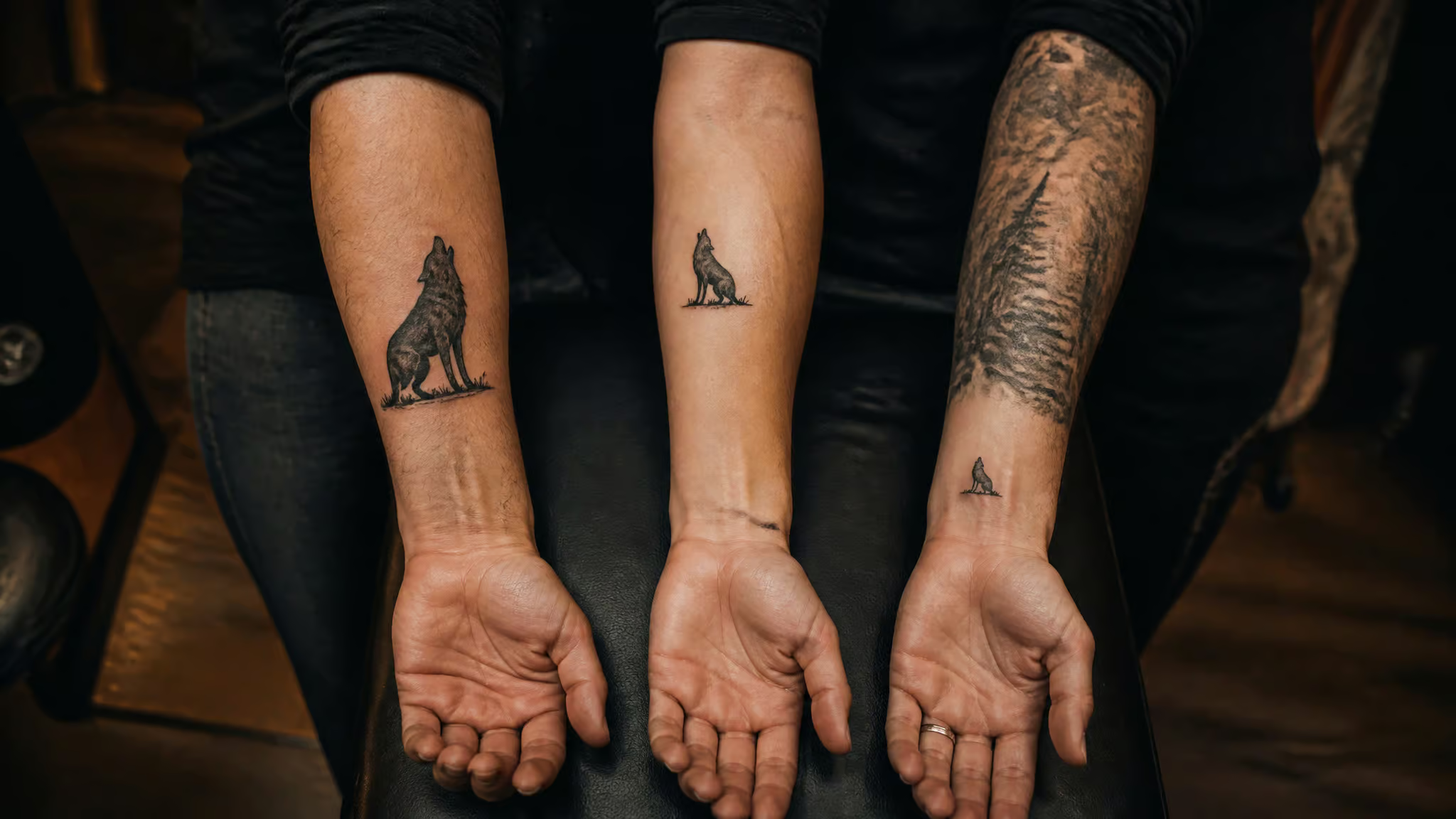
A full pack for the whole family. Guys match headcount to children, siblings, or close brothers all the time.
Here’s the part I’d push on if we were designing a pack-of-three together. Carbon-copy matching is the lazy version. The better move is one shared silhouette, rendered at different sizes and placements per person, because each person’s relationship to the pack is different. Siblings, friends, parent-and-children: same animal, different vantage point.
That’s the pattern that comes up again and again in group consultations. One design, scaled and placed per person, instead of everyone wearing an identical sticker.
A few practical notes on making it yours:
- Work with a custom artist so the piece is actually yours, not flash off the wall.
- Kids’ names worked into a family pack design make it personal in a way nothing else does.
- Testing a temporary tattoo first is genuinely useful advice, not an admission of doubt. Wear it for a week. See if you still like it.
- A running pack of wolves signifies family ties, which is one visual that does the headcount job for you.
Design variables: color, posture, and companions
Two identical pack tattoos can carry different messages depending on coat color, posture, and surrounding elements. Meaning isn’t read off a symbol chart. It’s engineered through choices, which is good news, because choices are yours to make.
Senior artist Jesse James Doering puts it this way: A wolf tattoo isn’t just about picking a cool animal, it’s about understanding the emotion you want the piece to carry. His practical point is that eyes, posture, and surroundings each turn a dial on that emotion. And honestly, his read on how clients work is accurate: most people start with what looks good, then refine the meaning toward family loyalty, independence, or transformation. That’s not shallow. That’s how picking ink actually goes.
Color meanings are traditions the tattoo world reports, not rules: a black wolf is a messenger or warning of change, tied to the shadow self, facing fears, and milestone moments. A white arctic wolf reads as good luck, adventure, and overcoming obstacles, and that resilience reading isn’t random. Arctic wolves survive brutal environments, and the symbol borrows from the survival.
Then there are the companions. A raven pulls in Odin’s ravens Hugin and Munin from Norse mythology, divine messengers, giving the piece a double meaning of wisdom or darkness. Moons, forests, roses, and daggers each layer their own message on top of the base. Change the color, add the bird, and your “same” tattoo tells a different story.
Style choices for pack ink
Style doesn’t change the core meaning, but it changes how the meaning hits. Five options worth knowing.
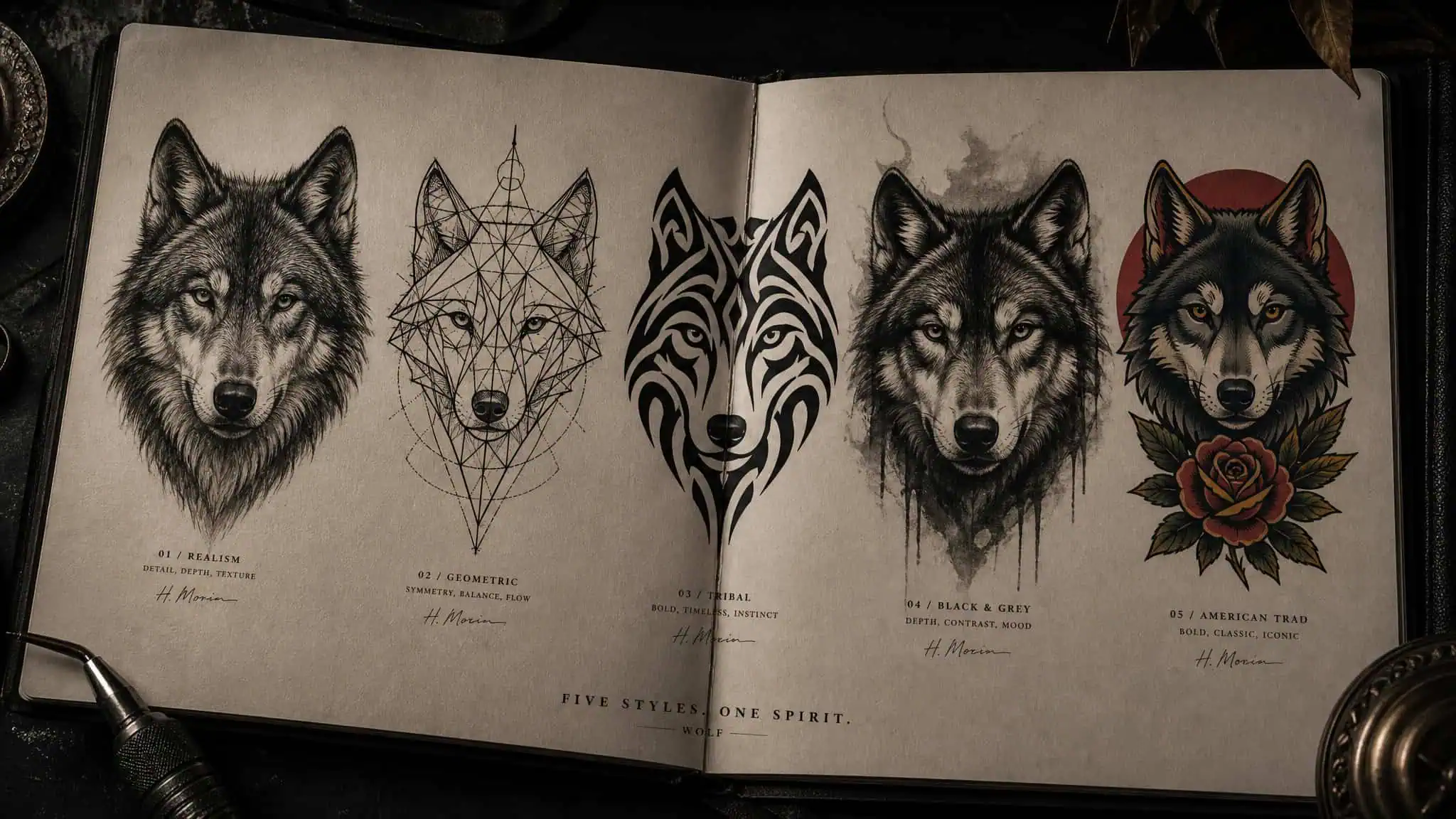
Realism
Lifelike fur texture and piercing, emotive eyes. This is the pick for guys who want authenticity and raw power on display, no stylization between the viewer and the animal.
Geometric
Clean lines, patterns, poly-shapes. Freedom meets structure, which is its own statement about the wearer. These tend to be face-focused, often symmetrical, and they mix well with micro-realism or watercolor. Half-wolf geometric designs show two sides of a personality in one piece.
Tribal
Bold black semi-abstract lines, and let’s be honest about the lineage: it carries the DNA of 1990s tribal work, updated for now. Meaning-wise, it’s the ancestral-connection pick, carrying spiritual guidance, protective energy, and strong family bond. These designs are often snarling or howling, and they can reflect personal heritage if that’s part of your story.
Black and grey
High contrast, smooth gradients, dramatic shading. Here’s the underrated part: it ages exceptionally well. That’s a real decision factor, not a footnote, and it matters most if you’re going big. Black-and-grey pieces traditionally carry messenger, change, and shadow meanings too.
American traditional
Thick linework, vibrant primaries, stylized ferocity. The old-school option with rules of its own. Watercolor exists as a variant if you want color that bleeds a little. Mention it to your artist, don’t oversell yourself on it.
For trend context without the trend-forecasting act: tribal goes back to the 90s, mandalas have owned the last decade, and geometric and moon-wolf imagery are the recent wave. Styles rotate. Family doesn’t.
Symbolic pairings and motif meanings
Quick hits on the companion motifs, because each one flips a dial.
Wolf pack as unity reminder. Wolves live in family units. On skin, that’s a daily loyalty reminder that outlasts the healing.
Wolf paw. Loyalty, progress, perseverance, walking your own path. Minimalist and subtle, and in Native American tradition the paw connects to moving forward under the wolf totem’s guidance.
Wolf skull. Overcoming grief, transformation, life after death. In some mythologies the wolf guides man after death, a meaning explored in depth among wolf tattoos with meaning. This is memorial-grade ink. It deserves honest weight, not edge.
Mandala wolf. The mandala is the cycle of life, the center is the inner self, the wolf is the spiritual guide. Inner growth, wisdom, the life journey. Among the most popular styles of the last decade, usually as half-wolf/half-mandala or a realistic wolf with dotwork.
Dreamcatcher wolf. Indigenous-inspired protection against nightmares, with spirit wolves adding a ward-against-harm layer. Positive energy, spiritual filtering, protection. It’s intricate, so give it thigh or forearm real estate.
Wolf and forest or mountains. Resilience, peaceful solitude, self-healing, connection to nature. Trees, moon, mountains: the whole quiet-restore scene.
Wolf with rose or peony. Ferocity balanced with passion and beauty, two sides of the same guy in visual form. Chest placement with red roses signals romantic dedication. A “for my person” piece.
Werewolf. European folklore, man-to-wolf under a full moon. Two natures at war, hidden qualities, transformation during big life shifts. The imagery is pulpy. The meaning is real.
Wolf eye. A piercing, focused gaze fixed on its target. The eyes can read haunting, angry, or ghostly, blue especially.
Wolf head or growling wolf. Intelligence, adaptability, staying calm under stress. Growling adds fearlessness and defending the pack. Good energy, no chest-thumping required.
Wolf and dagger. A classic pairing: protection, bravery, overcoming hardship.
Eagle and wolf. Balance in the natural world, plus courage, power, determination. For Americans it can carry patriotic and freedom symbolism. Fair warning: forearm or full backpiece scale. That’s a commitment.
Wolf headdress. A woman in Native American-inspired style wearing the wolf hide as a crown. Battle-worn headdresses were worn for strength and protection, hence the “two become one” idea. Describe it accurately, wear it respectfully.
Wolf scratch. Red-ink claw marks mimicking blood, a fighting-spirit signal. Or the cleverer version where the scratch reveals eyes behind it, hidden wolf traits. Small designs suit forearm, chest, or calf.
Running wolf. One running wolf is wild freedom. A pack running together reads as family ties. For the guys who don’t sit still.
One writer’s note the mainstream pack content skips: skull and werewolf pieces often carry the grief-and-transformation story a lot of family-ink wearers are actually living. Commemorating a brother who didn’t make it, or a stretch of years you survived. That’s family symbolism too, just with a harder edge.
Cultural roots, filtered through the family lens
Yes, wolf pack tattoos genuinely represent loyalty, and the evidence stacks up from several directions: the biology of pack cooperation, the traditions below, and the storytelling record. But not every tradition supports the family reading the same way, so it’s worth picking the one that matches your intent.
Native American
In these traditions the wolf is a sacred spiritual guide, guardian, protector, and totem animal, emphasizing loyalty, intelligence, courage, leadership, and protection of the soul. This tradition supports the family and loyalty reading head-on. Attribute it, respect it, move on.
Celtic and Norse
Some Celtic tribes claimed descent from wolves, which is a real ancestral claim and goes a long way toward explaining the symbolism. Wolves in Celtic mythology and Norse tradition mean protection, loyalty, strength, ancestral connection, and family bonds. Notice family bonds keep showing up. Nordic wolf tattoos are said to protect from evil, folklore framing intact, and Celtic knots honor heritage and family. The raven pairing loops back to Odin’s messengers from earlier.
Japanese Ōkami, plus one honest contrast
In Japanese folklore, wolves guard travelers and children. Japan’s native wolves are extinct and were believed to be gods or messengers of Kami spirits, and designs often show Shinto ritual bells carrying respect, heavenly powers, and good luck. Now the straight talk: Polynesian-style wolf work isn’t traditional in Polynesia. Wolves aren’t a native animal there; the style is a recent adaptation expressing courage and the inner warrior.
Saying so doesn’t gatekeep anyone. It just keeps your backstory accurate.
Here’s the filtering point: Nordic and Native American traditions center pack loyalty and protection of your own. Ōkami is guardianship of outsiders, travelers and children who aren’t family. Pick the tradition that actually matches your meaning instead of borrowing decoration.
Living the symbol: Zachary Reese’s wolf tattoo
UFC fighter Zachary Reese’s wolf tattoo, done in Bangkok, Thailand and placed near his left shoulder, represents loyalty, family bonds, independence, and freedom. It’s his favorite piece. As he put it, “I actually got it done in Thailand, in Bangkok, believe it or not.”
The biography is what makes the symbolism credible rather than decorative. Reese worked 90-hour oil field shifts as a well tester while training for the UFC, and he’s been with his partner Meloni since he was 17. She carries a “Savage” leg tattoo as a tribute to him. He joined the Ultimate Fighting Championship in 2023 and, at 31, has put together eight fights. You don’t survive that schedule and hold a relationship together since high school without the exact traits the wolf pack stands for: loyalty, endurance, protecting your people.
Placement, sizing, and making it last
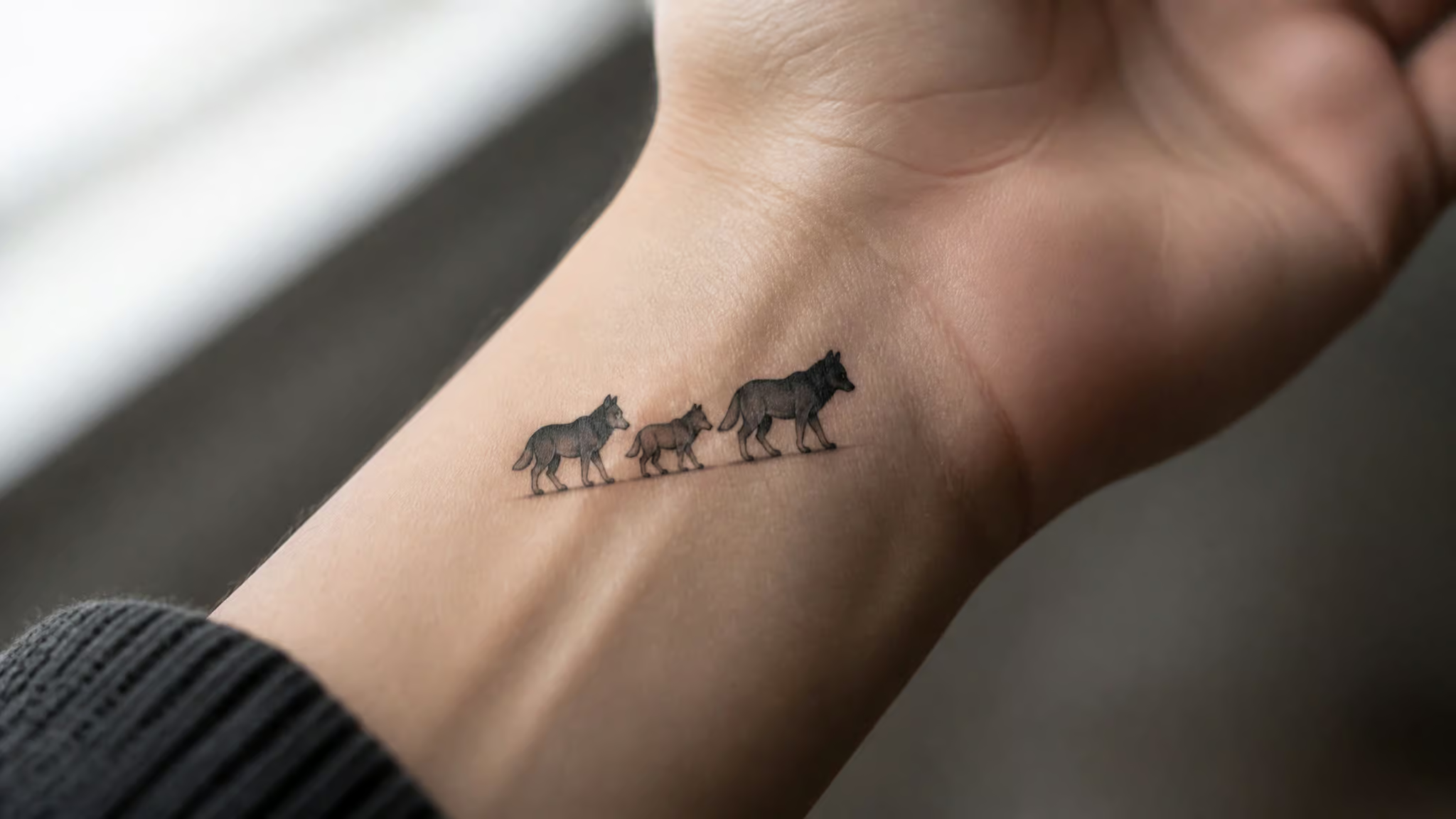
Small wolf pack tattoos carry the same loyalty and family meaning, but they survive best as simple silhouettes at wrist and ankle scale. Sleeve work, meanwhile, suits forearms and upper arms with realism, tribal, or black-and-grey styles. Match the piece to the real estate, and a lot of regret disappears. Our wolf tattoo placement guide goes deeper on the visible-versus-private tradeoffs.
Where the design fits
Multi-wolf compositions need canvas width. Back, chest, and thigh handle big pack scenes. Forearms and upper arms suit visible portraits. Wrist and ankle are minimalist-silhouette and paw-print territory only. Detailed wolf heads want broad surfaces; small pieces on an arm or leg read as quiet strength, which is its own statement.
The small-pack failure mode
Three detailed wolves on a wrist-scale canvas will blur over time. That’s a setup problem artists flag routinely, not a scare story. If you’re going small, a simple black-and-grey silhouette survives; micro-realism doesn’t. Let sizing drive the headcount decision, not just aesthetics. A two-wolf design at wrist scale beats a five-wolf blur.
Aftercare and the honest bit on cost
Clean with mild soap, apply a thin layer of the recommended moisturizer, and once it’s fully healed, high-SPF sunscreen. That last step is the one guys actually skip, and it’s the one that keeps fine lines and shading from fading. Keeping the skin hydrated preserves black-and-grey contrast and crisp line work, which is the look you paid for. Black-and-grey holds up best over decades.
Quick test: Before committing to headcount, hold the design at final size. If the wolves crowd at that scale, cut the count, not the detail.
On cost, straight answer: I won’t quote figures I can’t stand behind. The price moves with the artist, the size, and the number of sessions, so ask during your consultation, any shop can quote you in five minutes. What you can do before that appointment is come in with a clear direction: decide on the style that fits you, and work with an artist who specializes in custom work to build a one-of-a-kind design tailored to your body and your story.
For the broader symbolism stack beyond pack ink, the full wolf tattoo meaning guide covers the rest of the motif library.
The pack tattoo endures because its core claim is biologically true: a pack is a family. Get the headcount right, choose the color and style that match your story, place it where the design can breathe, and take care of it after. And when someone asks about the big wolf leading the others, you’ve got the better answer. That’s not an alpha.
That’s a dad. Dominance ink was always family ink mislabeled.
Frequently Asked Questions
What does a wolf tattoo symbolize for family?
A wolf tattoo symbolizes loyalty, unity, and the unbreakable bond of family. The reading is biologically accurate, since real wolf packs are family units led by the parents rather than dominance hierarchies. Many guys also use it as tribute ink for the people who stood by them when things went sideways.
What tattoo signifies family?
The wolf pack tattoo is the most popular family-and-brotherhood ink going, and its meaning holds up because a real pack is literally a family: parents and their offspring cooperating. Matching headcount to your actual family structure makes it personal, and working your children’s names into the design turns a general statement into a specific one.
What tattoos resemble brother and brotherhood?
Matching wolf pack tattoos work as brotherhood symbols, usually with the number of wolves mapped to the group. Two wolves read as a pair of brothers or a couple. The stronger move is one shared silhouette rendered at different sizes and placements per person, so each member’s relationship to the pack shows in the ink.
What does a wolf pack tattoo symbolize for family and brotherhood?
It represents the people who ride with you: loyalty, unity, and protection of your own. For family, the headcount logic maps wolves to parents, kids, or siblings; for brotherhood, matching pack pieces shared between friends carry the same weight. The meaning lands harder than most because real packs genuinely are families.
Lone wolf tattoo vs wolf pack tattoo: which meaning is right for me?
Pack ink is the belonging side of the story; lone wolf ink is for guys who got through something solo and want the receipt. The lone wolf works as a symbol precisely because real wolves are rarely alone — it’s aspirational, not descriptive, and it usually travels with mountains or a full moon. If your story is about who stood by you, the pack wins.
Is an alpha wolf tattoo accurate or is the alpha pack hierarchy a myth?
The alpha dominance hierarchy is a myth. Real packs are families led by the parents — the big wolf out front is usually dad, not a subordinate who fought his way up. A ‘leading alpha’ design with one large wolf guiding smaller ones actually depicts fatherhood or mentorship, so dominance ink turns out to be family ink mislabeled.
What does a black wolf pack tattoo mean for family and brotherhood?
A black wolf is traditionally read as a messenger or warning of change, tied to the shadow self, facing fears, and milestone moments — framed as reported tradition rather than hard rules. Combined with pack imagery, it layers change and transformation onto the base loyalty-and-family message. Coat color, posture, and companions are the dials that tune what the finished piece says.

