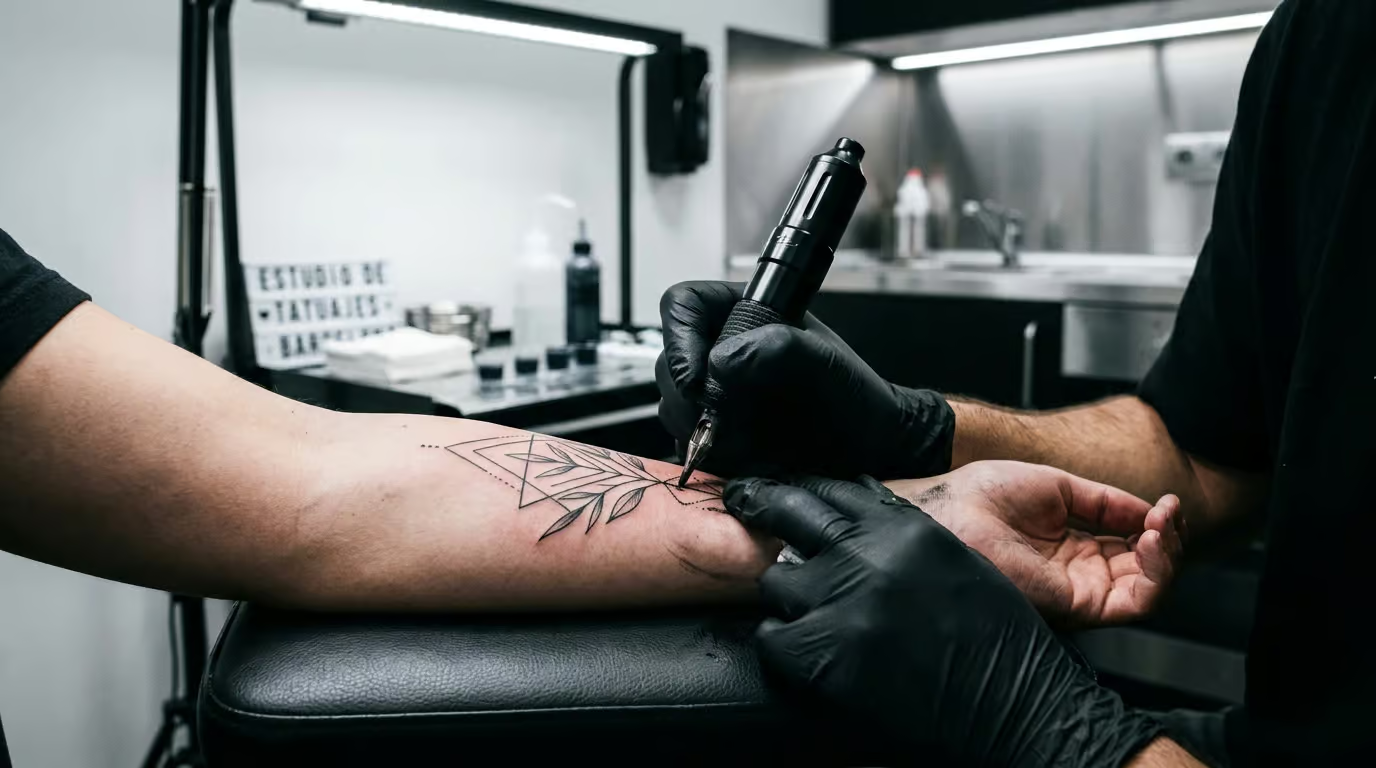
Getting a tattoo in Spain requires navigating strict health and safety regulations and hyper-specific cultural norms, making it much more complex than a spontaneous vacation impulse. If you want a souvenir that outlasts your tan, you need to abandon the romanticized idea of stumbling into a parlor after too many glasses of sangria. It just does not work like that anymore.
At Unfinished Man, we are all about handling the logistics quietly and correctly so you do not end up looking like a clueless tourist. The modern Spanish tattoo industry is highly professionalized and strictly regulated. The best studios operate with waitlists and will outright reject you if you lack the proper paperwork or fail to respect their sanitary boundaries.
Before browsing artist portfolios, you have to understand the rulebook. Doing this right requires knowing exactly how to vet a studio’s credentials and how to protect an open wound from the unrelenting Mediterranean sun.
Key Takeaways
Minors under 18 must have written parental permission, and legitimate Spanish shops will demand a physical passport or ID for age verification.
Always demand to see an artist’s Professional Certification IMP800_3, which guarantees they meet the exact sterilization standards enforced by the AEMPS.
Tattoos must be scheduled for the final 48 hours of your trip to Spain to prevent the intense beach sun and seawater from destroying the open wound.
Table of Contents
The Ultimate Traveler’s Guide to Tattoos in Spain
Read this guide to blueprint your entire international tattoo experience—from verifying a shop’s health credentials to scheduling around Spain’s intense high-sun beach culture. The days of treating foreign body art like a reckless weekend mistake are over. In Spain, tattooing is a globally recognized, heavily policed industry where unbridled creativity meets rigorous medical compliance.
Walking out of a shop with incredible art requires proactive planning. Most high-end artists book out weeks in advance, and communication barriers can complicate custom designs if you wait until you land. You have to treat the process like commissioning fine art rather than grabbing a novelty t-shirt.
“When you respect the professionalism of the local industry, you get better results.”
That shift in mindset is crucial. Before you start pulling reference images and contacting shops in Madrid or Barcelona, you need to clear the bureaucratic hurdles. The legal restrictions across the country are non-negotiable and strictly enforced.
Legal Requirements for Getting a Tattoo in Spain
At what age can you legally get a tattoo in Spain? You must be exactly 18 years old to legally get a tattoo in Spain without any guardian involvement. The country enforces this baseline requirement across all regions, treating body art with the same legal scrutiny as signing a binding contract.
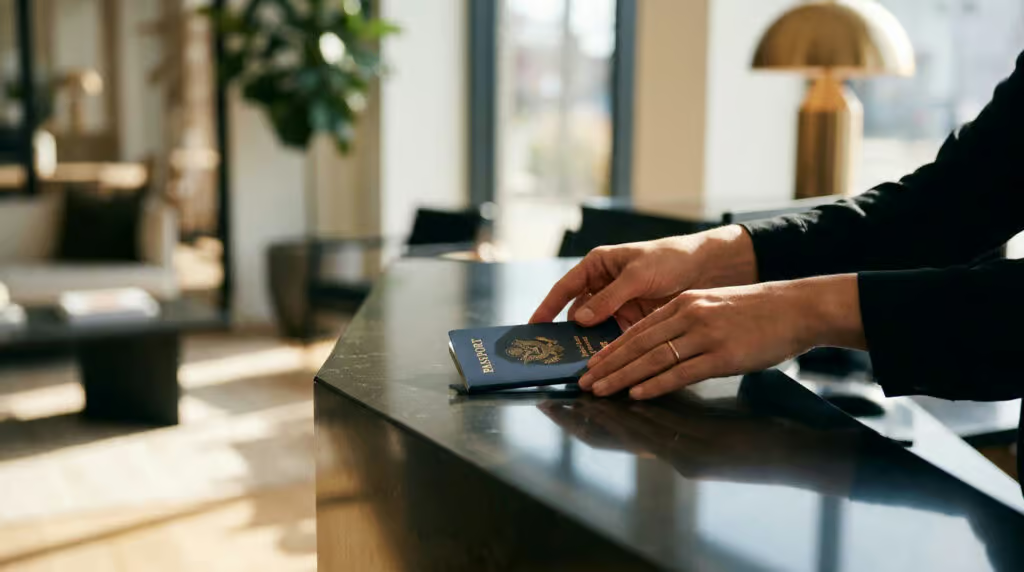
Bring your physical passport to the studio, as legitimate Spanish artists will refuse service to anyone unable to provide official government age verification, especially for clients near the age of 18. Digital copies of your ID or driver’s licenses from your home country are routinely rejected, so having the physical document is an absolute necessity. If you are a minor under 18, the legal framework becomes much more complicated, requiring physical documentation and guardian presence. Ultimately, age verification is the uncompromising first step before any needle touches skin.
Minimum Age Limits and Mandatory ID Checks
Spanish studios treat age verification precisely like buying alcohol or renting a car—there is zero flexibility. Tattoo artists face severe fines and potential shop closures for tattooing a minor. Because of this, you cannot rely on a digital photo of your driver’s license. You need the physical document in hand.
Foreign tourists often assume mainland Europe takes a relaxed approach to personal body modification. That is a mistake. The age limits mirror those found elsewhere in Europe, much like the strict legal framework in France or the recent legislation introduced in Belgium. If you are 18 or older, your government-issued ID is all you need to proceed.
If you look under 25, have your passport out and ready before the artist even asks. It proves you understand the local system.
Parental Consent Rules for Minors
Because Spanish law enforces uncompromising age restrictions, minors must obtain explicit written permission from a parent or legal guardian before any ink touches their skin. It is not enough for a parent to simply give verbal approval over the phone or wait in the lobby.
The studio will require physical, signed documentation alongside government identification from both the minor and the adult granting consent. If you are a parent traveling with a teenager who wants a vacation tattoo, prepare to fill out localized consent forms directly at the studio’s front desk. Without that paper trail, no legitimate artist will touch them. That changes the math for family trips entirely.

Choosing a Licensed Studio and Passing Hygiene Checks
What should I look for to verify a tattoo shop’s hygiene license in Spain? Ask the establishment to provide proof of their Professional Certification IMP800_3 to guarantee their sterilization and cross-contamination protocols meet national health standards. This specific document is your absolute best defense against life-threatening infections and proves the artist has completed rigorous municipal safety training.
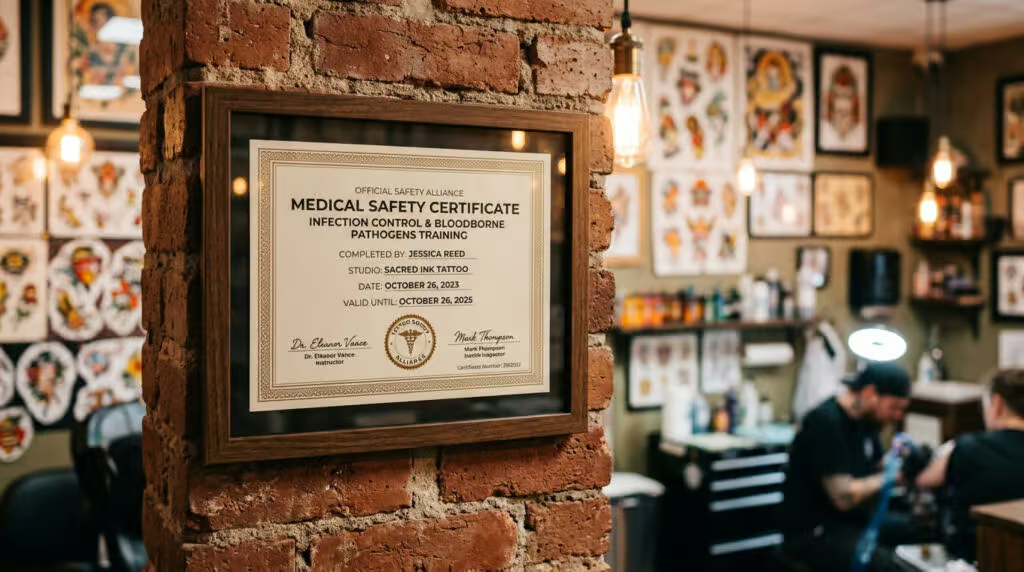
Unlike informal studios, licensed shops proudly display this certification on their walls precisely to reassure clients. Legitimate professionals in Spain follow strict biomedical waste disposal and autoclave guidelines monitored by local health authorities. Never hand over a deposit or sit in a chair without physically spotting this documentation. By prioritizing verifiable hygiene credentials over cheap pricing, you completely neutralize the risks associated with the dangerous underground tattoo market that specifically targets unsuspecting tourists unaware of local medical compliance laws.
Decoding Standardized Health Certifications
You do not have to guess whether a shop is clean; the government already checked for you. The baseline medical standards for the industry are managed directly by the AEMPS, acting as the primary health authorities overseeing body art sanitation.
Because bloodborne pathogens do not care if you are on vacation, you must verify the shop’s credentials before paying a deposit. Look for their Professional Certification IMP800_3, as this critical professional certification proves the individual artist has passed mandatory municipal health and safety training. It means they understand cross-contamination, proper needle disposal, and autoclave protocols. If you cannot easily spot this certificate framed on the wall, or if the artist brushes off the request to see it, leave immediately. It works as a flawless filter for finding reputable professionals.
The Risks of the Informal Home-studio Market
The primary threat to tourists in Spain is not a language barrier; it is accidentally booking with the underground, unregulated tattoo market. These unlicensed artists completely disregard the baseline hygiene standards required to keep clients safe.
If you are ever wondering whether you need a license to tattoo in Spain, the legal answer is a massive yes. Shadow operators working out of residential apartments often cut corners on sterilization to offer dramatically lower prices. This practice severely damages the reputation of the legitimate local industry while putting your health at immense risk. Getting infected abroad means navigating a foreign healthcare system and ruining your flight home. Stick exclusively to registered brick-and-mortar establishments subjected to frequent health inspections.
Regional Hubs and Traditional Artistic Styles
What are the most popular traditional Spanish tattoo styles? The most popular traditional Spanish tattoo styles feature heavy religious symbols, regional crests, Catholic iconography, and family-oriented phrases heavily concentrated in southern cities. Travel to Seville if your primary goal is collecting deeply traditional, culturally accurate Spanish motifs, rather than utilizing artists in Barcelona who specialize in international fusion.
Southern hubs excel at preserving the historic linework that defines the nation’s heritage, creating pieces that serve as authentic cultural souvenirs. Conversely, northern and central metropolitan cities embrace globalization, mixing these ancient traditional symbols with modern aesthetic trends like heavy blackwork or fine-line minimalism. Understanding this geographic artistic divide allows you to perfectly match your specific design aesthetic to the Spanish city that specializes in executing it. Do not just pick an artist; pick the proper regional hub.
Tracing Traditional Pre-Roman Techniques
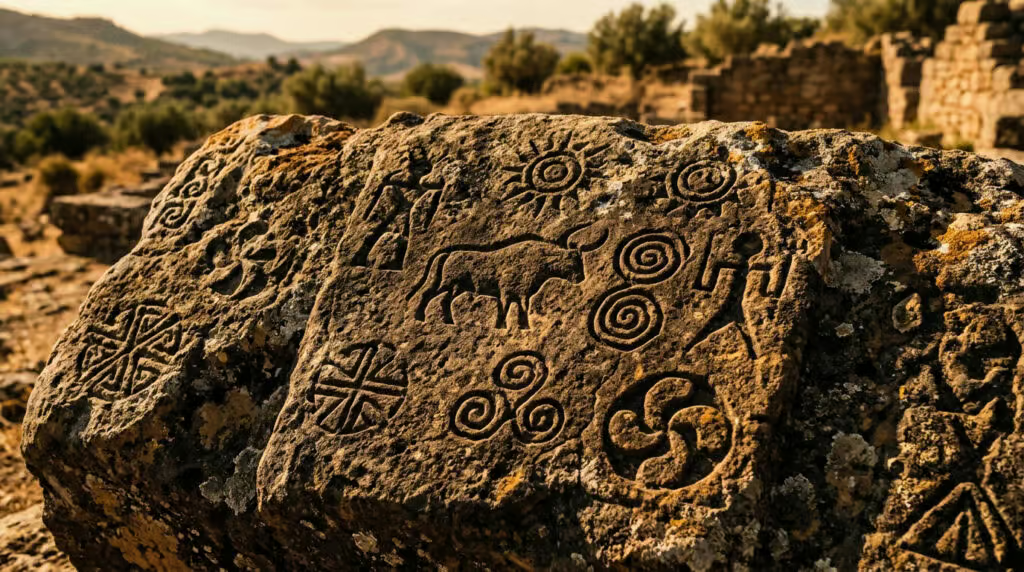
Modern Spanish tattooing is built on surprisingly ancient foundations. Long before contemporary studios utilized rotary machines and sterile blister packs, ancient Iberian tribes utilized primitive methods to mark their members for identification.
These primitive artists relied on rudimentary tools and rudimentary pigment. The earliest traditional practices involved mixing water or oil with soot and ash, then driving that pigment into the skin using sharpened bone fragments or primitive needles. This raw, tribal approach predates even the Romans. While nobody is puncturing your arm with a bone fragment today, understanding that deep heritage explains why Spanish artists harbor such immense respect for the craft. They are participating in a lineage that stretches back millennia.
Seville’s Heritage and Traditional Motifs
Tattoo tourism is hyper-regionalized across Major Spanish Cities, and picking the right destination dictates the artwork you receive. If your priority is authentic, historically anchored Spanish art, head straight to Seville or venture into Valencia.
These southern and eastern hubs are the epicenters for deeply traditional local symbols. Whether you are looking for sprawling Catholic iconography, historic family crests, or subtle small tattoos for men, Seville offers unparalleled dedication to Spanish heritage. The artists here excel at weaving regional history into their linework. Rather than chasing global trends, they preserve the aesthetic backbone of the culture, making it the perfect destination for a meaningful, culturally grounded souvenir.
Barcelona and Madrid’s Contemporary Fusion
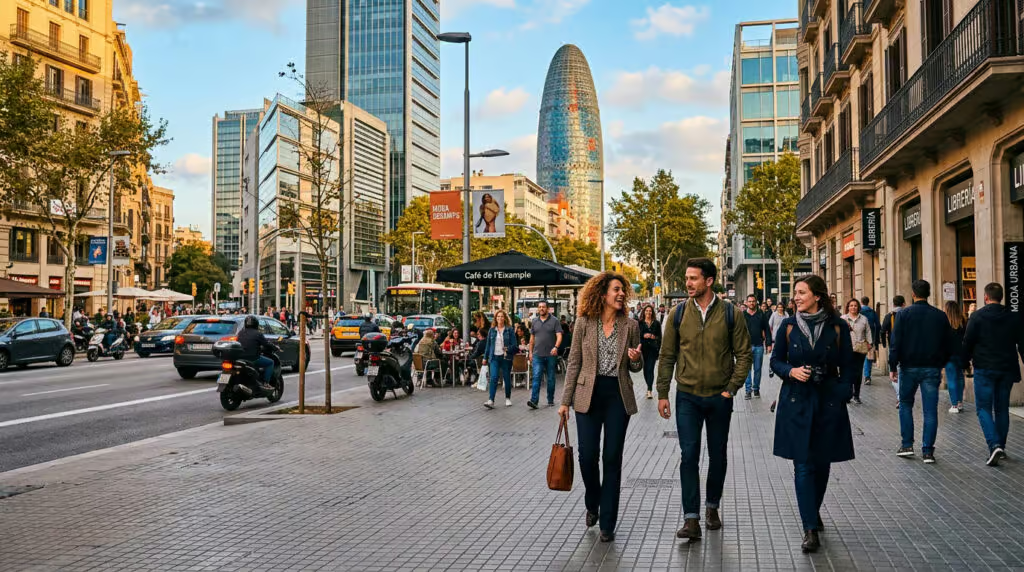
Major metropolitan centers approach the craft entirely differently. In Barcelona and Madrid, artists frequently incorporate distinct regional emblems, yet they filter those historic designs through an aggressive lens of cultural fusion.
These cities operate as globalized creative hubs. The artists embrace massive International Influences to create a completely modern hybrid style. You will routinely see classic Spanish motifs blended flawlessly with specialized UK shading techniques, sweeping Polynesian tribal elements, intricate Japanese framing, or bold Thai linework. If you want a piece that honors your trip to Spain while utilizing the best of global contemporary techniques, you book your artist in Madrid or Barcelona. They produce art that stands up against the best studios in the world.
Cultural Tips and Social Etiquette for Visible Ink
Are tattoos socially acceptable in Spanish workplaces? While tattoos are increasingly socially acceptable in general Spanish workplaces, extreme placements still raise eyebrows in highly formal or traditional environments. The days of total institutional bans have largely passed, but visibility remains a nuanced cultural issue.
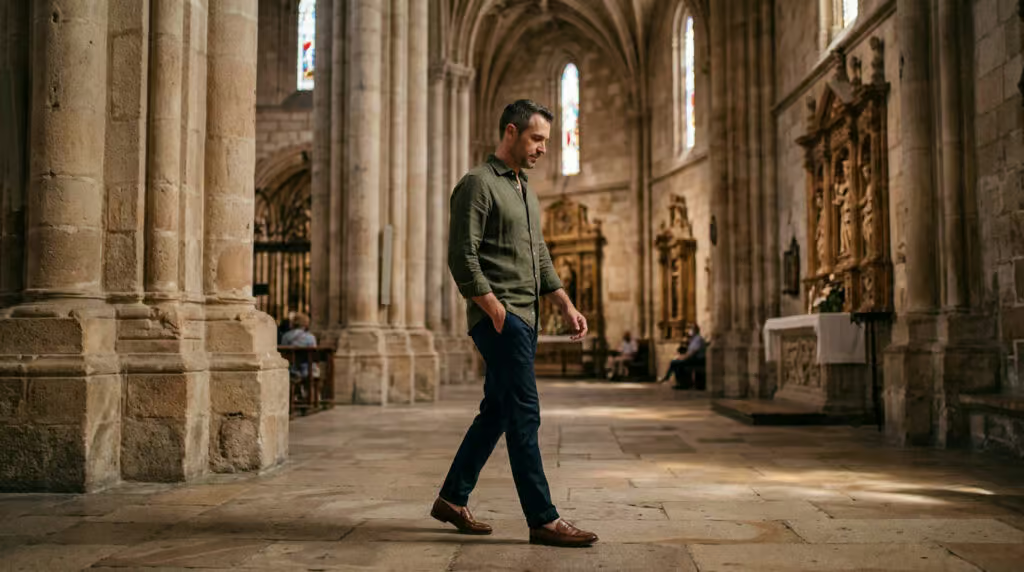
Therefore, pack clothing capable of covering facial or heavy neck tattoos if you plan to visit deeply conservative rural areas or highly traditional religious cathedrals during your trip. Modesty in these specific historical settings is considered basic etiquette rather than an act of oppression. Most modern urban centers embrace heavily tattooed locals and tourists alike, treating body art as a standard facet of contemporary fashion. By keeping a light scarf or collared shirt handy for excursions, you can effortlessly navigate Spain’s blend of progressive youth culture and enduring historical conservatism.
The Modernization of Conservative Institutions
The idea that Spain treats tattooed individuals as societal outcasts is entirely outdated. Over the past two decades, generational shifts have almost completely normalized visible body art across the country.
The clearest proof of this evolution is the recent police force modernization regarding tattoo tolerance policies, which allows officers to display previously banned body art while in uniform. When historically strict, conservative pillars of society dismantle their dress codes, it signals a massive cultural shift. You will see young professionals, hospitality workers, and academics openly sporting full sleeves. The stigma that once associated tattoos solely with underground crime has essentially evaporated, welcoming heavily tattooed individuals into the broader, mainstream local community in urban centers.
Navigating Facial Ink and Highly Visible Placements
While forearms and legs are widely accepted, there is still a definitive threshold for appropriate placements. The true test of societal acceptance lies in the treatment of visible facial tattoos.
Walking into an upscale restaurant in Madrid or a historic chapel in Andalusia with heavy ink above the collarbone can still generate noticeable friction. In highly traditional or religious settings, extreme body art is often viewed as actively disrespectful rather than just an artistic choice. Here is why this matters: as a visitor, your goal should be experiencing the culture, not antagonizing it. If you have significant facial or neck ink, keep a collared shirt or scarf handy for touring ancient religious sites.
Practical Vacation Logistics: Pricing, Tipping, and Sun Care
How do tattoo prices in Spain compare to the rest of Europe? Prices in Spain are generally competitive with Western Europe, operating on standard hourly rates for custom work without the heavy 20% tipping culture expected in the US. You will find that luxury studios in Madrid or Barcelona charge premiums similar to shops in Berlin or Paris, while smaller regional towns offer more affordable flat rates for flash pieces.
Regardless of the pricing model, logistics are the true challenge. Book your tattoo appointment strictly for the final 48 hours of your Spanish vacation so you do not have to forfeit swimming in the Mediterranean or sunbathing to protect the open wound. The intense natural climate of a southern European holiday is fundamentally hostile to fresh ink, demanding strategic scheduling to preserve both your expensive artwork and your vacation enjoyment.
Cost Expectations and Local Tipping Etiquette
Tattoo pricing in Spain is refreshingly straightforward compared to North American shops. Most professionals quote a flat rate for smaller flash pieces and utilize a strict hourly rate for large custom work. It is essential to finalize these numbers during your remote consultation.
Do not expect to aggressively negotiate the price. Spanish artists price their time based on their demand and the high cost of compliant sterilization materials. Furthermore, standard American tipping etiquette does not apply here. While leaving an extra 20% is customary in the United States, it is not historically expected in Spanish studios.
A sincere thank you and a glowing online review go a long way. If the artist went massively above and beyond, a modest cash tip of 10 to 20 euros is an appreciated, but fundamentally optional, gesture.
Protecting New Ink From Beach Sun and Seawater
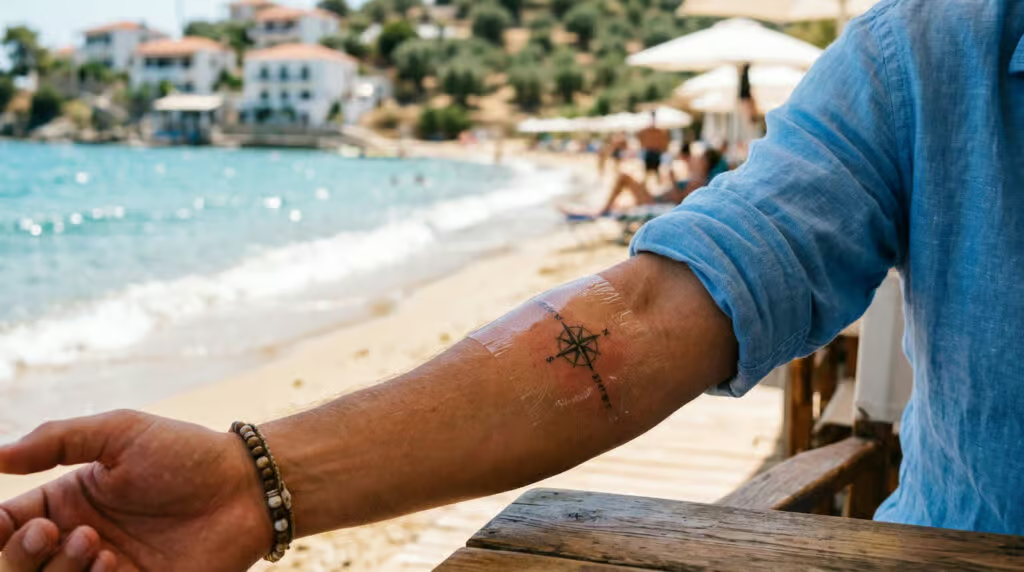
The absolute biggest threat to your new tattoo is the Spanish vacation itself. The intense Mediterranean sun, combined with heavily chlorinated hotel pools and saltwater beaches, creates a nightmare environment for a healing wound.
A fresh tattoo is an open abrasion. Exposing it to UV rays will instantly fade the pigment, and submerging it in seawater invites massive bacterial infections. If you are trying to figure out how to make an appointment for your first tattoo abroad, schedule it for the last two days of your trip. If you get tattooed on day one, your vacation is over—no swimming, no sunbathing, no prolonged hiking in the heat. Booking at the end of the trip lets you enjoy the beaches fully, leaving the uncomfortable healing phase for the flight home.
A Final Checklist for Your Spanish Tattoo
Verify your artist’s health licenses, clear your schedule for the end of your trip, and reach out to your chosen studio weeks in advance to begin the remote consultation phase.
Getting a tattoo in Spain does not have to be an anxiety-inducing gamble. By insisting on vetted professionals who hold actual government certifications, you strip the risk out of the equation. Avoid the shadow industry entirely. Once you know your artist meets every legal requirement, you are free to enjoy the creative process.
Whether you choose a classic regional design in Seville or a massive modern fusion piece in Barcelona, combining Spain’s incredible artistic heritage with smart logistical planning results in a lifelong souvenir you will actually be proud of. Get your paperwork right, protect your arm from the sun, and bring back a great piece of art.
Frequently Asked Questions
What is the IMP800_3 certification and why should I care about it?
The IMP800_3 is the mandatory professional certification for tattoo artists in Spain that verifies they have completed required health, safety, and sterilization training. If a studio cannot provide proof of this certificate, they are ignoring AEMPS standards and you should avoid them to prevent the risk of serious infection.
Why must I schedule my tattoo for the last 48 hours of my trip?
A fresh tattoo is essentially an open wound that cannot be exposed to intense Mediterranean sun, seawater, or chlorinated pools without risking damage or infection. By booking at the very end of your vacation, you avoid ruining your beach time and ensure the healing process begins away from Spain’s harsh environmental hazards.
Do I need to carry my physical passport to a tattoo appointment in Spain?
Yes, Spanish studios are legally required to verify your age and identity, and they will not accept digital photos or copies of your ID. If you cannot produce your physical government-issued passport or ID card, the artist will refuse service to protect themselves from heavy fines and potential shop closure.
What is the difference between getting tattooed in Seville versus Barcelona?
Seville is the destination for traditional, culturally anchored Spanish motifs like Catholic iconography and historic crests. In contrast, Barcelona and Madrid function as global fusion hubs where artists blend traditional Spanish elements with international styles like Japanese framing or UK shading.
Is it expected to tip a tattoo artist in Spain like in the US?
No, the heavy 20% tipping culture common in the United States does not apply to the Spanish tattoo industry. While a modest cash tip of 10 to 20 euros is appreciated for exceptional service, it is entirely optional and not expected by local professionals.
Can I bring my teenager to get a tattoo if I am there to give verbal consent?
No, verbal permission is insufficient under Spanish law. You must provide official, signed physical documentation alongside your government-issued identification at the studio to authorize the procedure for a minor.
Are visible tattoos or facial ink socially accepted in Spain now?
While general societal stigma has faded—to the point where even police officers can display ink—facially visible tattoos can still cause friction in certain settings. If you plan on visiting traditional, rural areas or religious cathedrals, it is advised to keep a collared shirt or scarf available to cover extreme placements.


Hello Jared,
When was the law regarding the tattooing of minors passed in Spain? When did it become law?