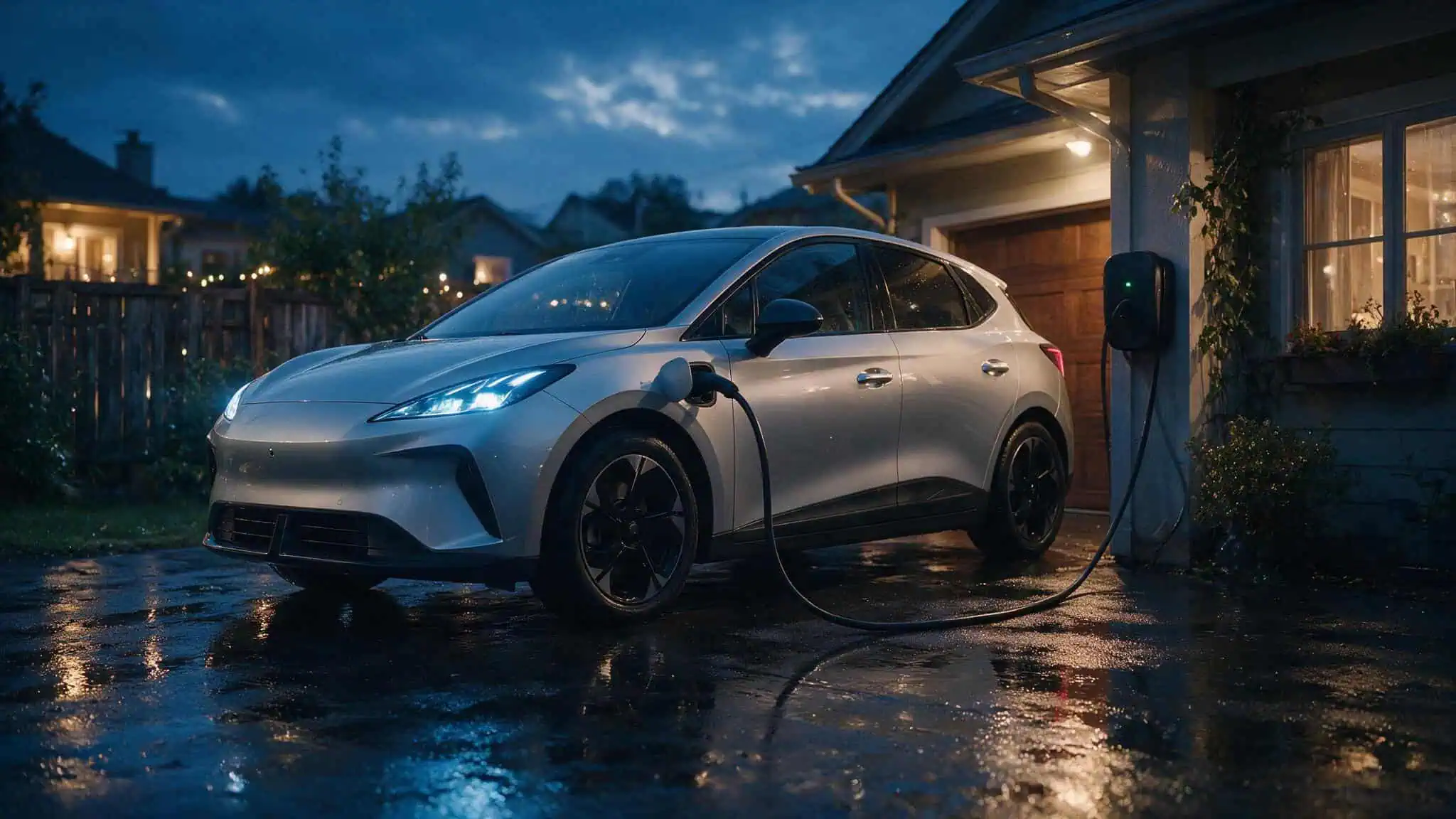
You’ve just finished installing a brand-new Level 2 charger in your garage. The specs look great – 48 amps, Wi‑Fi, the works. Then your partner pulls into the driveway because the garage is full of boxes. You grab the charging cable, walk it toward the car, and you’re about five feet short. Or worse: you bought an indoor‑rated unit because you planned to mount it in the garage, but now it’s raining and the charger is sitting in an open driveway.
That’s the exact moment two specs you didn’t think about – cable length and outdoor rating – become the numbers that matter on the box. Power specs matter, but they’re useless if the cable can’t reach or rain ruins your investment. I’ve watched this pattern repeat with friends and forum posts: people shop for speed and forget the physical reality of their parking setup. That’s what this article is about – picking the right cable length and weather protection so you don’t have to learn the hard way.
Key Takeaways
Most home Level 2 chargers run at 240V and deliver 7–11 kW, adding 25–50 miles of range per hour. But power doesn’t help if the cable is too short for your driveway or the charger can’t handle rain.
For outdoor installations, look for at least IP66 (dust-tight and resists powerful water jets) or NEMA 4 (watertight and dust-tight). A covered carport can get away with NEMA 3R, which blocks rain but not dust.
The safest cable length is the shortest one that reliably reaches your car’s charge port – longer cables add resistance, heat, and voltage drop. Common extension cable lengths are 21 ft, 30 ft, and 40 ft, and they must be rated for the charger’s continuous amperage.
Table of Contents
Why Cable Length and Outdoor Rating Matter More Than Charger Power
Level 2 charging is fast – 240V, 7–11 kW, enough to add 25–50 miles of range per hour. That means you can fully charge most EVs overnight, often in 4–8 hours depending on your battery size. Compare that to Level 1 (a standard 120V outlet, 1–2.4 kW, about 5 miles per hour) and it’s why everyone wants Level 2.
I’ve seen guys buy a 16‑foot cable because it was cheaper, only to realize their driveway approach requires 25 feet. Or they pick a charger rated for indoor use, mount it outside, and get a dead unit after the first storm.
How Cable Length Affects Charging Safety and Speed
Longer cables create higher electrical resistance, more heat buildup under load, and a greater voltage drop at high amperage. In plain terms: the longer the cable, the less power reaches your car, and the more heat the cable generates.
Buy the shortest cable that reaches your car’s charge port. Don’t keep extra slack coiled up – that traps heat. And never stack multiple extension cables together; that’s a fire risk.
Common extension cable lengths are 21 ft, 30 ft, and 40 ft. If you need 40 feet, make sure the cable uses thicker conductors and has a higher amperage rating – think 48A–50A class. A cable with a rating lower than the charger’s output can overheat, melt its insulation, or fail. Typical charger amperages are 32A (entry‑level), 40A (mid‑range), and 48A–50A (fastest home charging). Match the cable’s rating to the charger, not the other way around.
Decoding Outdoor Ratings – IP66, NEMA 3R, and NEMA 4
Here’s what the most common ratings mean:
- IP66 – Dust‑tight and resists powerful water jets. This is the standard for outdoor chargers. It handles direct rain, snow, and a garden hose. If your charger sits in an open driveway, aim for IP66.
- NEMA 3R – Blocks rain but not dust. Fine for covered carports or locations where rain hits from above but dust isn’t a concern. Not ideal for dusty environments or direct spray.
- NEMA 4 – Watertight and dust‑tight. Harsh‑weather duty – think coastal salt spray or heavy industrial areas. Overkill for most homes but gives you peace of mind if you live somewhere extreme.
Beyond the rating itself, look for UV‑resistant outer jackets (sunlight cracks cheaper rubber) and cold‑resistant insulation for winter climates. Most Level 2 units operate from -22°F to 122°F, so they’ll handle most of North America, but the cable material matters.
Simple rule: Exposed driveway = IP66 or NEMA 4. Covered carport = NEMA 3R is enough.
Garage vs Driveway – Matching Cable Length and Rating to Your Setup
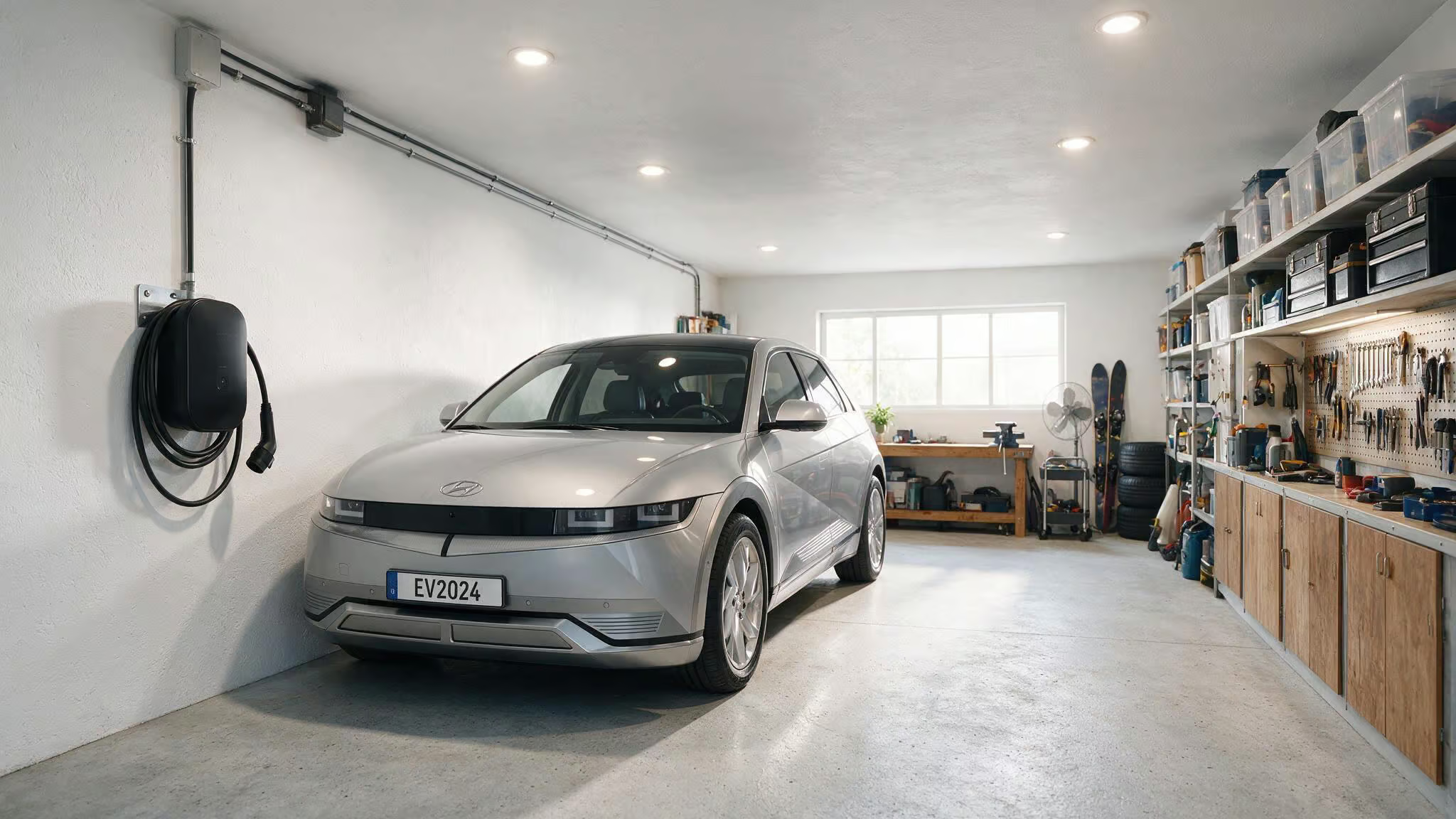
Garage charging: Protected from rain and snow. A shorter cable (18–25 ft) is sufficient because the charger is mounted near the car. You don’t need a high IP rating – NEMA 3R or indoor‑rated is fine if the charger stays dry, and researching Level 2 EV charger cost and rebates 2025 can help you budget for what you’ll actually spend on the charger plus installation, since federal tax credits, utility rebates, and state incentives can cut the price in half.
Driveway charging: Exposed to weather. You may need a longer cable (25–40 ft) to reach the car, especially if the charger is mounted on the house wall and the car is parked further out. You need a higher IP rating – IP66 or NEMA 4 – because rain, snow, and dust are constant. And your cable needs to be durable: UV‑resistant, cold‑resistant, with secure connectors — and you should also consider the trade-offs between a Level 2 EV charger hardwired vs plug-in installation, including safety, cost, and portability.
How to measure: From the charger location to the vehicle’s charge port, accounting for obstacles (walls, garage doors, flower beds). Add 2–3 feet of slack for movement. Don’t coil excess cable; that creates heat. For a garage, 20–25 ft is enough. For an open driveway, budget 25–40 ft and verify IP66 or NEMA 4.
EV Extension Cables – When They Work and When They’re Dangerous
The extension cord from a hardware store is not safe for EV charging. It can’t handle continuous high amperage for hours. The result: overheated connectors, melted insulation, and potentially a fire.
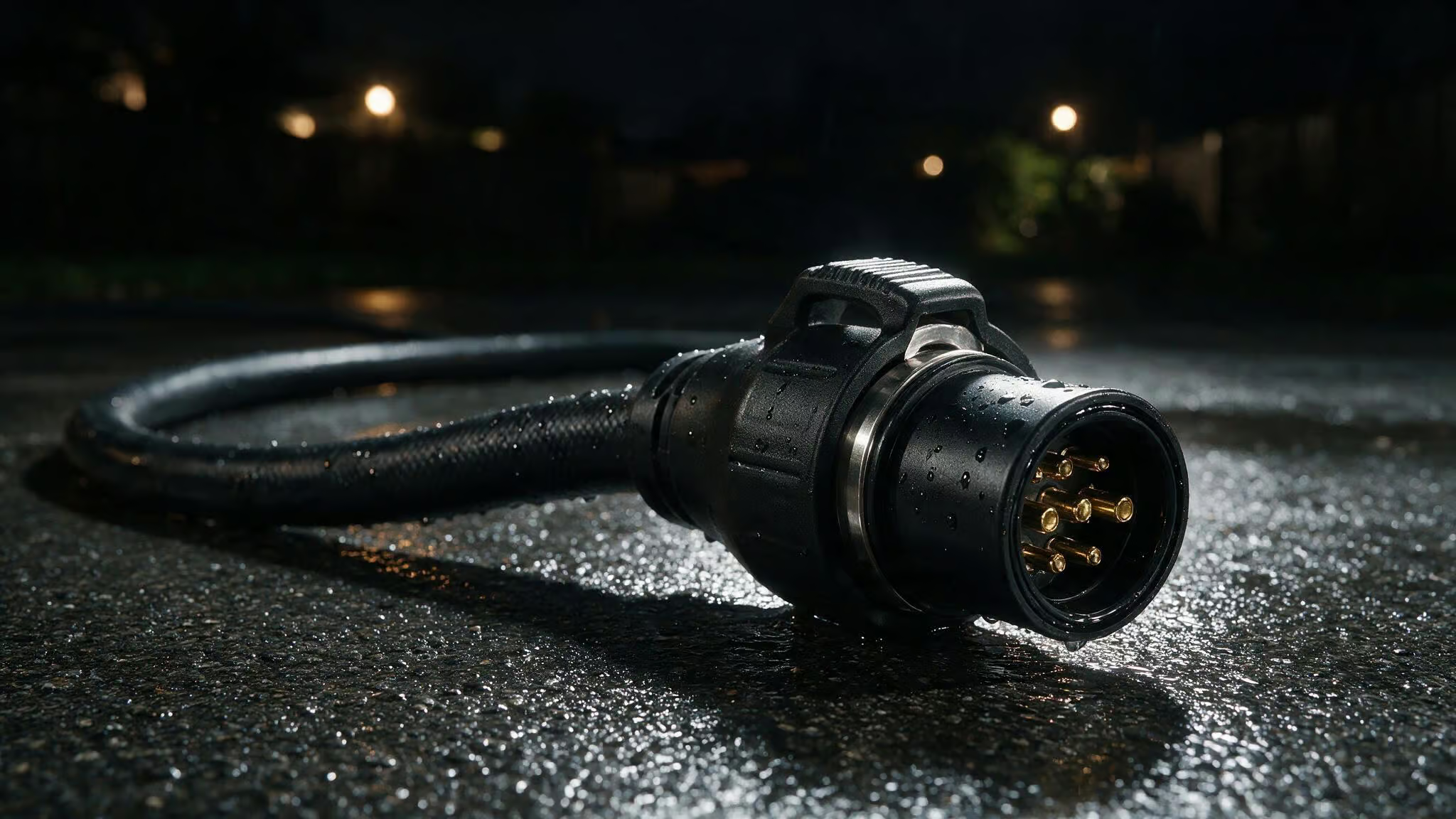
But dedicated EV extension cables exist, and they can be safe if you choose carefully. They come in the same lengths – 21 ft, 30 ft, and 40 ft – and must be rated for the charger’s continuous amperage (32A, 40A, 48A–50A). High‑quality connectors lock securely, resist moisture, and use heat‑resistant internal materials. Loose connectors can cause arcing and charging interruptions.
Red flags to avoid:
- No amperage or voltage rating stated – skip it.
- Cheaper than comparable products – they skimped on copper.
- Thin or flexible conductors – insufficient for continuous load.
- No weather or temperature rating – dangerous outdoors.
Some manufacturers prohibit extension cords. For example, Chevrolet’s Dual Level Charge Cord (which comes with many Chevy EVs) warns not to use wall adapters or extension cords. If the OEM says no, follow that. For other setups, only use a dedicated EV extension cable with stated specs and proper certification (ETL or SAE compliance is a good sign, though there’s no single unified certification for extension cables yet), so consult a practical guide on How to Choose a Level 2 Home EV Charger to avoid buyer’s remorse before purchasing your own equipment.
J1772 vs NACS – What Matters for Outdoor Charging
You’ll hear about two connector standards. J1772 is the established North American AC charging standard – it works with most non‑Tesla EVs and is used in public AC chargers. NACS (Tesla’s connector) is becoming the dominant standard in the U.S. – smaller, lighter, capable of higher current, and aligned with the Supercharger network.
A poorly sealed J1772 can fail faster than a well‑sealed NACS because of water ingress. Look for connectors that lock securely, maintain firm contact during vibration, resist moisture, and use heat‑resistant materials. Loose connectors cause arcing.
Several products support both standards now, which makes future‑proofing easier:
- ChargePoint Home Flex – Supports J1772 and NACS, available plug‑in or hardwired.
- Lectron Level 2 charger – Compatible with J1772 and NACS, weather‑resistant, and available with Wi‑Fi.
If you have a non‑Tesla EV today, a J1772 charger with a quality connector is fine. If you plan to keep the charger for 5+ years, a NACS‑compatible unit might be smarter.
Hardwired vs Plug‑In – Which Is Better for Outdoor Charging?
You have two installation options: hardwired (permanently connected by an electrician) or plug‑in (using a NEMA 14‑50 outlet, same as an electric stove or RV).
Hardwired: Often required for chargers above 40 amps. Provides a better weather seal because there’s no exposed plug. The connection is permanent and less likely to loosen over time. A certified electrician should handle this – not a weekend project.
Plug‑in: More flexible. You can unplug the charger and take it with you if you move. But the receptacle needs to be outdoor‑rated and GFCI‑protected. The plug itself is a potential weak point in rain – moisture can get into the connection if not properly sealed.
The trade‑off: Hardwired is cleaner, safer outdoors, and necessary for high‑power chargers. Plug‑in is easier to install if you already have a NEMA 14‑50 outlet and gives you portability.
Examples: ChargePoint Home Flex supports both. Grizzl‑E is a rugged charger often hardwired for outdoor durability. Choose based on your amperage needs and how permanent you want the installation.
Safety Certifications, Electrical Codes, and Installation Costs
Two safety standards to look for: UL 2594 (the definitive North American safety standard for EV supply equipment) and UL 2231 (ground‑fault protection). An NRTL certification (UL, ETL, or CSA) means the unit has been tested. Don’t buy uncertified chargers.
Breaker sizing: A 40A charger requires a 50A breaker (the 125% rule for continuous loads). Your electrician handles this, but it’s good to know.
The NEC debate: There’s an ongoing disagreement about whether #6 NM cable (55A ampacity) is sufficient for a 48A charger (which would require 60A wire under the 125% rule). The New Jersey Code Assistance Unit says #6 NM is permitted. Others argue NEC requires a 60A conductor. A 2026 proposal aims to clarify. For now, consult a local electrician familiar with your jurisdiction – don’t guess.
Costs: Total installation – charger plus electrician – typically ranges from $749 to $2,500. A standard setup averages around $1,700. Home charging costs roughly one‑third the price of DC fast charging, so the investment pays back over time.
Frequently Asked Questions
What is the best length for EV charging cable?
The best length is the shortest one that reaches your car’s charge port with 2–3 feet of slack for movement. For garage setups, 18–25 feet is usually enough; for driveways where the charger is mounted on the house, budget 25–40 feet. Never coil excess cable — that traps heat.