
That low monthly payment on the dealer’s site looks like it was designed for you. It wasn’t. A lease contract assumes you have a credit history, a paycheck that doesn’t change with the semester, and a city you’ll still be living in three years from now. As a college student, you might not have any of the three. So here’s the straight version: usually no, unless you can qualify through a co-signer or a grad program, absorb the real monthly cost, or pick a cheaper alternative.
Key Takeaways
Most students can’t lease on no credit alone: most auto lenders want a co-signer with a 700+ score (some accept 690), and that co-signer needs to stay attached at least 12 months or the credit-building backfires.
Thin credit is expensive: on a $30,000 loan over 60 months, payments run $558 to $731 a month depending on credit tier, a spread of more than $10,000 in interest on the same car.
Audi’s grad program requires no credit history or co-signer, and BMW, Lexus ($1,000), Toyota, and Nissan ($500) hand grads cash within two years of graduation.
Table of contents
Table of Contents
The verdict
For a typical college student, leasing is usually a bad idea, and the exceptions are narrow. It works if you’ve got a co-signer with a 700-plus score committed for at least 12 months, you’ll stay in the area through the term, your income covers the payment plus young-driver insurance, and a grad program or stable income closes the affordability gap. The appeal is real, to be fair: a lower payment on a new car under warranty. Manufacturer grad programs are the one path designed for students from the start.
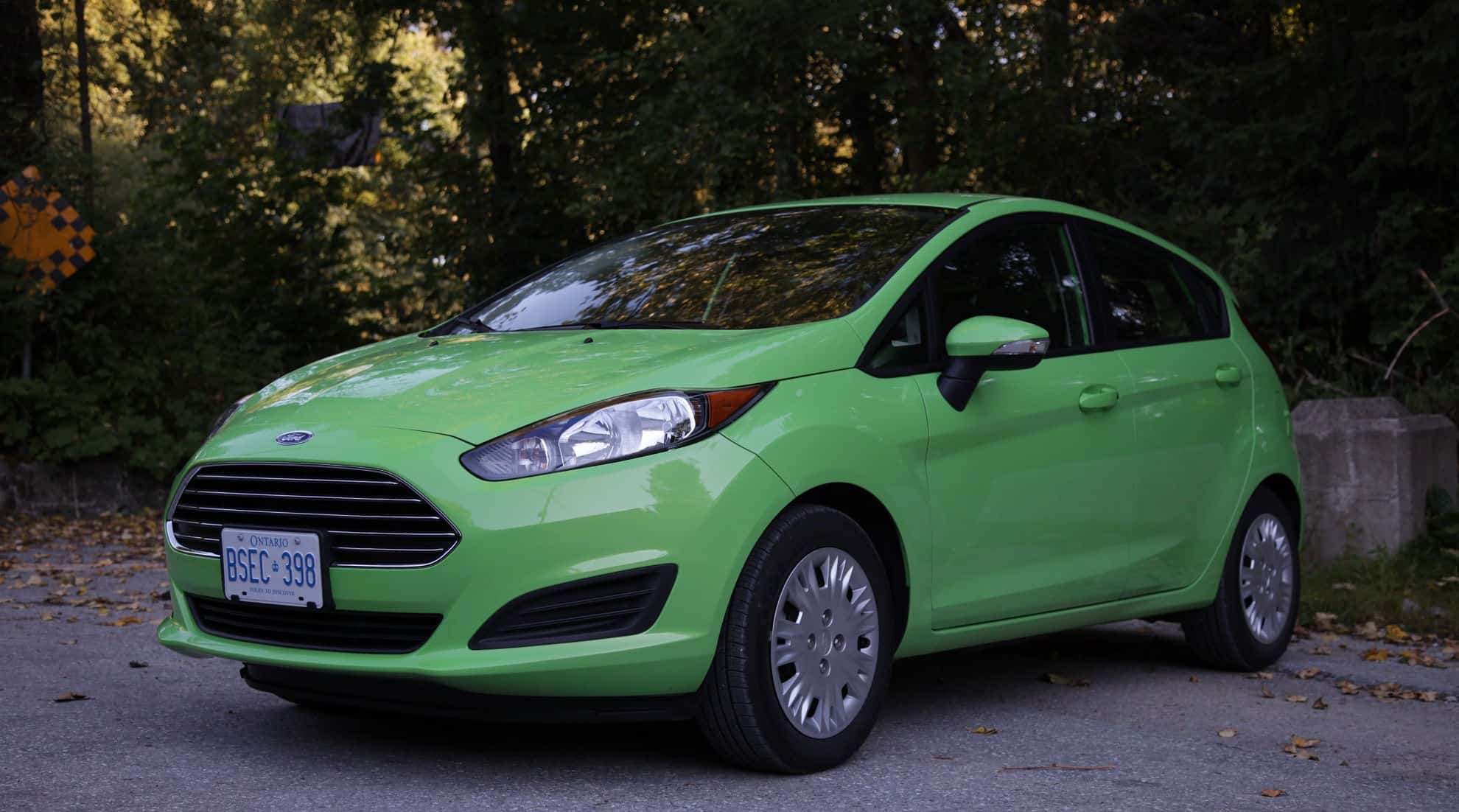
Can you lease a car with no credit history?
Most college students cannot lease a car on no credit history alone. Most auto lenders require a co-signer with at least a 700 credit score (some accept 690), plus sufficient income and an established credit history of their own. That’s the gate, and there’s exactly one way around it, which comes later in this article.
The co-signer gate
A co-signer is borrowing someone’s credibility, plainly. The lender takes on less risk because there’s a second adult on the hook, and that’s what gets a student approved and priced like a borrower instead of a gamble. Usually that’s a parent. Before you ask, check their number first: 700 is the standard minimum, 690 at some lenders, and they’ll need income and an established credit history too, not just a score. Saves everyone an awkward conversation that was never going to work.
The co-signed debt shows up on both credit reports. Miss a payment and it damages the co-signer’s credit, not just yours. Pay on time and it builds credit for both of you. A missed payment can sit on the co-signer’s report for up to seven years.
The 12-month retention trap
The co-signer isn’t an approval key you use once and discard. Jason Decker at Right Toyota in Scottsdale advises keeping the co-signer attached for at least 12 months. Finance managers see the same pattern regularly: a student trades out of the car or pays off the loan at 3 to 6 months, feeling responsible, and ends up with no credit score or one sitting around 500 instead of the 600s and 700s the account was building toward. Exit early and you defeat the entire purpose of the arrangement.
So the real commitment isn’t 36 months of payments. It’s 12 months of not touching something that’s working.
One exception exists: Audi’s College Graduate Program approves students with no credit history and no co-signer. Full detail comes in the grad-program section below.
What thin credit actually costs
Leasing is usually cheaper month-to-month than buying the same car. But a student’s thin credit inflates the cost of either path, and the numbers are worth staring at.
Experian’s Q2 2026 data put average new car loans at 6.35% and average used car loans at 11.19%. Yes, used costs more to borrow than new. That’s backwards from what most people assume, and it matters, because used is what most college guys are actually shopping.
The spread by credit tier is where it gets ugly:
| Credit tier | Score range | New car rate | Used car rate |
|---|---|---|---|
| Super prime | 781-850 | 4.41% | 6.29% |
| Prime | 661-780 | 6.15% | 8.81% |
| Near prime | 601-660 | 9.71% | 13.93% |
| Subprime | 501-600 | 13.52% | 19.10% |
| Deep subprime | 300-500 | 16.11% | 21.62% |
Same car. Wildly different price depending on the score attached to your name.
Run the actual loan and it gets worse. On a $30,000 loan over 60 months, payments run $558 to $731 depending on credit. Total interest: $3,484 to $13,878. Excellent credit versus bad credit is about $170 less per month and over $10,000 saved.
That’s the difference between a car payment and a rent payment, and it’s the price of having bad credit at 21. A student’s first credit tier is usually the worst one he’ll ever occupy, which is exactly why signing now costs more than waiting.
Leasing doesn’t dodge any of this. Lease money factors follow the same credit-tier logic as loan APRs, so the thin file inflates either path. Lenders underwrite with FICO and VantageScore, though some use auto-industry-specific scoring. And the environment won’t rescue you: the Federal Reserve raised rates for the first time in three years at its September meeting, to a 3.75%-4.00% target, and experts expect only small decreases through 2026, mostly for strong credit. One more reason the score matters more than the sticker.
Damage and mileage: where student life breaks the contract
Yes, you pay. End-of-lease inspections trigger wear-and-tear charges, and going over the typical 10,000 to 12,000-mile annual cap triggers overage fees.
The mileage cap vs. the job offer across the country
A lease assumes a fixed term (typically 36 months), predictable driving, and a stable location. Student life violates every one of those assumptions. Sign as a junior and the contract matures exactly at graduation, the precise moment a cross-country job offer makes early-termination penalties or mileage overages most likely. Leasing advisors see this relocation failure regularly, and it isn’t bad luck. It’s the contract colliding with the life stage, and the other end of the life-stage spectrum brings its own trade-offs.
Before signing anything, understand the exit mechanics: early termination penalties, lease transfer or swap options, and return-before-end penalties. If you’re one of the many considering leasing a car, know that exact per-mile fees and penalty amounts vary by contract, so read yours instead of trusting a forum.
Wear and tear, and the inspection
Campus parking lots and street parking are hard on bumpers and wheels, and the return inspection notices. Dings, curb rash, and interior wear all become line items at drop-off. Stacked on top of overage fees, that’s the difference between “the lease ended” and the lease ended and I still owe money.
The true monthly cost
The advertised payment is only layer one. Leases require full-coverage insurance, and for under-25 lessees that coverage gets priced at young-driver surcharge rates. Payment plus insurance is the real number, and the tell is when the online-quoted payment doesn’t match the out-the-door math.
The income caps make the stack visible upfront. Audi caps the monthly payment at 25% of gross monthly income. Mini requires payment-to-income of 20% or less and debt-to-income of 45% or less. BMW wants 45% or less DTI. These exist because the payment has to fit next to everything else you owe.
And for a student, everything else is a lot. In-state public four-year costs have topped $25,000 a year per College Board data, and federal undergraduate loans cover only $5,500 to $12,500 of it. The math doesn’t close, which is why a car payment competes for money that isn’t there. The OBBBA changes took effect July 1, 2026, tightening the picture further: new federal borrowing caps, Grad Plus eliminated, and a new Repayment Assistance Plan.
It’s also why federal loans come first when borrowing for school. They carry income-driven repayment and forbearance protections a car payment has nothing of.
Grad-program discounts: the money most students leave on the table
Manufacturer college graduate programs offer real money, cash back or low APR, to current students or anyone graduated within the past two years. Availability varies by model, so check eligibility before you develop brand loyalty.
- Acura: $500 off a purchase or lease of a 2025-or-newer Integra, MDX, TLX, or RDX (2024-or-newer ZDX), financed through Acura. Requires degree proof, employment or a future job, and income covering debts, living costs, and the payment.
- Audi: flexible terms on leases or financing of new or CPO models, no set rebate, but no credit history or co-signer required. Needs a degree (associate’s through doctorate, RN, or LPN), full-time job proof, employer contact, two references, and caps the payment at 25% of gross monthly income.
- BMW: $1,000 off any new or CPO vehicle financed through BMW, per the brand’s grad program (new 2022-or-later, CPO 2018-2021). Requires income proof or a guaranteed employment letter, six months of credit history, and 45% or less DTI.
- Chevrolet: $500 or a 90-day payment deferral, and some configurations stack both. Requires pre-authorization, 45% DTI, and 20% payment-to-income.
- Ford: $750 toward financing or $500 toward leasing. The split quietly rewards financing.
- Honda: $500 with a 90-day deferral.
- Hyundai: $400.
- Lexus: $1,000, verified through ID.me like Toyota.
- Mini: $500, with 45% DTI and 20% payment-to-income requirements.
- Nissan: $500 with no financing requirement, the rare no-strings version.
- Subaru: best available terms rather than cash, and qualifying automatically unlocks other available offers on the vehicle.
- Toyota: $500, ID.me verification.
- Volkswagen: savings on nearly all new models; graduated within the past two years, or graduating within six months with good-standing credit and no credit history.
The timing is the real play. The two-year post-grad window is a strategy, not just a discount: waiting can convert a thin-credit rejection into a no-credit-history approval plus $500 to $1,000 off. Two caveats: eligibility thresholds are caps, not approval guarantees, and documentation checks vary by brand.
How a lease hits your credit score
A lease is a credit obligation like any other, and the lender reports it to the bureaus either way. Handled well, it’s a building block; handled carelessly, it’s a lasting mark. Here’s what that looks like in practice.
What a lease does to your credit
A lease cuts both ways. On-time payments build history, and one missed payment can stay on your report for up to seven years. Autopay or calendar reminders are the boring fix that actually works.
Cheaper ways to build the same history
You don’t need a $300-a-month obligation to become creditworthy. Authorized-user status on a parent’s well-managed account is the lowest-effort move there is. Secured cards work by backing your limit with a savings deposit and reporting like any other card. Credit-builder loans at community banks and credit unions are structured as locked savings with monthly payments, which sounds odd but builds the same history.
Rent reporting through services like Bilt Rewards finally makes your biggest monthly payment count, since newer FICO and VantageScore models now include rent. Federal student loans, which plenty of guys already have, are often a student’s first installment credit account. They build history for both the student and the co-signer.
One free step before any application: you can pull one free credit report per week from each bureau (Equifax, Experian, TransUnion) at AnnualCreditReport.com. Find the mistake before it costs you a loan.
Used car or no car
For most college students, a cheap used car beats a lease. A used purchase at the 11.19% average used rate (better with a co-signer) builds equity and survives the relocation a lease punishes. The honest trade-offs: ownership carries repair risk a lease doesn’t, and most lenders won’t finance vehicles over 10 years old or with 100,000-plus miles, so the cheapest beater on the lot may not be financeable at all.
Buying used
A few tips from a friend who’s done this. Prequalify with at least three lenders inside a 14-day window; the bureaus count that as one credit pull. Target 20% down, which is more than the 10-20% people actually average, and it’s the difference between owning the car and the bank owning most of it. Prefer shorter terms: the term doesn’t change your rate, but a longer one means more total interest. Dealer financing often costs more than a bank, credit union, or online lender for the same loan. One small catch if you’re shopping online: Carvana only finances cars bought through Carvana.
Going car-free
Frame the need first. Transit, a bike, and car-share cover a lot of campus life, and the $0 baseline in payments, insurance, and parking matters against a budget already stretched past $25,000 a year. This depends heavily on the campus and the city, so don’t force it where it doesn’t work.
The sequencing matters more than the ranking: build credit cheaply first, then buy used with decent terms. The used path absorbs the relocation and mileage uncertainty a lease punishes.
The decision gate
Leasing makes sense only when all four conditions hold. Run the gate:
- Do you have a 700-plus co-signer willing to commit 12-plus months?
- Will you stay in the area through the term?
- Does your income cover the payment plus young-driver insurance?
- Are you within the two-year grad-program window?
Notice the contradiction in the sales pitch. You lease for flexibility, but the 12-month co-signer retention rule means that flexibility is partly illusory in the first year, which is exactly when a student’s life is least settled.
The “leasing is a waste of money” objection deserves a fair hearing. The perpetual-payment and no-equity critiques are real for people who roll leases forever, and the full case against gets argued honestly in our piece on 10 reasons not to lease a car. But this verdict already accounts for them, because the recommendation isn’t “never lease.” It’s “not on these three instabilities.”
Which leaves the third option, and it’s the one most guys in the first-car-under-25 stage should take: waiting is a financing strategy, not a delay. Credit built cheaply now improves every term you’re offered later, and the grad-program window rewards patience with approval plus $500 to $1,000 off. Answer no to any of the four questions, and that’s your move. Answer yes to all four, and lease with your eyes open. When you’re older and settled, the broader math lives in our guide to whether leasing is a good idea.
Frequently Asked Questions
Do I need a co-signer to lease a car under 25?
In most cases, yes. Most auto lenders want a co-signer with a 700+ score (some accept 690), and that person needs income and an established credit history too. Keep the co-signer attached for at least 12 months — exiting early can leave you with no credit score or one around 500 instead of the 600s and 700s the account was building toward.
What happens if you go over the mileage limit on a lease?
You trigger overage fees. Leases typically cap annual mileage at 10,000 to 12,000 miles, and student life — campus commutes, road trips, a post-graduation move — blows past that more often than people expect. Exact per-mile fees vary by contract, so read yours before signing.