Playing video games is a legitimate, rewarding hobby and pastime. I’m a grown man who games regularly with friends, and for me, it’s the practical routine that keeps me close to friends who moved to other cities. Even casual platforms highlight this social bond; according to American Luck casino, “Our social features are designed to make the experience more interactive, enjoyable, and engaging.” Taking the hobby seriously means looking past old stigma at what games actually give you, where the clinical line for addiction sits, why the cultural conversation flipped from brain-rot to productivity trap, and why hardware and software costs surged in 2026.
Key Takeaways
Half of UK adults and 83% of UK children and young people enjoy playing video games, and many adults who dismiss the pastime play mobile games like Candy Crush without counting themselves as gamers.
The World Health Organization classifies gaming disorder as a mental health condition, but requires 12 months of severe, ongoing life disruption before a habit qualifies for a clinical diagnosis.
Memory shortages, tariffs, and AI chip competition pushed gaming toward luxury pricing in 2026, highlighted by $79.99 Mario Kart World, $649.99 PlayStation 5 Disc Edition consoles, and Valve’s $1,049 Steam Machine.
Table of Contents
Is gaming a hobby? The short answer is yes
Gaming is a legitimate hobby, defined as a voluntary free-time activity pursued for pleasure, relaxation, and skill-building, and it has become a mainstream pastime across age and gender. A July 9, 2024 article from UK fostering agency Fostering People reported that 83% of UK children and young people enjoy playing video games and 50% of UK adults love gaming, yet some critics still debate whether it counts because the output happens on a screen.
What makes a hobby real is active participation rather than passive watching, and gaming hits the same marks as woodworking or gardening:
- Skill and persistence: Grinding through repeated failed attempts until you finally beat a final boss.
- Craft and ownership: Showing a family member or friend an in-game build you spent hours designing.
- Shared play: Inviting someone onto the sofa for couch co-op or asking them to watch a competitive match.
- The mobile blind spot: Plenty of adults who look down on console or PC players spend their own evenings hooked on mobile apps like Candy Crush without realizing that makes them gamers too.
The benefits that make gaming a real hobby
Gaming is a good hobby for adults and kids who want active decompression, mental sharpness, and social connection, provided play stays balanced and doesn’t crowd out sleep, responsibilities, or health. Fostering People points to the satisfaction of finally beating a tough final boss after repeated failures as proof that games build real-world grit alongside five core benefits:
- Gaming helps you de-stress with deliberate decompression after work or school.
- Play lets you practice fast decision-making, problem-solving, and teamwork under pressure.
- Games offer creative self-expression through custom builds and playstyles.
- Sessions provide a low-stakes arena for experiencing frustration and anger safely.
- Difficult challenges build long-term resilience by pushing you to fail and keep trying until you succeed.
De-stressing after school or work
Unwinding with a controller after a long shift or school day works because it demands just enough focus to crowd out daily stress. Unlike zoning out in front of a television with your phone in your hand, an engaging game gives your brain a specific, contained job to do. When the session ends, you’ve actually switched gears.
Practicing decision-making, problem-solving and teamwork
Good games rarely let you coast. Whether you’re routing power through a puzzle or calling out positions in a squad match, you’re constantly weighing bad options on a clock. Team games sharpen communication fast because five people talking over each other lose every time.
Creative self-expression
Not every player wants a scoreboard, and games are great ways to express yourself creatively. Titles with building tools, character customization, and open-ended mechanics let you solve problems your own way and put your stamp on a world. Putting together a clever build you’re proud enough to show off scratches the exact same itch as any hands-on craft.
Experiencing frustration and anger in a healthy, safe way
Getting wiped out right before a checkpoint is infuriating, and that’s part of the value. Video games give you a controlled, low-stakes space to feel real frustration and anger without breaking anything in your actual life. You learn to take the loss, steady your breathing, and reset.
Building resilience
Nobody beats a difficult game on the first try. Resilience is the willingness to keep working at something hard until it clicks, and gaming trains that loop relentlessly. Walking away from a final boss you failed against dozens of times only to come back, read the pattern, and win delivers a rush of earned achievement.
How gaming keeps adult friendships alive
Gaming is well worth it for adults who want to stay social, particularly men trying to keep long-distance friendships intact once careers and moves scatter a friend group, so long as sessions stay scheduled and balanced. As an adult man who games regularly with friends, I can tell you that for me, it’s how I keep up with friends in other cities. Fostering People highlights spending time with friends when you can’t be together in the same room as one of the pastime’s biggest draws, and that matters even more once everyone has a mortgage.
Adult male friendships rarely survive on “we should catch up soon” phone calls that nobody actually makes. A recurring weekly gaming night fixes the logistics. A group picks one game and a standing night, logs on, and talks nonsense while working toward a shared goal. When you’re in the same house, couch co-op, showing off a build, or watching a match together turns screen time into shared company rather than parallel entertainment.
Making the case to skeptical adults
Winning over skeptical parents or foster parents in the house takes three practical moves: explain the specific payoff you get from playing, invite them into a couch co-op session, and respect household limits.
Tell them what you love about gaming
Adults who didn’t grow up with consoles often just see glowing screens. Tell them plainly whether you use it to unwind after school with friends or for the rush of winning a team match.
Play a game together
Invite a family member to try a couch co-op game, show them a build you’re proud of, or ask them to watch a match. Inclusion kills the mystery and eases worries about content.
Respect boundaries
Household rules exist to keep play safe, and following them without a fight builds trust fast.
Why gaming’s reputation flipped from brain-rot to brain benefit
Gaming isn’t a waste of time for players who choose mentally engaging titles over passive phone scrolling, though the old stigma that video games aren’t a real hobby persists among people raised on nineties moral panic. For decades, critics claimed games were rotting brains and causing middle-school boys’ violent misbehavior, yet online culture over the past year has increasingly reframed video games as a focused alternative to social media. YouTube creator mikyatto points to videos like “my 3DS cured my iPhone,” Retro gaming helped stop my social media addiction, and “Stop doom scrolling, start gaming” as evidence of the turnaround, alongside several competing arguments and caveats:
- The attention-span foil: The creator argues (as a general observation rather than clinical data) that TikTok, Instagram Reels, and YouTube Shorts leave people unable to go roughly two minutes without checking their phones while cycling through 50 different emotions in 5 minutes, whereas a game requires sustained focus.
- The surgeon study: Online defenders frequently cite a widely circulated study finding that surgeons who played video games performed better on average than surgeons who did not, alongside studies linking certain games to memory and critical thinking.
- The game-type caveat: Cognitive upside depends on playing something that demands more thought than Roblox; any board game or video game involving puzzles, quick reactions, hand-eye coordination, or strategy could plausibly help the brain.
- Creator bias and ad-free spaces: A dedicated device like a Nintendo 3DS or an emulation handheld offers a space where you aren’t constantly being sold something (unlike live-service giants like Fortnite), though monetized gaming creators also have a clear financial incentive to call their hobby productive.
The shift toward healthier screens
When the baseline for spare time drops to thumbing through short-form feeds for hours, picking up a dedicated console looks healthy. At least a game asks you to remember a map, manage inventory, and stick with one task for forty minutes.
The skeptical caveats
Gaming might just be less harmful to your focus than doom scrolling rather than a miracle workout for your gray matter. And when a guy making a living on YouTube tells you gaming is productive, it pays to remember that keeping you watching gaming videos is his day job.
Is gaming a hobby or an addiction?
Yes, gaming is a hobby, unless a player loses control over play to the point that it overrides daily life for at least 12 months, which is the strict clinical threshold the World Health Organization sets for gaming disorder. While plenty of casual critics toss the word addiction at anyone who spends a rainy Saturday on the couch, medical guidance cited by Texas’s Temple Independent School District (tisd.org) draws a sharp boundary between enthusiastic leisure and pathology. The World Health Organization classifies gaming disorder as a mental health condition whose symptoms overlap with compulsive and addictive disorders, defined by three specific criteria.
- Loss of control: An inability to regulate when, how often, or how long you play video games.
- Misplaced priority: Giving gaming increased priority over other life interests and daily activities.
- Continuation despite harm: Keeping up the habit despite clear negative consequences to health, school, work, or relationships.
- The 12-month duration bar: Showing these ongoing problems consistently for a full year before a formal video game addiction diagnosis applies.
Medical bodies don’t demand a full year of severe, life-displacing harm to diagnose something that’s already abnormal in ordinary doses. By setting the diagnostic bar at twelve months of ongoing trouble, the WHO framework confirms that normal, controlled play is a standard hobby by default.
None of that means ignoring a problem for eleven months. The tisd.org parenting guidance notes that families and players who spot compulsive patterns should seek help from a behavioral health professional well before the one-year mark. At Unfinished Man, we treat adult pastimes with a simple rule: if you control the schedule, it’s a hobby; if the schedule controls you, you’ve got a problem to fix.
Warning signs a gaming habit is drifting past hobby
You know a gaming habit is drifting toward addiction when play stops filling your spare time and starts cannibalizing your sleep, obligations, physical health, and honesty. A healthy hobby takes what’s left after work, school, and relationships are handled; a problem habit takes first cut.

Early frictions to watch for
Fostering People lays out a practical checklist for when to take a break: struggling to put down the controller for homework, meals, showering, or school; getting sore eyes, headaches, tiredness, or wrist pain and swelling; feeling angry during or after play; dropping other hobbies; or realizing you aren’t even having fun anymore but can’t stop. At the clinical tier, tisd.org warns that not all gamers show every sign, but red flags warranting a psychologist include an inability to cut back, lying about usage, skipping sleep to play, weight gain, poor hygiene, poor impulse control, limited social interaction, and new or worsening ADHD-like symptoms.
Secrecy and spending as the tells
Two everyday tells usually show up before the rest: secrecy and money guilt. Hiding who you play with, how late you stayed up, or what titles you’re running is a warning sign, as is stressing over money sunk into loot boxes, season passes, and skins.
Rules that protect the hobby
Good household boundaries protect the pastime rather than punishing the player. Age ratings and parental controls block upsetting content, time limits protect sleep, fitness, homework, and family time, and playing only with known real-life contacts keeps online bullies and strangers out. Younger players should never share their full name, home location, or school online, and UK families can contact CEOP (the Child Exploitation and Online Protection command) if someone online causes discomfort. For any household, keeping tech away from dinner and bedtime, balancing screens with offline activities, taking one 24-hour tech-free day a week, and keeping consoles and phones out of bedrooms keeps gaming in its lane.
The productivity trap: when a hobby becomes a second job
Adults keep gaming as a healthy hobby without burnout by refusing to turn leisure into a tracked output grind. Over the past few years, hustle-culture guilt has convinced plenty of men that they aren’t allowed to sit down and enjoy something unless it generates a measurable result.
The community-accomplishment mechanism
On YouTube, mikyatto coined the term “YouTubification” to describe what happens when you join an online hobby community, whether that is gaming, BookTok and BookTube for reading, or fishing forums and channels. Once you start sharing goals and milestones online, the pastime begins to demand visible output: earning a brutal platinum trophy, clearing a backlog game, finishing a collection, hunting down a grail item, setting a speedrun record, or catching a shiny Pokémon. Backlog culture, a YouTube-era habit of logging games and stats like a spreadsheet, carries an unspoken threat that leaving games unfinished means you failed, even when a backlog ought to be nothing more than a harmless list of games you want to try.
The balanced verdict and counter-advice
Framing gaming as productive has improved its public image and pulled people off their phones, and productivity is subjective enough that emotional reward counts. Still, playing solely to cross titles off a list kills the escapism and leads straight to burnout. Keep at least one hobby deliberately unproductive so you can slow down and get lost, even if that means doing what mikyatto jokes about doing himself and speedrunning the Silent Hill 2 remake, which nobody on earth would mistake for career advancement.
What gaming costs as a hobby in 2026
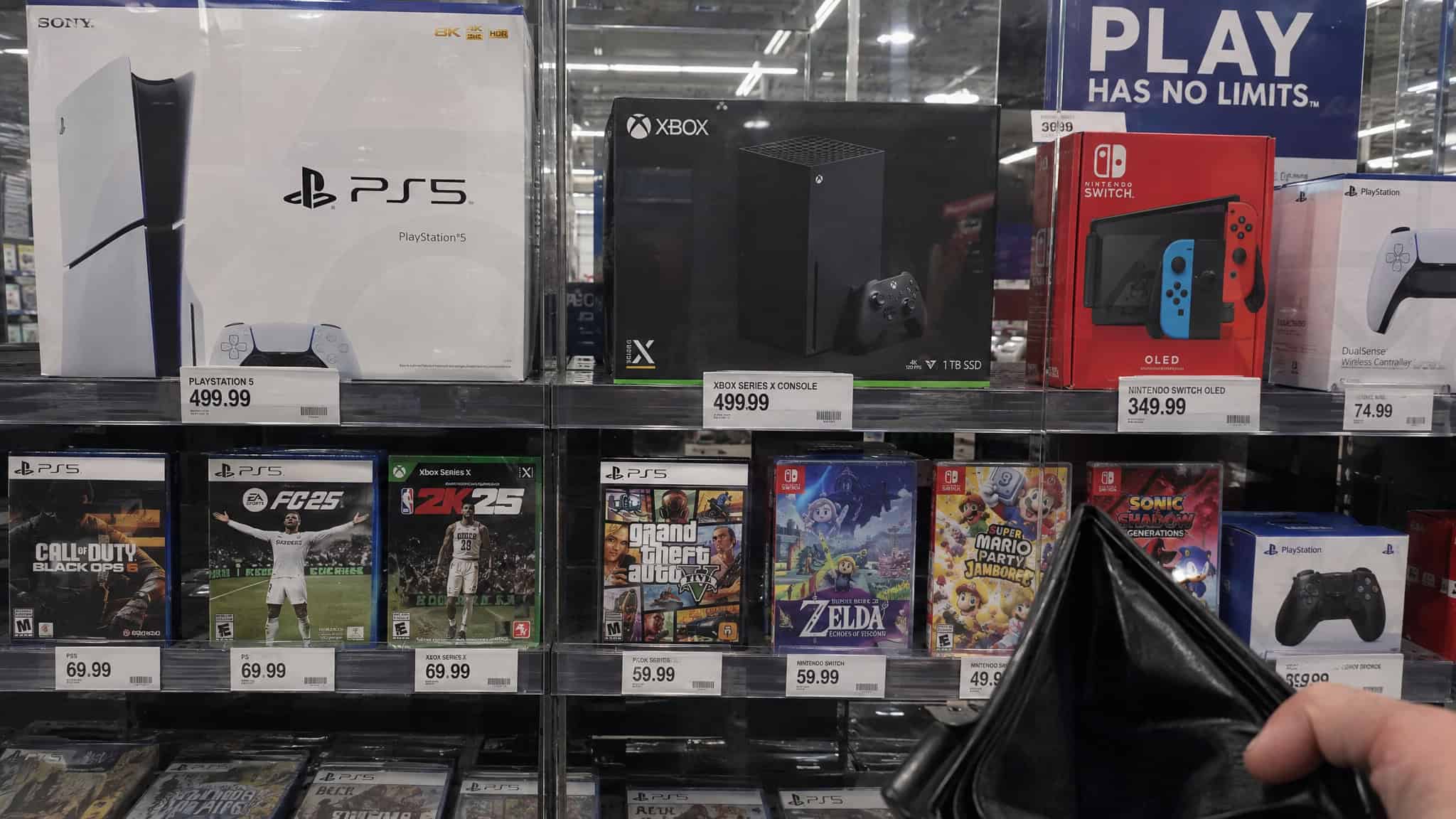
Gaming is an increasingly expensive hobby in 2026, with consoles ranging from $399.99 to $1,049 and major games hitting $79.99, even without a direct dollar-for-dollar comparison against hobbies like golf or a gym membership. Once one of the best per-hour bargains in entertainment, gaming is being pushed toward luxury territory by price hikes across hardware, software, and subscriptions. According to Business Insider‘s 2026 reporting, a global memory shortage with no easy fix led a wave of increases across the hobby prior to October 2026.
- Microsoft Xbox hardware: Prices rose $100 to $150 in August on soaring memory and storage costs, following two hardware hikes the prior year that included the Xbox Series S climbing from $379.99 to $399.99 the previous October.
- PlayStation and Nintendo consoles: The PlayStation 5 Disc Edition jumped from $549.99 to $649.99 in April, while the Nintendo Switch 2 rose from $449.99 to $499.99 in September.
- Valve PC hardware: Valve’s living-room console competitor, the Steam Machine, launched at a starting price of $1,049, hundreds above expectations, sparking gamer backlash, after the entry-level Steam Deck rose from $549 to $789 in May due to component costs.
- The $80 game tier: Software for AAA titles crossed a new ceiling with Mario Kart World priced at $79.99 and Rockstar Games confirming its Grand Theft Auto update starting at $79.
- Subscriptions: PlayStation Plus Essential rose from $9.99 to $10.99 a month in May, while Xbox Game Pass Ultimate jumped $10 to $29.99 in October of the prior year before being cut to $22.99 in April.
The price ledger
Stacking a new console, a couple of $80 releases, and a monthly subscription now clears a grand in year one. That sticker shock blindsides anyone returning to the hobby after a few years away.
Why it’s happening and who feels it
James Sheridan, CEO of Sheridan Technologies and a former HP firmware engineer, told Business Insider that “The industry is being squeezed from both ends” by tariffs, component costs, and semiconductor competition from the AI boom. Sheridan noted that companies pivoted from their old habit-building user-acquisition playbook to charging higher upfront prices while extracting more post-purchase spending inside their ecosystems. Meanwhile, Dan Mazei, principal at All Tangled Roots and former communications head at Activision Blizzard, pointed out that AAA development cycles remain long and expensive with no easy margins left to trim. The squeeze hits hardest if you chase new hardware, day-one releases, and top-end PC parts; a guy content with an older console and offline back-catalog games can still play for next to nothing.
Gaming next to reading, chess and other hobbies
Gaming sits on the exact same footing as reading or going to the gym as a hobby because the only real separator is inconsistent cultural gatekeeping, regardless of where you land on the endless Reddit debates over whether esports and chess count as sports. Spending four hours on the sofa reading a weird little fantasy novel produces nothing tangible either, yet everybody applauds reading because we accept that it’s good for the brain, even while those same readers turn around and productivize their shelves on BookTok and BookTube.
If emotional reward, skill, and working toward a goal count as worthwhile uses of free time, they count across the board. People constantly test the boundary by asking whether chess or esports qualify as sports or hunting for forum validation, which only proves how badly we want a permission slip to enjoy ourselves. You don’t need one. Pick a good game, call your friends, and play.
Frequently Asked Questions
is video gaming a hobby
Yes, video gaming is a genuine pastime pursued in your free time for fun, relaxation, and skill-building. It demands active participation rather than passive watching, whether you’re designing custom builds, practicing to beat a tough final boss, or playing couch co-op with friends. Even adults who dismiss console players often spend their evenings playing mobile titles like Candy Crush without realizing that makes them gamers too.
is gaming a good hobby
Gaming is a great pastime when it stays balanced in your spare time and doesn’t crowd out sleep, health, or real-world obligations. It offers deliberate decompression after work, sharpens fast decision-making and teamwork under pressure, and builds resilience when you fail repeatedly before beating a hard challenge. For me, scheduling regular sessions is also the most practical way to keep long-distance friendships alive with guys who moved to other cities.
is gaming a hobby or an addiction
It is a normal hobby unless you lose control over your play to the point that it severely disrupts your daily life for at least 12 months. That full-year mark is the strict clinical threshold the World Health Organization requires to diagnose gaming disorder alongside prioritizing games over life responsibilities and continuing despite clear harm. If you control the schedule, it’s a pastime; if the schedule controls you and starts eating into your sleep, hygiene, or honesty, it’s a problem to fix.
is reading a hobby like gaming or is gym a hobby
Gaming sits on the exact same footing as reading or going to the gym, and the only real dividing line is cultural gatekeeping. Spending four hours on the sofa reading a fantasy novel produces nothing tangible either, yet people applaud it while looking down on screen time. If skill, mental engagement, and emotional payoff make an activity worthwhile, they count across the board.
is gaming a hobby or a sport like chess or esports
Whether you classify competitive play alongside chess and esports or keep it strictly in the leisure column, gaming requires real skill, persistence, and strategy. Endless online debates over whether esports or chess qualify as sports mostly show how badly people want a cultural permission slip to enjoy their free time. You don’t need outside validation when an activity already delivers teamwork, problem-solving, and earned achievement.