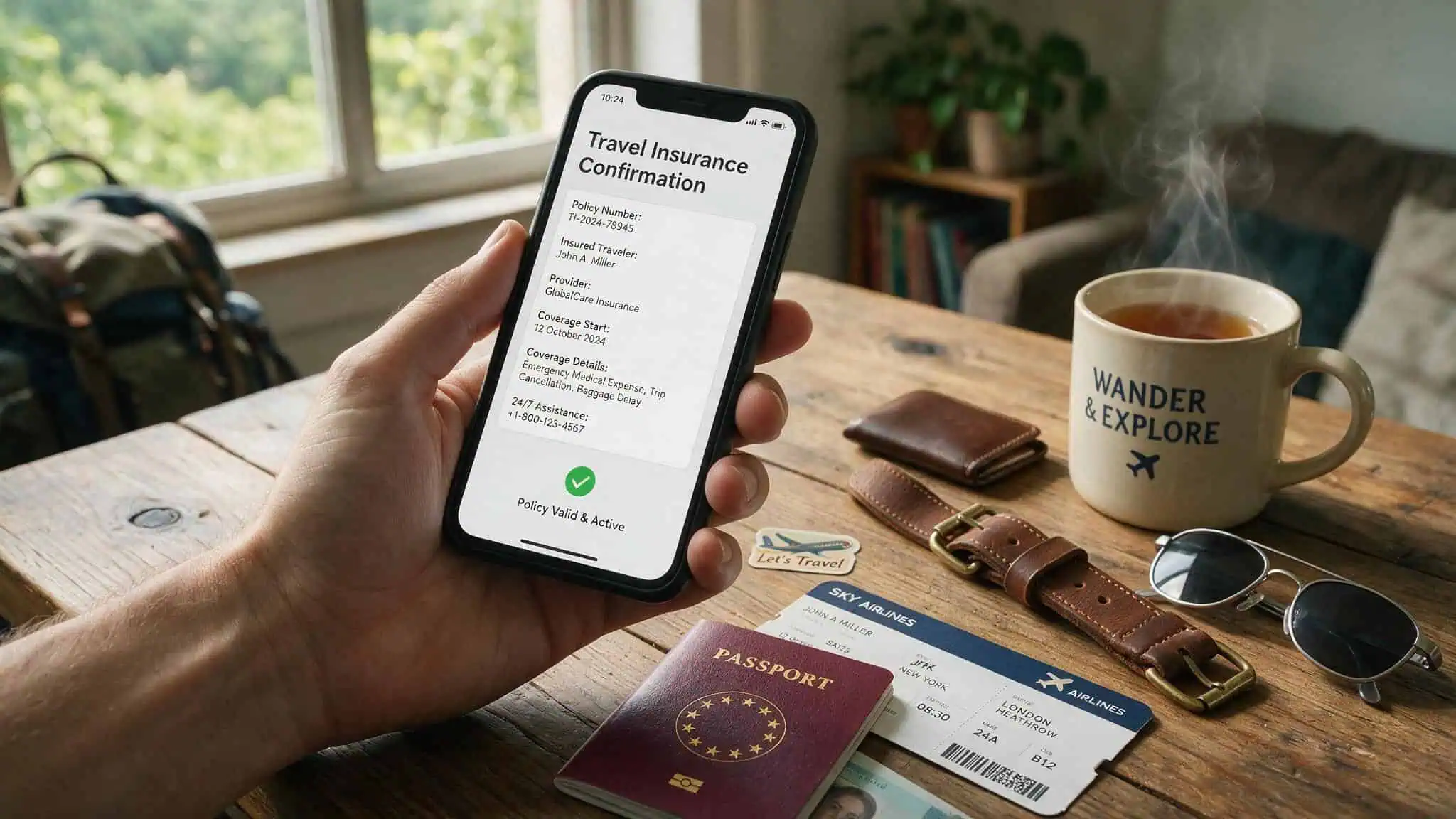
Time-sensitive benefits like pre-existing condition coverage, Cancel For Any Reason, and Financial Default have hard deadlines, and those deadlines don’t count down from your departure date. They count from the day you first handed over money for the trip.
Based on Squaremouth‘s sales data over the past year, the typical purchase happens 67 days before departure. But average doesn’t mean optimal. The question isn’t “how many days before I leave.” It’s “how many days after my first deposit.”
Let’s break down when you need to buy to get the coverage you want.
Key Takeaways
Buy travel insurance within 14 days of your first deposit to get pre-existing condition coverage. The clock for time-sensitive benefits starts on your first non-refundable deposit, not your departure date—so buying after you’ve booked everything often means you’ve already missed the window for pre-existing condition coverage and Cancel For Any Reason.
If you want a pre-existing condition waiver, you must buy a plan with that benefit within 14 days of your first deposit; you can buy an estimate now and update the policy later as you add more costs.
Buying the night before still gets you emergency medical, evacuation, baggage, and delay coverage—but trip cancellation becomes effectively useless because you can’t cancel a trip that’s already happening.
Table of Contents
How Far in Advance Should You Get Travel Insurance? It Depends on the Benefits You Want
Most marketplaces let you buy up until the day before departure. If you just want basic medical and baggage coverage, you can wait until the last minute and still be fine.
The benefits—cancelling because someone gets sick, getting reimbursed after a supplier goes bankrupt, or covering a pre-existing medical condition—come with hard deadlines.
There are two different clocks:
- Days before departure – The one. You can buy anytime up to the day before.
- Days after your first payment – The one for pre-existing condition coverage, Cancel For Any Reason, and Financial Default. Miss this window, and you’re locked out of those benefits forever.
When the Clock Starts: The First Deposit Rule
The first time you put money down on something non-refundable for the trip—that’s your trigger date. Insurers use that date to decide your eligibility for time-sensitive benefits. It doesn’t matter if it’s a flight, a hotel deposit, a cruise booking, or a tour. Whichever comes first. If all your bookings are refundable, the timing window may be less critical, but the first deposit rule still applies to any non-refundable portion.
Most travelers’ first big payment is airfare (41% of travelers, per Squaremouth survey). Another 22% start with a cruise deposit. So for most people, the clock starts when they buy the flight or put down the cruise deposit.
You buy a flight today, book a hotel next week, add a tour a month later, and assume the clock starts on the last booking you make. It doesn’t. It started the day you bought that first flight. By the time you finish booking everything, you might have already lost the window for pre-existing condition coverage, CFAR, and financial default protection.
Keep your receipts. When you file a claim, insurers will ask for documentation showing when you made that first deposit. Lose the receipt, lose the claim.
Bottom line: The clock starts on your first non-refundable payment, not your last. Buy insurance right after that first deposit, not after you’ve booked everything.
The 14-Day Window for Pre-Existing Condition Coverage
If you want coverage for an existing medical condition, you need to buy a plan that includes that benefit within 14 days of your first trip deposit. That’s the cutoff. Buy on day 15, and the standard pre-existing condition exclusion stays in place—no waiver. However, the 14-day window is not universal; some plans offer longer windows, and the ‘first deposit’ definition may vary, so check the specific policy.
What’s a pre-existing condition? It varies by plan, but generally it’s any medical issue you’ve had treatment for or been diagnosed with in a certain period before the trip. The waiver removes the exclusion so that if that condition flares up during travel, you’re covered.
The workaround most people don’t know about: You don’t need to have all your trip costs finalized within those 14 days. Purchase a plan that includes the pre-existing condition benefit now, using an estimate of your trip cost. Then, as you add bookings—hotels, tours, excursions—update the policy through the “Manage Your Policy” section on the insurance site. This way you lock in the waiver window while still protecting the full value of the trip.
What If I Haven’t Finalized All My Trip Costs Within 14 Days?
Do this:
- Purchase a plan that includes the pre-existing condition benefit within 14 days of your first deposit.
- Enter your estimate of total trip costs as the coverage amount.
- As you add new bookings, log in and update the policy each time.
That’s it. You get the waiver, and your coverage grows with your trip.
Cancel for Any Reason and Financial Default: Know the Separate Deadlines
Cancel For Any Reason and Financial Default have their own timing windows, which are separate from the 14-day pre-existing condition rule.
Cancel For Any Reason (CFAR) is an optional add-on that gives you partial reimbursement (usually 50-75%) for reasons the standard policy won’t cover—like deciding you don’t want to go. It’s not cheap, and it’s not full coverage, but it’s the closest thing to a safety net for cold feet.
Financial Default reimburses you for up to 100% of prepaid non-refundable expenses if your airline, cruise line, or tour operator goes bankrupt.
Both require purchase within 10 to 21 days of your first deposit, depending on the provider. Miss that window, and you can’t add them later—no exceptions.
So the order of operations is: First deposit → within 10-21 days buy CFAR/financial default if you want them → within 14 days buy pre-existing condition coverage. The 14-day pre-existing condition window is more generous than the 10-21 day CFAR window for most providers, so if you’re doing both, buy early.
The Best Time to Buy: General Timing Averages and Expert Advice
Most travelers purchase 67 days out, but the recommended window is 10-21 days after first deposit.
Why those two numbers are different: The 67-day figure reflects typical behavior—often after they’ve booked everything and gotten around to thinking about insurance, per Squaremouth sales data. The 10-21 day recommendation is what gets you pre-existing condition coverage, Cancel For Any Reason, and Financial Default.
Good news: Premiums don’t go up if you wait. Your price is determined by age, trip cost, and trip length, not by how far in advance you purchase. So there’s no financial penalty for buying early—only a benefit penalty for buying late.
If you book a flight today and buy insurance tomorrow, you pay the same as if you bought it the night before. But tomorrow you get the waiver window. The night before you don’t.
Last-Minute Purchase: What You Still Get and What You Lose
Let’s say you forgot. It’s the night before your flight, and you haven’t bought insurance yet. The question is, when to buy travel medical insurance? Is it worth buying now?
What you lose: Trip cancellation and trip interruption benefits are useless for refunding prepaid costs. You can’t cancel a trip that’s already happening or about to start. The covered period for cancellation has passed.
What you still get: Emergency medical coverage, medical evacuation, baggage loss/damage, baggage delay, and travel delay. Emergency medical coverage, medical evacuation, baggage loss/damage, baggage delay, and travel delay are the things that can cost you thousands on the ground. A fractured ankle in Portugal (real scenario from Squaremouth‘s files) without medical insurance means you’re eating the hospital bill, which is exactly why the straight-talking question of is travel insurance necessary for international travel matters. A last-minute policy would cover that.
A last-minute purchase still protects you with emergency medical coverage, baggage loss/damage, and travel delay, but it won’t refund your prepaid trip costs—so you need to know the point at which travel insurance can no longer be purchased international?
One catch: Most marketplaces (Squaremouth included) won’t sell you a policy after you’ve already departed. So if you’re at the gate and realize you forgot, it’s too late. Buy before you walk out the door.
When Does Coverage Actually Start? (By Plan Type)
- Comprehensive plans – Coverage starts at 12:00 AM the day after you buy. Buy online at 11 PM Monday, you’re covered from midnight Tuesday.
- Travel Medical plans – Coverage starts at 12:00 AM on your trip departure date. So you’re covered from the moment you leave.
- Annual plans – Coverage starts at 12:00 AM on the departure date of your first trip. If the plan includes trip cancellation, that part starts the day after purchase—so you’re covered for cancellation before you even leave.
What You Can’t Cover: The Foreseeability Rule
Travel insurance only covers unforeseen events, not known events like named storms or travel warnings. You can’t buy it after something has already happened or is about to happen.

The classic example: a traveler in Portugal fractures his ankle in a vineyard. No insurance. He’s facing the full hospital bill, plus the cost of cutting the trip short and flying home early. If he’d bought a policy before the trip, the medical bills and trip interruption would be covered. But you can’t buy insurance after you’ve fallen.
More relevant: named storms, such as hurricanes. Once a hurricane gets a name and a projected path, any policy bought after that won’t cover losses from that storm because it’s a known event. Same for travel warnings or political unrest. If it’s on the news, it’s too late.
So if you’re planning a trip to a region during hurricane season, buy early. Don’t wait until the forecast looks ugly.
The Free Look Period: A Safety Net for Early Buyers
Most policies include a free look period of 10 to 15 days after purchase during which you can cancel for a full refund. Conditions: you haven’t departed yet, and you haven’t filed any claims.
Buy now to lock in the time-sensitive benefits, then review the policy. If you don’t like it, cancel within the window and get your money back.
Credit Card Travel Insurance vs. Standalone Policies: Timing Differences
Credit card travel insurance timing rules, such as Chase Sapphire Reserve’s 6-hour delay threshold, differ from standalone policies.
Key difference: Credit card benefits are tied to the purchase date of the ticket or trip, not the deposit date. So if you book a flight with your Chase Sapphire Reserve, the clock starts when you pay for that flight—not when you made your first hotel deposit.
Chase-specific details:
- Chase Sapphire Reserve: trip delay kicks in after a 6-hour delay. $500 per ticket limit for meals, lodging, toiletries, and meds.
- Other Chase cards: need a 12-hour delay or an overnight stay for the same coverage.
- You have 60 days from the delay to file a claim, and 100 days to submit the paperwork.
- Coverage extends to your spouse/partner and dependent kids under 26.
- Covers flights, buses, cruise ships, and trains—but not taxis or commuter rail.
The trap: Many travelers think their credit card covers everything. It typically covers trip delay (expenses while you’re stuck) but not necessarily trip cancellation (refunding your prepaid costs if the trip doesn’t happen). And the thresholds are strict: Chase Sapphire Reserve requires a 6-hour delay; other Chase cards require 12 hours or an overnight stay. A 5-hour delay on a non-Reserve card? You’re on your own.
Trip Delay vs. Trip Cancellation/Interruption: What Each Covers
- Trip delay – Your trip still happens, later. Covers meals, hotel, toiletries while you wait.
- Trip cancellation/interruption – Your trip doesn’t happen at all, or ends early. Reimburses prepaid expenses.
Which cards have which:
- Chase Sapphire Preferred – has both delay and cancellation/interruption coverage.
- Marriott Bonvoy Boundless – delay coverage only.
- World of Hyatt and IHG Premier – cancellation/interruption only.
Common Mistakes That Cost You Coverage
Four common mistakes account for most denied claims, per industry data:
- Waiting until all trip payments are made. By then you’ve missed the 14-day pre-existing condition waiver window and the 10-21 day Cancel For Any Reason window. Buy after the first deposit, not the last one.
- Forgetting to update coverage. You bought early? Good. Then you added a hotel, a tour, a rental car.
Did you update the policy? If not, your coverage amount is still based on the original estimate—so if you cancel, you’re only reimbursed for what was on the policy, not what you paid.
- Buying after a storm is named. This falls under the foreseeability rule: travel insurance only covers unforeseen events. Once the storm has a name, it’s a known event. No coverage. Buy before hurricane season or early in the season, not when the forecast looks bad.
- Not keeping receipts. Insurers ask for proof of your first deposit date when you file a claim. If you can’t show it, they can’t confirm you bought within the window. Keep the email, the screenshot, the booking confirmation. Lose the receipt, lose the claim.
Bonus mistake: Not checking pandemic coverage. Some plans, such as those on Squaremouth, treat COVID like any other sickness. Others exclude pandemic diseases entirely. Read the fine print. The year 2020 made this clear when COVID-19 became a global pandemic, catching many travelers off guard.

So When Should You Buy? A Practical Summary
Here’s the decision framework:
Step 1 – If you want pre-existing condition coverage: Buy within 14 days of your first deposit. Doesn’t matter if you haven’t finalized costs—buy an estimate, update later.
Step 2 – If you want CFAR or Financial Default: Buy within 10-21 days of your first deposit (check the provider’s exact window). Those benefits can’t be added later.
Step 3 – If you missed those windows but still want medical/baggage/delay coverage: Buy before you leave. Even the night before gets you the important stuff, not trip cancellation.
If you travel multiple times a year: Look at an AllTrips multi-trip plan. One policy, coverage for every trip. Simplifies timing.
The free look period (10-15 days) means buying early is low-risk. The stable premiums mean waiting doesn’t save you money.
So buy after your first deposit.
Frequently Asked Questions
What is not covered by travel insurance?
Standard policies exclude pre-existing medical conditions unless you buy a waiver within 14 days of your first deposit. They also won’t cover known events like named storms or political unrest if you buy after they’re announced. Trip cancellation is effectively useless if you buy the night before departure.
What’s the difference between trip delay and trip cancellation coverage?
Trip delay covers expenses like meals, hotel, and toiletries when your trip happens later than planned. Trip cancellation reimburses your prepaid, non-refundable costs if the trip doesn’t happen at all or ends early. Credit cards often cover delay but not cancellation, so check your card’s specific terms.
When does the clock start for travel insurance time-sensitive benefits?
The clock starts on the day you make your first non-refundable deposit—whether that’s a flight, hotel, cruise, or tour. It does not start on your departure date or when you finish booking everything. Piecemeal booking is a trap: buy insurance right after that first deposit, not after you’ve booked everything.