
So, can you still buy travel insurance if you’re leaving today? It depends. If you’re heading to Belize in a few hours and just realized you never bought a policy, you’re not out of luck—but you’re going to lose trip cancellation, CFAR, and pre-existing condition coverage. For longer stays, an international medical insurance plan may be more appropriate, but your options still narrow considerably once you’re already abroad. If you’re already on the plane to Amsterdam? For Allianz and most other providers, that’s a hard no.
Key Takeaways
Allianz won’t sell you a policy on the day you leave, but you can buy from other providers same-day if you’re okay losing trip cancellation, CFAR, and pre-existing condition coverage.
The deadline for the valuable benefits (pre-existing condition waiver, Cancel For Any Reason, financial default) is 10–21 days after your first trip payment — not your departure date.
A last-minute policy still covers emergency medical, evacuation, trip delay, and baggage loss.
Table of Contents
The first deposit rule: the clock starts when you pay, not when you fly
Most people think the deadline for travel insurance is the day they leave. It’s not. The clock that matters starts ticking the moment you put money down on a non-refundable expense — typically an airline ticket or a cruise deposit. According to Squaremouth, the average traveler buys insurance 67 days before departure, but that’s what people do, not what they should do.
The first deposit date determines whether you qualify for the time-sensitive benefits: pre-existing condition waivers, Cancel For Any Reason, and financial default coverage. Miss that initial window, and those options are gone, even if your flight is still months away.
Why your first trip payment matters more than your departure date
Here’s a concrete example: you book a beach cottage in St. Augustine in November for a June trip. If you buy insurance in April, you can still get trip cancellation coverage — that covers you if something goes wrong with the rental or your flights. But if you book in November and don’t buy until April, you’ve already blown past the typical 14-day window for a pre-existing condition waiver. Any health issue you’ve been treated for in the last 120 days won’t be covered.
For 41% of travelers, the first payment is airfare. Another 22% put down a cruise deposit. That’s the moment to buy, not the morning you head to the airport.
The free look period means buying early has no real risk
Worried about locking yourself in? Most policies come with a free look period of 10 to 15 days. Allianz gives you 15 days to cancel for a full refund, as long as you haven’t filed a claim and haven’t left yet.
You can buy a policy today, decide it doesn’t fit your itinerary, and walk away with your money back.
Same-day departure: what you still get and what you lose
Let’s say you’re leaving for Amsterdam in an hour. Can you still buy standard travel insurance? Not from Allianz — they prohibit same-day purchase entirely. But other providers will let you buy right up until your departure. The catch: you lose access to three big benefits.
What you still get:
- Emergency medical care and evacuation. This is the big one — if you get sick or hurt abroad, you’re covered.
- Trip delay and missed connection coverage.
- Baggage loss, theft, or damage.
The core benefits on a last-minute policy — emergency medical care, evacuation, trip delay, and baggage loss, are as strong as an early-purchased one.
What you cannot get:
- No trip cancellation or interruption. If you need to cancel the whole trip after buying same-day, you eat the costs. That’s why it’s important to understand how far in advance should you get travel insurance before purchasing.
- No pre-existing condition waiver.
- No Cancel For Any Reason (CFAR).
Allianz does offer a couple of same-day options. Their OneTrip Emergency Medical plan covers medical, dental, evacuation, delays, and baggage — but no trip cancellation. Their AllTrips Basic is an annual plan you can buy same-day, with the same limitations on cancellation.
Bottom line: A same-day policy covers medical emergencies and lost bags, but it won’t refund your prepaid flight or hotel if you cancel.
Post-departure: hard no for most providers
Once you’ve left, it’s over. Squaremouth and most other marketplaces won’t let you buy a policy after your departure date. Allianz‘s rule is firm: “If you’ve already left, it’s too late.” There’s no online quote for a trip that’s already started on Squaremouth or Allianz.
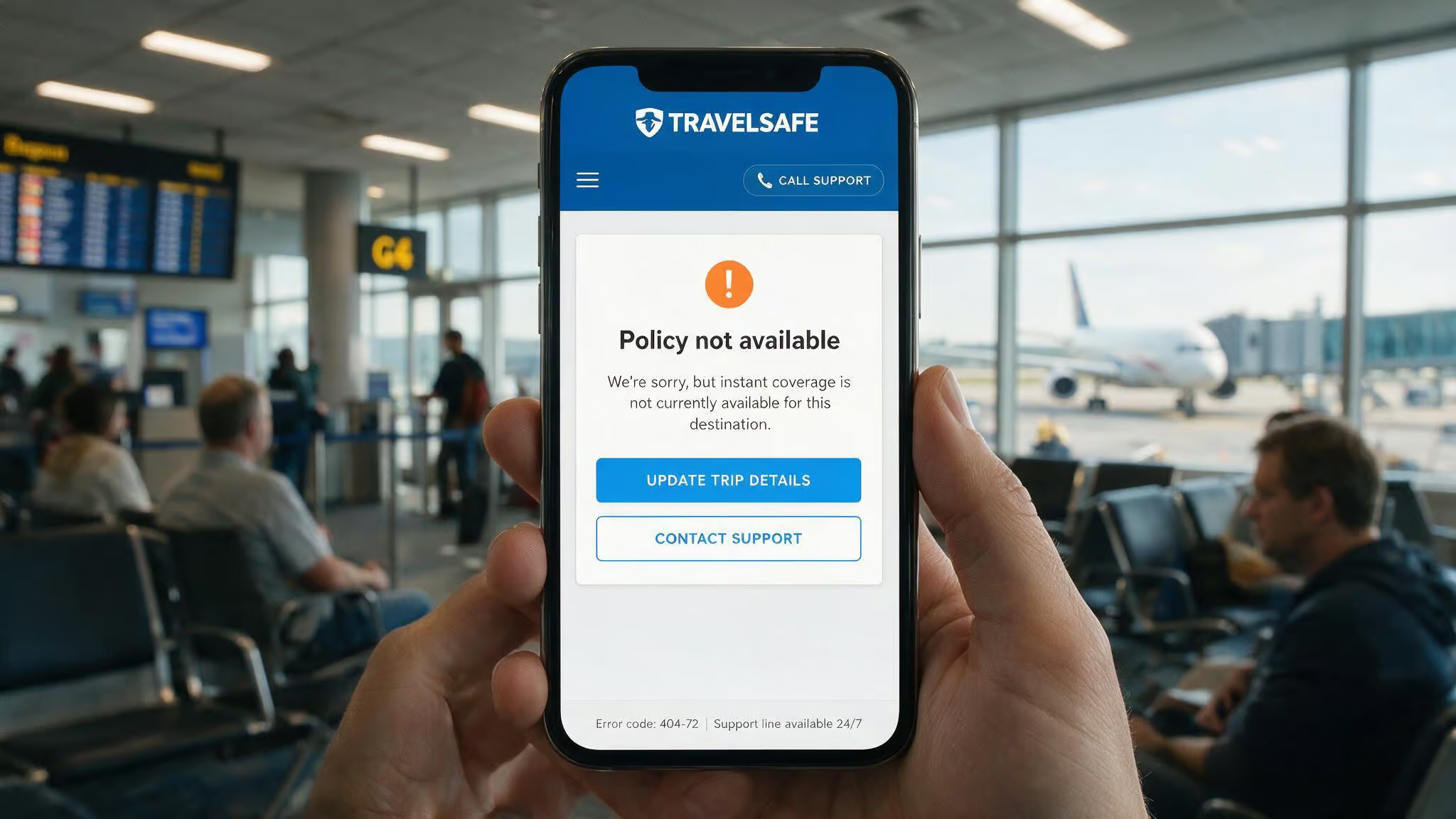
There is a narrow exception: some providers offer specialized medical-only coverage for people already on vacation. But that’s rare, limited to medical expenses, and you have to call around — you won’t find it on a comparison site. The scenario of falling off a hike in Santorini without insurance? That’s the kind of thing you can’t fix after the fact, no provider will sell you a policy post-departure, which is precisely why understanding when to buy travel medical insurance matters before your trip begins.
Time-sensitive benefits: the real cost of waiting
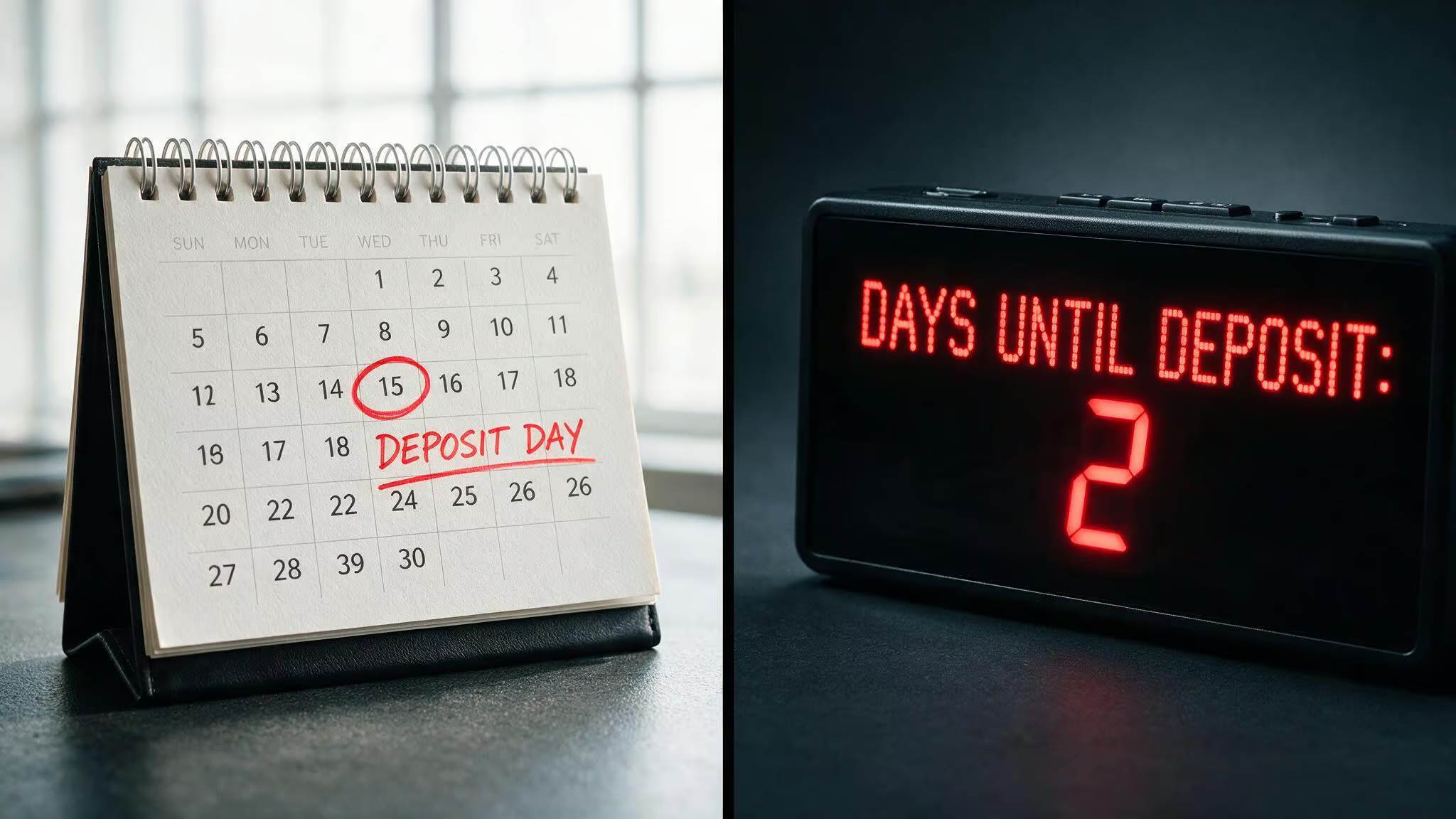
If you buy insurance more than 14 to 21 days after your first deposit, you’re giving up the features that save you money. Here’s what you lose and when.
Pre-existing condition waiver
Most providers require you to buy within 7 to 21 days of your first payment to qualify. Allianz uses a 14-day window. Miss that, and any condition you’ve been treated for or taken medication for in the last 120 days (their lookback) is excluded. That includes chronic issues, recent diagnoses, even routine prescription changes. The St. Augustine cottage scenario above shows exactly how this plays out: book in November, buy in April, and your father’s heart condition won’t be covered.
Cancel For Any Reason (CFAR)
CFAR is the add-on that lets you cancel for reasons not in the standard policy — job loss, cold feet, just not feeling it. The window to add it is usually 10 to 21 days after your first payment. Travel Guard gives you 15 days, Trawick International gives you 7 to 21, and Safe Travels AnyReason gives you a generous 60 days. After that, it’s gone.
CFAR costs about 40 to 50% of your total insurance premium and reimburses 50 to 75% of non-refundable costs. You don’t get it all back, but it’s better than losing everything. You also have to cancel at least 48 hours before departure. And it’s not available in all states — policies have changed since COVID, so check the fine print.
Financial default coverage
This covers you if your airline, cruise line, or tour operator goes under. It can reimburse up to 100% of prepaid non-refundable expenses. It’s time-sensitive, same as CFAR, requiring purchase within 10 to 21 days of first deposit. Miss the window, and you’re on your own if the company collapses.
Known events: weather and coverage alerts
You’re three days from a trip to the Philippines, and a tropical depression is forming. You can still buy insurance, but only if the storm hasn’t been named yet.
Insurance covers the unexpected, not the expected. Once NOAA names a storm, it’s a known event. If you buy a policy after that point, claims related to that storm won’t be paid. That goes for hurricanes, wildfires, political unrest — anything on a Coverage Alert list.
You can still buy insurance, but check the provider’s Coverage Alerts first — for example, Allianz lists named storms on their alerts page. If your storm is already listed, you’re out of luck for weather-related cancellation. Your medical coverage (if you slip on wet pavement, for example) would still be valid — unrelated claims aren’t blocked.
Common mistakes and how to avoid them
- Waiting until all payments are made. You don’t need to have every hotel booked before buying insurance. The first deposit is the trigger. Buy then.
- Forgetting to update coverage after adding trip components. Booked a cheap flight, then added a $3,000 tour? Update your policy cost to match, or you’ll only be insured for the original amount.
- Buying after a storm is named. Don’t assume last-minute weather coverage works. Check the name list first.
- Not keeping receipts and booking confirmations. Your provider will ask for proof of when you paid to determine eligibility for time-sensitive benefits. Save those emails.
- Relying on credit card trip protection alone. Most credit cards have exclusions and won’t cover plan changes like adding a leg or upgrading a room. They’re a safety net, not a replacement.
Annual insurance: a solution for frequent travelers
If you take two or more trips a year, an annual plan like Allianz‘s AllTrips Basic (covering all trips for 365 days) solves the timing problem. You buy once, you’re covered for 365 days. No last-minute decisions, no worrying about windows. It covers baggage loss, delay, emergency medical, and evacuation for every trip you take. You can even buy it on the day of departure for your first trip.
The catch: annual plans that include trip cancellation are subject to the same time-sensitive windows. So if you buy an annual plan with cancellation benefits, the coverage for your first trip starts the day after purchase — but the early-bird perks still apply.
Cost and refund safety net
Your premium is based on your age, trip cost, and trip length, not on how early you buy. A standard comprehensive policy runs about 4 to 8% of your total trip cost. Add CFAR, and you’re looking at 6 to 12%.
Most policies give you 10 to 15 days to cancel for a full refund.
The single most important rule
Buy travel insurance right after you make your first trip payment, not right before you leave. That one habit unlocks pre-existing condition coverage, CFAR, and financial default protection — the benefits that actually save you thousands if something goes wrong.
If you’ve already missed that window, buy anyway. A same-day or last-minute policy still covers medical emergencies, evacuation, delays, and lost bags.
And if you travel more than twice a year, get an annual plan. Then the answer to “is it too late?” is always no.
Frequently Asked Questions
When’s the latest I can buy travel insurance?
Most providers let you buy up until the day you leave, though some like Allianz prohibit same-day purchase entirely. Once you’ve already departed, it’s essentially too late — no standard policy will cover a trip that’s already in progress. A last-minute policy still covers medical emergencies and lost bags, but not trip cancellation.
How far in advance can I buy travel insurance?
You can buy travel insurance as soon as you book your first trip expense — there’s no minimum wait. Most policies come with a free look period of 10–15 days, so you can buy early, review the terms, and cancel for a full refund if it doesn’t fit. Buying early is the only way to unlock the best benefits.
What’s the difference between buying travel insurance early vs. last-minute?
Buying early (within 10–21 days of your first deposit) unlocks trip cancellation, Cancel For Any Reason, pre-existing condition waivers, and financial default coverage. Buying last-minute or same-day still covers emergency medical, evacuation, trip delay, and lost bags — but you forfeit those big-ticket protections that refund your prepaid costs if something goes wrong.
Does travel insurance cover hurricanes if I buy right before the storm?
Only if the storm hasn’t been named yet. Once NOAA names a hurricane, it becomes a known event, and any claims related to that storm won’t be paid if you buy after that point. Your medical coverage for unrelated incidents would still be valid, but weather-related cancellation is off the table.