You’ve heard the numbers: the Bureau of Labor Statistics projects home health aide jobs will grow 17 percent between 2024 and 2034—more than five times the average across all occupations. There are already 4.3 million people doing this work, and the field is expected to add about 740,000 more positions in that decade. The median pay sits at $34,900 a year, or $16.78 an hour.
So what does that mean for a guy considering the job? At its simplest, a home health aide (HHA) helps people who can’t fully care for themselves—bathing, dressing, eating, moving around. That’s the core. There’s a related role called a personal care aide (PCA), but the difference matters: HHAs can perform certain basic health tasks depending on where you live (like checking vitals), while PCAs stick strictly to nonmedical support.
The Bureau of Labor Statistics classifies this role under SOC Code 31-1120, which covers home health and personal care aides. We’ll cover what you’ll do with your hands all day, the legal lines you can’t cross, the physical and emotional demands, and what it’s like being a guy in this work.
The clinical framework that structures the job is called the six activities of daily living (ADLs): feeding, ambulating (walking or moving), dressing and undressing, personal hygiene, continence, and toileting.
Key Takeaways
Employment for home health aides is projected to grow 17% from 2024 to 2034, with about 765,800 job openings each year (mostly from people leaving the field).
The median annual wage is $34,900 ($16.78/hour), but pay varies by industry—residential disability facilities average $36,400; home healthcare services average $35,250.
The job revolves around six activities of daily living: feeding, walking/moving, dressing/undressing, personal hygiene, continence, and toileting—plus a range of household and companionship tasks.
Table of Contents
Personal Care: The Heart of the Job
If you take this job, personal care is where you’ll spend the most time and energy. The six ADLs aren’t a checklist you breeze through—each one involves intimate contact, physical effort, and a steady nerve.
Bathing, dressing, and grooming
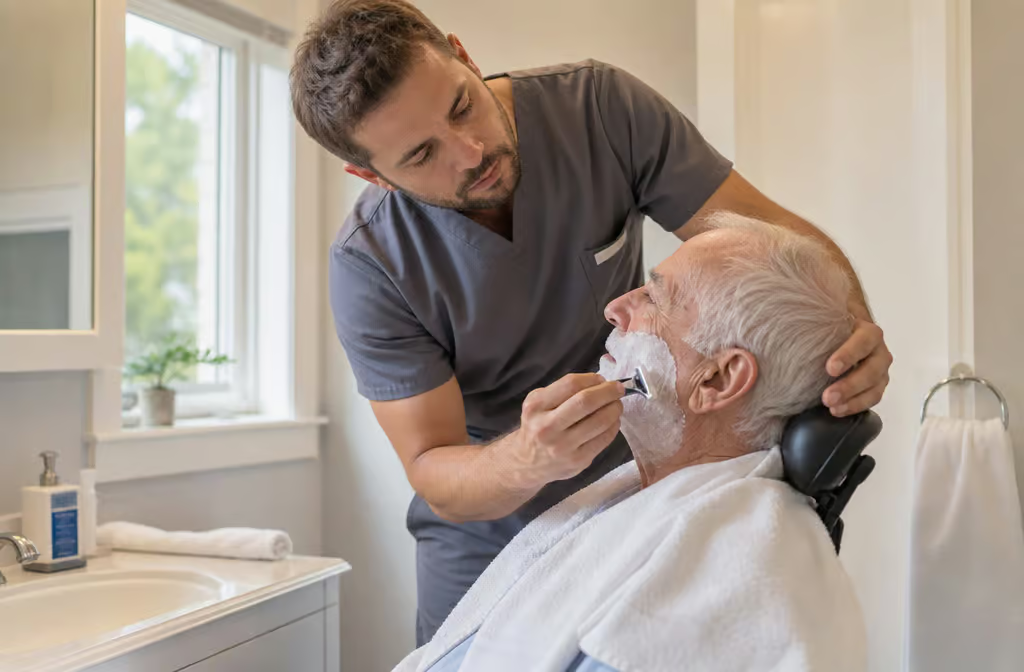
Bathing and dressing are the ADLs that demand the most from you physically and interpersonally. You’re lifting, turning, supporting weight while someone is wet and vulnerable. You also have to manage the emotional side—preserving a client’s dignity when they’re naked or half-dressed and dependent on you. Grooming (brushing teeth, combing hair, shaving) sounds minor but is often a daily morale booster for the client.
Toileting and continence care
This is the part new aides consistently say they underestimated. It includes helping clients use the toilet, cleaning up after accidents, and managing incontinence products. Some clients are fully aware and embarrassed; others have dementia and don’t understand what’s happening. You need to stay calm, move quickly, and not flinch.
If you can’t handle this with a straight face, this isn’t the role for you.
Feeding and ambulating
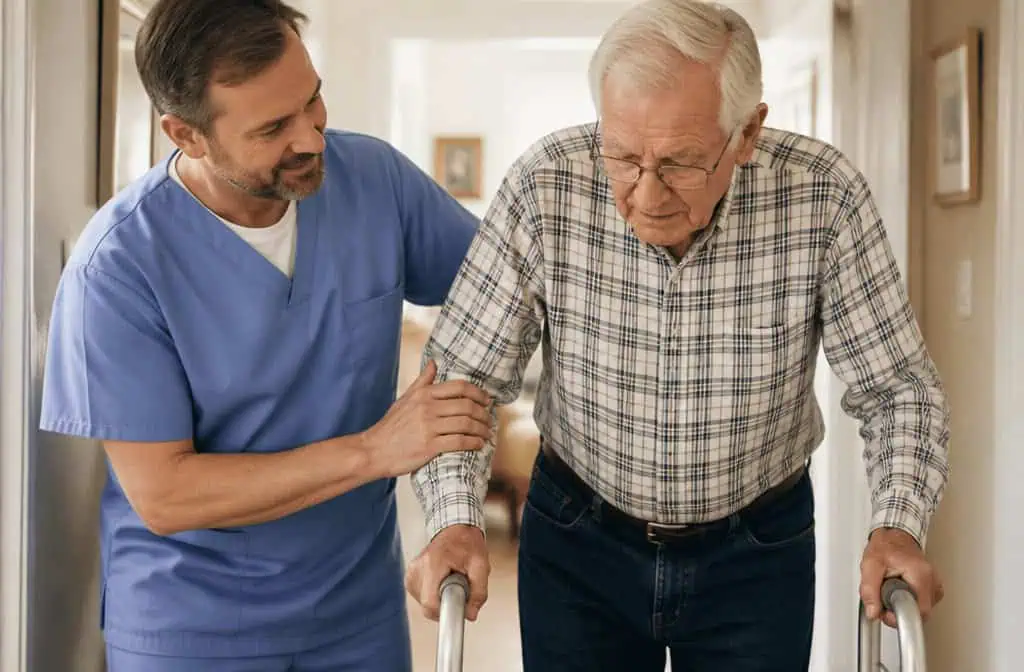
Feeding assistance means helping someone eat—prepping food, cutting it up, guiding a utensil to their mouth, and watching for choking. Dietary compliance matters: some clients have diabetes, swallowing difficulties, or allergies. Ambulating is everything from helping someone stand up from a chair to walking with a cane or using a transfer board to move from bed to wheelchair. Body mechanics matter here more than raw strength; poor lifting technique will wreck your back in six months.
Instrumental Tasks: Keeping the Client’s World Running
Beyond the hands-on personal care, you’ll handle what the experts call instrumental activities of daily living (IADLs)—the household and logistics work that keeps a client independent.
Meal preparation and grocery shopping
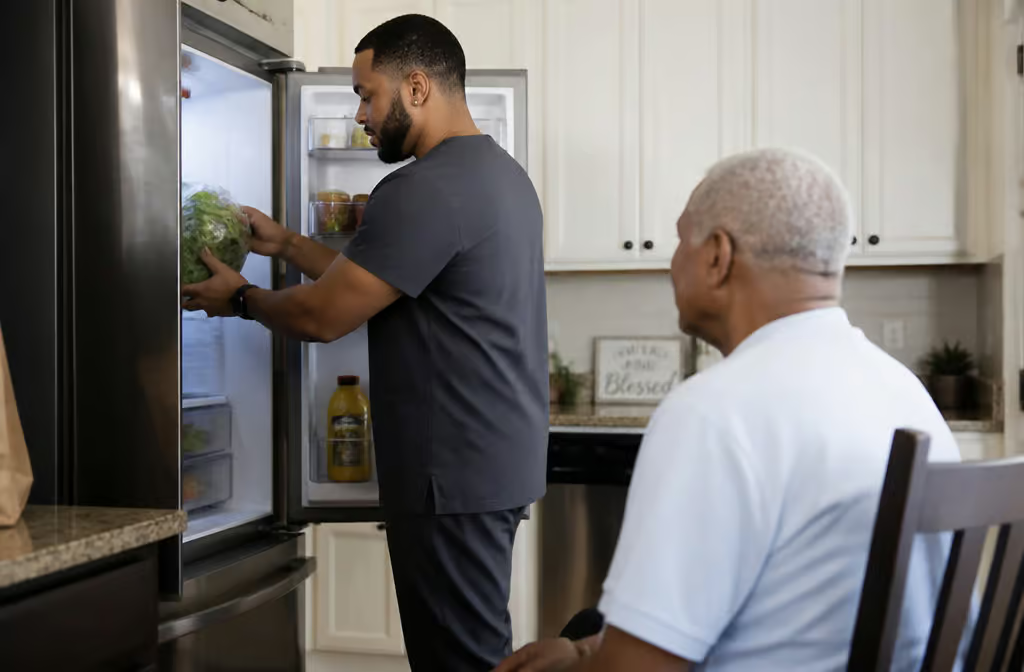
A common situation: you arrive at a home where the pantry is nearly empty and the client has specific dietary needs—low sodium, pureed food, diabetic-friendly. You shop, you cook, you clean up afterward. Some kitchens are well-stocked; others have limited tools and ingredients.
Housekeeping and laundry
Dishes, laundry (soiled sheets are routine), vacuuming, general tidying. This isn’t optional “light housekeeping.” A clean home prevents infections, reduces fall hazards, and keeps the client’s environment dignified.
Scheduling and transportation
You’ll organize doctor’s appointments, call to confirm times, arrange rides through services or family, and sometimes assist with outings (grocery store, pharmacy, a walk in the park). More complex than it appears: you’re the logistics coordinator between the client, their family, and multiple healthcare providers. You may also need to How to apply for home Attendant Services, whether for yourself or a family member. Note: you generally cannot use your own car unless authorized and insured—that’s a liability issue that can get you fired.
Social engagement and companionship
This isn’t fluff. Staying socially connected is clinically important for mental health—especially for older adults who might otherwise isolate. You might play cards, draw, garden, facilitate virtual family gatherings, set up a video call with family, or just sit and talk. Agencies have different approaches: CompassCare emphasizes cognitive activities, Home Instead promotes things like gardening and card games, TheKey uses something called the Balanced Care Method that integrates mental stimulation with daily tasks. Right at Home is known for using a “gentle nudge” technique with medication reminders, and for job seekers, a strong home health care job description for resume can highlight the skills that make these approaches work.
These interactions also provide respite for family caregivers who are often burnt out. Your presence means a spouse or adult child can take a break knowing someone competent is there.
Health-Related Tasks & the Legal Line You Can’t Cross
Now for the part where most new aides get confused: what medical tasks can you do?
Checking vital signs (state-dependent)
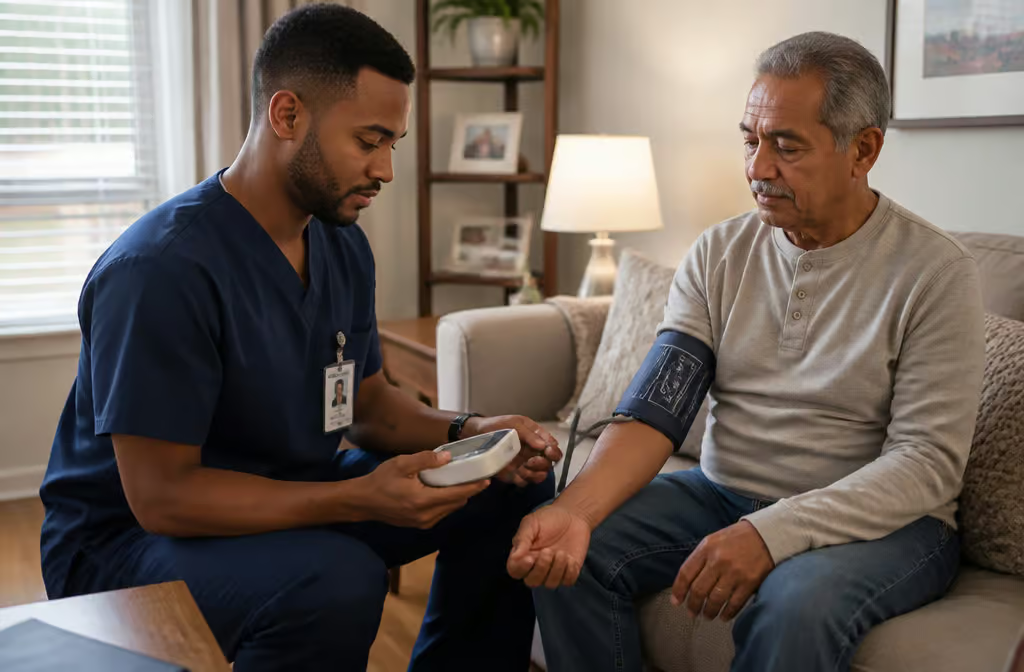
In some states, HHAs are allowed to take a client’s pulse, temperature, and respiration rate. Personal care aides generally cannot. If you work for a Medicare-funded agency, you’ll almost certainly need state certification that includes training on these skills, so it helps to consult a step-by-step guide on #planned-how-to-be-a-home-health-care-worker covering training, certification, and job duties.
Medication reminders vs. administration
This is the most common boundary issue you’ll face. A family member asks you to “just hand Mom her pill.” The legal distinction: a reminder is saying “It’s time for your medication.” Administration is physically handing them the pill or putting it in their mouth.
Joy Loverde, author of The Complete Eldercare Planner, makes the point clear: home health aides can remind, but generally cannot administer unless state law explicitly allows it. Exceptions exist in some states, but as a rule, don’t touch the meds. Your license (or your job) depends on it.
Other health-related tasks
Depending on training and state rules, you might help with prescribed exercises, change simple bandages, perform skin care, give massages, or assist with braces and artificial limbs. Ventilators require special training—do not attempt without certification. Each of these tasks should be written into your care plan.
Keeping records and reporting changes
You’ll document what services you provided, the client’s condition, and any progress or setbacks. If you notice a new bruise, a change in appetite, confusion, or a fall—you report it to your supervisor immediately. Accurate record-keeping protects you legally and ensures the client gets proper medical attention.
The Scope of Practice: What You Don’t Do (And Why It Protects You)
There are three hard “no’s” that apply everywhere in the U.S.:
- No medical procedures – No injections, no wound debridement, no inserting catheters. If it requires a nurse or doctor, you don’t do it.
- No managing finances – You can bring in the mail, but you cannot open it or handle their money. Tina Sadarangani from New York University warns that opening someone else’s mail is illegal and considered stealing. Same goes for paying bills or making financial decisions.
- No unauthorized transportation – Taking a client in your personal car without proper authorization and insurance coverage creates serious liability in case of an accident. Jennifer Drake, a care management expert, notes that this request could risk the home health aide’s employment.
These aren’t arbitrary rules—they protect you from legal exposure and protect the client from harm. The best defense against scope creep is a written care plan that defines exactly what’s expected, plus regular check-ins with the family and your agency. Signs you’re being overburdened: forgetting tasks, struggling to keep up, seeing decreased quality in your work, feeling constant exhaustion. If that happens, you speak up. Sadarangani stresses that clear communication and addressing issues promptly prevents the “gradual ask” that turns a reasonable workload into an impossible one.
Is This Job Right for You? Work Environment and Key Qualities
This job is harder than most people expect. Low entry requirements—a high school diploma or equivalent is typical—do not mean low demands.
Physical demands and injury prevention
You’ll be on your feet most of the shift. You’re lifting, turning, transferring clients who may weigh as much or more than you. Back injuries are the most common occupational hazard. Proper lifting techniques (use your legs, not your back; avoid twisting; use transfer aids) are non-negotiable.
Emotional demands and self-care
Many clients have dementia, cognitive impairments, or mental health conditions. They may be confused, frustrated, or aggressive. Some will forget who you are between visits. The emotional toll is a leading cause of turnover—more than the physical grind.
Emotional stamina is as important as physical strength.
Essential qualities from BLS
The Bureau of Labor Statistics identifies five qualities for success:
- Detail oriented – You notice changes in condition, follow care plans exactly, and document accurately.
- Emotional skills – You stay calm when a client cries, lashes out, or refuses to cooperate.
- Integrity – You don’t steal, lie, or cut corners when no one is watching.
- Interpersonal skills – You can build trust with a stranger in their own home.
- Physical stamina – You can handle the daily grind of lifting, standing, and moving.
Read those again. If you don’t have at least four of them naturally, this job will burn you out fast.
A Note for Men: Your Strengths and the Trust Question
Honest answer: sometimes, yes. Men make up a small share of the HHA workforce, and some female clients—or their conservative families—are uncomfortable with a male caregiver. You’ll also occasionally deal with husbands who give you a hard time.
Here’s what’s real: your physical strength is a legitimate asset. Lifts and transfers are easier for most men, which reduces your injury risk and makes you valuable for heavier clients. There’s also growing demand for male caregivers for male clients—veterans, men with specific trauma histories, or guys who just feel more comfortable with another guy handling their personal care. Agencies actively want to hire men for those cases.
Be upfront. Let the client and family meet you before the first shift.
Compassion and integrity matter more than gender every time.
Job Outlook and Earnings: A High-Growth Career
The numbers behind this career path show strong demand and solid wages, making it a practical choice for long-term stability.
Growth projections (17% growth)
The 17% growth rate is more than five times the 3% average for all occupations over the next ten years. That’s about 739,800 new jobs added. On top of that, roughly 765,800 openings will appear each year as existing aides retire or move on. Job security is about as solid as it gets.
Wage data ($34,900 median)
The median is $34,900 a year ($16.78/hour). The lowest 10% earn under $25,600; the top 10% earn over $44,190. But where you work matters more than you might think. According to BLS, the highest-paying industry is residential disability facilities ($36,400 median), followed by assisted living ($36,280), home healthcare services ($35,250), and individual/family services ($34,600). If you’re chasing the top dollar, look into group homes or assisted living facilities rather than private home care.
Certification requirements and how to start
Most entry-level positions require a high school diploma or equivalent. For Medicare-funded agencies, you’ll need state-specific certification—typically a training program that covers infection control, vital signs, emergency procedures, and basic care. Some states also require a background check and a written exam. Check with your state board of health for the exact requirements.
On-the-job training is common, and postsecondary programs (often at community colleges) can get you certified in a few months. No degree needed, just a willingness to learn the hands-on skills.
Conclusion: The Boundaries That Make the Job Sustainable
The thread running through all of it is boundaries.
Burnout is the #1 reason people leave this field, and it’s almost always preventable with honest communication.
If you respect the work enough to be honest about both sides, it can be a solid career for a long time.
People Also Ask
What are the duties and responsibilities of a home health aide?
A home health aide helps clients with the six activities of daily living: feeding, walking or moving, dressing and undressing, personal hygiene, continence, and toileting. They also handle instrumental tasks like meal preparation, light housekeeping, laundry, scheduling appointments, and providing companionship. Depending on state regulations, some HHAs can check vital signs, but they generally cannot administer medications or perform medical procedures.
What are the 6 main roles and responsibilities of a caregiver?
The six core responsibilities are based on the activities of daily living: feeding, ambulating (helping the client walk or move), dressing and undressing, personal hygiene (bathing, grooming), continence care, and toileting assistance. These aren’t abstract categories—they’re the hands-on tasks that fill a home health aide’s shift every day.
What’s the difference between a caregiver and a home health aide?
A home health aide is a specific type of caregiver who can perform certain basic health tasks like checking vital signs, depending on state regulations. A personal care aide, by contrast, sticks strictly to nonmedical support like bathing, dressing, and housekeeping. The term ‘caregiver’ is broader and can include family members or paid workers who provide any level of assistance.
Can a home health aide administer medication?
Generally, no. Home health aides can remind a client it’s time to take their medication, but physically handing them the pill or putting it in their mouth counts as administration and is outside their scope of practice unless state law explicitly allows it. Crossing that line can put your certification or job at risk.
Is being a home health aide physically demanding?
Yes, it’s one of the most physically demanding jobs you can take without a degree. You’re on your feet most of the shift, lifting and transferring clients who may weigh as much as you, and performing tasks like bathing that require supporting someone’s full weight. Back injuries are the most common hazard, so proper lifting technique matters more than raw strength.
What is the job outlook for home health aides?
The Bureau of Labor Statistics projects 17% growth from 2024 to 2034—more than five times the average for all occupations. That translates to about 740,000 new jobs added, plus roughly 765,800 openings each year as existing aides retire or leave the field. The aging population and preference for home care over institutions are driving this demand.