
If you need home care in New York, the biggest hurdle isn’t finding an aide. It’s getting the state to pay for it. Most people use Medicaid for this, but the application process is a maze of forms, assessments, and insurance plans. I went through the official guidelines so you don’t have to. Here’s how to apply for home attendant services in New York, what they’re looking for, and what to do if they say no, plus a step-by-step guide on how to be a home health care worker for men entering the field.
Key Takeaways
You need help with at least one “Level II” task (bathing, dressing, eating, toileting, mobility, or managing meds) to qualify — needing help with just groceries or housework doesn’t cut it.
The state requires two assessment appointments with NYIA within 14 days, and you must bring a doctor’s letter and medical records to make your case.
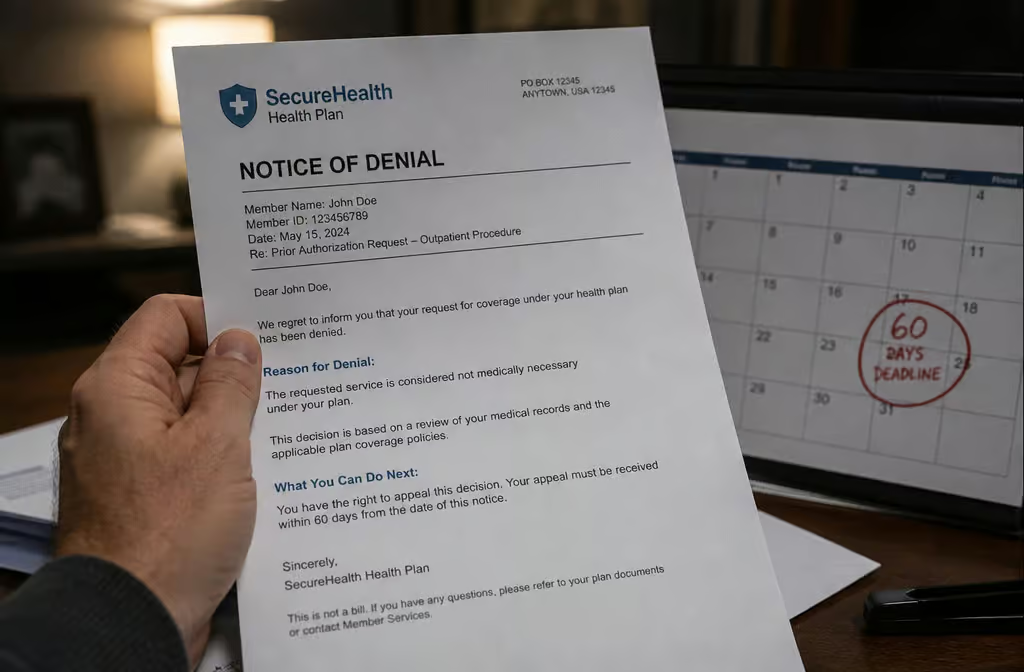
If you’re denied, you have exactly 60 days to appeal. The process depends on whether NYIA or your insurance plan sent the denial.
Table of Contents
What home attendant services actually cover
Before you dive into the paperwork, it helps to know what you’re applying for. Home attendant services through Medicaid in New York include personal care (help bathing, dressing, eating), private duty nursing, adult day care, and CDPAS — which is the option that lets you hire a family member as a paid caregiver.
The rule: you have to apply and get approved before any services start. There are no shortcuts, and you can’t backdate it. Plan ahead.
The eligibility test most guys get wrong
The state uses a specific test to decide if you qualify, and this is where people get tripped up.
You need three things:
- You’re medically stable.
- You can direct your own care (or have someone who can).
- You need help with at least one Level II task.
Level I tasks are the household management stuff: using the phone, making meals, cleaning, shopping, handling money. If that’s all you need help with, the state will tell you it’s not enough on its own. These tasks are called activities of daily living (ADLs). Level II ADLs include bathing, dressing, eating, toileting, transferring, and mobility.
Level II tasks are the personal stuff: taking medication, bathing, dressing, eating, using the bathroom, and getting around the house. If you can’t get out of the bathtub by yourself or you need help managing your pills, that’s the kind of thing the state needs to hear.
One more thing: starting January 1, 2027, there’s a new 80-hour work requirement for adults 19-64 on Medicaid. That doesn’t affect eligibility for care directly, but it could affect your coverage down the line. More on that later.
The NYIA assessment — the gate you have to go through
Assuming you meet the basic criteria, the next step is an assessment. The state uses a single independent agency for this: the New York Independent Assessor, or NYIA. You can’t skip this part.
Here’s how it works:
- Call 855-222-8350 to schedule your assessment.
- NYIA will set up two appointments: a Community Health Assessment (CHA, which is a general health check) and a clinical appointment with a clinician.
- Both appointments have to happen within 14 days of your call. If you miss the CHA, the clinical appointment gets pushed back too. Don’t blow it off.
- You can choose to do them in person or by telehealth.
- If you want someone else to handle the calls and paperwork for you, fill out an authorized representative form and fax it to 917-228-8601.
What to bring: A letter from your doctor and any relevant medical records. This is your chance to make your case, so don’t show up empty-handed. Keep copies of everything for yourself.
After the clinical appointment, the clinician writes a Practitioner’s Order — the official document that says you need care. The assessment and the order are good for 12 months. After that, you get reassessed. While the source does not specify a standard timeline, most applicants receive a letter within 30–60 days. If you haven’t heard back, call NYIA at 855-222-8350.
What happens after approval (it depends on your plan)
Getting approved by NYIA is step one. Actually getting an aide in your home depends on what kind of Medicaid you have and what specific tasks they will perform, such as those detailed in this home health aide duties list. This is where people get stuck.
Fee-for-Service Medicaid: This is the less common route. You take your NYIA approval letter to your local social services office (or the HRA if you’re in NYC). They’ll set up your services.
Managed Care (MMC): This is what most people have. Give your approval letter to your managed care plan. They’ll develop a plan of care and arrange the services.
Dual eligible (Medicare and Medicaid): You can’t stay in a regular managed care plan. You have to join a managed long-term care (MLTC) plan plan. The options include MLTC, Medicaid Advantage Plus (MAP) plan, PACE, and FIDA-IDD.
Critical warning: There’s a plan called Medicaid Advantage. It sounds like it should cover home care. It doesn’t. Avoid it if home care is what you need. Medicaid Advantage Plus is the one that includes it.
If you need to join an MLTC plan, call NYIA or New York Medicaid Choice after you get your approval letter. They’ll help you pick a plan.
What to do if you’re denied or given too few hours
Denials happen. It’s not the end of the road, but the clock starts ticking the day you get that letter.
If NYIA denied you: You have 60 days from the date on the denial letter to request a Fair Hearing through the Office of Temporary and Disability Assistance (OTDA). That’s the state-level appeal process.
If your managed care plan or MLTC plan denied you: You have 60 days to file an internal appeal with the plan first. If they uphold the denial, you can then request a Fair Hearing.
If you were approved for too few hours or they cut your hours: Same process. You have the right to appeal.
Keep every letter they send you. If you’re lost, call Legal Services NYC at 917-661-4500. They provide free help with denials, hour reductions, and appeals. The helpline is open Monday through Friday, 9:30 AM to 4 PM. They’re subject to capacity and where you live, so call early if you can.
Getting paid to take care of your own family
This is the option many guys don’t know about. Through CDPAS (Consumer Directed Personal Assistance Services), you can hire a family member as a paid caregiver. That means you can get paid to take care of your own dad, your spouse, or your kid. It’s an option under New York Medicaid.
Here is the New York-specific step-by-step: First, confirm eligibility with NYIA. Second, choose a CDPAP fiscal intermediary. Third, complete the enrollment and training with the intermediary. Fourth, the care recipient hires you as their personal assistant.
If you’d rather work through an agency, NYFSCHAS is one to know about. They’ve been around since 1981, licensed by the NYS Department of Health, and serve over 1,300 clients a year. They offer home health aides, personal care, housekeeping, and nursing supervision. The big selling point: if your aide doesn’t show, they can usually send a replacement within two hours.
They also have multilingual staff who speak English, Spanish, Chinese, Creole, Russian, and Polish. Phone lines are staffed weekdays 9-5, but they have 24/7 live answering and follow-up.
Recent policy changes that could affect your access
Two things happened in the last year that you should know about.
Nursing home staffing rules rolled back: The federal government repealed the Minimum Staffing Standards for Long-Term Care Facilities. The old rule required 3.48 hours of nursing care per resident per day, including a registered nurse onsite 24/7. HHS said the rule hurt rural and tribal facilities. Critics say it could reduce quality and shift more burden onto home care.
New 80-hour work requirement: Starting January 1, 2027, certain adults on Medicaid (ages 19-64) will need to work, train, or volunteer for at least 80 hours a month to keep their coverage. There are exceptions for people who are pregnant, disabled, medically frail, or caring for young children. About a third of direct care workers — the people who provide home care, are on Medicaid themselves. This rule could make it harder for them to keep their own insurance, which could worsen the worker shortage. A 2026 report projected that the policy could reduce the number of people receiving home care through Medicaid by over 311,000.
The implementation deadline is January 1, 2027, so it’s not immediate, but it’s coming.
That’s the map. It’s not a perfect system, and it respects no one’s time. But if you know the steps going in, you can avoid the worst of the runaround. Get the paperwork together, make the call, and take it one step at a time.
Frequently Asked Questions
What qualifies you to get a home health aide?
You need to be medically stable, able to direct your own care (or have someone who can), and require help with at least one Level II task — things like bathing, dressing, eating, toileting, mobility, or managing medication. Needing help with just groceries or housework won’t qualify you.