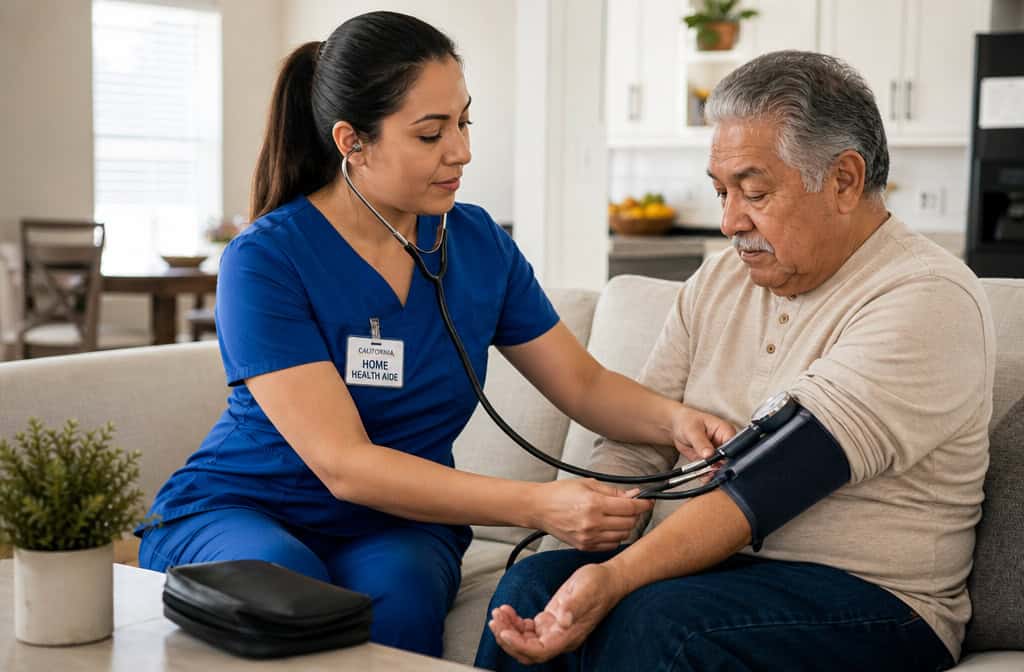
If you’re thinking about becoming a home health aide in California, the state doesn’t treat the job like a side gig. It treats it like a real healthcare role — because that’s what it is. Home health aides do basic medical tasks under the supervision of a nurse: checking vital signs, helping with wound care, assisting with mobility. They’re not just companions who sit with a client. And because they work for Medicare-certified home health agencies, the state has a say in who can do the work.
That authority belongs to the California Department of Public Health’s Licensing and Certification Program — CDPH LCP for short. The same agency that administers maternal and child health programs including Black Infant Health, Breastfeeding Initiative, California Home Visiting Program, Perinatal Equity Initiative, and Regional Perinatal Programs of California, and whose Office of Health Equity addresses climate change and health disparities, also runs HHA certification. It means the credential is backed by a government body with oversight, not some online certificate mill.
If you want to work for a Medicare-funded agency in California, you need this certification. Period.
Key Takeaways
California requires 120 hours of classroom training plus 20 hours of supervised clinical work — 140 total hours, compared to the federal minimum of 75 classroom and 16 clinical (91 total).
Only 6 states and the District of Columbia meet the 120-hour training recommendation from the National Academy of Medicine; California is one of them.
The background check through DOJ and FBI is the most common delay in the process — start it as early as possible.
Table of Contents
Training Requirements — California’s 120-Hour Standard and What It Means
If you google “HHA training hours,” you’ll see the federal minimum is 75 hours of classroom instruction and 16 hours of supervised clinical practice. That’s 91 hours total. California more than doubles the classroom portion and adds extra clinical time: 120 training hours plus 20 clinical hours, for a total of 140.

That’s roughly 50% more than the federal baseline.
Federal minimums vs. California requirements
Here’s the direct comparison:
- Federal minimum: 75 training hours + 16 clinical hours = 91 total
- California: 120 training hours + 20 clinical hours = 140 total
California requires that the clinical hours be separate from the classroom — you can’t just count roleplay in a classroom as hands-on experience. You need to be in a supervised setting, working with real patients.
Why 120 hours matters
In its 2008 report ‘Retooling for an Aging America,’ the National Academy of Medicine recommended that home health aides get at least 120 hours of training. The report, Retooling for an Aging America, made it clear that the federal minimum was too low. Most states ignored the recommendation. As of the latest data, 33 states still use the 75-hour minimum.
Only 17 states and D.C. exceed it, and only 6 states and D.C. actually meet the 120-hour recommendation. California is one of those six.
Bottom line: California’s 140-hour requirement puts you ahead of aides in 44 other states before you even start working.
That means a California HHA certification is one of the rigorous in the country. If you get certified here, you’ve had more training than HHAs in 44 other states. That matters if you ever move or if you’re comparing your credentials to someone from another state.
The clinical component trap
The 20 clinical hours are the part that trips up a lot of applicants. Everybody focuses on the 120 classroom hours, then realizes they need to arrange 20 hours of hands-on, supervised clinical work. You need to find a CDPH-approved program that offers clinical placement, or you need to arrange it yourself through a licensed home health agency. Start planning that before you even sign up for the classroom portion.
How to Get Certified — The Step-by-Step Process
The path to certification has four stages. You can’t skip any of them, and the order is fixed.
Completing training and clinical hours
First, you have to complete the 120 training hours and 20 clinical hours through a CDPH-approved program. Not every online course qualifies — the program must be approved by the CDPH Licensing and Certification Program. If you’re looking at a program, check that it’s on the approved list before you pay a dime.
Passing the competency evaluation
After the training comes the test. It’s not just a multiple-choice written exam. There’s also a hands-on skills test where you have to demonstrate things like taking blood pressure, transferring a patient, and performing proper hand hygiene. Both parts count. Fail one, and you don’t pass.
Background check
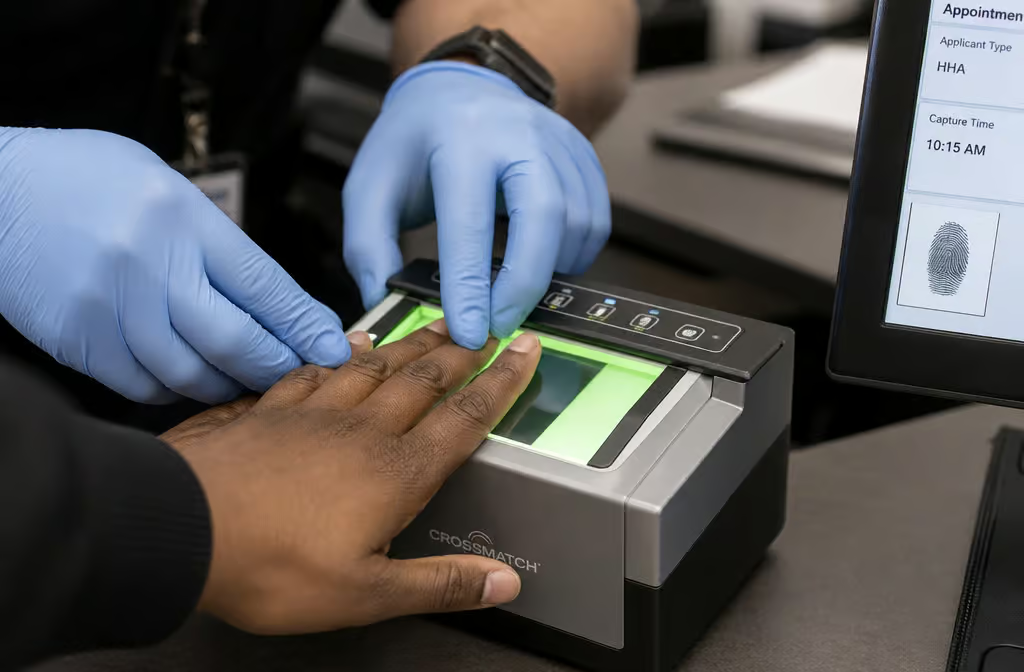
You need to get fingerprinted for both the California Department of Justice (DOJ) and the FBI. That’s state and federal. Processing times vary, but processing can take weeks. If you wait until after you finish training to start the background check, you’ll be sitting around with nothing to do. Start the fingerprinting process the minute you decide to pursue certification.
Submitting the application
Once the training is complete, the exam is passed, and the background check clears, you submit your application to the CDPH. The Healthcare Workforce Branch (HWB) and the Healthcare Professional Certification and Training Section (HPCTS) handle the paperwork. Contact HPCTS directly for the specific forms and filing instructions — don’t rely on third-party sites.
Cost and Free Training Options
If you’re paying your own way, here’s what you’re looking at:
- Training: $300 to $1,000
- Exam: $100 to $200
- Background check: $50 to $100
Total out-of-pocket: roughly $450 to $1,300. Training is the biggest variable, depending on whether you find a community college program, a private school, or a nonprofit.
Typical out-of-pocket costs
Some programs are cheaper, especially if you find one through a workforce development center. But don’t assume the cheapest option is the best — make sure it’s CDPH-approved.
CalGrows — free training with a ticking clock
California has a program called CalGrows that offers free online HHA training courses. It’s administered by the California Department of Aging, not the CDPH, and offers stipends up to $6,000. The program also provides stipends up to $6,000 for qualifying caregivers.
But here’s the catch: the clock is running. Enrollment must be completed by August 31, 2024, and all courses must end by September 30, 2024. This is a time-limited opportunity, not a permanent option. If you’re reading this after that date, it’s gone.
If you’re reading this before, don’t wait. Most articles about CalGrows treat it as a standing benefit — it’s not.
California vs. Other States
The national picture for HHA training is a mess. Here’s the breakdown:
- 33 states use the federal minimum of 75 training hours
- 17 states and D.C. exceed the federal minimum
- Only 6 states and D.C. meet the 120-hour recommendation from the National Academy of Medicine
California is in that top tier. If you ever move to another state, or if you’re applying for jobs with a national agency, your training is more than they’ll see from most other states. It’s not a guarantee that another state will accept it — every state has its own rules, but it’s a strong credential.
Renewal and Staying Certified
The certification doesn’t last forever. You need to renew every two years. That means 12 hours of continuing education each year, or 24 hours per two-year cycle. Track them annually. Don’t wait until the last month of your renewal period.
What you need to renew
Keep a log of your CE credits. Most training providers will give you a certificate. Don’t lose it. The CDPH uses a system called OASYS for certification management, and you can verify your status through CalHealthFind, a tool for finding licensed health care facilities. If you have questions, contact the Healthcare Workforce Branch.
What happens if you lapse
Let your certification lapse, and it’s not a simple “pay a late fee and move on.” You may be required to retrain or re-take the competency exam. Reinstatement is often more expensive — both in time and money, than staying current. There’s no guaranteed grace period. Don’t test it.
Common Questions Answered
Here are answers to the most frequently asked questions about HHA certification in California.
Can I get HHA certification online?
The classroom portion can be done online. CalGrows, for example, offers online courses. But the 20 clinical hours must be in-person and supervised. No online program can replace the hands-on component. Make sure any online program you consider is CDPH-approved and includes a clinical placement plan.
What pays more, CNA or HHA?
Certified Nursing Assistants (CNAs) typically earn more than HHAs, but CNA training is also more extensive and requires passing a state exam. HHA certification has a lower barrier to entry — fewer hours, less cost, but the pay ceiling is lower. If you’re trying to decide, think about the time and money you’re willing to invest versus the wage you need.
HHA vs. personal care aide?
A personal care aide (PCA) provides non-medical personal care: bathing, dressing, meal prep, light housekeeping. An HHA can do those things plus basic medical tasks under the supervision of a nurse — like taking vital signs or assisting with medications. The HHA certification opens the door to Medicare-funded home health agencies. A PCA does not need certification in California but is also limited to non-medical work.
Can I work without certification?
You can work as a personal care aide or a private-pay caregiver without HHA certification. But if you want to work for a Medicare-certified home health agency, you need the certification. Without it, you’re limited to roles that don’t require medical tasks.
How do I verify a certification?
Use the CDPH’s CalHealthFind tool. It lets you look up a certified HHA by name or license number. You can also find licensed home health agencies. It’s the official source — don’t trust third-party verification sites.
Requirements in other states (Florida, Pennsylvania)?
Every state sets its own rules. Florida requires certification through the state’s Department of Health. Pennsylvania requires certification through the Department of Health as well, but the training hours may differ. The best way to find out is to contact that state’s health department directly.
Search for “[state] home health aide certification requirements” and look for the official .gov page. Don’t rely on aggregator sites — they’re often outdated.
One more thing: even if a state doesn’t require certification, having CPR training is a strong advantage when applying for jobs. It’s a small investment that makes you stand out.
Resources and Tools
Bookmark these. They’re the official sources for everything related to HHA certification in California.
- CalHealthFind – Verify your certification or find a licensed home health agency. This is the CDPH’s public lookup tool.
- OASYS – The CDPH’s certification management system. You’ll interact with this for renewals and status checks.
- Healthcare Workforce Branch (HWB) – The department within CDPH that handles certification and training questions.
- Healthcare Professional Certification and Training Section (HPCTS) – The specific contact for application forms and filing instructions.
- CDPH LCP website – The primary source for application forms, approved training programs, and regulatory updates.
Do not rely on third-party aggregators. If you need a form, go to the CDPH site. If you need to check a certification, use CalHealthFind. It’s the only way to be sure.
Conclusion — What to Do Next
If you’re serious about getting HHA certified in California, here are three things to do this week:
- Verify CDPH-approved training programs. Find a program that’s on the approved list and includes the 20 clinical hours. Don’t sign up for anything that isn’t CDPH-approved.
- Check CalGrows eligibility before August 31, 2024. If the deadline hasn’t passed, you can get free training and a stipend. That’s a no-brainer if you qualify.
- Initiate your background check immediately. Don’t wait until after training. Start the DOJ and FBI fingerprinting now so the results are ready when you need them.
That’s it.
If you want more detail on the job itself, check out how to become a home health care worker and the home health aide duties checklist. If you’re ready to update your resume, there’s also a guide on writing a home health care job description for resume. Otherwise, get started on those three steps.
People Also Ask
Can I get my HHA certification online?
The classroom portion can be done online through a CDPH-approved program, but the 20 clinical hours must be completed in person under supervision. No fully online program can replace the hands-on component, so make sure any program you choose includes a clinical placement plan.
How much does HHA certification cost in California?
Total out-of-pocket costs range from roughly $450 to $1,300, with training costing $300 to $1,000, the exam $100 to $200, and the background check $50 to $100. Free training may be available through California’s CalGrows program, but that’s a time-limited opportunity with enrollment deadlines.