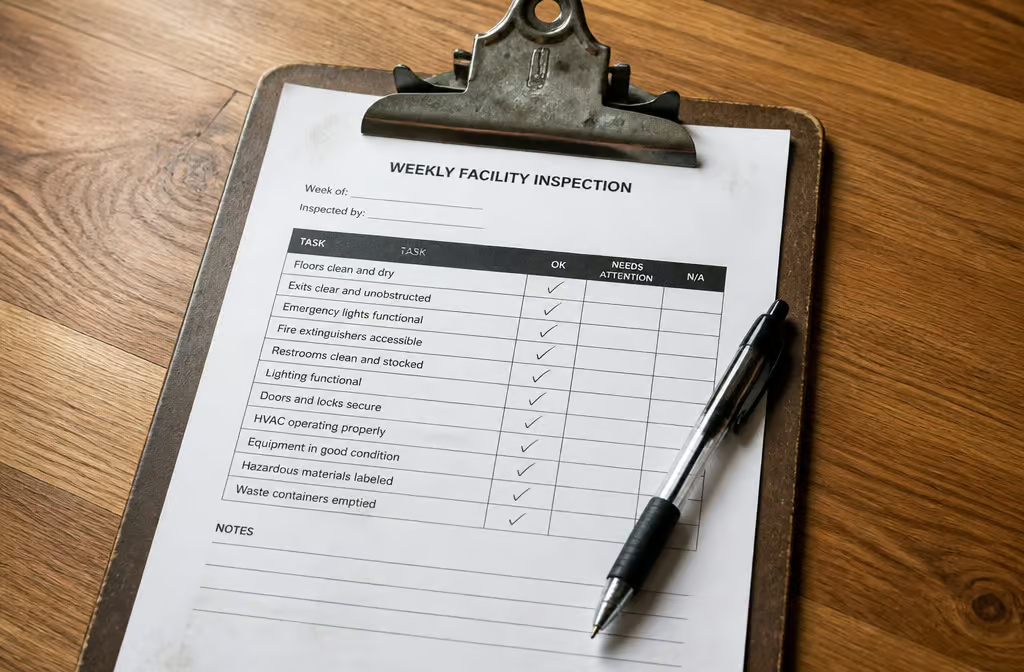
If you’re doing this work—getting someone bathed, fed, medicated, and through the day without anything falling through the cracks—you know the biggest risk isn’t the hard tasks. It’s the stuff you meant to do but forgot because the morning went sideways.
That’s where a solid checklist comes in. Not the crumpled to-do list you scribbled on a napkin. An actual organized system that covers what matters, shift after shift.
I’ve pulled together what I’ve found most useful, drawing from resources like Medbridge, CARE Homecare, and CareAcademy. You can download the Home Health Aide Duties Checklist as a free PDF from Medbridge and start using it today. But there’s a catch: no checklist works unless you adapt it to the specific patient. One size fits nobody in this job.
Below, I’ll walk through every category—personal care, nutrition, health monitoring, activity, and household management—along with the practical details that make the difference between a good shift and a scramble.
Key Takeaways
The Home Health Aide Duties Checklist covers five core categories (nutrition, hygiene, health monitoring, house cleaning, and activity or exercise) and is available as a free PDF from Medbridge, CARE Homecare, and CareAcademy
HIPAA rules mean your daily notes—even a skin observation or appointment time—are protected health information (PHI) and cannot be shared without patient consent, except for treatment or as required by law
Molina Healthcare and HealthStream’s MissionCare Collective initiative aims to create 15,000 new HHA positions across California, Arizona, Delaware, Illinois, New York, and Nevada, with training on environmental safety and more
Table of Contents
Personal Care and Hygiene: The Foundation of Patient Dignity
The stuff that keeps someone feeling human.
Daily tasks you’re probably already doing: bathing or sponge baths each morning or evening, grooming, helping them get dressed, managing toileting and incontinence, brushing teeth or cleaning dentures, moisturizing skin, and checking for redness or pressure sores.
Here’s the part most people don’t think about until it bites them: when you jot down a skin observation—say you notice a red spot on the lower back—that note is now part of the patient’s medical record. Protected health information (PHI) under HIPAA. And PHI isn’t just medical results. It includes non-health info like appointment times and family contact info if it’s in the same record set.
So that checklist? It’s not just a memory aid. It’s your documentation tool. Store it somewhere secure. Don’t leave paper logs on the kitchen table.
Nutrition and Meal Preparation: Dietary Needs and Practical Logistics
Meals and medication—the two M’s that keep everything running.
You’re preparing nutritious meals, reminding the patient to hydrate every 2–3 hours, following any prescribed dietary restrictions (low sodium, diabetic-friendly, etc.), tracking medication times and doses in a shared log, and restocking pill organizers weekly.
A pro tip if you’re in a household with rotating caregivers: set up standing grocery orders through Ralphs Delivery and prescription delivery through CVS CarePass. That way nobody’s scrambling mid-shift because the pantry’s empty or meds ran out.
And yeah, meal logs and dietary observations become part of the patient’s care record. Keep them factual—“refused breakfast,” “ate half of lunch”—short and useful.
Bottom line: Weekly pill organizer restocks and standing delivery orders prevent the two biggest mid-shift scrambles: empty pantries and missing medications.
Health Monitoring and Medication Management: Preventing Complications
This is the part where you catch problems before they become emergencies.
Daily tasks: record vitals once or twice daily—blood pressure, oxygen, temperature. Watch for signs of fatigue, dizziness, or swelling. Track medication times and doses.
Now here’s where HIPAA gets practical for you. When a family member asks “how’s Mom doing?” you’re allowed to share info for treatment purposes and with the patient themselves. But the minimum necessary standard applies — only share what’s needed for the person’s role. A daughter coordinating appointments probably needs more detail than a distant cousin who calls once a month.
Big exception — that minimum necessary rule doesn’t apply when the patient asks for their own records. Patients can request full access to everything in their file. So keep your notes honest and professional.
Activity and Exercise Assistance: Promoting Mobility and Fall Prevention
Keeping the patient moving—even a little—makes a difference.
You’ll help with safe transfers from bed to chair, encourage light movement or prescribed physical therapy exercises, and watch for signs of fatigue, dizziness, or swelling.
Fall prevention isn’t complicated: keep floors clear of clutter, make sure lighting is good, and be patient with transfers.
If you want to go deeper, CPR certification is a three-hour class through the Red Cross or American Heart Association. Not a huge time sink, and it gives you confidence.
Household Management and Safety: Creating a Safe Living Environment
The boring but essential stuff. Laundry, cleaning, tidying. A clean, organized home is safer and more pleasant for the patient.
Weekly tasks: deep clean bathrooms and kitchen counters, wash bedding and towels, review caregiver notes to spot changes early, rotate meals so the patient doesn’t get sick of eating the same thing, refill supplies (gloves, wipes, pads, skincare, cleaning products), and test smoke detectors. Change night-light bulbs while you’re at it.
Monthly tasks: walk through the home for new safety hazards—loose cords, uneven rugs, dim lighting. Check expiration dates on medication and food. Calibrate blood pressure cuffs, glucose monitors, and oxygen concentrators. Schedule medical appointments or telehealth check-ins. For those exploring the profession, hold a 15-minute care team meeting with family and caregivers to discuss how to be a home health care worker.
Worth noting: Molina Healthcare’s workforce initiative—covering California, Arizona, Delaware, Illinois, New York, and Nevada—includes environmental safety training for new HHAs. So this stuff is getting more attention at the industry level.
How to Use the Checklist: Planning, Personalization, and Progress Tracking
Here’s the workflow I’ve found works.
Start each day by reviewing the home health aide duties checklist. It’s your plan of attack. Keeps you from forgetting something important because you walked into a chaotic morning.
Adapt the checklist to the specific needs of each patient. Some people need heavy assistance with bathing but can handle meals on their own. Others need constant reminders to drink water. The checklist is a framework, not a straitjacket.
Use the checklist to record completed tasks, any observations about the patient’s condition, and notes for follow-up actions. This documentation is invaluable for continuity of care and communication. Keep it simple: “Slept poorly 2-5 a.m.,” “Refused breakfast,” “Redness noted on left heel.”
For coordinating between multiple caregivers, shared digital logs work great. Google Sheets or the CareSmart app with sections for vitals, meals, medications, mood, and shift notes. Short, factual notes. Not a novel.
Quick test: If your shift notes take longer than two minutes to write, you’re over-documenting. Short factual entries beat long narratives every time.
Communication Strategies
When a family member is anxious and asks the same questions repeatedly, your response sets the tone for the whole relationship.
Active listening. Use short, reflective responses. I hear you saying the pain is worse in the morning. Shows you heard them without turning into a therapist.
Clear language. No jargon, no medicalese. Talk to people like they’re people.
Empathy and reassurance. A kind word helps. Patients and families are stressed. You showing up calm helps.
Regular updates. Keep the family in the loop about the patient’s condition and any changes. Don’t let them find out something important from someone else.
Encourage feedback. Ask “is there anything you’d like me to do different?” You’ll adjust the care. And they’ll trust you more.
Overcoming Common Challenges: Burnout, Ethical Dilemmas, Difficult Behaviors, Boundaries
This is the hardest part of the job that nobody talks about.
When a patient lashes out, it’s usually not personal. Use the checklist to note behavioral triggers and what worked. “Agitated after noon meds,” “calmed down when I put on jazz.” Over time you build a playbook.
Emotional and Physical Burnout: Using the checklist to manage tasks efficiently can help prevent becoming overwhelmed in a challenging environment. Noting down personal reflections can be a tool for emotional processing. There’s a free Caregiver Burnout Self-Check Worksheet in PDF and Word format.
It helps you spot early warning signs, name what’s driving the stress (including guilt and resentment), and pick one realistic next step that lowers pressure this week. Use it.
Ethical Dilemmas: HHAs may face ethical decisions regarding patient care. The checklist, with its comprehensive recording of care activities, can serve as a guide for making informed, ethical choices.
Maintaining Professional Boundaries: It’s crucial to develop supportive yet professional relationships with patients. The checklist serves as a reminder of the professional scope of duties, helping maintain appropriate boundaries during care.
Skills Every Home Health Aide Needs
Essential: Patience (especially with dementia patients), compassion in the little things, empathy that builds real connections, time management when you’ve got multiple patients, physical strength for lifting and transfers, basic medical skills—taking pulse, checking oxygen, changing dressings, assisting other professionals. And yeah, you need to know how to use medical equipment like oxygen machines and blood pressure monitors.
Optional: Driver’s license and clean record (sometimes required for errands, but not always in cities with transit), high school diploma (agencies vary), foreign language proficiency (big plus with diverse clients), CPR certification (three-hour class, worth having).
State-specific certifications:
- Arizona: Food labels and special diets training
- California, Delaware, Illinois, New York: Sexual harassment prevention training
- Nevada: Abuse prevention training
- Oregon: Skin breakdown prevention, non-medical emergencies, hydration
Advanced skills: Dementia care covers Alzheimer’s, frontotemporal, and vascular dementia—each presents differently. Diabetes, heart disease, and Parkinson’s require specialized knowledge. For Parkinson’s specifically: keep floors clear, lights on, stick to a routine. Nutritional certification helps—understanding food labels, how dental issues affect diet, monitoring fluid intake to prevent dehydration.
HIPAA Compliance for Home Health Aides
Let’s cut through the legal language to what matters on the ground.
PHI is anything that can identify a patient and is created, used, or shared by a covered entity. That includes non-health info if it’s in the same record set—appointment times, family contact info, even a note about what they ate. HIPAA applies to caregivers only if they are employees of a covered entity or business associates, so whether you’re covered depends on your employment arrangement.
What you can share: With the patient directly, with colleagues for treatment, with public health or law enforcement in specific cases. Otherwise you need the patient’s OK or a signed authorization.
What you can’t do: Disclose PHI to family without consent (ask the patient first), overshare details, post anything on social media—ever. Social media disclosure is irreversible. Once it’s out there, you can’t take it back. Hard no.
Security Rule basics: Your employer handles most of it, but you need to know the basics. Any device with PHI needs a PIN lock, auto-logoff, and encryption. Communication channels must be secure. Use mobile devices that allow remote wiping if lost.
Training should be practical. Real-world scenarios in patients’ homes, not theory. Your employer is responsible for your compliance, but you still need to know the rules. No official HIPAA checklist exists for home health aides, so use a general compliance checklist and customize it to your specific duties and patient situations.
Building the HHA Workforce: Training and Career Pathways
The industry is investing in the pipeline because the shortage affects everyone—it’s harder to find good help, putting more pressure on existing HHAs.
Molina Healthcare and HealthStream’s MissionCare Collective initiative aims to create 15,000 HHA positions across California, Arizona, Delaware, Illinois, New York, and Nevada (acquired by HealthStream December 15, 2025). They’re targeting new HHAs, career seekers, and family caregivers. Training providers include Red Cross, American Heart Association, CareAcademy, and Medbridge (which offers 200+ courses).
This isn’t just background context. It means more training options, more career pathways, and hopefully better support for people doing this work. If you’re thinking about advancing your HHA career, keep an eye on these programs.
Tools to Streamline Your HHA Workflow
Beyond the checklist itself, here’s what I’ve found useful.
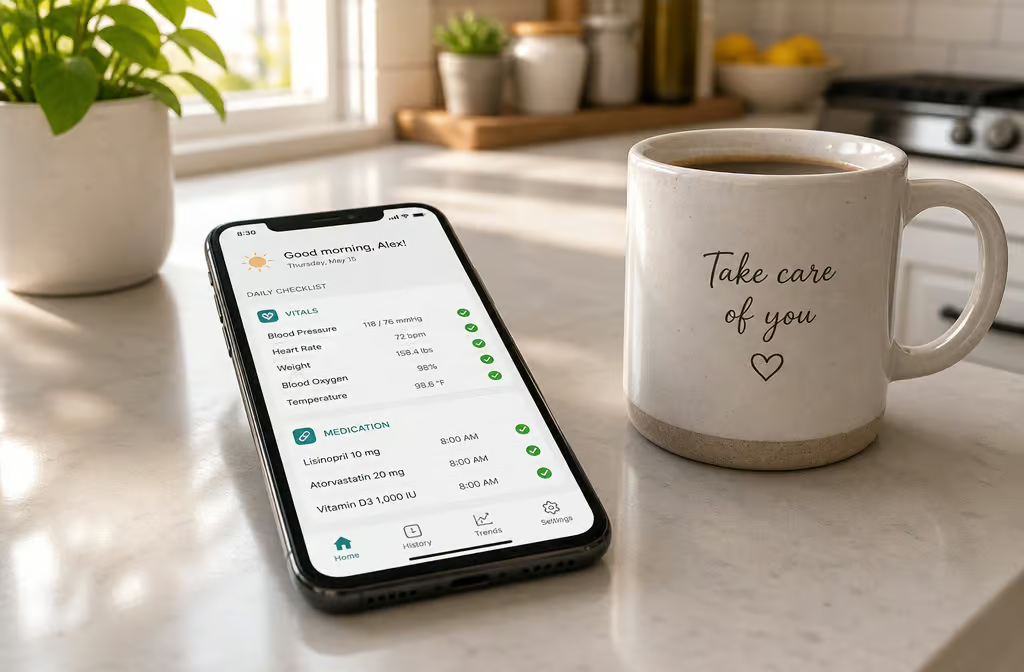
Digital shared logs: Google Sheets or the CareSmart app. Sections for vitals, meals, medications, mood, and shift notes. The key: short, factual entries everyone can read at shift change.
Printable checklists: Medbridge, CARE Homecare, and CareAcademy all offer versions. Grab the one that fits your style.
Delivery services: Ralphs Delivery for groceries, CVS CarePass for medication delivery. Particularly useful in the LA area, but worth checking wherever you work. Saves time and reduces last-minute scrambles.
When to reassess 24-hour care needs: Look for these signs—increased falls, confusion, new medications, caregiver fatigue, or sundowning (increased agitation in late afternoon/evening). If you’re seeing these, it’s time to talk to the family or agency about adjusting the care plan.
Download Your Free Home Health Aide Duties Checklist
Here’s where you actually get the tool.
The free PDF version is available from Medbridge. Just search for “Home Health Aide Duties Checklist Medbridge PDF” and it should come up. It covers all five categories we’ve talked about: nutrition, hygiene, health monitoring, house cleaning, and activity or exercise.
Alternatives exist: CARE Homecare has a printable 24/7 care checklist, and CareAcademy offers an HHA Skills Checklist. No single version is perfect—pick the one that makes sense for your situation, or grab all three and mix and match.
If you prefer digital, set up a Google Sheets version with the same categories. Share it with the care team so everyone’s working from the same page.
One last thing: the checklist is a starting point, not an endpoint. Customize it per patient, share it with the team, and update it when things change. That’s what makes it useful—not the paper, but how you use it.
This is real work. You’re getting up early, helping someone through their day, tracking the details that keep them safe, and trying not to burn out in the process. A good checklist won’t fix everything, but it’ll keep you from missing the stuff that matters. Start with the free PDF, adapt it to your patient, and use it every shift. You’ll see how much smoother the day goes.
People Also Ask
What are caregivers not allowed to do?
Caregivers cannot disclose protected health information (PHI) to family members without the patient’s consent, post anything about a patient on social media, or share details beyond what’s needed for treatment. They also must avoid overstepping professional boundaries — they are not family or friends, but trained professionals providing safe, structured care.
What are the 6 main roles and responsibilities of a caregiver?
The six main roles are: providing personal care (bathing, dressing, toileting), managing nutrition and hydration, monitoring health (vitals, symptoms, medication), assisting with mobility and exercise, maintaining a safe and clean home environment, and documenting observations and tasks for continuity of care. Each role adapts to the patient’s specific condition and care plan.
What’s the difference between a caregiver and a home health aide?
A home health aide (HHA) is a specific type of caregiver with formal training and often state certification, focused on medical and personal care tasks like taking vitals, assisting with medications, and documenting PHI. A caregiver is a broader term that can include family members or unlicensed helpers who provide companionship, homemaking, or non-medical support without the same regulatory requirements.
Is HIPAA training required for home health aides?
HIPAA training is required if you are an employee of a covered entity or a business associate — whether you need it depends on your employment arrangement. Training should cover what PHI is, what you can and cannot share, security basics like device encryption and PIN locks, and the absolute prohibition on social media disclosure. Your employer is responsible for ensuring compliance.
What skills do I need to become a home health aide?
Essential skills include patience, compassion, empathy, time management, physical strength for lifting and transfers, and basic medical skills like taking pulse and checking oxygen. Optional but valuable skills include a driver’s license, CPR certification, foreign language proficiency, and specialized knowledge in dementia care, diabetes, or Parkinson’s. State-specific certifications may also be required, such as sexual harassment prevention training in California or abuse prevention training in Nevada.