For years, the conversation around bodybuilder deaths has been driven by the same thing: a grim list of names that makes the rounds on forums every time another pro dies too young. Mike Mentzer. Nasser El Sonbaty. Dallas McCarver.
Rich Piana. It’s always the men who get the headlines, and the story usually ends the same way — steroids, heart attack, done.
But there’s a quieter crisis happening on the other side of the sport, one that’s mostly been invisible because nobody had the numbers to prove it was real. Until now.
A team led by Dr. Marco Vecchiato at the University of Padova published the first systematic study on female bodybuilder deaths in the European Heart Journal in 2024. They tracked 9,447 women who’d competed in at least one International Fitness and Bodybuilding Federation (IFBB) event between 2005 and 2020. What they found was sobering: 32 deaths, average age 42.
That’s young. And when you dig into the data, the story gets more complicated — and more disturbing, than the usual “gear kills” narrative. The women in this sport are dying differently than the men, and the risks aren’t just about what’s in their syringes.
Key Takeaways
Sudden cardiac death accounts for 31% of female bodybuilder deaths, with professional competitors facing more than 20 times the risk of amateurs — a rate higher than any other female athletic population studied.
Suicide or homicide accounted for 13% of deaths in female bodybuilders, four times higher than in male bodybuilders, pointing to unique psychosocial pressures.
The evidence linking anabolic steroids alone to these deaths is surprisingly weak — extreme training, diet, polypharmacy, and the week after competition may be just as dangerous.
Table of Contents
The heart of the problem: sudden cardiac death
The Vecchiato study found that sudden cardiac death accounted for 31% of the deaths in their sample. That’s the leading cause, and it’s not even close. What’s more concerning is the gap between the pros and everyone else: professional competitors had a risk of SCD more than 20 times higher than amateurs.
That’s a stark number, but it becomes even more striking when you compare it to other female athletes. The observed SCD incidence in this group exceeded what’s been reported in other female athletic populations. In other words, female bodybuilders are dying of heart issues at a rate that’s out of line with what we see in soccer players, runners, or even powerlifters.
So what’s driving it? The simple answer is “steroids,” but the real picture is messier. Heavy resistance training can spike blood pressure to absurd levels — we’re talking reports of 480/350 mmHg during a heavy set. That kind of pressure on the vessel walls isn’t nothing.
Combine it with extreme dieting, fasting, and dehydration during prep, and you’ve got a perfect storm for cardiac stress. Research at the cellular level has shown that AAS can directly affect the myocardium, adding a cellular mechanism to the hemodynamic strain.
Even without drugs, the training itself can cause problems. Research on college football players who didn’t use AAS found that their hearts got bigger and their function got worse over a single season. Concentric left ventricular hypertrophy — the kind that can turn “athlete’s heart” into something pathological, showed up almost exclusively in the linemen (20 out of 64), the guys doing the heaviest, most sustained resistance work. The point isn’t that football is the same as bodybuilding, but that extreme training alone can drive cardiac remodeling. Steroids just pour gasoline on the fire.
D’Andrea et al. compared AAS-using bodybuilders to non-users and found that both groups had larger hearts than non-lifters. The steroid users, though, had signs that the heart wasn’t pumping as well, and the dysfunction correlated with how long they’d been on. The non-users had better exercise performance and lower blood pressure. So the drugs matter. But the training matters too, and we’re not great at separating the two.
Bottom line: Heavy resistance training alone can drive pathological cardiac remodeling. Steroids amplify the damage, but they’re not the only factor.
The darker toll: suicide and homicide
Here’s the statistic that stopped me cold when I read the study: 13% of deaths in female bodybuilders were from suicide or homicide. That’s four times higher than the rate for male bodybuilders.
Think about that for a second. We’re used to talking about heart attacks and kidney failure — the physical costs. But the mental health crisis in this sport, particularly for women, appears to be orders of magnitude worse than what we see in men.
Dr. Vecchiato put it about as plainly as a researcher can: This notable gap indicates that, in addition to cardiovascular risks, women in this sport may encounter distinct psychosocial pressures, potentially tied to body image expectations, performance-enhancing substance use, or the extreme demands of the sport.
We don’t have a perfect mechanism for why this is happening. But it’s not hard to guess. Female bodybuilders operate in a space where they’re judged by a standard that’s almost impossible to maintain: extreme leanness, full muscle bellies, perfect symmetry — all while society often tells them they should look nothing like that. The pressure to be shredded on stage, the weight cycling, the drug regimens that mess with hormones and mood, it all adds up, and an unflinching look at bodybuilder deaths reveals a similar mortality crisis among men chasing the same unfinished ideal.
The suicide/homicide rate is the signal we’ve been ignoring. It’s not just a footnote. It’s a warning that the sport isn’t just killing women’s bodies; it’s breaking them in ways that don’t show up on an autopsy.
Not so fast: the AAS evidence gap
Here’s where I have to admit something that might piss off the “steroids are the only problem” crowd: the evidence that anabolic-androgenic steroids are the primary cause of death in bodybuilders is surprisingly weak, but the picture changes dramatically when you consider natural bodybuilder life expectancy.
The go-to review on this topic, published by Smoliga et al. in Sports Medicine (Auckland, N.z.), is blunt about it. They say there is “surprisingly limited direct evidence” that AAS is the primary factor. That’s not the same as saying steroids are safe — they’re not. But it means the causal chain is a lot fuzzier than the headlines suggest.
The problem is confounders. Bodybuilders don’t just take steroids. They take growth hormone, thyroid meds, insulin, diuretics, appetite suppressants, and recreational drugs. They train like animals, eat 4,000–8,000 calories a day during bulk, then starve themselves for weeks during prep.
They lose 5–7 kg for a show — female competitors lose 3–6 kg, and 15% of them report losing more than 9.5 kg at least once. It’s almost impossible to isolate AAS as the cause of anything when everything else is going on simultaneously.
Take the HAARLEM study, the one everyone cites when talking about steroid damage. Only 19% of the participants were active competitive bodybuilders. Their training frequency was a median of 4 times a week — not exactly elite preparation. The study did not include a control group of non-AAS lifters. So the results show that steroids cause changes in heart function and blood lipids, but they don’t tell us how much of that applies to someone doing 2-a-day sessions while running tren and cutting water.
On the reversibility front, the evidence is mixed. The HAARLEM study found that most cardiac changes reversed 3–12 months after stopping AAS. Former users had the same heart function as people who never used. But Rasmussen et al. found that some signs of systolic dysfunction persisted even 30 months after cessation. So maybe it’s reversible for some, permanent for others, and we don’t know why.
The honest answer is: steroids are probably a major contributor, but we can’t prove it with the data we have. And the near-exclusive focus on AAS might be distracting us from other risks that are more modifiable — like extreme dieting, polypharmacy, and the week after competition.
The most dangerous week: post-comp danger
If you really want to worry about acute risk, don’t look at the stage. Look at the 7 days after.
The post-competition period is a documented danger zone, and it’s almost entirely ignored by the mainstream coverage. Case reports describe refeeding syndrome leading to death within a week of competition. The mechanism is straightforward: after weeks of severe caloric restriction and dehydration, the body is depleted of electrolytes. Then the competitor goes home, celebrates with a large intake of carbs and fluids, and the insulin surge drives potassium and phosphorus into cells. That can trigger life-threatening arrhythmias.
The case reports are vivid. One competitor gained 10 kg in 4 days after a show, leading to hypokalemia and rhabdomyolysis. Another used furosemide (a diuretic) to drop 5–6 kg of water in 48 hours and ended up with hypokalemic paralysis. The Smoliga review notes multiple deaths occurring within a week of competition, with refeeding syndrome listed as the probable cause.
Female bodybuilders are especially vulnerable because they tend to lose a higher percentage of body weight relative to their starting mass. The extreme cuts — 3–6 kg for a show, sometimes >9.5 kg repeated over multiple seasons — leave them with depleted electrolyte reserves and a cardiovascular system that’s been stressed by weeks of low energy availability.
The binge-purge cycle doesn’t stop after the show either. Binge eating is common post-competition, and the yo-yo effect of losing and regaining the same 10–20 pounds over and over may have long-term metabolic consequences that we haven’t studied properly.
Red flag: The week after competition is the most dangerous period. Refeeding syndrome from rapid carb and fluid intake can trigger fatal arrhythmias.
The supplement minefield: hidden drugs in “natural” products
The supplement industry is a lawless frontier, and the stuff in the tub might not be what’s on the label.
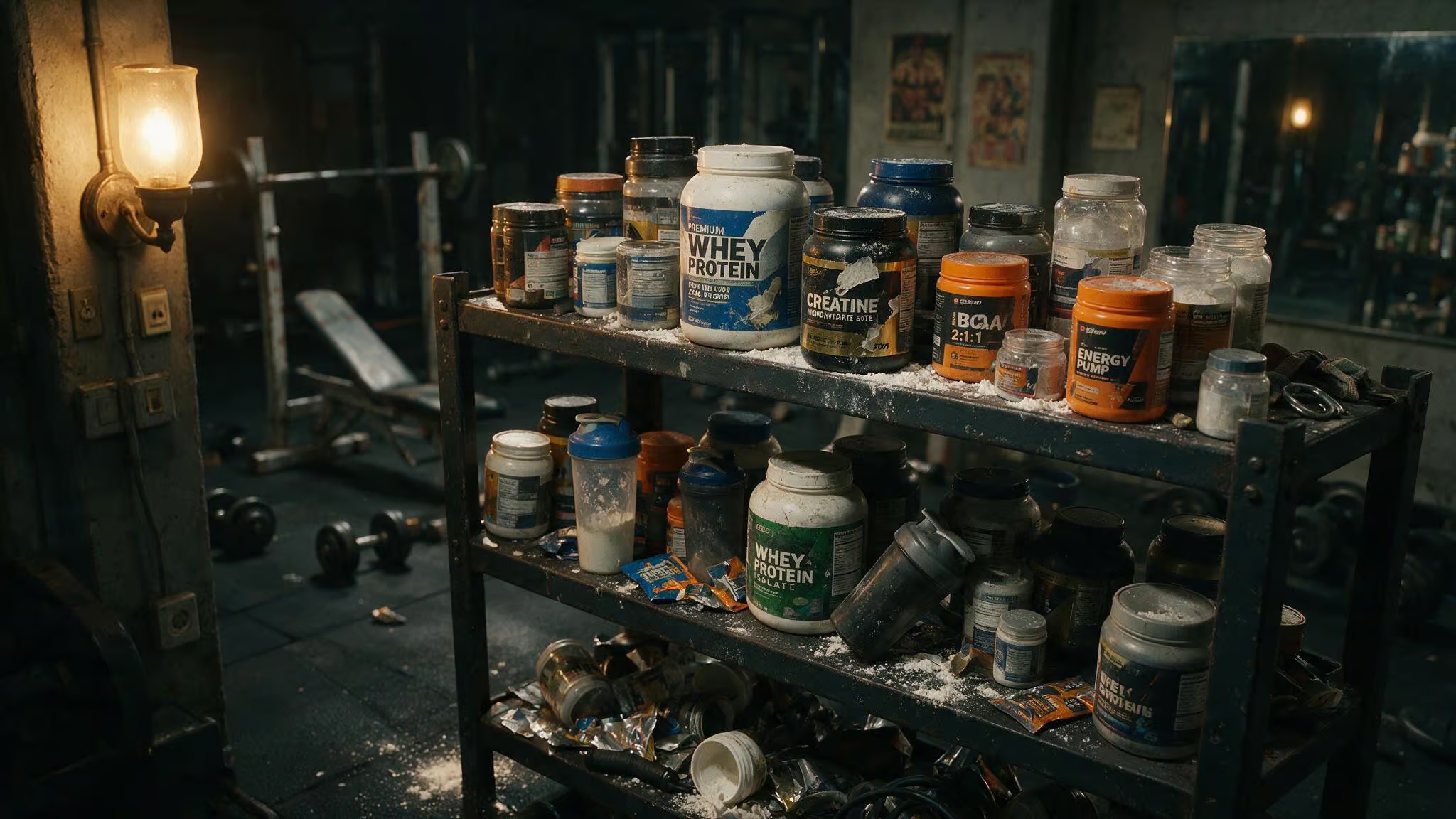
An analysis of 24 UK supplements marketed to bodybuilders found that 23 of them contained AAS. 12 contained controlled substances. That’s not a typo — 23 out of 24. These weren’t underground lab products either; they were sold over the counter, labeled as natural. Some supplements exceed the recommended daily allowance for various micronutrients by more than 1000%.
SARMs — selective androgen receptor modulators, have been found masquerading as everything from “green tea extract” to “face moisturizer” in online listings. The FDA has issued multiple warnings about contaminated bodybuilding products, including DMAA, a stimulant linked to cardiomyopathy and death. Emerging basic science and clinical research indicate that BCAA supplementation may promote thrombosis and other adverse effects.
The liver injury data is damning. A multi-state US registry documented 44 patients with severe liver injury from bodybuilding supplements between 2004 and 2013. Of the 14 supplements that could be analyzed, 9 contained AAS. That means even if you’re a natural competitor who’s never injected a thing, you could be getting dosed without knowing it. It remains uncertain whether creatine poses risks under certain conditions, such as rare genetic risk factors, or if the morbidity relates to other factors entirely.
The message is simple: the “natural” label means nothing. The regulatory system is broken, and the incentive to spike products with cheap, active compounds is too strong for many manufacturers to resist. In one case report of venous thromboembolism, the individual ingested 20 g of creatine.
The sport’s failure: the IFBB’s drug testing problem
The IFBB has a drug testing policy on paper. It says they follow the World Anti-Doping Association (WADA) Code. In practice, they don’t enforce it.
Consider the numbers. The IFBB and its member affiliates host over 6,000 competitions every year. In 2018 — the most recent World Anti-Doping Association (WADA) report available, they submitted 171 samples for analysis. That’s 171 samples across 6,000 events.
For context, the International Powerlifting Federation submitted 787. The International Weightlifting Federation submitted 3,238. Bodybuilding is at the bottom of the testing barrel by a wide margin.
This fosters a culture where open polypharmacy is the norm. If you know you won’t get tested, or that the odds of a positive are laughably low, there’s no deterrent. The result is that competitors chase performance and presentation with whatever combination of compounds they can get their hands on, often without medical oversight.
It’s not just about fairness — it’s about safety. Drug testing, even imperfect testing, creates a baseline and gives athletes a reason to pull back. Without it, the default is to take more.
Two deaths, two stories: Ganley and Trcka
The data is abstract until you attach names to it. Two recent cases of female bodybuilder deaths illustrate the different ways this crisis plays out.
Gabriel Ganley was a 22-year-old Brazilian influencer with 2.3 million followers. She was found dead at home, and the suspected cause was hypoglycemia linked to extreme PED and diet cycles. She was young, chasing rapid gains in the influencer era, and the acute risk of her protocols caught up to her fast. It’s a death that belongs to the “young and pushing too hard” category — the kind that’s becoming more common as social media rewards extremism.
Jayne Trcka was a different story. She was 62, an actress known for her role as Miss Mann in Scary Movie, and a long-time bodybuilder. Her cause of death was hypertensive and atherosclerotic cardiovascular disease, with chronic alcohol use listed as a contributing factor. This is the slow-accumulation death — the one that comes from years of extreme stress on the body, the kind that doesn’t make Instagram headlines but shows up in the quiet stats.
Trcka’s case is arguably more representative of the long-term pattern. The average age of death in the Vecchiato study was 42, but that includes the young outliers. Many of the deaths were in master athletes — competitors over 40 who’d been in the sport for decades. The damage doesn’t show up overnight. It builds.
What has to change
None of this is inevitable. The data exists now, and it points to clear areas where the sport could do better.
Vecchiato recommends proactive screening and counselling, even for young and apparently healthy female athletes. That’s common sense: if we know SCD is the leading cause and it’s 20 times more likely in pros, then regular cardiac screening should be standard for anyone competing at a high level.
Research needs to catch up too. We need survival analyses of elite competitors — Mr. Olympia-level athletes tracked over decades, and case-control studies that compare drug-using to natural bodybuilders. Right now, most of what we have is case studies and surrogate markers. That’s not enough.
And the sport itself needs a cultural shift. The IFBB’s drug testing problem is a symptom of a larger issue: bodybuilding has normalized extreme behaviors to the point where health monitoring is seen as a weakness. De-stigmatizing check-ups, teaching athletes about refeeding syndrome, and acknowledging the mental health toll would go further than any ban.
The solution isn’t “just don’t do steroids.” It’s more complicated than that. It’s about changing the environment so that athletes don’t have to choose between being competitive and being alive at 50. The data is finally here. The question is whether anyone will listen to it.
People Also Ask
What is the average life expectancy of a body builder?
There is no single average life expectancy for all bodybuilders, but the first systematic study on female bodybuilders found an average age of death at 42 among those who died during the study period. That number is skewed by young outliers, but it signals a mortality crisis far younger than the general population, driven by sudden cardiac death, suicide, and the cumulative toll of extreme training and polypharmacy.
Why do female bodybuilders have a higher suicide rate than male bodybuilders?
The data shows suicide and homicide account for 13% of female bodybuilder deaths — four times the rate in men. Researchers point to unique psychosocial pressures: extreme body image expectations, weight cycling, hormonal disruption from performance-enhancing drugs, and the contradiction of being judged by a standard that society often rejects for women.
Can natural bodybuilding supplements contain steroids?
Yes, and it’s disturbingly common. An analysis of 24 UK supplements marketed to bodybuilders found that 23 contained anabolic-androgenic steroids, and 12 contained controlled substances — all sold over the counter labeled as natural. The ‘natural’ label means nothing, and the regulatory system is broken, so even competitors who never inject anything can be getting dosed without knowing it.
What’s the difference between how male and female bodybuilders die?
Male bodybuilder deaths are typically linked to heart attacks from long-term steroid use, while female bodybuilders die from a more complex mix of causes. Sudden cardiac death is the leading cause for both, but women face a suicide and homicide rate four times higher than men, and they’re more vulnerable to post-competition refeeding syndrome because they lose a higher percentage of body weight during prep.