
Over two dozen competitive bodybuilders died suddenly in 2021, plus some retired competitors who never reached age 60. Heart attacks, pulmonary embolisms, suicide, COVID, kidney failure, seizures, strokes, diuretic abuse, colon cancer — not one single cause.
Bodybuilders seem to be the exception. And we don’t really know why.
Key Takeaways
Over two dozen pro bodybuilders died in 2021 from causes ranging from heart attack to diuretic abuse. No survival analysis exists for elite competitors — we’re working with case reports and small studies, not population data
Anabolic steroid use is common (54-76% of male competitors), but methodological problems in the research — tiny samples, uncontrolled polypharmacy, and measurement methods that can more than halve reported cardiac differences, make it impossible to say exactly how much AAS contribute to mortality
Extreme training alone, without any drugs, can trigger pathological heart changes in athletes — 20 of 64 college football linemen developed concentric left ventricular hypertrophy over a single season with zero steroid use
Table of Contents
The Mortality Crisis — Headlines vs. Evidence
When a 30-year-old bodybuilder drops dead, the assumption is usually steroids. Sometimes that’s right. Sometimes it’s not.
The 2021 death list is sobering: Table 1 from a 2023 review lists 34 named bodybuilders who died that year, ages 27 to 58. The causes are all over the map. Heart attacks show up a lot, but so do strokes, seizures, kidney failure, and suicide. A female competitor died from diuretic abuse. A male bodybuilder died the day before competition.
The paradox is real. Jack LaLanne, the original fitness evangelist, used to say: The doctors were against me — they said working out with weights would give people heart attacks. He died at 96. Arnold Schwarzenegger and Lou Ferrigno are still alive and well in their 70s.
Dave Draper made it to 79. Chris Dickerson died at 82.
Meanwhile, guys in their 30s and 40s are dropping dead.
Anabolic Steroids and the Heart — Strong Evidence, Hard Questions
Steroids (anabolic-androgenic steroids, or AAS) are the usual suspect, and for good reason. Estimates range from 54% to 76% of male competitive bodybuilders. For women, it’s 10% to 40%. This isn’t a fringe practice in the sport; it’s the norm.
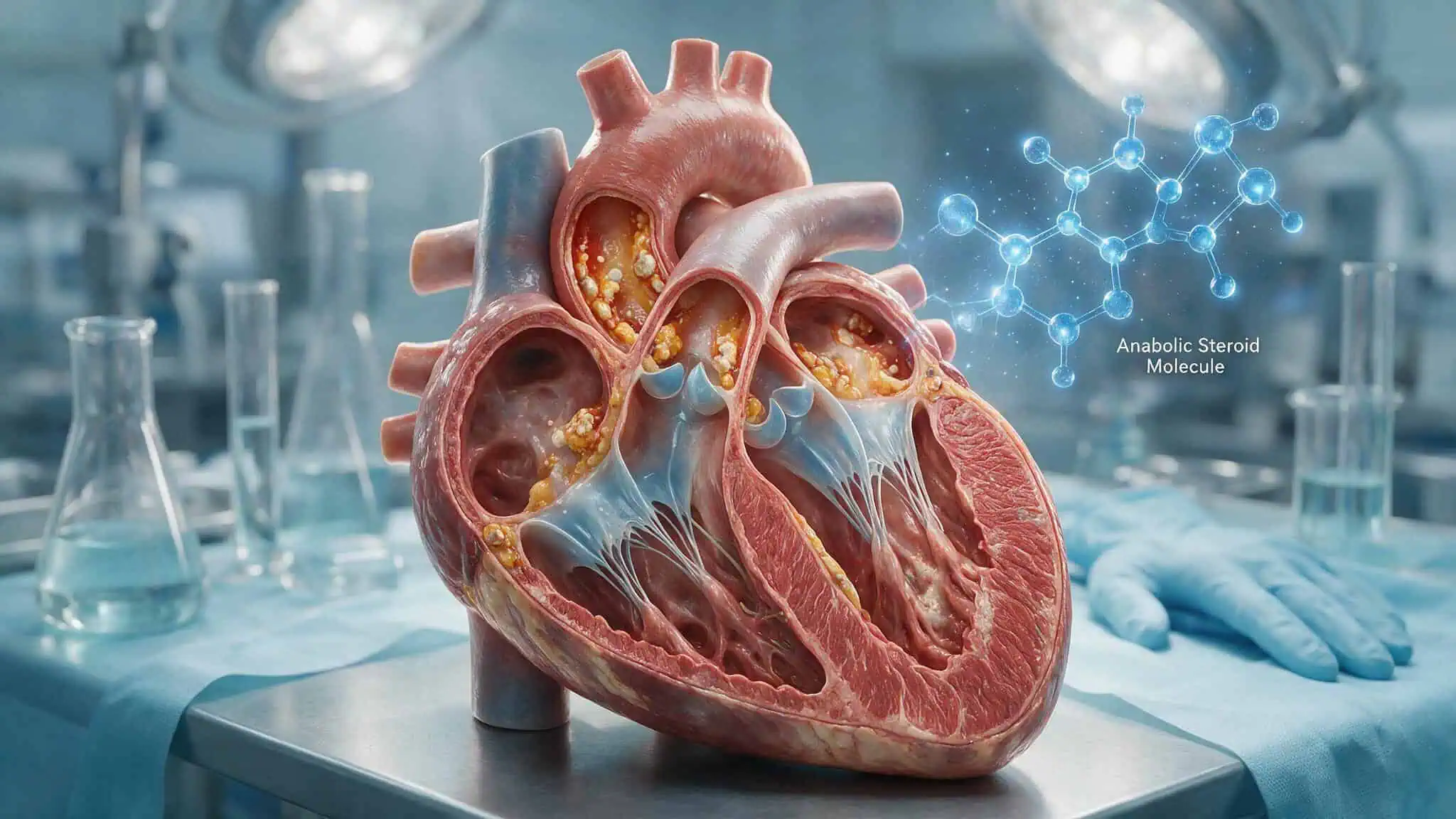
The mechanism for heart damage is straightforward. AAS tank your HDL (good cholesterol), raise your LDL (bad cholesterol), and increase homocysteine — all independent risk factors for cardiovascular disease. Blood pressure effects are less clear; some studies show elevation, others don’t.
Even a single cycle of steroids is linked to unfavorable changes in cardiac function and lipid profiles. You don’t need to be a decade-long user to see effects.
What the studies actually show
The D’Andrea study compared top-level bodybuilders who used steroids for at least five years against non-users. Both groups had bigger hearts than sedentary people — that’s the training, not the drugs. But only the steroid users showed signs that their hearts weren’t pumping as well. The dysfunction was linked to how long they’d been using.
The Baggish study looked at non-competitive strength trainers — not bodybuilders. They found heart function problems in steroid users, but the heart structure was similar to non-users. The authors suggested elite bodybuilders might actually be healthier overall than the non-competitive guys, even with steroid use.
The Thompson study found no heart size differences between steroid users and non-users who’d trained for at least three years. They actually found slightly better heart compliance in steroid users that was not statistically significant — the opposite of some other studies.
Most of these studies have 10 to 20 people per group. Many don’t adjust for multiple comparisons. Few are blinded.
And steroid users almost never take just steroids. They’re using growth hormone, thyroxine, insulin, painkillers, and recreational drugs like cocaine and amphetamines. The HAARLEM study — one of the better ones, found that over 20% of participants were using other anabolic agents, medications, or recreational drugs alongside AAS.
Reversibility — the good news and the question mark
The HAARLEM study tracked 111 male AAS users and found that most cardiac changes reversed within 3 to 12 months after stopping. People who had never used steroids and past users had similar heart function. That’s encouraging.
But only 19% of the HAARLEM participants were competitive bodybuilders. Their training frequency averaged 4 times a week. There was no non-AAS control group. And the data only covers one cycle — we don’t know what happens after years of cycling on and off.
Another study found that some systolic dysfunction persisted in former users 30 months after cessation. So the timeline for full recovery isn’t guaranteed.
The real concern is cumulative damage. Years of steroid use could cause progressive, irreversible problems: atherosclerotic lesions, glomerular damage in the kidneys, hepatocellular adenomas in the liver. We just don’t have the long-term data to know how common this is.
Methodological Landmines — Why the Science Is Unreliable
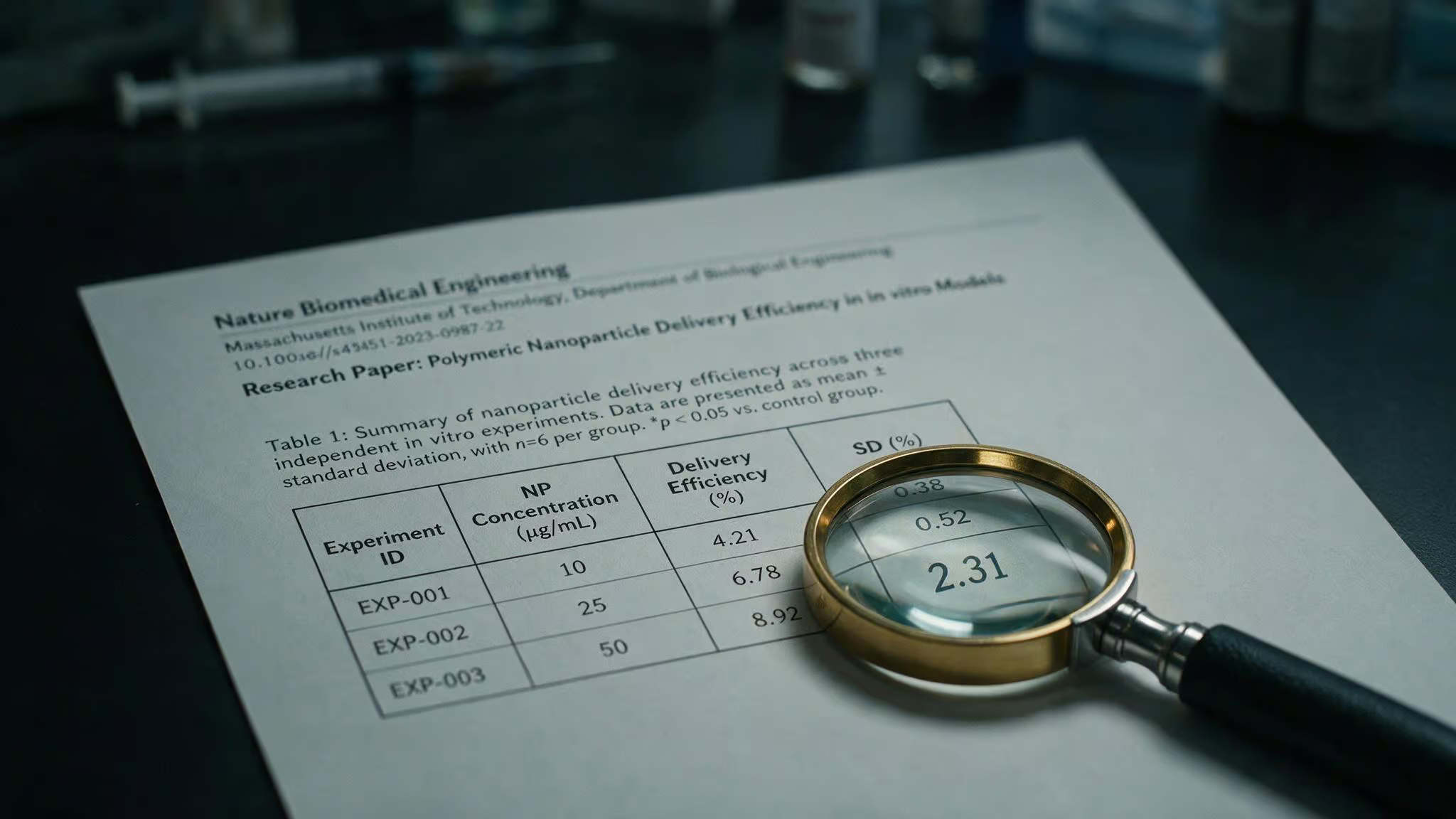
The research on bodybuilders and anabolic steroids is full of problems that make it hard to draw firm conclusions. Anti-doping studies often target the most muscular individuals, which may overestimate AAS prevalence and bias results. These issues affect nearly every study in the field.
Small samples and confounding drugs
Most studies have fewer than 20 participants per group. Many don’t adjust for the fact that they’re making multiple comparisons — which increases the chance of false positives. Blinding is rare.
And the polypharmacy problem is massive. AAS users take growth hormone, thyroxine, insulin, clenbuterol, painkillers, cocaine, amphetamines. Most studies don’t account for these. When you see a “steroid effect,” you’re actually seeing the effect of steroids plus whatever else the person was taking.
The scaling problem nobody talks about
Body surface area (BSA) is the most common method. It’s estimated using formulas from 1916. Those formulas were never designed for heavily muscled athletes. They weren’t designed for bodybuilders at all.
In a cross-sectional study, 27 bodybuilders had their fat-free mass calculated via eight different methods. The means ranged from 65.5 kg to 69.1 kg, and 62.0 kg when using BMI. Skinfold tests and bioelectrical impedance yielded body fat percentage estimates that differed by about ±8% from the gold-standard four-compartment model.
The result is that your choice of measurement method can determine your conclusion.
Bottom line: Comparing current AAS users (n=37) against controls (n=30), the scaling method you choose can more than halve the reported difference in left ventricular mass — from 38.3% greater to just 17%.
Comparing current AAS users (n=37) against controls (n=30), left ventricular mass was 38.3% greater without scaling, 33.7% scaled to BSA, and 17% when normalized to DXA-measured fat-free mass. The scaling method more than halves the reported difference.
Another study of elite Olympic weightlifters (62-94 kg) found no significant difference in LV mass without scaling, with height^2.7 scaling, or BSA^1.5 scaling. But a significant 11.3% difference appeared with DXA fat-free mass normalization. Same data, different conclusion.
Extreme Training — The Independent Cardiac Risk Nobody’s Tracking
Heavy resistance training can spike blood pressure to 480/350 mmHg. That’s not a typo. Every heavy rep generates pressure that would be pathological if it were sustained.
We know from studies of American football players — who don’t use steroids, that extreme training alone can trigger bad heart changes. College linemen developed concentric left ventricular hypertrophy and impaired diastolic function over a single three-month season. 20 of 64 linemen showed this, compared to 1 of 49 non-linemen.
First-year college players showed significant increases in LV mass, septal thickness, and relative wall thickness over a season. None tested positive for AAS.
A three-year longitudinal study showed progression of concentric LVH and unfavorable changes in cardiac function. Steroid use wasn’t specified, but the pattern was clear.
It’s possible that steroids directly damage the heart. It’s also possible that steroids simply allow increased training intensity, and that extreme training is what drives the remodeling. Both are plausible.
The Diet Trap — Protein Overload, Weight Cutting, and Refeeding Danger
The dietary practices in competitive bodybuilding are extreme enough to kill you on their own—no steroids required, yet the bodybuilder average age of death remains shockingly low.
Extreme protein and kidney strain
Bodybuilders consume 1.9 to 4.3 grams of protein per kilogram per day (men), and 0.8 to 2.8 g/kg/day (women). The standard recommendations for strength athletes are 1.4 to 2.0 g/kg/day.
One case report: a 26-year-old novice bodybuilder, training 4 hours a day, eating 500 grams of whey protein plus 250 grams of dietary protein per day — 8.3 g/kg/day. He was also using an appetite suppressant and AAS. His case echoes patterns seen in famous bodybuilder deaths, where extreme regimens and substance use often precede tragedy. BMI 21.5. He had a myocardial infarction.
Epidemiologic studies link protein intakes of 1.0 to 1.7 g/kg/day to impaired kidney function in the general population. But nobody has done that kind of study in bodybuilders or strength athletes.
Meanwhile, some studies have put healthy lifters on very high protein diets (3.0 to 4.4 g/kg/day) for as long as a year and found no adverse changes in kidney or liver biomarkers.
So the picture is mixed. Extreme protein might be fine for some people and harmful for others. Maybe it depends on genetics, hydration, pre-existing kidney function, or what else is in the stack.
Weight cutting and refeeding
Male bodybuilders typically lose 5 to 7 kg for competition. Women lose 3 to 6 kg. 15% of female competitors reported losing over 9.5 kg at least once.
Rapid weight loss via dehydration and diuretics can cause hypokalemic paralysis and sudden death. One case: furosemide-induced 5-6 kg water loss 48 hours before competition, leading to hypokalemic paralysis. Another case: a 28-year-old bodybuilder lost 19 kg before a contest, then consumed 800 grams of carbohydrates daily for 5 days, developing life-threatening refeeding syndrome.
The Table 1 deaths include a female bodybuilder who died from diuretic abuse and a male who died one day before competition. These are directly attributable to extreme weight cutting.
But deaths outside peak week, or in retired bodybuilders, can’t be explained by this. Something else is going on for those guys, as a year-by-year breakdown of bodybuilder deaths 2022 reveals the names, causes, and patterns that emerged post-pandemic.
The Black Market Pharmacy — Contaminated Supplements and Hidden Drugs
One of the scariest findings in this research isn’t about steroids at all. It’s about what’s in the supplements that bodybuilders trust.
A UK analysis of 24 bodybuilding supplements found that 23 contained anabolic steroids. 12 were controlled substances. Not a fringe batch — just off-the-shelf products.
SARMs have been sold online as “green tea extract” and inside face moisturizers. Tamoxifen — a breast cancer drug, has been found in commercially available supplements. DMBA has never been tested in humans. DMAA has been linked to cardiomyopathy, stroke, and death.
The FDA has issued numerous warnings about contaminated bodybuilding products.
A multi-state registry identified 44 patients with severe liver injury from bodybuilding supplements. Of 14 products tested, AAS were found in 9, and none in 5.
Even growth hormone has a dark history. Before 1985, hGH was extracted from cadaver pituitaries and contaminated with Creutzfeldt-Jakob disease prions. Some athletes from that era were exposed.
What Injecting Really Costs — Infectious Disease and Injection Complications
Injectable AAS use carries risks beyond the drugs themselves. The infection data is worth knowing.
A cross-sectional survey of 395 men using injectable performance-enhancing drugs found 1.5% had HIV and approximately 5 to 10% had viral hepatitis antibodies. An Australian study of 63 injectable AAS users (23 bodybuilders) found about 10% had hepatitis C and 12% had hepatitis B.
Needle sharing is at least tenfold lower than IV drug users. But sharing multi-dose vials and using syringes to partition drugs is common — and that’s enough to transmit blood-borne viruses.
Local complications include abscesses, myositis, compartment syndrome, and oil injections causing tumor-simulating masses. Case reports from the 1980s and 1990s documented bodybuilders who contracted HIV by sharing needles.
The Psychological Toll — Suicide and the Post-Cycle Crash
Suicide is a documented cause of death in bodybuilders, and it’s often separated from “physical” health risks.

Luke Sandoe, UK bodybuilder, earned his Pro card in 2016, placed 11th at the 2019 Mr. Olympia, and took his own life at 30. Mikayla Kingman, 23-year-old Figure competitor who won the 2017 NPC Jay Cutler Classic, died by suicide days after Sandoe.
The mechanism here is biological as well as psychological. Prolonged hypogonadism after AAS cessation can persist for months to years (Kanayama et al. 2015; Rasmussen et al. 2016). Reduced testosterone levels, reproductive function, and psychological health may persist long after the drugs stop.
AAS use is associated with increased risk of psychiatric disorders and substance abuse in cohort studies. The post-cycle crash isn’t just “feeling down” — it’s a neuroendocrine event.
The Social Media Pipeline — How Adolescents Get Drawn In
Steroid and SARM content on TikTok has accumulated up to 587 million views in the U.S., primarily from users under 24. Content aimed at teenagers includes messages such as “just tell your parents they are vitamins” and “take the risk.”
Websites sell products labeled as “research chemicals” or “not for human consumption” while showing muscular physiques. 16-year-old content creator Zaid Laila, openly using steroids, expressed a fatalistic attitude about the possibility of an early heart attack.
A study of 1,515 males aged 15 to 35 found that exposure to muscularity content on social media increased intentions to use anabolic steroids. Adolescent prevalence in school-based surveys is 2 to 3%, nearly 6% among boys.
What We Still Don’t Know — The Research Gaps
No survival analysis exists for elite bodybuilders controlling for career duration and AAS use. No long-term study compares mortality in natural vs. AAS-using bodybuilders. No study has systematically evaluated whether drug testing or harm reduction programs actually reduce mortality in competitive bodybuilding. Case-control studies comparing drug-using bodybuilders to natural bodybuilders could help isolate the role of polypharmacy in cardiovascular risk. The relatively short history of competitive natural bodybuilding isn’t long enough to assess long-term mortality.
Comparison with other extreme athletes is revealing. Tour de France cyclists from the 1970s, a period when AAS were commonly used, had substantially lower mortality than the general population. No different from pre-AAS era cyclists. Finnish powerlifters (n=62, 8 deaths) showed higher mortality and suicide, but the sample is too small to conclude anything.
The only large-scale cohort study comes from Vecchiato et al.: 73 sudden deaths in 20,286 male bodybuilders over 8 years. Professionals had more than 5x the sudden cardiac death risk of amateurs. Mean heart mass was 74% heavier. Left ventricles were 125% thicker. But this doesn’t control for AAS use.
The most honest conclusion is that the authors of the 2023 review are not advocating for AAS use, nor denying the possibility that premature deaths are common and exacerbated by AAS abuse. They’re saying we need better data.
The evidence suggests that training alone — heavy, progressive resistance training, can cause cardiac changes, but those changes are usually adaptive. The athlete’s heart is a real phenomenon, and it’s generally healthy.
Steroids add risk. The magnitude of that risk is unclear because the research is full of confounders and small samples. But the mechanisms are well-established, and the case reports are too numerous to dismiss.
Diet extremes can kill you directly, regardless of drug use. Weight cutting and refeeding are acute risks that deserve more attention than they get.
The supplement market is contaminated enough that you can’t trust labels.
And we don’t know half of what we’d like to about long-term outcomes because nobody has done the studies.
People Also Ask
Which famous bodybuilder died?
Several high-profile bodybuilders have died young, including Luke Sandoe at 30 and Mikayla Kingman at 23. The 2021 death list alone includes 34 named competitors aged 27 to 58, with causes ranging from heart attacks and strokes to suicide and diuretic abuse.
What is the average life expectancy of a body builder?
There’s no reliable survival analysis for elite bodybuilders, so a true average life expectancy doesn’t exist. What we do know is that some legends like Jack LaLanne died at 96 and Chris Dickerson at 82, while competitors in their 30s and 40s are dropping dead from causes tied to steroids, extreme dieting, and contaminated supplements.
What did Dave Draper pass away from?
Dave Draper died at age 79, but the specific cause isn’t detailed in the available data. His death is notable because he lived far longer than many younger bodybuilders who die from heart attacks, kidney failure, or suicide, highlighting the wide variance in outcomes even among elite competitors.
Can steroids alone explain bodybuilder deaths?
No, and that’s the problem — the research is too messy to pin it all on steroids. Anabolic steroid use is common (54-76% of male competitors), but extreme training alone can trigger pathological heart changes, diet extremes like protein overload and rapid weight cutting can kill you directly, and the supplement market is so contaminated that you can’t trust labels.
How does extreme training damage the heart without steroids?
Heavy resistance training can spike blood pressure to 480/350 mmHg during a rep, and over time that stress can cause bad cardiac remodeling. College football linemen developed concentric left ventricular hypertrophy and impaired diastolic function over a single season with zero steroid use — 20 of 64 linemen showed this versus 1 of 49 non-linemen.
Is the damage from anabolic steroids reversible?
Some of it appears to be. The HAARLEM study found that most cardiac changes reversed within 3 to 12 months after stopping, and past users had similar heart function to never-users. But another study found systolic dysfunction persisting 30 months after cessation, and cumulative damage from years of cycling — like atherosclerotic lesions or kidney damage — may not be reversible at all.
Why do bodybuilders die from kidney failure?
Extreme protein intake is a major suspect — bodybuilders often consume 1.9 to 4.3 grams of protein per kilogram daily, far above standard recommendations, and one case involved a novice eating 8.3 g/kg/day before having a heart attack. Add in steroid use, diuretics for weight cutting, and contaminated supplements, and you’ve got a recipe for kidney strain that can turn fatal.