Every time a headline crosses your feed — “Bodybuilder dies at 45”, a part of you wonders whether the whole thing is worth it. If you train naturally, you’ve probably done the math: elite athletes live longer than the rest of us, and lifting weights lowers all-cause mortality. So why do so many bodybuilders drop before 60?
The 2021 death toll gave that question an edge. In 2021, over two dozen professional competitive bodybuilders died suddenly, along with a number of retired bodybuilders under age 60. It wasn’t a fluke. It looked like a pattern.
But here’s the thing nobody talks about: we don’t actually have the data to say whether natural bodybuilding shortens your life. The research on bodybuilder lifespan is surprisingly limited — primarily based on case studies and clinical surrogates. No large epidemiological trial has followed a cohort of drug-free bodybuilders for decades.
So what do we actually know? I’ve spent time digging through the studies, the historical records, and the messy contradictions. Steroids are the obvious suspect, but they’re not the only factor. The whole lifestyle is extreme. And the honest answer is: we have to piece the picture together from indirect evidence.
Here’s what that evidence says.
Bottom line: Natural bodybuilding from the pre-steroid era produced lifespans averaging 80.2 years — longer than the general male population of that time.
Key Takeaways
Silver-era bodybuilders (1930–1960), who competed before steroids became widespread, lived to an average of 80.2 years — longer than the general male population of their time.
A 2025 study of 20,286 male bodybuilders found 121 deaths over 8 years, with 46 sudden cardiac deaths at an average age of 34.7 — but the risk was concentrated among professionals (likely enhanced), not amateurs.
The mortality gap between natural and enhanced is stark: historical natural-era lifters averaged 80.2 years vs. 68.6 years in the steroid-era Golden era, and a 2024 paper showed 2.8% of steroid users died over 11 years compared to 1% of non-users.
Table of Contents
What the Historical Record Shows
Before we talk about modern bodybuilding, it helps to look at the guys who built the sport without drugs.
Researchers analyzed the lifespans of 120 elite bodybuilders across three eras. The Bronze era (1900–1930) averaged 74.8 years. The Silver era (1930–1960) pushed that to 80.2 years — the longest of any group, and longer than the general male population at the time. The Golden era (1960–1990), when steroids became common and physiques got more extreme, dropped to 68.6 years. The difference between the Silver and Golden eras is statistically significant (p < 0.0005).
That’s an 11.6-year difference in average lifespan.
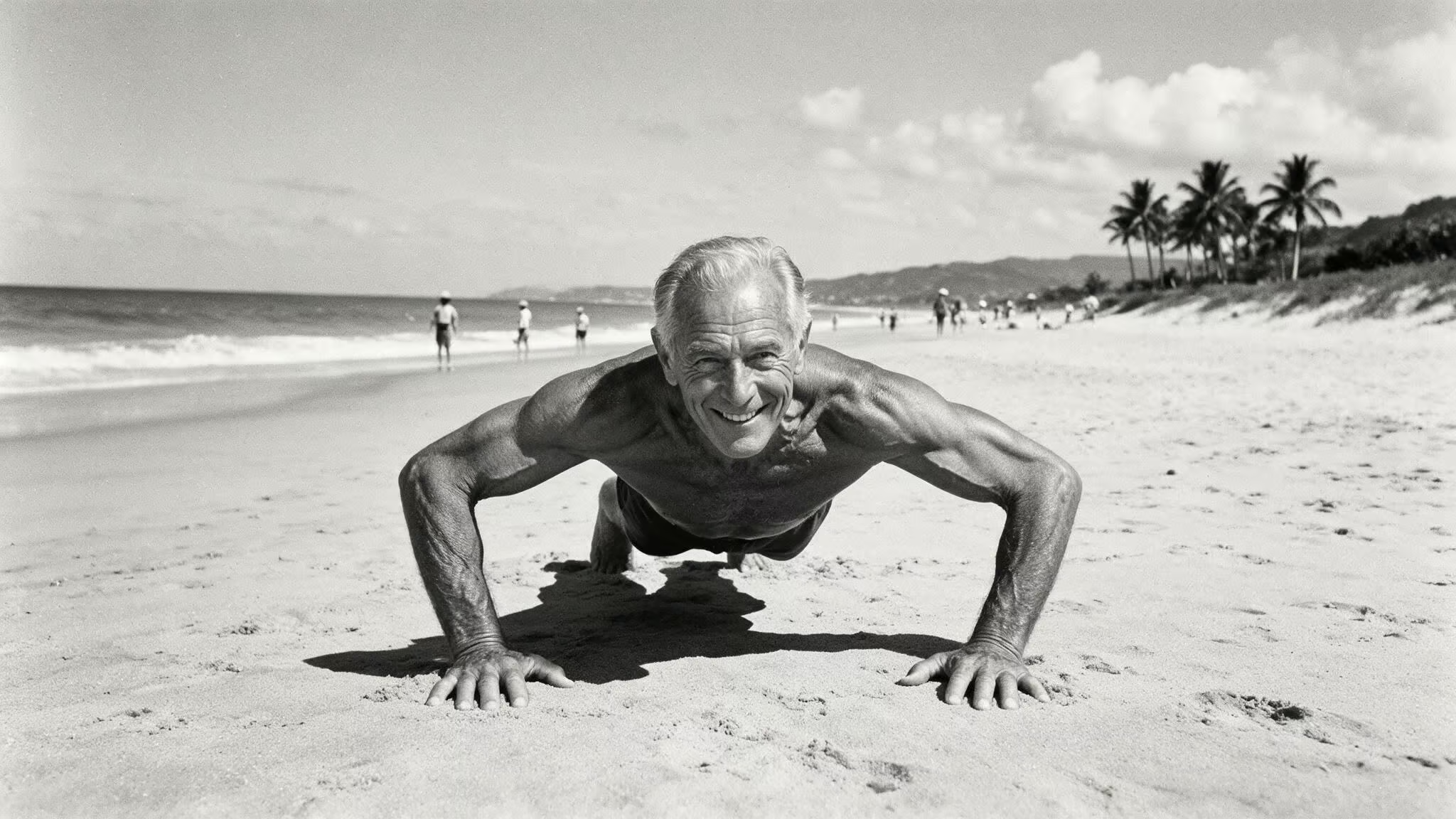
Think about who those Silver-era guys were. Jack LaLanne died at 96, still doing push-ups on his birthday. Dave Draper made it to 79. Chris Dickerson lived to 82. These weren’t outliers — they were the norm for natural-era bodybuilders.
The takeaway: the bodybuilding lifestyle itself — the training, the discipline, the diet, is compatible with living a long time. The problem isn’t the sport. It’s what happened to the sport.
The Modern Evidence: Who’s Actually Dying
The most recent large-scale study on bodybuilder mortality came out in 2025 in the European Heart Journal. Researchers tracked 20,286 male bodybuilders over eight years. During that period, 121 of them died. Forty-six of those deaths were sudden cardiac deaths. The average age at death: 34.7 years old.
That sounds alarming until you dig deeper.
Male professional bodybuilders had a five times higher risk of sudden cardiac death compared to amateurs. For female professionals, the risk was twenty times higher than female amateurs. That gradient tells you something important: the danger isn’t evenly distributed. It’s concentrated at the top, where the drug use, the extreme mass, and the punishing competition cycles are most intense.
The same study found that 13% of deaths in female bodybuilders were from suicide or homicide — more than four times the rate in men. That’s a different kind of warning, one that points to psychological and social pressures that go beyond physical health.
The key caveat: this study mostly reflects IFBB competitors, who are overwhelmingly enhanced. The IFBB and its member affiliates host > 6000 competitions annually, but submitted only 171 samples for analysis in 2018. For context, the International Powerlifting Federation submitted 787 samples in 2018 and the International Weightlifting Federation submitted 3238 samples in 2018. The testing is theater.
So when you read headlines about bodybuilders dying young, remember: you’re reading about the enhanced pro scene, not the guy at your gym who trains hard and eats clean—and the hard data on the bodybuilder average age of death is what separates the two.
Red flag: The IFBB hosted over 6,000 competitions in 2018 but drug-tested only 171 samples — compared to 3,238 from the International Weightlifting Federation.
What the Steroid Research Actually Says
You’d think the science on steroids and heart damage would be settled by now. It is not.
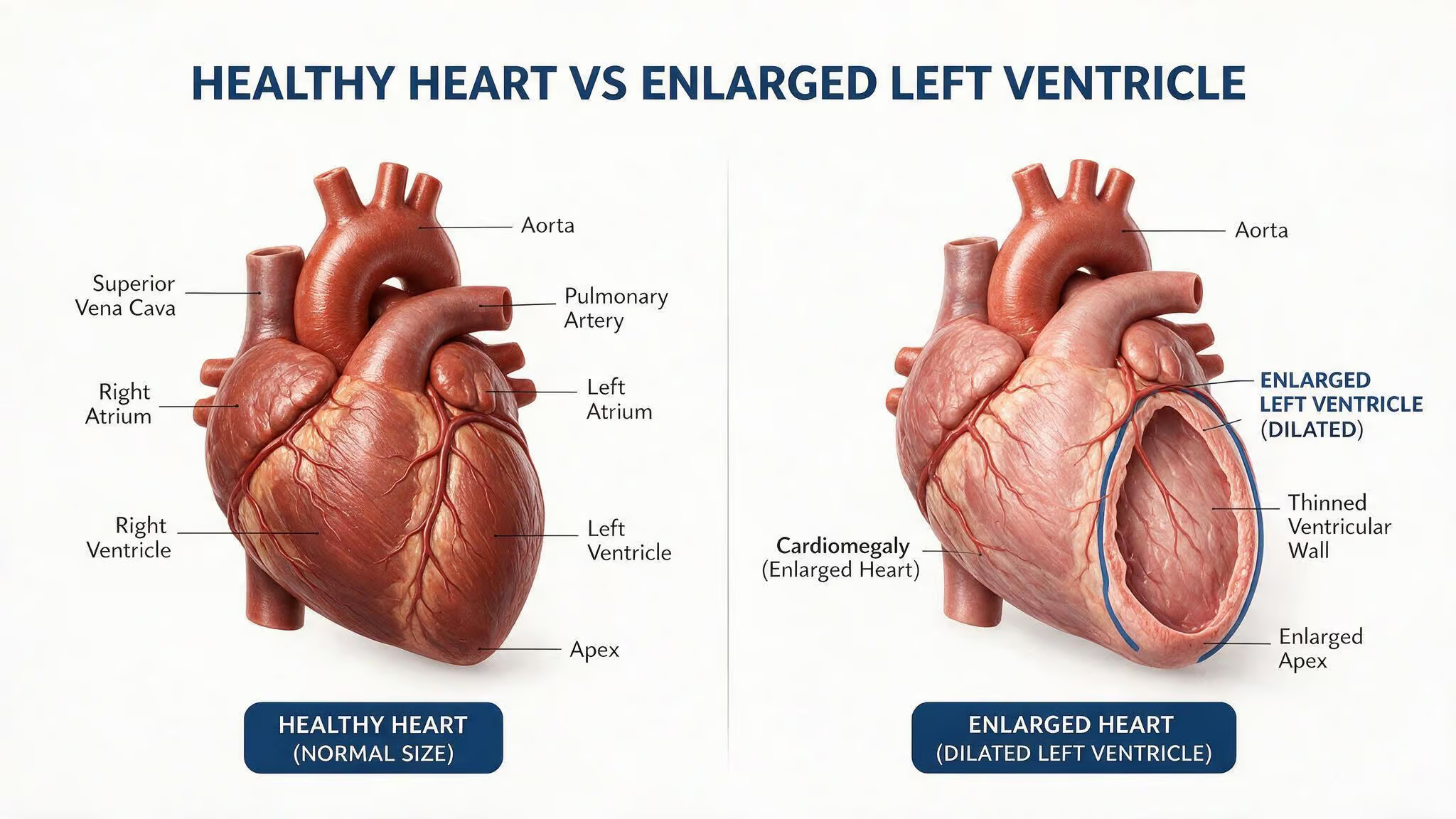
The HAARLEM study examined male AAS users in a gym and found that one cycle of AAS is associated with unfavorable cardiac function, blood lipid profile, and various other risk factors. But the study had no control group of non-users. Only 19% of 111 male AAS users initially enrolled were competitive bodybuilders; median training sessions per week was 4. These were mostly recreational gym guys who happened to use steroids.
And the measurement problem is real. Heart mass is usually reported relative to body surface area or lean body mass. But the method you choose can flip the result. One study found steroid users had 38.3% more heart mass than non-users — until they adjusted for body size using DXA-measured fat-free mass. Then the difference dropped to 17%. Another study of Olympic weightlifters found no difference in heart mass compared to weight-matched non-athletes until they adjusted for body size.
This is why studies disagree: they measure the same thing in different ways, and small sample sizes (often 8 vs. 8 or 15 vs. 8) make the findings fragile.
There’s good news on reversibility. In the HAARLEM study, many of the cardiac changes reversed completely within 3 to 12 months after stopping steroids. Another study found that past users had similar heart function to people who never used. But a separate study found some diastolic dysfunction persisted an average of 30 months after stopping, even though heart size returned to normal.
The science says steroids damage your heart, but the dose, duration, other drugs, and measurement methods all matter. It’s not as simple as “steroids destroy your heart.” But it’s also not an excuse to think you can use them safely.
The Lifestyle Risks Beyond Steroids
Even if you never touch steroids, the extreme bodybuilding lifestyle carries real risks.
Blood pressure during heavy resistance training can hit 480/350 mmHg. Those spikes happen every rep. Most of the time, your cardiovascular system handles it fine. But over years, the cumulative load matters.
Consider American football linemen — athletes who don’t typically use steroids but train heavy and carry extreme mass. One study followed them through a single season. Twenty out of 64 linemen developed concentric left ventricular hypertrophy and diastolic dysfunction, compared to just one out of 49 non-linemen. That’s a three-month season doing football-specific training, not the year-round extreme of competitive bodybuilding.
Then there’s the cut. Male bodybuilders typically lose 5 to 7 kg for competition. Females lose 3 to 6 kg, with some losing over 9.5 kg. That rapid weight loss often involves dehydration, diuretics, and severe caloric restriction.
A case report describes a 28-year-old bodybuilder who developed life-threatening hypokalemia and rhabdomyolysis after losing 19 kg, then binge-eating 800 grams of carbs for five days. Refeeding syndrome after a show may account for some of the female bodybuilder deaths that happen within a week of competition.
And the supplement market is a minefield. A UK test found that 23 of 24 bodybuilding supplements contained anabolic steroids, including 12 with controlled substances. SARMs have been sold as “green tea extract.” Tamoxifen — a breast cancer drug, has turned up in supposedly legal products. A registry from 2004 to 2013 identified 44 cases of severe liver injury from bodybuilding supplements; anabolic steroids were found in nine of the fourteen that were tested.
You cannot trust the label. That is the data.
Cost check: A UK test found 23 of 24 bodybuilding supplements contained anabolic steroids — you are paying a premium for illegal drugs regardless of what the label says.
How Bodybuilding Compares to Other Sports
Context helps. Tour de France cyclists from the 1970s — the height of EPO and AAS use in cycling, actually had lower mortality than the general population. If steroids alone were a death sentence, those guys should have died younger. They didn’t.
Elite athletes typically enjoy lower mortality rates than non-athletes. That’s true across most sports. Elite athletes in other strength-based sports do not enjoy a major longevity benefit compared to endurance athletes. The cardiovascular benefit of running 100 miles a week is different from the cardiovascular load of heavy squatting.
Football linemen, as mentioned, develop cardiac changes from extreme training without AAS. But they don’t die at the same rate as pro bodybuilders. The difference seems to be the specific cocktail: extreme mass plus extreme diet plus polypharmacy. Bodybuilding combines all three in a way that few other sports do.
This is why the danger isn’t just “steroids” or “training.” It’s the whole package. Natural bodybuilding removes one of those variables. The historical data suggests that might be enough to flip the longevity equation.
Natural vs. Enhanced by the Numbers
Let’s get concrete about what that gap looks like.
Jeff Nippard, a well-known natural bodybuilder, tested his testosterone: 485 ng/dL. Chase Irons, a pro bodybuilder, tested above 10,000 ng/dL. That’s a twenty-fold difference.
Natural muscle gain for an advanced athlete: roughly one pound per year. On 600 mg of testosterone per week: about one pound per week.
A 2024 paper followed 1,000 steroid users and 60,000 non-users, all averaging 27 years old, for 11 years. Mortality: 2.8% for users, 1% for non-users. That’s nearly three times the risk.
The historical data tells a similar story. Silver-era natural bodybuilders: 80.2 years average lifespan. Golden-era enhanced bodybuilders: 68.6 years.
The numbers show which path is safer.
What Natural Lifters Can Actually Do
I am not going to tell you to avoid steroids. You already know that. The question is: what about the rest of the lifestyle?
Protein intake. Bodybuilders often consume 1.9 to 4.3 g/kg/day. The recommended range for strength athletes is 1.4 to 2.0 g/kg/day. There’s no evidence that more than 3 g/kg/day provides any benefit, and there are case reports of harm at extreme levels.
Keep it at 1.6 to 2.2 g/kg/day. That’s enough for anyone natural.
Rapid weight cuts. Don’t lose more than 1 to 2% of your body weight per week. Extreme dehydration and diuretic misuse are the shortcuts that land people in the ICU. If a competition prep plan calls for that kind of loss, reconsider the plan.
Supplements. Buy from reputable, third-party tested brands. Look for certifications like Informed Sport or NSF Certified for Sport. Don’t trust a label that promises extreme results in a bottle.
Medical screening. If you’re serious about competing — or even training heavy into your thirties and forties, get an echocardiogram, blood work (lipid panel, kidney function), and a basic metabolic panel. It’s a prudent investment. Many natural lifters skip this because they think they’re healthy. That is when problems get missed.
Consider natural federations. The IFBB’s drug testing is minimal. Natural organizations like the INBF, WNBF, or OCB have robust testing programs. Competing there gives you a different environment — less pressure to push pharmacology, more focus on what you can actually build.
The Bottom Line
The headlines about bodybuilders dying young are about the enhanced side of the sport. The historical data from before steroids took over suggests that natural bodybuilding is compatible with living longer than the average person.
But that’s not a free pass. The extremes of the lifestyle — extreme mass, extreme cuts, extreme supplementation, carry risks even without drugs. The smart approach is to train hard, eat well, avoid the shortcuts, and recognize that the cautionary tales aren’t just about steroids. They’re about the whole package of extreme behaviors that can accompany the sport.
Natural bodybuilding likely won’t shorten your life. The data says it might even extend it. But you have to be smart about the extremes. Otherwise, you’re replicating the risks without the rewards.
People Also Ask
What is the average lifespan of bodybuilders?
It depends entirely on the era and drug use. Natural bodybuilders from the pre-steroid Silver era (1930–1960) averaged 80.2 years, which was longer than the general male population at the time. In contrast, Golden-era bodybuilders (1960–1990), when steroids became common, averaged just 68.6 years.
Does natural bodybuilding increase life expectancy?
The historical data suggests it can. Silver-era natural bodybuilders lived longer than the average man of their time, indicating the training and discipline alone are compatible with longevity. The lifespan penalty only appears when you add extreme mass, extreme cuts, and performance-enhancing drugs into the mix.
What bodybuilder lived the longest?
Jack LaLanne is a standout example from the natural era, living to 96 and still doing push-ups on his birthday. He wasn’t an outlier — other natural-era greats like Dave Draper (79) and Chris Dickerson (82) also lived well into their later years, supporting the idea that the drug-free lifestyle is the key variable.
What’s the difference between natural and enhanced bodybuilder lifespan?
The gap is stark: natural-era bodybuilders averaged 80.2 years, while steroid-era bodybuilders dropped to 68.6 years — an 11.6-year difference. A 2024 study of modern lifters found that steroid users had a 2.8% mortality rate over 11 years compared to 1% for non-users, nearly triple the risk. The numbers consistently show that removing drugs flips the longevity equation.