
Here’s a puzzle for you. Resistance training is associated with reduced all-cause mortality rates and likely reduces cardiovascular risk. Resistance training lowers your risk of dying from pretty much anything. Elite athletes typically enjoy lower mortality rates than non-athletes.
In 2021, over two dozen professional competitive bodybuilders died suddenly, along with a number of retired bodybuilders under age 60. A number of retired bodybuilders under age 60 also died.
The first Mr. America contest was held in 1938. The first Mr. America was in 1938. The first IFBB professional event (Mr. Olympia) was held in 1965. Research on bodybuilder lifespan is surprisingly limited.
You’d think the answer would be straightforward. It’s not. Abstract of the article states this. This area of research is highly nuanced and influenced by numerous confounders unique to bodybuilding.
The short version: There is little direct epidemiologic evidence that bodybuilders are at increased risk of adverse clinical outcomes. It is quite possible that bodybuilders are at elevated risk and that AAS use is the primary reason.
Key Takeaways
The only large-scale study on male bodybuilders (597 competitors with mortality data) found a mean age of death of 47.7 years and a 34% higher mortality rate than the general population, but it’s a single conference abstract from 2016, not peer-reviewed journal research
A separate 16-year study of 9,447 female bodybuilders found sudden cardiac death in professionals was 53.98 per 100,000 athlete-years — roughly 22 times higher than amateurs, but only 32 total deaths were recorded, making the sample vanishingly small
Steroids are the most obvious suspect, but the evidence is conflicted: the HAARLEM study (the most-cited prospective research) only included 19% competitive bodybuilders, and studies on cardiac function in AAS users disagree with each other
Table of Contents
The Hard Numbers: What the Only Two Large-Scale Studies Actually Found
Two studies provide the only large-scale mortality data on competitive bodybuilders — one on men, one on women. Both are small, limited, and frequently misinterpreted.
Male Bodybuilders (the 47.7-Year Finding)
In 2016, researchers presented a study at an American Urological Association meeting. They identified 1,578 professional male bodybuilders from 1948 through 2014 and managed to get complete mortality data for 597 of them. The number that came out: mean age of death was 47.7 years. The standardized mortality ratio was 1.34 — meaning at any given age, these guys were 34% more likely to be dead than an age-matched man in the general population.
That’s the number that gets cited as fact in articles and forum posts. Here’s what usually doesn’t get mentioned alongside it.
This was a conference abstract, not a peer-reviewed journal article. Out of those 597 men, only 58 were dead — that’s 9.7%. You’re building a conclusion about an entire population on fewer than 60 deaths. After age 50, the mortality difference disappeared entirely.
The risk was concentrated in younger competitors. And the study made no adjustment for steroid use, diet, or any of the other obvious confounding factors.
The 47.7-year figure is not a reliable average. It’s a tentative finding from a very small dataset.
Female Bodybuilders (An Even More Incomplete Picture)
The only large-scale study on women followed 9,447 female bodybuilders over 16 years. The mean age of death was around 43. Sudden cardiac death among professionals clocked in at 53.98 per 100,000 athlete-years — dramatically higher than the amateur rate of 2.48. But again, only 32 deaths total.
A quarter of the causes of death were undetermined. Many bodybuilder deaths lack autopsies or are officially listed as ‘not reported’, expanding the uncertainty beyond the 25% figure. Thirteen percent were from suicide or homicide — four times the male rate in the other study.
That’s three dozen deaths to work with, spread across 16 years, for an entire sex in the sport. You can’t build reliable epidemiology on that.
The AAS Question: What the Evidence Actually Shows About Steroids and the Heart
AAS use is commonly cited as a key contributor to morbidity and premature mortality in bodybuilders. Incidence of AAS use is 54–76% in male competitive bodybuilders and 10–40% in female competitive bodybuilders. AAS markedly reduce HDL cholesterol and increase LDL cholesterol in bodybuilders and powerlifters, and increase homocysteine in bodybuilders. Several studies have demonstrated AAS unfavorably influences known cardiovascular disease risk factors. It’s not hard to connect the dots.
But the research is more conflicted than most articles admit.
Take the HAARLEM study — the most-cited prospective research on steroid users. One cycle of AAS is associated with unfavorable cardiac function, blood lipid profile, and various other risk factors, including bodybuilder deaths. But only 19% of its participants were competitive bodybuilders. The median training was four sessions a week, not the daily grind of someone prepping for a show.
HAARLEM study findings may not represent high-level bodybuilders. You can’t assume the findings apply to guys pushing 300 pounds on stage.
The structural studies are all over the place. Some show steroid users have bigger, thicker hearts than non-users. Others show no difference in heart size at all. The D’Andrea and Thompson studies found similar cardiac hypertrophy in AAS-using and non-using weightlifters.
The Baggish and Fyksen studies found dysfunction where others didn’t. Part of the disagreement comes from how you measure: normalize heart mass for body size one way and steroid users look 38% bigger; use fat-free mass scaling and the difference drops to 17%. The method determines the conclusion.
There’s some good news in the data. Many cardiac changes reverse within 3 to 12 months after stopping, according to the HAARLEM follow-up. Past users often have similar heart function to people who never used. But one study found signs of systolic dysfunction persisting 30 months after discontinuation. And nobody has studied what happens after years of cycling on and off.
The honest answer: AAS are a primary suspect, but the evidence is far from definitive. The research is small, conflicting, and confounded by the fact that steroid users also take a lot of other drugs.
Bottom line: The cardiac risk from AAS is real but inconsistent across studies — method choices shift conclusions, and recovery after cessation is common but not guaranteed.
The Training Itself: Can Extreme Lifting Damage Your Heart Without Steroids?
This is the piece most articles miss. The drugs get all the attention, but the actual act of lifting extreme weights might be its own risk factor.
In 1985, MacDougall and colleagues measured blood pressure during heavy resistance exercise. They recorded readings as high as 480/350 mmHg. That’s not a typo. You’re generating that kind of pressure in your arteries dozens of times per training session.
And the changes look similar to what steroids produce. Studies of American football linemen — who are not, generally, using AAS, found that 20 out of 64 developed concentric left ventricular hypertrophy over a single season. Only 1 of 49 non-linemen did. The Thompson and D’Andrea studies found similar cardiac hypertrophy in AAS-using and non-using weightlifters. The training alone can drive these structural changes.
Cardiac hypertrophy is typically present in bodybuilders and other athletes and is suspected to be pathological when facilitated by AAS. “Athlete’s heart” is a well-documented adaptation. But if you have pre-existing vulnerabilities — a valvular defect you don’t know about, genetic hypercoagulability, family history of early atherosclerosis, extreme training might trigger the bad kind of remodeling.
Most bodybuilding research is conducted on elite AAS users, making it impossible to separate the effects of extreme training from the effects of drugs. The football studies suggest the iron itself could be a problem.
The Acute Killers: Dieting, Weight Cutting, and Refeeding Syndrome
You don’t need a needle to die from this sport. The diet can kill you faster.
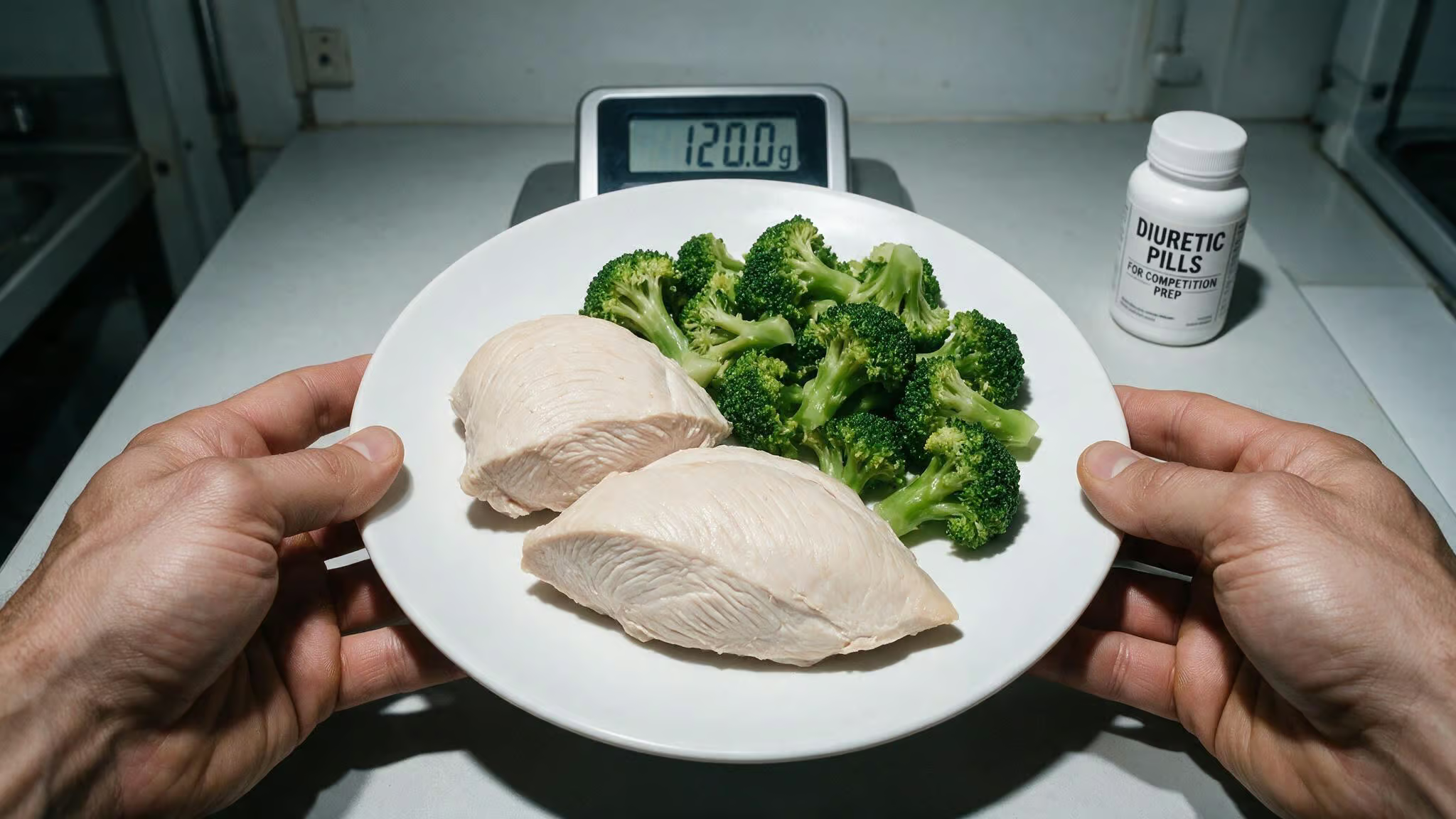
Competition prep involves brutal weight cuts: 5-7 kg for men, 3-6 kg for women. Fifteen percent of female competitors report losing more than 9.5 kg. The extreme end of that spectrum involves diuretic abuse — furosemide-induced water loss of 5-6 kg in the 48 hours before a show. That can cause hypokalemic paralysis and sudden death.
Table 1 of the Smoliga review lists one female bodybuilder (A.H.) who died hours before competition from exactly this cause. Bodybuilders consume 1.9–4.3 g/kg/day of protein (men), and the repeated weight cycling inherent to the sport may affect long-term health, though direct evidence is limited.
The post-competition danger is just as real. One case report describes a 28-year-old bodybuilder who lost 19 kg pre-contest, then consumed 800 grams of carbohydrates daily for five days afterward. He developed life-threatening hypokalemia and rhabdomyolysis — refeeding syndrome. Another competitor in Table 1 (G.P.) died one day before Mr. Olympia, a tragedy that echoes the patterns seen in other famous bodybuilder deaths.
These are not chronic, cumulative risks. They’re acute, entirely preventable events that can kill within hours. The steroids get the headlines, but the diet is faster.
The Wild West of Supplements: When “Legal” Isn’t Safe
Here’s where the line between natural and enhanced bodybuilding gets blurry enough to be meaningless.
An analysis of 24 UK bodybuilding supplements found that 23 contained anabolic androgenic steroids. Twelve contained controlled substances. The US Liver Injury Registry documented 44 severe cases from bodybuilding supplements between 2004 and 2013. Of the 14 supplements they could analyze, 9 contained AAS. Five had no AAS identified — and the liver injury still happened.
Hidden pharmaceuticals show up regularly. Tamoxifen (a breast cancer drug). DMBA (an untested stimulant). DMAA, which has been linked to cardiomyopathy, stroke, and death.
SARMs have been sold online labeled as “green tea extract.” Black market steroids are unregulated, with raw materials often coming from China. Jerry Brainum reported a case of a bodybuilder taking steroids that contained arsenic.
A bodybuilder who never intentionally touches AAS can still be consuming them through contaminated supplements bought over the counter. The regulatory system has effectively no oversight.
Injection Risks: The Danger Isn’t Just the Drug
Even if the drug itself were perfectly safe, the method of delivery introduces its own problems.
A survey of 395 men who inject performance-enhancing drugs found 1.5% HIV positive and roughly 5-10% hepatitis antibodies. An Australian study of 63 injectable-AAS users (23 of whom were bodybuilders) found about 10% hepatitis C and 12% hepatitis B. Needle-sharing rates are at least tenfold lower than IV drug users, but multi-dose vial sharing is common. The infection risk comes from the vial, not just the needle.
Non-infectious complications include abscesses, myositis, compartment syndrome, and septic shock. Before 1985, cadaver-derived human growth hormone carried a risk of Creutzfeldt-Jakob disease.
The numbers are not apocalyptic — we’re talking about 1-12% infection rates in most studies, but they’re real for a population doing regular intramuscular injections.
Population Studies: The Strongest Evidence (and a Major Caveat)
The best epidemiologic data we have comes from outside the bodybuilding world. A Danish cohort of 545 AAS users compared to 5,450 controls found a threefold higher all-cause mortality, threefold increase in nonischemic heart disease, and fivefold increase in thromboembolic conditions. A Swedish general population study found AAS users had double the cardiovascular morbidity and mortality — and roughly 18 times greater all-cause mortality than the general population.

Those are big numbers. They’re also from people who use AAS in general, not necessarily competitive bodybuilders.
And here’s the counterexample that complicates everything: Tour de France cyclists from the 1970s — the height of the AAS era, when doping was essentially uncontrolled, had lower mortality than the general population. Not equal. Lower. Finnish powerlifters from the same era showed excess mortality, but the sample was tiny (62 athletes, 8 deaths). Swedish strength athletes who competed between 1960 and 1979 had excess mortality and suicide under age 50 — but after 50, their mortality was comparable to the general population.
The Tour de France data doesn’t prove steroids are safe. But it does suggest that other factors — genetics, training load, healthcare access, overall lifestyle, are critical mediators. A simple “steroids kill” narrative doesn’t fit all the evidence.
What We Still Don’t Know: The Gap Where Natural Bodybuilding Should Be
The most obvious question a lifter asks is: What about natural bodybuilders?
There’s no data. Not limited data. No data. The history of competitive natural bodybuilding is too short, and almost all research has been conducted on AAS-using individuals. It is difficult to disentangle AAS use from multiple other bodybuilding-specific risk factors which may have adverse effects on short- and long-term health.
Jack LaLanne made it to 96. Dave Draper died at 79. Chris Dickerson made 82. These are anecdotes, not epidemiology. They don’t prove natural bodybuilding is safe, and they don’t tell you about the average outcome.
The research that’s needed — survival analysis of Mr. Olympia competitors, case-control studies comparing natural to AAS-using bodybuilders, long-term biomarker studies, doesn’t exist yet. The sport hasn’t been around long enough in its drug-free form to generate the data.
Where does this leave the guy who lifts heavy but doesn’t compete?
The panic-worthy numbers — 47.7 years, 34% higher mortality, threefold risk, come from tiny, limited studies of an extreme lifestyle. They don’t apply to someone doing sets of five on deadlifts three times a week. The risks that exist are specific to a very specific world: massive drug doses, brutal weight cuts, contaminated supplements, intravenous injection, and training loads that generate blood pressure readings that sound like a typo.
That’s a different conversation than “does lifting weights kill you.” For the average guy in the gym, the answer is still a clear no.
People Also Ask
Who is the oldest bodybuilder alive?
There isn’t a single verified record, but several natural bodybuilders have lived into their 80s and 90s, like Jack LaLanne who made it to 96. The problem is that almost all longevity data comes from steroid-using competitors, so we don’t have reliable epidemiology on drug-free bodybuilders.
What bodybuilder died at age 30?
Multiple competitive bodybuilders have died in their 20s and 30s, often from acute causes like refeeding syndrome after extreme dieting or cardiac events linked to steroid use. The 47.7-year average age of death from one small study is misleading because the risk is concentrated in younger competitors, and after age 50 the mortality difference from the general population disappears.
Do body builders age well?
It depends entirely on whether they use anabolic steroids and how extreme their lifestyle is. Steroid users show higher cardiovascular mortality and morbidity in population studies, but past users often recover normal heart function within 3 to 12 months after stopping. Natural bodybuilders who avoid brutal weight cuts and contaminated supplements likely age similarly to other athletes, but there’s no direct research on them.
What age do bodybuilders usually retire?
There’s no standard retirement age, but competitive bodybuilding is brutal on the body — extreme dieting, massive drug doses, and training loads that can spike blood pressure to 480/350 mmHg. Many competitors retire in their 40s or earlier, though some like Chris Dickerson competed into their 50s and lived to 82.
Can extreme weightlifting damage your heart without steroids?
Yes, heavy resistance exercise can generate blood pressure readings as high as 480/350 mmHg, and studies on American football linemen found that 20 out of 64 developed concentric left ventricular hypertrophy over a single season without steroid use. The training alone can drive structural heart changes, though most research can’t separate the effects of extreme lifting from the effects of drugs.
How does competition dieting kill bodybuilders?
Extreme weight cuts of 5-7 kg for men and 3-6 kg for women, combined with diuretic abuse, can cause hypokalemic paralysis and sudden death within hours. Post-competition refeeding syndrome — like a bodybuilder who lost 19 kg then ate 800 grams of carbs daily for five days — can trigger life-threatening hypokalemia and rhabdomyolysis. These acute risks kill faster than steroids.