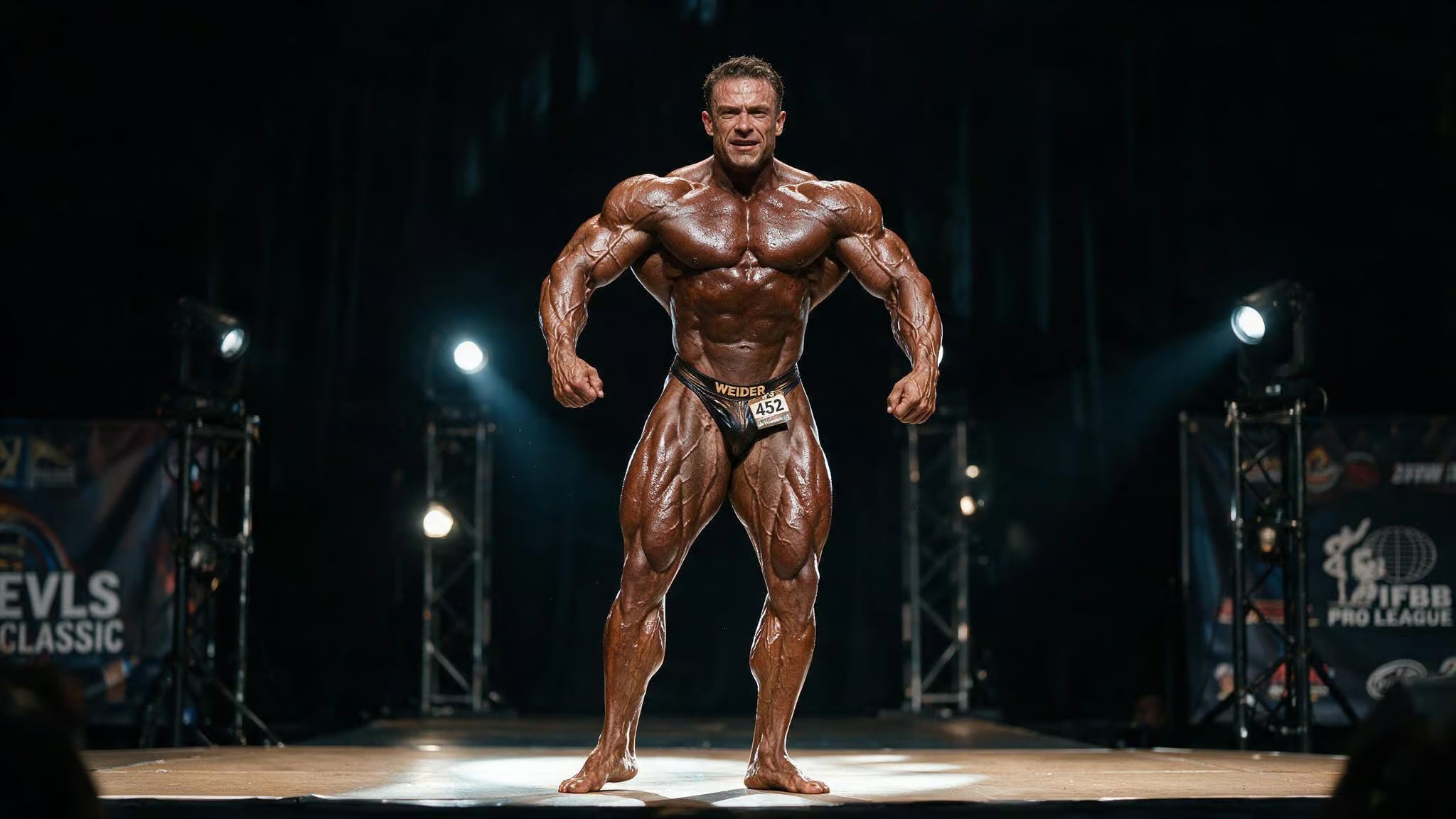
Rich Piana told his hundreds of thousands of YouTube subscribers and 1.2 million Instagram followers that only 5% of people have what it takes to go all-in. He built a brand around that mentality — 5% Nutrition, the YouTube rants, the tattoos, the 6 ft 2 in (1.88 m) frame that looked like a comic book drawing more than a human being. He was the guy who said he’d do whatever it takes, and he had the body to prove it.
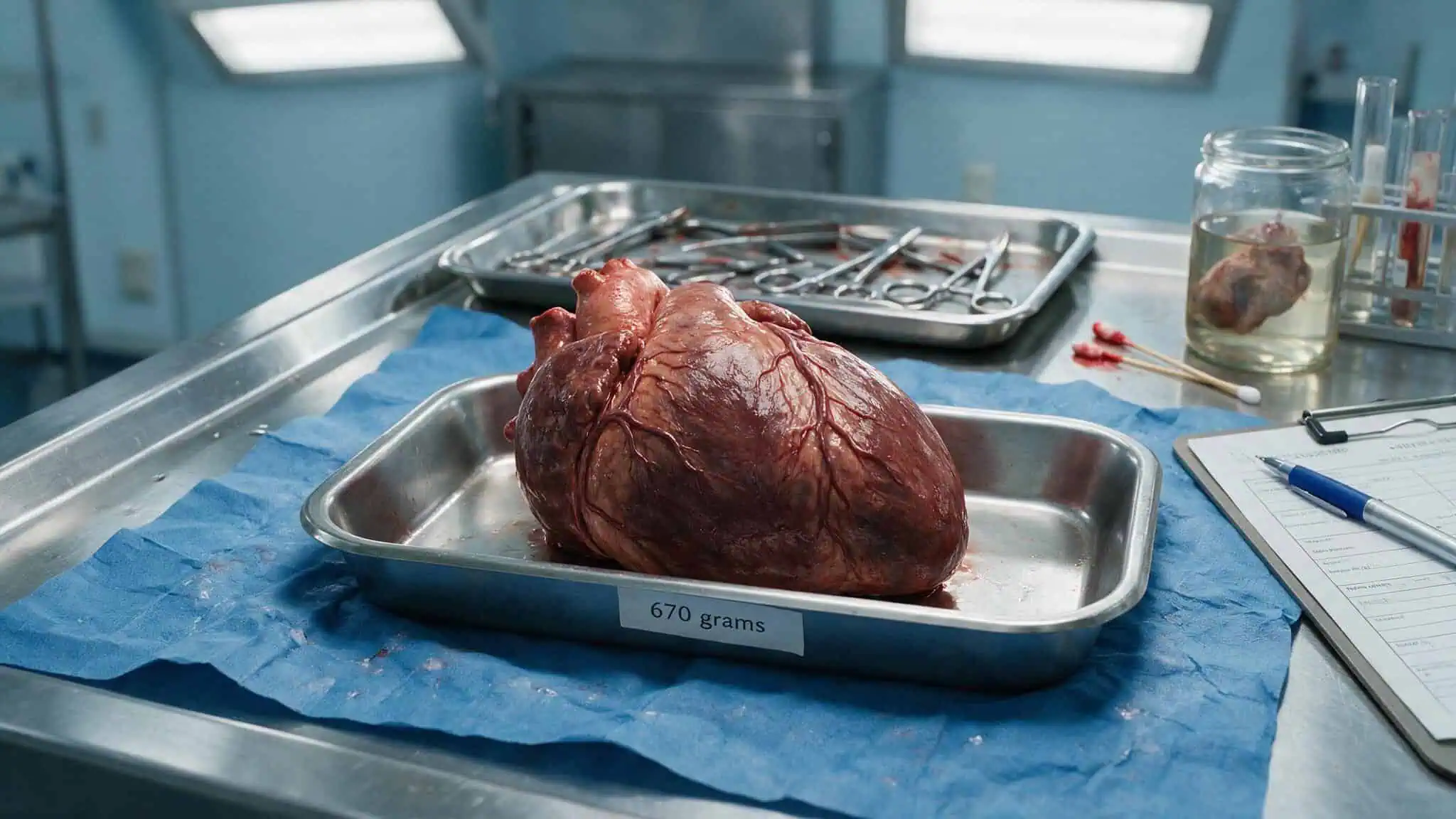
Turns out, what it took was a 670-gram heart and an autopsy report that still can’t tell you exactly why he died at age 46.
I’ve spent time reading through the FOIA documents, the autopsy case file, the public records requests that MuckRock filed under Florida’s Sunshine Law. What I found isn’t a clean story with a neat moral. It’s a mess — a procedural screw-up, a disputed scene, and a body failing on multiple fronts. Here’s what happened, what the numbers say, and why the official cause of death is “undetermined.”
Key Takeaways
Rich Piana’s heart weighed 670 grams at autopsy — more than double the normal male maximum of 300 grams, and his liver was twice the average size, indicating years of systemic organ damage.
The cause of death is officially undetermined. The hospital threw out the blood and urine specimens the medical examiner asked them to save, so toxicology testing was impossible.
Piana started his first steroid cycle at 18 (testosterone and Deca-Durabolin) and admitted he got “hooked” on the dramatic results, continuing for 27 years with escalating doses including 20 international units of Serostim HGH per day at a cost of up to $8,000 monthly.
Table of Contents
The 5% Bodybuilder Who Couldn’t Escape His Own Warning
Rich Piana was born September 26, 1970 in Glendale, California, and raised by his mom in Sacramento. He started bodybuilding at age 6 and won NPC Mr. Teen California at age 19 in 1989. By 1998 he’d win NPC Mr. California, and he kept competing through the 2000s, winning the Los Angeles Super-Heavyweight division in 2003 and taking overall titles in Sacramento and the Border States Classic in 2009.
But Piana wasn’t just a competitor. He was the guy who said the quiet part out loud. While other bodybuilders on YouTube pretended they got big on chicken and rice, Piana openly talked about trenbolone, testosterone, and HGH. He didn’t hide it. He made it part of the brand. The 5% mentality — that only a tiny fraction of people are willing to do what it takes, became his identity.
That identity killed him. Not directly. But the 670-gram heart sitting in the autopsy report is the physical manifestation of a man who lived by his own rules for too long.
The Collapse — August 7, 2017
It happened at 1:30 PM on a Tuesday. Piana was at his home in Clearwater, Florida, getting his hair cut by his on-again, off-again girlfriend Chanel Jansen. He collapsed at 1:30 p.m. and hit his head on the way down.
Jansen called 9-1-1 and performed CPR until paramedics arrived about 10 minutes later. When they got there, they found crushed white powder, a straw, and a credit card. Standard drug paraphernalia setup. They gave him naloxone — the opioid overdose reversal drug, and got his heartbeat back.
Here’s where it gets murky. Jansen said it wasn’t recreational drugs. She claimed Piana had snorted a high-caffeine pre-workout supplement called Con-Cret Pre Workout. No cocaine, no heroin, she said. Just a pre-workout.
The paramedics saw what they saw, and they acted accordingly. Twenty bottles of testosterone were found in Piana’s home. That’s not a cycle. That’s a pharmacy.
Piana was put into an induced coma to reduce brain swelling from oxygen deprivation. He stayed there for two weeks. He died on August 25, 2017 in Clearwater, Florida — the autopsy lists date of death as August 24, 2017, a one-day discrepancy that conspiracy theorists love but is almost certainly paperwork timing.
The Autopsy — 670 Grams Is Not a Strong Heart
Let’s talk about what the autopsy found. These are numbers from the Florida District Six Medical Examiner’s Office, case number 5171418, obtained through a public records request.
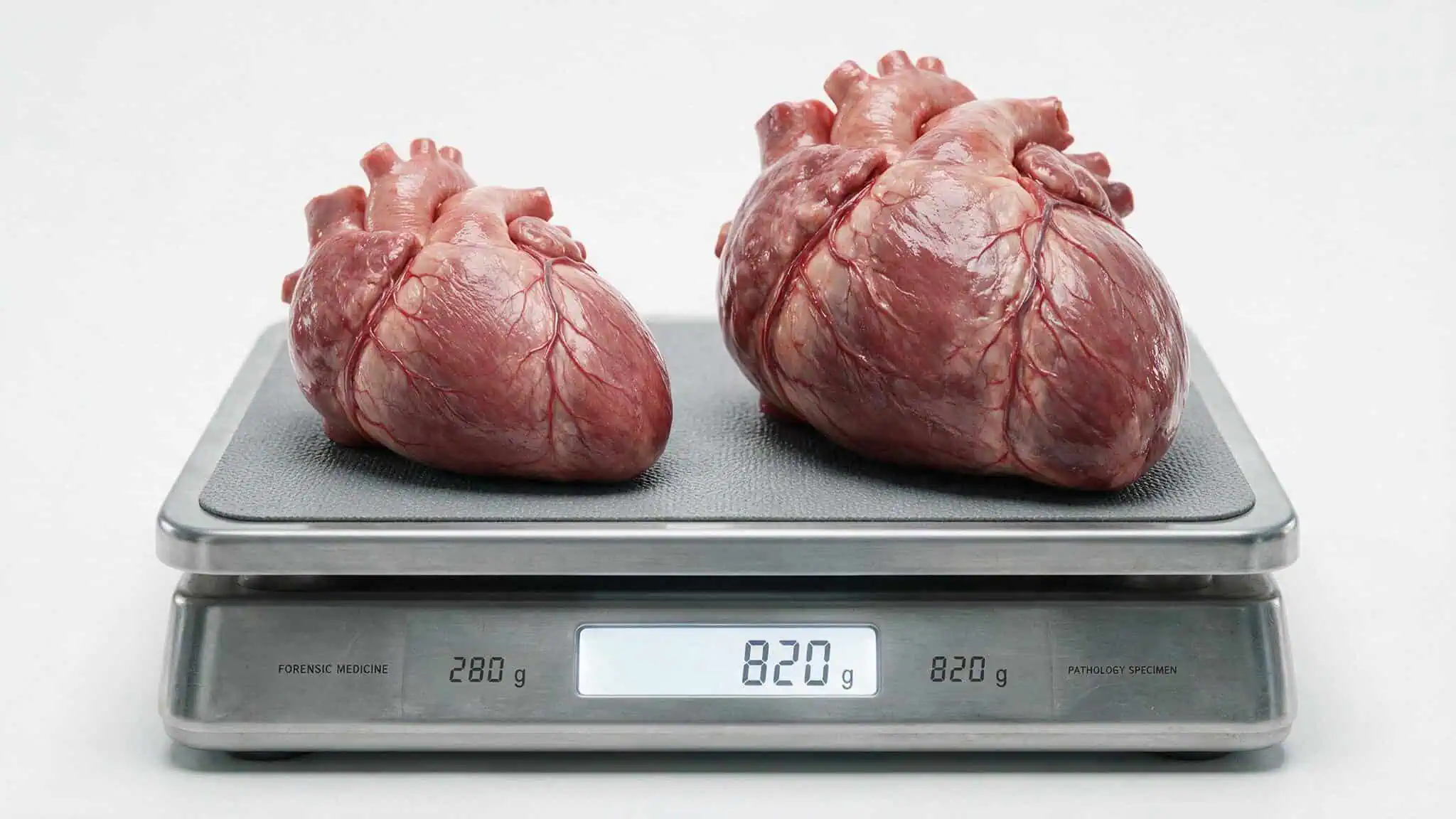
The heart: 670 grams. A normal adult male heart maxes out around 300 grams. More than double. That’s cardiomegaly — an enlarged heart. It’s not a strong heart. It’s a heart that’s been working overtime for years, growing because it had to, until it couldn’t.
The liver: Twice the average adult weight. Not healthy.
Mild coronary atherosclerosis: Plaque in the arteries. Hardening of the vessels. Common in steroid users who also eat like bodybuilders — high cholesterol, high saturated fat.
Additional findings: Bronchopneumonia with fluid in the lungs. Ascites — fluid buildup in the abdomen, which is a sign of liver or heart failure. Brain edema, swelling, which is why they kept him in a coma. Yellowish skin, jaundice, meaning his liver wasn’t processing properly.
At autopsy his body weighed 221 pounds and measured 72 inches in length.
The official cause of death is “undetermined.” The autopsy report cites heart disease, a reported history of drug use, and the lack of hospital specimens as reasons they couldn’t make a definitive call.
The Missing Toxicology — a Procedural Failure, Not a Conspiracy
This is the part that frustrates anyone who wants a clean answer. The medical examiner’s office asked the hospital to preserve Piana’s blood and urine specimens for toxicology testing. The hospital disposed of them anyway.
The hospital threw away the one piece of evidence that could have told us what was in his system when he collapsed.
This is documented in FOIA correspondence from Debra L. Lewis, the Records Custodian, and William Pellan, the Director of Investigations. The quote from the report says: that No specimen was available for blood toxicology testing.
That’s why the cause is undetermined. Not because it’s a medical mystery. Because someone at the hospital didn’t get the memo. In a high-profile death, the coordination failed, and now we’ll never know if the white powder was cocaine, pre-workout, or something else.
Red flag: The hospital’s failure to preserve blood and urine specimens made toxicology testing impossible. That single procedural breakdown is why the cause of death will never be definitively known.
Conspiracy theories popped up. Dave Palumbo on RxMuscle accused foul play. But the evidence points to a routine procedural breakdown. Hospital staff aren’t always aware that the medical examiner needs those samples. It’s a bureaucratic failure, not a cover-up—but the ambiguity surrounding the rise in bodybuilder deaths will never be resolved.
The Steroid Journey — From Test and Deca at 18 to Serostim at $8,000 a Month
Piana started his first cycle at age 18 — testosterone and Deca-Durabolin. “Test and deca.” In 2014 he stated he got ‘hooked’ on steroids because the results were dramatic. Most guys that age are figuring out how to cook chicken without giving themselves salmonella. Piana was running his first gear cycle.
Over time it escalated. Trenbolone. Other hormones. By the time he was competing at a national level, he was taking 20 international units per day of Serostim (HGH).
At prescription prices, that cost about $8,000 per month. Sometimes he got it for free or about $2,000 through connections. Still expensive. Still a serious dose.
The side effects were visible and he talked about them openly. Hair loss. Gynecomastia — treated with medication. Signs of liver toxicity. He knew the cost. He paid it anyway.
Total duration: 27 years of use, from age 18 onward. That’s not a few cycles. That’s most of his adult life.
The Contradiction — Telling People to Stay Natural While Using Himself
In a 2016 video, Piana advised viewers: If you have the choice to do steroids or stay natural, stay natural. There’s no reason to do steroids. You’re only hurting your body and hurting yourself.
He said this while actively using. It’s easy to call that hypocritical. But it’s more complicated than that.
Piana knew what steroids do. He was living it. He also knew that professional bodybuilders don’t have a choice — you can’t win at that level without drugs. The sport demands it. He was trapped in a system he chose, and he was honest about the damage while being unable to walk away.
The 5% mentality didn’t give him an off-ramp. It demanded he keep going. That’s the tragedy of it.
The Culture — Why Extreme Bodybuilding Creates This Outcome
Not everyone who uses steroids dies young. Arnold Schwarzenegger used steroids and is still alive at 77. Zyzz (Aziz Shavershian) died at 22 from an undiagnosed heart condition. Same sport, same drugs, different outcomes.
That’s not a contradiction. It’s a lottery. Genetics play a role. Some people’s bodies can handle the abuse.
Some can’t. Piana’s 670-gram heart tells you which group he was in.
The systemic pressure is simple: professional bodybuilders cannot win without drugs. The conversation is never “should they use?” but “how much and for how long?” Most influencers lie about it, claiming natural physiques while running heavy cycles. Piana’s openness was rare, and it made him a target for criticism, but it also made him more honest than 95% of the industry in a culture built on dishonesty.
The culture of dishonesty means young guys see the results without understanding the risks. They compare themselves to Arnold and think they’ll be fine. They don’t account for the genetic variability that determines whether your heart can handle the load.
Personal Turmoil — Relationships, Stress, and Opiate Addiction
Piana’s personal life was messy. He married Icelandic bodybuilder Sara Heimisdóttir in 2015. It was annulled in 2016 under claims of false pretenses pretenses. He accused her of using him for a green card. That’s not a happy story.
His relationship with Chanel Jansen was long-term on-again, off-again. They got back together after the annulment, and she was there when he collapsed.
Jansen said Piana had struggled with opiate addiction at some point. Not clear if it was active at the time of his death, but it adds context to the naloxone administration. The white powder dispute might never be settled, but the fact that an opioid reversal drug was used and that Jansen acknowledged a history with opiates makes the picture more complex.
Steroids weren’t his only substance issue. The stress of his personal life, the pressure of the brand, the physical toll of 27 years of gear — it all adds up.
Aftermath — Conspiracy, Community, and What We Actually Learn
The missing toxicology fueled conspiracy theories. Dave Palumbo’s accusation on RxMuscle was the most prominent. But the truth is that the hospital screwed up. The bodybuilding community remains divided — some see a direct steroid death, others a tragic accident, though a review of bodybuilder deaths 2022 reveals the patterns that emerged post-pandemic. The primary lesson from this case is the urgent need for better coordination between hospitals and medical examiners to preserve critical evidence in high-profile deaths.
5% Nutrition continues as a brand. His YouTube channel is still up. He’s buried at Forest Lawn Memorial Park in Hollywood Hills.
The conspiracy theories are understandable but wrong. The question is why the bodybuilding world is so eager to find a cover-up. Because the alternative — that this is what happens when you push the limits hard enough, is harder to face.
The Unresolved Death of a 5% Icon
670 grams. That’s the number that matters. Not the conspiracy theories, not the white powder dispute, not the missing toxicology. His heart was more than double the size it should have been. Everything else is noise.
He told people to stay natural. He couldn’t follow his own advice. And now we’re left with a question that has no clean answer — a 670-gram heart in a 46-year-old body.
The 5% mentality was his brand. It was also his burden. He built an empire on being the one guy willing to go further than anyone else. In the end, it went further than he could handle.
The unresolved death is a fittingly ambiguous end to a story that doesn’t have clean lessons. It has a number, a missing toxicology report, and a guy who died doing what he said he’d do — whatever it takes.
Frequently Asked Questions
Why were Rich Pianas’ arms so big?
Rich Piana’s extreme physique, including his oversized arms, came from 27 years of high-dose anabolic steroid and growth hormone use that he was unusually open about. He started his first cycle of testosterone and Deca-Durabolin at age 18 and escalated over time to 20 international units of Serostim HGH daily, which alone cost up to $8,000 per month.
What is the main cause of death in bodybuilding?
There’s no single cause, but enlarged heart (cardiomegaly) and heart disease are the most common themes in bodybuilding deaths linked to long-term steroid abuse. Rich Piana’s autopsy found a 670-gram heart — more than double the normal maximum of 300 grams — along with a damaged liver and other organ failure, though his official cause of death was ultimately ruled ‘undetermined’ because toxicology samples were destroyed by the hospital.
What does a 670-gram heart mean for a bodybuilder?
A 670-gram heart is a textbook case of cardiomegaly — a heart that’s grown more than double its normal size because it’s been forced to work overtime for years under the strain of anabolic steroids, high blood pressure, and elevated red blood cell count. It’s not a ‘strong’ heart; it’s a failing one that eventually can’t keep up with the demands placed on it.
Why was Rich Piana’s cause of death ruled undetermined?
The cause of death is undetermined because the hospital disposed of the blood and urine specimens that the medical examiner specifically requested to be preserved for toxicology testing. Without those samples, it’s impossible to know whether the white powder found at the scene was cocaine, a pre-workout supplement, or something else — so the official report cites heart disease, drug use history, and the lack of specimens as reasons they couldn’t make a definitive call.