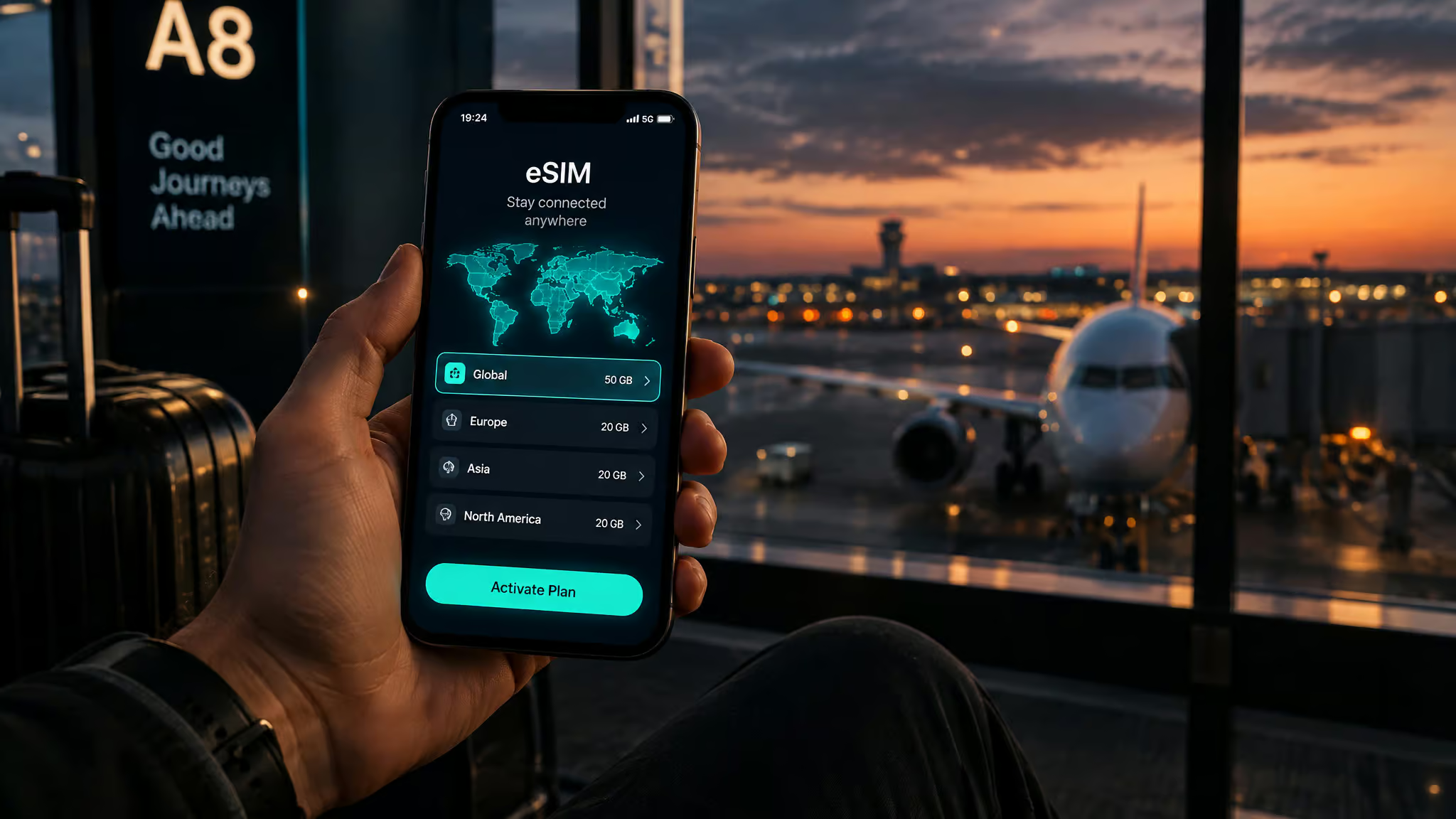
Flights booked, hotel sorted, then you hit the data question. “Unlimited” is sitting right there on the plan page, and it looks like the safe bet. No counting gigabytes, no anxiety on day nine. But here’s the thing worth knowing before you tap buy: every unlimited travel eSIM carries a fair use policy, and every one of them cuts your speed after a daily threshold.
The traveler who streams podcasts and Netflix all day can burn through 3GB by mid-afternoon and spend the evening crawling along at 1 Mbps. Until the reset. Which, depending on the provider, might not be midnight.
So the real question isn’t “is unlimited good?” It’s “what does unlimited actually mean, and does that match how I use data?” The answer lives on the plan page, not in the marketing.
Key Takeaways
Every unlimited travel eSIM throttles after a daily high-speed threshold: Airalo cuts to 1 Mbps after 3GB/day, Holafly reportedly slows to 3G-level speeds after roughly 2-5GB/day, and no provider is an exception.
The hotspot line matters as much as the data line: Jetpac and Airalo allow unrestricted tethering, Holafly caps hotspot at a reported 500MB-1GB/day, and Quibity bans “excessive” tethering without defining it.
Fixed-data plans often do more for less: Jetpac’s 30GB/30-day Japan plan runs $29.99 versus roughly $80 for Holafly over the same duration, with no hidden thresholds and unrestricted hotspot.
Table of Contents
What unlimited really means on a travel eSIM
Unlimited, on these plans, means a daily allowance of fast data followed by slower speed. Not infinite data. That’s the whole mechanic, and it’s written into the fine print of every provider that sells these plans.
Take Airalo. Its unlimited plans have no total data cap at all, which is genuinely good news: you can’t run out of data, only out of fast data. You get 3GB of high-speed data per day, then you’re throttled to 1 Mbps. The 3GB window resets every 24 hours from the moment you activated the eSIM, so your clock might refresh at 2:37pm rather than midnight.
It’s personal, non-commercial use only. Quibity works the same way in shape: a daily high-speed allowance that varies by destination, starting from your first connection, shown on each plan page before you buy.
There’s no industry standard here. Each provider engineers its own version of “unlimited,” which is why the plan page is the real spec sheet.
The real terms, provider by provider
The decisive difference among providers isn’t coverage or price. It’s how honestly the unlimited plan maps to how you actually use data, and that comes down to three published terms: the daily threshold, the throttle speed, and the hotspot rule.
| Provider | Daily threshold | Throttle speed | Hotspot rule | Reset convention |
|---|---|---|---|---|
| Airalo | 3GB/day fixed | 1 Mbps | Unlimited tethering | Every 24h from activation |
| Holafly | Reported ~2-5GB/day | 3G-level speeds | Capped 500MB-1GB/day, unsupported in some regions | Reported midnight reset (not official) |
| Jetpac | None (fixed allowance) | Full speed until data’s gone | Fully unrestricted | N/A, no daily threshold |
| Quibity | Varies by destination | Reduced speed, shown on plan page | “Excessive” tethering banned, undefined | Every 24h from first connection |
Holafly is the unlimited-only player. It doesn’t sell fixed-data plans at all, which is either the point or the dealbreaker depending on how you travel. Pricing runs about $1.55 to $3.90 per day, and the UK plans go from $6.90 for a single day up to $74.90 for 30 days. The escape hatch for laptop users is Holafly Connect, which offers unlimited hotspot, though it’s still subject to fair-use throttling.
Jetpac takes the opposite bet: fixed data, no thresholds, full speed until it’s gone. Plans run $6.50 to $35, starting at $1.00/day.
The ratings give you one more data point. Holafly sits at 4.6 on Trustpilot from more than 65,000 reviews, Saily at 4.7, Airalo at 4.0, Nomad at 4.3, Ubigi at 4.2, as checked on 1 June 2026. Those scores are context, not verdicts. My quick-and-dirty shortlist: Saily if you want simple, Holafly if you’re a heavy user who refuses to count anything, Airalo if you need calls and texts, Nomad for budget, Ubigi for group hotspot sharing.
After the threshold: what throttled speed actually supports
When you cross your daily limit, your speed drops to the provider’s throttle level, and everything downstream depends on which number that is. At Airalo’s 1 Mbps, its own policy says messaging, simple browsing, maps navigation, and lower-quality video calls still work. Streaming, gaming, and big downloads don’t. That’s Airalo’s guidance, not a universal measurement, but it tracks.
The worst case is uglier. In a YouTube stress test, Ollefly throttled at 12.3GB, speeds fell to 0.07 Mbps, and the tester managed only 6GB of a 22GB download. Amazon Prime downloads were blocked by foreign-IP routing, and full recovery took about 36 hours against a claimed 24. There’s also a reported Reddit case from a traveler in Japan whose speeds were near dead by 10am, with no maps or GPS in an unfamiliar city.
The gap between those two experiences is the whole story. 1 Mbps is degraded but survivable. 0.07 Mbps is effectively stranded.
The hotspot fine print most buyers miss
Jetpac and Airalo are the plans that let you tether a laptop without a cap. Jetpac’s hotspot is fully unrestricted, and Airalo’s unlimited plans explicitly allow tethering with no limit. Holafly caps hotspot at a reported 500MB to 1GB per day, or doesn’t support it at all in some regions. Quibity bans “excessive” tethering without telling you what excessive means. Ubigi supports multi-device hotspot.
This is the most common post-purchase surprise in the category. “Unlimited” on your phone can quietly be a few hundred megabytes over tether, and most comparisons never mention hotspot rules at all. The practical win if you find a plan with unrestricted hotspot: a couple, or one guy working off a laptop, can share a single plan instead of buying two.
Quick test: Before buying, check the plan page for the hotspot rule — if it says “excessive” without a number, assume your laptop is not invited.
When unlimited is a waste of money, and when it wins
Unlimited is really speed insurance. You’re not paying for sustained speed, because throttling sees to that. You’re paying a premium for the guarantee that you’re never cut off entirely. Whether that’s worth the premium comes down to math and habits.
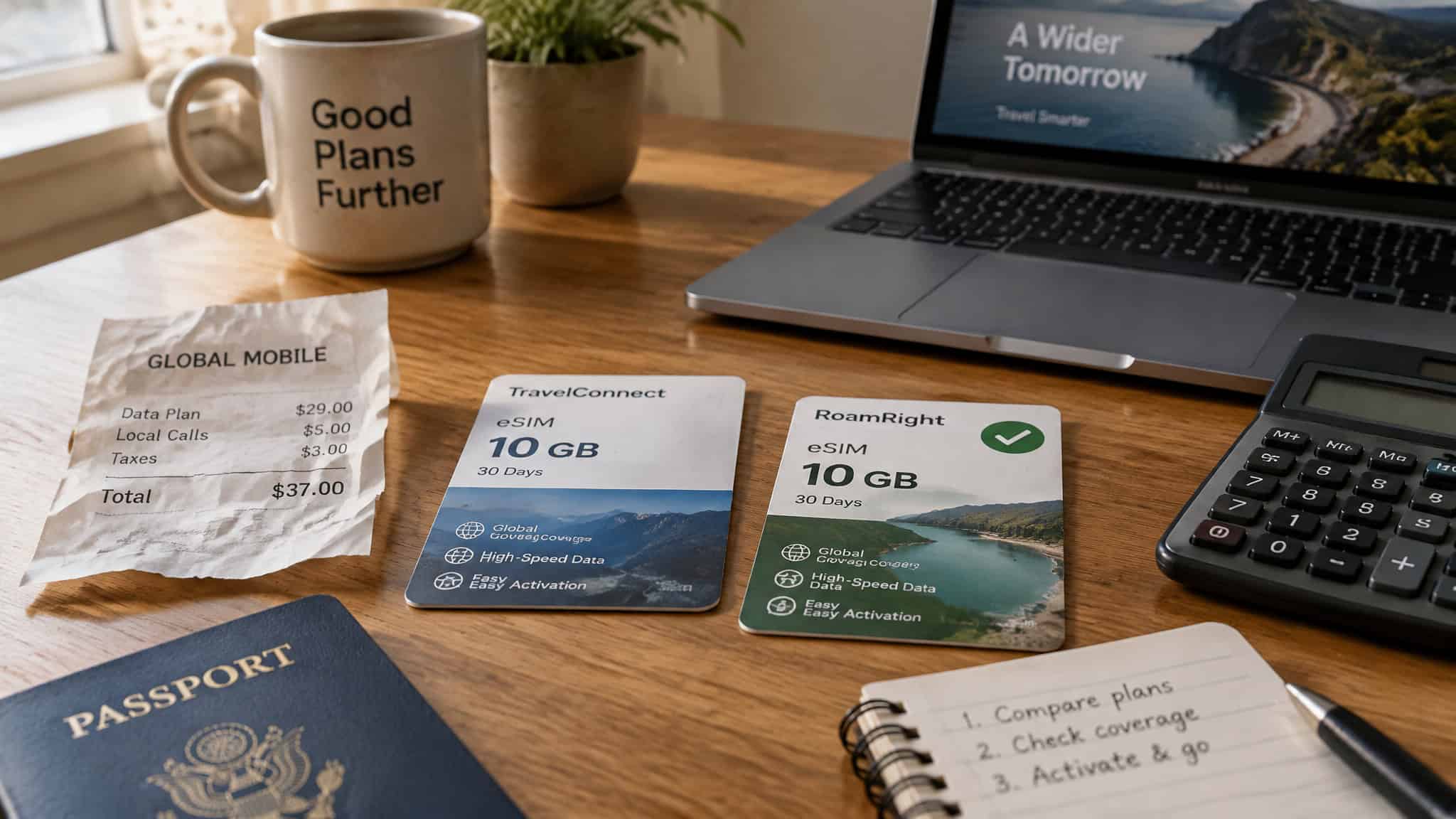
The math first. Jetpac’s 30GB/30-day Japan plan costs $29.99. Holafly runs roughly $80 for the same duration in Japan. If you’d use 25GB of that 30, Jetpac wins outright, and its data just runs at full speed the whole time with no threshold waiting for you. The app tracks your usage and sells top-ups if you misjudge it.
The counter-example is the UK. Technically Money ran a hands-on test of SimLocal’s UK unlimited eSIM at £25 for 14 days, with a claimed 10GB/day of high speed, a practical demonstration of how to use eSIM when travelling. The tester pulled roughly 250GB over two weeks with no observed throttling. That’s 40GB days, 10GB in a single hour streaming 4K, hot-spotting solid enough to work as home broadband backup. It works out to about 10p per GB, under £2/day, and the plan includes unlimited minutes and texts with a local number on EE, Orange, and Three. You’ll need coupon code TMONEY15 for the 15% discount.
Who unlimited actually suits
Cybernews ran a Jetpac versus Holafly head-to-head, deliberately tripping fair-use limits on iPhone 15s across multiple countries. Their call: Jetpac wins on price, flexibility, unrestricted hotspotting, and perks, with setup rated a tie. Holafly still makes sense for the solo traveler on one device who refuses to monitor usage, full stop.
Fixed-with-perks wins for everyone else. Jetpac’s SmartDelay perk gives you a free LoungeKey lounge voucher if a registered flight is delayed 60+ minutes, provided you register 24 hours ahead, and those passes normally run $40 to $80. Keep-alive keeps Google Maps and WhatsApp working even after your data runs out, and if it won’t connect at all, here’s a troubleshooting guide for eSIM not working abroad, which is the difference between an annoyance and being genuinely stuck.
Two honesty flags. SimLocal’s result is one UK test from a coupon-discounted source. Cybernews discloses affiliate links. Neither invalidates the numbers, but neither is a neutral lab either. There’s no universal winner here, only the plan that fits your trip.
Prohibited use and enforcement
Yes, personal hotspot is allowed on Airalo’s unlimited plans. What’s not allowed: reselling the plan or sharing it commercially, SIM farms and auto-diallers and bulk messaging, P2P traffic, hosting servers off your phone, or working around their network management. If you’re trying to VPN your way past the throttle, that’s against the rules too. Usage beyond what one person could reasonably consume can trigger action on its own.
Break the rules and Airalo can suspend or terminate your plan without a refund, without prior notice, under England and Wales law. Quibity enforces under San Marino regulation, and continued use after a policy update counts as accepting it. In plain terms: use it like a normal person and none of this will ever cross your radar.
The speed layers you don’t control
You can be slowed twice: once by your provider’s fair-use threshold, and again by the host network’s own traffic management during busy periods, which is outside the provider’s control and comes with no warranty of speed or availability. Geo-routing quirks are a third layer, as the Amazon Prime block from that Ollefly test showed.
Reset clocks, activation timing, and setup
Before the setup steps, two timing details decide how your unlimited plan behaves in practice: when your daily high-speed window refreshes, and when the plan’s validity starts counting. Get either wrong and you can burn fast data at the wrong hour or install too early.
When your allowance resets
Reset clocks differ in ways that actually matter. Airalo counts 24 hours from when you activated the eSIM. Quibity starts its window at your first network connection. Holafly reportedly resets at midnight, though that’s user-reported rather than official. So a 3GB window can refresh at a different local time each day, worth knowing before you time a big upload or a movie night.
One more wrinkle: some plans count validity from purchase, others from first connection. Know which before you install early.
Before you fly
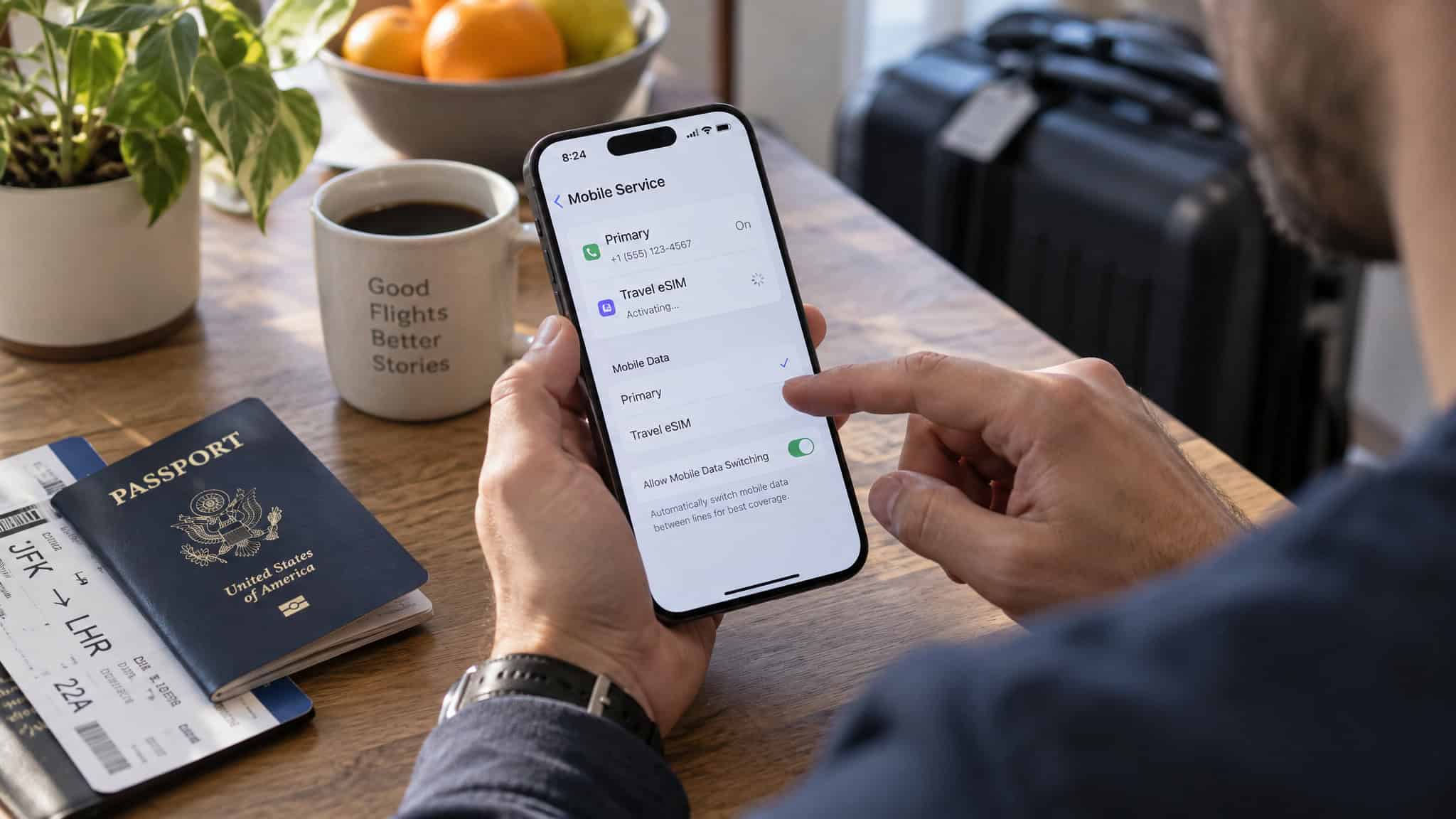
The phone has to be carrier-unlocked, and it has to support eSIM: iPhone XS onward, most 2020-and-later Android flagships, though some mainland-China phones don’t play ball. Install the eSIM before you leave, and set up dual SIM so your home number stays live for WhatsApp, iMessage, and FaceTime while data runs on the eSIM. For trips of a week or more, an eSIM beats buying a local SIM or eating roaming charges. And be careful with the install: a deleted or transferred eSIM may need repurchasing, so put it on the right phone the first time. Support exists if setup goes sideways, and your phone’s cellular settings will show usage if you want a low-tech check. The full walkthrough is in how to use eSIM when travelling.
Global unlimited, regional evidence, and how to read the reviews
Worldwide unlimited exists, sort of. “Global unlimited” is largely a patchwork of destination-specific allowances. Quibity’s varies by destination and local network conditions, and Airalo covers 200+ countries. The honest move is the same either way: check the destination plan page, not the marketing.
If you’re after Europe with calls, the UK evidence is strongest. Airalo is the only provider in this landscape offering UK calls and texts, riding EE, which has the widest UK coverage of the four networks that travel eSIMs access through wholesale deals. SimLocal includes unlimited minutes and texts with a local number, and Saily sits at 4.7 on Trustpilot. Most unlimited travel eSIMs are data-only, so WhatsApp and iMessage carry your messaging and local numbers are rare. Europe-wide and global specifics are thin in the available sources, so treat anything beyond the UK carefully.
Then read the sources with your eyes open. Cybernews deliberately tripped fair-use limits on iPhone 15s running iOS 26.4.1 and discloses affiliate links. Technically Money’s SimLocal test came with a coupon. Measured results, policy text, and affiliate-motivated reviews are three different animals, and it pays to know which one you’re reading.
As for “free unlimited eSIM” searches: nothing in the sourced landscape supports that tier existing with real terms behind it, so treat it as marketing noise until proven otherwise. The broader provider landscape is covered in best eSIM providers for international travel.
Bottom line: The plan page is the spec sheet. Threshold, throttle speed, hotspot rule — if one of the three is missing, keep shopping.
Bottom line
Buy unlimited only if you refuse to monitor usage and you’re traveling solo on one device. Otherwise a fixed plan with unrestricted hotspot and a safety net, like Jetpac’s keep-alive and top-ups, costs less and does more. UK travelers should look at tested options like SimLocal. Everyone else: read the plan page and the fair-use policy before you pay. That’s it.
Frequently Asked Questions
Which eSIM offers the best unlimited data plan for international travel?
There’s no universal winner — the best plan depends on how you use data. Holafly suits solo travelers who refuse to monitor usage, while Jetpac’s fixed-data plans win on price, flexibility, and unrestricted hotspotting in head-to-head testing. Check the plan page for the daily threshold, throttle speed, and hotspot rule before buying.
Which eSIM provider is best for international travel?
It depends on your priorities: Airalo if you need calls and texts, Saily for simplicity, Nomad for budget, Ubigi for group hotspot sharing, and Holafly if you’re a heavy user who refuses to count gigabytes. Trustpilot scores as of 1 June 2026 put Saily at 4.7, Holafly at 4.6, Nomad at 4.3, Ubigi at 4.2, and Airalo at 4.0 — context, not verdicts.
Is unlimited eSIM data for international travel really unlimited or does it get throttled?
It gets throttled — every unlimited travel eSIM carries a fair use policy and cuts your speed after a daily threshold, with no provider exception. The severity varies wildly: Airalo’s 1 Mbps throttle still supports messaging, maps, and lower-quality video calls, while one Ollefly stress test saw speeds fall to 0.07 Mbps, which is effectively stranded.
When is an unlimited eSIM plan a waste of money compared to a fixed-data plan?
When you’d actually use the data a fixed plan provides. Jetpac’s 30GB/30-day Japan plan costs $29.99 versus roughly $80 for Holafly over the same duration — if you’d use 25GB of that 30, Jetpac wins outright, and its data runs at full speed the whole time with no threshold waiting for you. Unlimited is really speed insurance: you’re paying a premium to never be cut off entirely.