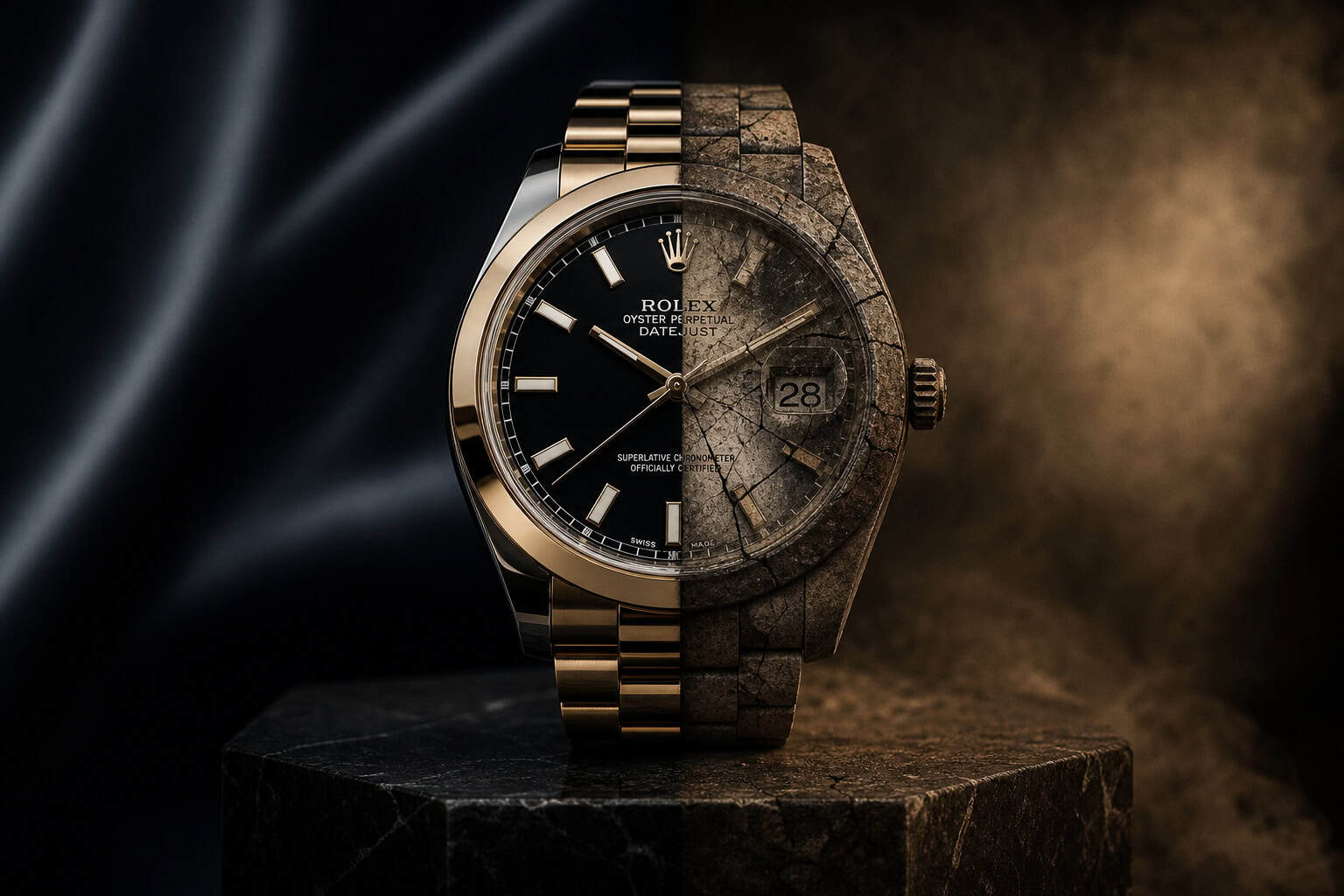
You find a watch you’ve been eyeing. The price is hundreds below retail—a discount that often signals an unauthorized seller. The site looks professional—clean product shots, a polished logo, glowing reviews that may be fabricated. That surface-level polish? That’s the trap—counterfeit sellers invest in appearance, not authenticity.
Online watch shopping gives you more selection, better prices, and the convenience of browsing from your couch. One mistake—a counterfeit, the wrong size, a worthless warranty—can cost you thousands, as Jody Millhouse lost £9,000 on a Hublot Big Bang. I’ve seen enough readers write in asking “How do I get my money back?” to know the anxiety is justified—unauthorized sellers void manufacturer warranties.
The fix isn’t complicated, but it requires treating every purchase like a verification exercise against the brand’s authorized dealer list. The brand’s own rules are your truth-check, not the seller’s promises—Patek Philippe and Rolex prohibit online sales entirely. Here’s how to do it right, step by step.
Key Takeaways
Patek Philippe and Rolex prohibit all online sales by authorized dealers—any listing you see is unauthorized, meaning no manufacturer warranty.
Water resistance ratings are deceptive: 100 meters means surface swimming only, not diving, and steam from a shower will damage seals on any watch.
A single hype-driven purchase can lose 50% of its value in months—Jody Millhouse’s £18,000 Hublot Big Bang was worth half that after a boozy lunch in Mykonos.
Table of Contents
Step 1: Verify the Seller Is an Authorized Retailer
Here’s a rule that catches most first-time buyers: Patek Philippe and Rolex do not allow their watches to be sold online. Period. If you see a listing for either brand on any website that isn’t the brand’s own e-commerce site, it is not an authorized dealer—Rolex and Patek Philippe enforce this policy strictly. That isn’t a gray area. It’s a hard policy—no authorized dealer may sell these brands online.
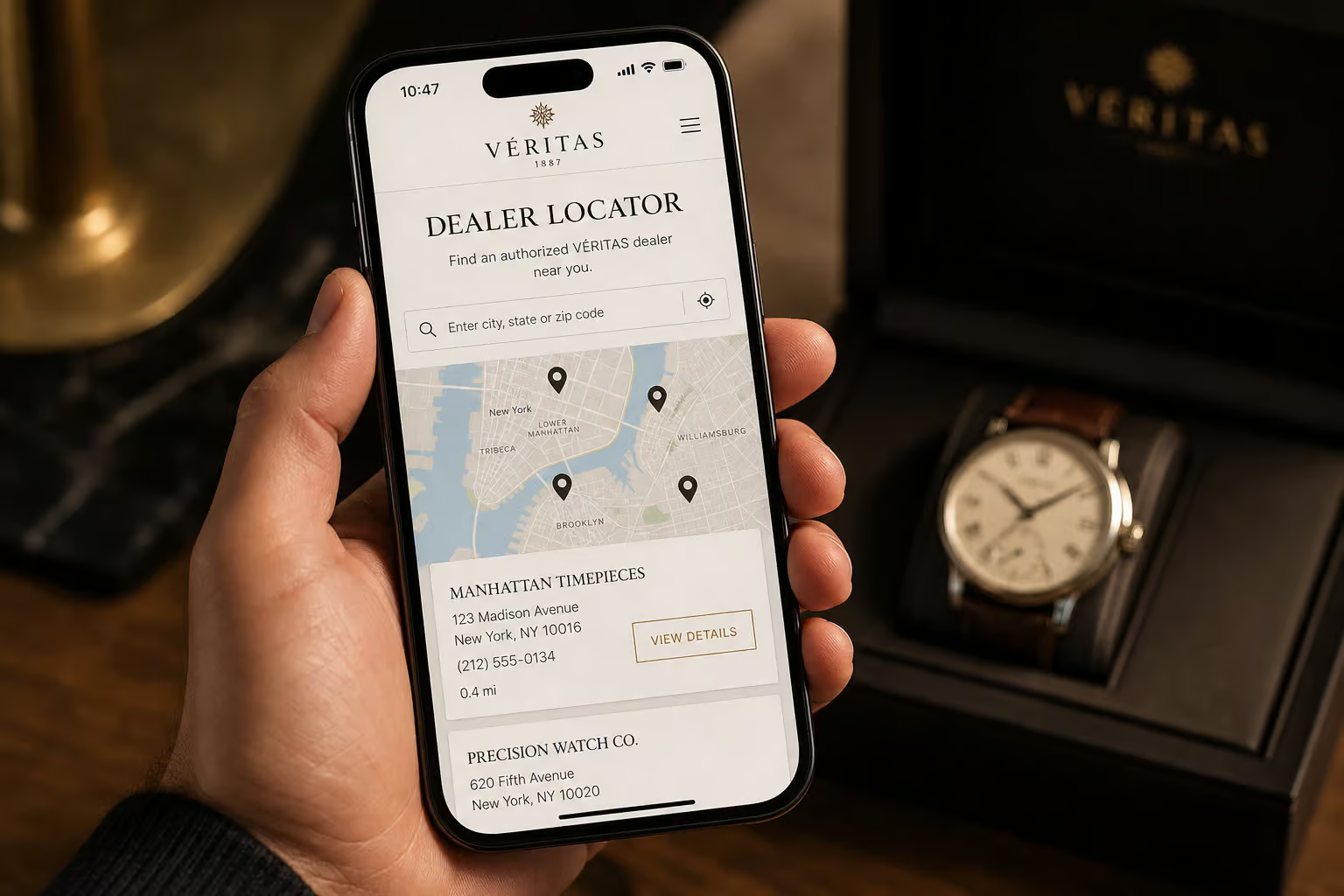
Why does that matter? Watch companies will not honor the warranty unless you bought from an authorized retailer—Rolex and Patek Philippe void coverage for unauthorized purchases. Without that authorized status, you’re buying a very expensive paperweight with no manufacturer support—no service center will accept it under warranty.
The fix takes two minutes—visit the brand’s website and check their dealer locator. Go to the brand’s official website and find their dealer locator or authorized retailer list—Rolex lists authorized dealers on rolex.com. Cross-reference the seller. If the seller is authorized, they’ll usually say so on their site—look for “Authorized Dealer” in the footer or about page.
If you can’t confirm it, you are buying without a manufacturer warranty—Rolex and Patek Philippe will not cover the watch. That’s a gamble, not a purchase—you risk losing the full price if the watch fails.
Some brands sell directly from their own e-commerce store—that’s the surest route to a genuine watch with full coverage, as with Rolex‘s own site. Otherwise, stick to the list of authorized retailers on the brand’s website.
Quick test: A brand’s dealer locator is your truth-check. If the seller isn’t listed there, you have zero manufacturer warranty—no exceptions.
Step 2: Know What Warranty You’re Actually Getting
You see “warranty included” on the product page and feel safe—but it may be a third-party warranty, not the manufacturer’s. But whose warranty? Most watch companies offer at least a two-year manufacturer warranty—Rolex offers five years on new watches. That’s the gold standard—backed by the brand’s service network.
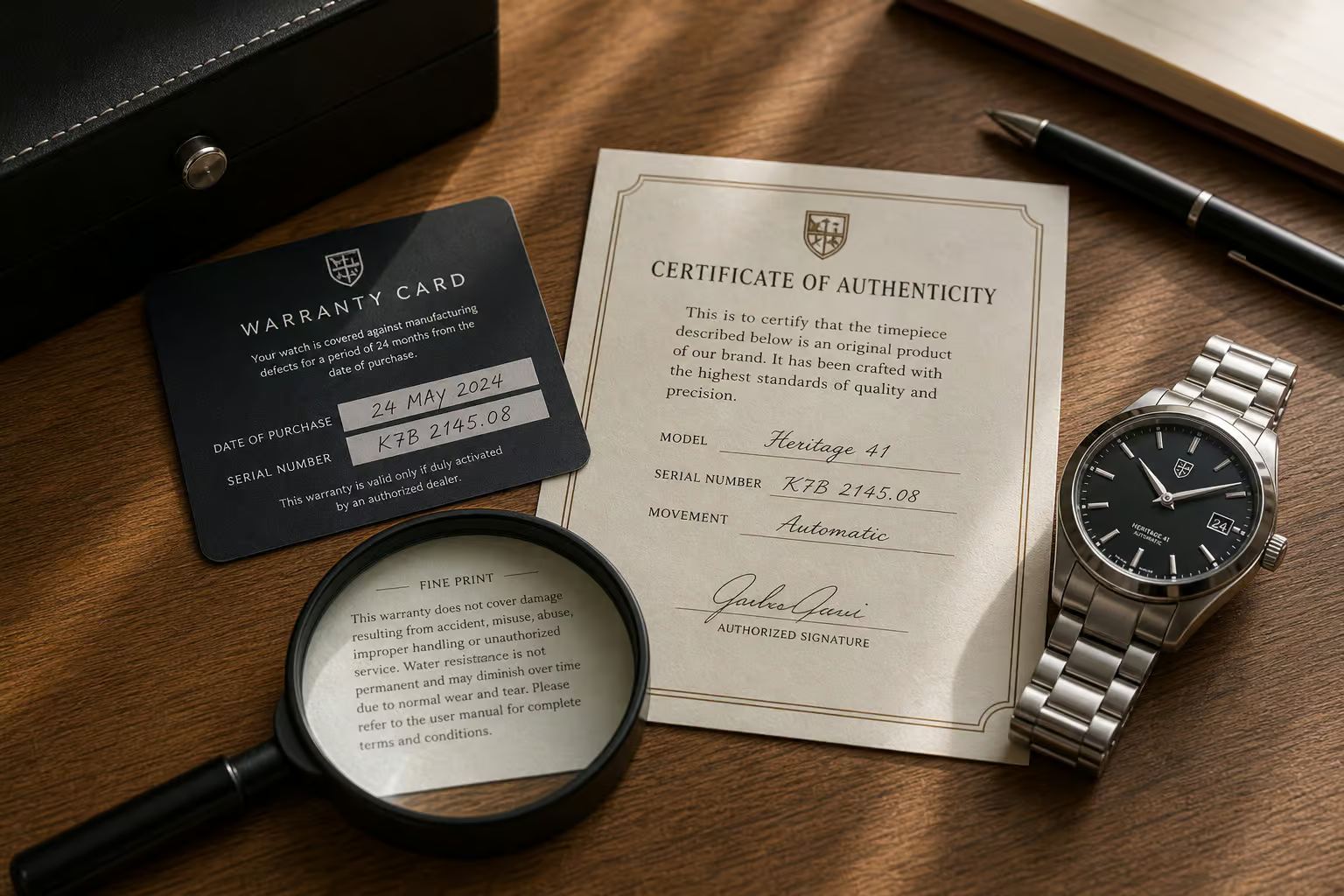
But it only applies if you bought from an authorized dealer—Rolex and Patek Philippe void the warranty otherwise. Buy from an unauthorized seller and that warranty is void—even if the watch is brand new in the box, as Rolex requires authorized purchase for coverage. For a guaranteed factory warranty, consider The Watch Pages SHOP—they are an authorized retailer for every brand they sell and offer a two-year manufacturer warranty.
Some gray-market sellers get around this by offering their own warranty—Jomashop provides its own warranty instead of the manufacturer’s. Jomashop, for example, provides its own warranty rather than the manufacturer’s—meaning no Rolex or Patek Philippe service center will accept it. Bob’s Watches, on the other hand, offers both the manufacturer’s warranty and its own—double coverage for Rolex watches. The catch with third-party warranties: they’re only as good as the company behind them—if Jomashop goes under, so does your coverage. If that company goes under, so does your coverage—no recourse to the manufacturer.
Why the manufacturer warranty matters most
The manufacturer warranty is backed by the brand itself—Rolex service centers honor it directly. If something goes wrong, you send it to an authorized service center—Rolex has service centers in 40+ countries. With a third-party warranty, you’re relying on a middleman who may or may not be around in two years—Jomashop has been in business since 1987, but many others have not.
Gray-market sellers and the warranty trade-off
Gray market means the seller is not an authorized dealer but still sells genuine watches—often at lower prices, as with Jomashop‘s Rolex listings. The trade-off is clear: you save money upfront, but you lose the manufacturer’s warranty—Rolex will not service a gray-market watch under warranty. Some shoppers are fine with that risk—they accept the gamble for a lower price. Just know what you’re giving up—manufacturer service and resale value.
Before you buy, ask in writing: “Is this the manufacturer’s warranty or yours?” If they won’t answer clearly, walk—a reputable seller will state the warranty terms explicitly.
Step 3: Get the Size Right Before You Click “Buy”
Kevin Roberts, founder of the Red Bar watch community, ordered two 38mm Ming watches—each with a £4,000 deposit. He has large wrists—over 7 inches in circumference. When the watches arrived, they looked comically small—the 38mm case was dwarfed by his wrist. He’d paid £4,000 deposits on each, held for about 12 months, then another £4,000 when they shipped—total £8,000 lost on sizing alone. Eight thousand pounds lost on sizing alone—because he didn’t measure lug-to-lug distance.
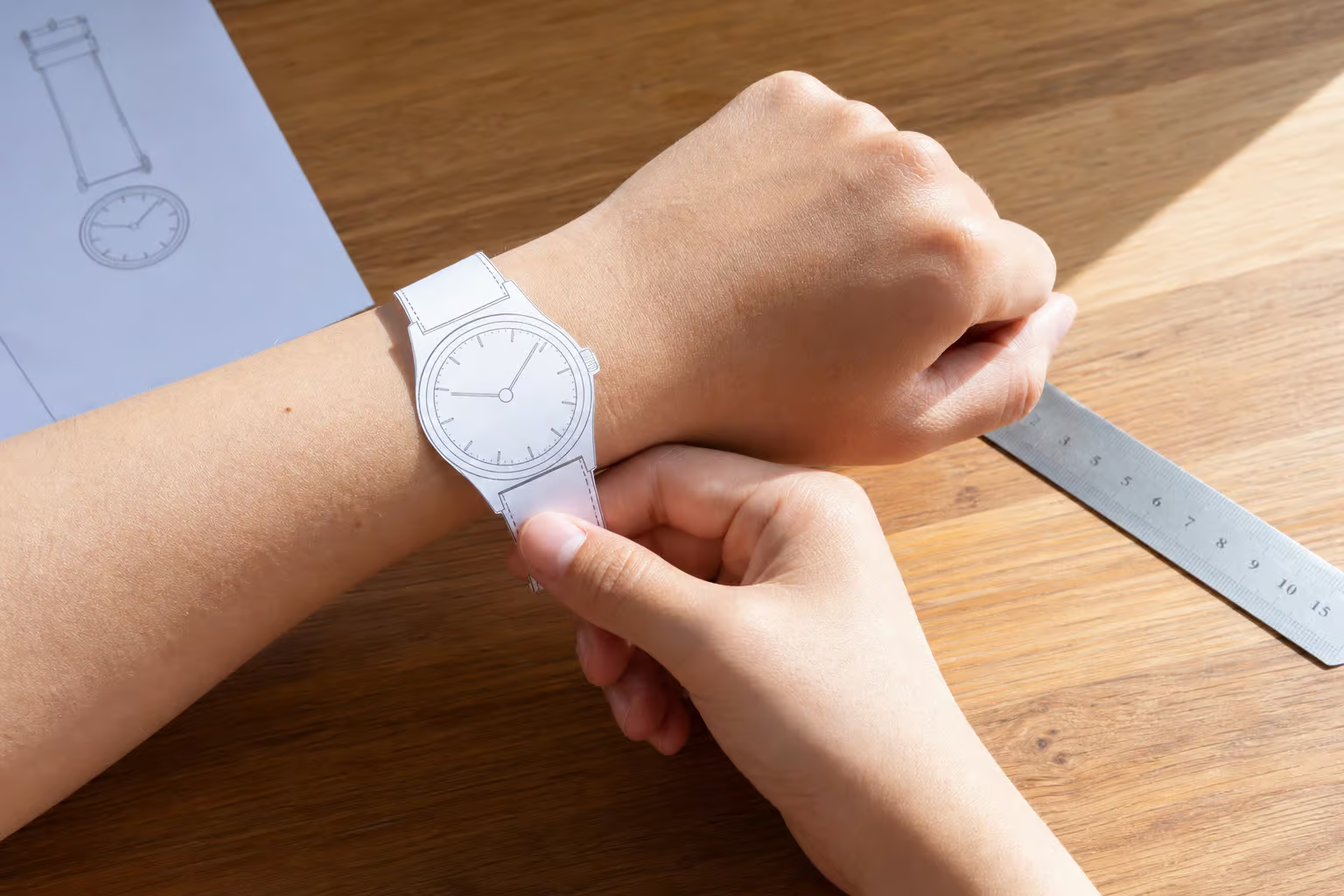
Case diameter alone doesn’t tell you how a watch wears—lug-to-lug distance and wrist shape matter more. Lug-to-lug distance—the measurement from one end of the strap attachment to the other—and your wrist shape matter more; a 42mm watch with short lugs can wear smaller than a 40mm with long lugs. A 42mm watch with short lugs can wear smaller than a 40mm with long lugs—Kevin Roberts’ Ming had 46mm lug-to-lug on a 38mm case.
The easiest trick: print a paper cutout of the watch’s actual dimensions—use the case diameter and lug-to-lug from the spec sheet. Place it on your wrist—compare it to your wrist width for proportion. Does it look proportional? If you have access to a physical store, try on a watch with similar dimensions—same case diameter and lug-to-lug—to get a feel for the size.
Strap material also affects fit—leather straps add bulk, metal bracelets feel heavier. Leather straps can be damaged by sweat, so swap them for nylon or mesh in summer—sweat accelerates cracking. Metal bracelets work year-round—316L stainless steel resists corrosion from sweat. Rubber straps can dress up surprisingly well with a sharp suit—if the watch case is polished and slim. But the core rule remains: measure twice, buy once—Kevin Roberts’ £8,000 mistake proves it.
Cost check: A sizing mistake can cost you the full purchase price. Print a paper cutout of the lug-to-lug and case diameter, then place it on your wrist before you click buy.
Step 4: Decode the Spec Sheet: Movement, Water Resistance, and Materials
Product pages are full of numbers that sound impressive but mean little without context—water resistance ratings are tested statically, not in real-world conditions. Let’s translate them.
Quartz, automatic, or mechanical: which movement fits your life?
- Quartz runs on a battery, lasts 12–36 months, and is the most accurate option. It’s also typically the cheapest—a quartz movement costs $10–$50 versus $200+ for automatic.
- Automatic winds itself as you move your wrist. If you don’t wear it daily, you’ll need a watch winder to keep it running—otherwise it stops after 24–48 hours.
- Mechanical requires daily hand-winding. Some people love the ritual; others find it tedious—mechanical watches have no battery or rotor.
Choose based on how often you’ll wear the watch and whether you mind a daily winding habit—quartz is best for infrequent wear.
What water resistance numbers really mean
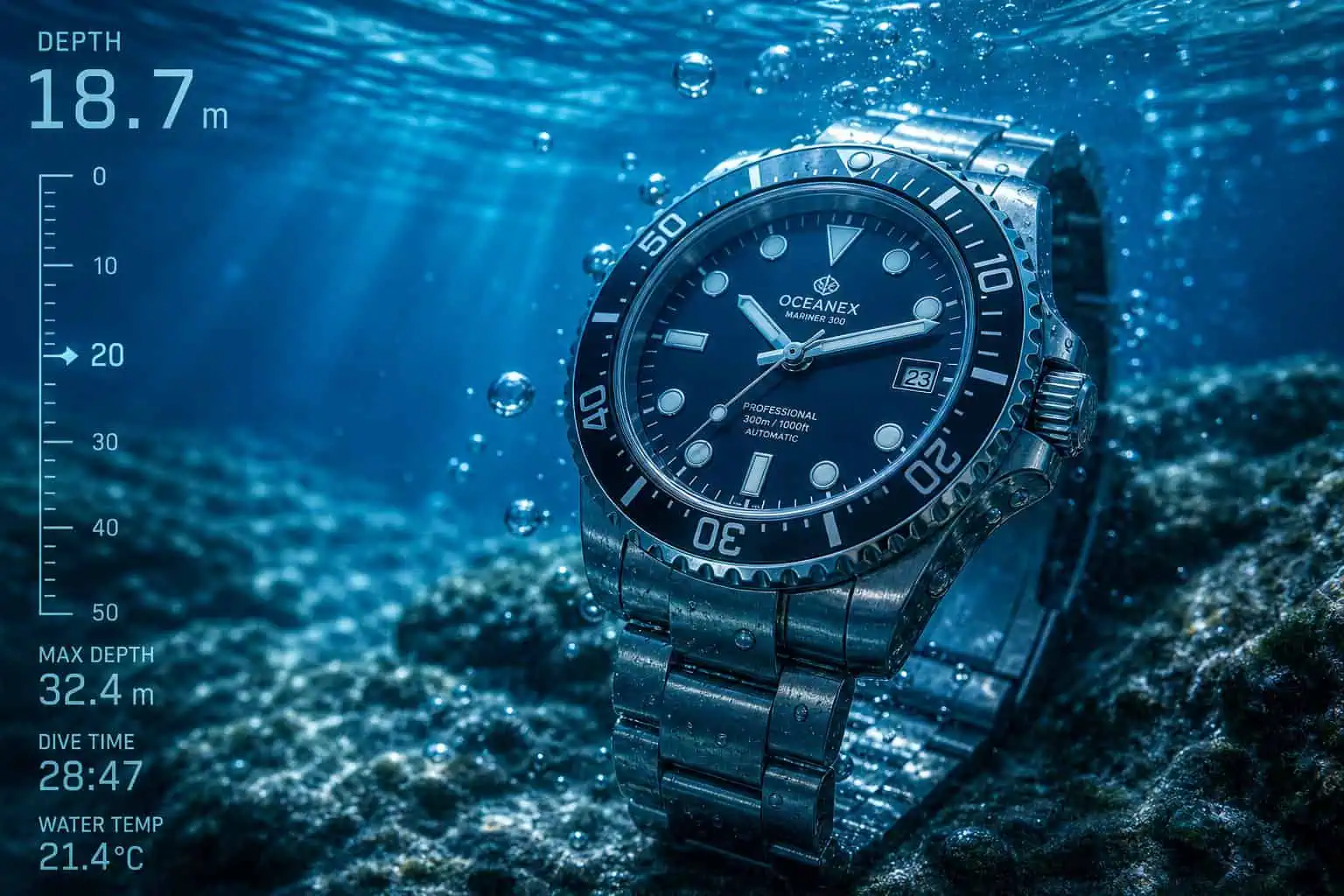
This is the most deceptive spec on any product page—water resistance is tested in static water, not moving water. A rating of 100 meters doesn’t mean you can dive to 100 meters—it’s a static lab test, not real-world use; swimming adds dynamic pressure. Here’s the actual breakdown—based on ISO 2281 standards:
- No rating – Keep it dry.
- 30 meters – Splashproof. Fine for rain, not for swimming—submersion can force water past the gaskets.
- 50 meters – You can put it in water, but don’t swim with it.
- 100 meters – Surface swimming is okay. No diving.
- 200 meters – As close to waterproof as you’ll get without a dedicated dive watch.
One universal rule: don’t shower with any watch—steam and soap degrade the gaskets over time. Steam and soap degrade the seals over time, regardless of the rating—hot water expands the case, letting moisture in.
Quality cues that product photos don’t show
When you can’t hold the watch, look for these signs—based on watchmaker standards:
- 316L stainless steel is the industry standard for quality. Almost all steel watches use it—316L contains molybdenum for corrosion resistance.
- Solid bracelet links – Avoid hollow or folded links; they feel cheap and wear out faster.
- Signed crown, buckle, and clasp – The watchmaker’s name should appear on the dial, caseback, crown, and clasp. Unsigned parts indicate generic parts-bin assembly—cheaper watches use off-the-shelf components.
- Double or triple locking clasp – Single locking clasps can snap open. If you’re buying a metal bracelet, this matters—a clasp failure can drop the watch.
- Lume – Good lume means large, richly applied luminous surfaces—Super-LumiNova is the standard for modern watches. Check photos in low light—lume should glow evenly for 6–8 hours.
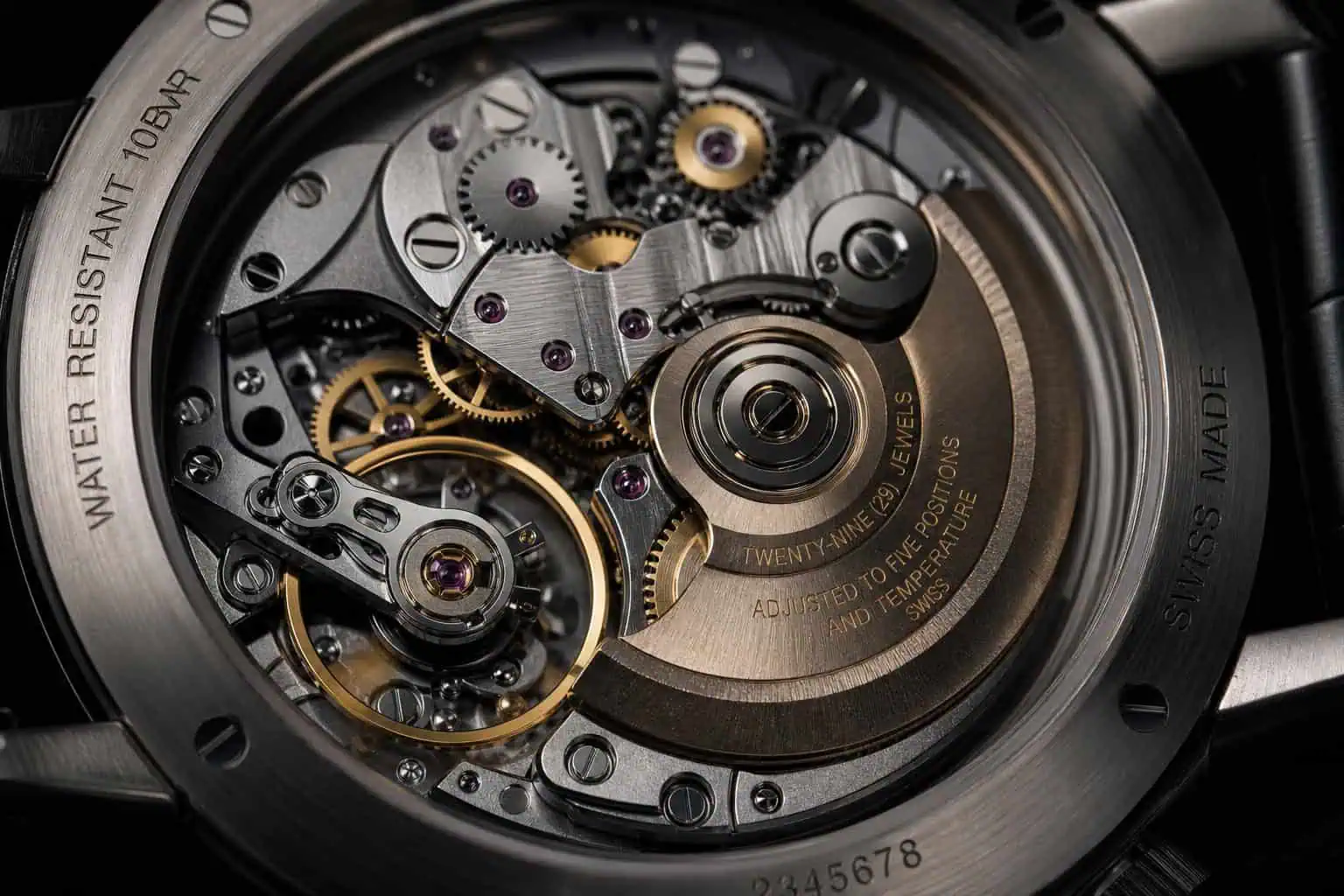
- COSC certification – A Swiss chronometer certification earned after 15 days of testing in 5 positions at 3 temperatures. It’s a quality signal—only 3% of Swiss watches are COSC-certified.
- Seal of Geneva – Only about 24,000 out of 30 million Swiss watches per year receive this. It’s rare and indicates top-tier movement finishing—hand-finished anglage and perlage.
Now when you read a product page, you know what each number actually means—water resistance, movement type, and material quality. Fashion watches may have superfluous or vestigial design cues, so it pays to focus on pieces designed by actual watchmakers. Keep the Ultimate Watch Checklist handy when evaluating any new purchase.
Step 5: Buy for Yourself, Not the Hype
Jody Millhouse was on vacation in Mykonos—a Greek island known for nightlife. After a boozy lunch, he walked into a Hublot boutique and dropped £18,000 on a Big Bang—a luxury chronograph. A few months later, he sold it at a 50% loss—losing £9,000 on the resale.
Georgia Benjamin bought seven Swatch MoonSwatches during the hype cycle—each priced at $260 retail. Now she wishes she’d bought a Studio Underd0g or a Must de Cartier instead—watches with more lasting value.
I’ve seen this pattern over and over—hype-driven purchases lose value quickly. A buzzy watch drops, everyone wants it, and a year later half those buyers are trying to sell at a loss—the MoonSwatch hype faded within 6 months. Hype-driven purchases are almost always regretted once the noise fades—Jody Millhouse’s £9,000 loss proves it.
Chrono24‘s price index shows real-time transaction data, but a good mens watch buying guide can also help you stop guessing. A Hublot Big Bang lost half its value in months—that’s not a rare exception; many hype watches drop 30–50% in the first year. If you wouldn’t want the watch in three years without the hype, don’t buy it now—Georgia Benjamin regrets her seven MoonSwatches.
Your wrist, your taste, your money—don’t let Instagram decide. Don’t let Instagram decide—influencers are paid to hype watches. Watchfinder regularly highlights how hype distorts value, and Tim Stracke has written extensively on the same pitfalls. Even a FTSE 100 company can be caught up in a hype cycle.
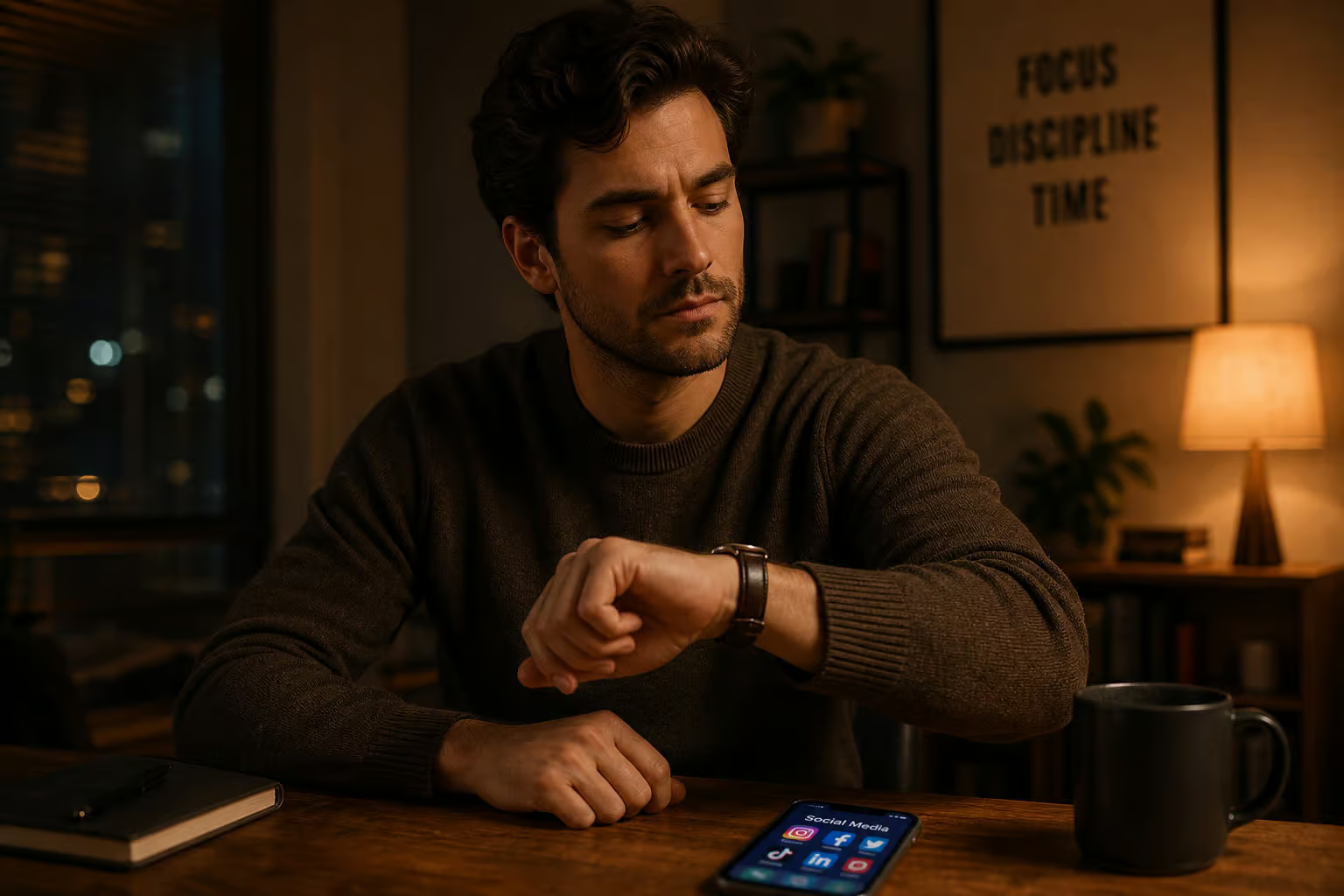
Red flag: If you wouldn’t want the watch in three years without the buzz, don’t buy it now. Hype fades; your bank account doesn’t forget.
Step 6: Pre-Owned Strategy: Trust the Condition, Not the Box
Everyone says box and papers are essential for authentication—but blank papers can be bought on eBay. Elias Marte, a watch collector, disagrees—and he has a point: blank papers are sold on eBay for $20. Blank papers can be bought on eBay—for as little as $20. That cardboard box and those documents in the listing photos? They might tell you nothing about the watch’s authenticity—serial numbers on the movement are the real proof.
Instead, focus on the actual condition of the watch and the seller’s reputation—Elias Marte recommends opening the caseback. If the seller can open the caseback and show you the movement, that’s worth more than a full set of packaging—the movement reveals authenticity markers. Inner markings, serial numbers stamped on the movement, and consistent wear patterns are real evidence—Rolex movements have unique serial numbers. Negotiation tip: On platforms like Chrono24, you can often make an offer 10-15% below asking. Also, beware of ‘super clone’ replicas—they are marketed as 1:1 accurate but are illegal counterfeits.
From a trusted dealer, you can often get a better deal on a watch without box and papers—savings of 10–20% are common. The savings are real, and the risk is lower than you’d think—provided you’re buying from someone with a long track record, like Bob’s Watches (founded 1999). When buying pre-owned, check the dealer’s reputation, the watch’s condition, and the price against retail new—Chrono24 lists both new and used prices.
Pay for the watch, not the packaging—Elias Marte’s approach saves money. Buying new is less risky assuming the dealer is licensed, but pre-owned can offer significant savings.

Step 7: Choose the Right Marketplace and Understand Its Protections
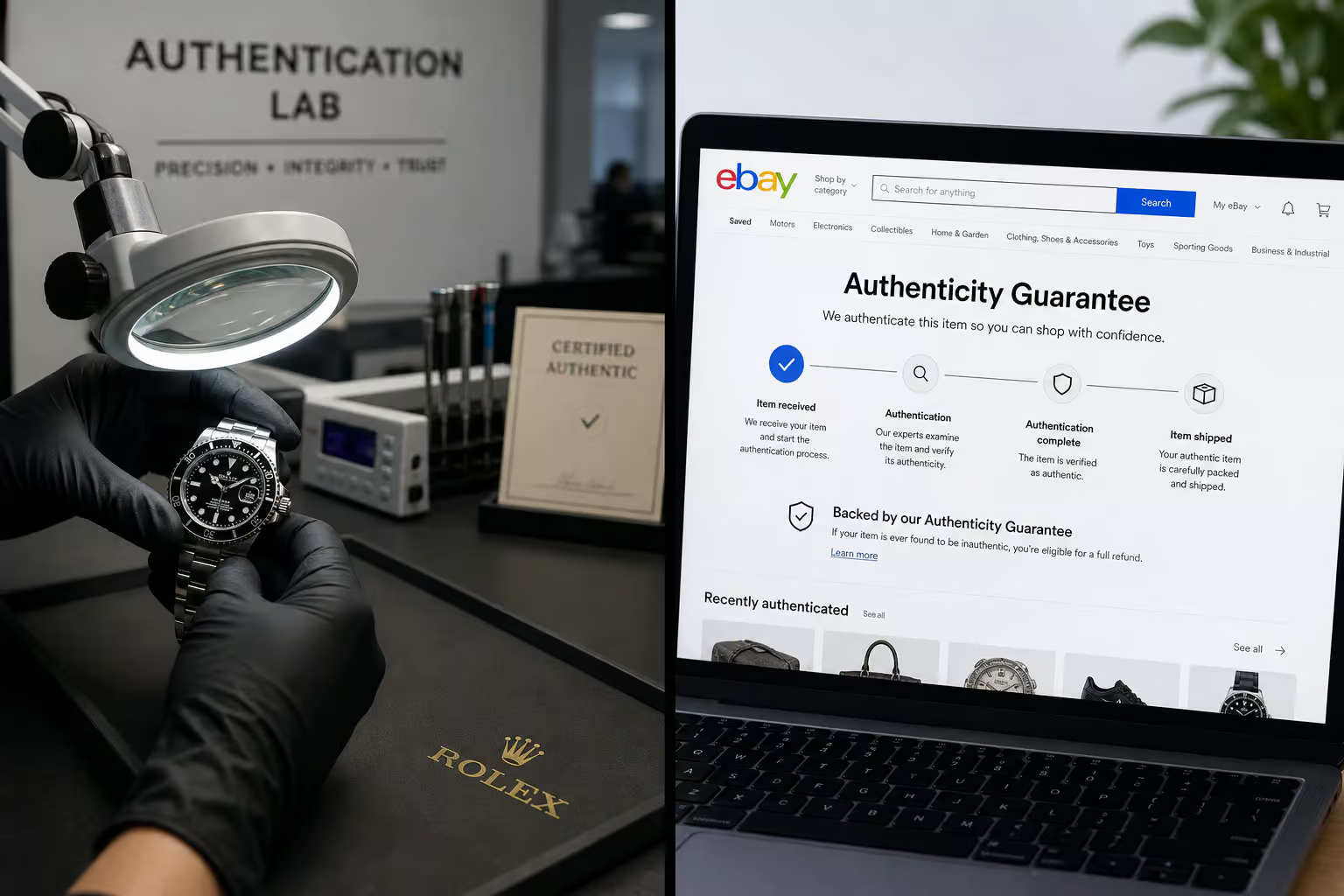
The safest marketplaces are the ones that handle authentication themselves—eBay, StockX, and Bob’s Watches all verify watches. Here’s how the major players stack up—based on authentication and return policies:
Authentication-first marketplaces
- eBay – Sellers send the watch to eBay’s authentication team before the listing goes live. eBay holds the item while listed, so you’re never dealing directly with the seller until after authentication—this prevents bait-and-switch.
- StockX – Verifies every watch by an expert before shipping. The process is similar to their sneaker authentication—using trained authenticators.
- Bob’s Watches – Specializes in pre-owned Rolex. Shows both buying and selling prices transparently—listing both buy and sell prices for each model. Provides the manufacturer’s warranty plus its own—double coverage for Rolex watches.
Department stores and their return policies
If you want a safety net, department stores have you covered—though their luxury selection varies; Saks Fifth Avenue carries Rolex, Neiman Marcus does not.
- Saks Fifth Avenue – 30-day return window for a full refund.
- Neiman Marcus – 30-day return policy with a 10-day price adjustment window. Buy now, and if the price drops within 10 days, you can get the difference back—Neiman Marcus processes the refund automatically.
- Nordstrom – Handles returns case by case. Known for being flexible, often extending beyond 30 days—up to 90 days in some cases. Note: Nordstrom doesn’t carry top-tier luxury brands like Rolex or Audemars Piguet, but they do have designer options like Gucci and Versace—Gucci watches start at $350.
The common thread: if a seller insists you pay outside the platform’s process—via wire transfer, direct Venmo, or crypto—that’s the number-one red flag; eBay and StockX prohibit off-platform payments. The RealReal requires users to sign up for a free account to shop, and it also has in-store locations for those who prefer to see items in person. Brands like Panerai and Tudor are often available on these platforms.
Step 8: Pay Securely and Protect Your Purchase
The real safety net isn’t on the seller’s site—it’s on your credit card statement; Visa and Mastercard offer chargeback rights. Credit cards and PayPal offer buyer protection through chargeback mechanisms—PayPal‘s Buyer Protection covers items up to $20,000. If the watch never arrives, arrives damaged, or turns out to be fake, you can dispute the charge and get your money back—Visa‘s chargeback window is 120 days.
Cash, wire transfers, and cryptocurrency offer no recourse—wire transfers are irreversible once sent. Avoid them for watch purchases—use credit cards or PayPal instead.
Beyond payment, take these practical steps—based on buyer protection best practices:
- Use shipping with tracking and insurance – No exceptions. Know where your watch is at every point—tracking updates every 2–4 hours.
- Keep records – Save the serial number, receipt, and certificate of authenticity. Those documents are your evidence for returns, disputes, and insurance claims—without them, you have no proof of purchase.
- If the price seems too good to be true, it almost certainly is – Reputable retailers provide a certificate of authenticity and a return policy for counterfeits—Bob’s Watches offers a 100% authenticity guarantee. If those are missing, something’s off—walk away from the deal.
This is the boring part, but it’s the one that saves your money—credit card chargebacks have saved buyers millions.
Bottom line: Pay with a credit card, not a wire transfer. Visa and Mastercard give you 120 days to dispute a bad purchase—that’s your real warranty.
The bottom line
Eight steps, and none of them are complicated—verify, measure, decode, buy for yourself, choose the right marketplace, pay securely, keep records. Verify the seller’s authorization—check the brand’s dealer list. Know whose warranty you’re getting—manufacturer or third-party. Measure your wrist and decode the specs—lug-to-lug and water resistance. Buy for yourself, not the hype—check resale value on Chrono24.
Choose a marketplace that authenticates—eBay, StockX, or Bob’s Watches. Pay with a credit card—Visa or Mastercard for chargeback protection. Do these things and you’ll buy with confidence—not anxiety—knowing your purchase is protected.
The right watch is out there—verified, warranted, and sized correctly. You just need to find it without getting burned—follow these eight steps.
People Also Ask
What is the best website to buy watches?
The safest marketplaces are those that handle authentication themselves, like eBay, StockX, and Bob’s Watches. eBay and StockX verify every watch before it ships, and Bob’s Watches specializes in pre-owned Rolex with transparent pricing and double warranty coverage. For new watches, buying directly from the brand’s own e-commerce site is the surest route to a genuine watch with full manufacturer coverage.
Is it better to buy a watch in store or online?
Online gives you better selection, better prices, and convenience, but in-store lets you try on the watch and verify the seller is an authorized dealer on the spot. The risk with online is counterfeit watches, voided warranties, and sizing mistakes—Kevin Roberts lost £8,000 on two watches that were too small for his wrist. If you buy online, use authentication marketplaces and pay with a credit card for chargeback protection.
Where can I buy genuine watches online?
Buy from the brand’s own e-commerce site or from authorized dealers listed on the brand’s official website. For pre-owned watches, use authentication-first marketplaces like eBay, StockX, or Bob’s Watches that verify every watch before shipping. Avoid any seller that isn’t on the brand’s dealer locator—Rolex and Patek Philippe prohibit online sales by authorized dealers entirely, so any listing you see for those brands is unauthorized.
What does 100 meters water resistance actually mean on a watch?
A 100-meter water resistance rating means surface swimming is okay, but not diving—the rating is based on static lab tests, not real-world dynamic pressure. Swimming adds movement that increases pressure on the seals, so 100 meters is not enough for scuba diving. And regardless of the rating, never shower with any watch—steam and soap degrade the gaskets over time.