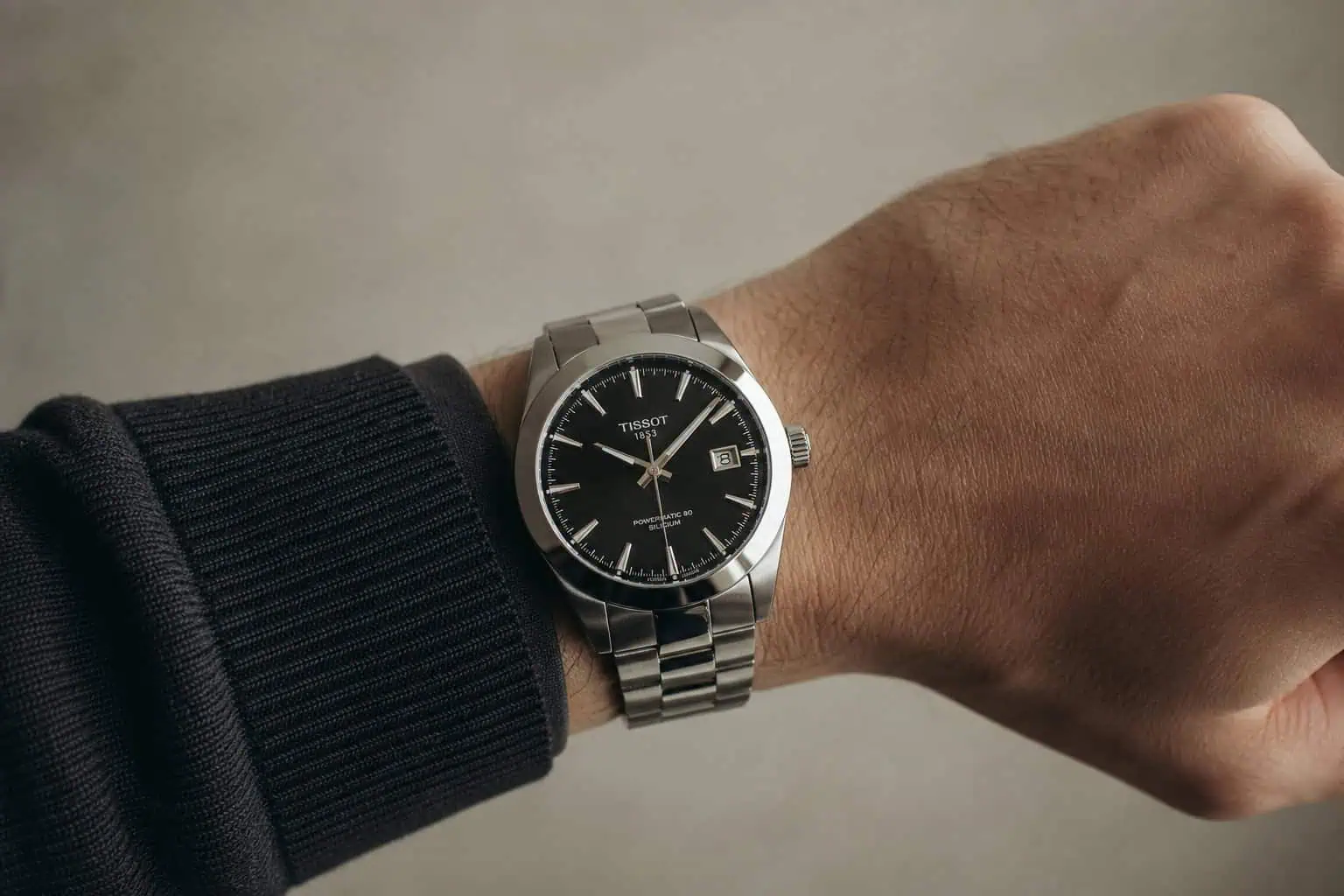
You can save 20–40% off retail by buying a watch online instead of in a boutique. But that discount comes with risks: counterfeits, gray-market sellers with no manufacturer warranty, watches that arrive looking nothing like the photos, and impulse buys that looked great on screen but feel wrong on your wrist.
The good news is that these problems are avoidable with research and patience. The bad news? Many buyers skip steps like verifying the seller’s authorization or checking the serial number, and that’s how mistakes happen.
Buying a watch online isn’t like buying a toaster. A toaster you can return. A watch you might be stuck with for years, or one that depreciates by 50% within months like Jody Millhouse’s Hublot Big Bang. So before you click “buy,” you need to understand what you’re paying for, and what risks you’re accepting.
The process runs from determining your budget and priorities to verifying the serial number matches the certificate.
Table of Contents
Step 1: Know What You’re Working With
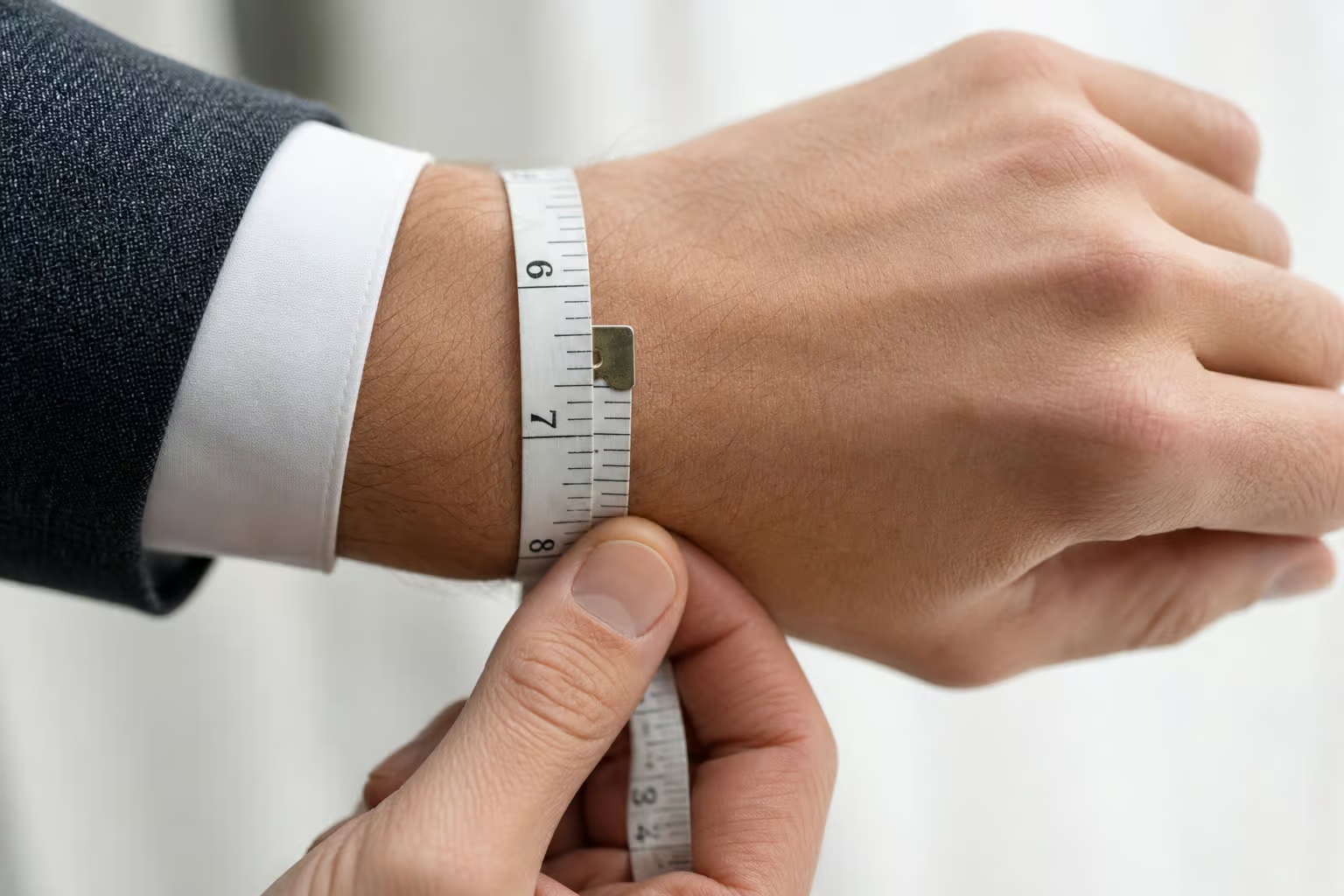
Before you even open a browser tab, measure your wrist with a tape or a piece of string. Wrist size determines whether a watch will wear like a bracelet or a dinner plate. A 38mm watch on a 7-inch wrist can look perfect; the same watch on a 6-inch wrist can look comically large. Kevin Roberts learned this the hard way when he bought two Ming watches at £4,000 each, only to realize a 38mm case was too small for his larger wrists. That’s £8,000 tied up in watches that didn’t fit, with a 12-month deposit lock-in.
Know your wrist. Measure it with a tape or a piece of string. Compare that measurement to the watch’s lug-to-lug distance, case height, and overall profile. A watch that fits well feels like part of you, not an accessory you’re adjusting.
Decide whether you need a daily workhorse, a dress piece for formal occasions, or a tool for the gym. Is it a daily workhorse? A dress piece for weddings and dinners? A tool for the gym? The answer determines your budget, features, and acceptable tradeoffs.
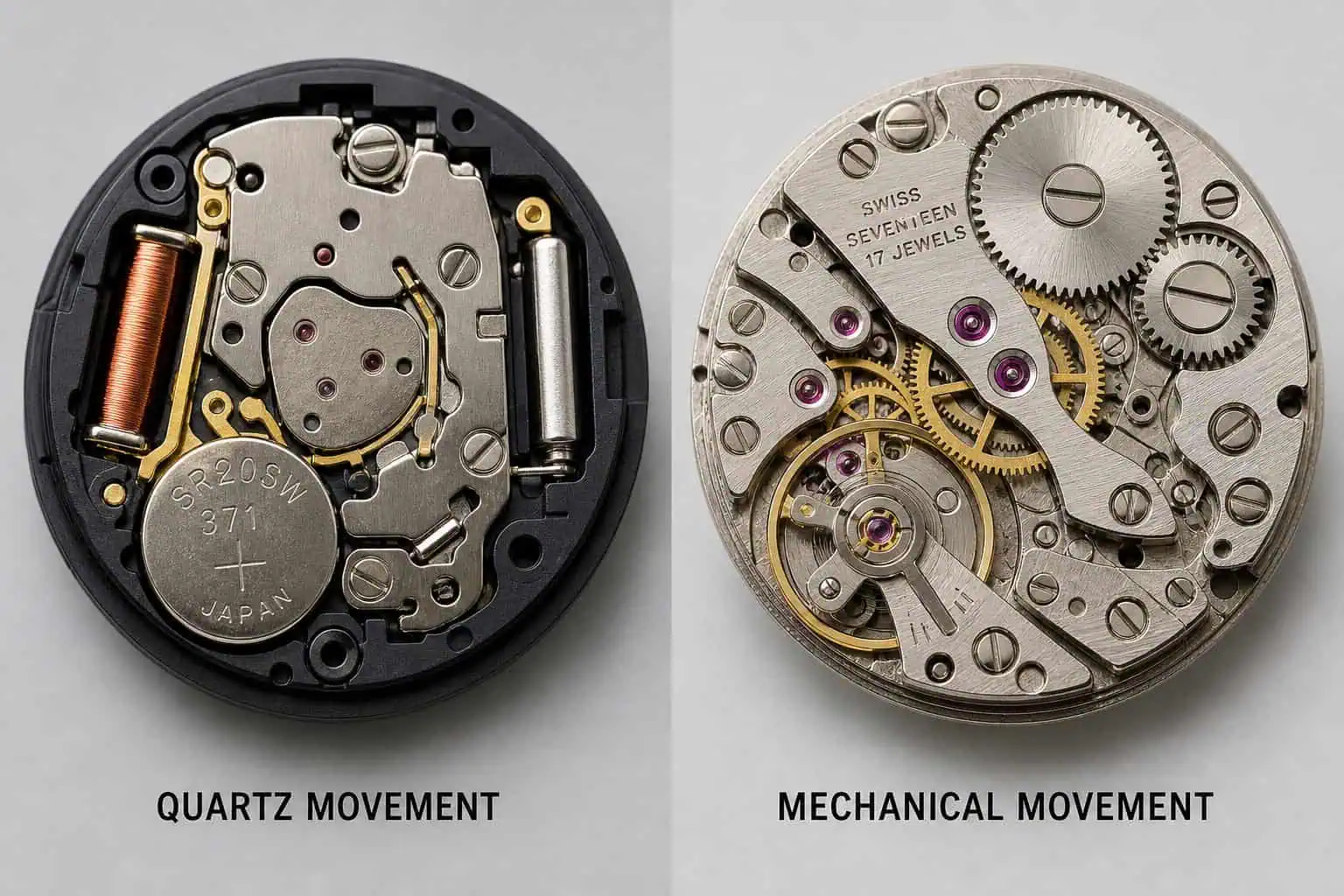
Analog or digital? Quartz or mechanical? These are real forks in the road. Analog watches can be more versatile—you can swap straps, they often last decades, and they catch the eye. Digital watches are practical for specific uses: running, diving, or when you need a timer or alarm without fussing.
Quartz watches are accurate, cheap, and require battery replacement every 12 to 36 months. Mechanical watches are a different beast—they need winding or wrist movement to keep running, and they’re sensitive to shocks and magnetism. They’re also more expensive. But for many, the craftsmanship and the ritual of winding a mechanical watch is the point.
If you want a watch that tells the time and nothing else, go quartz. If you want a watch that feels alive, go mechanical.
And if you want the convenience of digital but the aesthetic of analog, there’s a middle ground: analog watches with digital displays layered underneath the hands.
Step 2: Authorized vs. Gray – Know the Tradeoffs
The biggest fork in the road is whether to buy from an authorized dealer (AD) or a gray market seller.
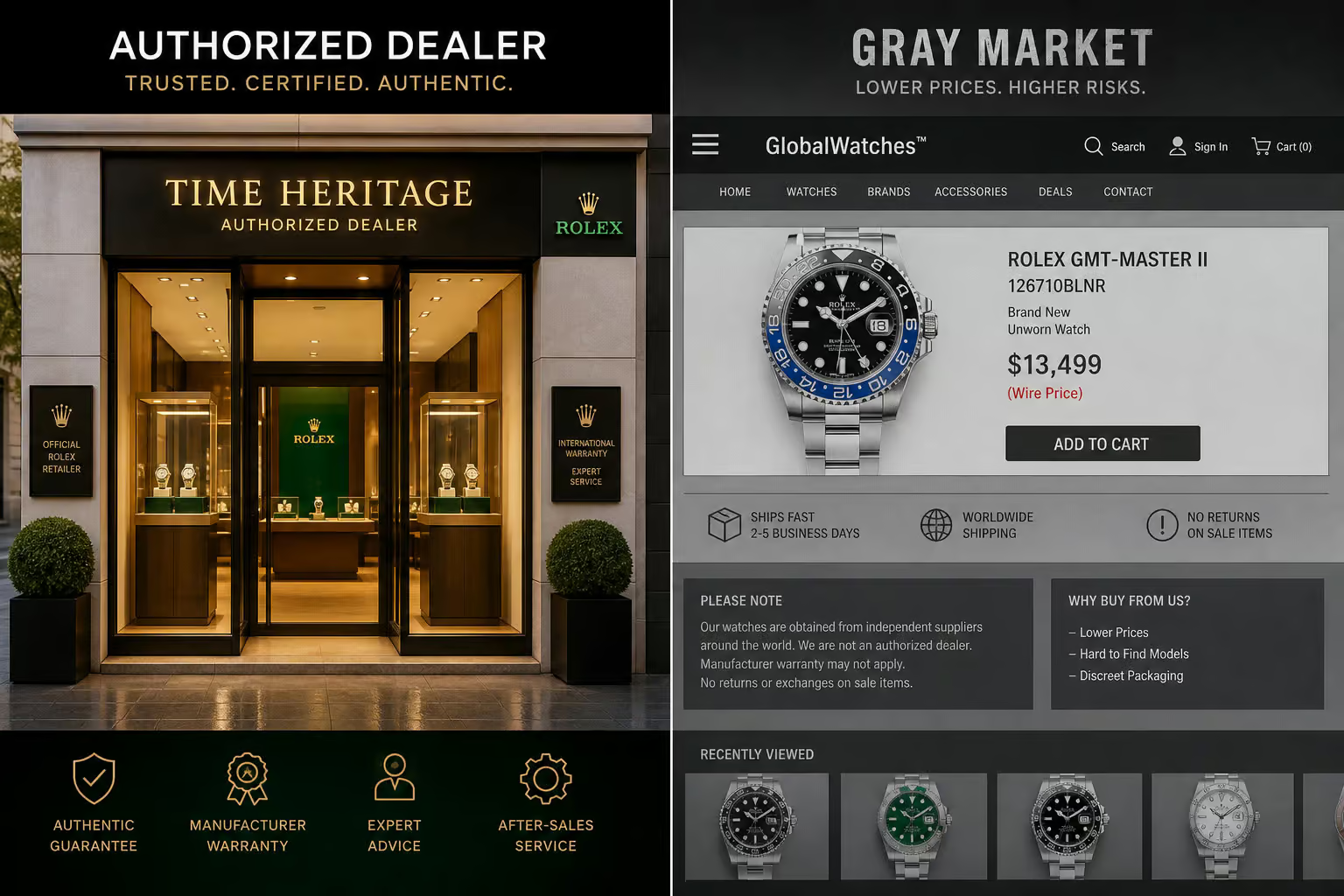
Authorized dealers sell only genuine watches directly from the brand. You get a full manufacturer warranty and the peace of mind that the watch is real. But you also pay for that peace of mind—full retail price. And some brands, like Patek Philippe and Rolex, don’t allow their watches to be sold online. If you find a listing from an unauthorized seller for these brands, it’s either a counterfeit or a gray market watch that was originally meant for another market and is being sold without the brand’s blessing.
Gray market sellers like Jomashop or AuthenticWatches offer new watches at steep discounts—sometimes 20–40% off retail. The catch? They provide their own warranty, not the manufacturer’s. That means if something breaks, you’re dealing with the seller, not the brand.
And if that seller goes under, your warranty is worthless. Jomashop’s policy is clear: they offer their own warranty on most watches, but they also note that “some watches may not include manufacturer warranty.” That’s a risk you take for the savings.
How to check authorization: Every brand has an official list of authorized dealers. If the seller isn’t on that list, they’re not authorized. Some brands, like Patek Philippe and Rolex, do not allow online sales—so any online listing claiming to be “authorized” is a red flag. Always check the brand’s website for a dealer locator. If the seller claims to be an authorized dealer but isn’t listed, move on.
Step 3: Inspect the Watch Like a Pro
Once you’ve narrowed down a model and a trustworthy seller, it’s time to scrutinize the listing. A real photo of the watch is ideal—but even then, you need to look closely. Many sellers lift images from official sites or previous listings. If the photos look too polished or generic, ask for real-time pictures. A seller who hesitates or sends stock photos is waving a red flag.
Key things to check:
- Material: Look for “316L stainless steel.” That’s the industry standard for quality watch cases and bracelets. Avoid cheaper metals like plated brass.
- Construction: The case and bracelet links should be solid, not hollow. Weight is a clue—a quality steel watch feels substantial.
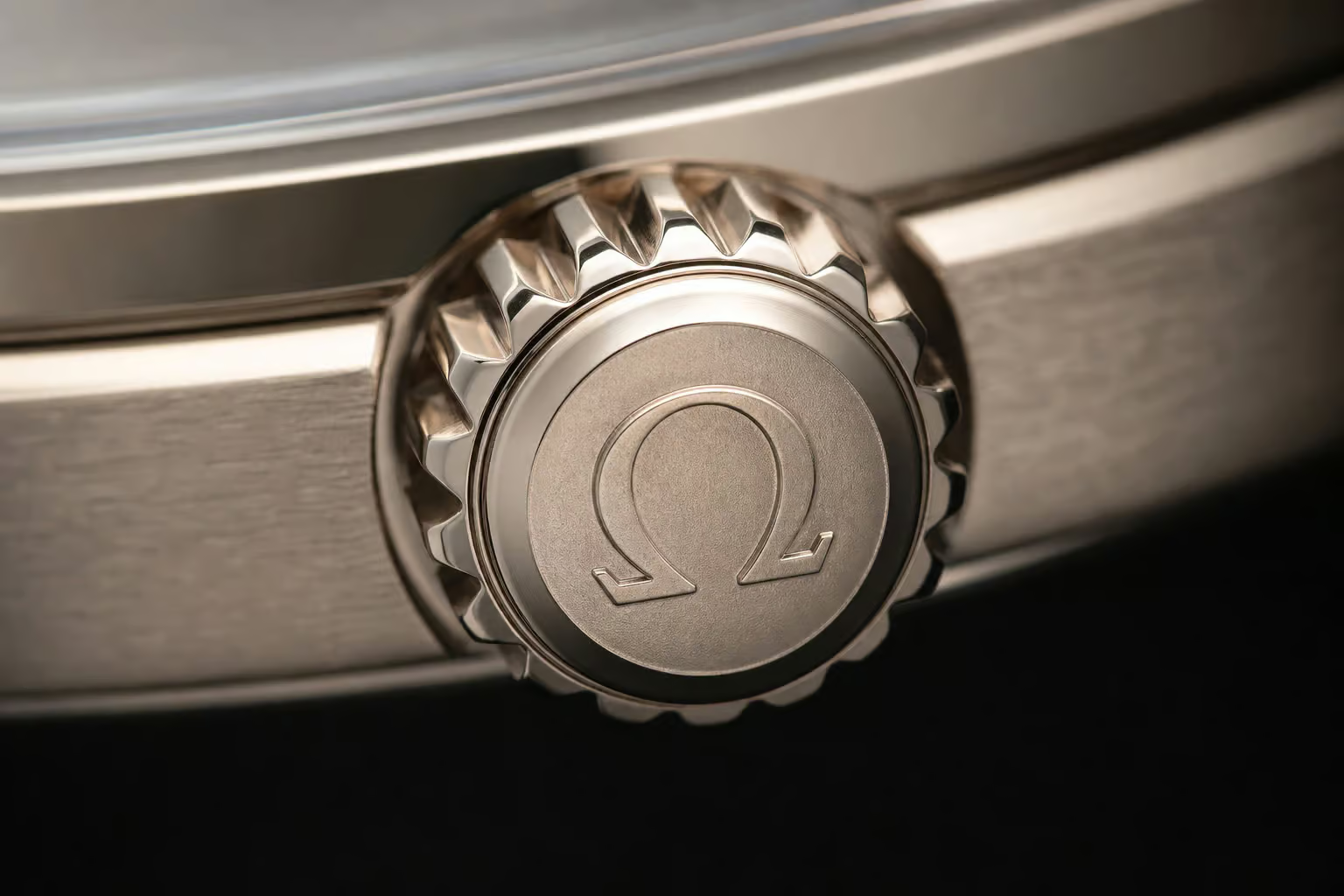
- Crown: A quality watch has a signed crown (the brand’s logo engraved on the winding knob). Bare crowns are a sign of lower-end replicas.
- Clasp: Look for a signed, double-locking clasp. Cheap watches use single-locking or unsigned clasps.
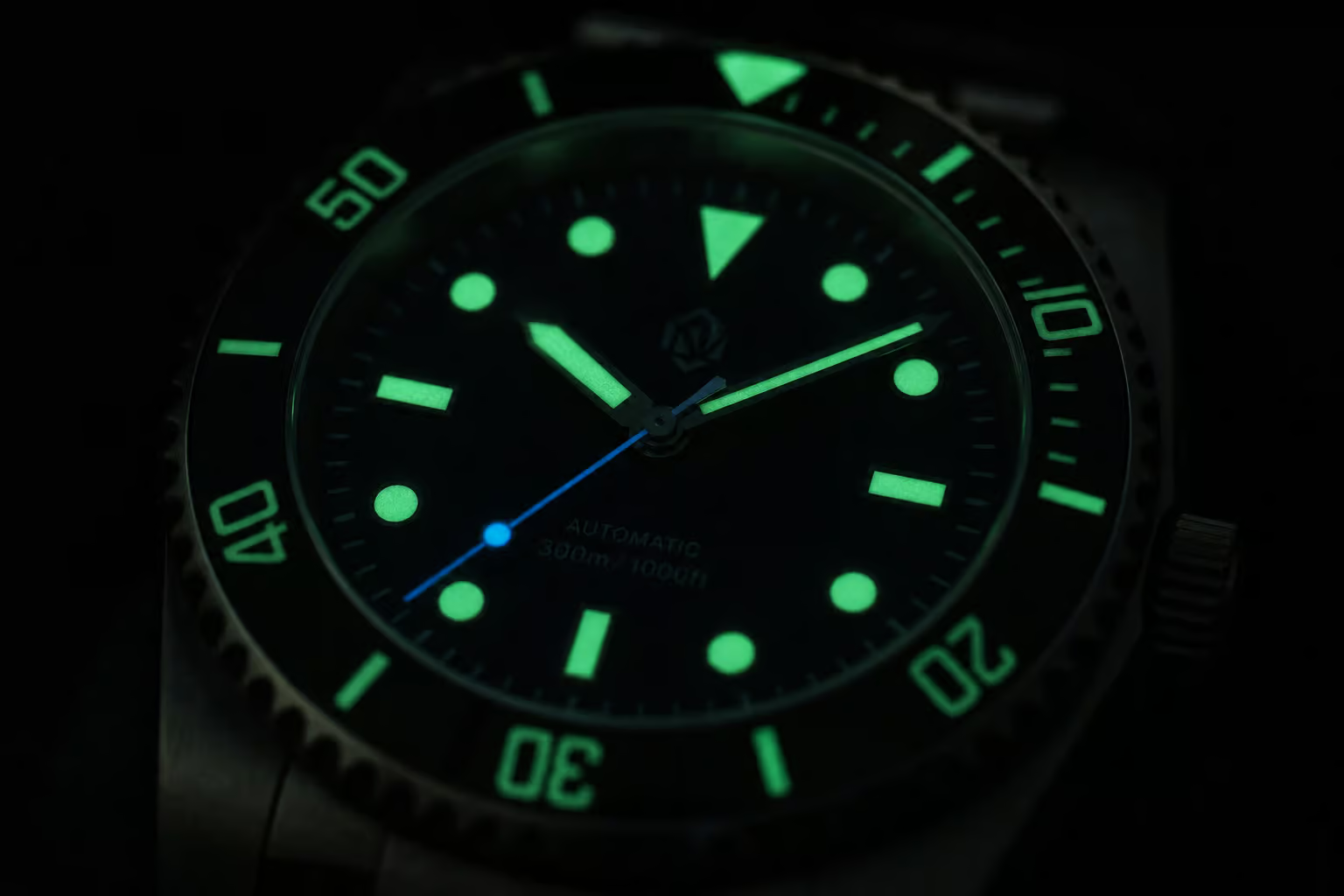
- Lume: If the watch has luminous markers, test them in a dark room. Cheap lume fades fast and glows unevenly. Good lume (like Super-LumiNova or Seiko’s Lumibrite) holds brightness for hours.
- Dial inspection: Check that the hands align properly with the hour markers. In a genuine watch, the second hand should sweep smoothly; in a quartz, it should tick precisely once per second with no hesitation.
- Weight: A quality watch has a solid feel. Lightness can indicate cheap materials or a movement that’s not fully metal.
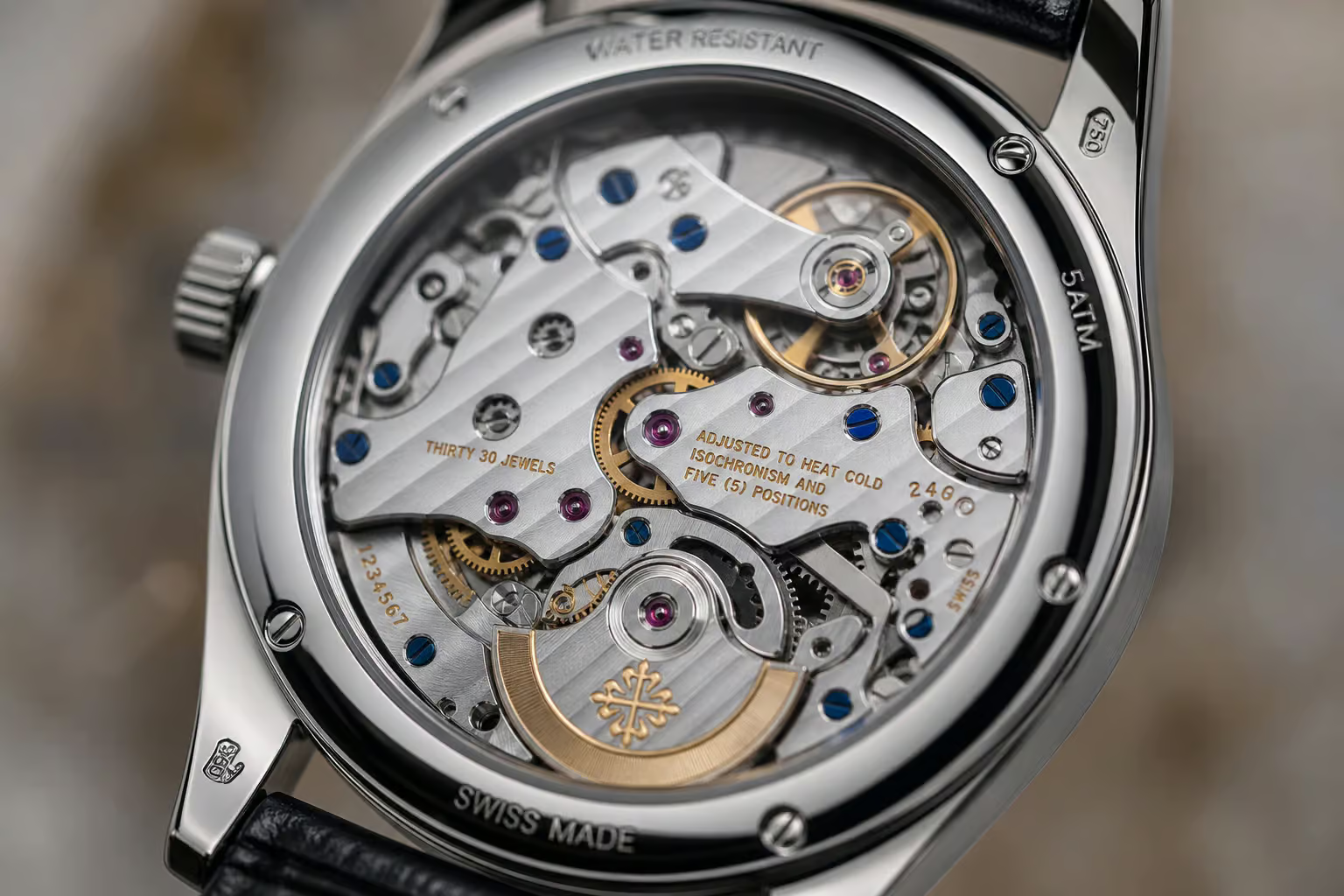
- Caseback detail: Transparent casebacks let you see the movement. Look for engravings, decorations, and finishing. A plain, unmarked movement is a red flag.
If you’re unsure, ask the seller for a video of the watch running and a close-up of the movement. Any legitimate seller will be happy to provide these. For a complete reference, consult the Ultimate Watch Checklist before finalizing your purchase.
The Golden Rule: If It Seems Too Good to Be True, It Probably Is
This is where many people get burned. A “Rolex” for $500 is either a fake or stolen. A “Ming” for half price is likely a scam. Know the market value of what you’re looking at, and don’t be swayed by deals that seem magical. If a seller can’t or won’t provide detailed photos, serial numbers, and a clear return policy, walk away.
Speaking of returns: know the policy cold before you buy. Some retailers like Nordstrom have famously generous return policies; others like Saks Fifth Avenue and Neiman Marcus offer 30 days. A few specialized dealers like Bob’s Watches and Watchfinder have their own return windows. If you’re buying from a gray market seller who offers their own warranty, read the fine print. Some warranties are only valid if you use a specific watchmaker for service, and those warranties may not transfer if you sell the watch later.
Jomashop, for instance, provides its own warranty rather than the manufacturer’s. That’s fine if they’re around if you need it, but consider who you’d be dealing with if something goes wrong. Many gray market sellers offer their own warranties, but the quality of those warranties varies. Ask about service networks before you buy.
You don’t want to own a watch you can’t get serviced. Michael Brown bought an Omega from Authentic Watches and praised the selection and staff. Other reputable retailers include Piaget and Montblanc, which offer their own authorized online sales.
Step 6: Secure Your Payment and Protect Your Records
Once you’ve chosen a seller and a watch, don’t whip out your credit card. Use a payment method that offers protection—PayPal and credit cards are best. Avoid wire transfers and other non-reversible methods. If something goes wrong, your payment method can be your only recourse.
Before you hit “buy,” make sure the seller has a clear return policy and that the watch will be shipped with insurance. You should also check the seller’s reputation—look for reviews from real buyers, not the curated testimonials on the site.
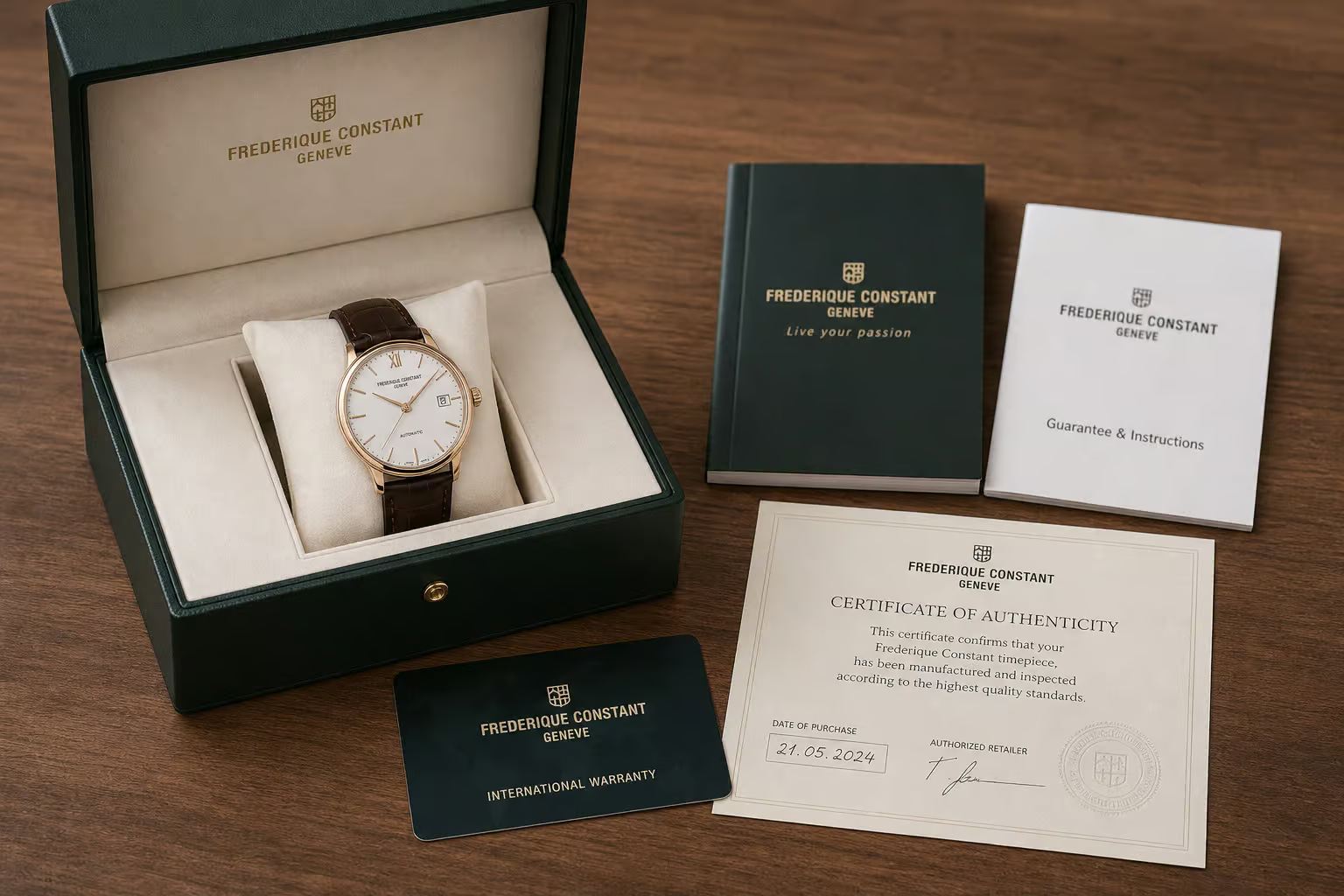
When the watch arrives, document everything. Take photos of the packaging, the watch itself, and the paperwork. Compare the serial number on the watch to the one on the certificate. Keep all your documentation—receipt, certificate, box, and any correspondence.
If a watch comes with blank or generic papers, that’s a red flag. Some sellers will sell you a watch with “blank” papers—meaning the dealer didn’t fill them in—which is different from missing papers entirely. Either way, if the watch doesn’t come with properly filled-in paperwork from an authorized dealer, treat it as unverified.
Finally, check the return policy. A seller with no returns or a restocking fee is a yellow flag. You should be able to return the watch within a reasonable period if it doesn’t meet expectations. Some platforms like eBay now offer authentication services, which adds a layer of protection—but that doesn’t guarantee the seller is legitimate.
Step 6: Know the Regret Stories
Buying a watch online comes with risks, but the biggest risk isn’t the watch itself—it’s the regret that follows a bad decision. I’ve heard plenty of stories that illustrate how painful a hasty purchase can be, so it helps to learn how to buy a men’s watch without regret before you commit.
Jody Millhouse bought a Hublot Big Bang for £18,000 after a few drinks, only to watch its value plummet by 50% within months. He sold it on Watchfinder for £9,000, taking a hit. “I loved the look of it,” he said, that but they didn’t think about the resale value. Now they know better.
Georgia Benjamin bought seven Swatch MoonSwatches in one year because of the hype. “I thought I was investing,” she says, that but they ended up with watches they never wore. She wishes she’d bought one thoughtful piece instead—say, a Studio Underd0g chronograph or a vintage Cartier.
Kevin Roberts bought two Ming watches because he liked the design, but they were both 38mm—too small for his wrists. He spent £8,000 total and was locked into a 12-month wait for each. If he’d tried them on in person first, he’d have saved the money and the frustration.
These stories aren’t meant to scare you—they’re meant to show you that buying a watch online is a skill. It requires research, patience, and a willingness to walk away when something doesn’t feel right.
The Problem with “Great Deals”
A huge discount on a luxury watch should make you skeptical. If the price seems too good to be true, it probably is. Counterfeit watches have gotten shockingly good. Even experts can be fooled at a glance. A $6,000 Rolex sold for $2,000 might be a super-fake that would pass initial inspection but fail under magnification.
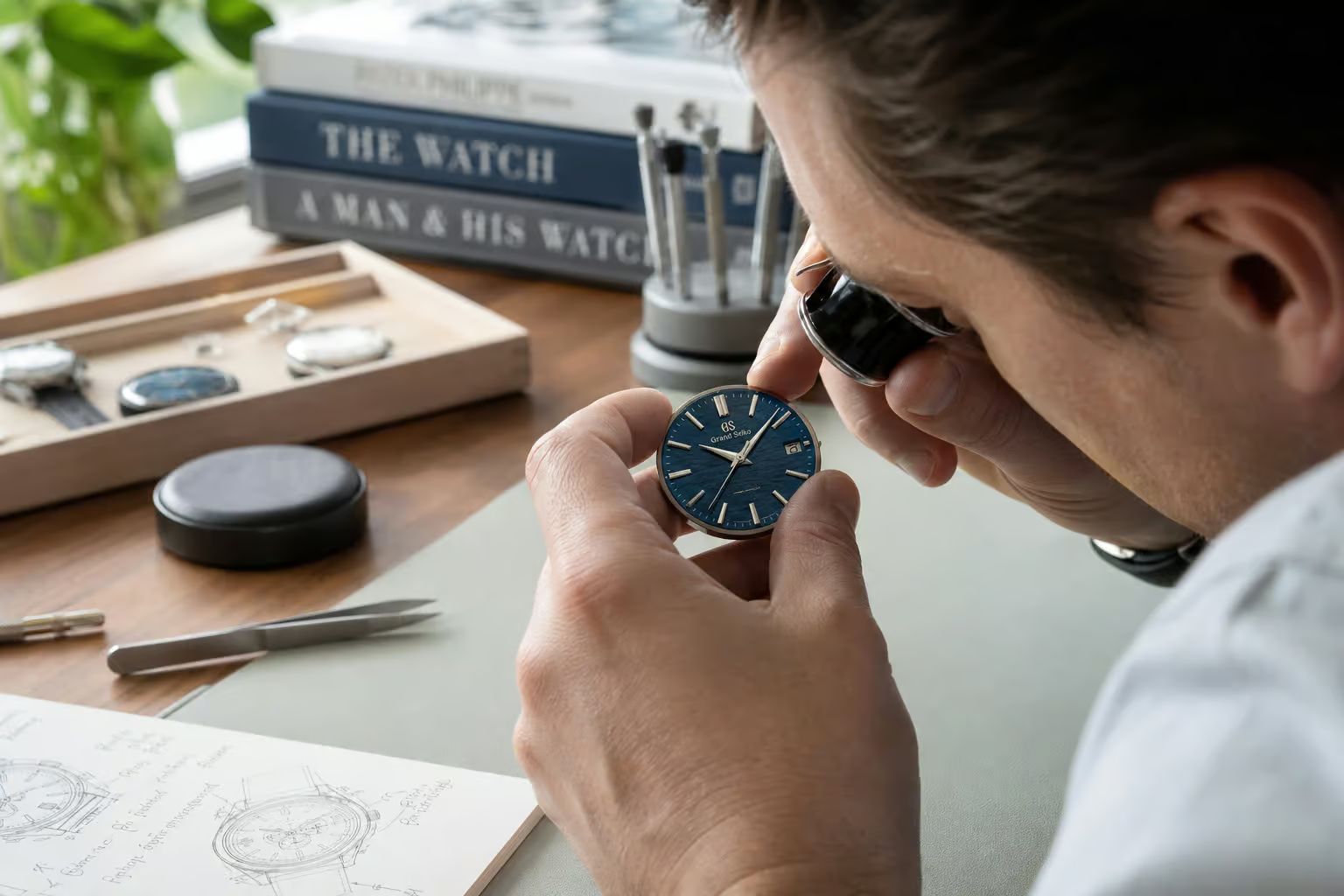
That’s why verification matters. Legitimate sellers will allow you to inspect the watch under a loupe or will provide detailed macro photos. They’ll also be transparent about the watch’s condition—including any scratches, dial patina, or service history. If a seller can’t or won’t do this, walk away.
Step 5: Understand the Return and Warranty Rules
Every online watch purchase should come with a clear return policy and a warranty that you can rely on. Some sellers, like The Watchery, offer a 30-day return window. Others, like Authentic Watches, provide a 5-year warranty on pre-owned pieces. But many of these warranties are store-specific. If the store goes out of business, your warranty goes with it.
Authorized dealers are different. They offer the manufacturer’s warranty, which is universally recognized. If you buy a Breitling from an authorized dealer and something goes wrong, Breitling themselves will service it. That peace of mind is worth the extra cost.
But even with an authorized dealer, the warranty only starts from the date of purchase—and it’s only valid if the watch is registered with the brand. Some dealers will pre-date your warranty card, which can shorten your coverage. Always check the card when it arrives. If it’s blank or predated, that’s a red flag.
Step 6: Plan Your Purchase Timeline
Watches, especially luxury ones, aren’t cheap. But you don’t have to pay full price. Sales happen—Black Friday, end-of-season clearances, and holiday events can knock 20% or more off retail. The key is to know when to buy.
Boxing Day sales, for example, are notorious for deep discounts. Many retailers offer markdowns in late December. If you’re flexible, you can find great deals on last year’s models or discontinued lines.
But if you’re buying a watch you plan to keep for years, don’t obsess over a sale. The best deal is the one that gets you the watch you want. A discount on a watch you don’t love is still money wasted.
Step 3: What to Check Before You Click
Once you’ve found a candidate, it’s time to put it under a microscope. The photos should show the watch from every angle—dial, caseback, crown, clasp, and the bracelet or strap. Look for the hallmark signs of quality: 316L stainless steel (not “stainless steel”, which is vague), a solid-link bracelet (not folded or hollow links), and a signed crown and clasp.
Check the dial. Are the hands aligned properly? On an automatic watch, the seconds hand should sweep smoothly. On a quartz, it should tick exactly once per second.
If the lume (the glow-in-the-dark material) is uneven or dim, it’s a red flag. Authentic watches have crisp, even lume applications.
Ask for a photo of the movement if it’s a display caseback. The finishing should be clean—no rough edges or tool marks. Watchmakers talk about “Geneva stripes” and “perlage” as signs of quality finishing. If you can’t see the movement, don’t worry—look for overall build quality. The case should be solid, the crown should feel precise when winding, and the bracelet should have substantial weight.
Step 4: Authenticate Thoroughly
Authentication is the most critical step in buying a watch online. You need to be sure the watch is genuine, not a superfake or a franken-watch with swapped parts.
Start with the serial number. Every genuine luxury watch has a unique serial number, usually engraved on the caseback or between the lugs. You can verify this number with the manufacturer or through a database. Be wary of sellers who claim the number is “not available for verification” or who refuse to provide it.
Next, examine the dial and hands. Counterfeiters get the logo wrong—the font might be slightly off, the spacing uneven, or the color a shade different. The hands should be perfectly aligned and move smoothly. On a Rolex, the hour hand should sweep continuously; on a quartz, the second hand ticks in precise one-second increments.
The crystal should be clear and free of distortions. Many quality watches use sapphire crystal, which is scratch-resistant and has a slight blue hue when viewed from an angle. Mineral crystal is cheaper and more prone to scratches, but it’s still used in many reputable watches.
Finally, the caseback. Some brands have transparent casebacks showing the movement; others are solid. If the caseback is engraved, check that the engraving matches the brand’s style—font, depth, and positioning. A poorly engraved caseback is a common tell on fakes.
Don’t forget the paperwork. The certificate of authenticity, warranty card, and instruction manual should all match the brand’s standards. Some sellers will register the warranty in your name on the spot, which is a sign of a reputable authorized dealer. Others might give you a warranty card that’s already filled in and stamped. Either way, make sure the serial numbers on the watch, the certificate, and the warranty card all match.
Step 6: Understand the Return and Warranty Rules
Before you commit, read the return policy and warranty terms carefully. Most authorized dealers offer a 14- to 30-day return window. Gray market dealers may have stricter policies or none. Some sellers will accept returns only if the watch is unworn and in its original packaging—so don’t wear it and then try to return it.
Warranties are another animal. Authorized dealers provide the manufacturer’s warranty, which is underwritten by the brand itself. Gray market sellers offer their own warranty, but that’s only good as long as they stay in business. If your watch breaks and Jomashop is gone, you’re out of luck. Some gray market shops are large and established, but the risk is still there.
One workaround: buy on a credit card. Many credit card companies offer extended warranty protection that kicks in if the manufacturer’s warranty expires. It’s a safety net worth having, especially for high-value purchases.
Step 5: The Authentication Gauntlet
Authentication is where online buying gets serious. You’re not trusting a photo—you’re trusting that the watch in the box matches the watch in the listing. This is why you should ask for a serial number and a clear photo of the caseback. If the seller won’t provide them, walk away.
Some platforms offer built-in authentication. StockX verifies every watch before shipping. eBay now requires authentication for luxury watches listed over $2,000. Bob’s Watches has a team of experts who inspect every watch before it ships. These processes catch discrepancies like replaced parts, refinished dials, or outright fakes.
But even with authentication, caveats apply. A watch can be authentic but not “original”—maybe it’s been polished, or the hands have been replaced, or the movement has been swapped with a cheaper alternative. Ask about service history, original parts, and any modifications. A seller who’s transparent about these things is more trustworthy than one who dodges the question.
Step 6: Know the Market, Know the Price
Before you pull the trigger, do your homework. Check Chrono24’s transaction data to see what similar watches have sold for in recent months. Look for completed listings on eBay. Don’t go by the seller’s listed price—that might be inflated, especially on gray market sites.
Remember the rule of thumb: if a deal seems too good to be true, it probably is. That $6,000 “Rolex” is almost certainly a fake or a stolen watch. But even legitimate discounts deserve scrutiny. A watch priced below market might be a gray market watch (no manufacturer warranty), a pre-owned piece, or a model that’s been sitting in inventory for years.
Also consider the cost of ownership. Mechanical watches require servicing every 3–5 years, which can cost several hundred dollars. Factor that into your budget. If you’re buying a quartz watch, battery changes are trivial. But if you’re buying a mechanical piece, budget for regular maintenance.
Finally, ask yourself: are you buying for now or for the future? Watches can hold their value—or appreciate—if you choose wisely. Rolex and Patek Philippe are known for retaining value, but many brands depreciate after purchase. If you’re buying as an investment, stick to the classics. If you’re buying for joy, buy what you love and don’t worry about resale.
Conclusion: Enjoy the Hunt, But Buy With Eyes Open
Buying a watch online isn’t a simple transaction. It’s a process—one that rewards patience, research, and a healthy dose of skepticism. The good news is, it’s never been easier to find what you want at a price you can afford. The bad news is, it’s also never been easier to make a costly mistake.
Start with the fundamentals: know your wrist size, know your budget, and know what features you need. Then move to research: read forum threads, check price histories on Chrono24 or StockX, and look at multiple listings from different sellers. When you find a piece you’re serious about, ask every question you can think of. A legitimate seller will answer without hesitation. Then pull the trigger—but only after you’ve verified everything: the seller’s reputation, the authenticity of the watch, the return policy, and the warranty.
One more thing: the box and papers are nice, but they’re not proof of authenticity. Blank papers can be bought on eBay. The value is in the watch itself, not the box it came in. If you’re buying a used or vintage piece, condition is everything. A well-worn watch with a clean movement is better than a pristine watch that’s been sitting in a drawer for 20 years.
The best watch is the one you’ll wear. Not the one you bought because you felt pressured. Not the one you bought because you thought it would go up in value. The one you put on every morning and smile at. That’s the one worth finding.
People Also Ask
What is the best website to buy watches?
The best website depends on whether you want an authorized dealer or a gray market discount. Authorized dealers like Bob’s Watches or Watchfinder offer manufacturer warranties and authenticity guarantees, while gray market sellers like Jomashop or AuthenticWatches provide steep discounts but only their own warranty. Always check the brand’s official dealer list to verify authorization.
Is it better to buy a watch in store or online?
Online offers 20–40% savings and wider selection, but in-store lets you try on the watch and verify fit and feel. If you buy online, measure your wrist and check lug-to-lug distance to avoid size regrets. For high-value pieces, in-store may be safer, but online with a trusted seller and solid return policy can work well.
What should I check when a watch arrives from an online purchase?
Document everything: take photos of the packaging, watch, and paperwork. Compare the serial number on the watch to the certificate and warranty card. Inspect the dial, hands, crown, and clasp for quality signs like 316L steel, signed crown, and smooth movement. If anything seems off, contact the seller immediately.