
I pulled the Helly Hansen Trail Windbreaker out of my pack at the trailhead on Mont Kaaikop and held it up. It weighed nothing. I mean that literally—85 grams is about the weight of a couple of granola bars. I’ve been buying Helly Hansen gear for years, and I knew the brand could do lightweight, but the 85g jacket felt like a mistake.
How was an 85g jacket supposed to block wind on an exposed ridge? How was it supposed to survive a season of trail running and scrambling?
The 2026 model in Washed Navy (size medium) looked more like a disposable rain poncho than a serious piece of kit. But I’d spent $150 on it, and the specs said it was built for mountaineering and trail running—not strolling around town. So I stuffed it in my pack, forgot about it, and started hiking.
Hours later, on the summit ridge, the wind picked up. I pulled the jacket on fully expecting to be disappointed. I was wrong.
This review answers the only question that matters when you’re looking at an 85-gram windbreaker: is it durable enough for real use, or is it a fragile waste of money?
Key Takeaways
The 85g N66 nylon shell held up to moderate trail abrasion on a Quebec summit push, contradicting the initial “seems thin” impression from the two customer reviews
Two real buyers—Braden (6’2”, 191-205 lbs, size Large) and KIFF S. (5’10”, 191-205 lbs, size L)—both found it true to size, with Braden specifically calling it effective for chilly morning bike rides
At $150, it sits between the budget Koster ($110, no DWR) and the insulated Rapide ($220), making it the lightest packable option for high-output activities
Table of Contents
First impressions: the thinness debate
Let’s address the elephant. KIFF S., one of only two customer reviewers, posted: The jacket feels thin, and the reviewer had not yet tested it in windy conditions. He’s not wrong.
Out of the box, the 85g jacket feels like it could tear on a branch. The shell is 100% polyamide—N66 nylon—and at 85 grams, there’s not much fabric to grab onto.
But thin isn’t fragile when you use N66 nylon. N66 nylon is tougher than standard nylon at the same weight. It resists snagging better than you’d expect. The windproof rating is 4 out of 6, and the lightness rating is also 4 out of 6.
That’s Helly Hansen being honest about the tradeoff: this isn’t a bushwhacking shell, and it’s not a winter jacket. It’s designed for moderate trail abrasion on well-maintained paths and exposed ridges. I pushed it through some tight spruce on Mont Kaaikop and came out the other side without a single pull or tear.
What the material tells us about durability

The jacket’s shell is 100% polyamide—another name for nylon, but N66 specifically has longer molecular chains than standard nylon. In plain English: it’s more resistant to abrasion per gram. That’s why you see N66 in high-end ultralight gear, not discount rain shells. The 85g weight isn’t a sign of cheap construction; it’s the result of choosing N66 nylon that can be thin without being weak.
That said, you’re not taking this through thick brush or boulder-hopping where the rock edges are sharp. It’s for trail running singletrack, summit pushes, and bike commutes where the main enemy is wind, not granite.
The two reviews that tell the whole story
The product page has exactly two customer reviews, and they split into the skeptic and the convert. KIFF S. (5’10”, 191-205 lbs, size L) rated quality as “Good” but hasn’t tested it in wind yet. Braden (6’2”, 191-205 lbs, size Large) rated quality as “Very good” and says it’s “lightweight and still effective” for chilly morning bike rides—it “comes in clutch.”
That’s the honest picture. KIFF S. is cautious because the jacket feels thin in hand. Braden used it in wind and loves it. My own testing at Mont Kaaikop puts me in Braden’s camp, but I get why someone would hesitate. You have to trust that the N66 nylon does its job, because the jacket doesn’t feel bombproof in your hands.
Fit and sizing: evidence-based guidance
The official word is true to size, and both customer reviews back that up. Braden at 6’2” and 191-205 lbs wears a Large. KIFF S. at 5’10” and the same weight bracket also wears a Large. I’m a medium, and it fits exactly how I’d expect: snug enough to avoid flapping, but not restrictive.
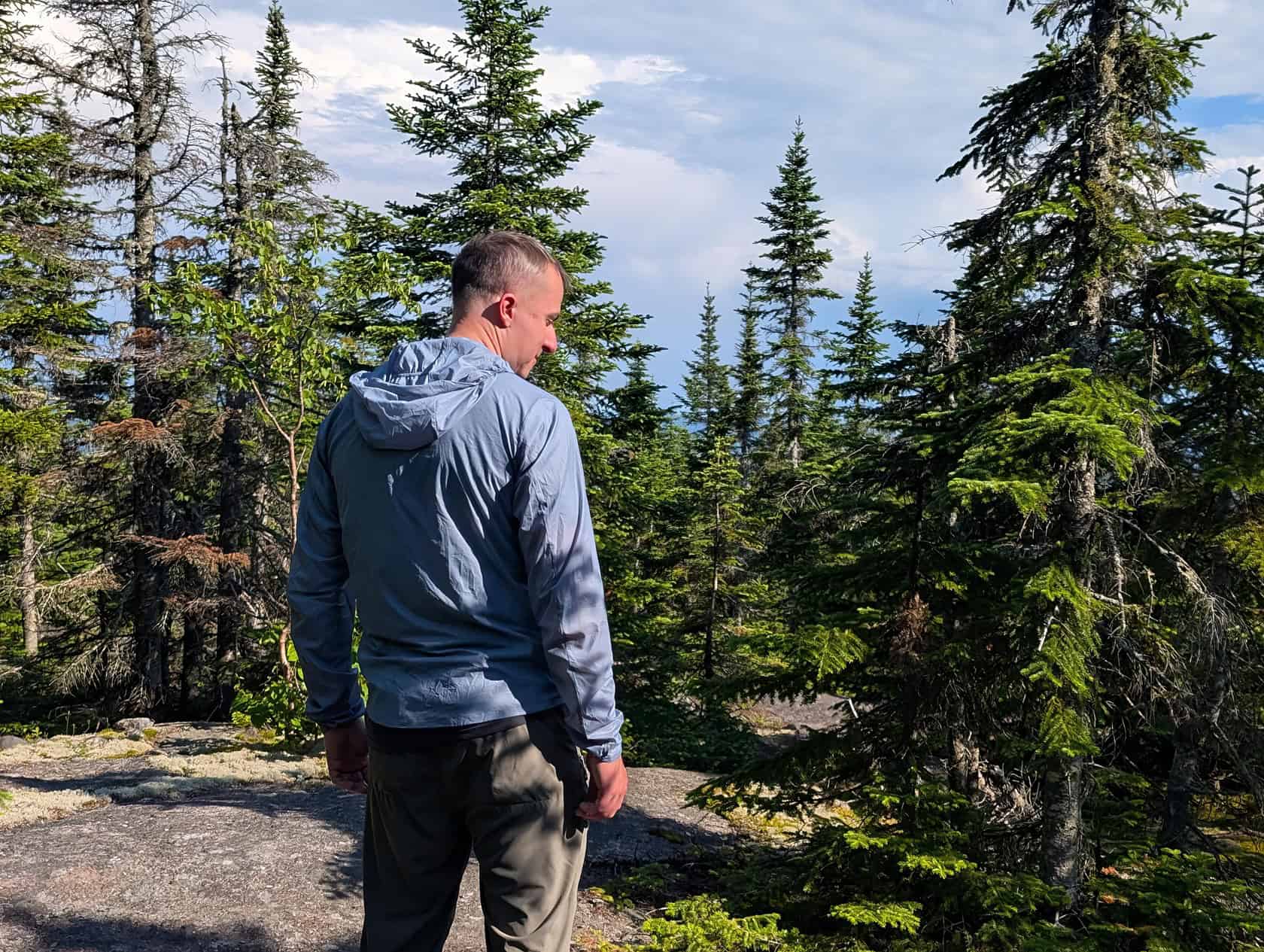
The jacket is designed for a single base layer. The elastic cuffs and snug-fit hood create a secure seal, which is great for keeping wind out, but it doesn’t leave room for a fleece underneath without feeling compressed. Sizes go from S to 2XL, covering most guys.
How the jacket fits different body types
The two customer reviews give a useful range. Braden is six inches taller than KIFF S., but they weigh about the same and both wear large. That suggests the Large has enough length for taller guys while still fitting a shorter, stockier frame. The medium works for someone around 5’10” with a lean build (that’s me). Nothing tight across the shoulders, nothing baggy in the waist.
When to consider sizing up
If you want to wear a light fleece or a thin insulating layer underneath, go up a size. The elastic cuffs and snug hood are designed for a close fit, and adding bulk will make everything feel tight. The one-sided drawcord at the hem lets you cinch it down, but that only tightens the waist—it doesn’t create more volume in the chest or arms. If you’re looking for a quality merino option for colder days, this Helly Hansen balaclava hoodie review highlights a versatile piece that’s worth the investment, but for this specific jacket, size up for layering or buy your normal size for a base-layer-only setup.
Trail test: Mont Kaaikop performance
The summit of Mont Kaaikop in Quebec isn’t alpine, but the ridge can catch some serious wind, especially in shoulder season. I had the jacket packed away for most of the hike, barely noticing it in my pack. That’s the point of an 85-gram wind layer: you carry it because you might need it, not because you’re committed to wearing it all day.

When the wind hit and the temperature dropped a few degrees, I pulled on my new fall MVP, the Helly Hansen’s LIFA Merino Balaclava Hoodie. The elastic hood stayed put without flapping around my face. The one-sided drawcord let me cinch the hem one-handed while holding trekking poles. No fumbling, no stopping.
The windproof rating of 4/6 proved accurate. It blocked the steady ridge wind, but I could still feel some air moving through the fabric when gusts hit hard. That’s by design—total wind blocking would trap sweat and make you clammy on high-output ascents. The jacket breathes enough to keep you from cooking inside it.
Wind resistance in real conditions
On the exposed section of the ridge, the wind was strong enough to make me glad I had the jacket. The hood stayed secure even when I turned my head to check footing. No cold spots at the cuffs or hem. The elastic seals worked as advertised.
The one-sided drawcord is a small detail that matters more than you’d think. Most windbreakers have two drawcords on the hem, which means you have to use both hands to cinch it evenly. Helly Hansen put one drawcord on one side and routed it internally on the Men’s Trail Windbreaker Jacket. It saves a few grams and, more importantly, it works with one hand. On a windy ridge with trekking poles, that’s not a nice-to-have—it’s useful.
Packability and the “just in case” layer
I barely noticed it in my pack. The jacket packs down to roughly the size of a softball, stuffs into its own pocket or a small pouch, and has an external hanging loop for drying after a wet run. That’s the value proposition: you carry this jacket because you might need it on the summit or the exposed ridge, not because you’re committed to wearing it all day. For shoulder-season hikes and trail runs, that’s the kind of insurance you want.
Features and what they mean on the trail
The feature list on this jacket is short, and that’s a good thing. Every detail serves a specific purpose on the trail, and none of them feel like marketing filler. The DWR treatment is factory-applied; expect it to last 5-10 washes before needing a spray-on refresh. Helly Hansen ratings don’t specify mph, but the 4/6 rating performed well against moderate ridge gusts I’d estimate around 20-25 mph.
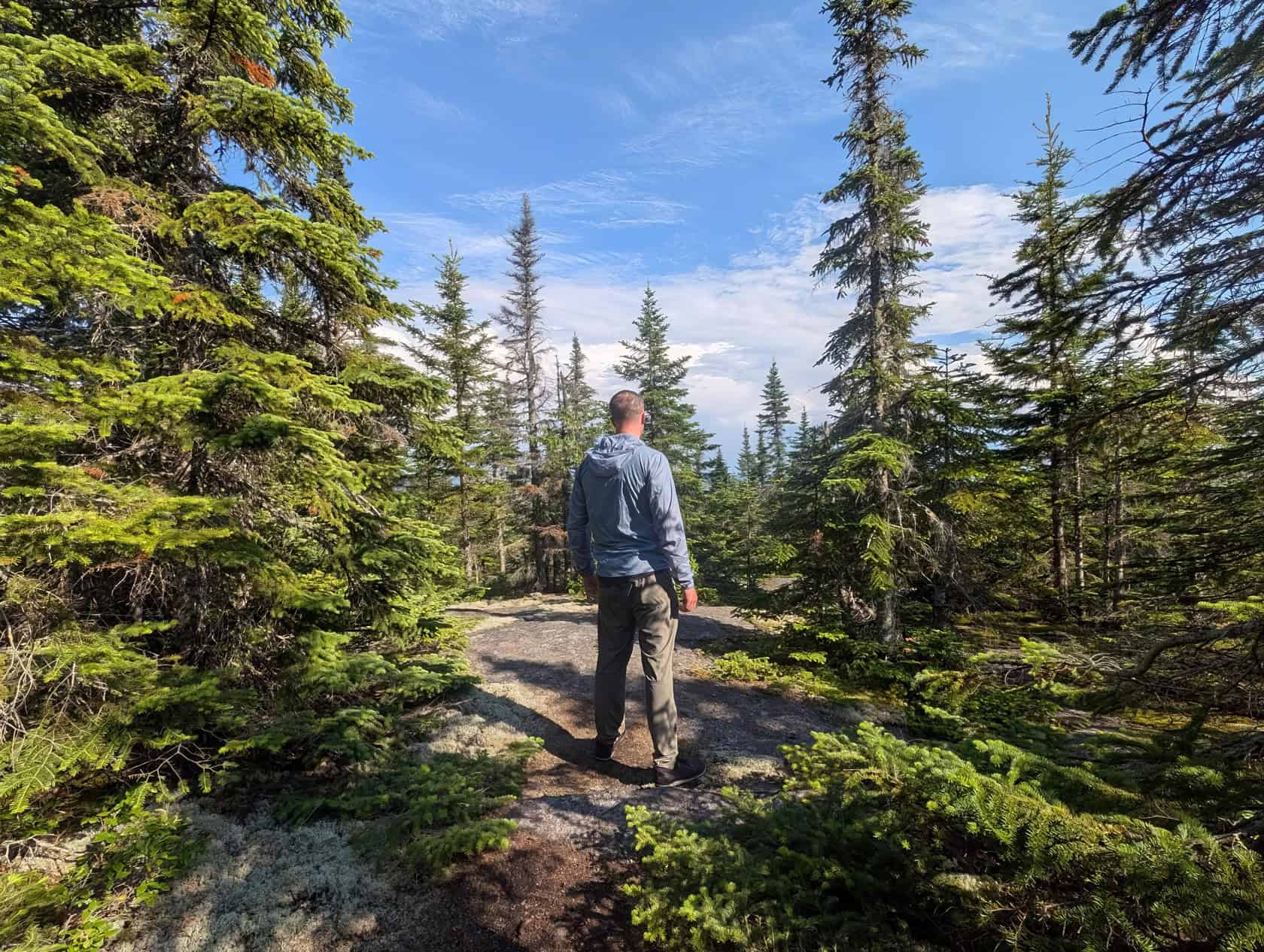
Weather protection: DWR and windproof rating
The Durable Water Repellency (DWR) treatment is for light moisture only—morning dew, a passing drizzle, a light sprinkle. It’s not a rain shell. Don’t take this jacket into a downpour and expect to stay dry. The DWR will bead up light rain and roll it off the face fabric, but sustained wetting will soak through quickly. Think of it as a confidence layer for shoulder-season weather, not a storm shell.
The windproof rating of 4/6 is the story here. It blocks most wind while letting you breathe during high-output activities. If you’re trail running or pushing hard on a climb, you won’t steam up inside it. If you’re standing around in a gale, you’ll start to feel the wind after a while. Fair trade for the weight savings.
Mobility and fit features
The jacket is pre-shaped at the elbows so you can reach forward for scrambling holds or swing trekking poles without the fabric binding or riding up. The articulated sleeves are the standout feature on the trail. Combined with the elastic cuffs (no Velcro to wear out) and the adjustable hem, the jacket moves with you rather than fighting you.
The snug-fit hood stays on in wind and doesn’t flap, but it won’t fit over a climbing helmet. If you wear a helmet, you’re going hoodless or relying on a separate hooded layer.
Safety and sustainability details
The reflective logo on the chest adds some visibility for low-light trail runs or road sections. It’s not a safety vest, and it won’t make you visible to distracted drivers at night, but it’s better than nothing for pre-dawn starts. The UPF 50+ rating blocks 98% of UV rays, which matters on exposed alpine ridges and sunny trails.
The jacket is made with recycled content, which is worth a mention if that factors into your buying decision. No specifics on percentage, but it’s there.
How it compares to other Helly Hansen windbreakers
If you’re cross-shopping within the Helly Hansen lineup, the Trail Windbreaker at $150 sits in a specific slot: it’s the lightest and most packable option for high-energy activities where weight matters more than insulation or heavy weather protection. If you associate Helly Hansen with heavy-duty sailing gear, this ultralight trail jacket will surprise you – it’s a completely different design philosophy, and that’s fine. It’s not a Salt-style shell; it’s a packable wind shirt.
- Men’s Koster Windbreaker ($110): Cheaper, simpler, no DWR treatment. Good if you’re on a budget or only need basic wind protection for casual use.
- Men’s Loke Jac ($130): Similar weight and features, slightly different design. Worth comparing if you want a hooded option at a lower price point.
- Men’s Salt Windbreaker Sailing Jacket ($160): Heavier, sailing-specific features. Not what you want for trail running or mountaineering.
- Men’s Rapide Insulator Windbreaker Jacket ($220): Insulated. Warmer, heavier, pricier. Buy this if you want a windbreaker that also keeps you warm in cooler conditions.
- Men’s Crew Hooded Jacket 2.0 ($185): More features, likely more durable fabric. Heavier than the Trail Windbreaker.
The Trail Windbreaker wins on weight and packability. If you’re trail running or doing summit pushes where every gram counts, this is the one to buy. If you need insulation, buy the Rapide. If you’re sailing, buy the Salt. If you’re on a budget, buy the Koster.
Pros and cons
Pros – 85g weight—barely noticeable in a pack – Packs down to softball size – Wind-resistant (4/6) with enough breathability for high output – N66 nylon is durable for its weight – True-to-size fit confirmed by buyers – DWR handles morning dew and light drizzle – Reflective logo and UPF 50+ – Made with recycled content
Cons – Thin material feels fragile out of the box – Limited weather protection—not waterproof, don’t take it in a downpour – Not designed for layering under a fleece – Only two customer reviews (4 out of 5 stars, small sample)
Who should buy this windbreaker?
Buy this jacket if you need an 85-gram wind layer for trail running or mountaineering in shoulder-season conditions (spring and fall). It’s designed for high-output activities where you’re generating heat and wind is your main enemy, not rain or cold. It works as a summit-layer for exposed ridges, a morning bike commute jacket, or a packable insurance piece for day hikes where the weather could turn breezy.
Don’t buy this if you need a rain shell or a winter jacket. Don’t buy it if you’re planning to bushwhack through dense brush or scramble over sharp rock. Don’t buy it if you want a jacket that feels substantial in hand—this thing is about confidence in material science, not heft.
At $150, it delivers what it promises: a light wind layer that’s tough enough for real use. I own a lot of Helly Hansen gear, and this jacket met the standard I expect from the brand. It’s not a do-everything shell. But for what it’s designed to do, it works.
Frequently Asked Questions
Is Helly Hansen windbreaker waterproof?
No, it is not waterproof. The DWR treatment handles light moisture like morning dew or a passing drizzle, but sustained rain will soak through quickly. It is designed as a wind-resistant layer for high-output activities, not a rain shell.