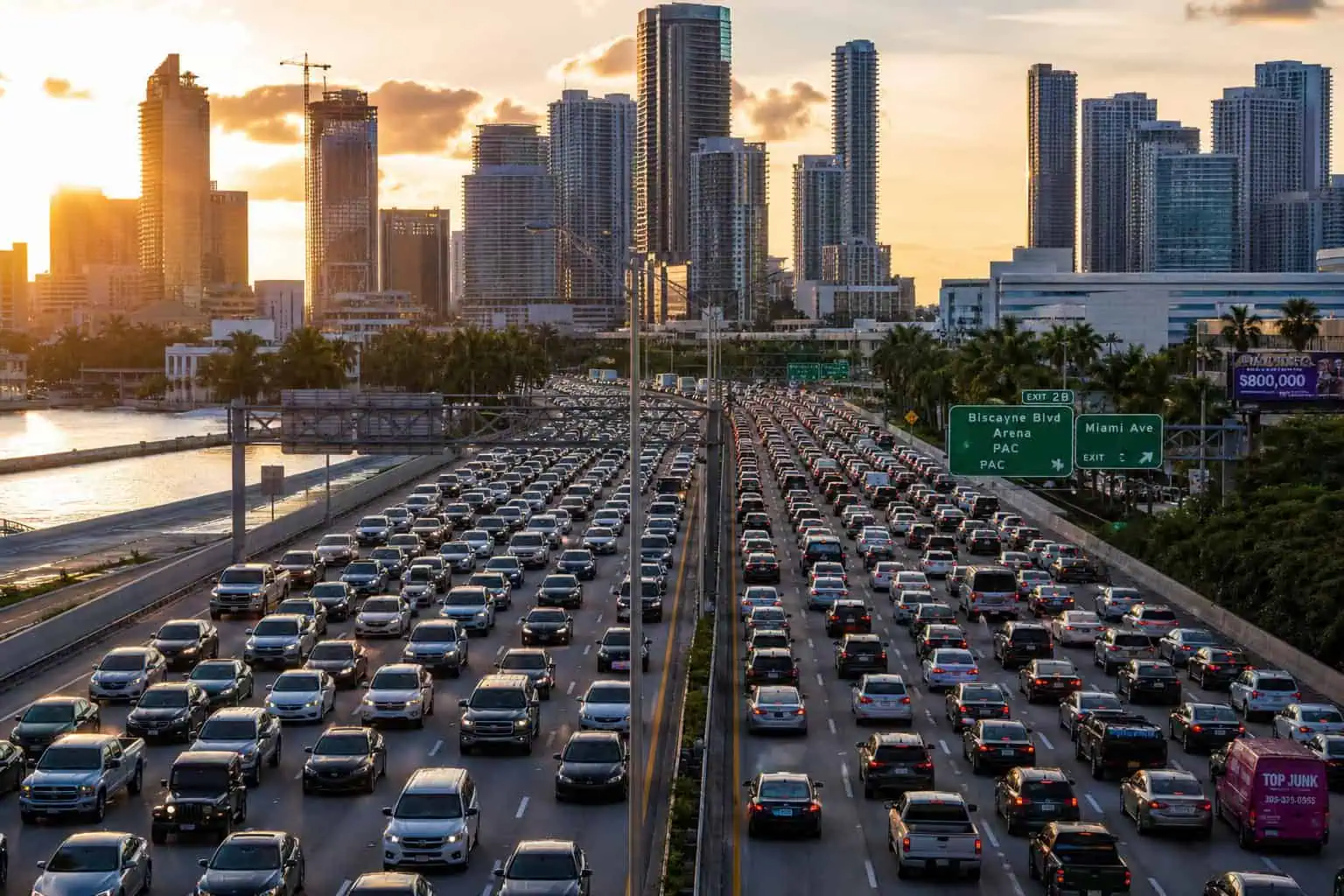
Miami is the most congested city in Florida and sixth most congested in the United States. That’s not a warning — it’s the baseline. Driving here is manageable, but only if you understand the toll, parking, and traffic systems before you turn the key. Tolls require a SunPass or Toll-By-Plate; parking requires PaybyPhone or ParkMobile; express lanes fine you for crossing plastic poles; and a driving culture rewards defensive instincts over aggression. This guide covers tolls, parking, traffic, and safety.
Tolls require a SunPass transponder or Toll-By-Plate. Parking requires PaybyPhone (most of Miami) or ParkMobile (Miami Beach) depending on the neighborhood. Traffic requires Florida 511 for personalized alerts or Google Maps/Waze for live rerouting.
Key Takeaways
You need a SunPass transponder to use toll roads and express lanes; Toll-By-Plate is a fallback that can lead to surprise rental car fees and even license suspension if left unpaid.
The I-95 Express Lanes have limited exits, no stopping, and plastic poles that trigger penalty fees if you drive around them — do not enter without a transponder.
Parking requires the right app for the right neighborhood: PaybyPhone for most of Miami (Downtown, Coconut Grove, Brickell, etc.) and ParkMobile for Miami Beach; ParkMe helps you find an open spot.
Table of Contents
Traffic Laws You Need to Know Before You Drive
Most visitors get the hazard light rule wrong: in Florida, hazard lights are for stopped vehicles only. Using hazard lights during heavy rain is illegal and confuses other drivers who expect a stationary car. The correct move is headlights and windshield wipers, not hazard lights. If you’re moving, keep hazard lights off.
Now the specific speed limits: 15 mph in school zones, 30 mph in business and residential areas, and 55 mph on most expressways. These speed limits are enforceable at those exact numbers. Right turns after a full stop are permitted at red lights unless otherwise indicated. Texting while driving is not allowed for any driver.
All passengers must wear seat belts. Children under five years old must be fastened in government-approved car seats. Driver’s license and proof of insurance, registration or car rental documents must be kept at all times, so know these essentials for driving in L.A. before you hit the road.
DMV hours: Tuesday-Friday, 7:30 a.m.-6 p.m., hours vary by location. That Tuesday-Friday window matters if you’re trying to get a Florida license or register a car.
Miami’s Major Highways and Which Ones Have Tolls
Not all roads cost money, but toll roads like Florida’s Turnpike, Dolphin Expressway (836), and Airport Expressway (State Road 112) will eat into your trip if you aren’t prepared.
Toll roads: Florida’s Turnpike, Dolphin Expressway (836), and the Airport Expressway (State Road 112). These toll roads require payment via SunPass or toll-by-plate fee mailed or charged via rental car company.
Hybrid road: The Palmetto Expressway (826). The main road is toll-free, but toll rate on its express lanes varies. It’s easy to merge into the express lanes and end up paying when you didn’t intend to.
Congestion hotline: I-95 is congested even during non-peak hours. You may hit traffic at 2 p.m. on a Tuesday, not just rush hour.
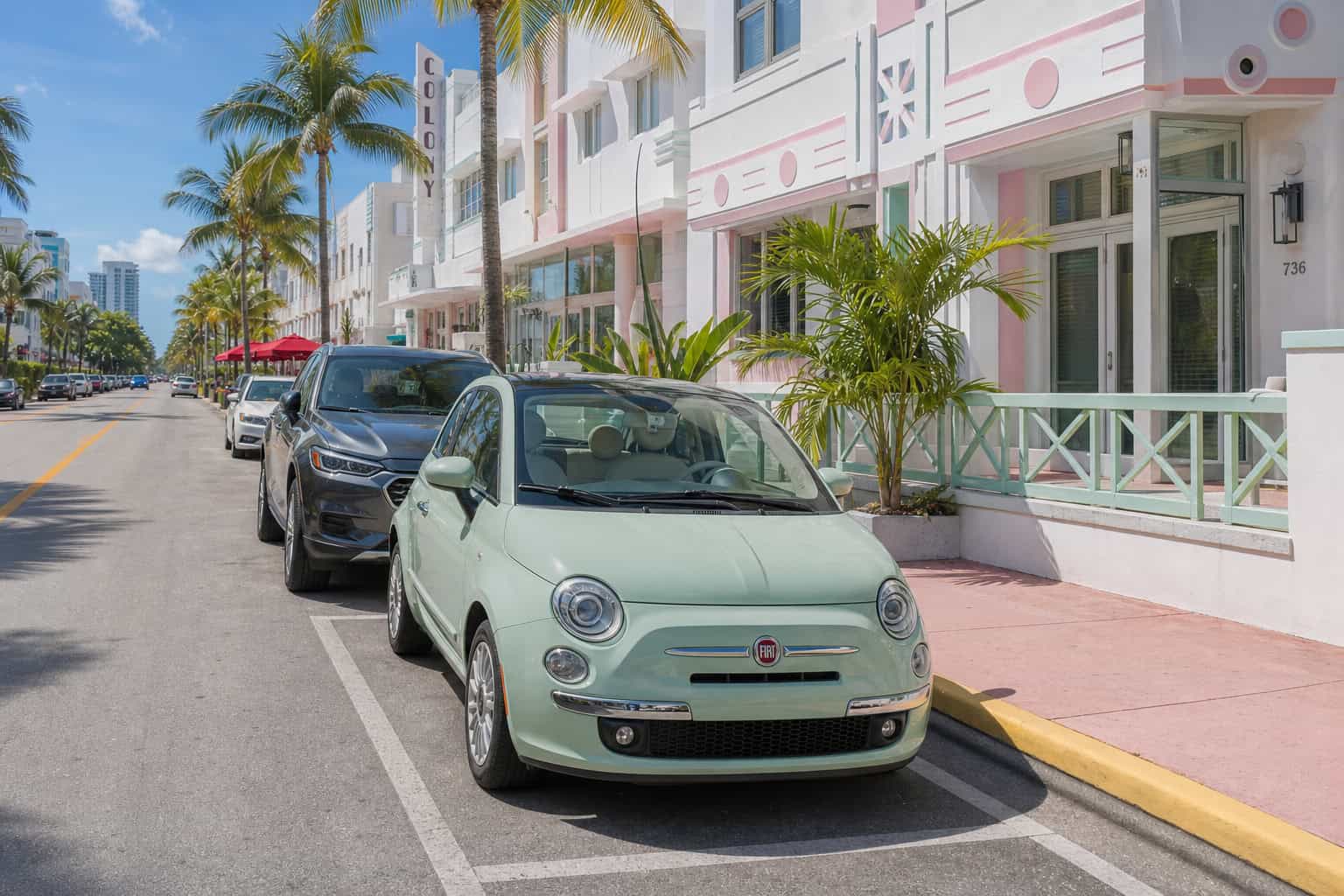
Neighborhoods with tight streets: Brickell and South Beach have narrow roads, heavy pedestrian traffic, and limited parking. Narrow roads, heavy pedestrian traffic, and limited parking. Don’t bring a full-size SUV unless you’re comfortable squeezing into compact parking spots.
SunPass vs. Toll-By-Plate: How to Pay Tolls Without Getting Burned
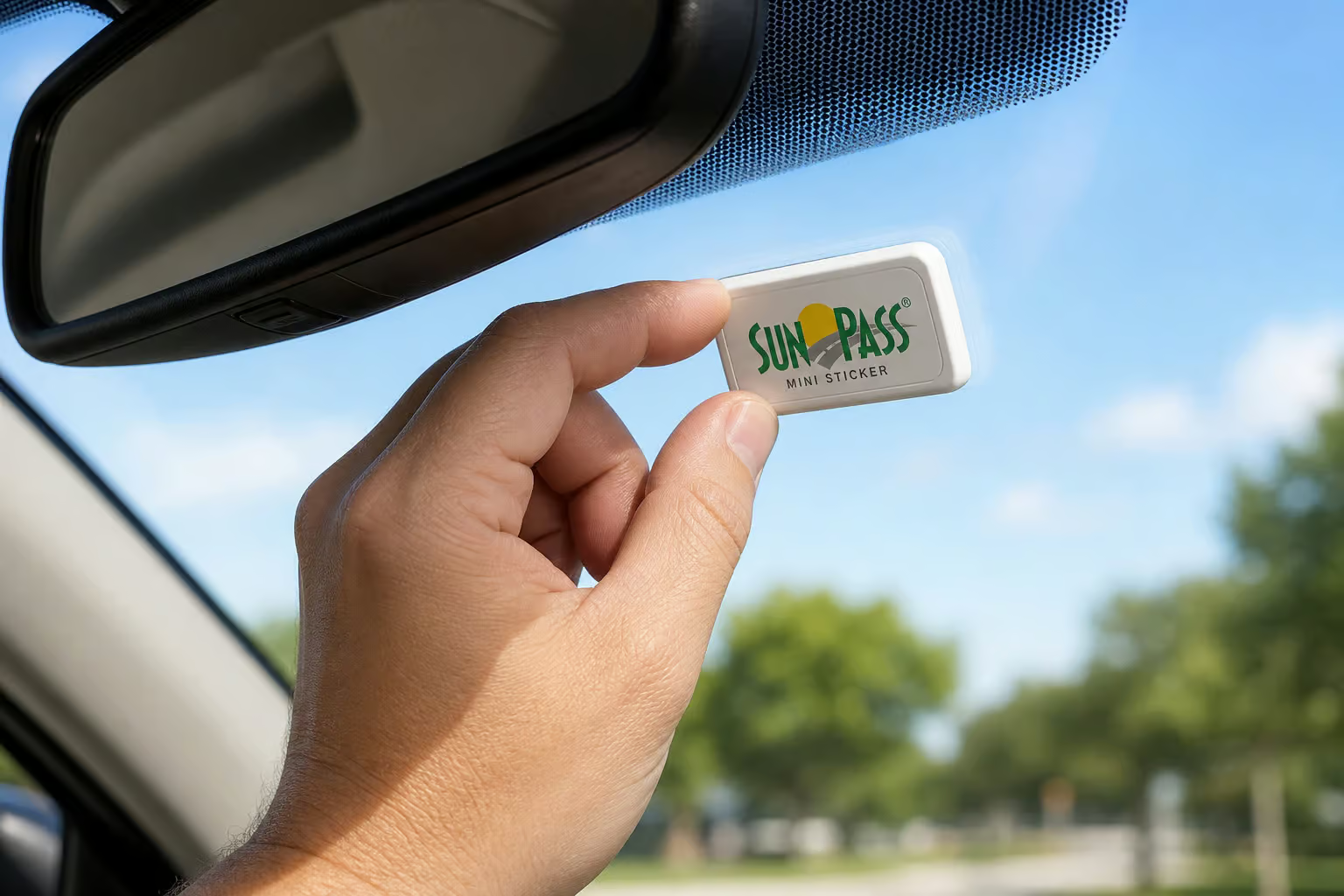
SunPass is an electronic prepaid tolling system used on most Florida toll roads. SunPass transponder types: SunPass Portable transponder or SunPass Mini Sticker transponder, attached to inside of car windshield, just below rearview mirror. Transponder communicates with toll plaza overhead readers via radio frequency. SunPass transponders can be purchased at local supermarkets, pharmacy stores, AAA South offices and Amscot branches. Purchase before you hit the road.
Toll-By-Plate cameras read license plate and bill to home address. It’s convenient if you forget, but it’s not free — unpaid tolls may result in driver’s license suspension or inability to renew registration.
For rental cars, the stakes are higher: if using a rental car, the rental company is billed and sends a bill to the driver, often with an administrative fee that can exceed the toll itself. Always ask the rental car company ahead of time to find out what to expect and to avoid paying extra fees, and if the worst happens, know what to do after a serious car accident in Miami.
SunPass Toll Calculator can estimate toll expenses on a specific route.
I-95 Express Lanes: Rules, Pricing, and the Plastic Pole Penalty
I-95 Express Lanes are located far left in northbound and southbound lanes. To use them, must have a SunPass transponder. Fees change according to time of day and increase at higher travel volume.
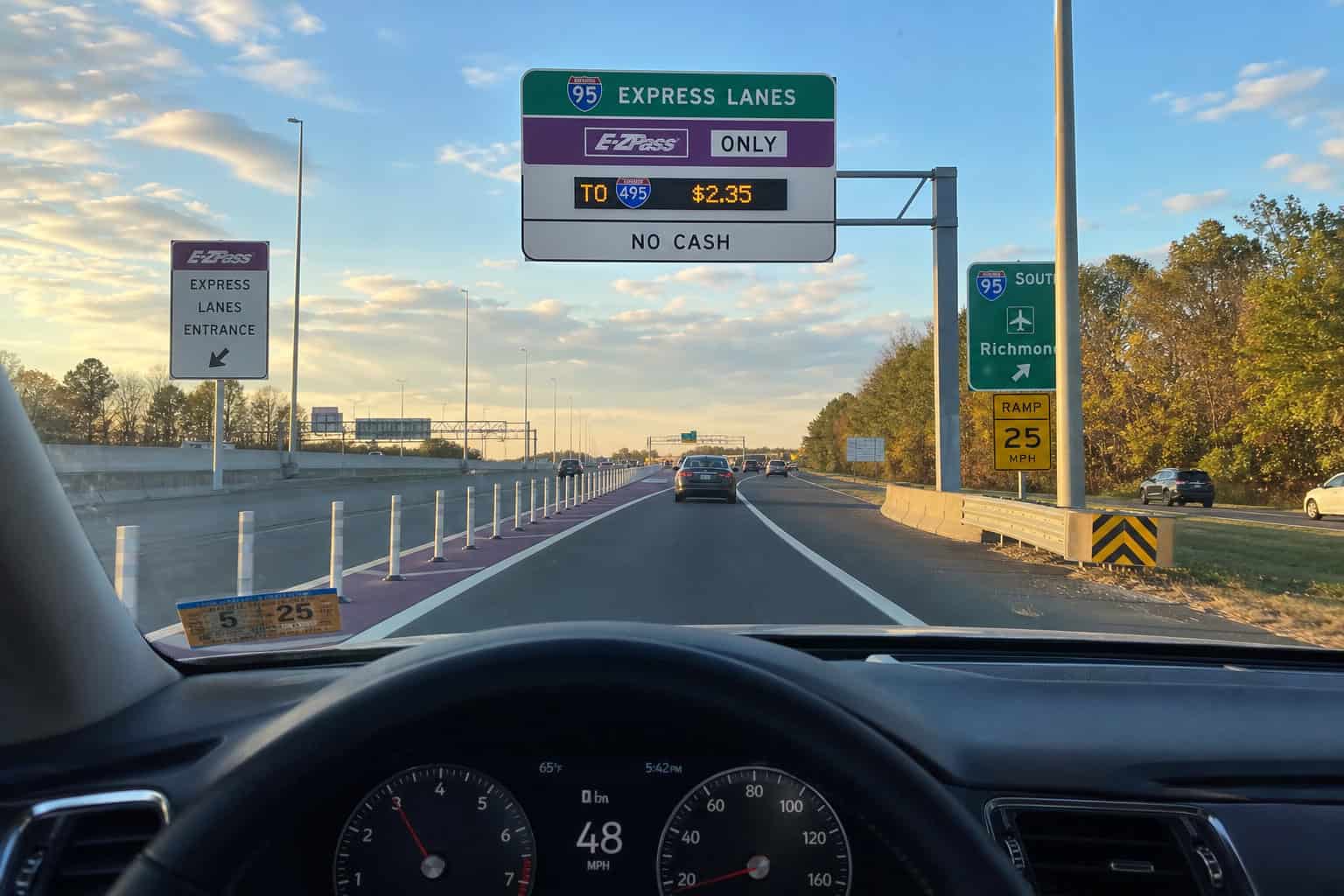
Entries/exits to/from express lanes are limited. There may be a long stretch between express lane entrances and exits, so be diligent of this when making travel plans. Cannot stop inside express lanes. If you enter without a SunPass, you cannot stop or easily exit.
Cannot stop inside express lanes. Entries/exits are limited. Your only option is to ride it out and pay the bill later — or try to cross the plastic poles, which incurs extra penalty fees.
Driving around or between plastic poles is not allowed and incurs extra penalty fees. These are not cones you can maneuver around — they are a barrier. They are a barrier that triggers penalty fees. Penalty fees add up fast.
Rental car users may purchase PlatePass or Pass24 at rental car agency location. Purchase before you leave the lot.
Florida 511: The Traffic Tool That Knows Your Route
Florida 511 provides personalized, proactive alerts for your specific routes — something Google Maps and Waze don’t.
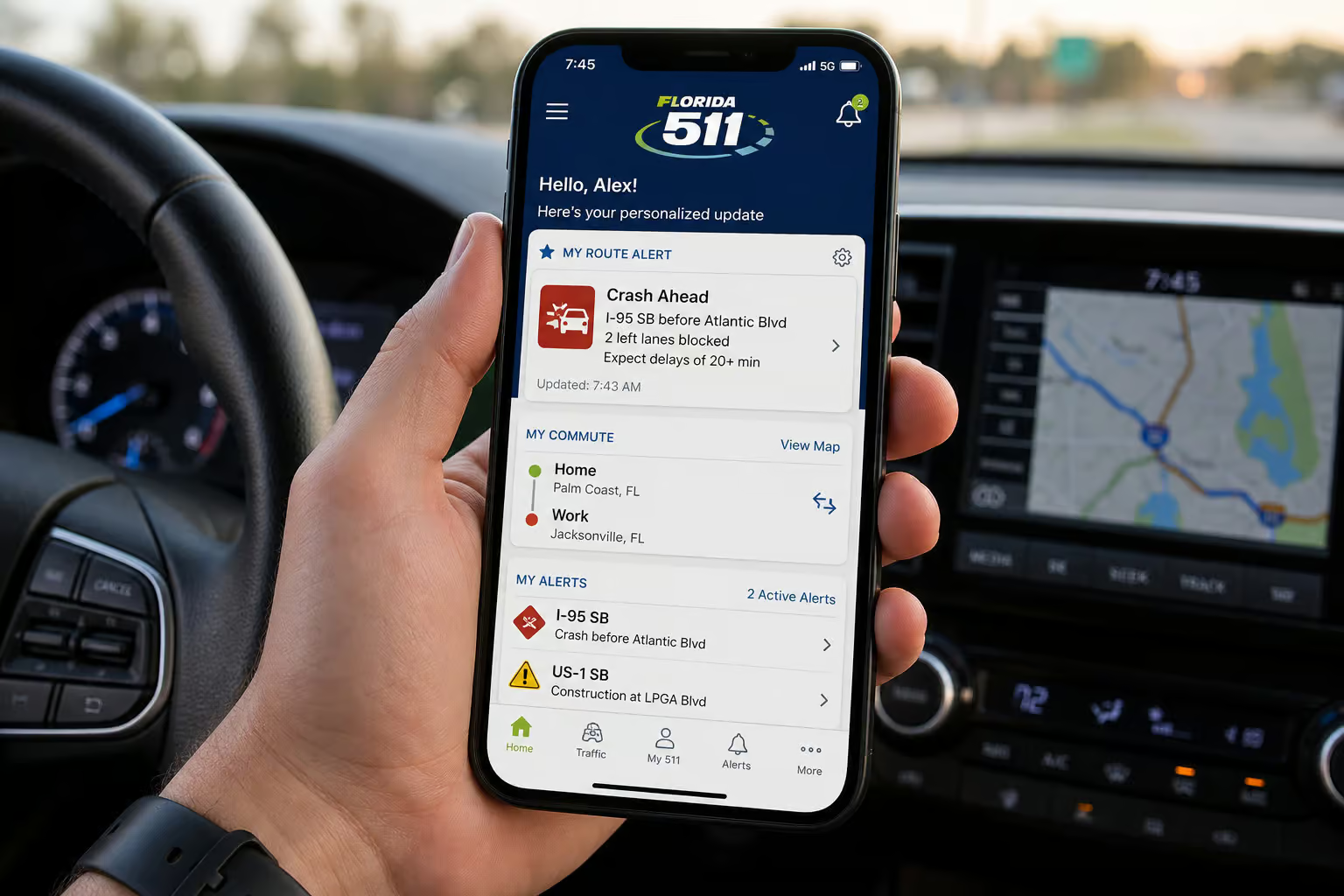
Florida Department of Transportation’s 511 system provides 24/7 traffic updates on all major roadways. 511 can be called toll-free, or register for automatic personalized text alerts, or use free Florida 511 app. Also check @FL511_Southeast Twitter feed for recent updates.
Florida 511 allows custom profile with unlimited routes for up to two phone numbers. Language options: English or Spanish. Receive phone call, text, or email alerts about incidents on selected routes. When calling 511 from registered phone, receive updates on custom routes and statewide traffic info.
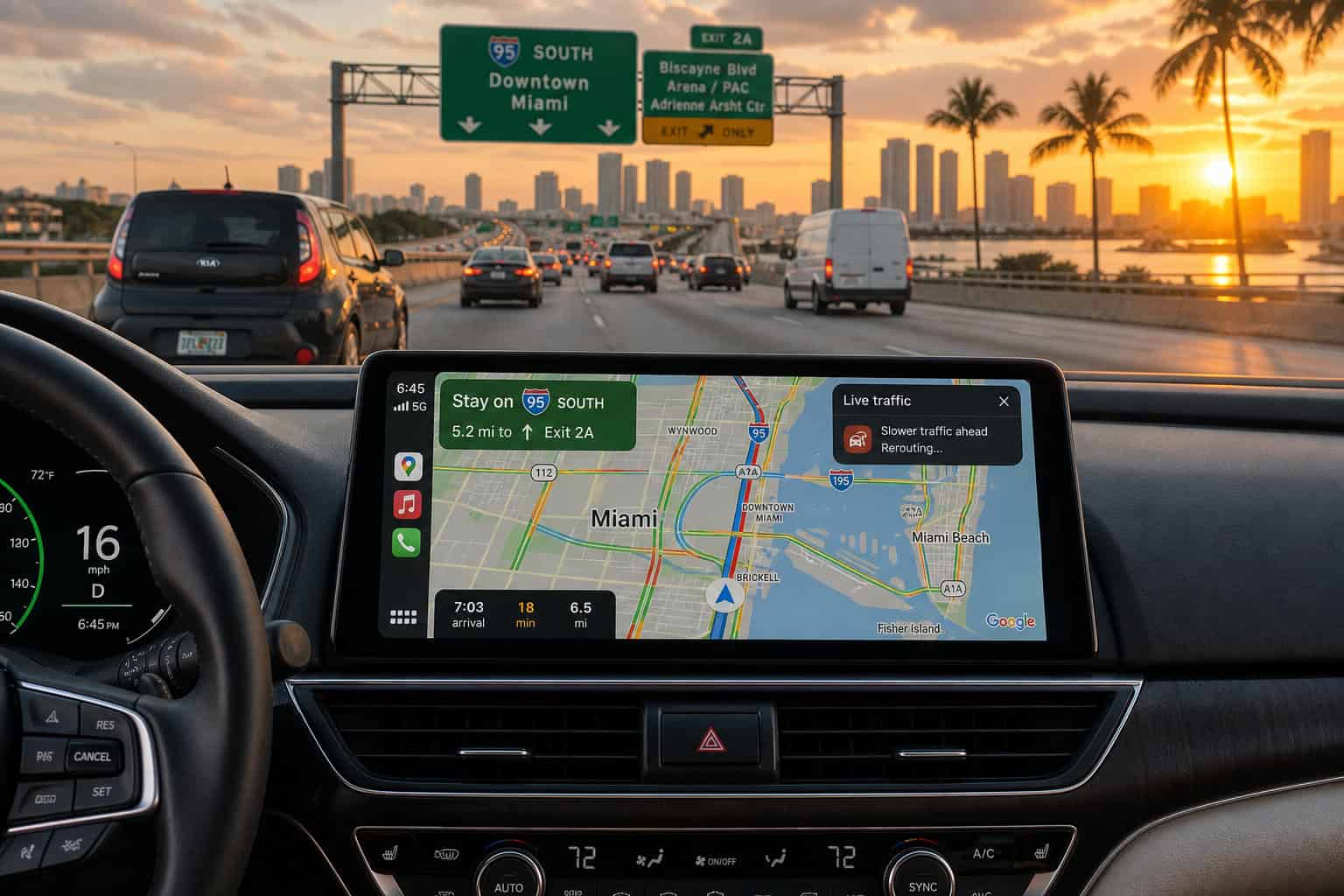
Cannot access Florida 511 routes from a phone not listed on account. Set up your Florida 511 account before you leave. Florida 511 complements your GPS apps, not a replacement for them.
Parking in Miami: One Neighborhood, Three Apps
Using the wrong app for the wrong neighborhood — PaybyPhone for Miami Beach or ParkMobile for Downtown, is the single most common parking mistake.
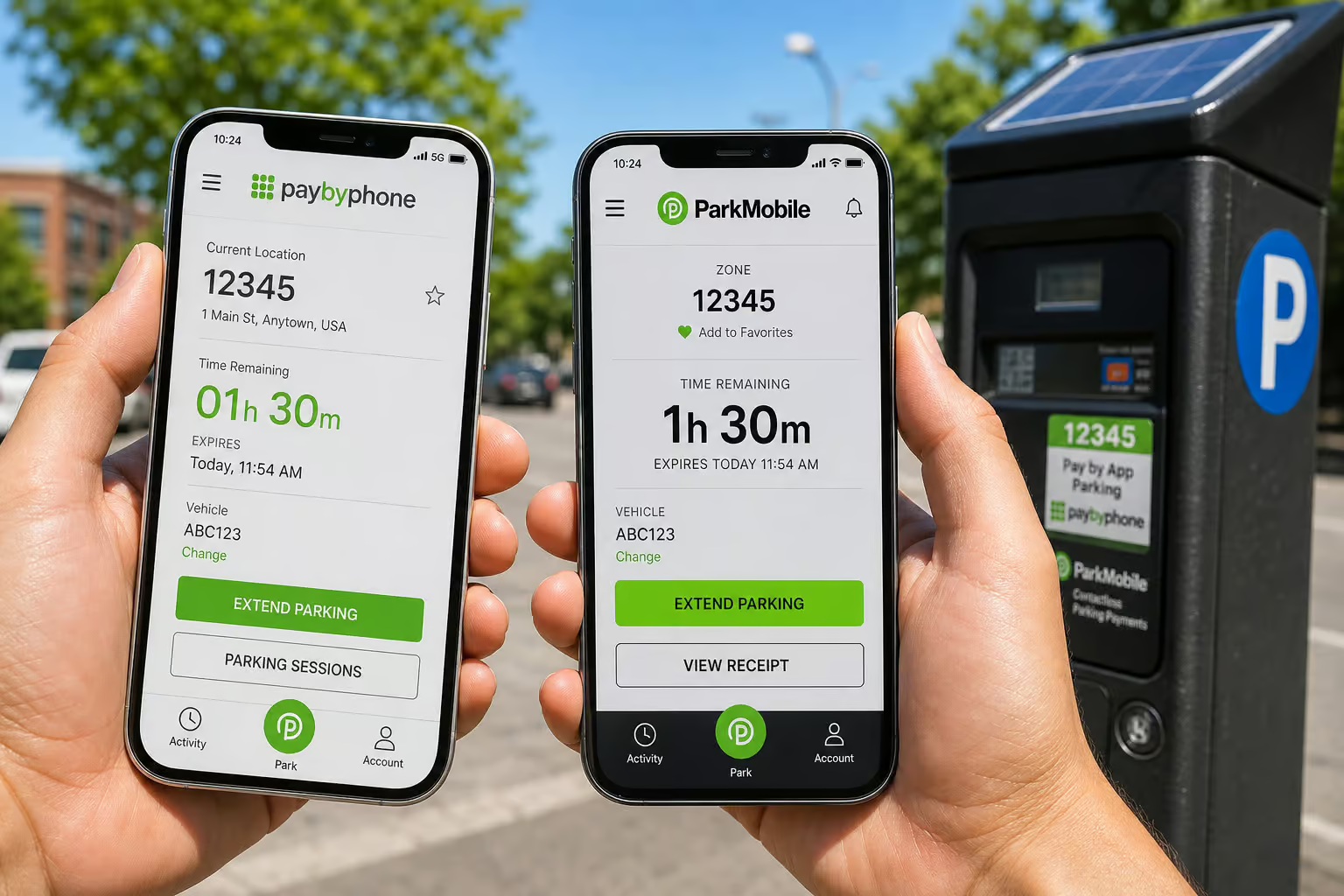
PaybyPhone works in areas managed by the Miami Parking Authority: Downtown, Coconut Grove, Brickell, Little Havana, Wynwood, and the Design District. Same app works in City of Coral Gables.
ParkMobile is for the City of Miami Beach — that means South Beach and surrounding neighborhoods.
ParkMe – Miami Beach is a separate app that shows where parking spots are available in real-time.
Watch for signs indicating resident-only or public street parking. Resident-only parking is strictly enforced, and you will get ticketed or towed. Street parking is limited; garages or paid lots recommended. For luxury cars, use well-lit, secure parking garages.
Driving Culture and Safety: Aggressive Drivers, Sudden Rain, and Jaywalking Pedestrians
Aggressive drivers: Quick lane changes, tailgating, running red lights, and failing to signal are common. Distracted driving is common in Miami, with drivers often using phones. The strategy is simple: defensive driving — let them go. Let them go.
You are not in a race, but you can get better at driving by taking advanced classes to master parallel parking and safe lane changes. In an emergency, dial 9-1-1.
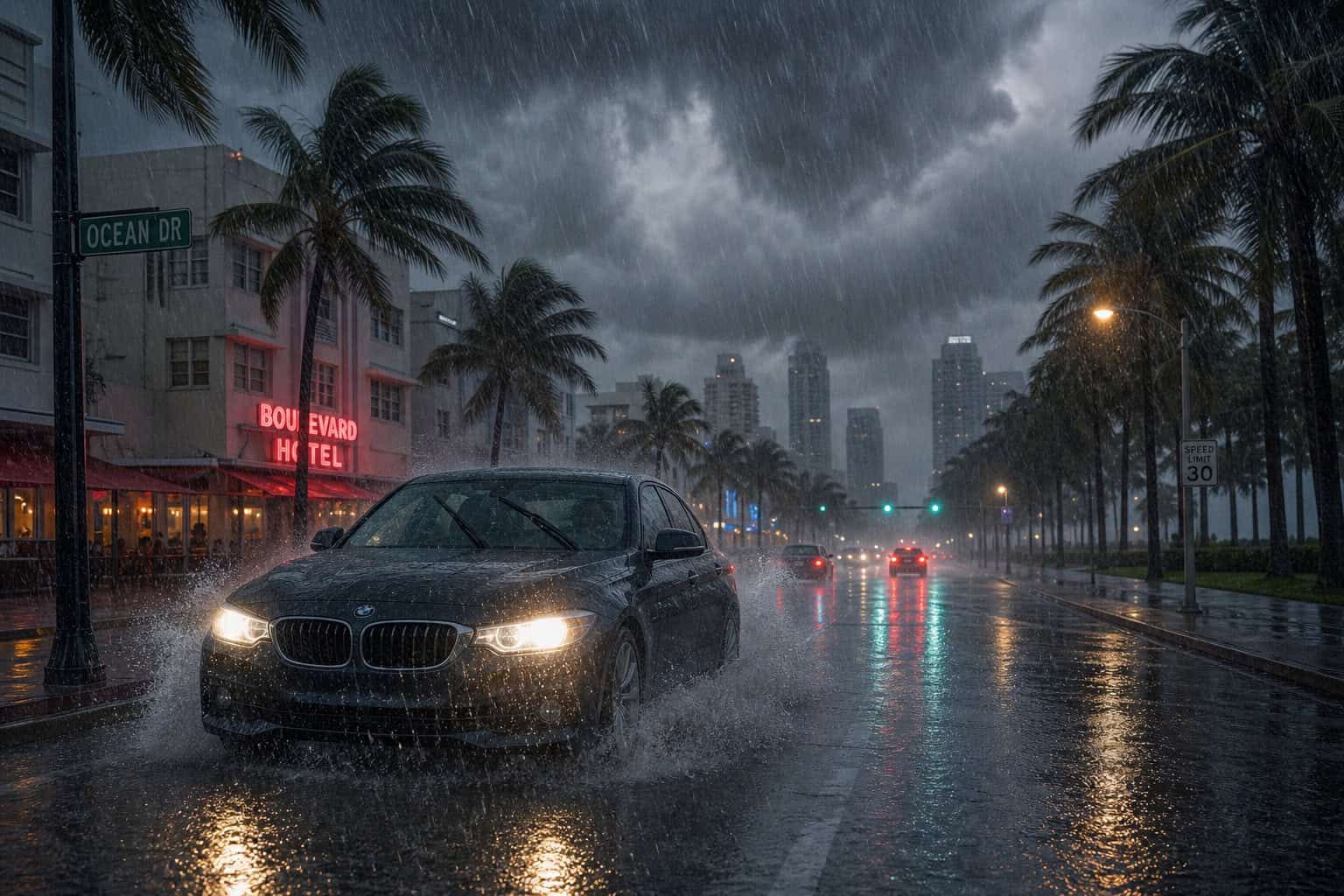
Weather: Miami weather can cause sudden downpours, slick roads, reduced visibility, and hydroplaning risk. Reduce speed, keep headlights on, maintain greater distance from vehicle ahead during storms. Not hazard lights. High temperatures can affect tire pressure and strain car battery.
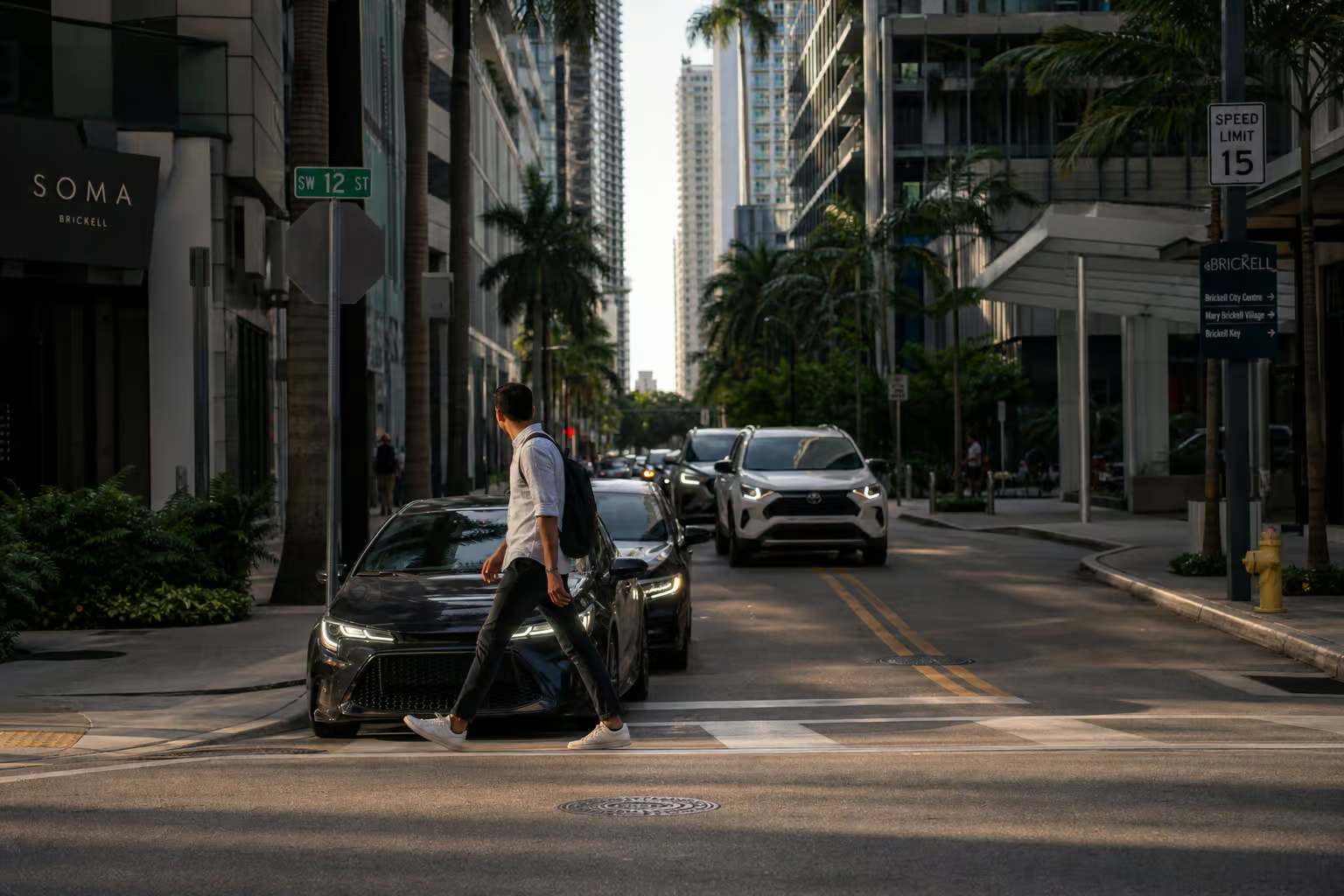
Pedestrians and cyclists: Pedestrians often jaywalk without warning; cyclists may weave through traffic unexpectedly. Cyclists may weave through traffic unexpectedly. Pedestrians legally have the right-of-way, but not every driver stops. Hotspots include Wynwood, South Beach, downtown Miami, and Brickell.
Miami traffic is brutal during rush hour: weekday mornings 7–10 AM, late afternoons 4–7 PM. I-95 is congested even during non-peak hours. Much of the traffic comes from number of people driving on roads not designed for that volume.
Many locals speak Spanish; basic Spanish phrases or a translation app may help after a fender bender. You don’t need to be fluent, but knowing how to exchange insurance info or ask if everyone is okay goes a long way.
Rental Car Tactics: How to Avoid Surprise Toll Fees
The hidden cost of renting a car in Miami is toll fees — most rental car companies charge a fee to use a SunPass.
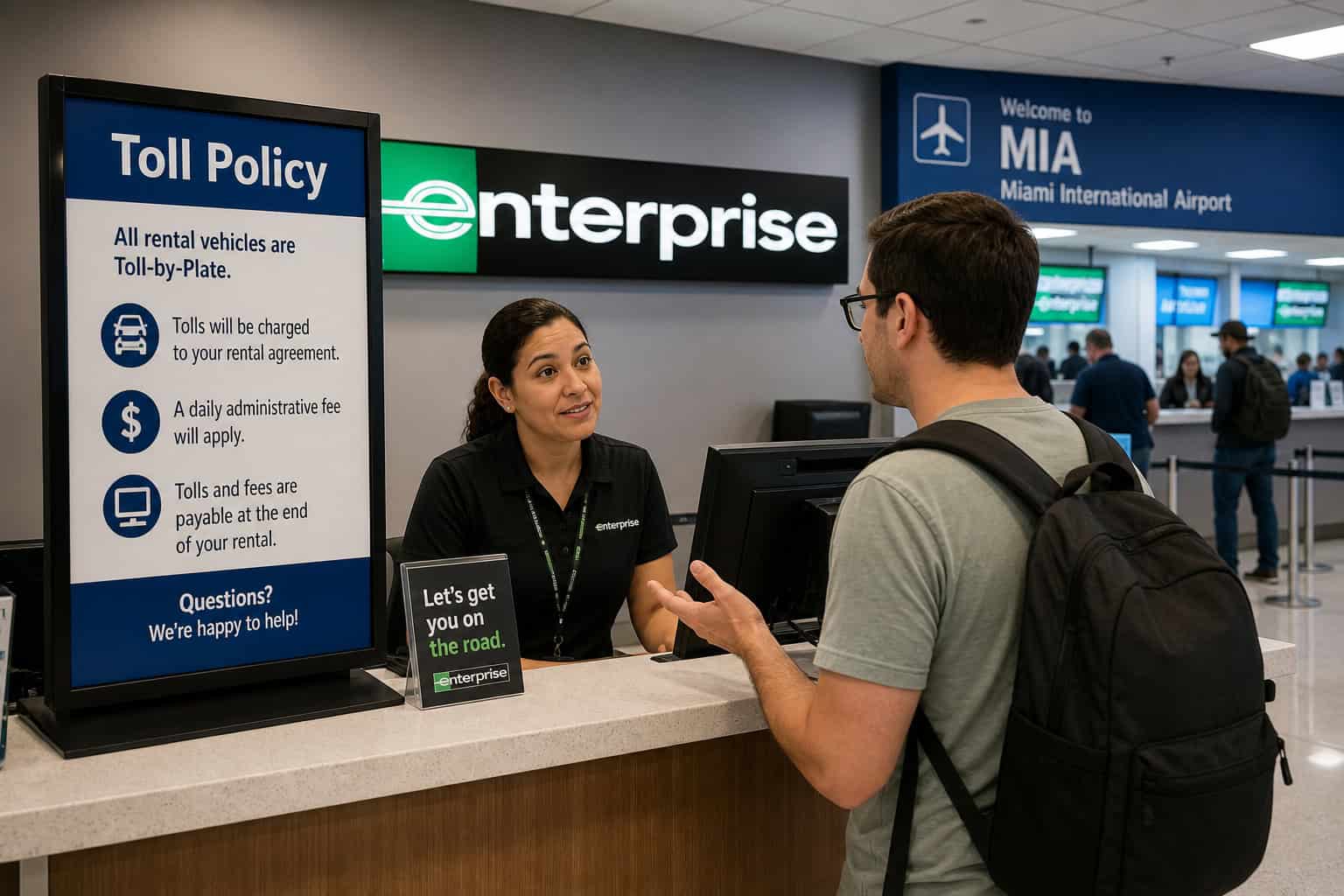
Most rental car companies charge a fee to use a SunPass. But if you don’t have a SunPass, Toll-By-Plate bills the rental company, who then bills you with an administrative fee that can exceed the toll itself. For I-95 Express Lanes, rental car users may purchase PlatePass or Pass24 at rental car agency location.
The solution is proactive: ask at the counter, “What’s your toll policy?” and “What’s the administrative fee if I use Toll-By-Plate?” Ask before you sign the rental agreement.
Putting It All Together: Drive Miami With Confidence
- Tolls: SunPass (get one before you drive) or Toll-By-Plate (fallback, costs more, risk of fees or suspension if unpaid).
- Parking: PaybyPhone (most of Miami) or ParkMobile (Miami Beach). Use ParkMe – Miami Beach app to find a spot.
- Traffic: Florida 511 for personalized route alerts; Google Maps or Waze for live rerouting.
- Timing: Peak traffic is 7–10 AM and 4–7 PM weekdays. Plan around it.
- Mindset: Defensive driving works across all conditions — aggressive drivers, rain, pedestrians.
- Alternatives: Public transportation and rideshare are options if the whole thing sounds like too much.
The horror stories come from people who didn’t know about the plastic poles, the wrong parking app, or the rental company fee that showed up a month later. Now you know.
Frequently Asked Questions
Can tourists drive in Miami?
Yes, tourists can drive in Miami with a valid driver’s license from their home country or state. The main headaches for tourists are surprise rental car toll fees, using the wrong parking app, and not knowing that hazard lights are illegal while driving in rain — use headlights instead.
What is the most difficult US city to drive in?
Miami ranks as the sixth most congested city in the United States, but its difficulty comes from a unique mix: a complex toll system with plastic pole penalties, neighborhood-specific parking apps, aggressive driving culture, and sudden downpours. It’s not necessarily the hardest, but it punishes unprepared drivers more than most cities.
What happens if you drive on I-95 Express Lanes without a SunPass?
You can’t stop or easily exit — entry and exit points are limited, and you’re stuck riding it out. The cameras will bill you through Toll-By-Plate, but if you try to cross the plastic poles separating the lanes, you’ll incur extra penalty fees that add up fast.