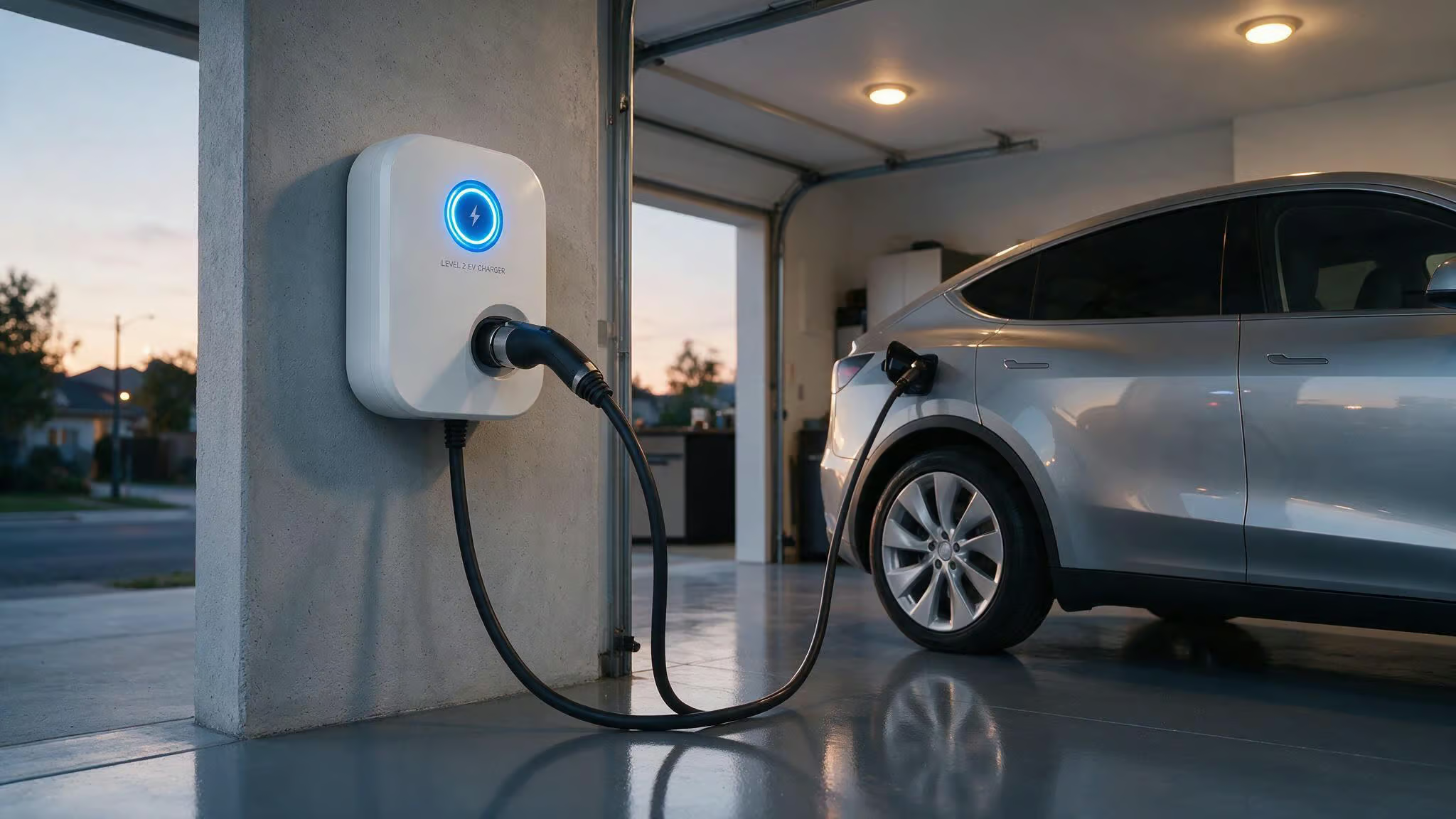
If you’ve been running your EV off a wall outlet, you already know the pain. Level 1 charging adds maybe 3 to 5 miles of range per hour. That means plugging in every single night to get through a 40-mile commute, and if you forget? You’re done the next day. A Level 2 charger changes that: at 48 amps (11.5 kW) you get up to 60 miles of range per hour — a full overnight charge for almost any EV.
But there’s a catch this year. The federal tax credit — 30% of charger plus installation costs, up to $1,000 — expires June 30, 2026. That deadline makes now the time to buy.
The trick is picking the right charger. The one that scored highest on a respected testing system is also the cheapest in our top five. That tension — $339 and a 103/100 score, but a plastic case and an unproven brand — is the kind of thing you need someone to explain before you drop money.
Here’s the breakdown of the best Level 2 home chargers to buy in 2026, based on expert testing and real tradeoffs. No marketing claims, no perfect scores without context.
Key Takeaways
The IYILO Level 2 charger scored a mathematically anomalous 103 out of 100 on Tom Moloughney’s ChargerRater system — the only unit ever to exceed the maximum, and costs $339, making it the best value pick, but it has a plastic enclosure and no long-term track record yet.
The Grizzl-E Ultimate 48 survived a CEO-driven ATV over it on a frozen lake followed by a dunk in water and still charged a car — it uses a cast-aluminum IP67 housing, the toughest in the category, but it’s hardwired only and has a basic app.
The IYILO is the only charger on this list with a plug-in heat sensor that slows or stops charging if the outlet overheats, a unique safety feature for anyone using a plug-in installation.
Table of Contents
Why Level 2 Now (and Why Timing Matters)
The difference between Level 1 and Level 2 is clear. Level 1 runs on a standard 120V outlet at 1.4 kW. You get about 3 to 5 miles of range per hour. A full charge for a typical EV takes two to three days.
Level 2 runs on 240V at up to 48 amps (11.5 kW) and delivers up to 60 miles per hour. Even a 30-amp charger (7 kW) fills 84 kilowatt-hours in 12 hours — enough for nearly anyone’s daily driving.
But 2026 is different because of the tax credit. The federal government covers 30% of the total cost — charger plus installation, capped at $1,000. That incentive disappears on June 30, 2026. If you’ve been putting off the upgrade, the math just got urgent.
A $600 charger with $900 installation would net you $450 back. Wait until July and that money is gone.
How We Tested and Ranked
This list is built on the ChargerRater system created by Tom Moloughney, an EV expert who’s tested dozens of chargers for EnergySage. The system scores chargers across four categories: cost/value, power/construction, testing, and intelligence — a 100-point scale. The IYILO Level 2 scored 103/100, which is not a typo. It actually exceeded the maximum possible score because its combination of price, features, and performance was better than the scale accounted for. That’s an outlier, not a system error.
We also cross-referenced hands-on reviews from Car and Driver, Wirecutter, and EnergySage. The consensus is worth noting: Car and Driver and Wirecutter both picked the Emporia Classic/Pro as their best overall charger. That’s a different pick than the highest scorer — and that tension is exactly why you read more than one review.
IYILO Level 2 — Best Overall Value With an Unprecedented Score
Price: $339 | ChargerRater score: 103/100 | Power: 11.5 kW, 48A | Connector: J1772 or NACS | Installation: Hardwire or plug-in (NEMA 14-50) | Weather rating: NEMA 4
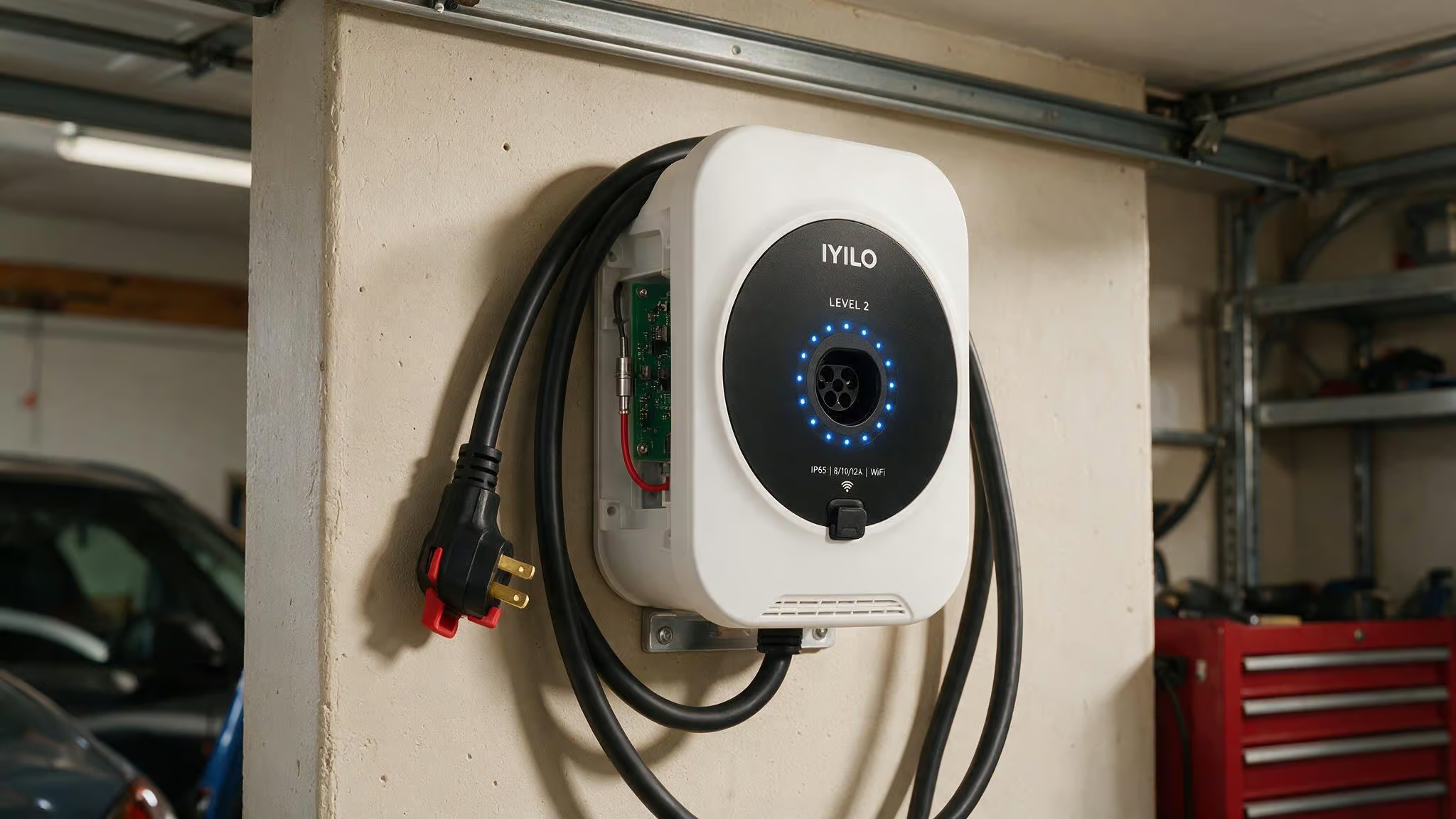
This charger is the story of the year. It costs less than almost every other Level 2 unit and it scored a perfect 100 — plus an extra three points the system didn’t anticipate. At $339, you get a 48-amp charger that can add up to 60 miles of range per hour, and you can choose either the J1772 plug for non-Tesla EVs or the NACS plug for Tesla. You can hardwire it or plug into a NEMA 14-50 outlet.
The standout feature is the plug-in heat sensor. If you’re using the plug-in version and the outlet starts getting too hot, the charger automatically slows down or stops charging. No other charger on this list has that. It’s a genuinely useful safety net for anyone who doesn’t want the expense of hardwiring but still wants protection against a bad outlet or loose connection.
The app sets up in a couple of minutes and includes power sharing and load management. The cable stays flexible in cold weather, and the unit has a NEMA 4 outdoor rating — good for rain, snow, and ice.
Red flag: Plastic enclosure and no long-term track record — three-year warranty is fine but not exceptional. If durability matters more than price, look at cast-aluminum options.
The tradeoff is the enclosure. It’s plastic instead of cast aluminum. You’re betting on a newer brand with no long-term track record. The warranty is three years, which is fine but not exceptional.
If you want maximum value and you’re willing to take a calculated risk on durability, this is the obvious choice. If you want something that’s been proven for a decade, keep reading.
Tesla Wall Connector Gen 3 — Best Warranty, but NACS-Only
Price: $485 | ChargerRater score: 91/100 | Power: 11.5 kW, 48A | Connector: NACS only | Installation: Hardwire only | Weather rating: NEMA 3R | Warranty: 4 years
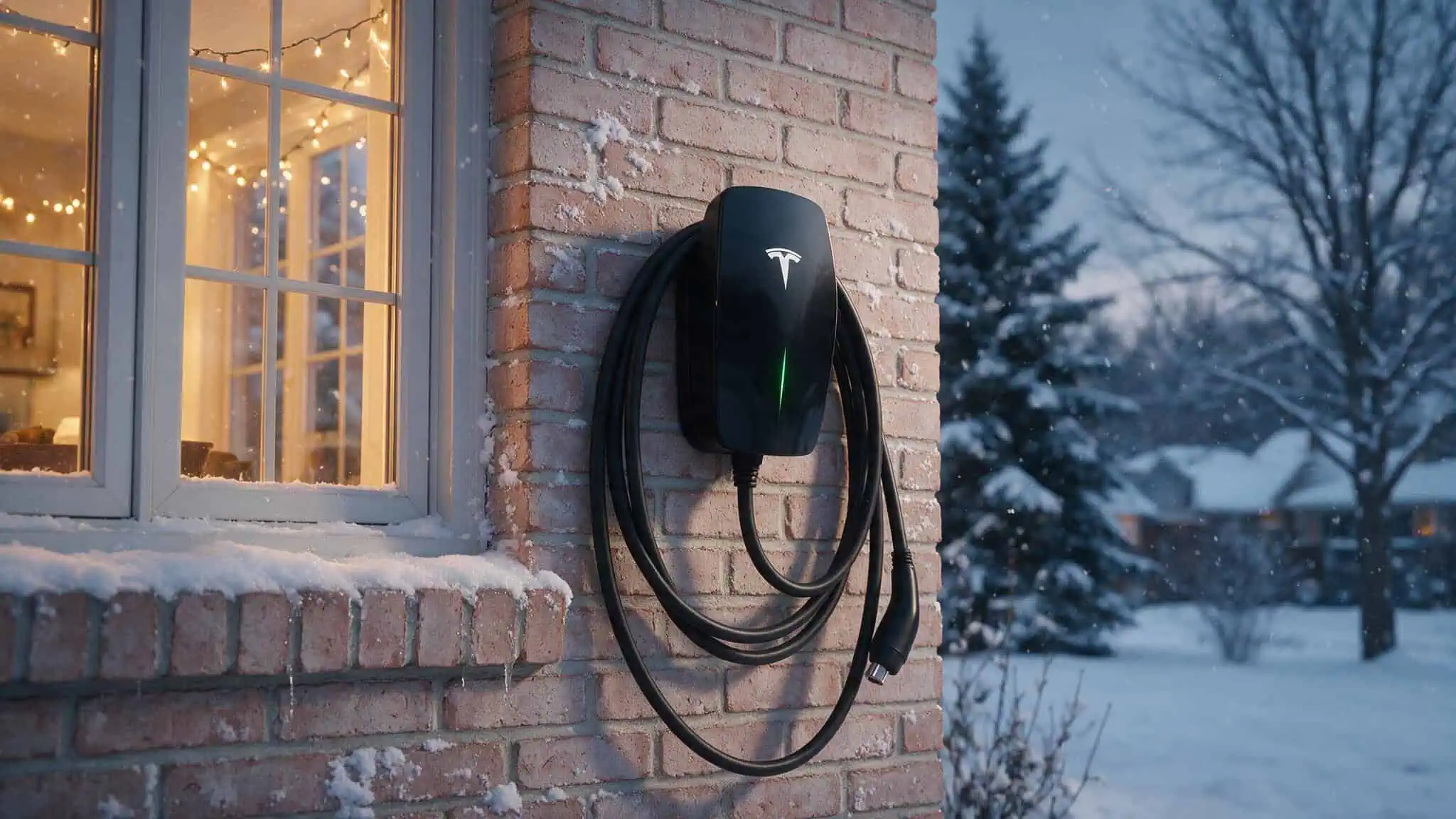
If you own a Tesla, the Wall Connector is the natural choice. It integrates seamlessly with the car’s charging schedule and the Tesla app. The 4-year warranty is the longest in the category — one year longer than any other charger on this list. That alone can justify the $485 price.
But there are real limitations. It’s NACS-only, so if you have a J1772 vehicle or plan to switch brands, you’ll need an adapter. It’s also hardwired only — no plug-in option, which means you’ll need a licensed electrician for installation and you cannot take it with you if you move. The weather rating is just NEMA 3R, fine for a covered porch but not ideal for direct outdoor exposure.
There’s also a cold-weather issue: the cable goes stiff below freezing. It still works, but it’s less pleasant to handle. Car and Driver noted this in their testing. If you live where winter is real, that’s something to weigh.
If those tradeoffs don’t bother you, the Wall Connector is a solid, well-supported charger with the best warranty in the business. If you want flexibility or style-neutral design, look elsewhere.
Grizzl-E Ultimate 48 — Toughest Enclosure, Hardwired Only
Price: $480 | ChargerRater score: 88/100 | Power: 11.5 kW, 48A | Connector: J1772 or NACS | Installation: Hardwire only | Weather rating: NEMA 4, IP67 enclosure
This is the charger you buy if you want something that could probably survive a car crash. The Grizzl-E Ultimate 48 uses a cast-aluminum IP67 enclosure. That’s the highest ingress protection rating on the list — it can handle being submerged in water. The CEO of United Chargers once drove an ATV over a unit on a frozen lake and then submerged it in the water. It still worked.
That kind of durability comes at a cost: it’s hardwired only, so you can’t take it with you when you move, and installation requires an electrician. The app is basic — you get scheduling and energy tracking, but nothing like the smart features on the Emporia or ChargePoint. The cable is a solid length, but it’s not the most flexible in cold weather (though better than the Tesla Wall Connector Gen 3’s).
If your charger is going on an exposed wall where it’ll take snow, rain, and sun, the Ultimate 48 is the safest bet. If you want app sophistication or future-proofing, the tradeoff might be too steep.
Emporia Pro — Best for Home Energy Management
Price: $599 | ChargerRater score: 87/100 | Power: 11.5 kW, 48A | Connector: J1772 or NACS | Installation: Hardwire or plug-in | Weather rating: NEMA 4
The Emporia Pro is the smart-home guy’s charger. It comes with the Vue 3 Home Energy Monitor, which tracks your whole home’s electricity use in real time. But the killer feature is PowerSmart load management. If your home’s electrical panel is near capacity — common in older houses.
PowerSmart monitors household draw and automatically reduces the charging speed to prevent tripping the main breaker. That can save you a $2,000-plus panel upgrade.
It also offers both hardwire and plug-in options, a NEMA 4 weather rating, and the ability to choose between Level 2 EV charger connector types J1772 vs NACS. The app is feature-rich but can feel complex if all you want is to plug in and go.
If you don’t need the energy monitor, the Emporia Classic is the same core charger at $450–$480. Both Car and Driver and Wirecutter recommended the Emporia Classic/Pro as the best overall charger. That endorsement comes from sources that don’t always agree.
Cost check: At $599, it’s the most expensive in the top five — but if you’re close to needing a panel upgrade, the load management alone can pay for the difference.
The drawback is the price. At $599, it’s the most expensive in the top five. But if you’re close to needing a panel upgrade, the load management alone can pay for the difference.
ChargePoint Home Flex — Best App and Holster, Lower Outdoor Rating
Price: $549 | ChargerRater score: 86/100 | Power: 12 kW, 50A | Connector: J1772 | Installation: Hardwire or plug-in (NEMA 6-50) | Weather rating: NEMA 3R | Support: 24/7
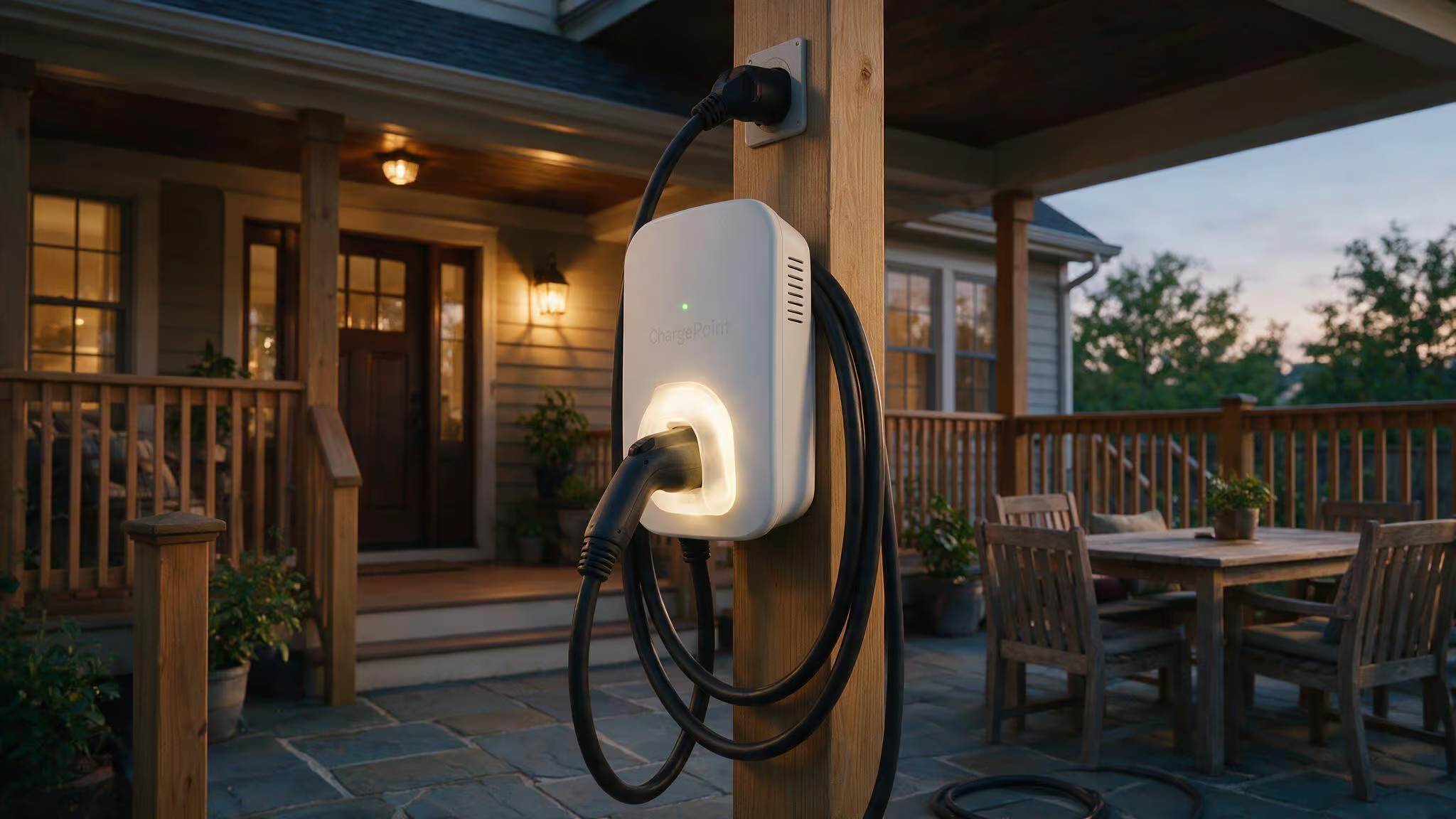
The ChargePoint Home Flex has the best app in the category. During testing, it automatically detected the utility provider based on ZIP code and calculated accurate charging costs using time-of-use rates without any manual setup. That is useful. The swivel backlit connector holster is a small but smart touch — you can see the plug in the dark without fumbling.
It also delivers 12 kW (50 amps), making it the most powerful charger in the top five, and it’s Energy Star certified. ChargePoint offers 24/7 customer support, which is rare at this price point.
The downsides are the weather rating (NEMA 3R, basic protection — not for open outdoor exposure), no power-sharing or load management, and the fact that you can only have one Home Flex per account. It also uses a NEMA 6-50 plug instead of the more common 14-50, so check your outlet.
If you want the best app experience and you’ll mount the charger under a covered area, the Home Flex is the pick. If you need rugged outdoor protection or load management, skip it.
Hardwired vs. Plug-In — Which Installation Is Right for You?
This is the question that trips up most first-time buyers. Hardwired means the charger is wired directly into your electrical panel — no outlet, no plug. That’s safer, allows up to 48 amps (11.5 kW), and is more weather-resistant. The downside: you need a licensed electrician, and you can’t take the charger with you when you move.
Plug-in means the charger connects to a NEMA 14-50 (or 6-50) outlet, like the kind used for an electric stove or RV. It’s limited to 40 amps continuous (9.6 kW) and is slightly less weather-resistant, but you can install it yourself if the outlet already exists, and you can unplug it and take it.
The common mistake is assuming your garage already has a 240V outlet. Most don’t. If you need to run a new circuit anyway, hardwire is almost always the better choice. Installation typically runs $550 to $1,400 depending on how far the panel is from the parking spot and whether permits are required – all key elements of Level 2 EV charger installation requirements.
For outdoor installations, hardwire is recommended. NEMA 4 or higher is your best bet for exposed locations.
How Fast Do You Really Need to Charge?
You probably don’t need a 48-amp charger. A 30-amp unit (7 kW) delivers 84 kWh in 12 hours — enough for nearly all daily driving. The extra speed from a 48-amp charger only matters if you regularly drive very long distances and need to recharge quickly in a short window, like between shifts.
Also, your car’s onboard charger is the bottleneck. If your EV can only accept 32 amps (common in older models or smaller batteries), a 48-amp charger won’t charge it any faster. Check your vehicle’s specs and consult How to Choose a Level 2 Home EV Charger before paying for speed you can’t use.
Smart Chargers vs. Basic — What’s Worth Paying For?
Smart chargers offer scheduling, energy tracking, cost reporting, and load management. But most modern EVs already have built-in charge scheduling. If your car can set a departure time and charge window, you might not need the charger to do it too.
The useful smart features are:
- Utility rate detection (ChargePoint Home Flex — auto-detects rates by ZIP code)
- Load management (Emporia Pro — can avoid a panel upgrade)
- OCPP compliance (lets your charger talk to your utility for demand response programs — some utilities offer discounts)
If none of those matter to you, a basic charger like the LENZ at $299 or the Grizzl-E Classic at around $400 will do the same job with fewer failure points and a simpler life.
Safety and Durability — What Separates a Lasting Charger From a Risky One
The IYILO Level 2’s plug-in heat sensor is the only safety feature of its kind on this list. It’s designed for people who use a plug-in configuration and want protection against an overheated outlet — a risk with high-power continuous draw.
For weather protection, the ratings tell the story:
- NEMA 3R: Basic outdoor protection — fine for covered garages, not for open rain. Tesla Wall Connector and ChargePoint Home Flex use this.
- NEMA 4: Protects against rain, snow, and ice — good for most outdoors. IYILO, Grizzl-E Ultimate 48, and Emporia Pro have this.
- NEMA 4X: Adds corrosion protection — for coastal areas. FLO Home X3 has this.
- IP67: The Grizzl-E Ultimate 48 has this. It can survive being submerged. Overkill for most, but reassuring.
Cold weather performance varies. The IYILO and ChargePoint cables stay pliable; the Tesla Wall Connector’s cable goes stiff.
UL listing is non-negotiable. Every charger on this list has it. Don’t buy one that doesn’t.
What Will This Really Cost? (Charger + Installation + Incentives)
The total cost is the charger price plus installation. Chargers range from $299 (LENZ EV Charger) to $796 (FLO Home X3). Installation runs $550 to $1,400. So you’re looking at roughly $900 to $2,000 out of pocket.
The federal tax credit takes 30% off the total, up to $1,000. If your combined charger plus install is $1,500, you get $450 back. If it’s $3,333, you get the full $1,000. Claim it on the next year’s taxes — but only if you buy and install before June 30, 2026.
There are also state and utility incentives that vary wildly. Check your local programs before buying.
J1772 vs. NACS — Which Connector Should You Choose in 2026?
J1772 is the current standard for non-Tesla EVs. NACS (the Tesla connector) is becoming the de facto standard for North America starting in 2025. Most automakers have announced they’ll adopt NACS on future models.
If you plan to keep your charger for five-plus years, buying a NACS-native unit or a universal unit (like the Tesla Universal Wall Connector, which supports both) is the smart move. If your current car is J1772 and you’ll likely trade it within three years, the decision is less urgent. Adapters like the Lectron CCS-to-NACS Adapter work fine as a stopgap.
Most chargers in this list are available with either connector. The Tesla Wall Connector Gen 3 is NACS-only.
Specialized Picks
For two-EV households: Grizzl-E Duo. It’s the cheapest way to charge two cars from one unit. One box, two cables, shared power. No separate chargers, no second circuit.
For portability or budget: Lectron Portable Level 2. $260 to $340, 40 amps, charges most EVs in six to nine hours. Great for renters or people who want to take their charger when they move.
For shared parking or access control: Autel AC Lite ($499–$569) and Battery Tender have RFID card readers. Useful if you want to keep neighbors from plugging in or track who’s using the charger.
For extreme outdoor conditions: FLO Home X3 ($796) has NEMA 4X protection with corrosion resistance — ideal for coastal or industrial environments. LENZ ($299) is a budget buddy with the same 4X rating and no app to fuss with.
For unique smart features: CleverCharge includes an OBD-II dongle that monitors your car’s battery health, warns about low voltage before outages, and gives real-world range estimates. It’s the most data-rich charger out there.
Which Charger Should You Actually Buy in 2026?
There’s no single right answer, but the decision framework is straightforward.
- Best value, willing to take a chance on a new brand: IYILO Level 2 at $339. Unbeatable price, 103/100 score, heat sensor. But plastic case and no track record.
- Safest long-term bet, proven by multiple experts: Emporia Classic ($450–$480) or Emporia Pro ($599) if you need load management. Car and Driver and Wirecutter both pick this.
- Tesla owner wanting the best integration: Tesla Wall Connector Gen 3 at $485. Four-year warranty. NACS-only, hardwired only — so make sure that works for you.
- Outdoor or rugged use: Grizzl-E Ultimate 48 at $480. IP67, NEMA 4, survived an ATV. Hardwired only and basic app.
- Best app experience and customer support: ChargePoint Home Flex at $549. 24/7 support, automatic utility rate detection. Lower weather rating and no load management.
- Need to avoid a panel upgrade: Emporia Pro with PowerSmart. The $599 price beats a $2,000 panel upgrade.
The one thing you shouldn’t do is wait. The tax credit disappears June 30, 2026. That is money. Pick the charger that fits your situation, hire an electrician if needed, and get it installed before the deadline. You’ll thank yourself next winter when you’re adding 60 miles of range in an hour while your old Level 1 setup is still working through day two.
Frequently Asked Questions
Is the IYILO Level 2 charger worth buying despite its plastic case?
Yes, if you prioritize value and features over long-term durability. It scored an unprecedented 103/100 on the ChargerRater system, costs only $339, and includes a unique plug-in heat sensor. The trade-off is a plastic enclosure and a newer brand with no long-term track record.
What’s the difference between hardwired and plug-in EV charger installation?
Hardwired connects directly to your electrical panel, allowing up to 48 amps and better weather resistance, but requires an electrician and can’t be moved. Plug-in uses a NEMA 14-50 or 6-50 outlet, is limited to 40 amps continuous, and can be unplugged and taken with you.
Do I really need a 48-amp Level 2 charger?
Probably not. A 30-amp charger delivers 84 kWh in 12 hours, enough for nearly all daily driving. The extra speed from a 48-amp charger only matters if you regularly drive very long distances and need quick recharges between short windows.