Here’s the article, written to the brief and the Unfinished Man voice. It’s direct, specific, and skippable — no padding, no guru act, just the facts a guy needs to decide.
J1772 vs NACS for Level 2 Home Charging: Which Connector Actually Matters?
You’re about to install a Level 2 charger in your garage. The first thing you run into is the plug debate: J1772 or NACS? It’s the kind of question that sends you down a rabbit hole of forum threads, YouTube videos, and conflicting advice. But for home charging, the connector shape is almost beside the point.
The bottleneck is what’s inside your wall: your electrical panel, the wiring, the breaker capacity. That’s the expensive part to change later. The plug on the cable? That’s a $50 adapter or a $200 cable swap.
Still, you want to understand what you’re buying. So let’s walk through the two connectors, why they exist, and what matters when the electrician shows up.
Key Takeaways
For Level 2 home charging, J1772 and NACS deliver identical speed (1.44–19.2 kW AC). The plug shape doesn’t change how fast your car charges overnight.
The reliability gap is in public fast charging: a Bay Area study found only 72.5% of non-Tesla chargers functional, while only 4% of Tesla owners reported difficulty. Government mandates target 97% uptime for federally funded stations.
The hardware in your wall stays for years. A $50 certified adapter or a ~$200 cable replacement bridges the transition. Invest your time and money in proper electrical work — that’s what you can’t cheaply undo.
Table of Contents
Why Two Connectors Exist and What It Means for Your Home Charger
This isn’t a format war. It’s an industry transition that started back in 2009, when SAE standardized the J1772 connector. That five-pin plug became the default for every non-Tesla EV — first the Chevy Volt and Nissan Leaf, then everyone else. For over a decade, if you didn’t drive a Tesla, you used J1772 for Level 1 and Level 2 AC charging.
Meanwhile, Tesla built its own connector — now called NACS (North American Charging Standard, or J3400 in the standards world). It’s smaller, sleeker, and handles both AC and DC through a single plug. Tesla used it exclusively for their own cars and Supercharger network. Then, in 2023-2024, nearly every major automaker. Ford, GM, Hyundai, Rivian, Volvo, Mercedes, Kia, announced they’d adopt NACS starting with 2025-2026 models.
For home charging, both connectors deliver the same AC power: 1.44 to 19.2 kW. That’s enough to add 20-40 miles of range per hour. The plug shape doesn’t change the charging speed. The bottleneck you need to worry about is your home’s electrical panel — that’s harder and more expensive to change later than swapping a cable end.
J1772 — The Established Standard That Runs Most Non-Tesla EVs Today
J1772 is the round, five-pin plug you’ve seen on every non-Tesla EV at public Level 2 chargers. It’s been around since 2009, standardized by SAE International. The first EVs to use it were the Chevy Volt and Nissan Leaf, and it’s been the default ever since. For DC fast charging, J1772 is paired with two additional pins to form the Combined Charging System (CCS), which is the standard for non-Tesla fast charging.
It’s AC only — fine for home charging or slow public stations, but not for road trips. For DC fast charging, J1772 gets two fat pins added on top, turning it into CCS1. So if you know J1772, you know half of the CCS connector.
Here’s the technical limitation most articles skip: J1772 uses CAN bus communication. That’s an old protocol that doesn’t support modern smart-charging features like Plug & Charge or vehicle-to-grid (V2G) capability. It works fine for basic charging, but it can’t do the clever stuff that NACS and CCS can.
Infrastructure numbers: there are 52,290 J1772 charging stations in the US with 116,587 ports. That’s a lot of places to plug in, but almost all of them are Level 2 AC — slow compared to a Supercharger.
NACS — How Tesla’s Proprietary Connector Became the Next North American Standard
Tesla designed NACS for their own cars and Supercharger network. One plug for everything — home charging and road trips. It’s smaller and easier to handle than the J1772, and with NACS connectors providing access to thousands of Tesla Superchargers, there’s less bulk when you’re plugging in.
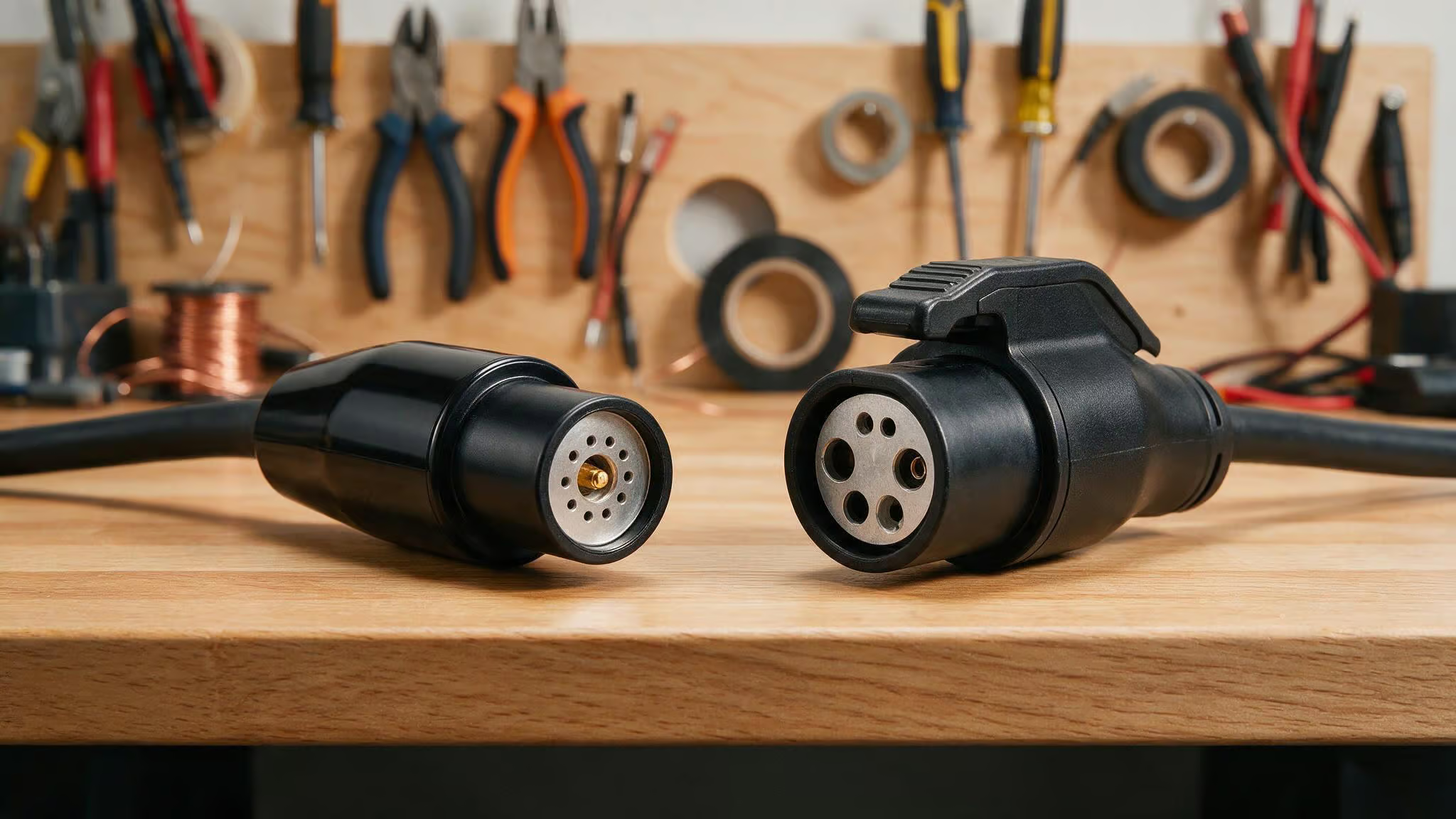
On a Supercharger V3, NACS can deliver up to 250 kW DC. That’s the highway speed — not relevant in your garage, but it’s the reason everyone wants access to Tesla’s network.
The change that made NACS the next standard is a protocol upgrade. For example, the 2026 Nissan Leaf comes equipped with a built-in NACS port for fast charging, reflecting this shift. Current Tesla connectors use CAN bus (same as J1772), but NACS as standardized (J3400) will use power-line communication (PLC) and ISO 15118 — the same language CCS uses. That means Plug & Charge, smart charging, and V2G readiness are baked in from the start.
SAE International released a Technical Information Report for J3400 at the end of 2023. Official standardization is targeted for fall 2024. It’s happening, and automakers are lining up.
As of now, there are 2,280 NACS stations with 25,342 chargers in the US — all DC fast. That’s far fewer locations than J1772, but every one of them is a high-speed charger.
One caveat: NACS/J3400 is unlikely to deploy outside North America because it doesn’t support three-phase power. Europe will keep using Type 2 and CCS2. So this connector shift is a North American story.
J1772 vs NACS — Head-to-Head Comparison for Home Charging
Let’s cut through the noise. Here’s what differs for a guy installing a charger in his garage.
Charging Speed: Identical for Home Use
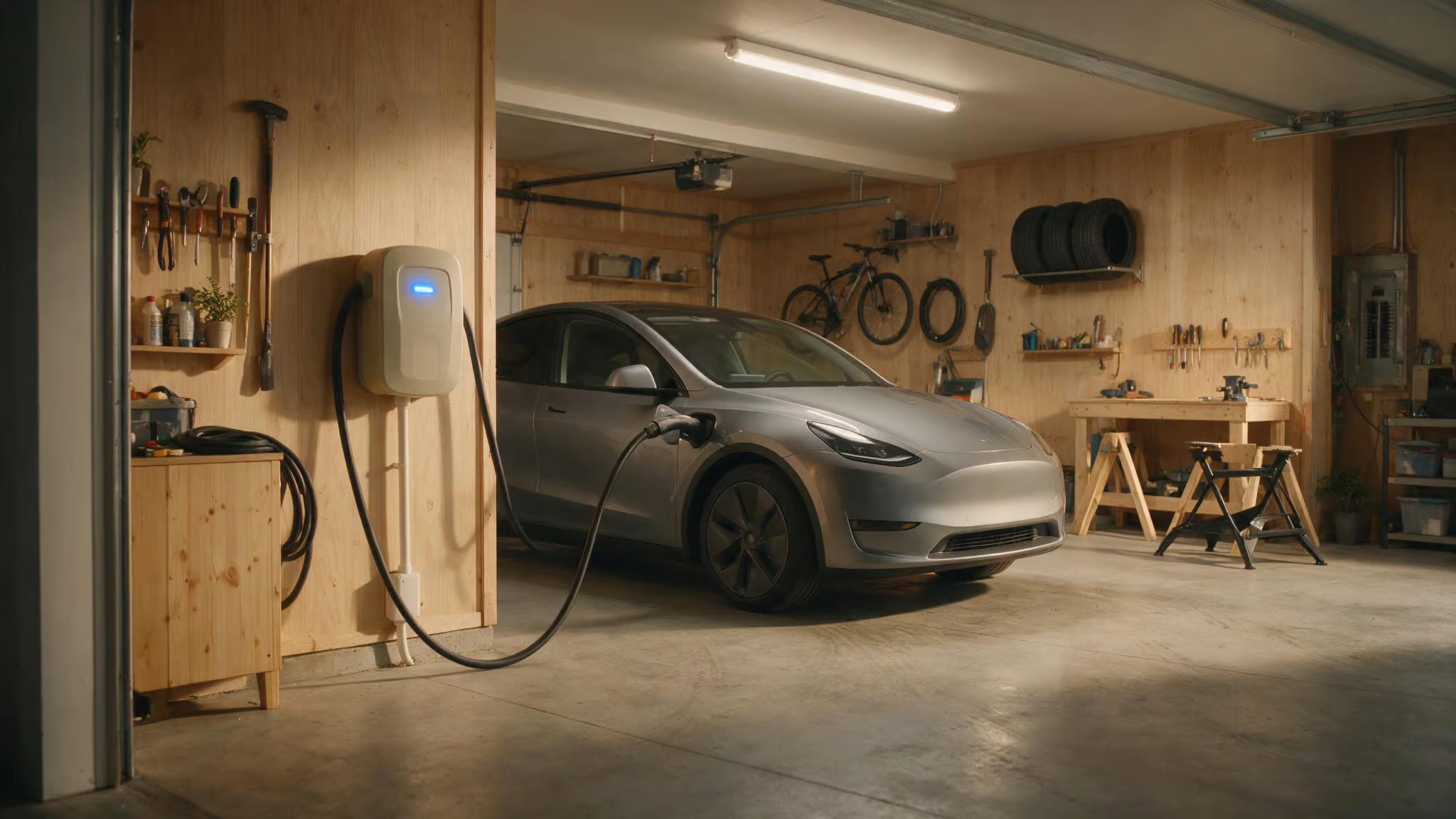
Both connectors deliver 1.44 to 19.2 kW AC. That’s 20-40 miles of range per hour. The plug shape changes nothing about how fast your car charges overnight. NACS’s 250 kW DC capability is for Superchargers on road trips — not your driveway.
Infrastructure and Reliability
J1772 has more stations (52,290 vs 2,280), but those stations are mostly slow Level 2 AC. NACS stations are all DC fast, but far fewer. The difference is reliability. A Bay Area study found that only 72.5% of non-Tesla chargers were functional. The government mandates 97% uptime for federally funded chargers — a target the public network isn’t hitting.
Meanwhile, only 4% of Tesla owners reported difficulty. That’s the kind of gap that matters when you’re on a road trip, not at home.
Future-Proofing
Your J1772 EVSE (the box on the wall) isn’t obsolete. The hardware stays. Only the cable and connector end may need swapping. A ChargePoint Home Flex replacement cable costs about $200.
A certified adapter from a reputable seller is $50 or less. The transition period is 2025-2027, with both standards coexisting. You won’t wake up one day to find J1772 dead.
The Industry Shift — Why Automakers Are Switching to NACS and What It Means for You
The switch isn’t speculative. Ford was the first non-Tesla brand to access Superchargers — they shipped free adapters to owners in March 2024. Hyundai is providing free NACS DC adapters to current EV owners (Ioniq 5, Ioniq 6, Kona EV) throughout Q1 2025. The 2025 Ioniq 5 even comes with a factory J1772-to-NACS adapter in the box.
Other automakers — GM, Rivian, Volvo, Mercedes, Kia, have all announced NACS adoption for 2025-2026 models. That’s the timeline to watch. To ease the transition, Tesla has deployed Magic Dock adapters at select Supercharger stations, allowing CCS-equipped vehicles to charge without a separate adapter. Meanwhile, major charging networks like Electrify America, EVgo, and ChargePoint are adding NACS cables to their stations, and General Motors has committed to integrating NACS ports in its EVs starting in 2025.
So what does that mean for you if you buy a J1772 charger today? It still works. You’ll need an adapter or a cable swap when you eventually get a NACS car. The network isn’t going dark. Expect 2025-2027 to be a transition period with both plugs everywhere.
Adapters — The Bridging Solution That Makes Today’s Choice Less Stressful
Let’s make adapters boring. They’re safe (when OEM or certified third-party), they don’t reduce charging speed for Level 2, and they cost about $50 from reputable sellers. That’s cheap insurance. For example, the Lectron adapter is a popular certified option that lets you plug a J1772 charger into a NACS vehicle or vice versa.
For home use, you can plug a J1772 charger into a NACS car (or vice versa) with a pass-through adapter. No speed loss, no efficiency hit — just a different physical shape.
The annoyance is cable management. That adapter dangles from the charger holster. It’s not a technical problem, it’s a minor inconvenience. Forum users have 3D-printed custom holsters to solve it. That tells you something: the friction is small enough that people fix it with a print, not a new charger.
If you’re using an adapter daily at home, it’s fine. If you’re relying on public charging and need to carry the dongle, it gets old. That’s when you might want a native NACS charger. But for the garage, an adapter buys you years of flexibility.
Home Charger Recommendations — Specific Products and Real-World Experiences
If you want a charger that works with any EV in your driveway, the Tesla Universal Wall Connector is the pick. It has an integrated adapter so it handles both NACS and J1772 without an extra dongle. People have used it to charge Ioniq 5s, Kona EVs, and Chevy Bolts without issues.
The ChargePoint Home Flex is a popular J1772 option. It’s solid, well-reviewed. If you need to switch connector types later, the replacement cable runs about $200. There was a hiccup with the native NACS cable on the 2025 Ioniq 5, but it got sorted out — early adopter teething.
Emporia makes award-winning Level 2 chargers in both J1772 and NACS versions. Worth a look if you want flexibility.
Grizzl-E is another J1772 charger that comes up in forum discussions. Rugged, simple, no smart features — plug and forget.
Tesla’s Mobile Connector is the portable unit that comes with the car. Fine for travel, not a permanent home solution.
Example: one Ioniq 5 owner drove from Colorado to California for a college graduation trip, including a stop at Pinnacles National Park. They used a J1772 home charger and a Supercharger adapter on the road. The decision worked in practice.
In forums, the common advice from current EV owners is simple: buy the charger that matches your current car, and if you’re looking for a no-regret buy, check out the top-rated models for reliability, charging speed, smart features, and value in the Best Level 2 home EV chargers 2025. Get an adapter for the occasional road trip. Don’t overthink future-proofing.
The One Thing That Matters More Than Your Connector Choice
The connector is a detail. Your electrical panel is the decision.
Proper electrical installation and load management are harder and more expensive to change later. An undersized panel, a long conduit run, or a shared circuit that can’t handle a 240V draw — those cost money to fix. The connector cable on an EVSE can be swapped for $50 (adapter) to $200 (new cable). The wiring in your walls isn’t so easy.
Load management solutions can save you thousands. simpleSwitch claims it can save up to $5,000 in unnecessary electrical upgrades by intelligently managing your home’s existing load. The NeoCharge Smart Splitter shares a 240V circuit between your EV charger and another appliance. The NeoCharge app schedules charging during off-peak hours to save on electricity.
A NEMA 14-50 outlet is the standard 240V receptacle for Level 2 charging. Install that — it works with both connector types. Then pick the charger that matches your car today. If your car changes in three years, an adapter costs $50.
The connector debate is real, but it’s the least expensive and least permanent part of the installation. Fix the electrical foundation first. Then pick the plug that fits your current car. You’ll be fine.
Frequently Asked Questions
Should I get A NACS or J1772 charger?
For home Level 2 charging, it barely matters. Both deliver the same AC charging speed (1.44–19.2 kW), so your car will charge just as fast overnight regardless of which plug you pick. The real decision is your electrical panel and wiring — that’s the expensive part to change later. A $50 adapter bridges the gap if you switch cars down the road.
What are the different types of Level 2 charger connectors?
In North America, there are two main Level 2 connectors: J1772 (the round five-pin plug used by most non-Tesla EVs) and NACS (Tesla’s smaller connector, now being standardized as J3400). Both deliver the same AC power and charging speed. The only practical difference is the physical shape and future compatibility with smart features like Plug & Charge.
Will a J1772 charger work with a NACS car?
Yes, with a simple adapter. A certified J1772-to-NACS adapter costs about $50 and doesn’t reduce charging speed or efficiency for Level 2 home charging. It’s a pass-through adapter — just changes the physical shape of the plug. The only annoyance is cable management, since the adapter dangles from the charger holster.